 Image 1 of 4
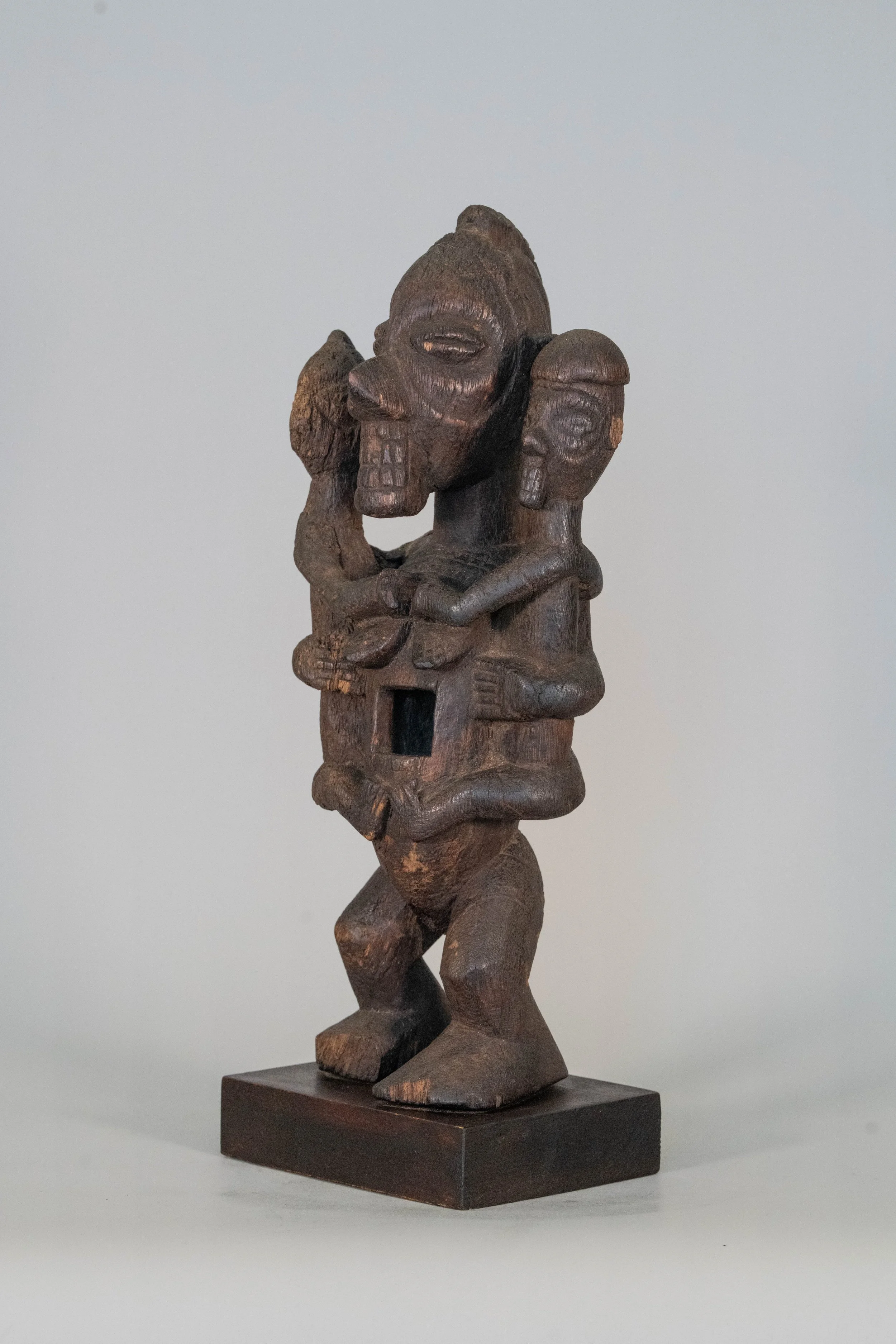 Image 2 of 4
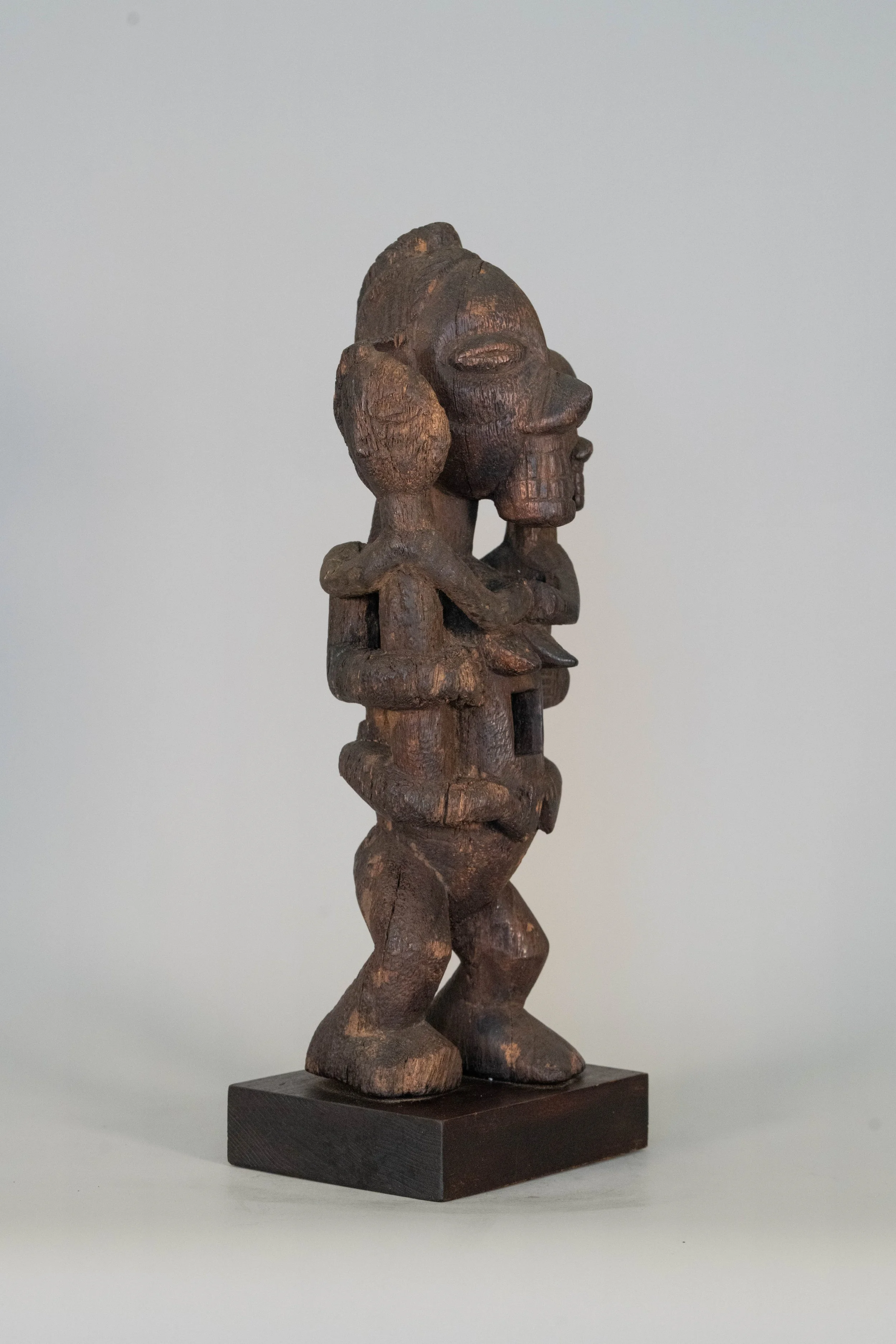 Image 3 of 4
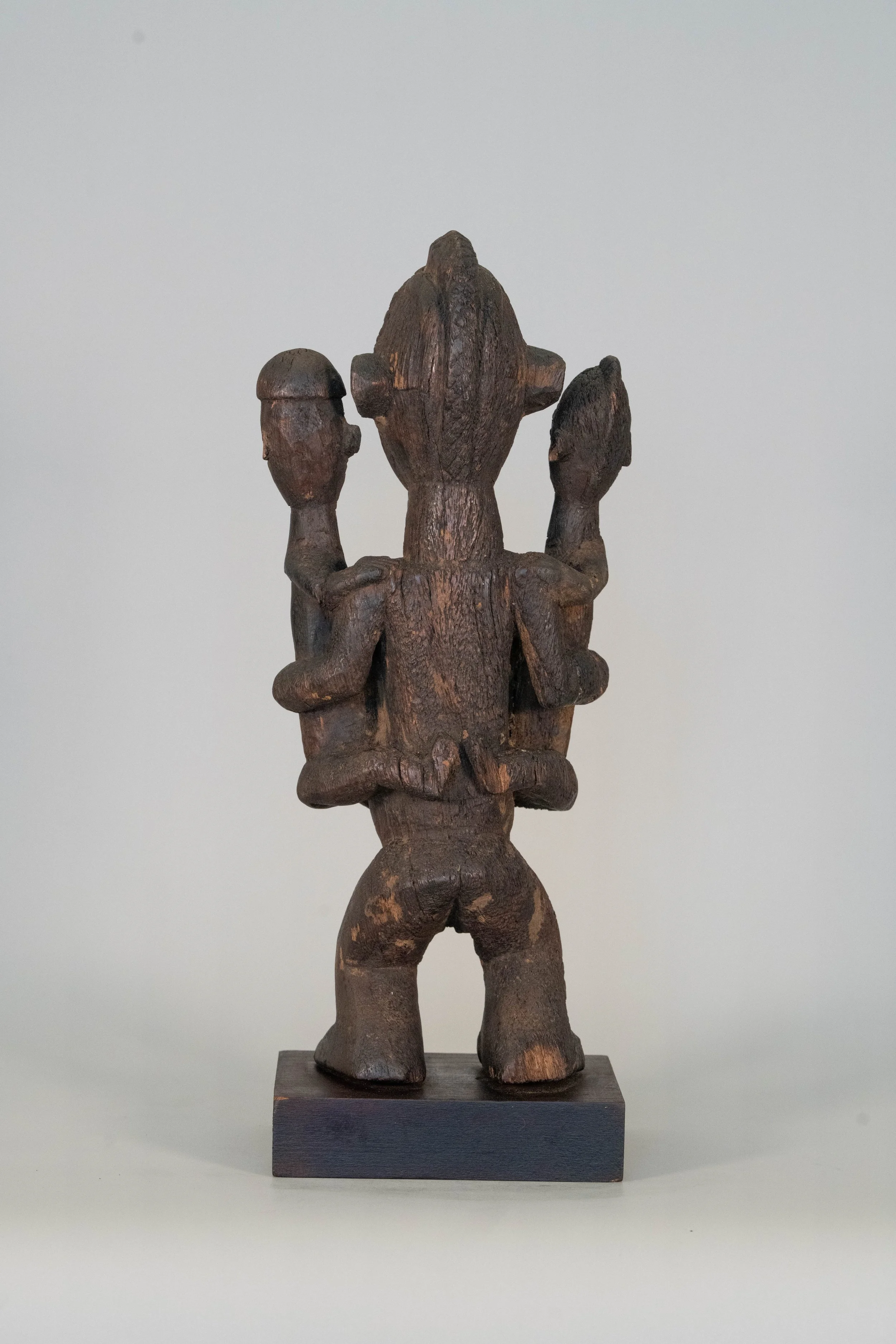 Image 4 of 4
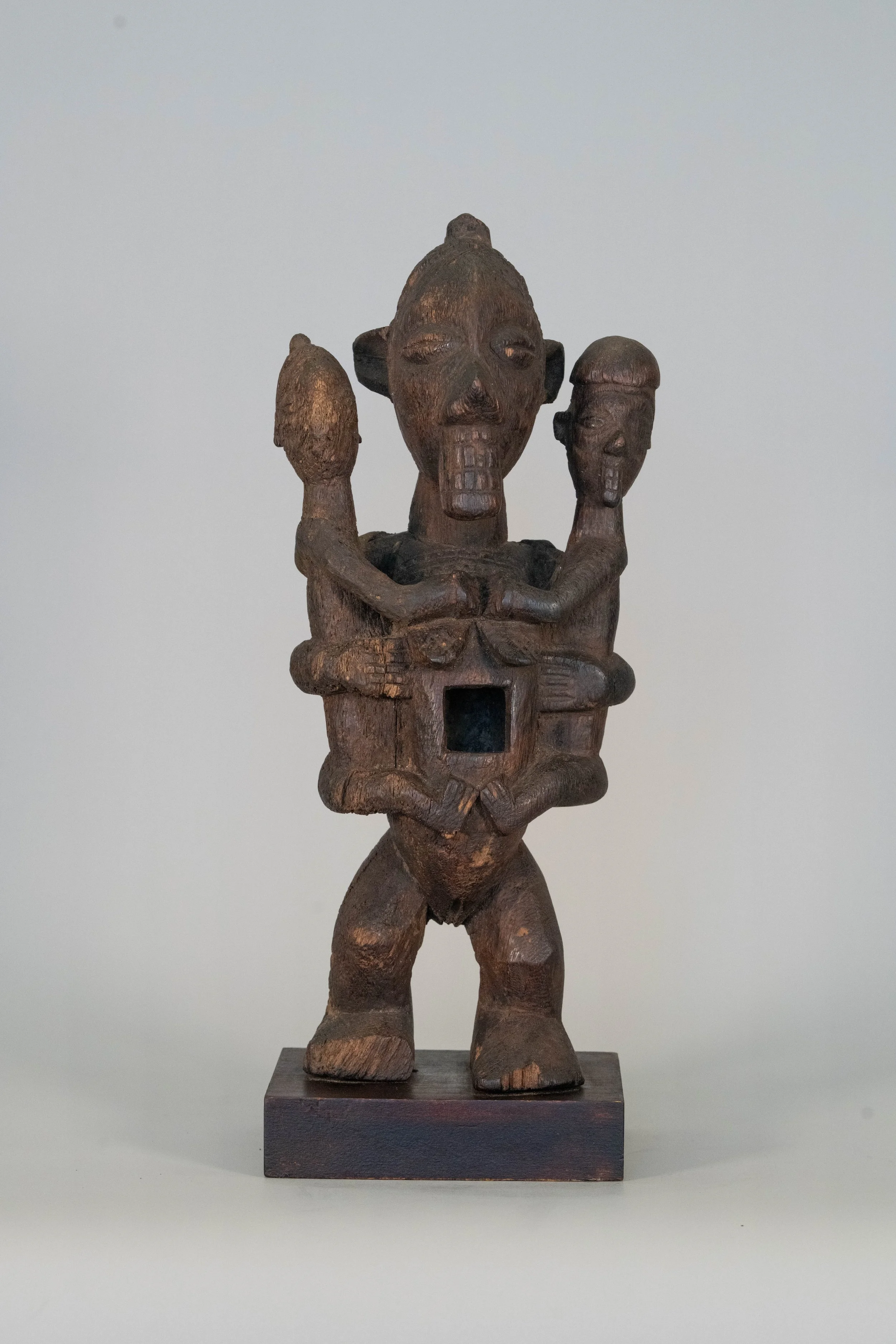
A female power (Nkisi) figure, attributed to the Yaka or the closely related Suku/Holo carving tradition, was created to embody protection, authority, and spiritual “force” in solid form.
The figure commands attention immediately. A slight contrapposto stance, knees softly bent, gives it lifelike tension; the bold face—heavy-lidded eyes, forceful toothy mouth—broadcasts authority rather than prettiness. That was the point. In this tradition, power was meant to be visible.
The heart of the object is the square abdominal cavity, once packed with bilongo—charged materials prepared by a ritual specialist to activate the figure's protective force. The evidence is written in the wood: the cavity interior is deeply oxidized, and the rim is worn smooth from repeated handling, opening, and renewal. That kind of focused, purposeful wear is exactly what serious collectors look for, because it cannot be convincingly faked on a later decorative carving.
Two smaller attendant figures cling to the body, reinforcing the piece's meaning: this is not a portrait but a sculptural argument about guardianship, lineage, and spiritual command—a central female presence who contains, protects, and presides. The dense hardwood, honest high-point wear, and strong old patina all support an early–mid 20th-century date and a life that began in ritual use rather than the souvenir trade.
For a new collector, pieces like this are the ones that turn curiosity into obsession: sculpturally dramatic, culturally coherent, and materially true—with the physical fingerprints of original purpose still intact.
Custom base included.
Condition: Strong old patina and wear consistent with use; medicine cavity now empty.
Dimensions: Overall with base 16 × 6 × 4.5 inches; Figure only 14.5 × 6 × 4 inches (H x W x D)
A female power (Nkisi) figure, attributed to the Yaka or the closely related Suku/Holo carving tradition, was created to embody protection, authority, and spiritual “force” in solid form.
The figure commands attention immediately. A slight contrapposto stance, knees softly bent, gives it lifelike tension; the bold face—heavy-lidded eyes, forceful toothy mouth—broadcasts authority rather than prettiness. That was the point. In this tradition, power was meant to be visible.
The heart of the object is the square abdominal cavity, once packed with bilongo—charged materials prepared by a ritual specialist to activate the figure's protective force. The evidence is written in the wood: the cavity interior is deeply oxidized, and the rim is worn smooth from repeated handling, opening, and renewal. That kind of focused, purposeful wear is exactly what serious collectors look for, because it cannot be convincingly faked on a later decorative carving.
Two smaller attendant figures cling to the body, reinforcing the piece's meaning: this is not a portrait but a sculptural argument about guardianship, lineage, and spiritual command—a central female presence who contains, protects, and presides. The dense hardwood, honest high-point wear, and strong old patina all support an early–mid 20th-century date and a life that began in ritual use rather than the souvenir trade.
For a new collector, pieces like this are the ones that turn curiosity into obsession: sculpturally dramatic, culturally coherent, and materially true—with the physical fingerprints of original purpose still intact.
Custom base included.
Condition: Strong old patina and wear consistent with use; medicine cavity now empty.
Dimensions: Overall with base 16 × 6 × 4.5 inches; Figure only 14.5 × 6 × 4 inches (H x W x D)