 Image 1 of 4
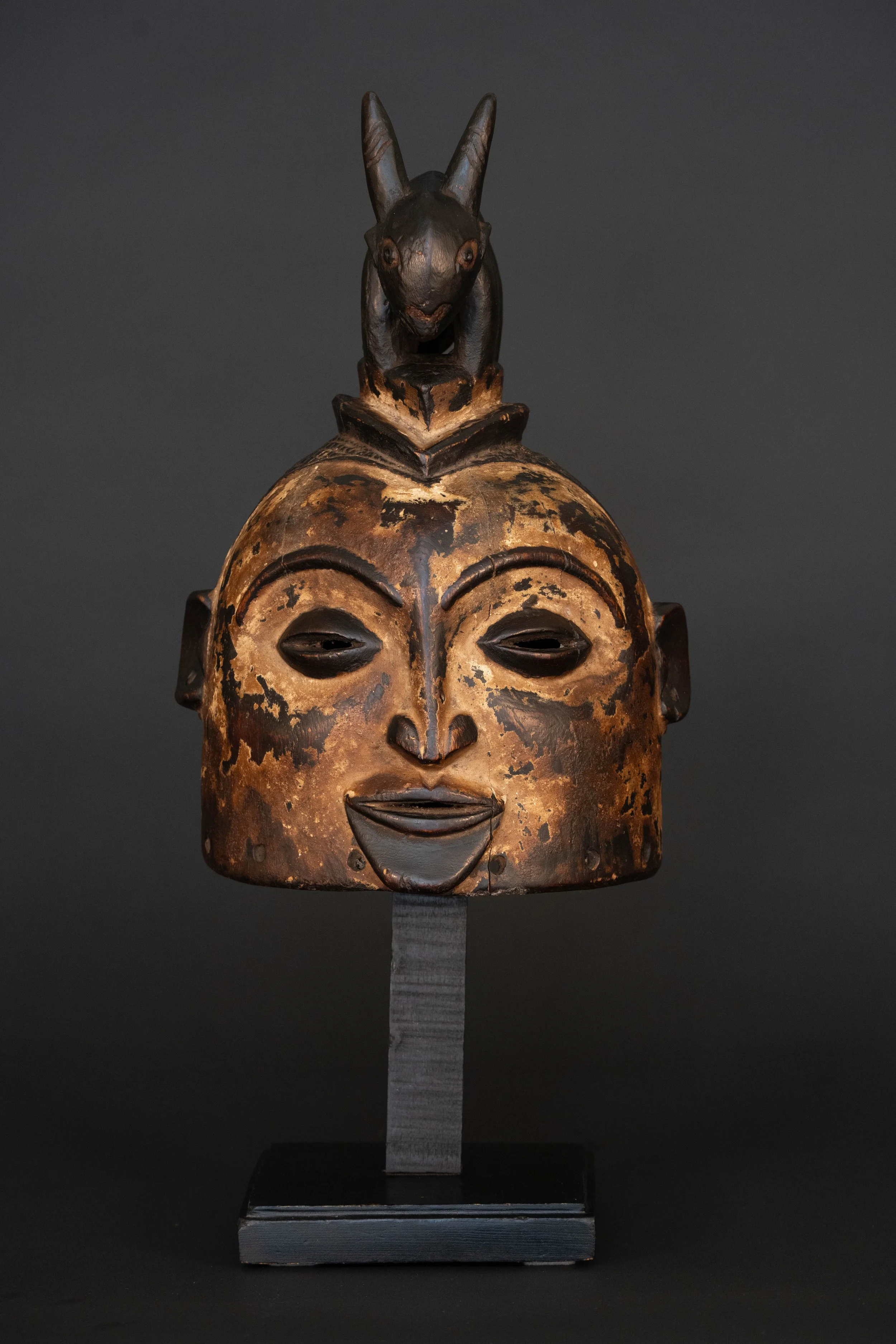 Image 2 of 4
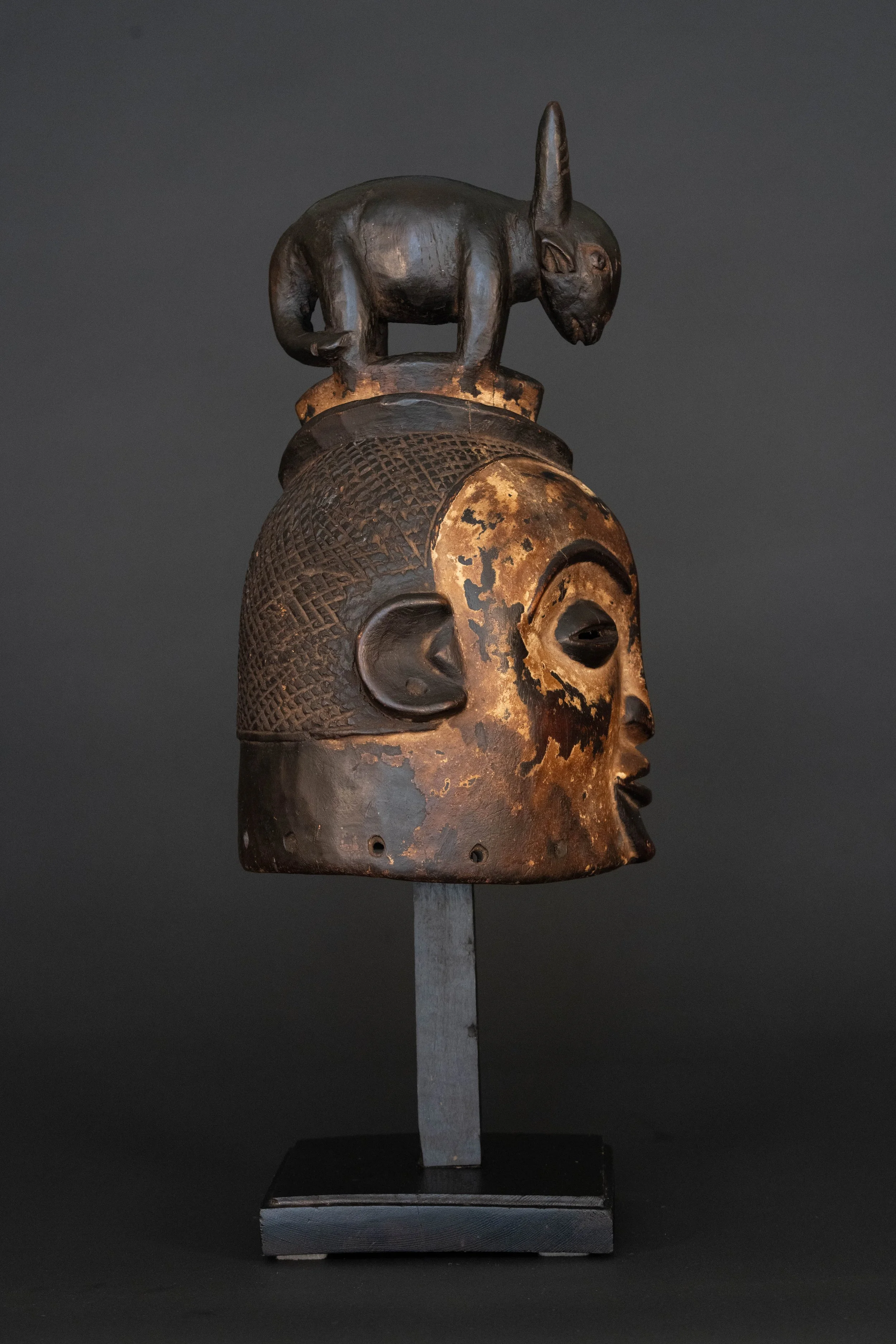 Image 3 of 4
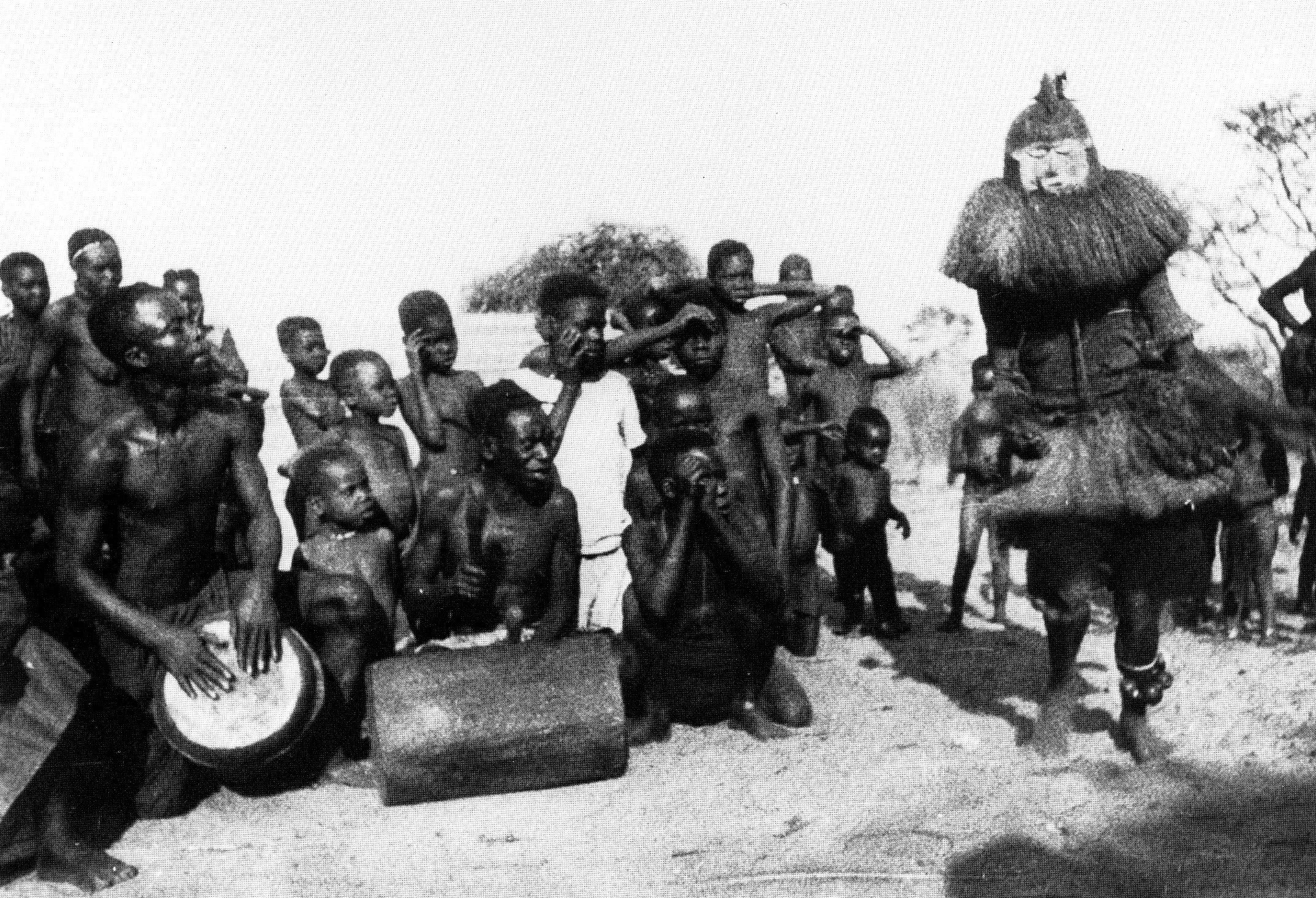 Image 4 of 4
Suku Helmet Mask with Animal Finial | Circa 1890–1930
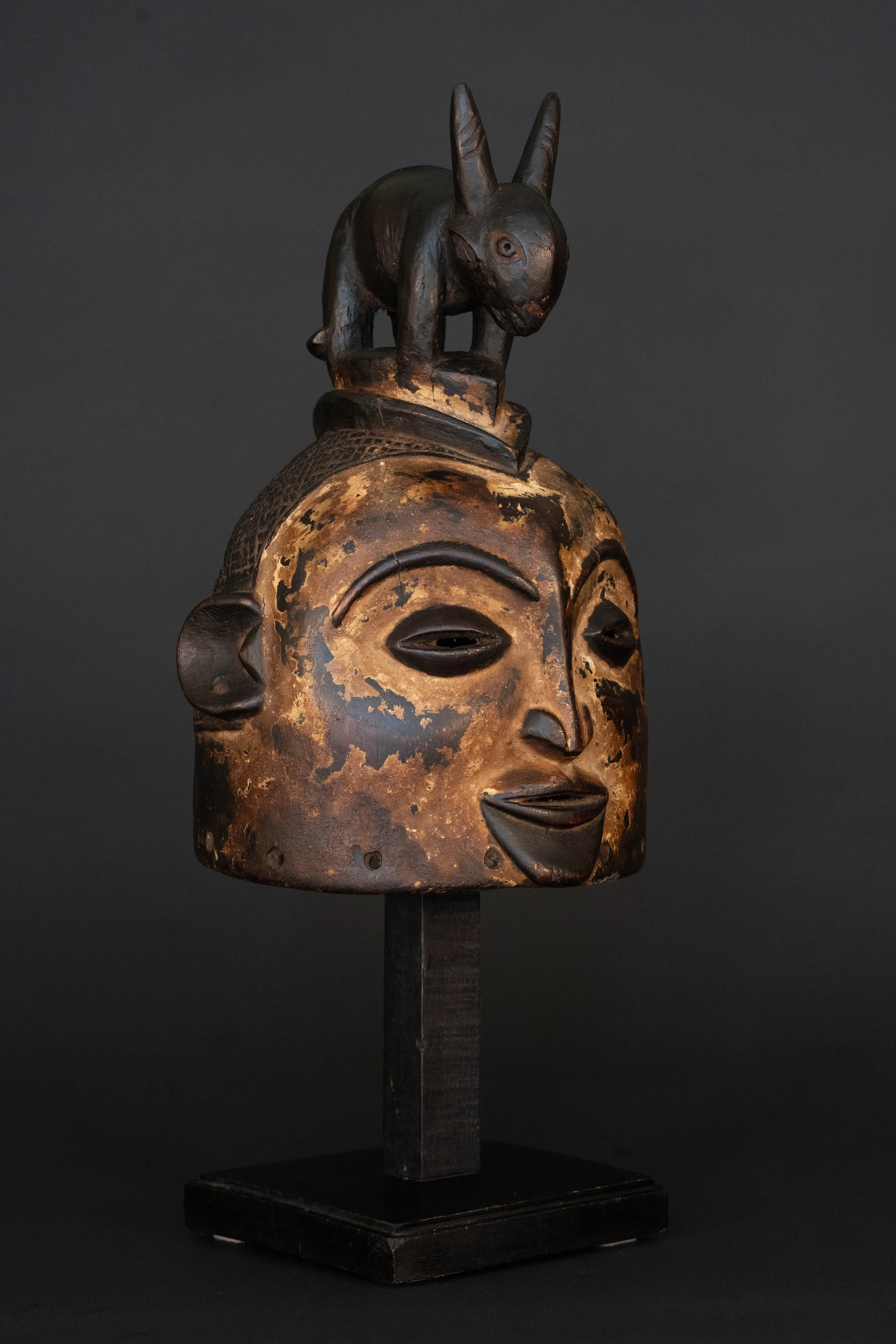
This mask was made to move — to dance, to embody a spirit, to transform a man into something beyond human. Carved by the Suku people of southwestern DRC, it was central to initiation ceremonies that taught young men the laws of community, social order, and spiritual life. When worn with a full-fiber costume, the dancer disappeared. The mask took over.
The rounded helmet form is calm and commanding — half-closed eyes, a composed expression, projecting control rather than frenzy. This is spiritual authority made visible. The thick lower rim, still pierced with original attachment holes, once anchored the raffia costume that completed the transformation. Those holes are evidence, not detail.
The crown is the piece's defining feature. An animal — likely a hare or antelope — crouches alert above the wearer's head. In Suku belief, these creatures embody intelligence, vigilance, and heightened perception. The placement is intentional: instinct and awareness seated at the apex of the mind. Sculpturally, it elevates this from a powerful ritual object to a commanding three-dimensional work. Intact animal finials are genuinely rare — most have been lost to time and handling.
The surface confirms what the form suggests: this mask lived. Patina shifts from warm brown to near-black. High points are worn smooth. Edges are softened. The oxidation is uneven and entirely natural.
For collectors new to African art, this is an ideal example of why these works are so compelling. It is bold, sculptural, and visually impactful even in a modern interior. For seasoned collectors, it checks the important boxes: authentic age (circa 1890–1930), strong carving, original animal crest, honest wear, and no obvious modern intervention.
Pieces like this don't decorate a room — they anchor it. Includes a custom wood stand.
Condition: Good. Old repairs on the crown.
Dimensions: Overall Height with stand 22 inches; Mask only 14.5 × 9.5 × 9 inches (H x W x D)
For context, a closely related Suku Hemba Helmet Mask is on view online at the Brooklyn Museum. https://www.brooklynmuseum.org/objects/112680
Suku Helmet Mask with Animal Finial | Circa 1890–1930
This mask was made to move — to dance, to embody a spirit, to transform a man into something beyond human. Carved by the Suku people of southwestern DRC, it was central to initiation ceremonies that taught young men the laws of community, social order, and spiritual life. When worn with a full-fiber costume, the dancer disappeared. The mask took over.
The rounded helmet form is calm and commanding — half-closed eyes, a composed expression, projecting control rather than frenzy. This is spiritual authority made visible. The thick lower rim, still pierced with original attachment holes, once anchored the raffia costume that completed the transformation. Those holes are evidence, not detail.
The crown is the piece's defining feature. An animal — likely a hare or antelope — crouches alert above the wearer's head. In Suku belief, these creatures embody intelligence, vigilance, and heightened perception. The placement is intentional: instinct and awareness seated at the apex of the mind. Sculpturally, it elevates this from a powerful ritual object to a commanding three-dimensional work. Intact animal finials are genuinely rare — most have been lost to time and handling.
The surface confirms what the form suggests: this mask lived. Patina shifts from warm brown to near-black. High points are worn smooth. Edges are softened. The oxidation is uneven and entirely natural.
For collectors new to African art, this is an ideal example of why these works are so compelling. It is bold, sculptural, and visually impactful even in a modern interior. For seasoned collectors, it checks the important boxes: authentic age (circa 1890–1930), strong carving, original animal crest, honest wear, and no obvious modern intervention.
Pieces like this don't decorate a room — they anchor it. Includes a custom wood stand.
Condition: Good. Old repairs on the crown.
Dimensions: Overall Height with stand 22 inches; Mask only 14.5 × 9.5 × 9 inches (H x W x D)
For context, a closely related Suku Hemba Helmet Mask is on view online at the Brooklyn Museum. https://www.brooklynmuseum.org/objects/112680