Wood, glass beads, fiber, metal arm ring / Early to mid-20th century
In Songye society, an nkishi was not a passive object. Activated by a ritual specialist and loaded with medicine, these figures functioned as protective agents — deployed against illness, misfortune, and unseen threats to the community. This compact, well-carved example retains an unusual amount of its original material presence.
The horn projection rising from the crown is the figure's most immediate signal of ritual charge. Around the neck are old glass trade beads; braided fiber cords, darkened with age and oxidation, wrap the torso and waist; a non-magnetic metal ring remains in place on the right arm. Perhaps most telling is an indigenous copper repair plate on the back of the head — evidence that the figure was mended and kept in use rather than replaced. Field repairs of this kind are among the more reliable indicators of genuine ritual life.
The carving is confident and well-proportioned: dense hardwood, a large head, bent arms, and a pronounced abdomen that gives the figure a sense of contained weight. Three integrated spherical elements form the face, masterfully absorbed into the composition and giving the head a striking, mask-like intensity. The surface carries a deep aged patina — polished high points, darker recesses — consistent with long handling. There is some age-related loss and erosion of the lower base, which appears to be honest wear.
For context, a closely related Songye Power Figure (Nkishi) is on view online at the Smithsonian https://www.si.edu/object/male-figure:nmafa_84-12-1 and the Metropolitan Museum of Art. https://www.metmuseum.org/art/collection/search/311108
Condition: Good.
Dimensions: Overall 19.5 × 5.25 × 4.25 inches; Figure only 16 × 4 × 3.5 inches (H x D x W)
Wood, glass beads, fiber, metal arm ring / Early to mid-20th century
In Songye society, an nkishi was not a passive object. Activated by a ritual specialist and loaded with medicine, these figures functioned as protective agents — deployed against illness, misfortune, and unseen threats to the community. This compact, well-carved example retains an unusual amount of its original material presence.
The horn projection rising from the crown is the figure's most immediate signal of ritual charge. Around the neck are old glass trade beads; braided fiber cords, darkened with age and oxidation, wrap the torso and waist; a non-magnetic metal ring remains in place on the right arm. Perhaps most telling is an indigenous copper repair plate on the back of the head — evidence that the figure was mended and kept in use rather than replaced. Field repairs of this kind are among the more reliable indicators of genuine ritual life.
The carving is confident and well-proportioned: dense hardwood, a large head, bent arms, and a pronounced abdomen that gives the figure a sense of contained weight. Three integrated spherical elements form the face, masterfully absorbed into the composition and giving the head a striking, mask-like intensity. The surface carries a deep aged patina — polished high points, darker recesses — consistent with long handling. There is some age-related loss and erosion of the lower base, which appears to be honest wear.
For context, a closely related Songye Power Figure (Nkishi) is on view online at the Smithsonian https://www.si.edu/object/male-figure:nmafa_84-12-1 and the Metropolitan Museum of Art. https://www.metmuseum.org/art/collection/search/311108
Condition: Good.
Dimensions: Overall 19.5 × 5.25 × 4.25 inches; Figure only 16 × 4 × 3.5 inches (H x D x W)
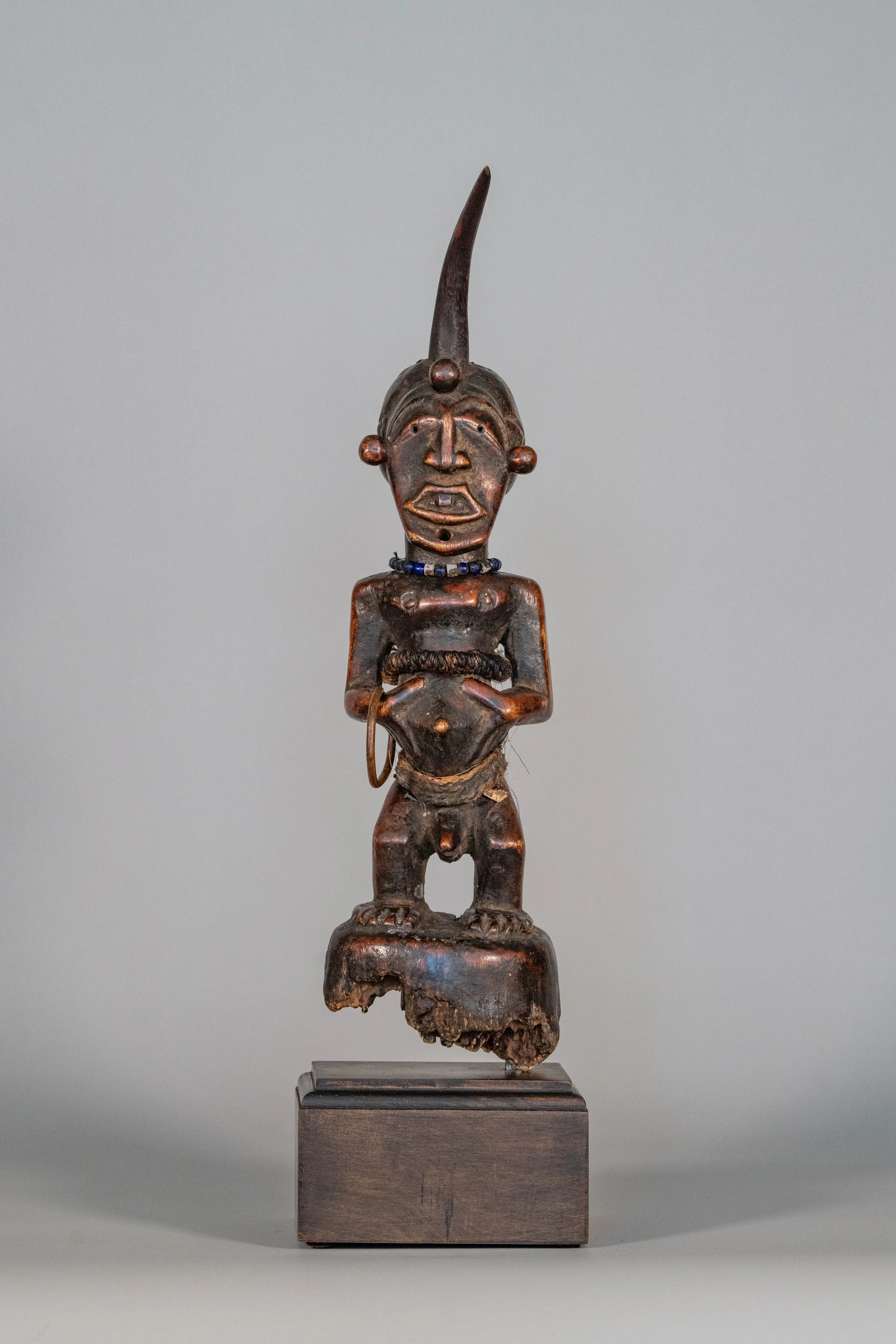 Image 1 of 6
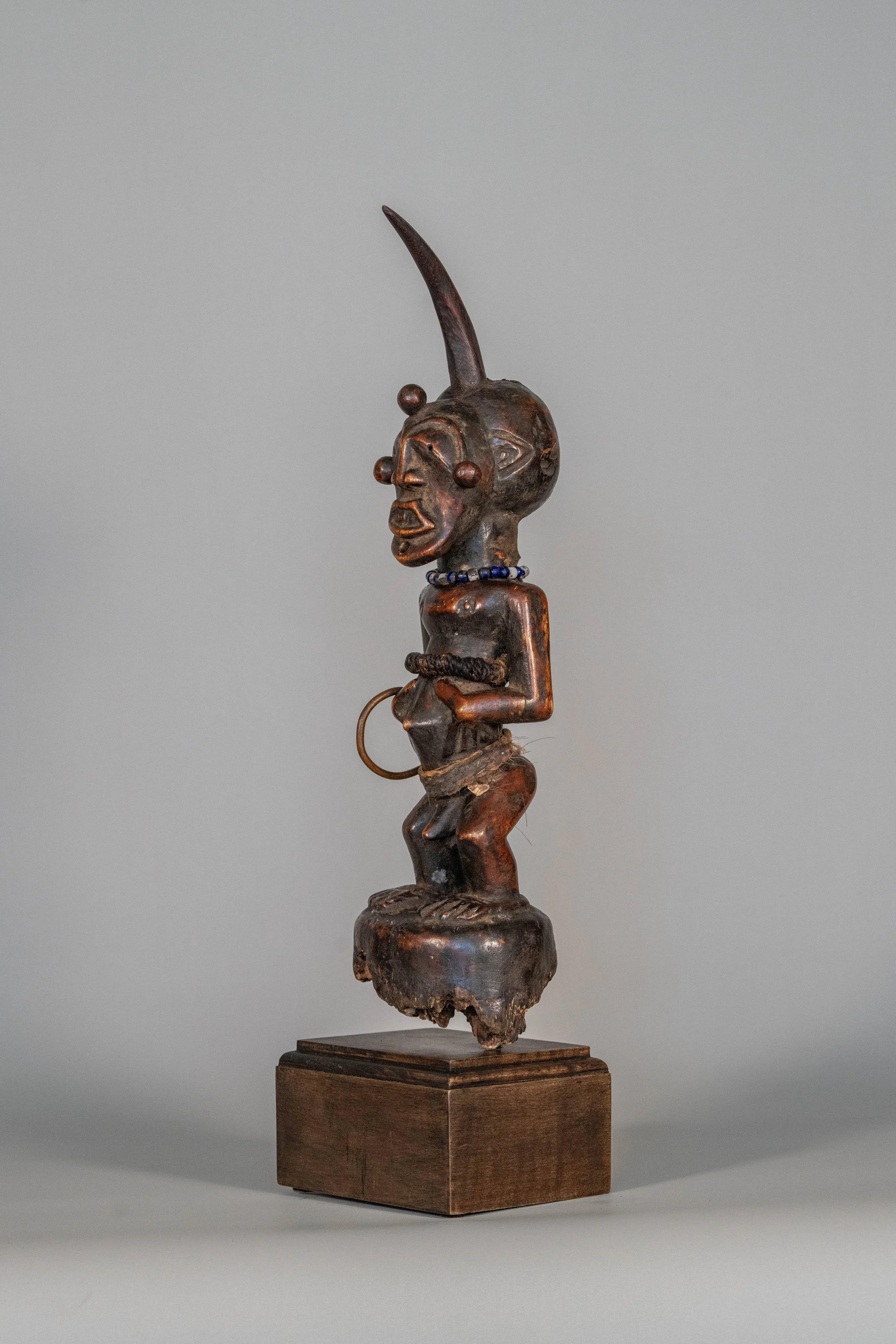 Image 2 of 6
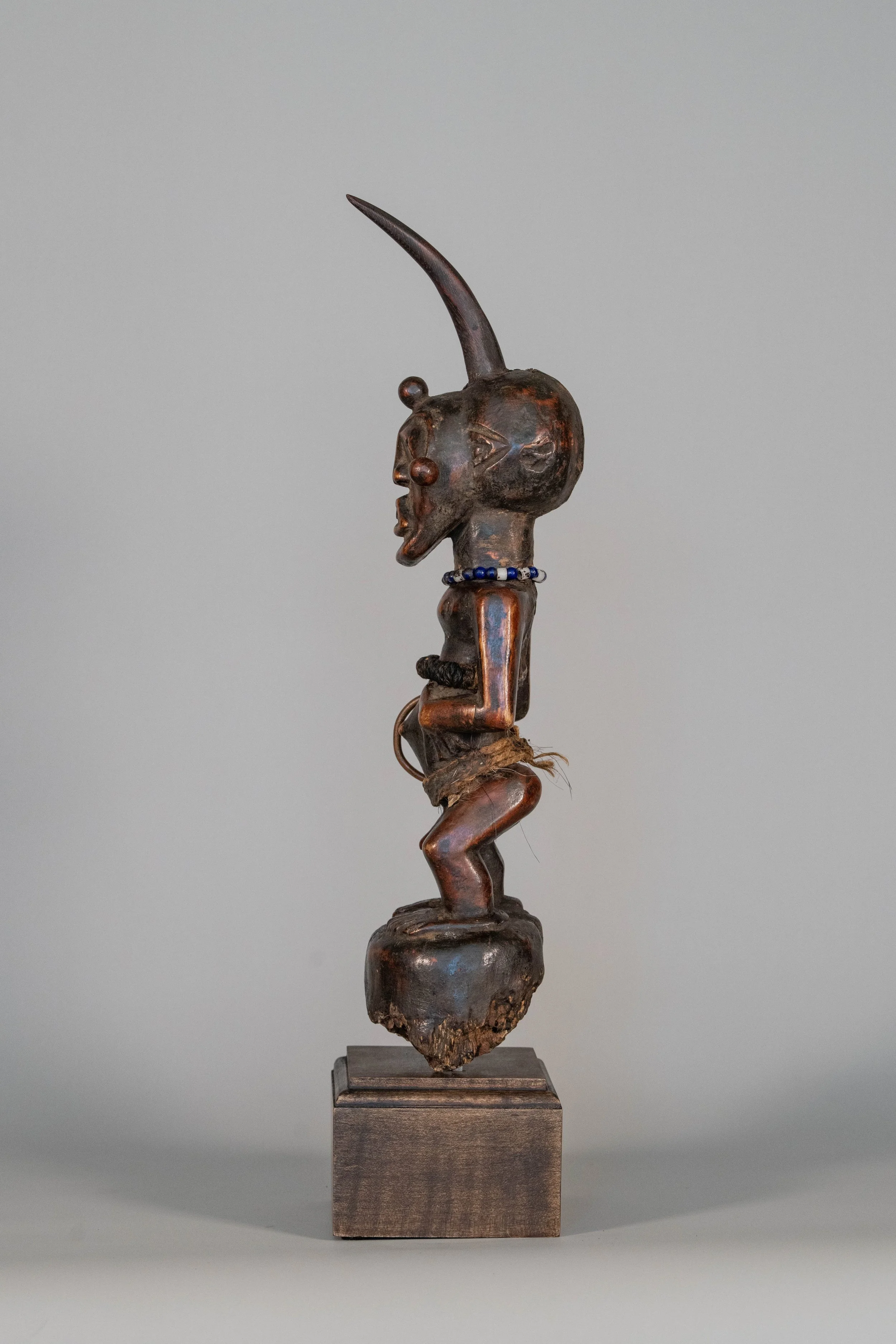 Image 3 of 6
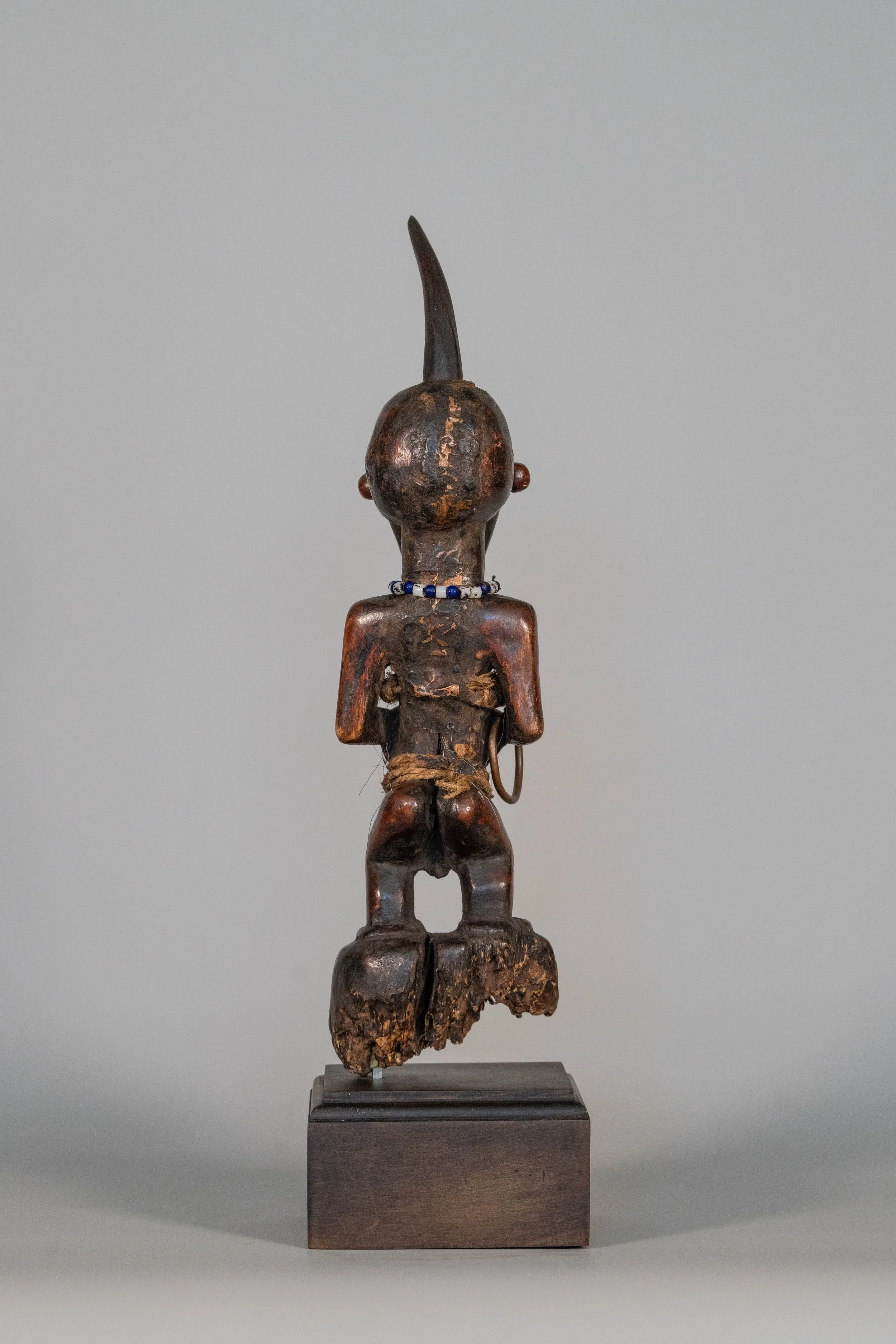 Image 4 of 6
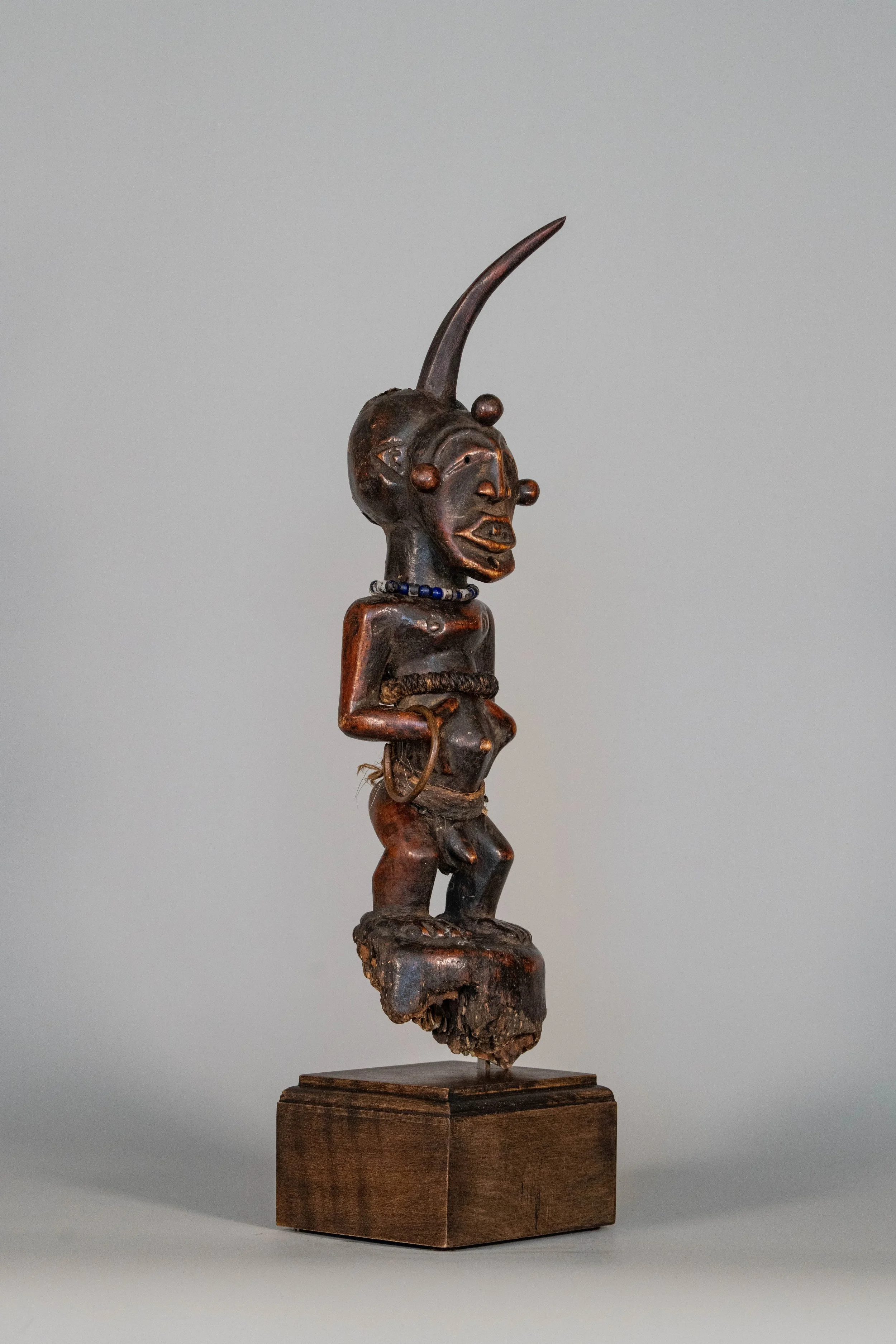 Image 5 of 6
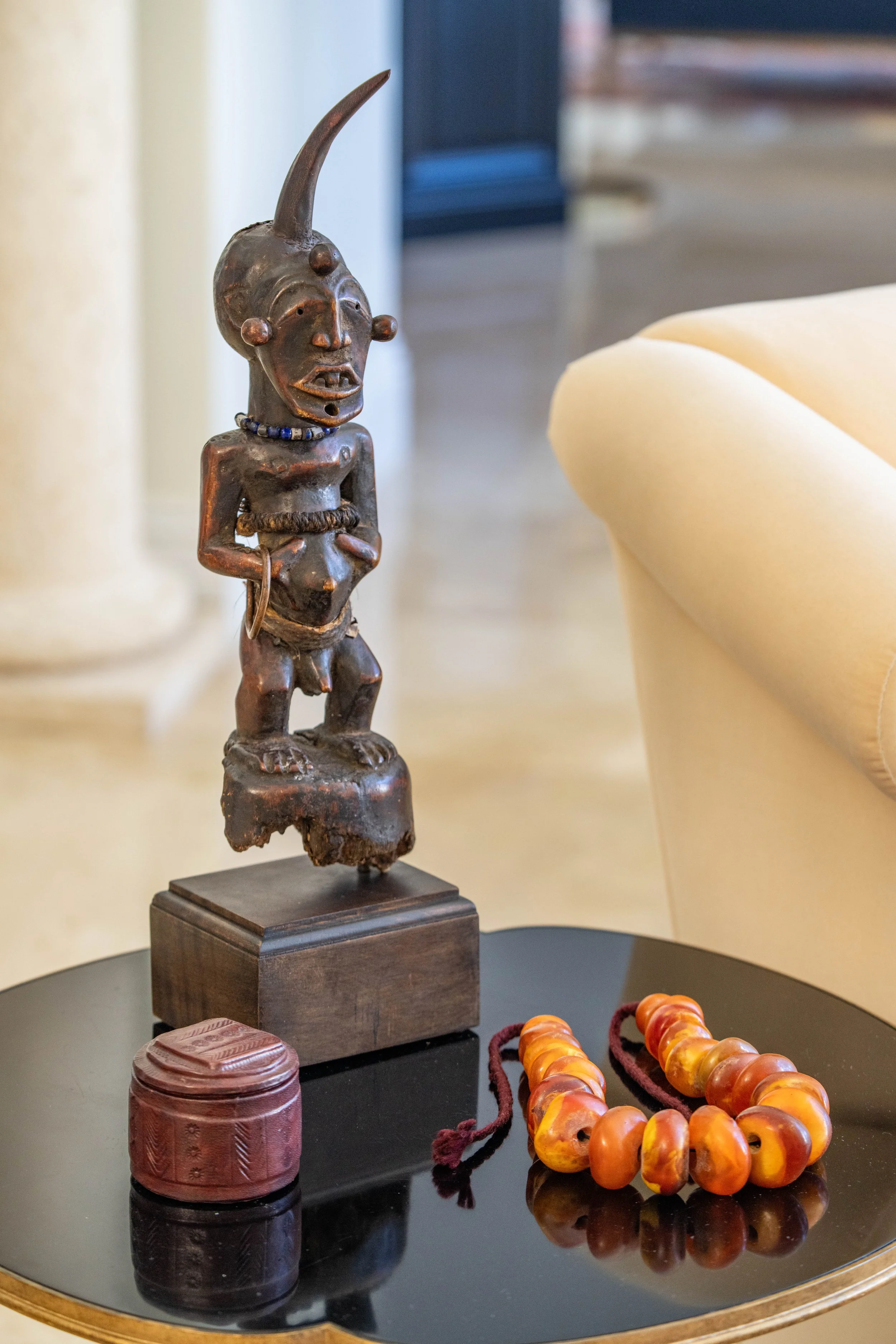 Image 6 of 6