 Image 1 of 3
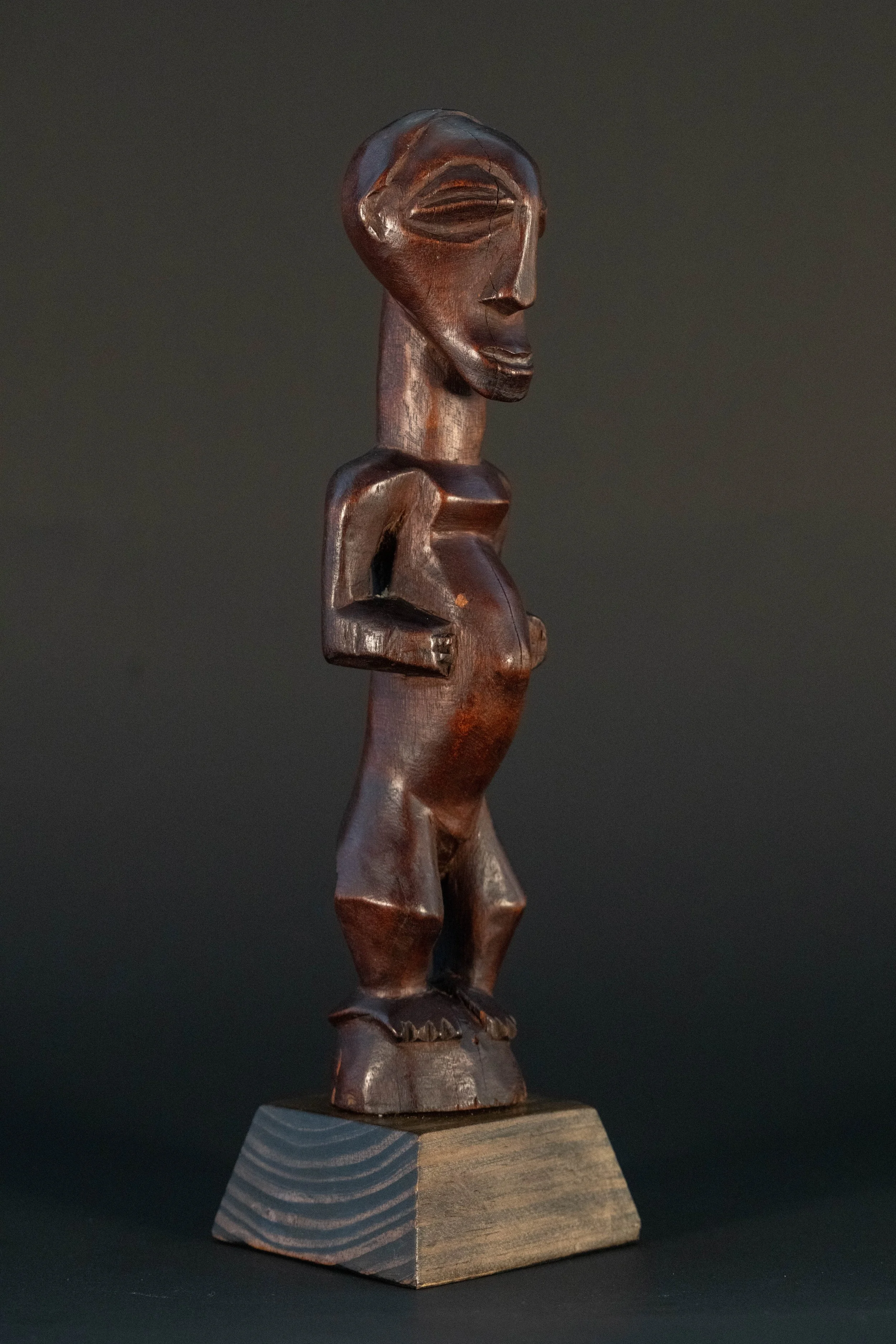 Image 2 of 3
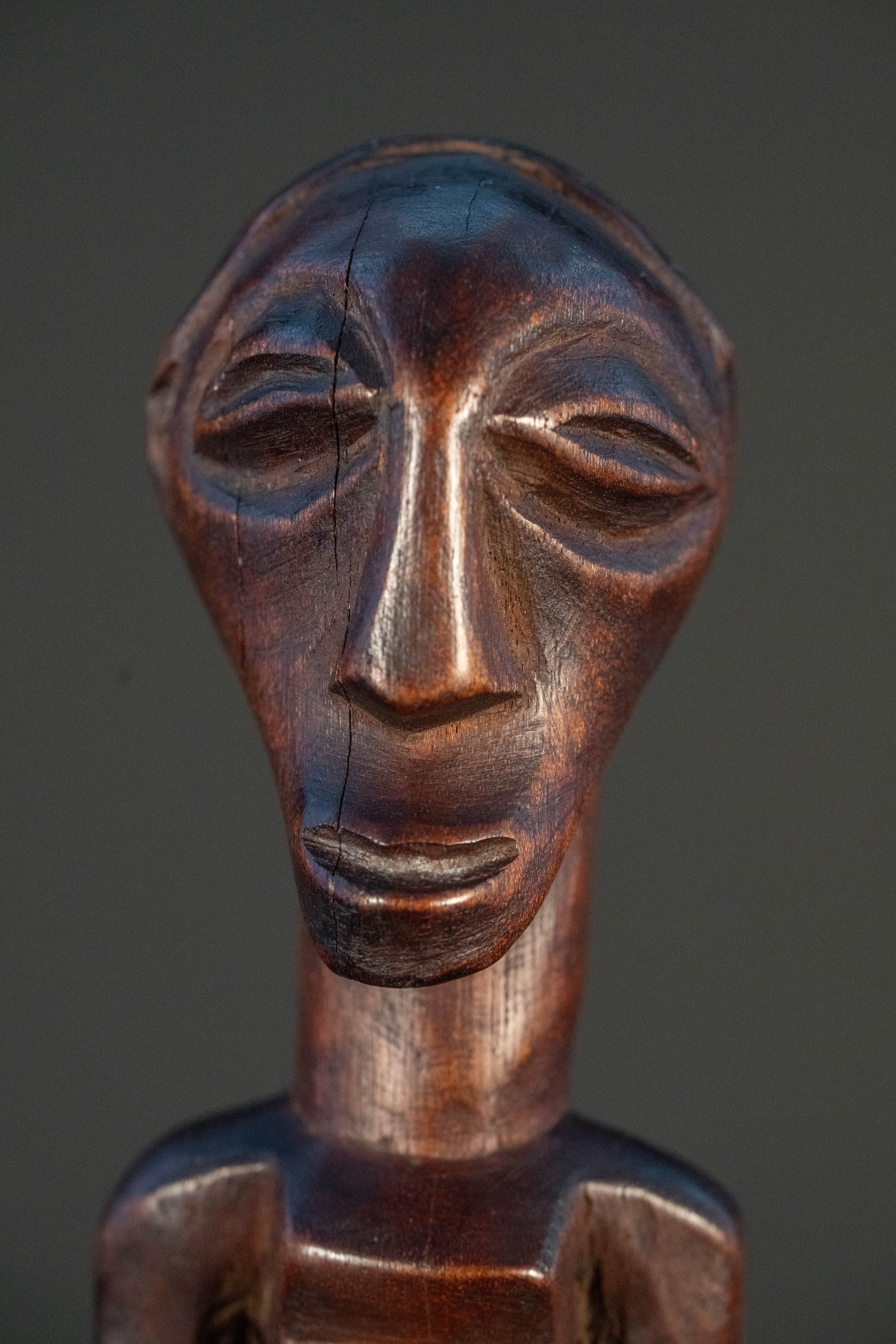 Image 3 of 3
Mid-20th Century
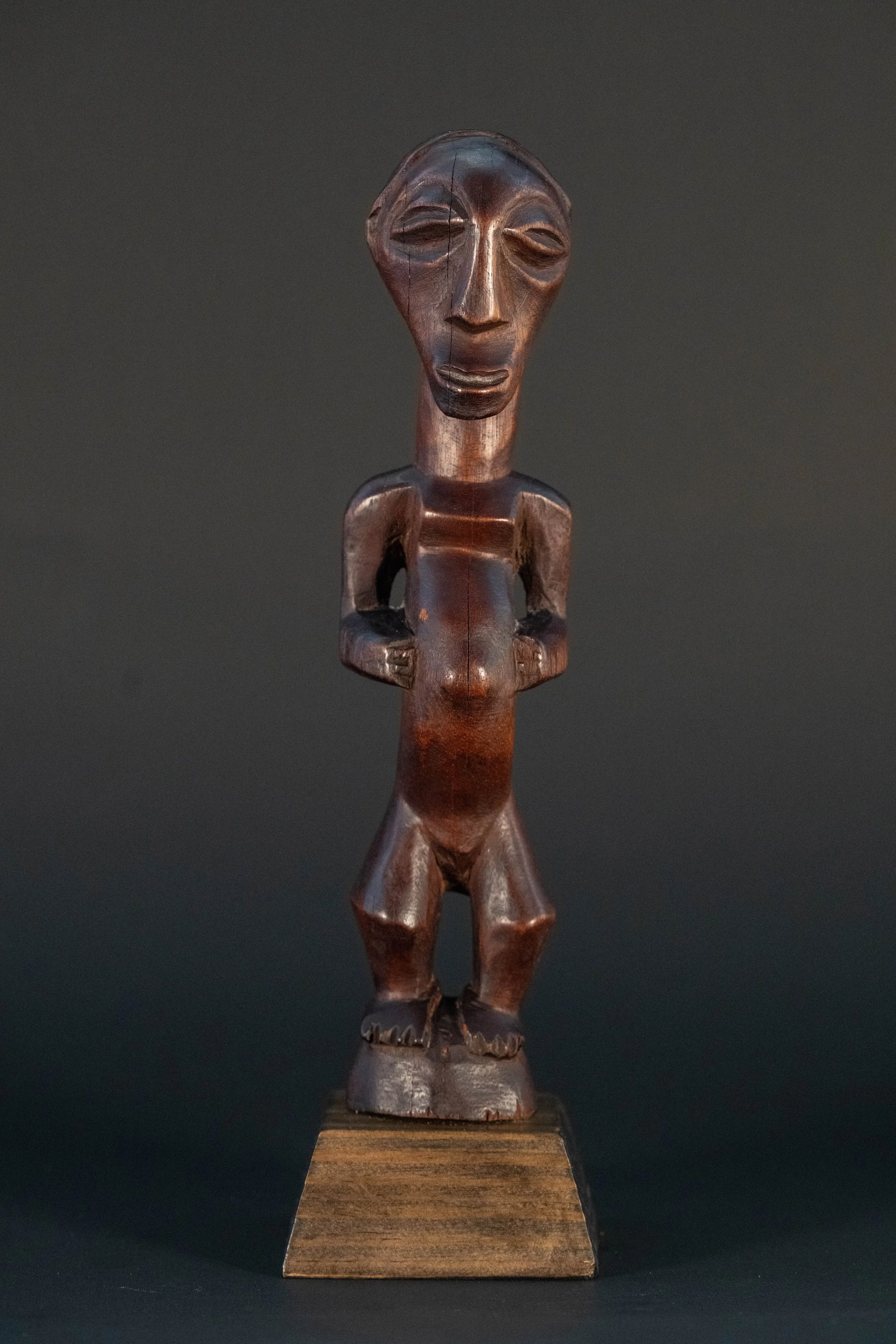
This small Songye nkishi rewards close attention. The elongated head, lowered eyelids, and hands held firmly at the abdomen are not arbitrary stylistic choices—they reflect a coherent formal language in which power is understood as inward, contained, and directed. Songye power figures were conceived as vessels for spiritual force, activated by ritual specialists and deployed for protection or communal benefit.
The carving is confident and economical. The long architectural nose, strong cheek planes, compact torso, and grounded stance all work in proportion, giving the figure a sculptural clarity that reads well even at modest scale. This directness of form is part of what drew early 20th-century European modernists to Central African sculpture—the sense that reduction and abstraction were being used with clear intent.
The surface has aged well. A deep, dry brown patina covers the figure, with gentle polish on the nose, chest, and thighs from handling. Tool marks remain visible beneath, consistent with hand carving. A stable vertical crack runs through the head and down through the body—typical of older, solid-carved figures and not structurally concerning. It reads as evidence of age rather than damage. The absence of added ritual materials is common in figures that have passed out of active use.
A coherent, honest example of the tradition—well-proportioned, with a believable surface and no signs of artificial enhancement.
Condition: Good. Stable vertical crack through head, belly, and back.
Dimensions: Overall with base: 11.5 × 3.25 × 3.25 in. Figure only: 10.25 × 2.25 × 2.25 in. (H x D x W)
Mid-20th Century
This small Songye nkishi rewards close attention. The elongated head, lowered eyelids, and hands held firmly at the abdomen are not arbitrary stylistic choices—they reflect a coherent formal language in which power is understood as inward, contained, and directed. Songye power figures were conceived as vessels for spiritual force, activated by ritual specialists and deployed for protection or communal benefit.
The carving is confident and economical. The long architectural nose, strong cheek planes, compact torso, and grounded stance all work in proportion, giving the figure a sculptural clarity that reads well even at modest scale. This directness of form is part of what drew early 20th-century European modernists to Central African sculpture—the sense that reduction and abstraction were being used with clear intent.
The surface has aged well. A deep, dry brown patina covers the figure, with gentle polish on the nose, chest, and thighs from handling. Tool marks remain visible beneath, consistent with hand carving. A stable vertical crack runs through the head and down through the body—typical of older, solid-carved figures and not structurally concerning. It reads as evidence of age rather than damage. The absence of added ritual materials is common in figures that have passed out of active use.
A coherent, honest example of the tradition—well-proportioned, with a believable surface and no signs of artificial enhancement.
Condition: Good. Stable vertical crack through head, belly, and back.
Dimensions: Overall with base: 11.5 × 3.25 × 3.25 in. Figure only: 10.25 × 2.25 × 2.25 in. (H x D x W)