 Image 1 of 5
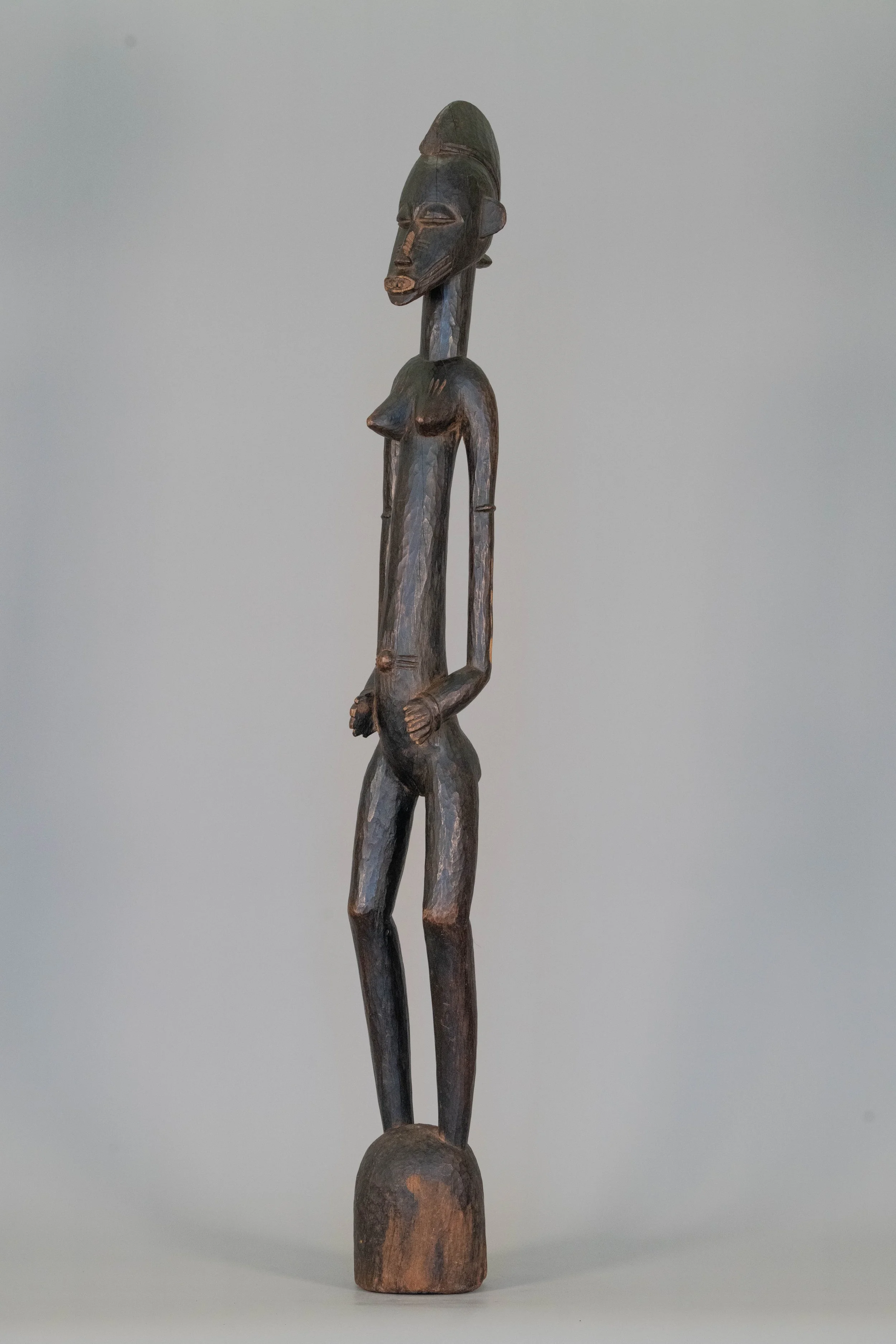 Image 2 of 5
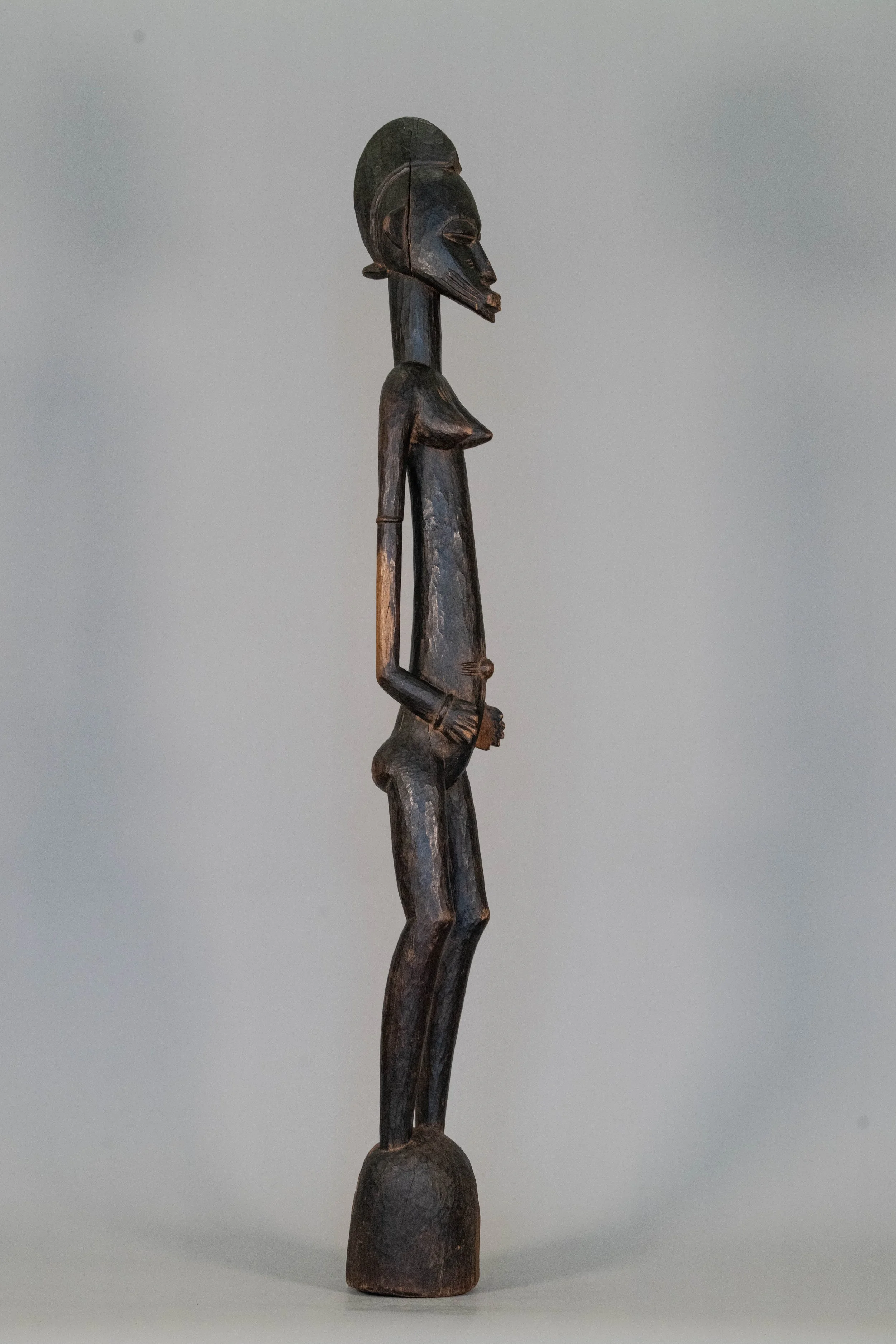 Image 3 of 5
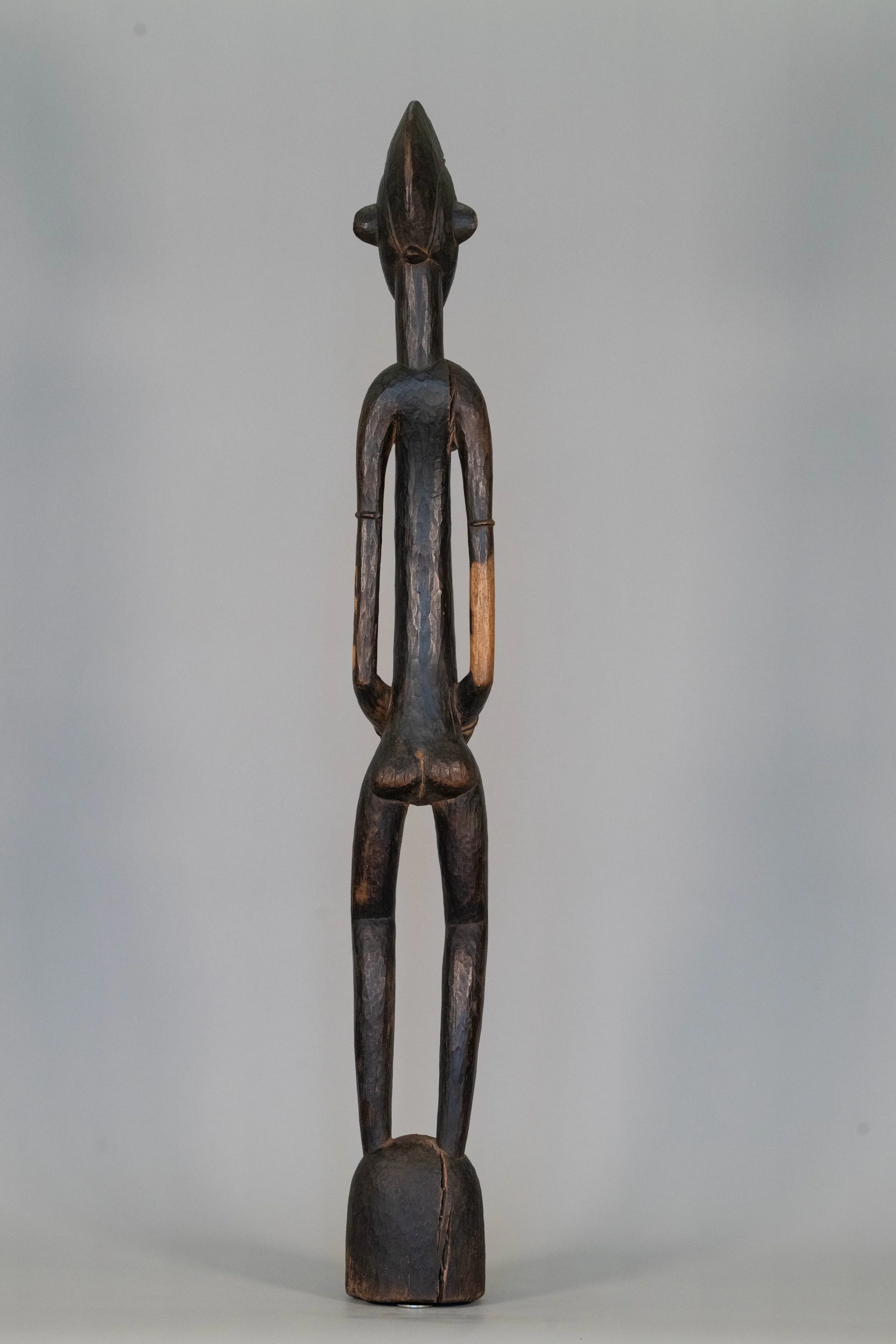 Image 4 of 5
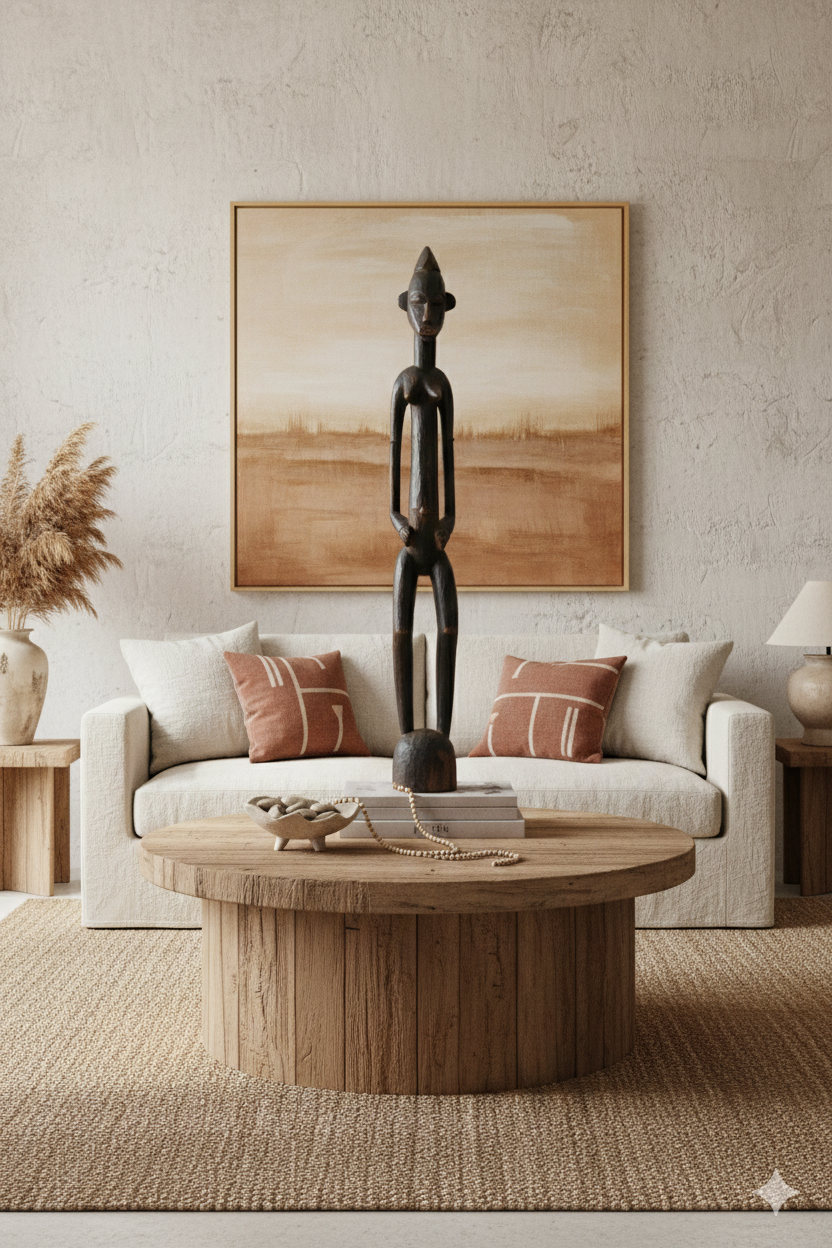 Image 5 of 5
Earlier Mid-20th Century, c. 1935–1965
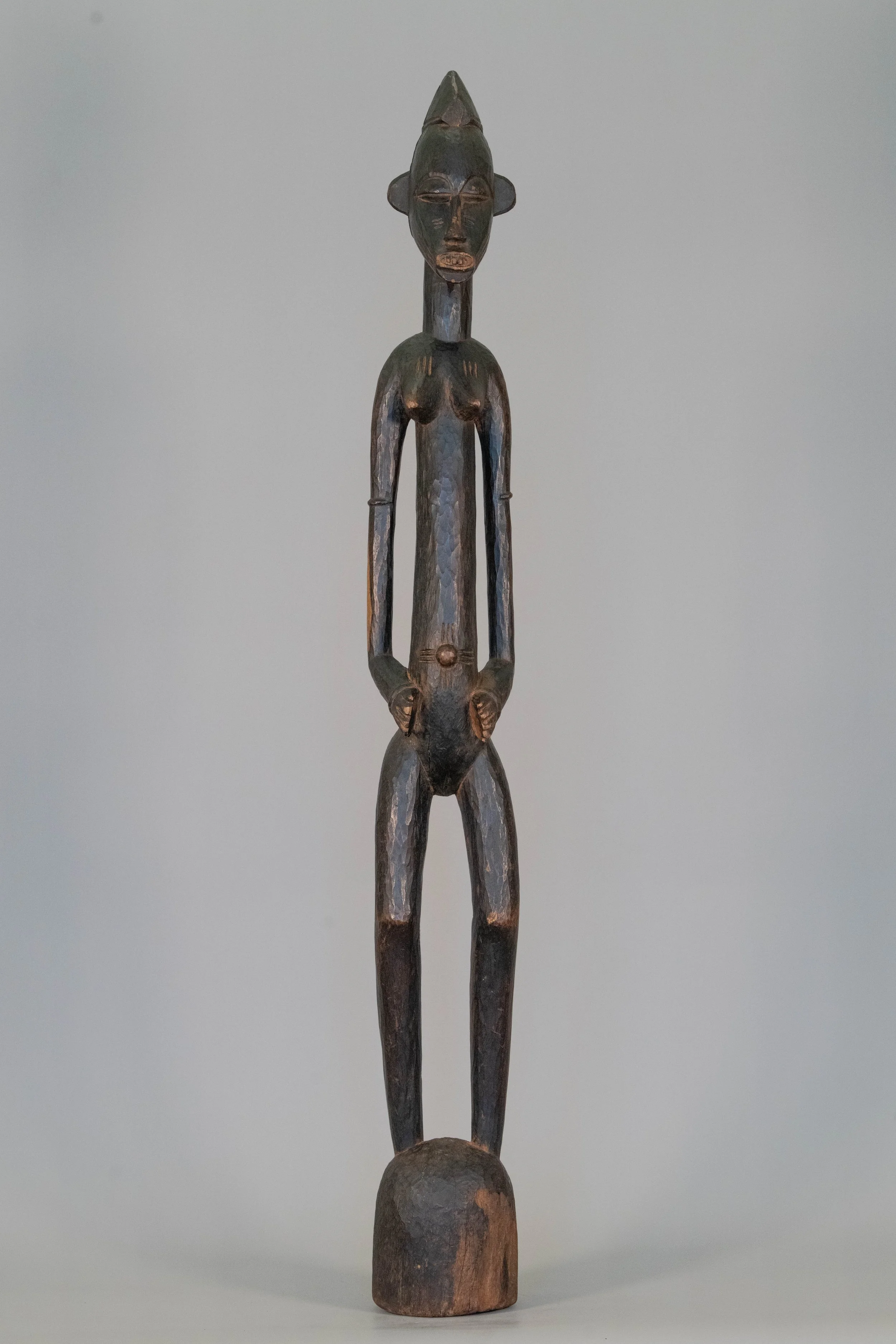
At 34 inches, this is a substantial example of the Senufo deble, or rhythm pounder—a figure type used in initiations, harvest celebrations, and funerary gatherings, where pairs of figures are struck rhythmically against the earth. The act is both practical and ceremonial, and the figures themselves embody the themes at the center of Senufo life: nourishment, continuity, and the dignity of women's labor.
The carving is confident and well-resolved. A calm forward gaze, an elongated neck and torso, and a bold, crested coiffure give the figure a composed, architectural silhouette. The legs flow directly into the base without differentiated feet—a deliberate formal choice that unifies the body into a single column and reinforces the figure's grounded, percussive function.
The surface is convincing throughout. The wood is dense and heavy, the underside of the base deeply oxidized, and the protected recesses carry a dry, matte patina with real accumulation rather than applied finish. Wear appears where handling would produce it—the breasts, navel, and high-contact areas show natural smoothing, while deeper carvings retain a darker tone. A lighter band on one forearm follows the grain of the hardwood and sits within intact tool facets, indicating a natural variation rather than surface disturbance. An age crack in the base is stable.
Condition: Good. Abrasion on the left arm. Vertical crack on the right side of the head, right shoulder, and base. Arrested bug damage on the base.
Dimensions: 34 × 4 × 4 inches (H x D x W)
Earlier Mid-20th Century, c. 1935–1965
At 34 inches, this is a substantial example of the Senufo deble, or rhythm pounder—a figure type used in initiations, harvest celebrations, and funerary gatherings, where pairs of figures are struck rhythmically against the earth. The act is both practical and ceremonial, and the figures themselves embody the themes at the center of Senufo life: nourishment, continuity, and the dignity of women's labor.
The carving is confident and well-resolved. A calm forward gaze, an elongated neck and torso, and a bold, crested coiffure give the figure a composed, architectural silhouette. The legs flow directly into the base without differentiated feet—a deliberate formal choice that unifies the body into a single column and reinforces the figure's grounded, percussive function.
The surface is convincing throughout. The wood is dense and heavy, the underside of the base deeply oxidized, and the protected recesses carry a dry, matte patina with real accumulation rather than applied finish. Wear appears where handling would produce it—the breasts, navel, and high-contact areas show natural smoothing, while deeper carvings retain a darker tone. A lighter band on one forearm follows the grain of the hardwood and sits within intact tool facets, indicating a natural variation rather than surface disturbance. An age crack in the base is stable.
Condition: Good. Abrasion on the left arm. Vertical crack on the right side of the head, right shoulder, and base. Arrested bug damage on the base.
Dimensions: 34 × 4 × 4 inches (H x D x W)