 Image 1 of 5
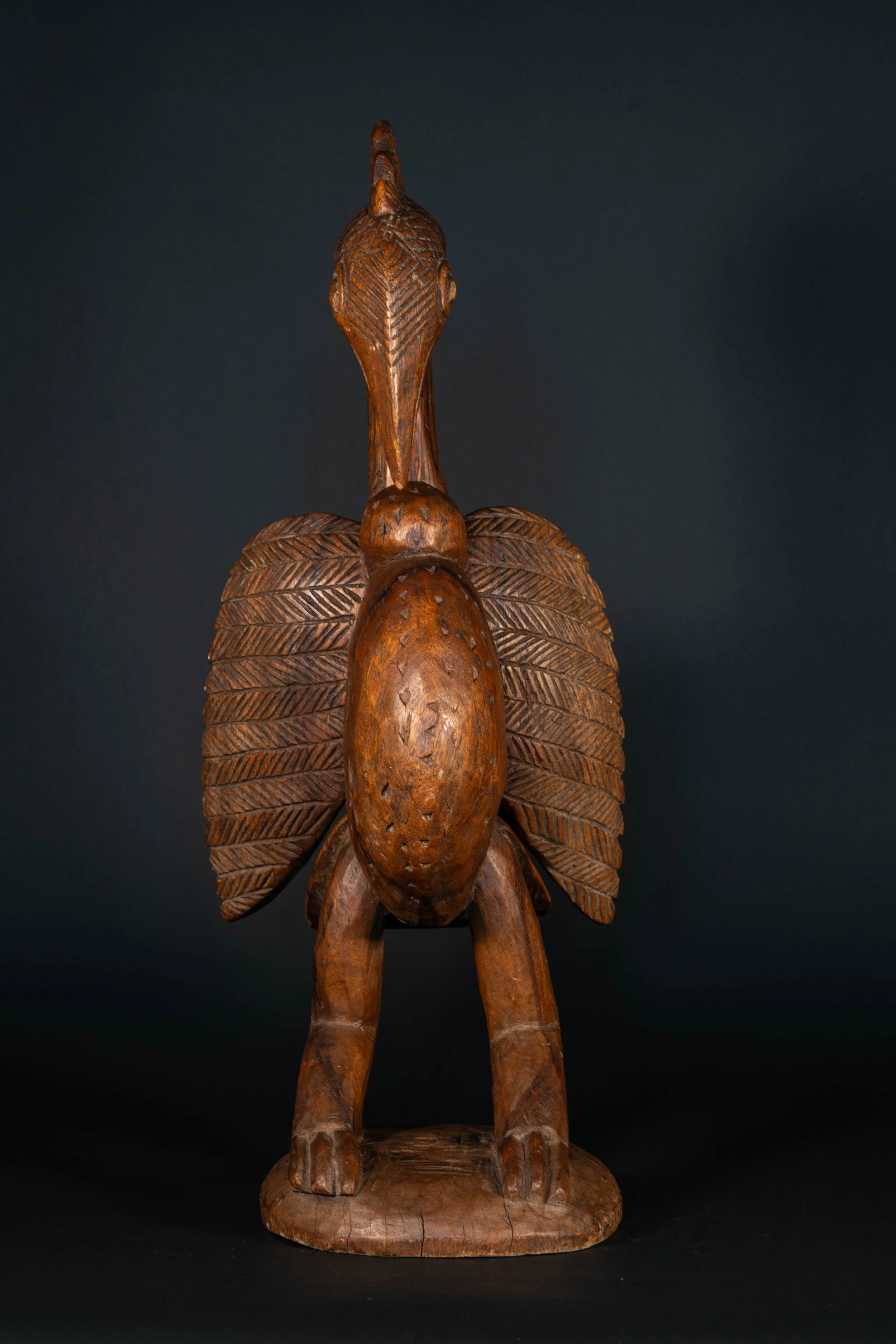 Image 2 of 5
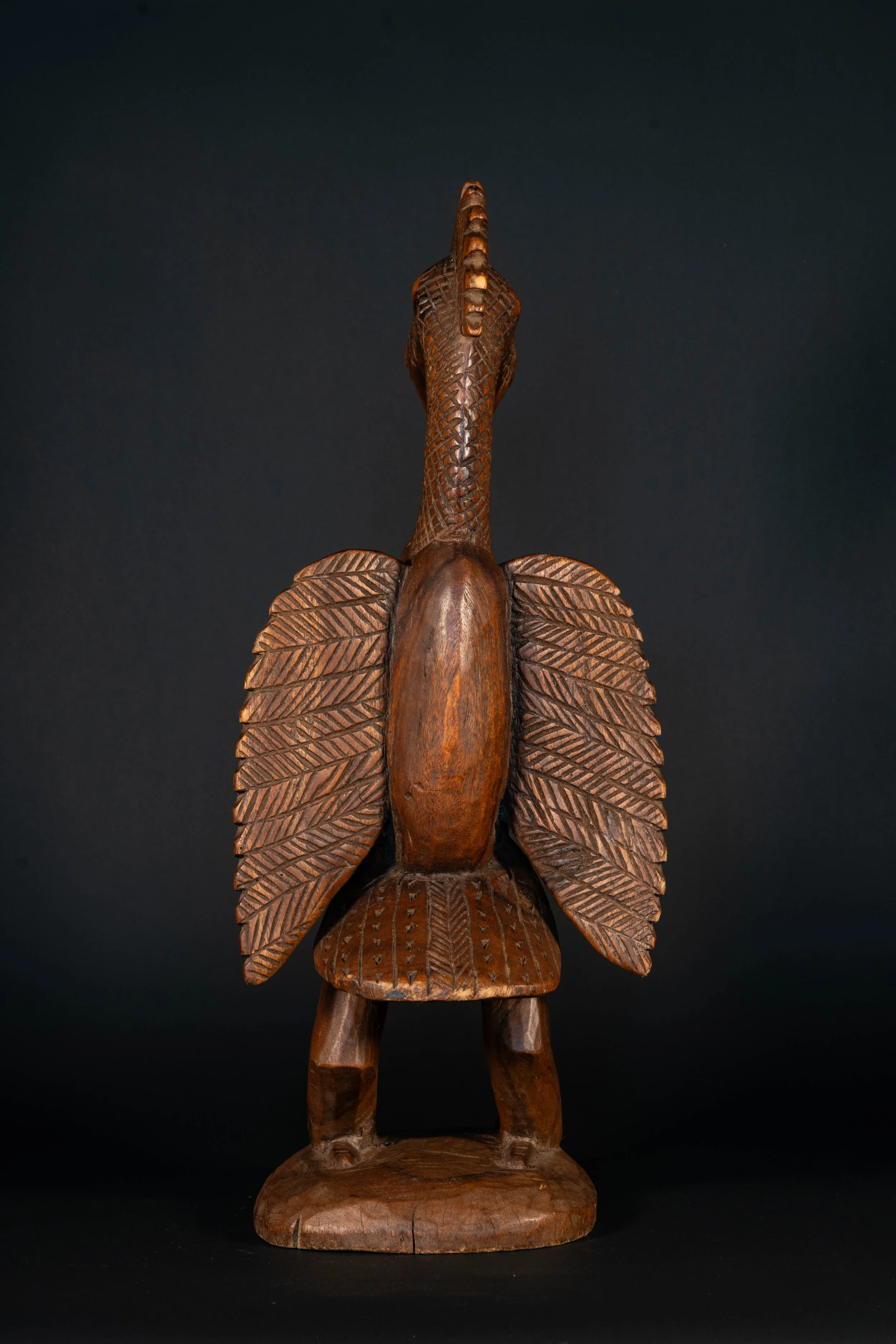 Image 3 of 5
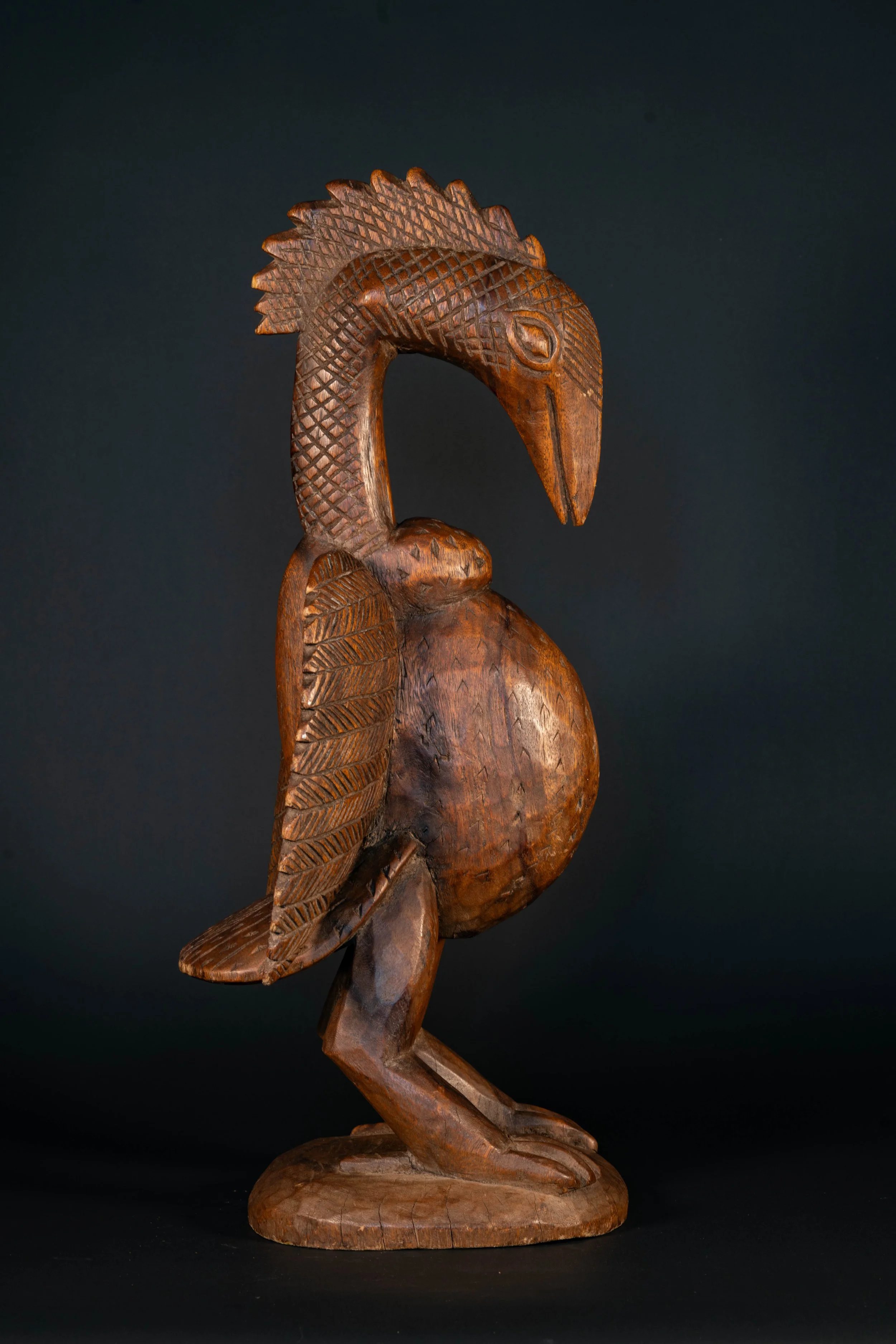 Image 4 of 5
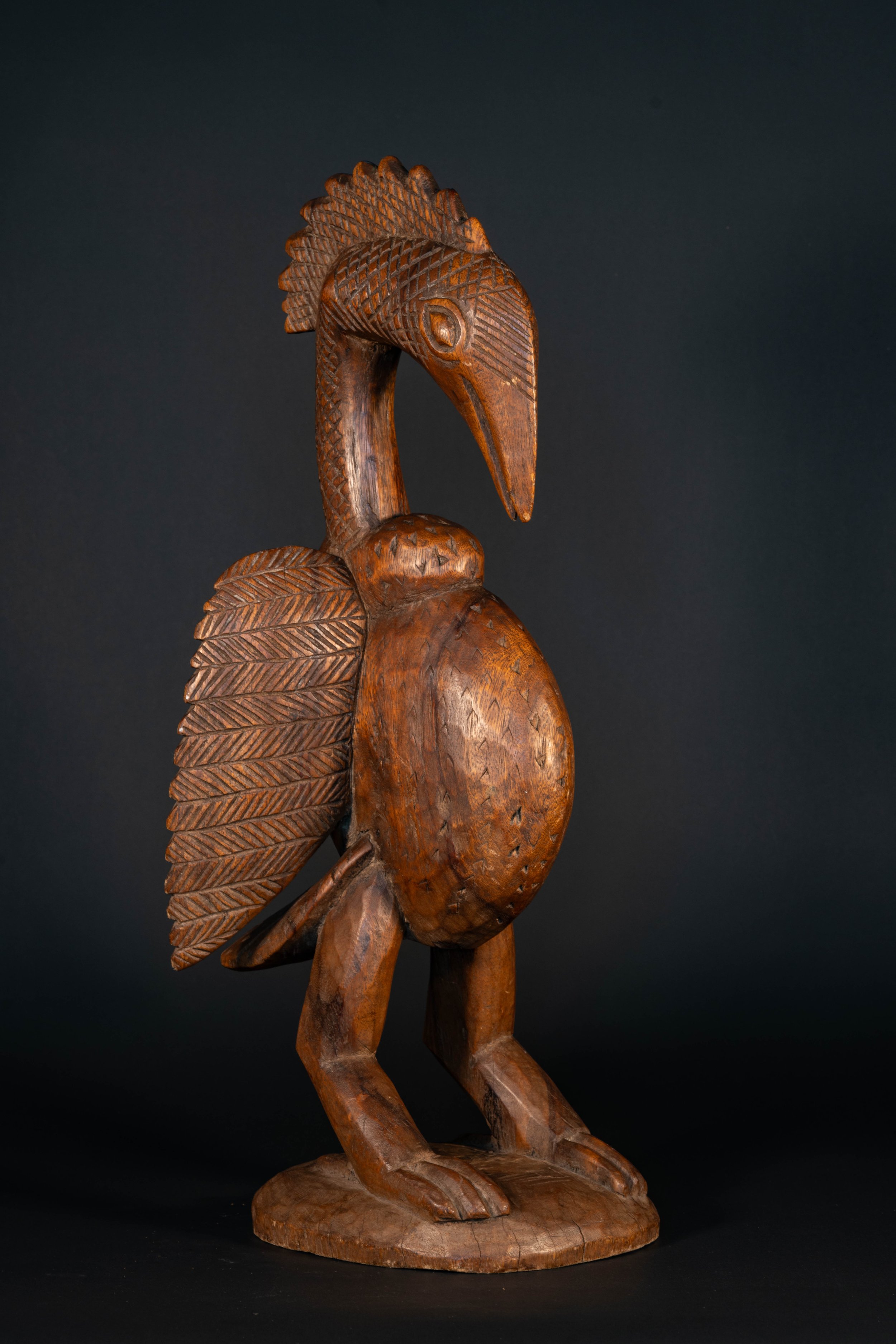 Image 5 of 5
Côte d'Ivoire · Mid-20th century · Wood · H. 23.5 in (59.7 cm)
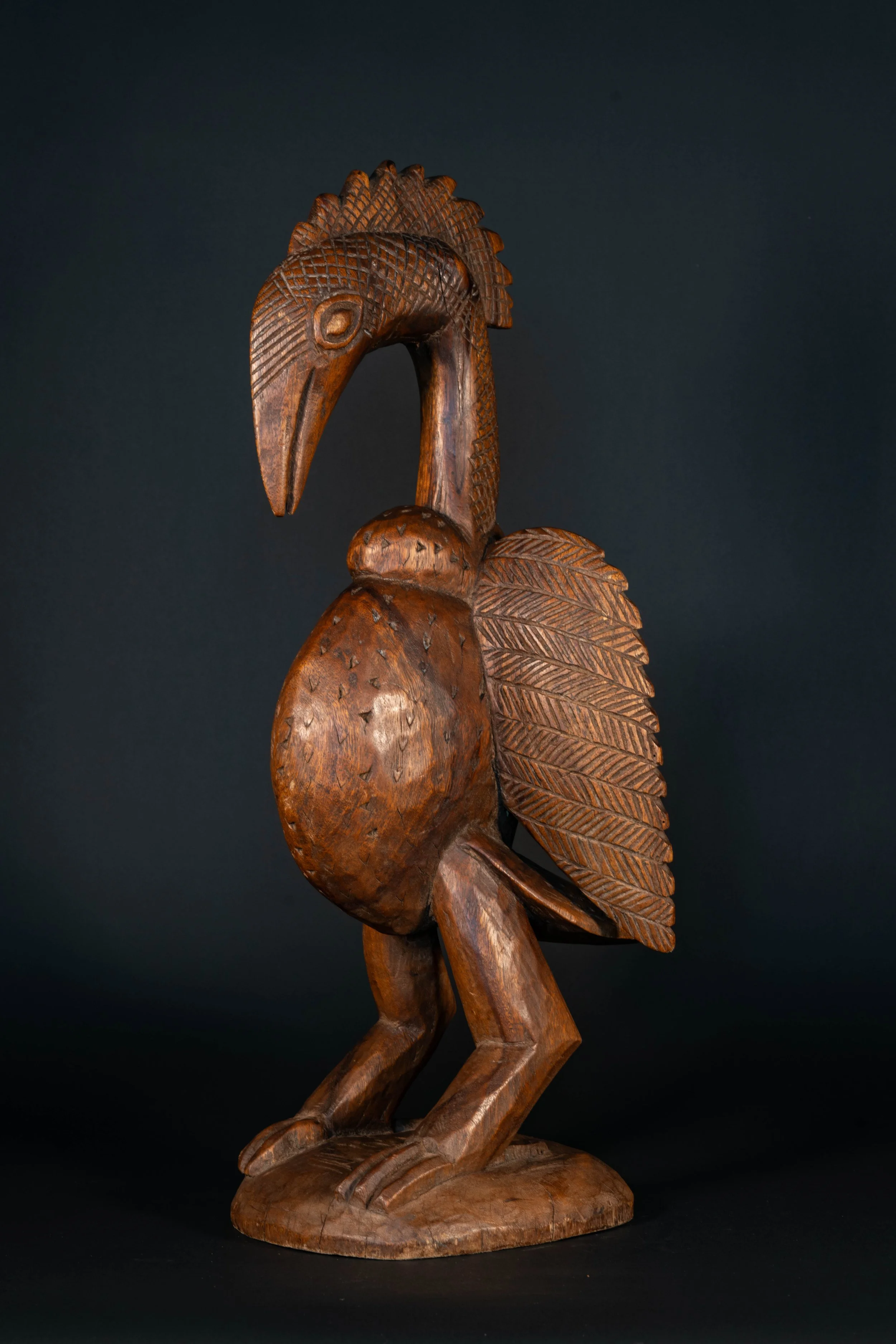
Among the Senufo of northern Côte d'Ivoire, the hornbill is one of five primordial creatures, carved as a standing figure with a long down-curved beak bending toward a swollen belly. The posture is deliberate: the beak meeting the gravid abdomen unites male and female principles in a single body, an image of fertility and the continuity of the community rather than a portrait of a particular bird. Such figures, called sejen or porpianong ("child of the Poro"), belonged to the Poro initiation societies, where the hornbill stood for the knowledge passed from elders to the young.
This example carries the full decorative vocabulary of the type: a crested casque worked in crosshatch, concentric-ring eyes, wings carved in herringbone relief, and triangular punch-stippling across the body, all rising from an integral oval base. It is cut from a single piece of wood and shows the variable surface darkening of age, with oxidation deepest on the underside of the base, where peripheral radial checks and finer ring checks have opened along the end grain over time. The tool-mark character is consistent with adze and knife hand-tooling, and ultraviolet examination shows no evidence of modern coloring; the recesses and cut surfaces do not fluoresce.
A well-aged mid-century example of one of the most recognizable forms in West African art, and a direct point of contact with the carving traditions that shaped early European modernism.
Condition: Sound and stable for its age. Surface wear consistent with age and handling; peripheral radial and ring checks to the base; no breaks, significant losses, or evidence of restoration. Stands unsupported on its integral base.
Côte d'Ivoire · Mid-20th century · Wood · H. 23.5 in (59.7 cm)
Among the Senufo of northern Côte d'Ivoire, the hornbill is one of five primordial creatures, carved as a standing figure with a long down-curved beak bending toward a swollen belly. The posture is deliberate: the beak meeting the gravid abdomen unites male and female principles in a single body, an image of fertility and the continuity of the community rather than a portrait of a particular bird. Such figures, called sejen or porpianong ("child of the Poro"), belonged to the Poro initiation societies, where the hornbill stood for the knowledge passed from elders to the young.
This example carries the full decorative vocabulary of the type: a crested casque worked in crosshatch, concentric-ring eyes, wings carved in herringbone relief, and triangular punch-stippling across the body, all rising from an integral oval base. It is cut from a single piece of wood and shows the variable surface darkening of age, with oxidation deepest on the underside of the base, where peripheral radial checks and finer ring checks have opened along the end grain over time. The tool-mark character is consistent with adze and knife hand-tooling, and ultraviolet examination shows no evidence of modern coloring; the recesses and cut surfaces do not fluoresce.
A well-aged mid-century example of one of the most recognizable forms in West African art, and a direct point of contact with the carving traditions that shaped early European modernism.
Condition: Sound and stable for its age. Surface wear consistent with age and handling; peripheral radial and ring checks to the base; no breaks, significant losses, or evidence of restoration. Stands unsupported on its integral base.