 Image 1 of 5
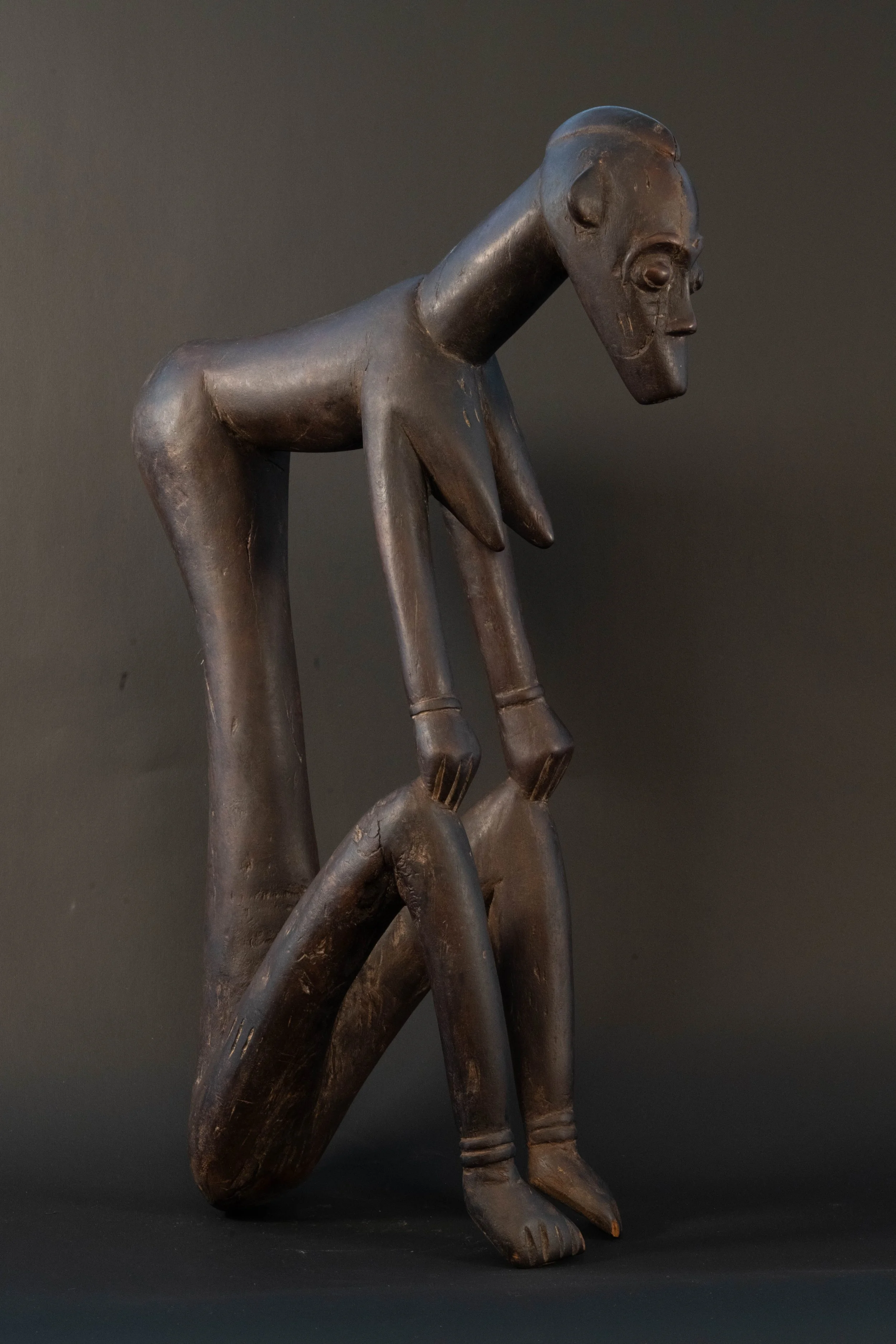 Image 2 of 5
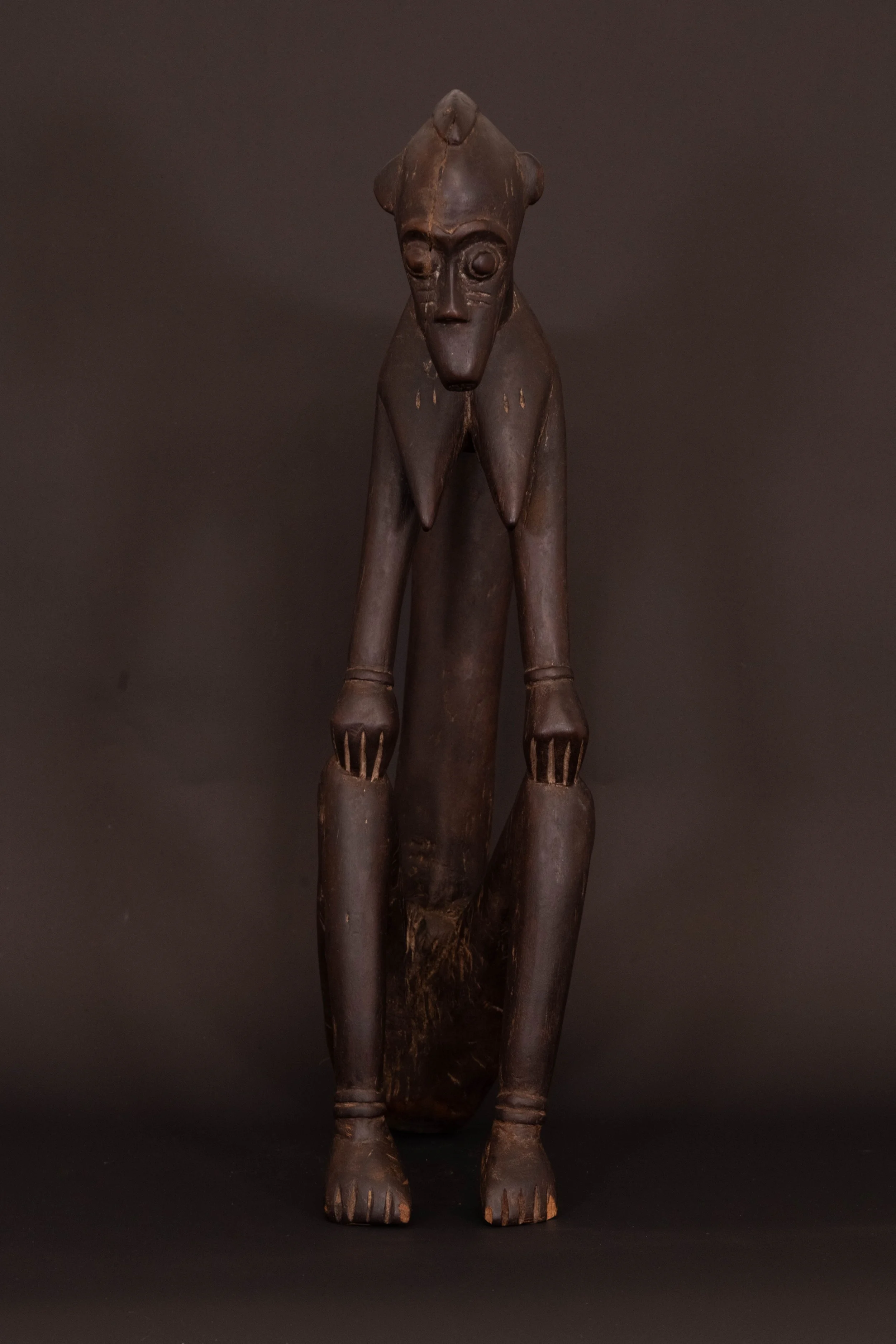 Image 3 of 5
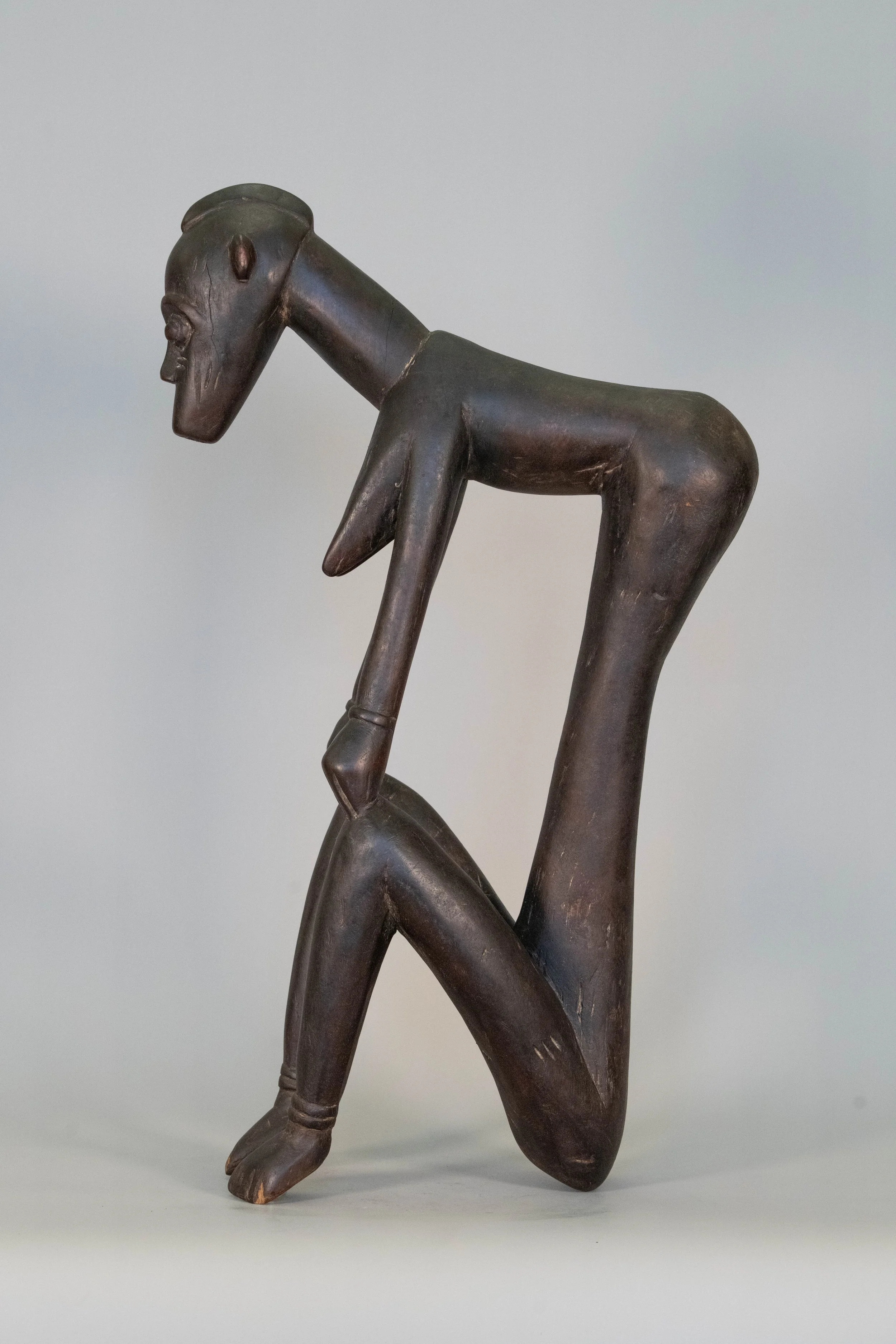 Image 4 of 5
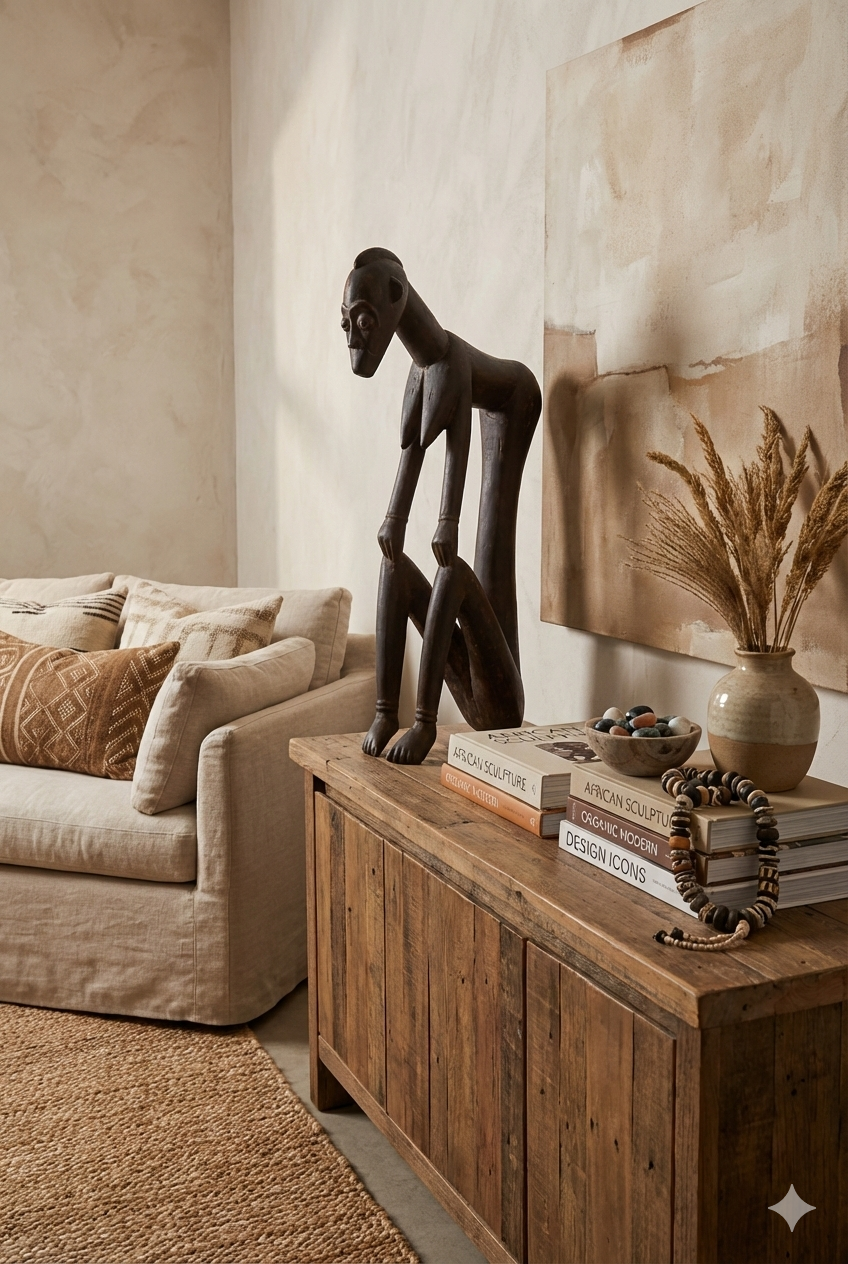 Image 5 of 5
Circa 1890–1930
Among the Senufo peoples of West Africa, female figures like this one were not carved as decoration. They embodied ideals — discipline, fertility, moral clarity, and the strength of lineage — and functioned within the Poro society, the male initiatory institution through which Senufo values and spiritual knowledge were transmitted across generations. Sculpture served as a visual guide to character. This figure is not a portrait of a woman so much as a statement about what a woman represents: stability, continuity, and inner power.
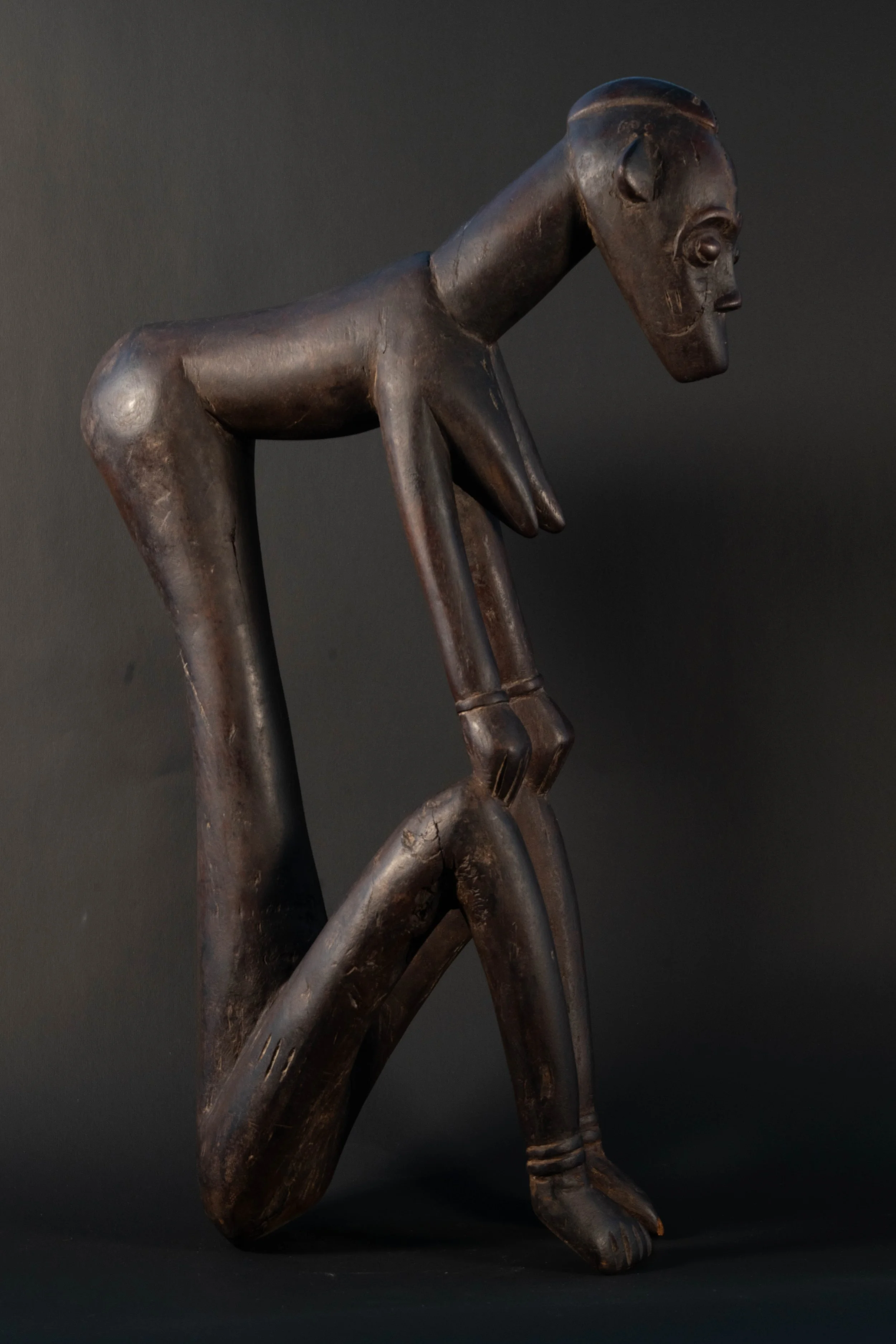
The posture is immediately engaging: a long, forward-leaning torso, hands resting firmly on raised knees, the head slightly bowed. It is a pose of composure and self-possession rather than display. The proportions are classically Senufo — elongated limbs, a stylized crested coiffure, and pendulous breasts signifying maturity and fertility. The exaggeration is deliberate and controlled; there is no unnecessary detail, and the restraint itself carries weight.
The surface tells its own story. A deep, naturally developed patina has built up over decades of handling and environmental exposure. The knees and hands show subtle polish from repeated touch. Contours soften with time rather than being artificially distressed, and tool marks remain visible beneath the surface — confirmation of hand carving and honest age. Nothing about this figure reads as commercial or decorative. It feels purposeful.
Works of this period and sculptural authority are increasingly difficult to find. The figure holds space with quiet confidence, and its formal clarity translates well into a contemporary interior without sacrificing any of its cultural weight.
Condition:Good. Minor age cracks and abrasions are consistent with age.
Dimensions: 22.5 × 6 × 14 inches (H x W x D)
Circa 1890–1930
Among the Senufo peoples of West Africa, female figures like this one were not carved as decoration. They embodied ideals — discipline, fertility, moral clarity, and the strength of lineage — and functioned within the Poro society, the male initiatory institution through which Senufo values and spiritual knowledge were transmitted across generations. Sculpture served as a visual guide to character. This figure is not a portrait of a woman so much as a statement about what a woman represents: stability, continuity, and inner power.
The posture is immediately engaging: a long, forward-leaning torso, hands resting firmly on raised knees, the head slightly bowed. It is a pose of composure and self-possession rather than display. The proportions are classically Senufo — elongated limbs, a stylized crested coiffure, and pendulous breasts signifying maturity and fertility. The exaggeration is deliberate and controlled; there is no unnecessary detail, and the restraint itself carries weight.
The surface tells its own story. A deep, naturally developed patina has built up over decades of handling and environmental exposure. The knees and hands show subtle polish from repeated touch. Contours soften with time rather than being artificially distressed, and tool marks remain visible beneath the surface — confirmation of hand carving and honest age. Nothing about this figure reads as commercial or decorative. It feels purposeful.
Works of this period and sculptural authority are increasingly difficult to find. The figure holds space with quiet confidence, and its formal clarity translates well into a contemporary interior without sacrificing any of its cultural weight.
Condition:Good. Minor age cracks and abrasions are consistent with age.
Dimensions: 22.5 × 6 × 14 inches (H x W x D)