 Image 1 of 5
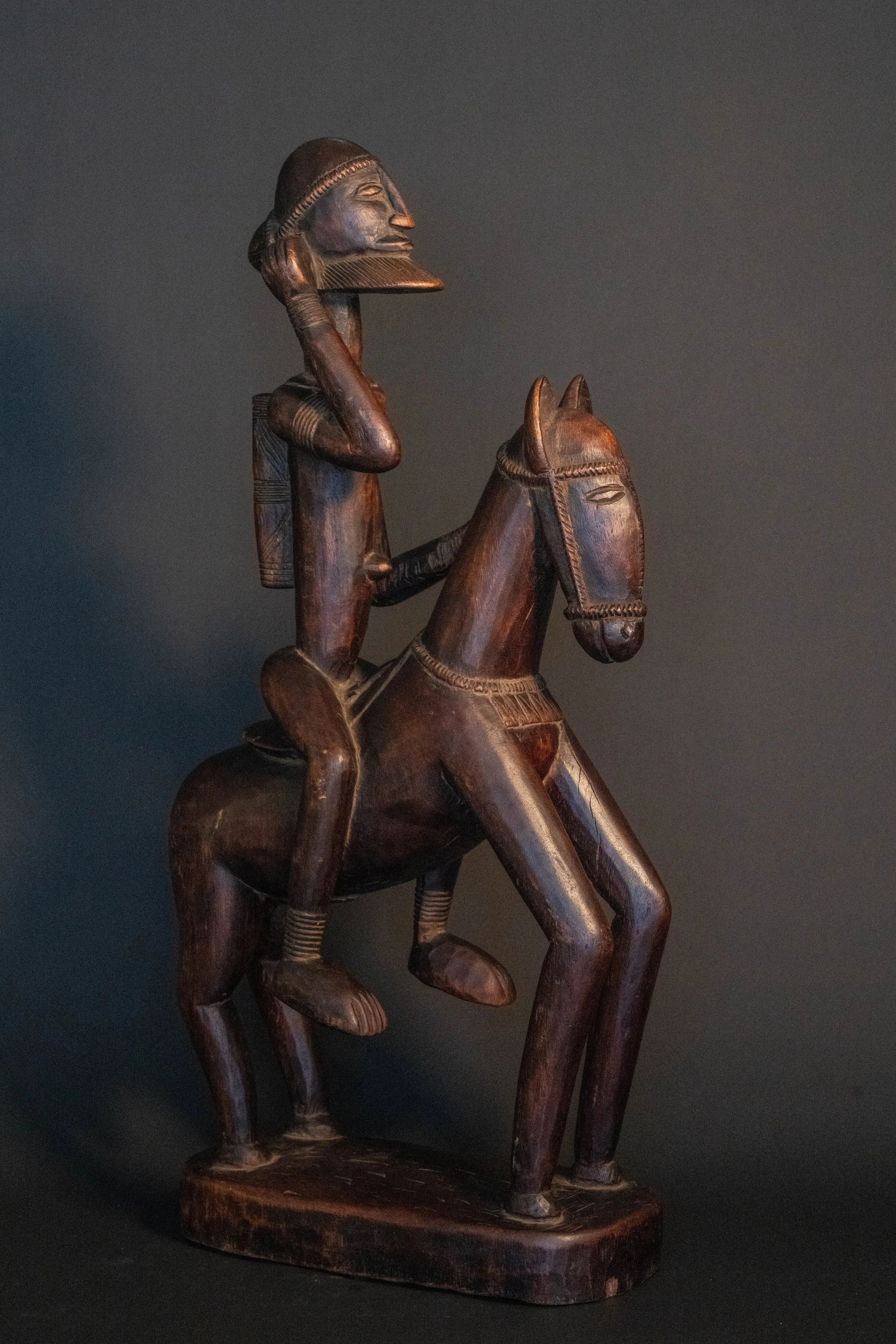 Image 2 of 5
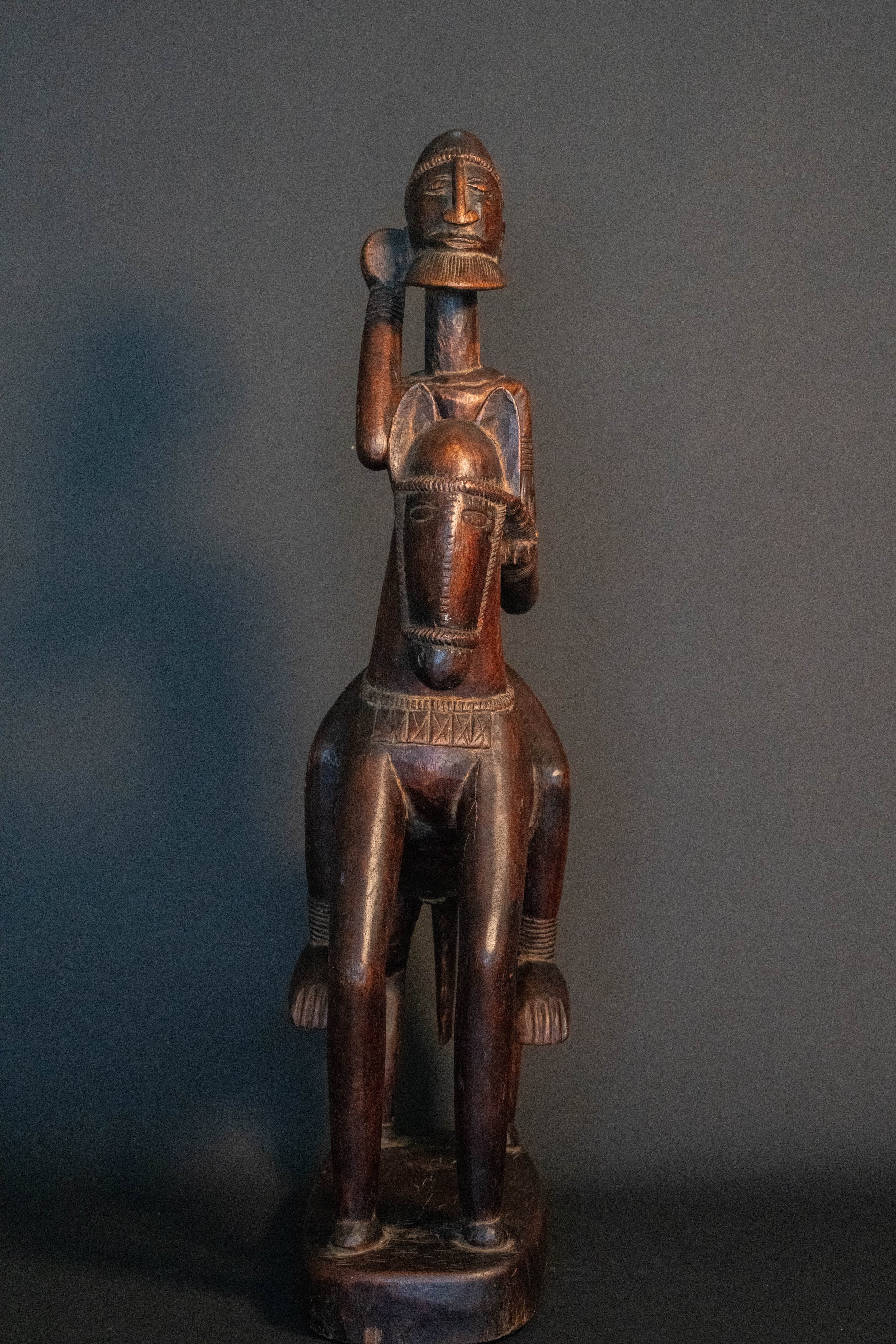 Image 3 of 5
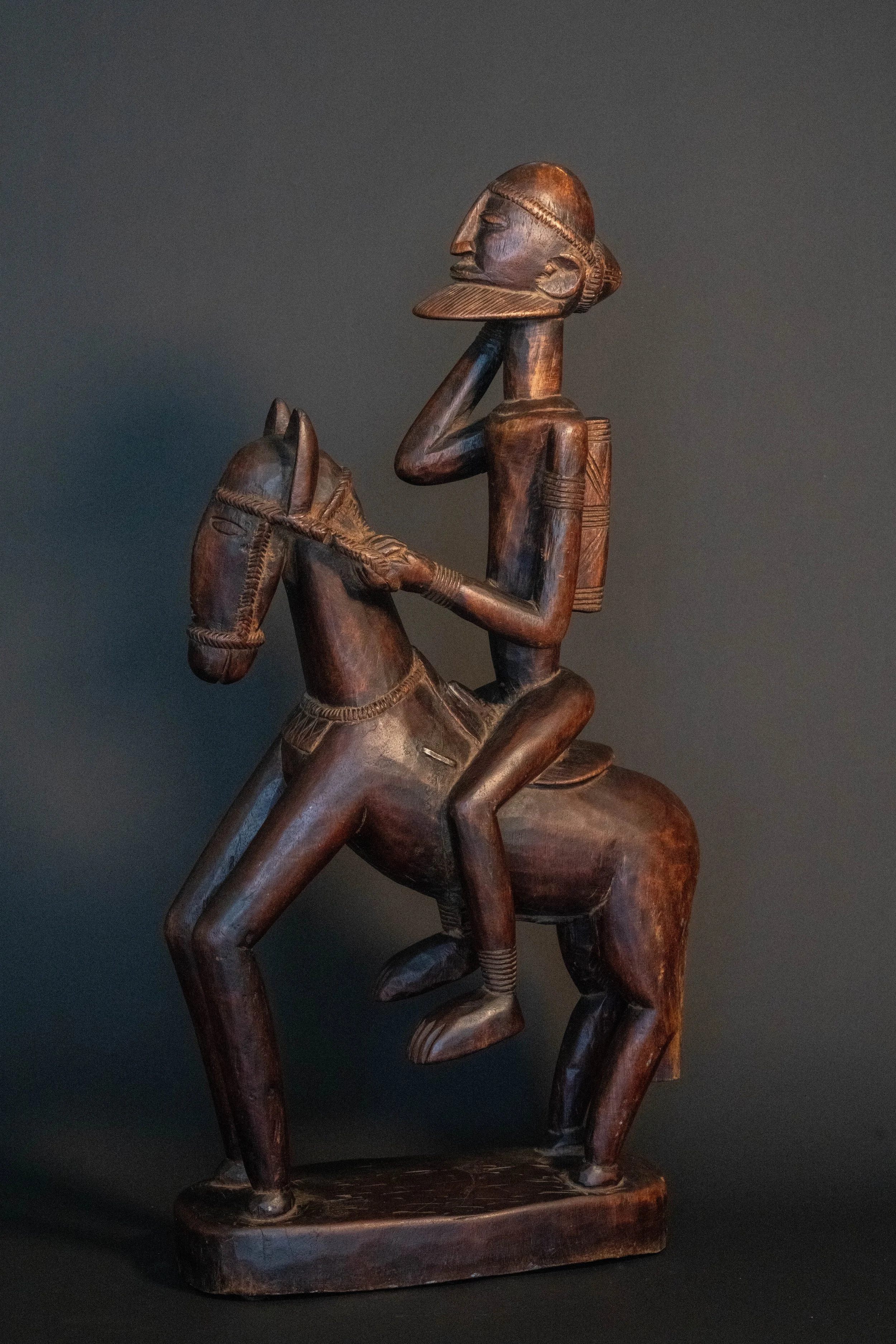 Image 4 of 5
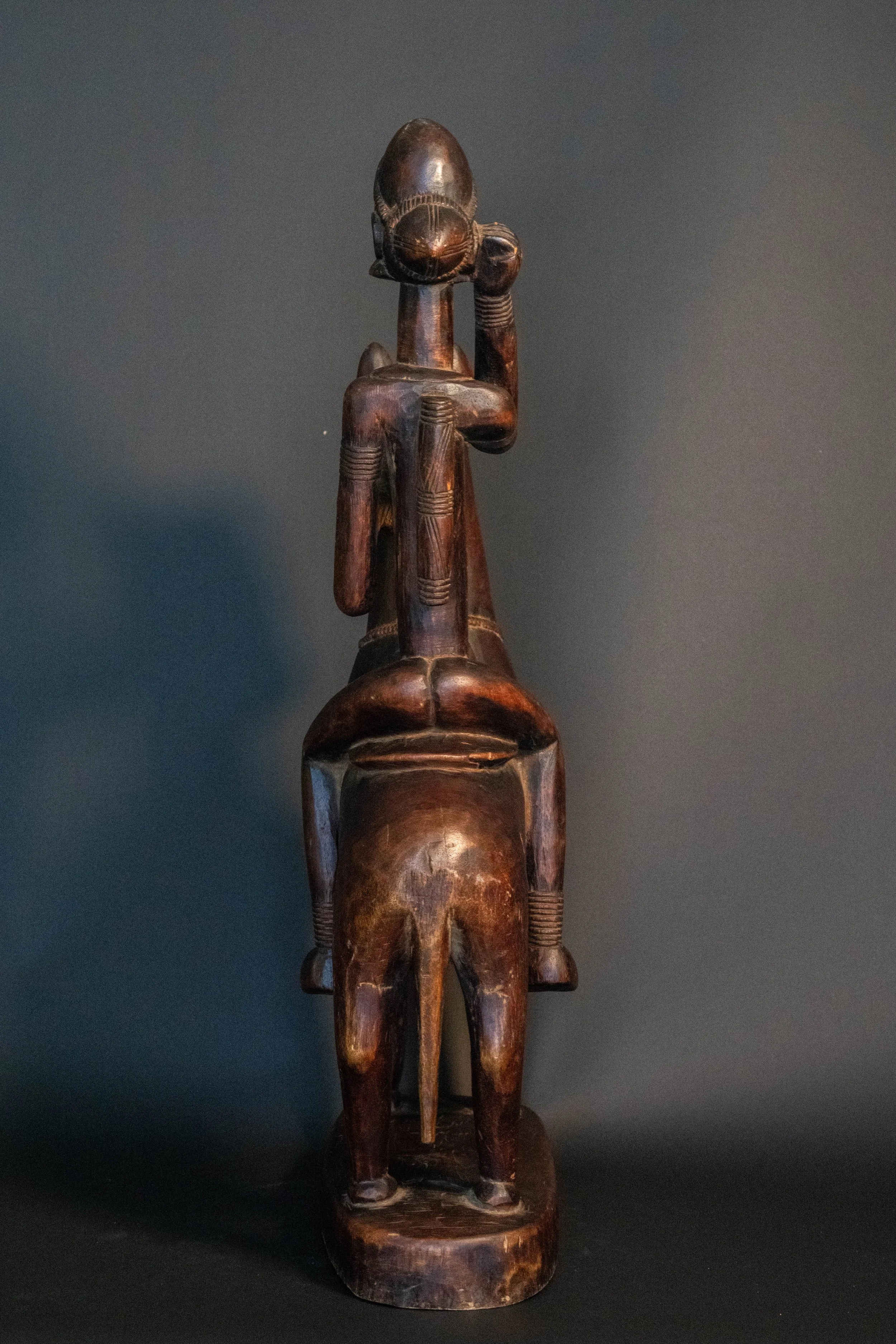 Image 5 of 5
Early-to-Mid 20th Century
In the Dogon, Sahel, and Inland Niger Delta regions of present-day Mali, the horse was not an everyday animal. It was bound to power—to warriors, hunters, chiefs, and men of influence. Equestrian carvings like this one gave that association physical form: the human figure elevated, literally and symbolically, by the animal beneath him. Kept near a household altar or in a reception space, such a piece served as both a prestige object and a guardian image.
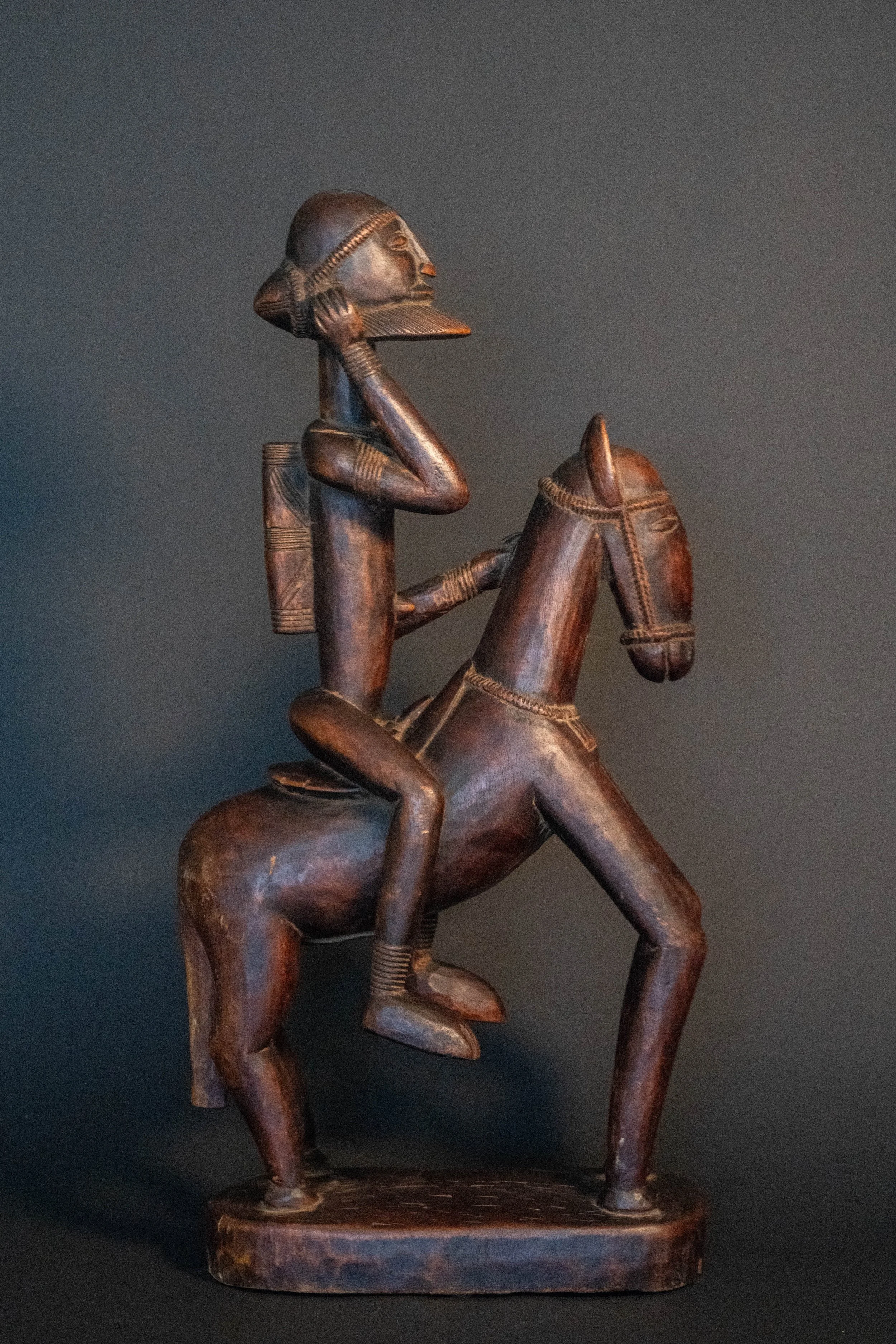
The figure stands 26.5 inches overall on an integrated base. The horse rises on long, columnar legs; the rider sits straight and composed above him. The head is the carving's strongest passage—a projecting chin and beard shelf with fine striations, crisp facial planes, and a formal clarity that carries across a room. Incised banding at the upper arms, wrists, and ankles, and raised "stitched" bridle elements on the horse, give the surface visual rhythm and confirm a carver working with intention.
What lifts this beyond a standard equestrian type is the pose. The rider's arm is raised and bent—not at rest, but in motion—reaching back over his shoulder toward a cylindrical quiver carved on his back, its surface decorated with incised patterning and banded borders. The sculptor has caught him at a moment of readiness, turning a prestige figure into something more particular: a hunter or warrior, mid-action.
The patina is deep, dark, and consistent with the hardwood's grain—absorbed rather than applied. The underside of the base is notably darker and more oxidized than the display surfaces, with visible hand-tool marks: a convincing, unglamorous detail that supports a genuine working life in the early-to-mid 20th century. Condition is solid and display-ready. A ferrous staple repair runs along a crack on the figure's left side—an indigenous, utilitarian stabilization fully consistent with documented use and age.
For context, a closely related Dogon Equestrian figure is on view online and in person in the Metropolitan Museum of Art’s collection in Gallery 341. https://www.metmuseum.org/art/collection/search/312289
Condition: Good. Stable, old ferrous staple repair to a crack on the figure’s left side; rich, naturally oxidized patina.
Dimensions: 26.5 × 6.5 × 12 inches (H x D x W)
Early-to-Mid 20th Century
In the Dogon, Sahel, and Inland Niger Delta regions of present-day Mali, the horse was not an everyday animal. It was bound to power—to warriors, hunters, chiefs, and men of influence. Equestrian carvings like this one gave that association physical form: the human figure elevated, literally and symbolically, by the animal beneath him. Kept near a household altar or in a reception space, such a piece served as both a prestige object and a guardian image.
The figure stands 26.5 inches overall on an integrated base. The horse rises on long, columnar legs; the rider sits straight and composed above him. The head is the carving's strongest passage—a projecting chin and beard shelf with fine striations, crisp facial planes, and a formal clarity that carries across a room. Incised banding at the upper arms, wrists, and ankles, and raised "stitched" bridle elements on the horse, give the surface visual rhythm and confirm a carver working with intention.
What lifts this beyond a standard equestrian type is the pose. The rider's arm is raised and bent—not at rest, but in motion—reaching back over his shoulder toward a cylindrical quiver carved on his back, its surface decorated with incised patterning and banded borders. The sculptor has caught him at a moment of readiness, turning a prestige figure into something more particular: a hunter or warrior, mid-action.
The patina is deep, dark, and consistent with the hardwood's grain—absorbed rather than applied. The underside of the base is notably darker and more oxidized than the display surfaces, with visible hand-tool marks: a convincing, unglamorous detail that supports a genuine working life in the early-to-mid 20th century. Condition is solid and display-ready. A ferrous staple repair runs along a crack on the figure's left side—an indigenous, utilitarian stabilization fully consistent with documented use and age.
For context, a closely related Dogon Equestrian figure is on view online and in person in the Metropolitan Museum of Art’s collection in Gallery 341. https://www.metmuseum.org/art/collection/search/312289
Condition: Good. Stable, old ferrous staple repair to a crack on the figure’s left side; rich, naturally oxidized patina.
Dimensions: 26.5 × 6.5 × 12 inches (H x D x W)