 Image 1 of 4
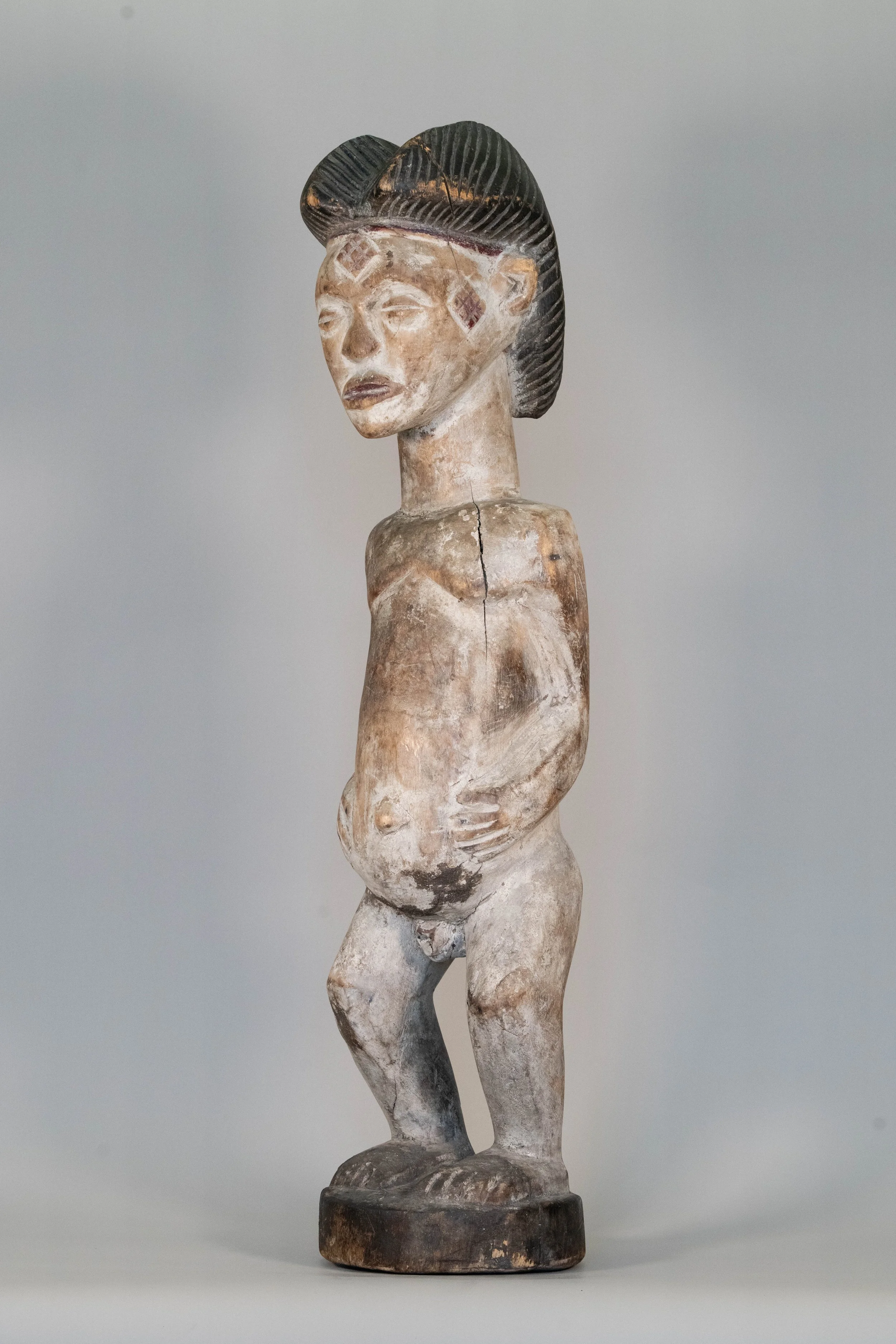 Image 2 of 4
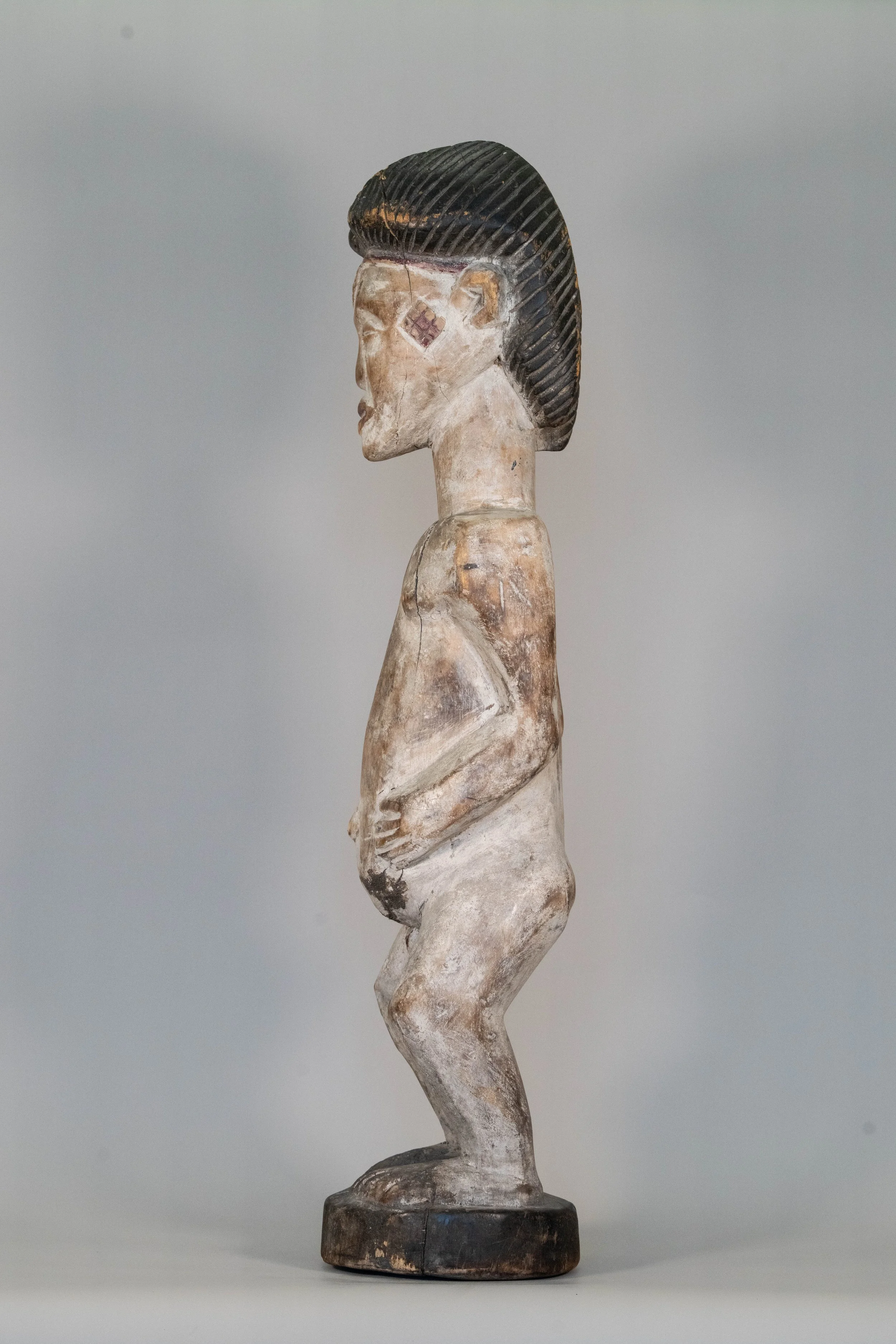 Image 3 of 4
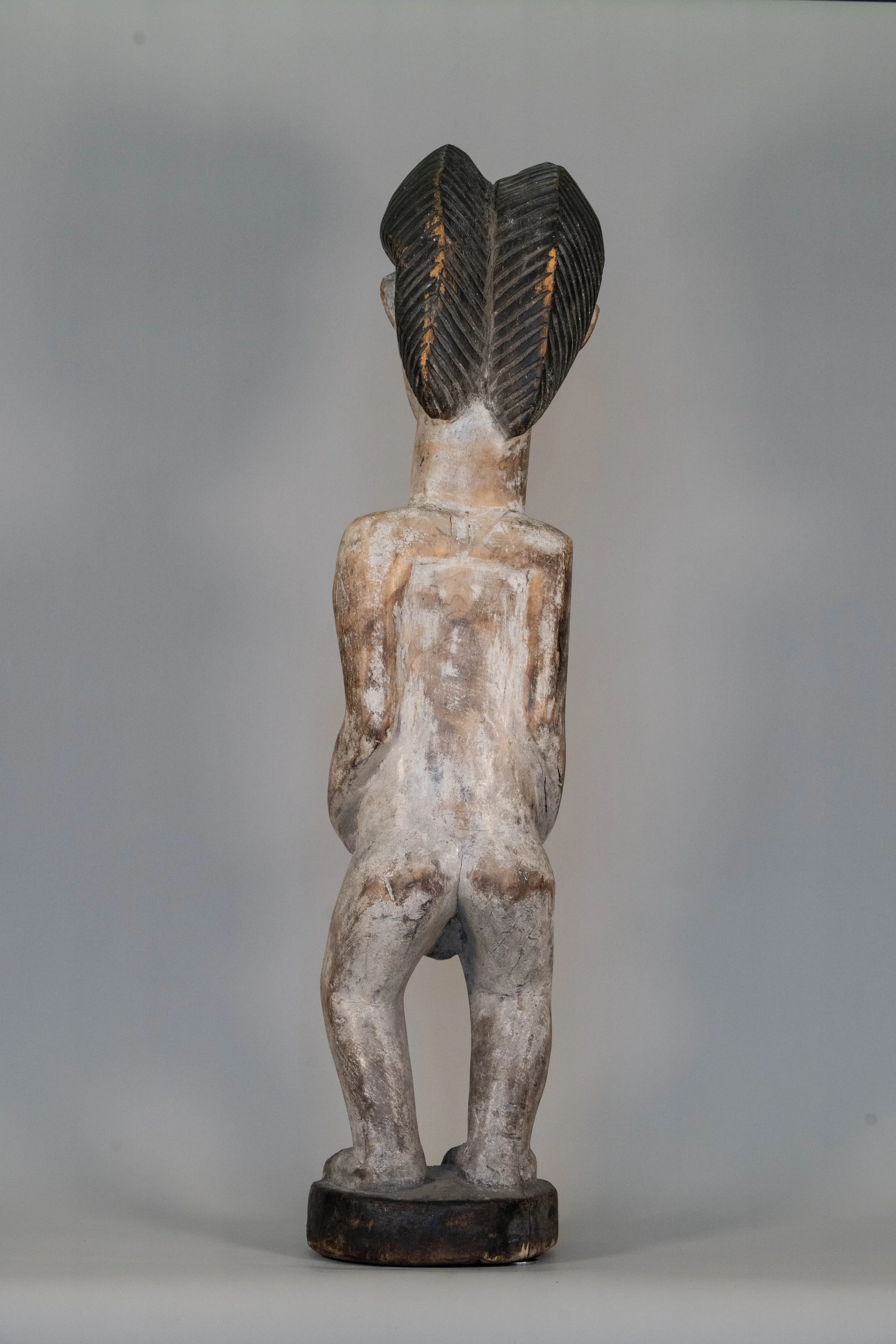 Image 4 of 4
Early to Mid-20th Century
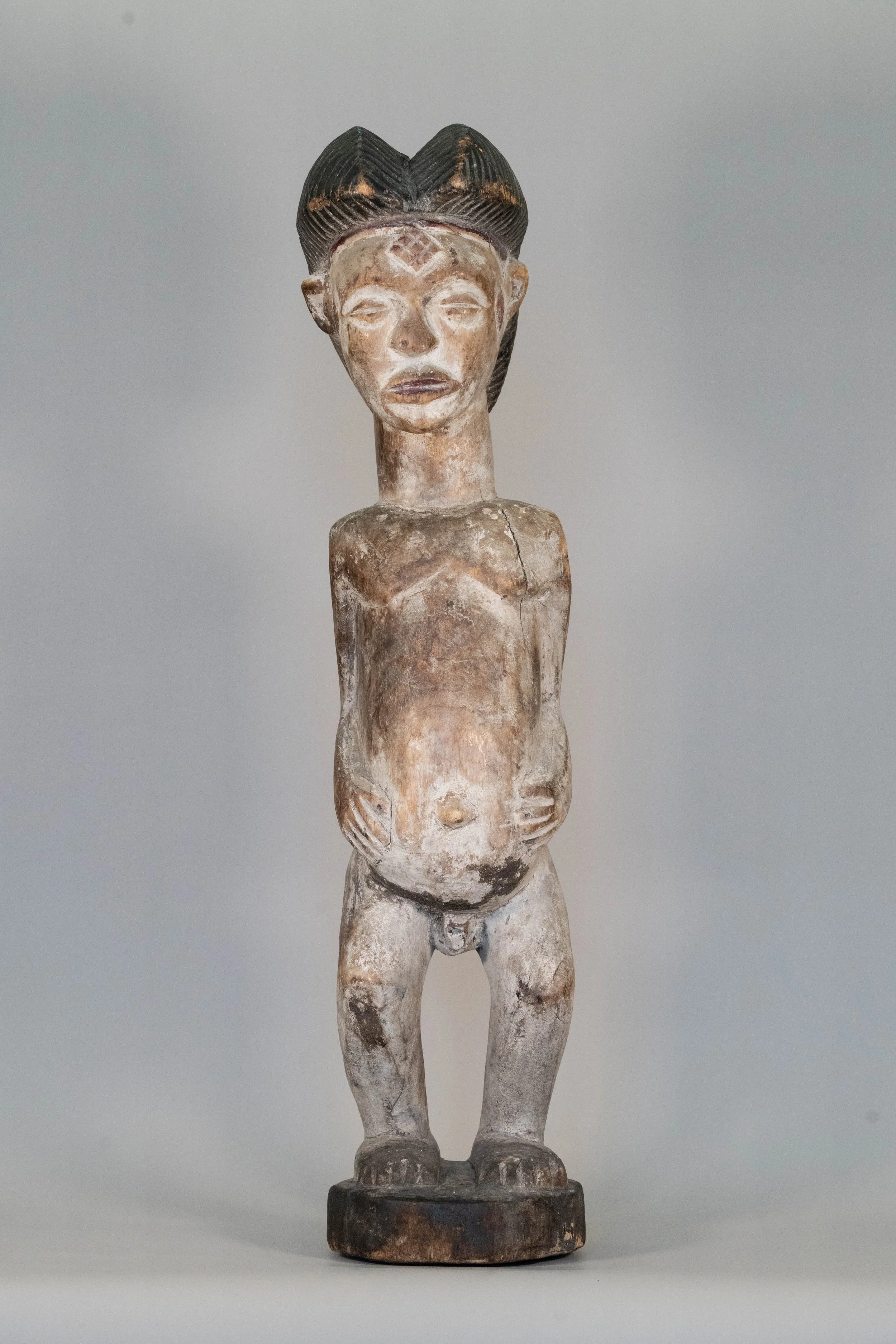
The Punu people of Gabon are among the most accomplished sculptors in the western Central African tradition, known for a formal vocabulary that prizes refinement, symmetry, and a distinctively luminous white surface. This standing female figure is a strong example of that tradition — large in scale, well-carved, and carrying the physical evidence of genuine use and age.
The figure stands with knees slightly flexed, hands resting across the abdomen — a posture consistently associated in Punu carving with fertility and ancestral guardianship. The face is calm and inward-looking, with the characteristic high forehead, downcast eyes, and composed expression that define the Punu ideal. Fine incised markings at the forehead and temples record traditional scarification patterns, markers of identity and social standing. Above, the bi-lobed coiffure rises in bold carved ridges — one of the most recognizable formal elements in Punu sculpture, and executed here with confident, rhythmic precision.
The white kaolin patina is not a decorative finish but a ritual substance. Among the Punu and neighboring groups, white is the color of the ancestral world, and kaolin was applied as part of ceremonial practice. In this figure, the surface has built up and mellowed over time into a softly luminous presence that comes only with age and handling — a material record of the object's life before it entered the art market.
At 34 inches, the figure carries real physical authority. A stable age crack runs through the torso and head, consistent with older carvings of this scale and entirely expected given the wood's response to a century of climate change.
Custom wood base included.
For comparative context, a closely related Punu Female mask is on view in the Metropolitan Museum of Art’s online collection. https://www.metmuseum.org/art/collection/search/310743
Condition: Good. Stable age crack through the torso and head.
Dimensions: Overall with base 36 × 9.25 × 9.5 inches; Figure only 34 × 7.5 x 7.5 inches (H x D x W)
Early to Mid-20th Century
The Punu people of Gabon are among the most accomplished sculptors in the western Central African tradition, known for a formal vocabulary that prizes refinement, symmetry, and a distinctively luminous white surface. This standing female figure is a strong example of that tradition — large in scale, well-carved, and carrying the physical evidence of genuine use and age.
The figure stands with knees slightly flexed, hands resting across the abdomen — a posture consistently associated in Punu carving with fertility and ancestral guardianship. The face is calm and inward-looking, with the characteristic high forehead, downcast eyes, and composed expression that define the Punu ideal. Fine incised markings at the forehead and temples record traditional scarification patterns, markers of identity and social standing. Above, the bi-lobed coiffure rises in bold carved ridges — one of the most recognizable formal elements in Punu sculpture, and executed here with confident, rhythmic precision.
The white kaolin patina is not a decorative finish but a ritual substance. Among the Punu and neighboring groups, white is the color of the ancestral world, and kaolin was applied as part of ceremonial practice. In this figure, the surface has built up and mellowed over time into a softly luminous presence that comes only with age and handling — a material record of the object's life before it entered the art market.
At 34 inches, the figure carries real physical authority. A stable age crack runs through the torso and head, consistent with older carvings of this scale and entirely expected given the wood's response to a century of climate change.
Custom wood base included.
For comparative context, a closely related Punu Female mask is on view in the Metropolitan Museum of Art’s online collection. https://www.metmuseum.org/art/collection/search/310743
Condition: Good. Stable age crack through the torso and head.
Dimensions: Overall with base 36 × 9.25 × 9.5 inches; Figure only 34 × 7.5 x 7.5 inches (H x D x W)