 Image 1 of 4
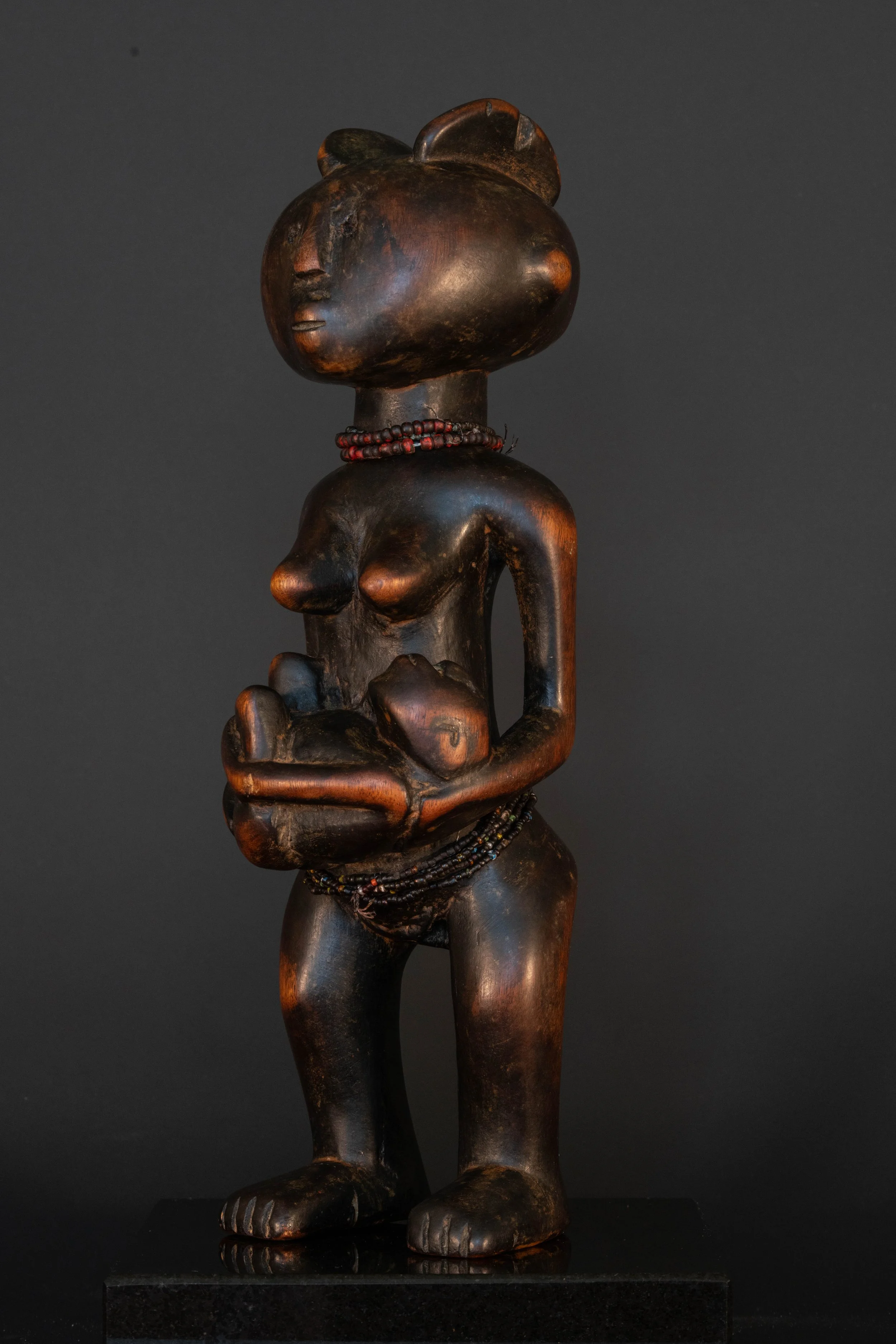 Image 2 of 4
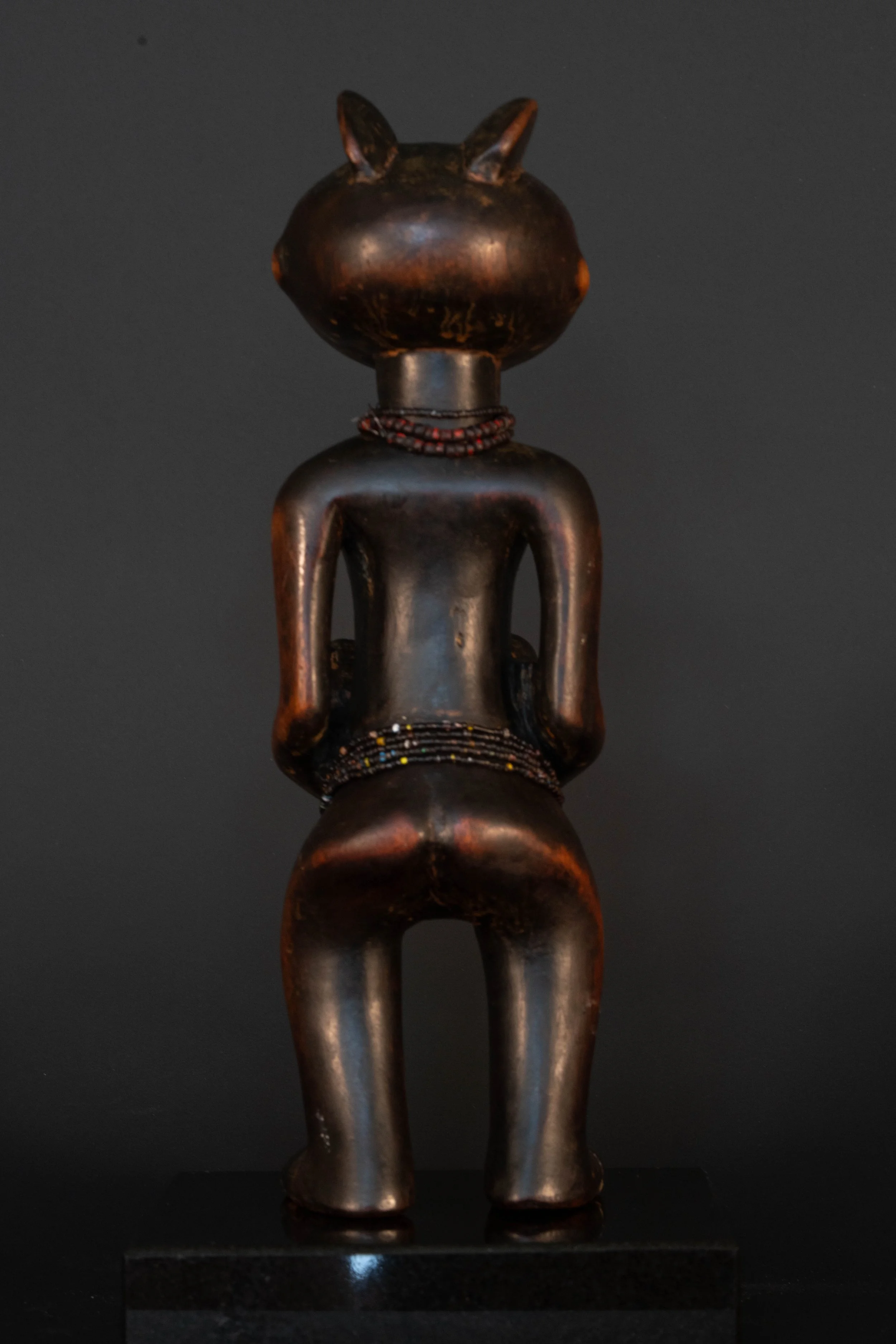 Image 3 of 4
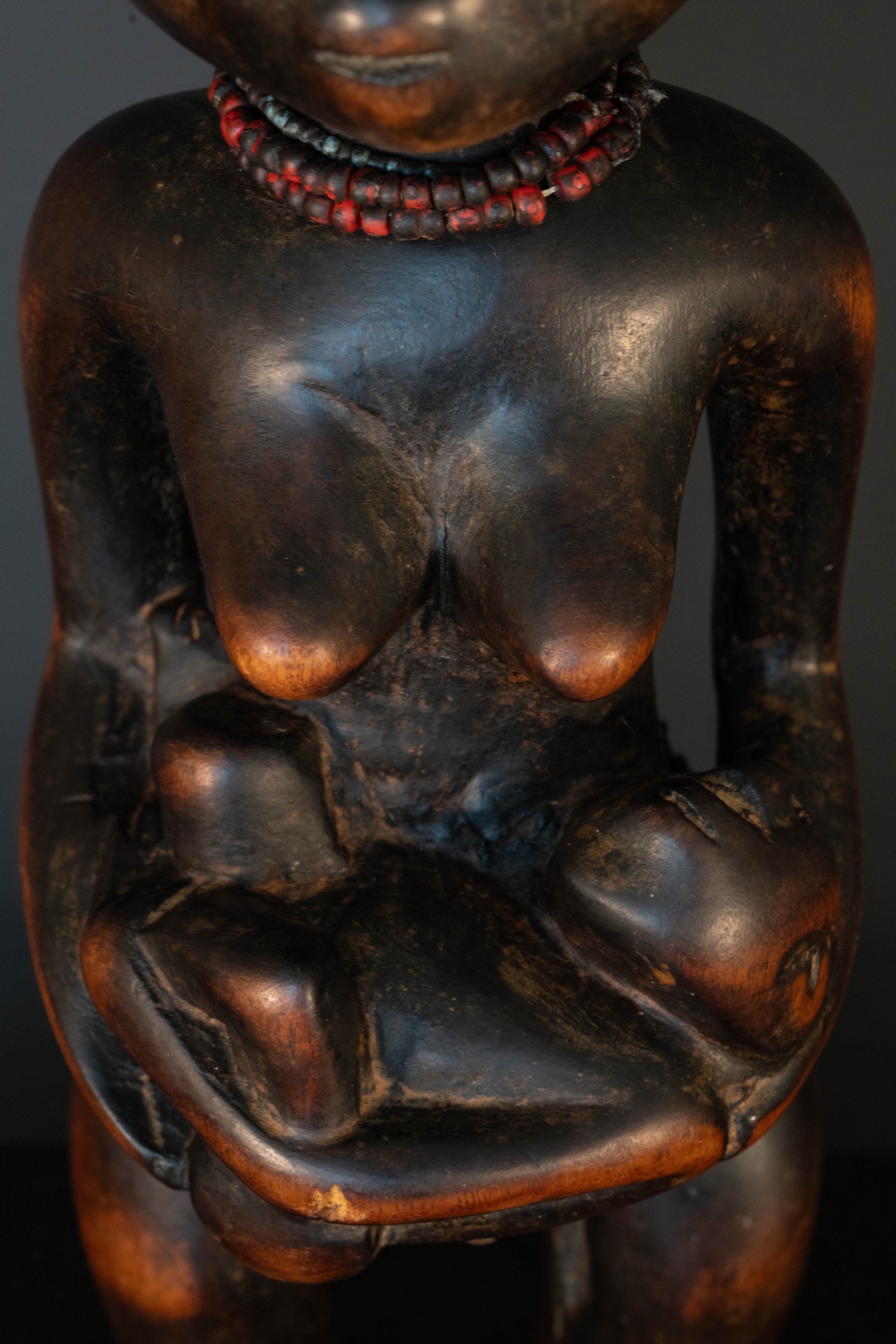 Image 4 of 4
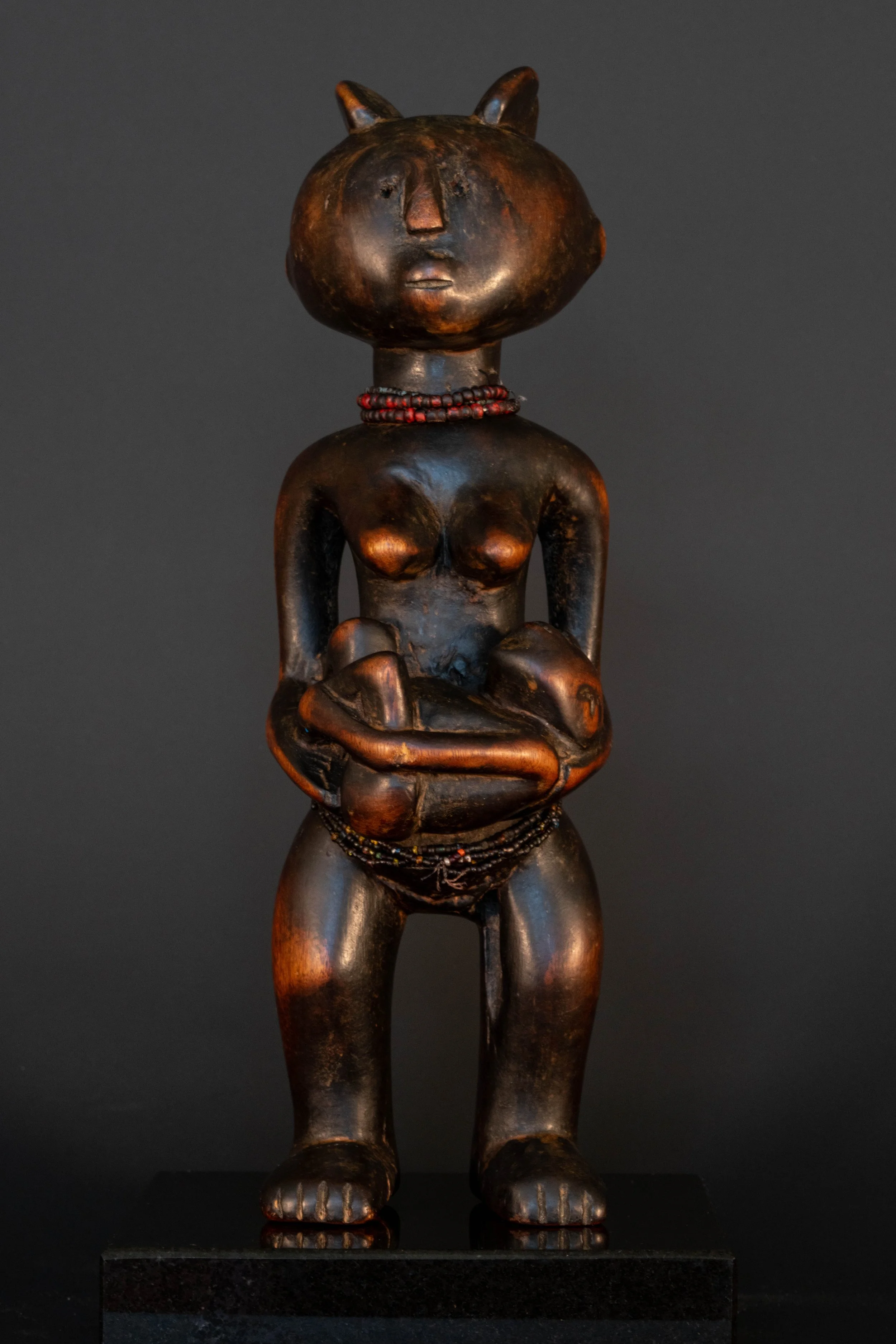
Carved more than a century ago, likely between 1880 and 1920, this powerful standing woman embodies one of the most universal and enduring human themes: motherhood as strength, continuity, and protection. Among the Nyamwezi people, figures such as this were not decorative objects. They were visual prayers, representing ancestors who are invoked for protection, guidance, fertility, and to bestow blessings upon the family.
The mother stands firmly planted, her large feet anchoring her to the earth. Her knees bend slightly, giving the figure a sense of quiet readiness and life. She cradles her child across her abdomen—not delicately, but securely—emphasizing protection and continuity. The child is not rendered with sentimental realism; instead, it is integrated into the mother’s form, symbolizing that a child is part of the mother’s very being.
The head is striking and unforgettable. The broad, dome-shaped head, crowned with projections representing traditional hairstyles or ritual status, radiates an air of presence. These forms are markers of vitality and spiritual potency within Nyamwezi visual language. The facial features are simplified yet deeply expressive, conveying calm authority rather than overt emotion.
The wood—dense and beautifully carved—has developed a deep, lustrous patina over generations. Darkened recesses and warm brown highlights reveal where hands have touched it repeatedly over time. The subtle polishing on the breasts, abdomen, thighs, and knees is consistent with ritual handling. This is not artificially aged wood—it is wood that has lived.
Encircling the neck and waist are strands of old glass trade beads, likely dating to the same early period. These beads were valuable materials traded across continents, and their presence reinforces the figure’s cultural and ceremonial importance. They add movement, color, and authenticity—further grounding the sculpture in its historical context.
Nyamwezi figures of this quality remain less common on the market than works from Central Africa, making strong examples increasingly desirable among collectors. This piece has real sculptural presence: it commands space, even in silence. It bridges anthropology and fine art, ritual and modern design. Whether placed in a contemporary interior or among a focused collection of African art, it becomes an immediate focal point.
Condition: Good. Arrested bug damage in the left leg.
Dimensions: 13.5 x 4 x 4.5 inches (H x W x D)
Carved more than a century ago, likely between 1880 and 1920, this powerful standing woman embodies one of the most universal and enduring human themes: motherhood as strength, continuity, and protection. Among the Nyamwezi people, figures such as this were not decorative objects. They were visual prayers, representing ancestors who are invoked for protection, guidance, fertility, and to bestow blessings upon the family.
The mother stands firmly planted, her large feet anchoring her to the earth. Her knees bend slightly, giving the figure a sense of quiet readiness and life. She cradles her child across her abdomen—not delicately, but securely—emphasizing protection and continuity. The child is not rendered with sentimental realism; instead, it is integrated into the mother’s form, symbolizing that a child is part of the mother’s very being.
The head is striking and unforgettable. The broad, dome-shaped head, crowned with projections representing traditional hairstyles or ritual status, radiates an air of presence. These forms are markers of vitality and spiritual potency within Nyamwezi visual language. The facial features are simplified yet deeply expressive, conveying calm authority rather than overt emotion.
The wood—dense and beautifully carved—has developed a deep, lustrous patina over generations. Darkened recesses and warm brown highlights reveal where hands have touched it repeatedly over time. The subtle polishing on the breasts, abdomen, thighs, and knees is consistent with ritual handling. This is not artificially aged wood—it is wood that has lived.
Encircling the neck and waist are strands of old glass trade beads, likely dating to the same early period. These beads were valuable materials traded across continents, and their presence reinforces the figure’s cultural and ceremonial importance. They add movement, color, and authenticity—further grounding the sculpture in its historical context.
Nyamwezi figures of this quality remain less common on the market than works from Central Africa, making strong examples increasingly desirable among collectors. This piece has real sculptural presence: it commands space, even in silence. It bridges anthropology and fine art, ritual and modern design. Whether placed in a contemporary interior or among a focused collection of African art, it becomes an immediate focal point.
Condition: Good. Arrested bug damage in the left leg.
Dimensions: 13.5 x 4 x 4.5 inches (H x W x D)