 Image 1 of 5
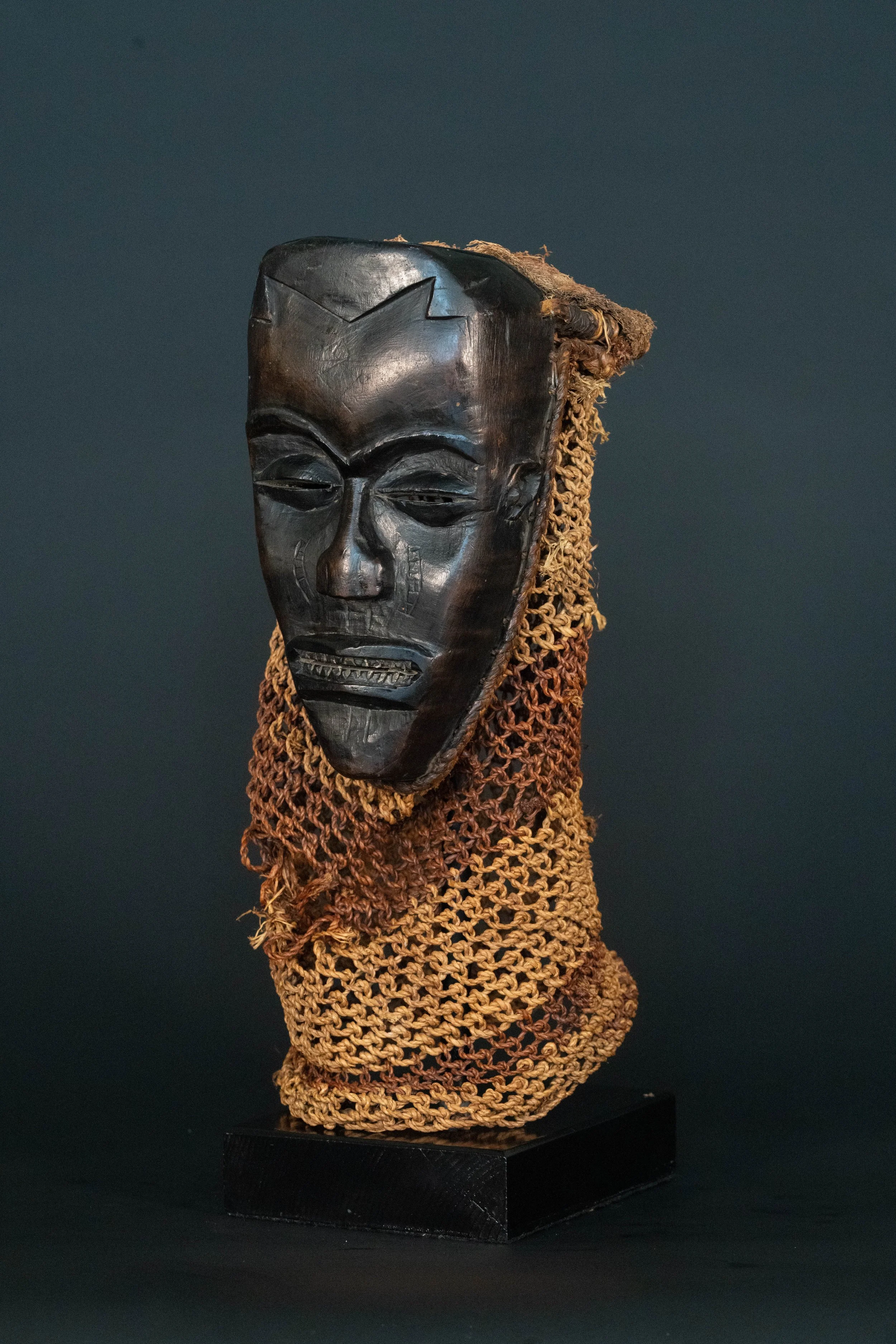 Image 2 of 5
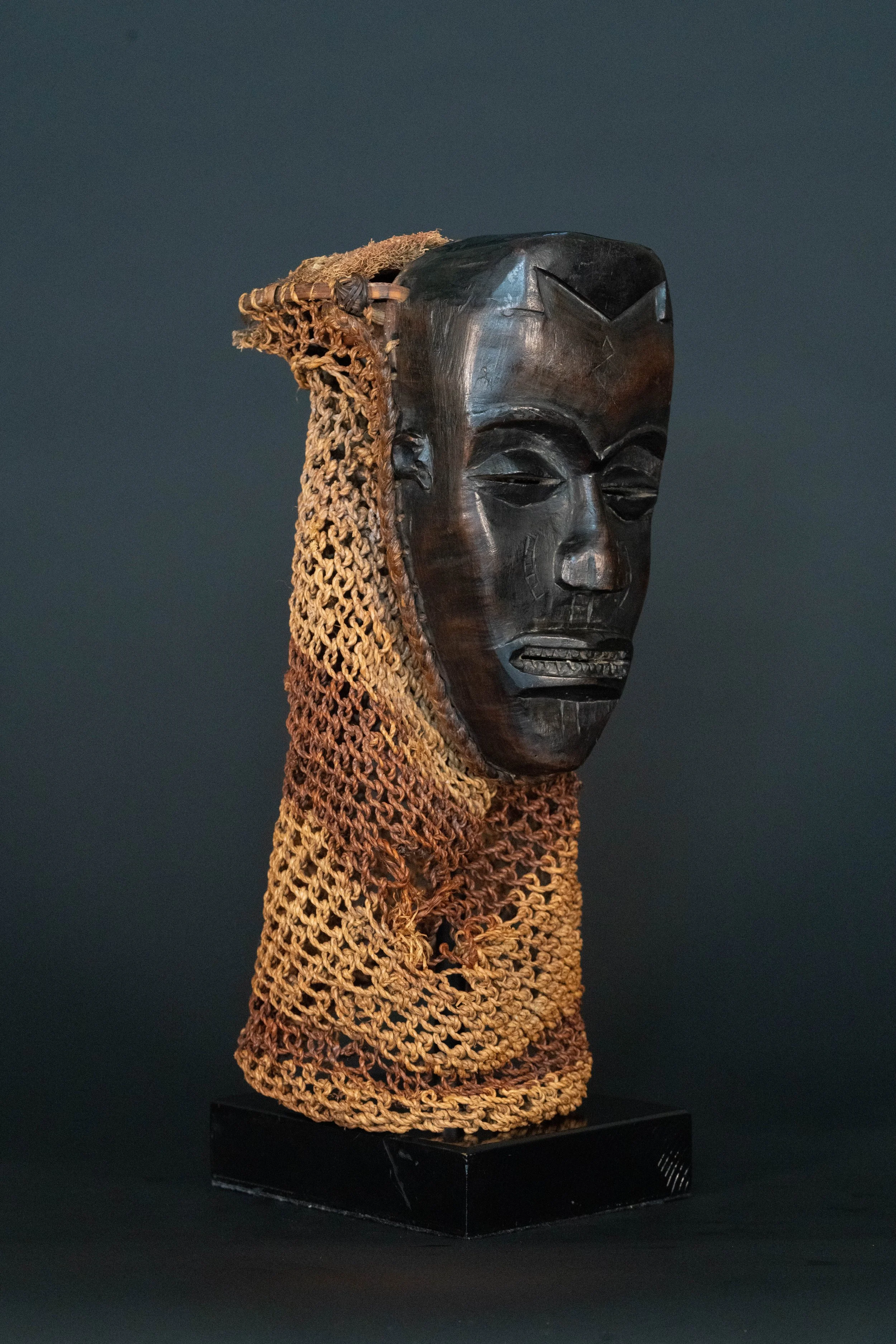 Image 3 of 5
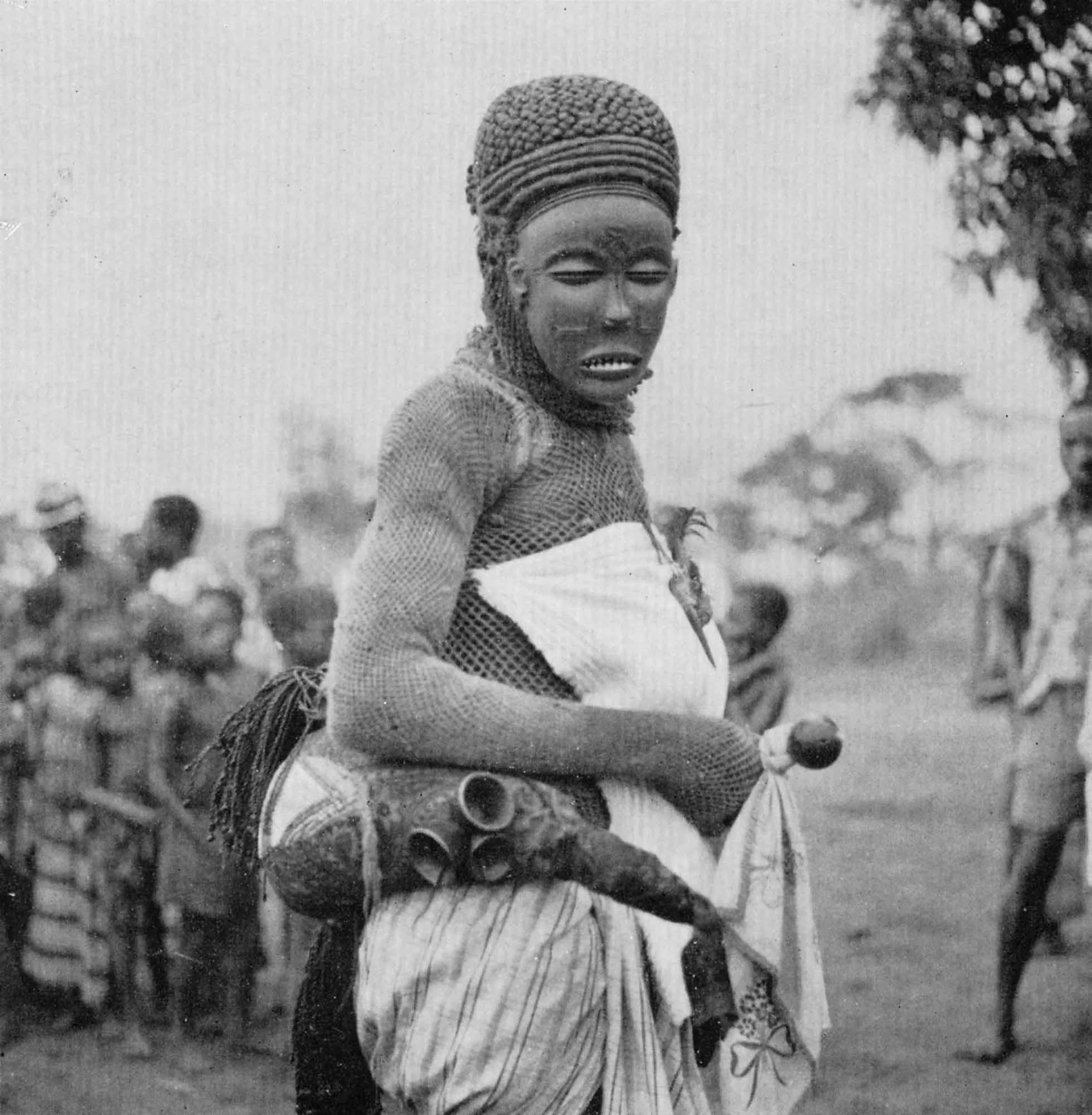 Image 4 of 5
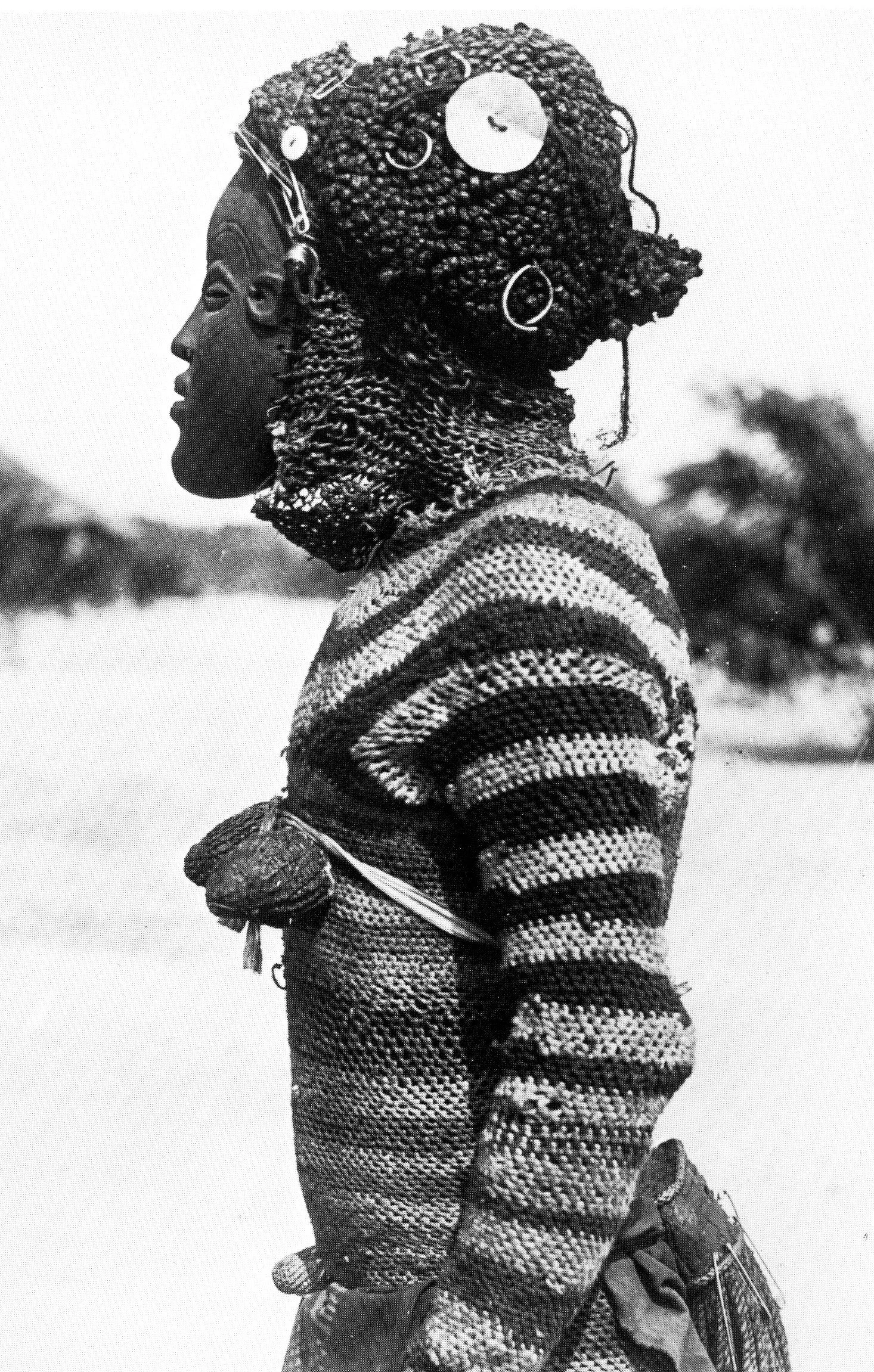 Image 5 of 5
This is not simply a mask—it is a survivor of ceremony.
Carved by a Chokwe artist of the Angola–Congo region in the early decades of the 20th century, this mask once moved, breathed, and spoke through a dancer during public ritual. The Chokwe are among Central Africa’s most respected sculptors, known for masks that embody lineage, authority, and moral instruction. This example reflects that legacy with remarkable clarity.
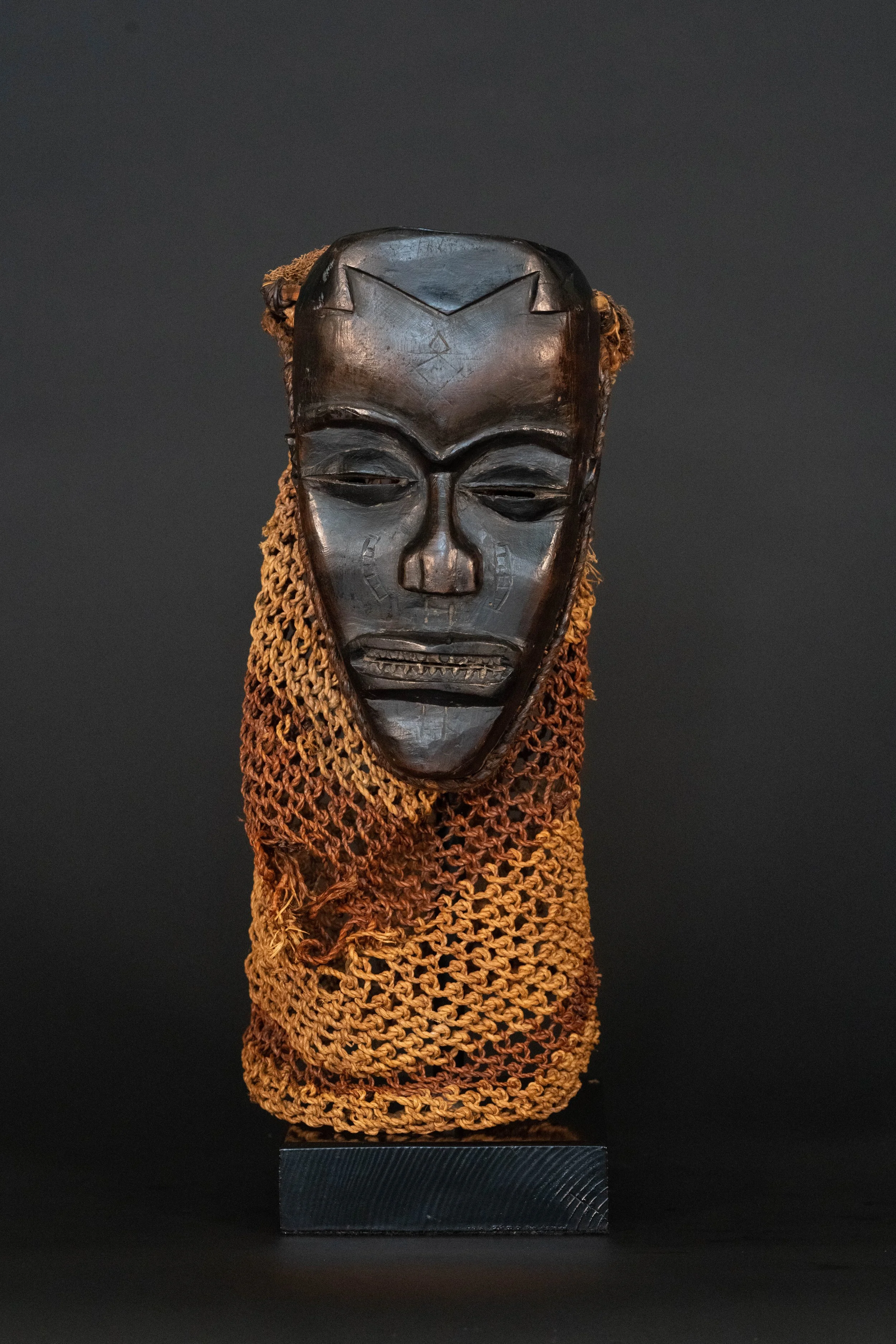
The face is calm, self-contained, and deliberate. Heavy-lidded eyes suggest wisdom and composure. The incised scarification marks on the cheeks identify cultural identity and maturity. The angular crest at the forehead—bold and sharply cut—anchors the composition and signals its ceremonial purpose. Even the individually carved teeth in the rectangular mouth carry symbolic weight: speech, judgment, ancestral presence. This is a face meant to command respect, not entertain.
What elevates this piece far beyond a typical African mask is the survival of its original woven fiber headdress. In most cases, these organic elements deteriorated or were discarded long ago. Here, the handwoven raffia remains intact, its warm gradations of gold and brown telling a story of age and ritual use. You can almost imagine the fibers swaying as the masked dancer moved through initiation ceremonies or community gatherings. The attachment points and wear patterns confirm that this was not made for export—it was made to be worn.
The wood surface supports that history. The patina is deep and honest, with a soft sheen built from handling and time rather than artificial treatment. Subtle asymmetries and visible hand-tool marks remind us that this was shaped by a master carver’s hands, not a machine. The wear concentrates naturally at the nose and lips, exactly where a mask would have been touched, lifted, and secured.
Dating most likely to the mid-20th century, this mask comes from a period when Chokwe carving was still deeply embedded in community ritual life. It was created for meaning, not the tourist trade.
For collectors new to African art, this is an exceptional entry point: visually striking, culturally significant, and materially complete. For experienced collectors, the intact fiber headdress alone places it in a higher tier.
This mask has presence. It reads beautifully on display, but it also carries authenticity you can feel. It bridges sculpture, history, and performance in a single object. Pieces like this do not surface frequently in such a coherent condition. It is both an artwork and a cultural document—and it holds its ground in any serious collection. The custom stand is included.
Condition: Good. Distressed textile headdress.
Dimensions: (Height x Width x Depth) Overall with stand 16 × 6.5 × 7.25 inches
This is not simply a mask—it is a survivor of ceremony.
Carved by a Chokwe artist of the Angola–Congo region in the early decades of the 20th century, this mask once moved, breathed, and spoke through a dancer during public ritual. The Chokwe are among Central Africa’s most respected sculptors, known for masks that embody lineage, authority, and moral instruction. This example reflects that legacy with remarkable clarity.
The face is calm, self-contained, and deliberate. Heavy-lidded eyes suggest wisdom and composure. The incised scarification marks on the cheeks identify cultural identity and maturity. The angular crest at the forehead—bold and sharply cut—anchors the composition and signals its ceremonial purpose. Even the individually carved teeth in the rectangular mouth carry symbolic weight: speech, judgment, ancestral presence. This is a face meant to command respect, not entertain.
What elevates this piece far beyond a typical African mask is the survival of its original woven fiber headdress. In most cases, these organic elements deteriorated or were discarded long ago. Here, the handwoven raffia remains intact, its warm gradations of gold and brown telling a story of age and ritual use. You can almost imagine the fibers swaying as the masked dancer moved through initiation ceremonies or community gatherings. The attachment points and wear patterns confirm that this was not made for export—it was made to be worn.
The wood surface supports that history. The patina is deep and honest, with a soft sheen built from handling and time rather than artificial treatment. Subtle asymmetries and visible hand-tool marks remind us that this was shaped by a master carver’s hands, not a machine. The wear concentrates naturally at the nose and lips, exactly where a mask would have been touched, lifted, and secured.
Dating most likely to the mid-20th century, this mask comes from a period when Chokwe carving was still deeply embedded in community ritual life. It was created for meaning, not the tourist trade.
For collectors new to African art, this is an exceptional entry point: visually striking, culturally significant, and materially complete. For experienced collectors, the intact fiber headdress alone places it in a higher tier.
This mask has presence. It reads beautifully on display, but it also carries authenticity you can feel. It bridges sculpture, history, and performance in a single object. Pieces like this do not surface frequently in such a coherent condition. It is both an artwork and a cultural document—and it holds its ground in any serious collection. The custom stand is included.
Condition: Good. Distressed textile headdress.
Dimensions: (Height x Width x Depth) Overall with stand 16 × 6.5 × 7.25 inches