This is a Dan mask from the Liberia–Côte d’Ivoire region, most likely carved in the late 19th to early 20th century. Among the Dan, masks were not decorative objects. They were living presences—embodiments of spiritual authority that appeared in the village to settle disputes, restore balance, and represent unseen forces. When a mask like this emerged from the forest during a ceremony, it was not viewed as a man in disguise. It was something other.
The long, oval face and strong vertical ridge create a sense of stillness and gravity. The narrow slit eyes are not meant to “see” in a naturalistic way—they suggest inward vision, spiritual awareness. The downturned mouth gives the mask moral seriousness. This is not a festival performer or a racing mask; this is a figure of judgment and calm authority. The subtle incised line running down the forehead reads as a scarification mark—an echo of identity and lineage marks worn by the Dan, grounding the spirit face in human cultural tradition while elevating it into the supernatural realm.
One of the most striking features is the pale horizontal band across the eyes. On Dan masks, such contrasting bands often reference ritual pigments or spiritual perception—emphasizing that this being sees differently than we do. Over time, the lighter surface has aged into the wood rather than sitting on top of it, reinforcing that it belongs to the mask’s original life.
Look closely at the edges, and you’ll see evenly spaced perforations around the perimeter. These were used to attach the full-fiber costume, which would have concealed the wearer’s body. Wear around these holes, along with the deep, dark patina and smooth interior surface, tells a convincing story of real use. The surface is not artificially distressed; it has the quiet glow that comes only from decades of handling, movement, sweat, smoke, and time.
Importantly, the carving itself shows confident handwork. There is subtle asymmetry and visible knife modeling beneath the patina—signs of a human hand shaping dense wood with intention.
For someone new to African art, this mask offers something essential: authenticity without excess. It is not overloaded with decoration. Its strength lies in clarity of form and cultural purpose. That kind of purity is increasingly difficult to find. The stand is included.
For context, a closely related Dan Deangle Mask is on view online at the Brooklyn Museum. https://www.brooklynmuseum.org/objects/124807
Condition: Good.
Dimensions: Overall with stand 13.5 × 5.5 × 6 inches; 9 × 5.25 × 3 inches (H x W x D)
This is a Dan mask from the Liberia–Côte d’Ivoire region, most likely carved in the late 19th to early 20th century. Among the Dan, masks were not decorative objects. They were living presences—embodiments of spiritual authority that appeared in the village to settle disputes, restore balance, and represent unseen forces. When a mask like this emerged from the forest during a ceremony, it was not viewed as a man in disguise. It was something other.
The long, oval face and strong vertical ridge create a sense of stillness and gravity. The narrow slit eyes are not meant to “see” in a naturalistic way—they suggest inward vision, spiritual awareness. The downturned mouth gives the mask moral seriousness. This is not a festival performer or a racing mask; this is a figure of judgment and calm authority. The subtle incised line running down the forehead reads as a scarification mark—an echo of identity and lineage marks worn by the Dan, grounding the spirit face in human cultural tradition while elevating it into the supernatural realm.
One of the most striking features is the pale horizontal band across the eyes. On Dan masks, such contrasting bands often reference ritual pigments or spiritual perception—emphasizing that this being sees differently than we do. Over time, the lighter surface has aged into the wood rather than sitting on top of it, reinforcing that it belongs to the mask’s original life.
Look closely at the edges, and you’ll see evenly spaced perforations around the perimeter. These were used to attach the full-fiber costume, which would have concealed the wearer’s body. Wear around these holes, along with the deep, dark patina and smooth interior surface, tells a convincing story of real use. The surface is not artificially distressed; it has the quiet glow that comes only from decades of handling, movement, sweat, smoke, and time.
Importantly, the carving itself shows confident handwork. There is subtle asymmetry and visible knife modeling beneath the patina—signs of a human hand shaping dense wood with intention.
For someone new to African art, this mask offers something essential: authenticity without excess. It is not overloaded with decoration. Its strength lies in clarity of form and cultural purpose. That kind of purity is increasingly difficult to find. The stand is included.
For context, a closely related Dan Deangle Mask is on view online at the Brooklyn Museum. https://www.brooklynmuseum.org/objects/124807
Condition: Good.
Dimensions: Overall with stand 13.5 × 5.5 × 6 inches; 9 × 5.25 × 3 inches (H x W x D)
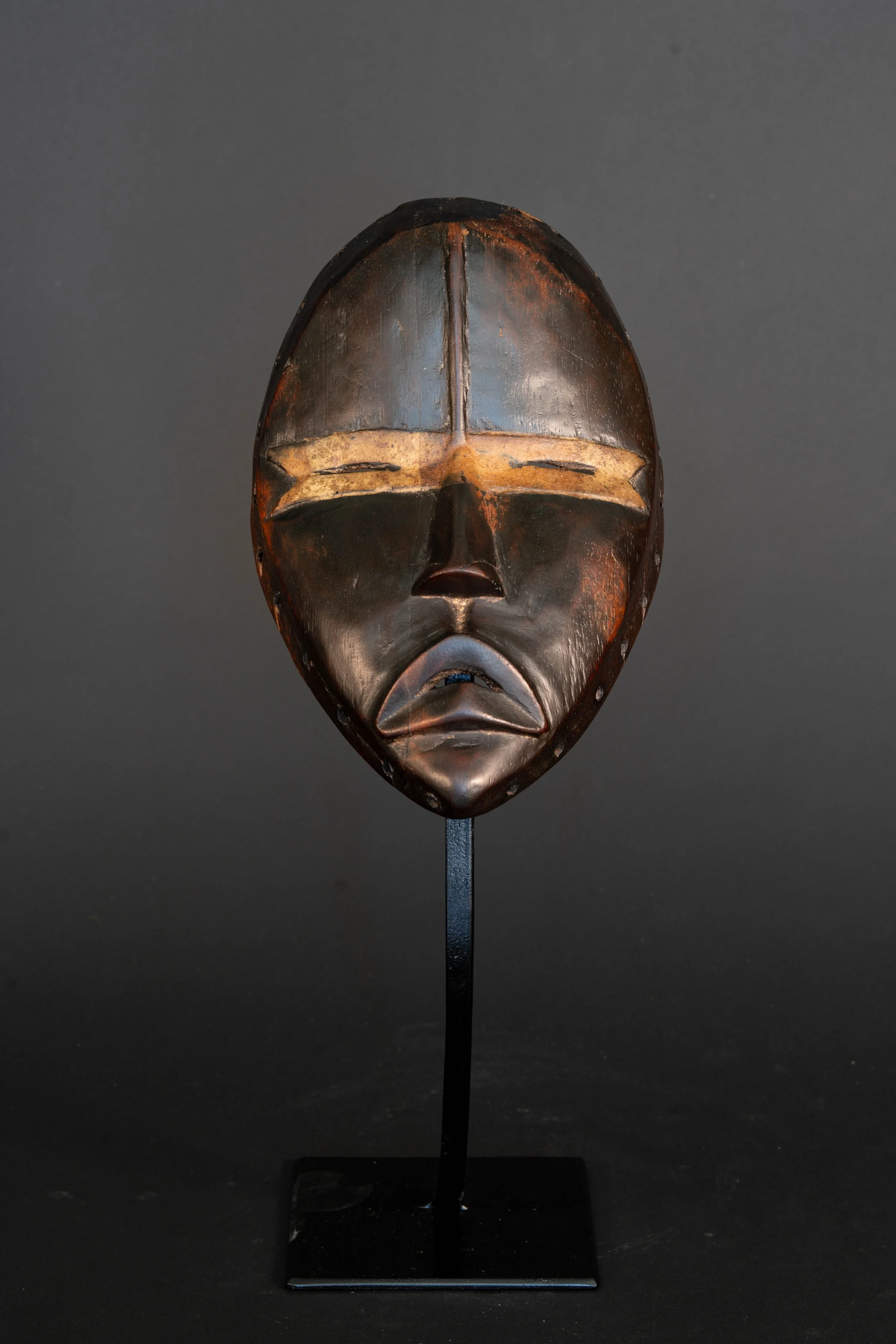 Image 1 of 7
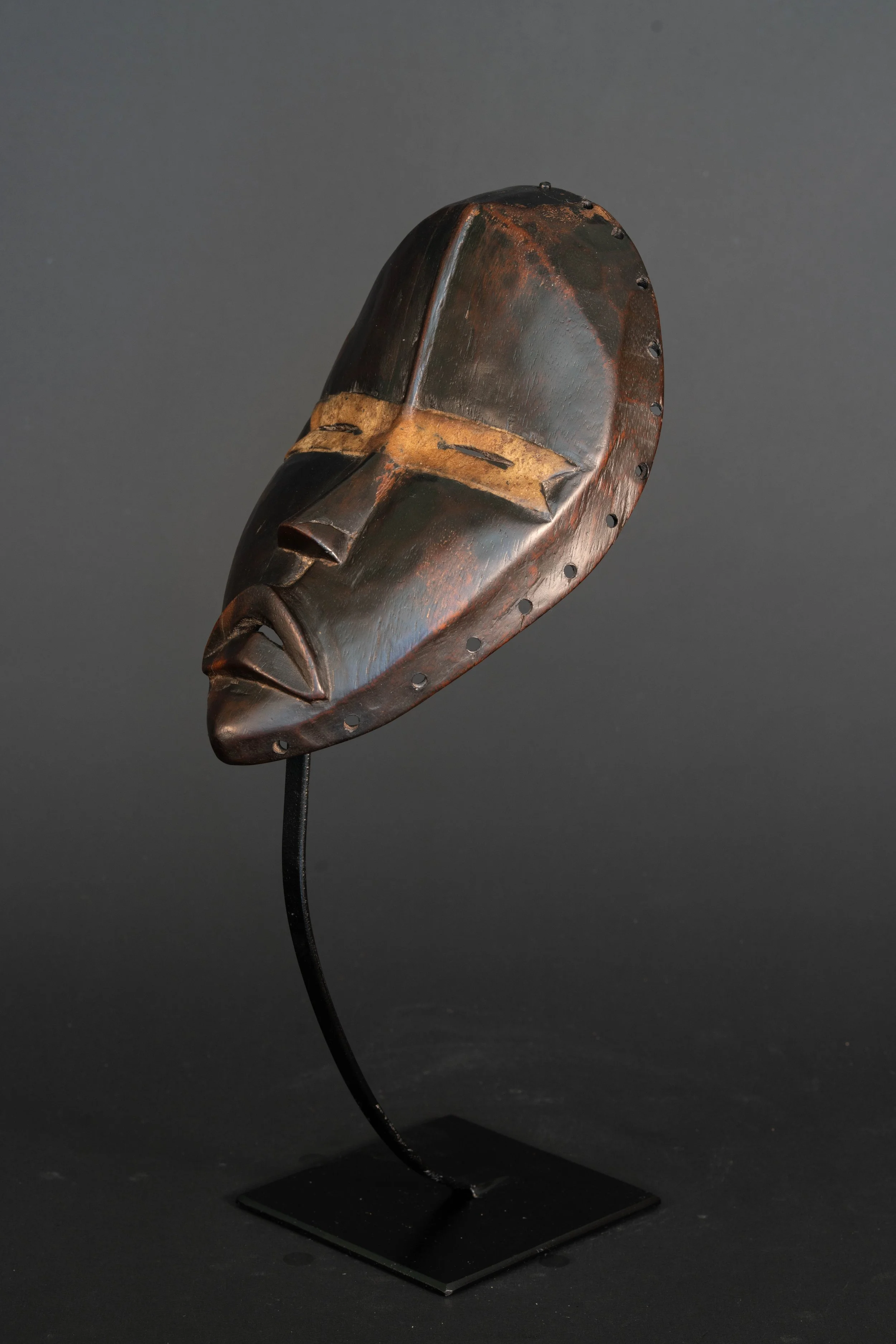 Image 2 of 7
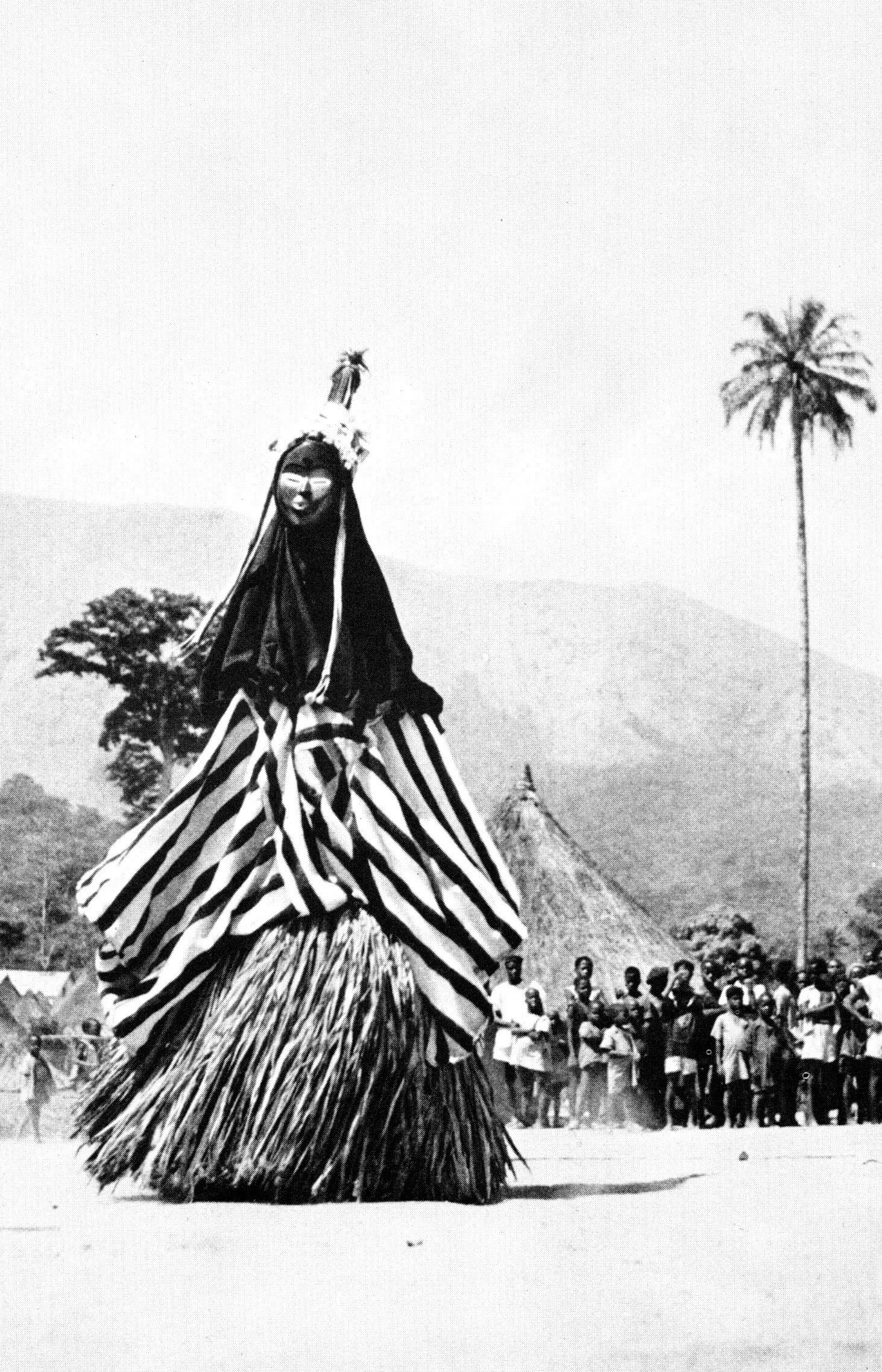 Image 3 of 7
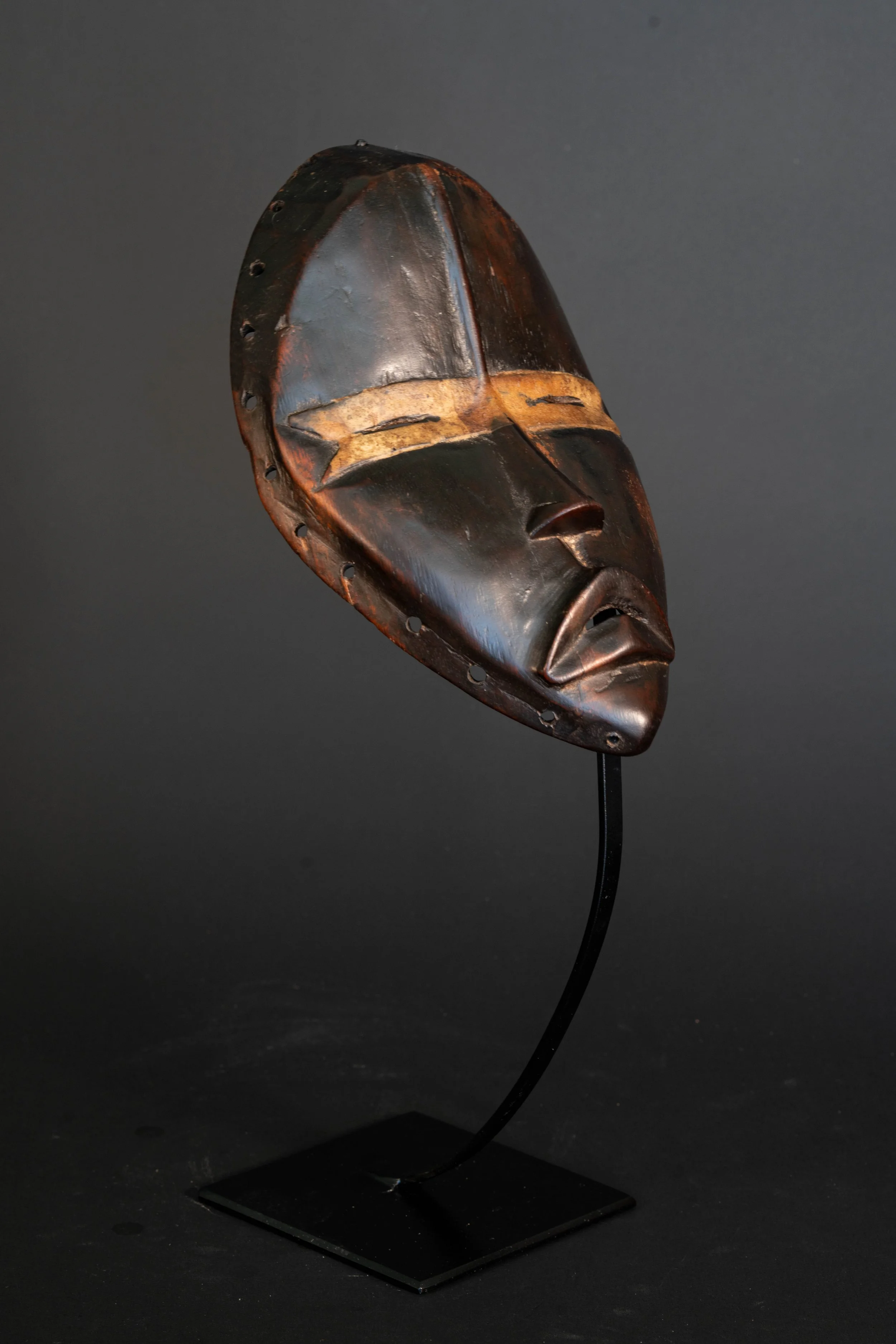 Image 4 of 7
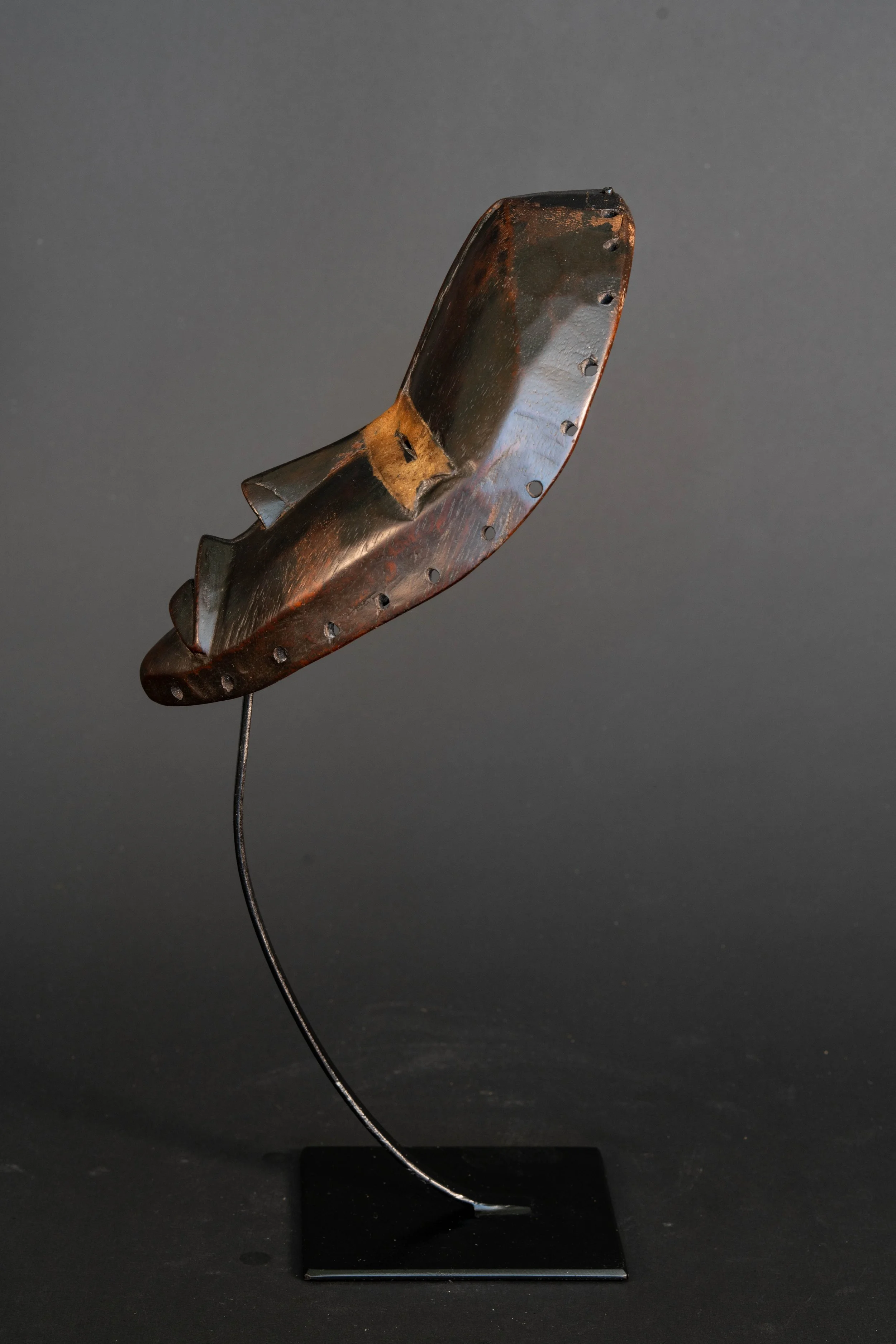 Image 5 of 7
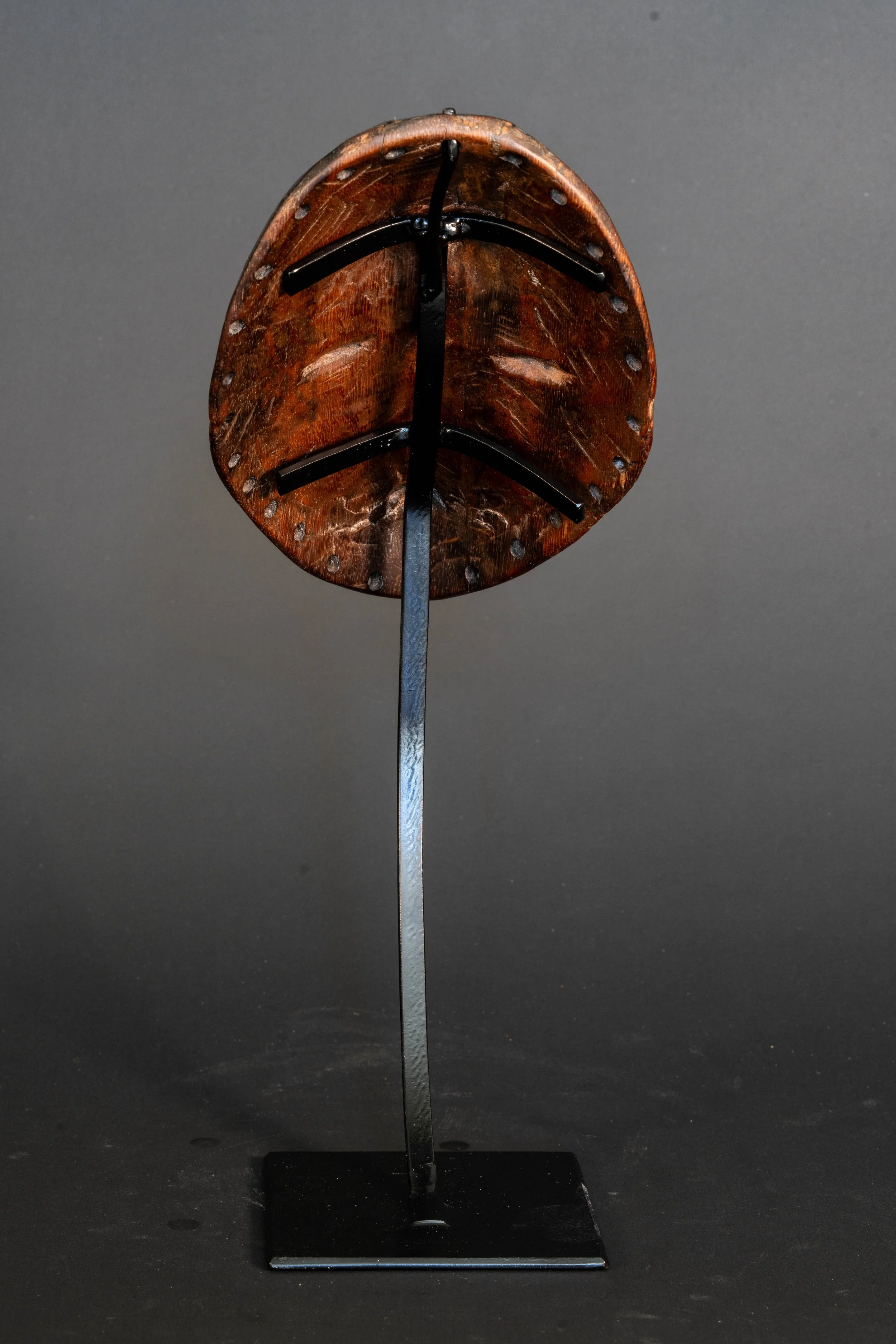 Image 6 of 7
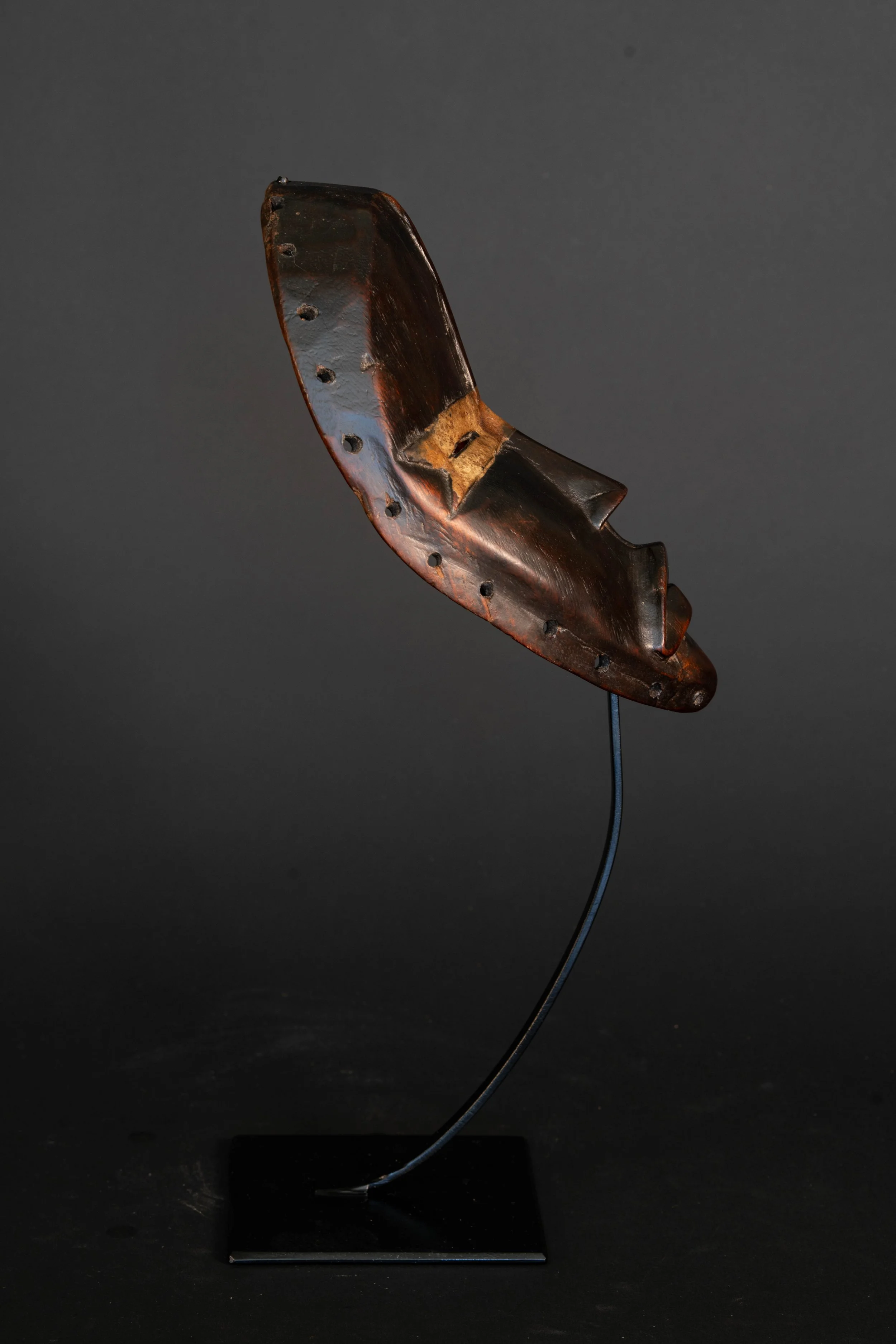 Image 7 of 7