 Image 1 of 4
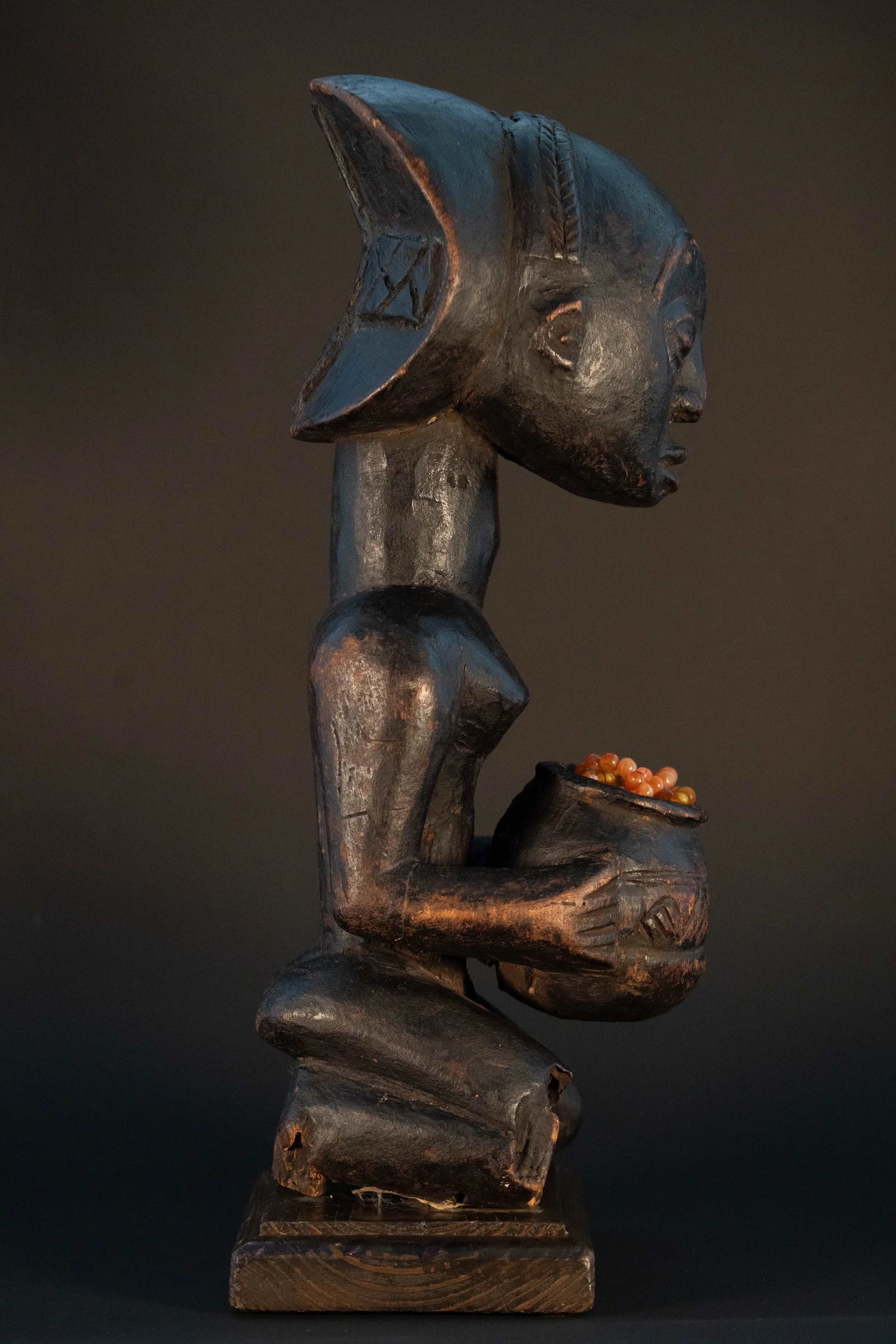 Image 2 of 4
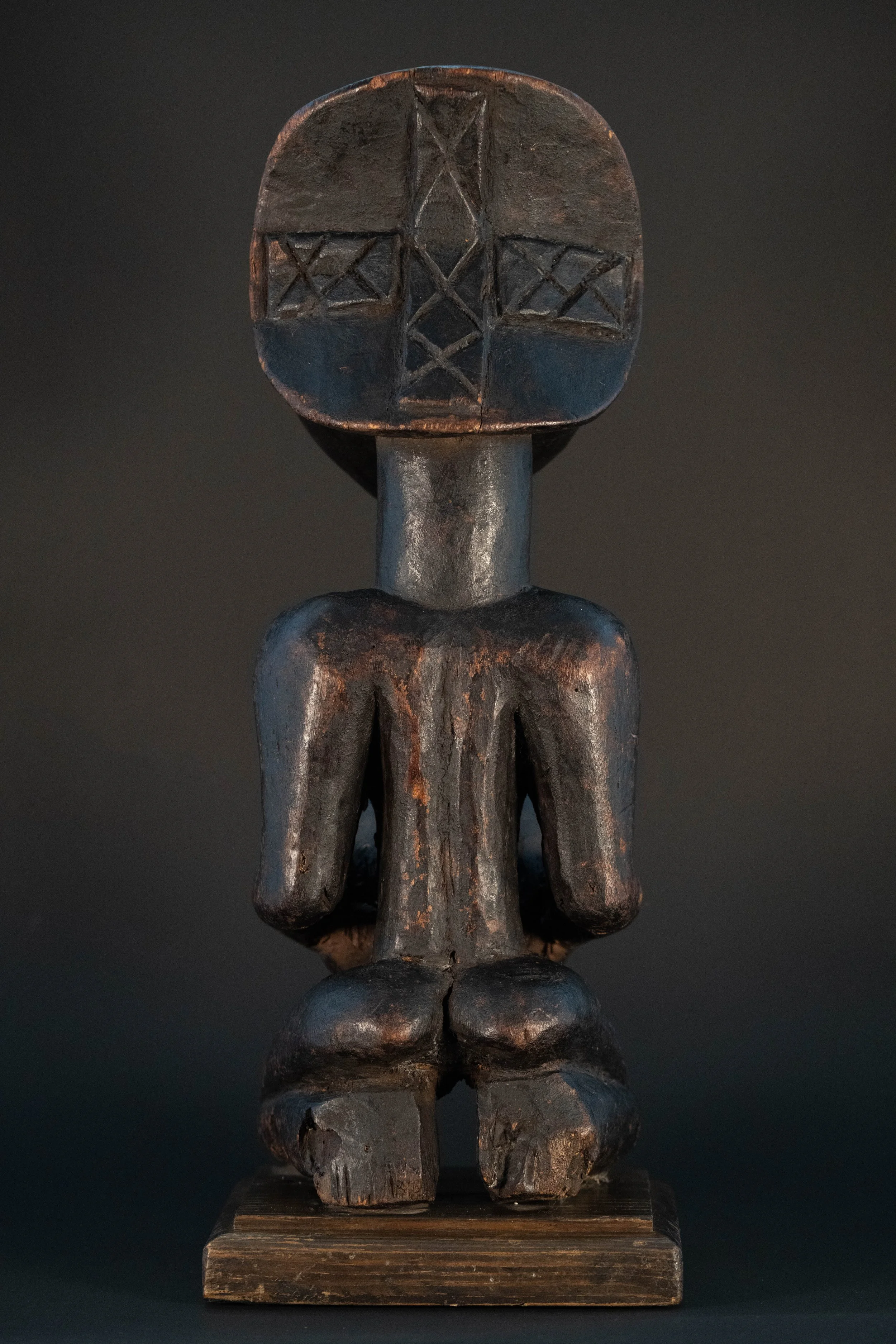 Image 3 of 4
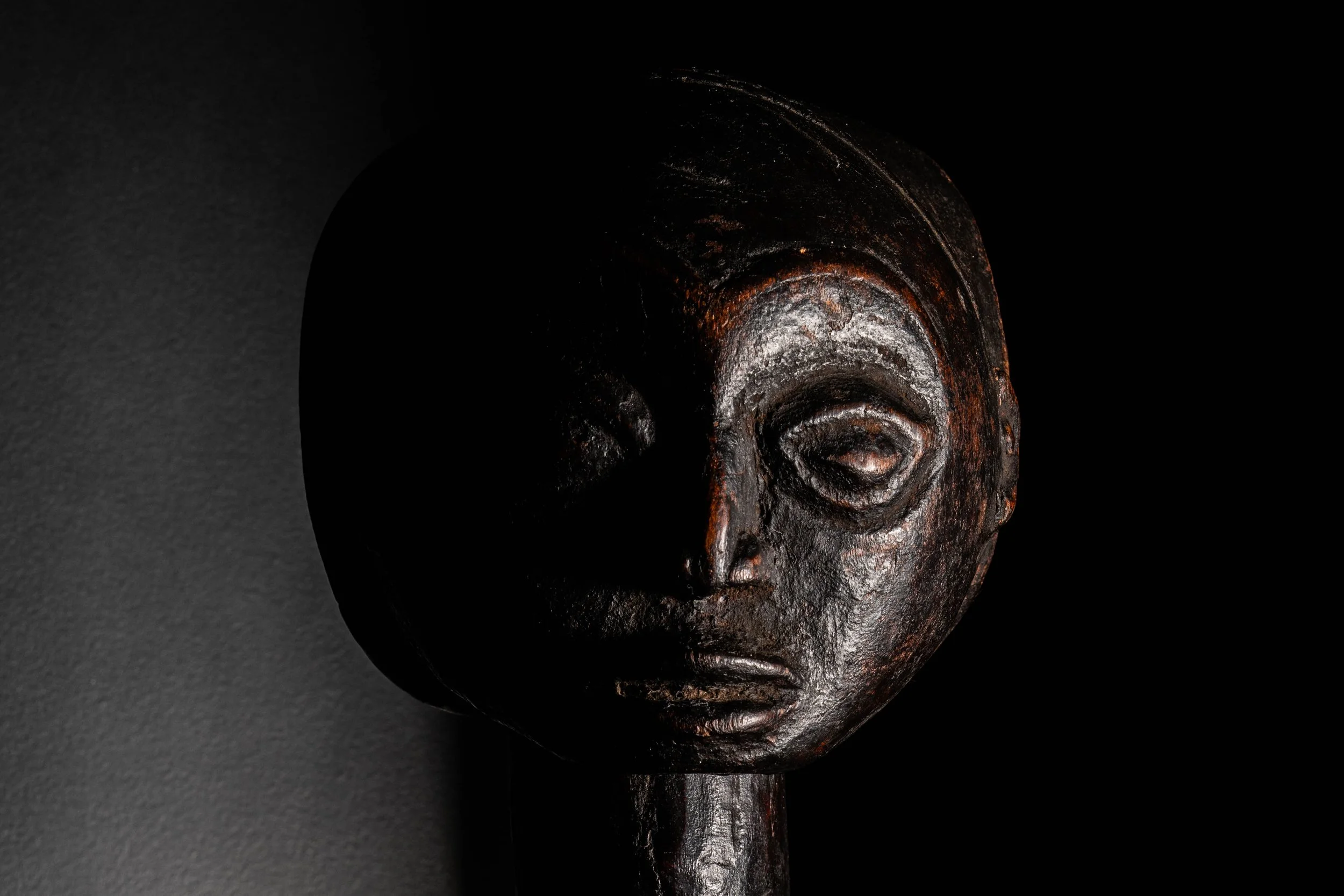 Image 4 of 4
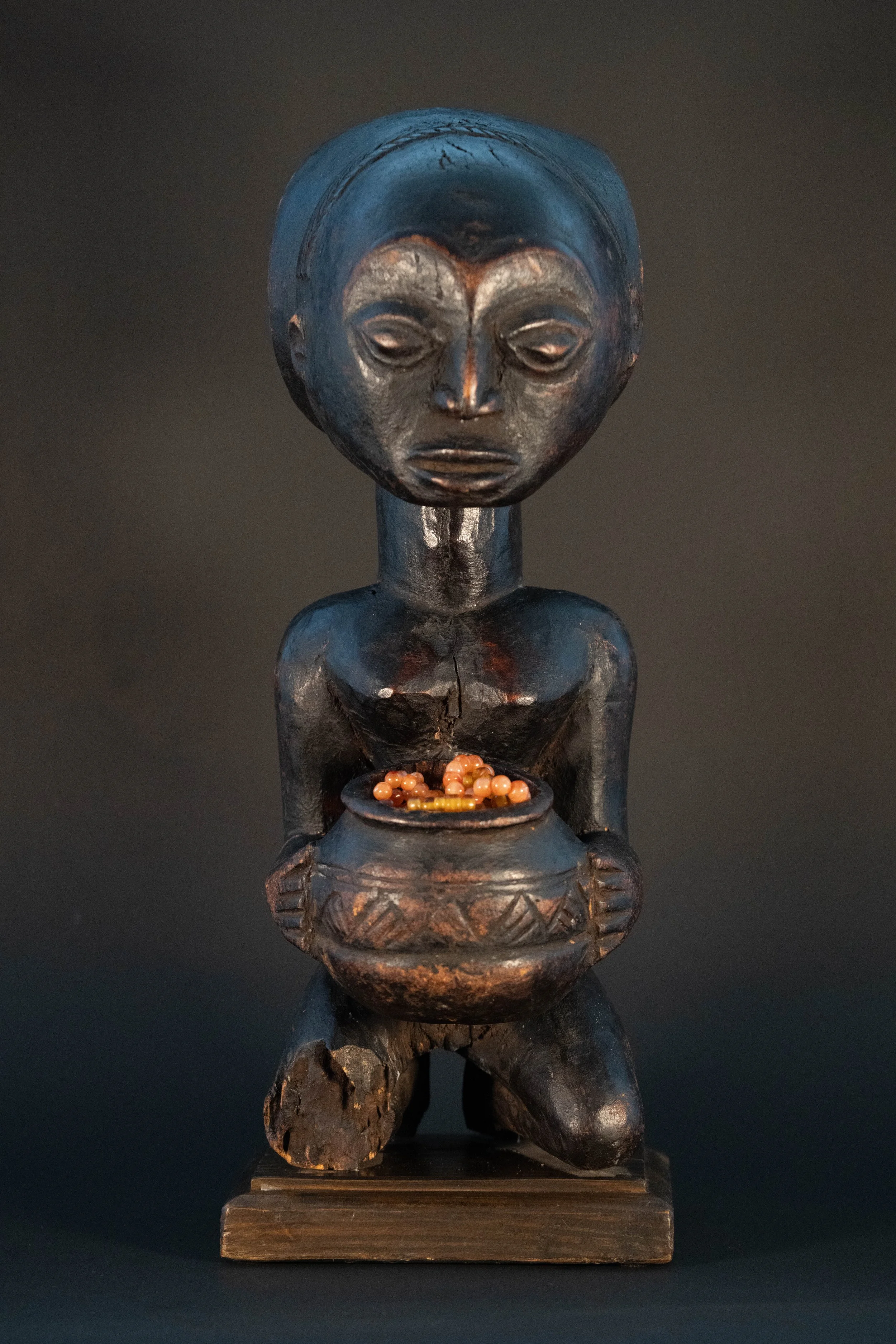
This kneeling female figure with bowl is more than a sculpture—it is a survivor from the royal and spiritual world of the Luba people of Central Africa. In Luba culture, women were revered as custodians of lineage and sacred knowledge, and figures like this embody an ideal rather than an individual. Her calm, half-closed eyes and upright kneeling posture convey introspection, authority, and spiritual presence. The bowl she holds, known as an mboko, was used in divination and ritual practice, reinforcing her role as a mediator between the visible and ancestral worlds. Her refined coiffure, though restrained, signifies beauty, status, and the central role of women in preserving history and power.
The sculpture’s form reflects core Luba values: an elongated neck emphasizing the head as the seat of wisdom, balanced proportions, and a composed, dignified presence. The surface shows a deep, lustrous patina consistent with age and ritual handling, with natural wear on the knees, hands, and bowl rim. There is old, arrested insect damage on the right knee, now stable and consistent with long-term age. A string of carnelian beads rests within the bowl, adding visual and symbolic richness without detracting from the sculpture’s integrity. Subtle asymmetries and visible hand-tool marks further support its authenticity as a traditionally carved work.
Stylistically, the figure aligns with early to mid-20th-century Luba examples, a period highly sought after by collectors. Luba sculpture is celebrated worldwide for its refined abstraction and profound symbolism, influencing major developments in modern art. This example offers a compelling combination of cultural depth, aesthetic strength, and authentic presence—an object that is not only historically significant but deeply engaging as a work of art. Custom base included.
Condition: Good. Arrested bug damage on the right knee.
Dimensions: Overall with base 17.5 × 7 × 7 inches; Figure only 16 × 6 × 7 inches (H x W x D)
This kneeling female figure with bowl is more than a sculpture—it is a survivor from the royal and spiritual world of the Luba people of Central Africa. In Luba culture, women were revered as custodians of lineage and sacred knowledge, and figures like this embody an ideal rather than an individual. Her calm, half-closed eyes and upright kneeling posture convey introspection, authority, and spiritual presence. The bowl she holds, known as an mboko, was used in divination and ritual practice, reinforcing her role as a mediator between the visible and ancestral worlds. Her refined coiffure, though restrained, signifies beauty, status, and the central role of women in preserving history and power.
The sculpture’s form reflects core Luba values: an elongated neck emphasizing the head as the seat of wisdom, balanced proportions, and a composed, dignified presence. The surface shows a deep, lustrous patina consistent with age and ritual handling, with natural wear on the knees, hands, and bowl rim. There is old, arrested insect damage on the right knee, now stable and consistent with long-term age. A string of carnelian beads rests within the bowl, adding visual and symbolic richness without detracting from the sculpture’s integrity. Subtle asymmetries and visible hand-tool marks further support its authenticity as a traditionally carved work.
Stylistically, the figure aligns with early to mid-20th-century Luba examples, a period highly sought after by collectors. Luba sculpture is celebrated worldwide for its refined abstraction and profound symbolism, influencing major developments in modern art. This example offers a compelling combination of cultural depth, aesthetic strength, and authentic presence—an object that is not only historically significant but deeply engaging as a work of art. Custom base included.
Condition: Good. Arrested bug damage on the right knee.
Dimensions: Overall with base 17.5 × 7 × 7 inches; Figure only 16 × 6 × 7 inches (H x W x D)