 Image 1 of 3
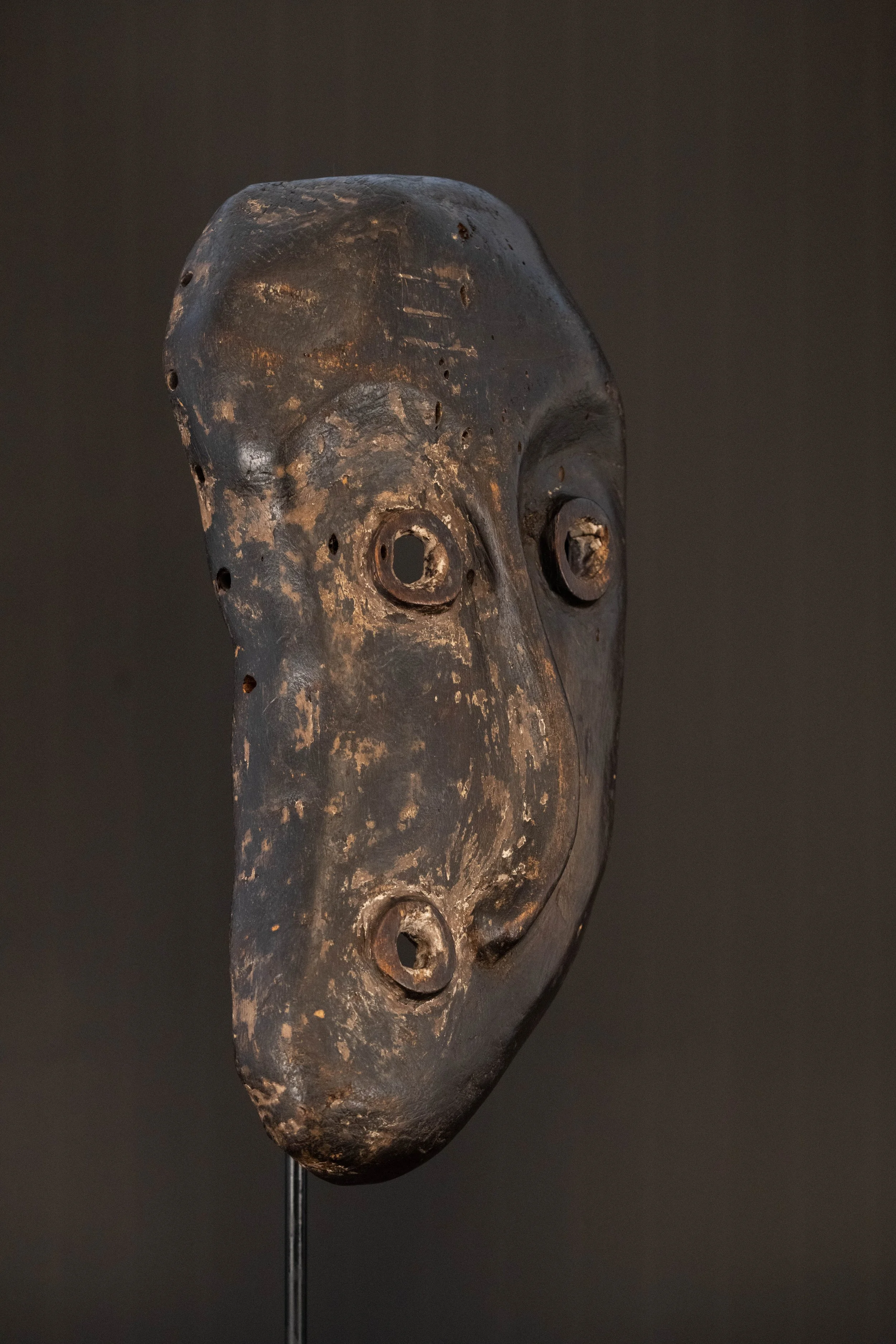 Image 2 of 3
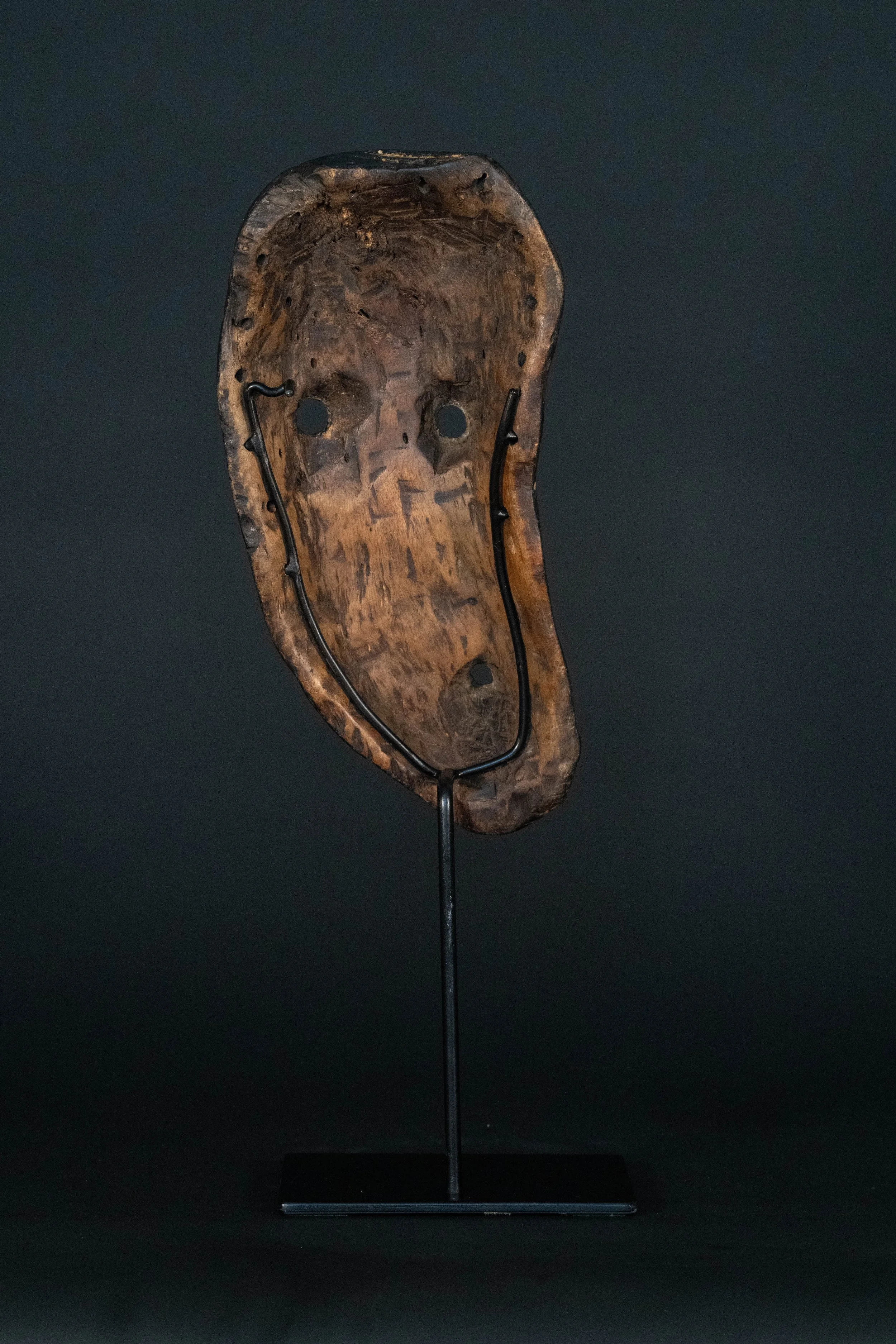 Image 3 of 3
Circa 1890–1930
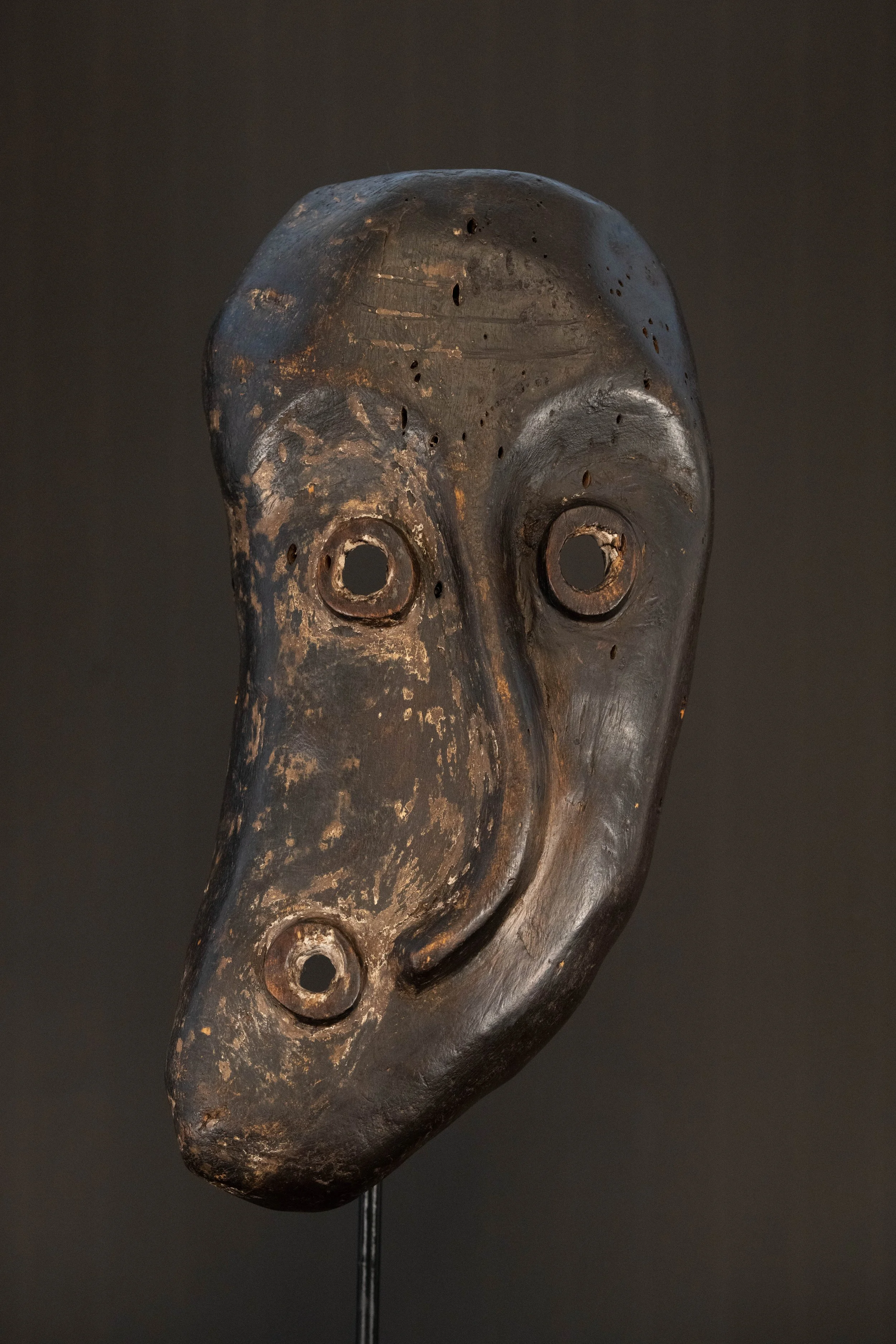
Created by the Pende people of what is now the Democratic Republic of the Congo, this asymmetrical face belongs to a type known as Mbangu—masks that depict illness, moral disorder, or social imbalance. The distortion is deliberate: one cheek swells, the jaw shifts, the features feel slightly, unsettlingly wrong. That wrongness was the point. In performance, the Mbangu mask didn't portray ideal beauty—it held a mirror up to its opposite.
Worn in masked dance, it moved through dust and drumbeat as a visual lesson, reminding the community about behavior, consequence, and the fragile balance between physical and spiritual life. The performer animated the face with body and gesture; the hollow circular eyes did the rest.
The surface tells its own story. A deep black-brown patina has built up over decades of use and handling. Areas of soft polish mark where hands have held it. Small insect exit holes—long inactive—confirm time spent in village environments. The edges of the eye perforations are gently worn rather than sharp. Nothing here has been artificially aged or contrived. The wear is honest.
This is a single-piece hardwood carving of real sculptural confidence—bold volume, no unnecessary ornament, and an expression that reads as strikingly contemporary. Collectors often note how well these Pende forms hold their own against 20th-century Western abstraction, much of which they predate.
Authentic Pende masks of this age and quality are increasingly difficult to find. This example has presence, history, and a clear original purpose. Custom stand included.
Condition: Good. Arrested insect damage; minor scuffs, scratches, and abrasions consistent with age and use.
Dimensions: Overall with stand 21 × 7 × 5 inches; Mask only 14 × 7 × 3.5 inches (H x W x D)
Circa 1890–1930
Created by the Pende people of what is now the Democratic Republic of the Congo, this asymmetrical face belongs to a type known as Mbangu—masks that depict illness, moral disorder, or social imbalance. The distortion is deliberate: one cheek swells, the jaw shifts, the features feel slightly, unsettlingly wrong. That wrongness was the point. In performance, the Mbangu mask didn't portray ideal beauty—it held a mirror up to its opposite.
Worn in masked dance, it moved through dust and drumbeat as a visual lesson, reminding the community about behavior, consequence, and the fragile balance between physical and spiritual life. The performer animated the face with body and gesture; the hollow circular eyes did the rest.
The surface tells its own story. A deep black-brown patina has built up over decades of use and handling. Areas of soft polish mark where hands have held it. Small insect exit holes—long inactive—confirm time spent in village environments. The edges of the eye perforations are gently worn rather than sharp. Nothing here has been artificially aged or contrived. The wear is honest.
This is a single-piece hardwood carving of real sculptural confidence—bold volume, no unnecessary ornament, and an expression that reads as strikingly contemporary. Collectors often note how well these Pende forms hold their own against 20th-century Western abstraction, much of which they predate.
Authentic Pende masks of this age and quality are increasingly difficult to find. This example has presence, history, and a clear original purpose. Custom stand included.
Condition: Good. Arrested insect damage; minor scuffs, scratches, and abrasions consistent with age and use.
Dimensions: Overall with stand 21 × 7 × 5 inches; Mask only 14 × 7 × 3.5 inches (H x W x D)