Tanzania | Early–mid 20th century
Among the Nyamwezi people of Tanzania, carvings known as mwana hiti honor motherhood, fertility, and the continuity of family and community. Kept within the home, they served as protective and devotional objects—believed to safeguard the household and encourage well-being across generations. In Nyamwezi culture, a woman carrying her child is more than a scene from daily life; it is a symbol of strength, protection, and the future itself.
This figure has a genuine presence. She stands firmly planted, legs slightly bent, grounded and composed. Her torso is full and life-affirming, and the bold, wing-like hairstyle frames a calm, stylized face that reads as deeply human from every angle. The silhouette is confident and memorable—conveying both dignity and status.
The surface tells its own story. The wood has developed a rich, dark patina over decades, with smooth polish on the breasts, abdomen, thighs, and feet where handling has gently burnished the surface. Darker tones settle into the recesses, creating depth and warmth that cannot be replicated artificially. This is the kind of surface collectors seek—earned, not manufactured.
There is a stable age crack at the back of the head, typical of older hardwood carvings, and a later repair to the child's left arm. Both speak to a sculpture that has lived a real life. Neither affects the figure's strength, presence, or display impact.
At 17 inches, this piece commands attention on a pedestal, shelf, or console while remaining intimate enough to feel personal. Whether you are a seasoned collector or new to African art, this is the kind of sculpture that connects immediately—warm, sculptural, and unmistakably authentic.
A beautifully aged example of East African maternity carving, ready to anchor a collection or begin one.Nyamwezi Mother-and-Child Figure (Mwana Hiti)
Condition: Good. Crack on the back of the head of the main figure. Repair on the child’s left arm.
Dimensions: 17 × 6 × 6 inches (H x W x D)
Tanzania | Early–mid 20th century
Among the Nyamwezi people of Tanzania, carvings known as mwana hiti honor motherhood, fertility, and the continuity of family and community. Kept within the home, they served as protective and devotional objects—believed to safeguard the household and encourage well-being across generations. In Nyamwezi culture, a woman carrying her child is more than a scene from daily life; it is a symbol of strength, protection, and the future itself.
This figure has a genuine presence. She stands firmly planted, legs slightly bent, grounded and composed. Her torso is full and life-affirming, and the bold, wing-like hairstyle frames a calm, stylized face that reads as deeply human from every angle. The silhouette is confident and memorable—conveying both dignity and status.
The surface tells its own story. The wood has developed a rich, dark patina over decades, with smooth polish on the breasts, abdomen, thighs, and feet where handling has gently burnished the surface. Darker tones settle into the recesses, creating depth and warmth that cannot be replicated artificially. This is the kind of surface collectors seek—earned, not manufactured.
There is a stable age crack at the back of the head, typical of older hardwood carvings, and a later repair to the child's left arm. Both speak to a sculpture that has lived a real life. Neither affects the figure's strength, presence, or display impact.
At 17 inches, this piece commands attention on a pedestal, shelf, or console while remaining intimate enough to feel personal. Whether you are a seasoned collector or new to African art, this is the kind of sculpture that connects immediately—warm, sculptural, and unmistakably authentic.
A beautifully aged example of East African maternity carving, ready to anchor a collection or begin one.Nyamwezi Mother-and-Child Figure (Mwana Hiti)
Condition: Good. Crack on the back of the head of the main figure. Repair on the child’s left arm.
Dimensions: 17 × 6 × 6 inches (H x W x D)
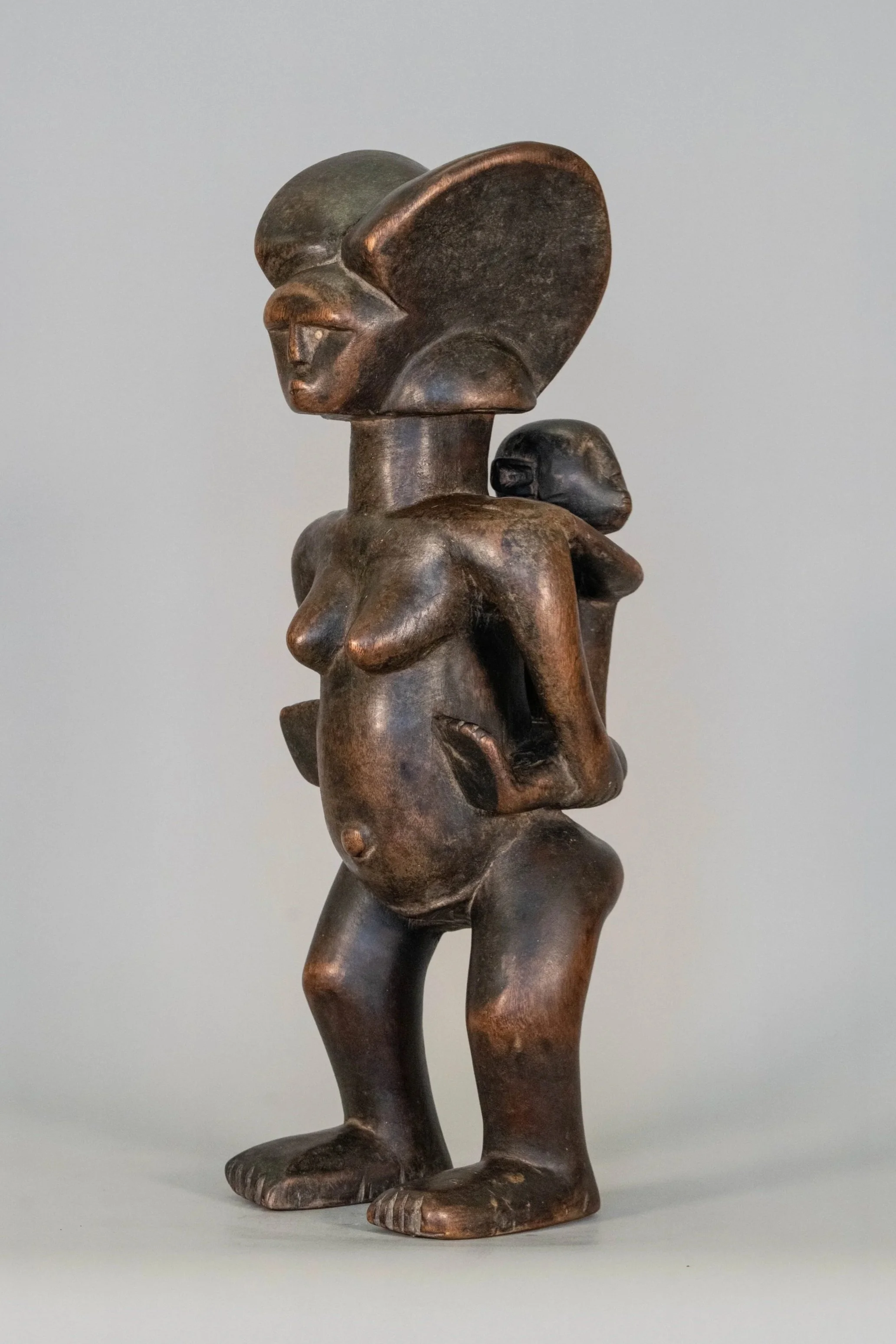 Image 1 of 7
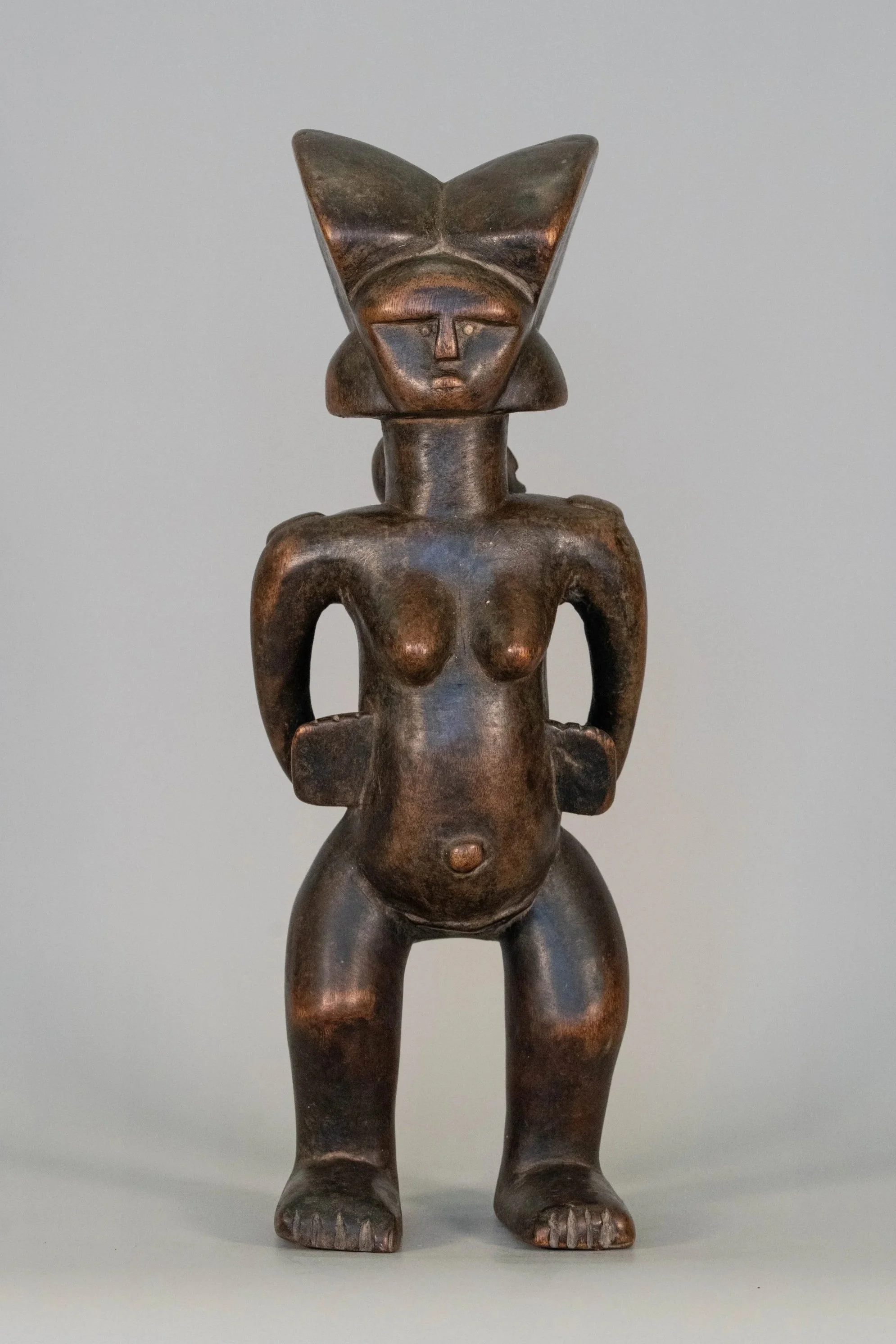 Image 2 of 7
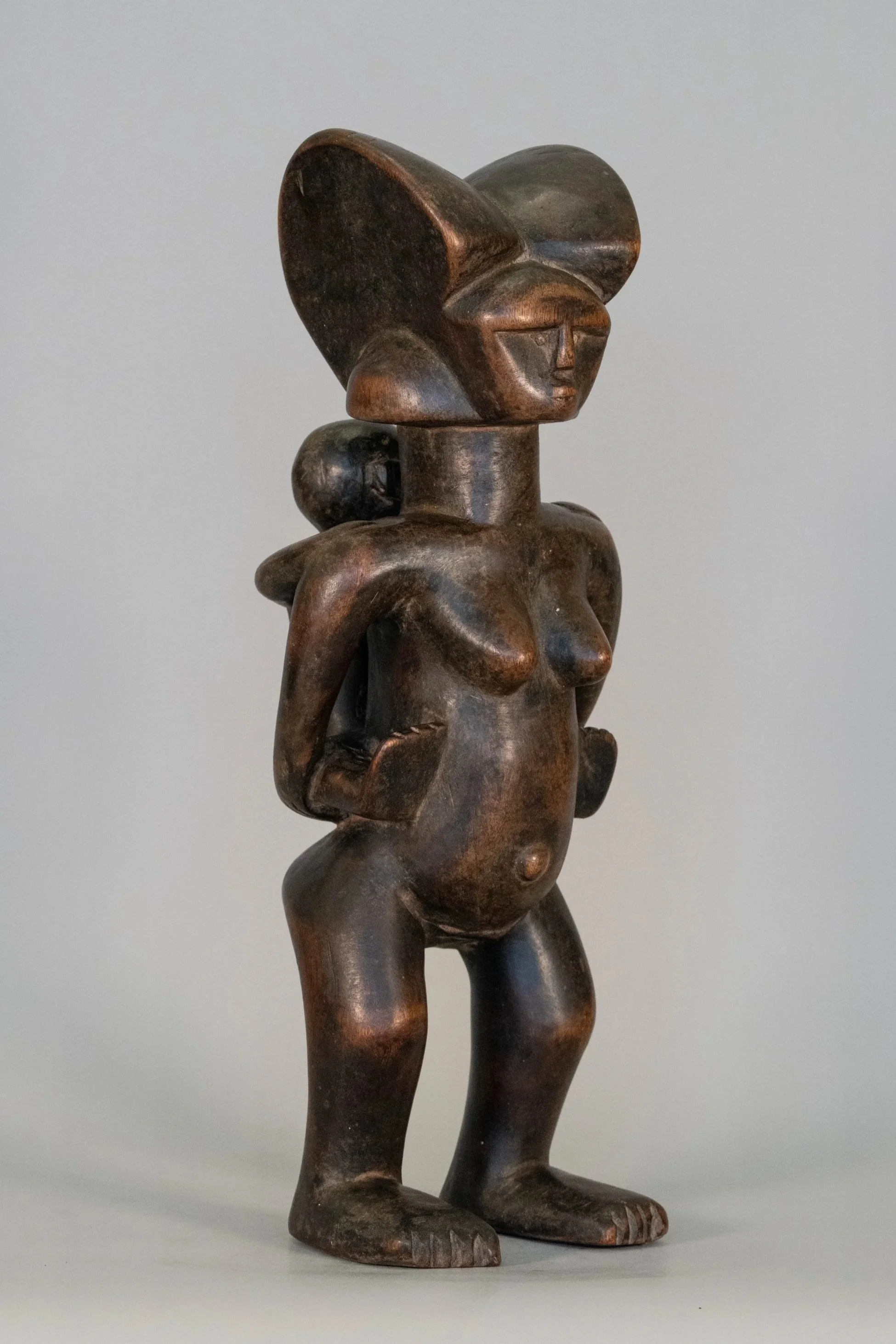 Image 3 of 7
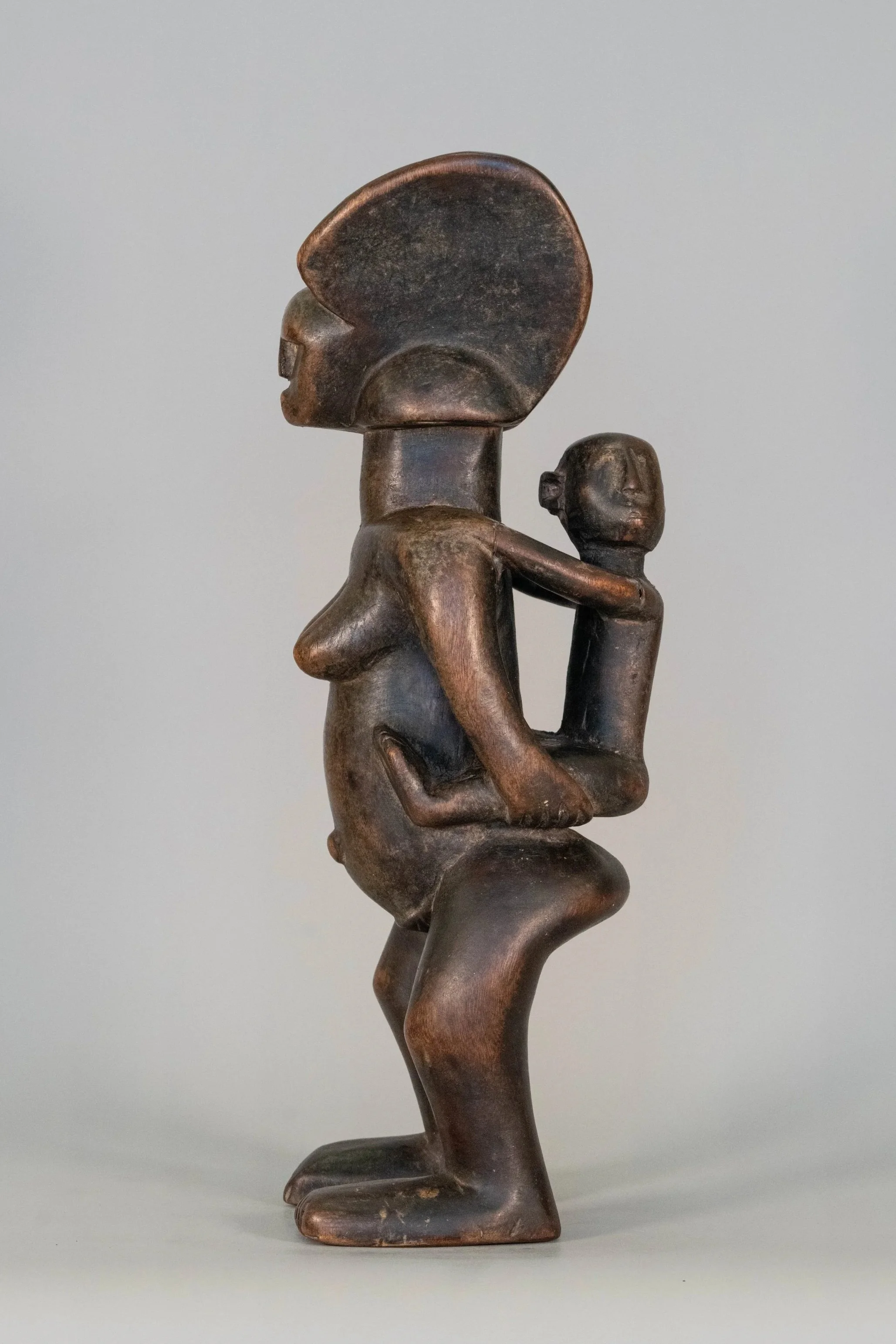 Image 4 of 7
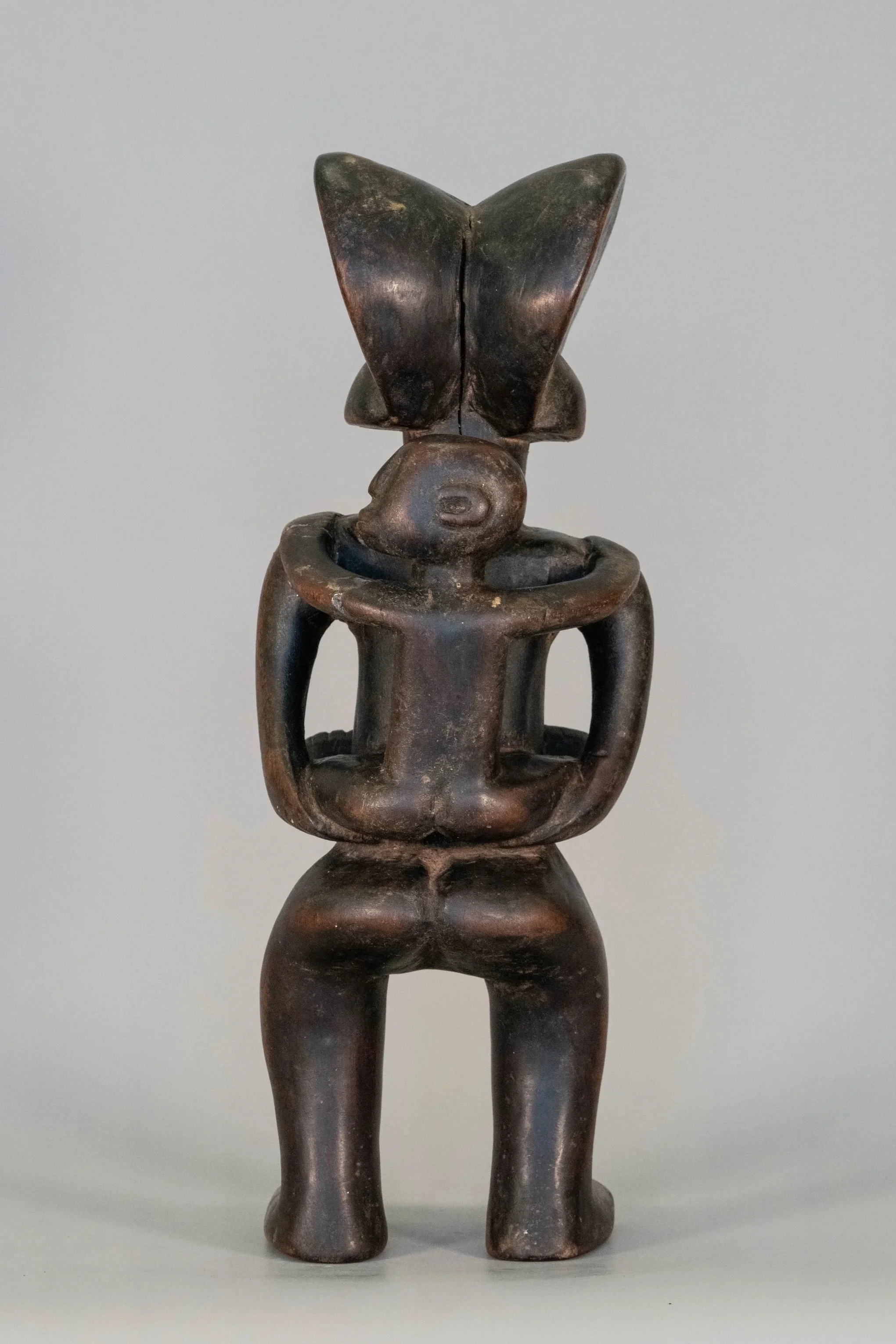 Image 5 of 7
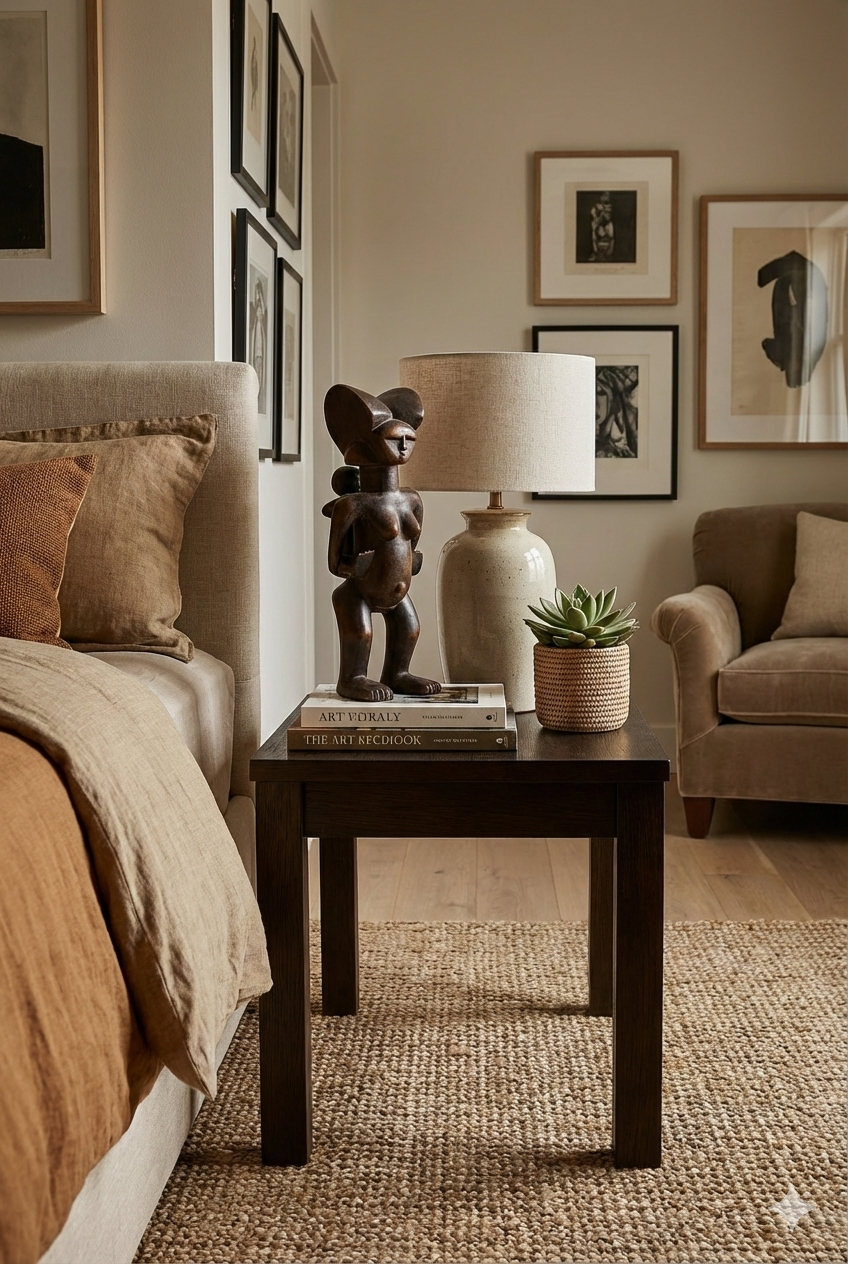 Image 6 of 7
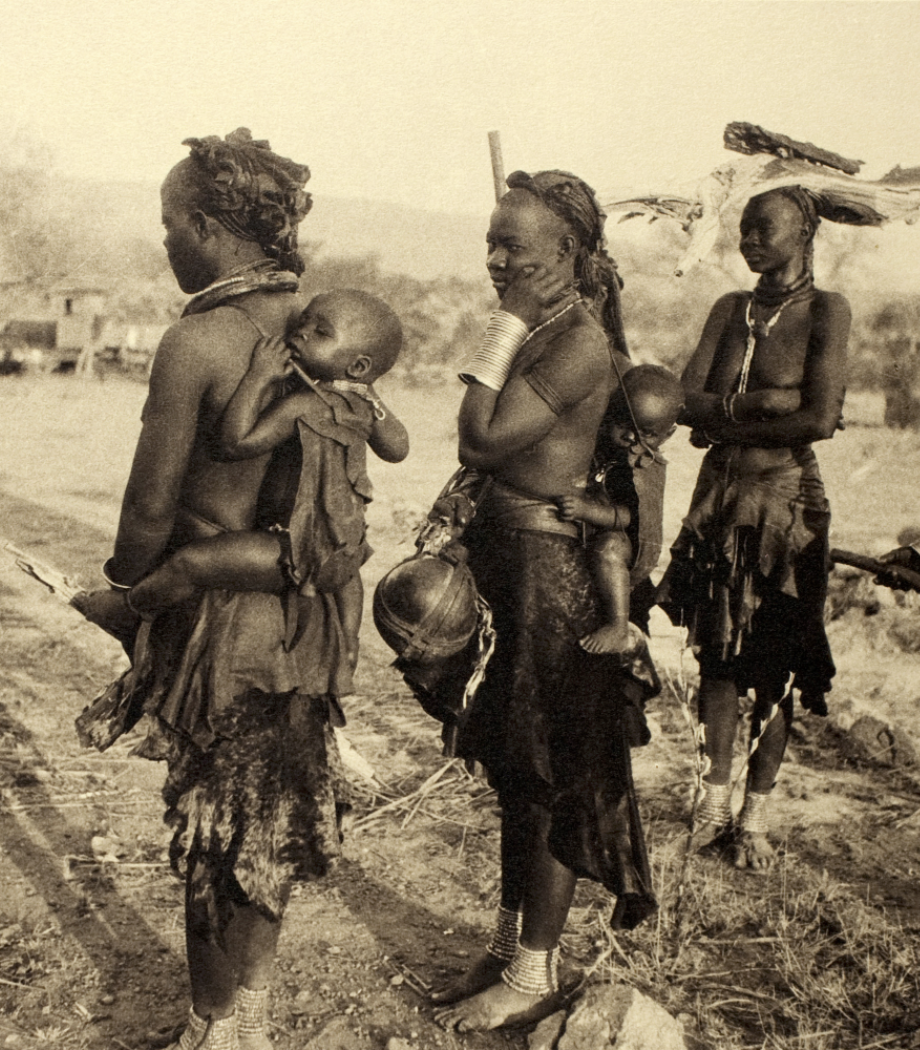 Image 7 of 7