Early 20th Century, circa 1910–1930· 16 inches · Custom display base included
Standing sixteen inches tall, this male figure is carved from a single piece of dark hardwood whose patina has grown heavy with age. His silhouette stops you: a sharply peaked head crest, two broken cowrie shells set as eyes, a strong projecting nose, and an abstracted beard. The ears are large, horizontal, and ovoid — not naturalistic but emblematic, carved to declare a being who listens across worlds. The arms encircle forward in the signature Mumuye posture — not passive at the sides but engaged and protective. A carved waist ring, integrated into the body from a single piece of wood, girds the figure with quiet authority.
The surface is the story. Dark, smooth, and completely stable — no flaking, no active cracking — this wood has been touched by many hands over many decades. The dark encrustation in recessed areas, the warmer tones on high surfaces: this is the patina of genuine ritual use, not artificial aging. Experienced collectors know the difference on sight.
This figure is an iagalagana— the most significant object type in the Mumuye artistic tradition. These figures were invoked for healing, divination, rainmaking, dispute resolution, and as guardians over ancestral remains. To own one was to hold authority within the community. They were made for use — carved by specialist blacksmiths within the family compound that commissioned them, for purposes no outsider was meant to witness.
The Mumuye people of northeastern Nigeria remained virtually unknown to the outside world until the 1960s — their remote hill country offered colonizers nothing worth extracting, and so their culture developed in near-total isolation for centuries. When scholars finally documented their art, the impact was immediate. Mumuye figures entered the collections of the Metropolitan Museum of Art, the Musée du quai Branly, the Fowler Museum at UCLA, and major private collections worldwide.
The formal qualities here — peaked crest, horizontal ovoid ears, prominent umbilicus, integrated waist ring, forward-curling arms, cowrie shell eyes — represent the complete canonical vocabulary of Mumuye figure carving. The slight asymmetry between the two sides is not a flaw; it is the mark of hand-carving for ritual use. Authentic iagalagana carry in their bodies the evidence of the carver's hand, the tool's path, and time's passage. This one does.
Condition: Good: Custom display base included.
Dimensions: Overall with base 17.5 x 5.5x 5.25 inches; Figure only 16 x 4.5 x 4.5 inches (H x W x D)
Early 20th Century, circa 1910–1930· 16 inches · Custom display base included
Standing sixteen inches tall, this male figure is carved from a single piece of dark hardwood whose patina has grown heavy with age. His silhouette stops you: a sharply peaked head crest, two broken cowrie shells set as eyes, a strong projecting nose, and an abstracted beard. The ears are large, horizontal, and ovoid — not naturalistic but emblematic, carved to declare a being who listens across worlds. The arms encircle forward in the signature Mumuye posture — not passive at the sides but engaged and protective. A carved waist ring, integrated into the body from a single piece of wood, girds the figure with quiet authority.
The surface is the story. Dark, smooth, and completely stable — no flaking, no active cracking — this wood has been touched by many hands over many decades. The dark encrustation in recessed areas, the warmer tones on high surfaces: this is the patina of genuine ritual use, not artificial aging. Experienced collectors know the difference on sight.
This figure is an iagalagana— the most significant object type in the Mumuye artistic tradition. These figures were invoked for healing, divination, rainmaking, dispute resolution, and as guardians over ancestral remains. To own one was to hold authority within the community. They were made for use — carved by specialist blacksmiths within the family compound that commissioned them, for purposes no outsider was meant to witness.
The Mumuye people of northeastern Nigeria remained virtually unknown to the outside world until the 1960s — their remote hill country offered colonizers nothing worth extracting, and so their culture developed in near-total isolation for centuries. When scholars finally documented their art, the impact was immediate. Mumuye figures entered the collections of the Metropolitan Museum of Art, the Musée du quai Branly, the Fowler Museum at UCLA, and major private collections worldwide.
The formal qualities here — peaked crest, horizontal ovoid ears, prominent umbilicus, integrated waist ring, forward-curling arms, cowrie shell eyes — represent the complete canonical vocabulary of Mumuye figure carving. The slight asymmetry between the two sides is not a flaw; it is the mark of hand-carving for ritual use. Authentic iagalagana carry in their bodies the evidence of the carver's hand, the tool's path, and time's passage. This one does.
Condition: Good: Custom display base included.
Dimensions: Overall with base 17.5 x 5.5x 5.25 inches; Figure only 16 x 4.5 x 4.5 inches (H x W x D)
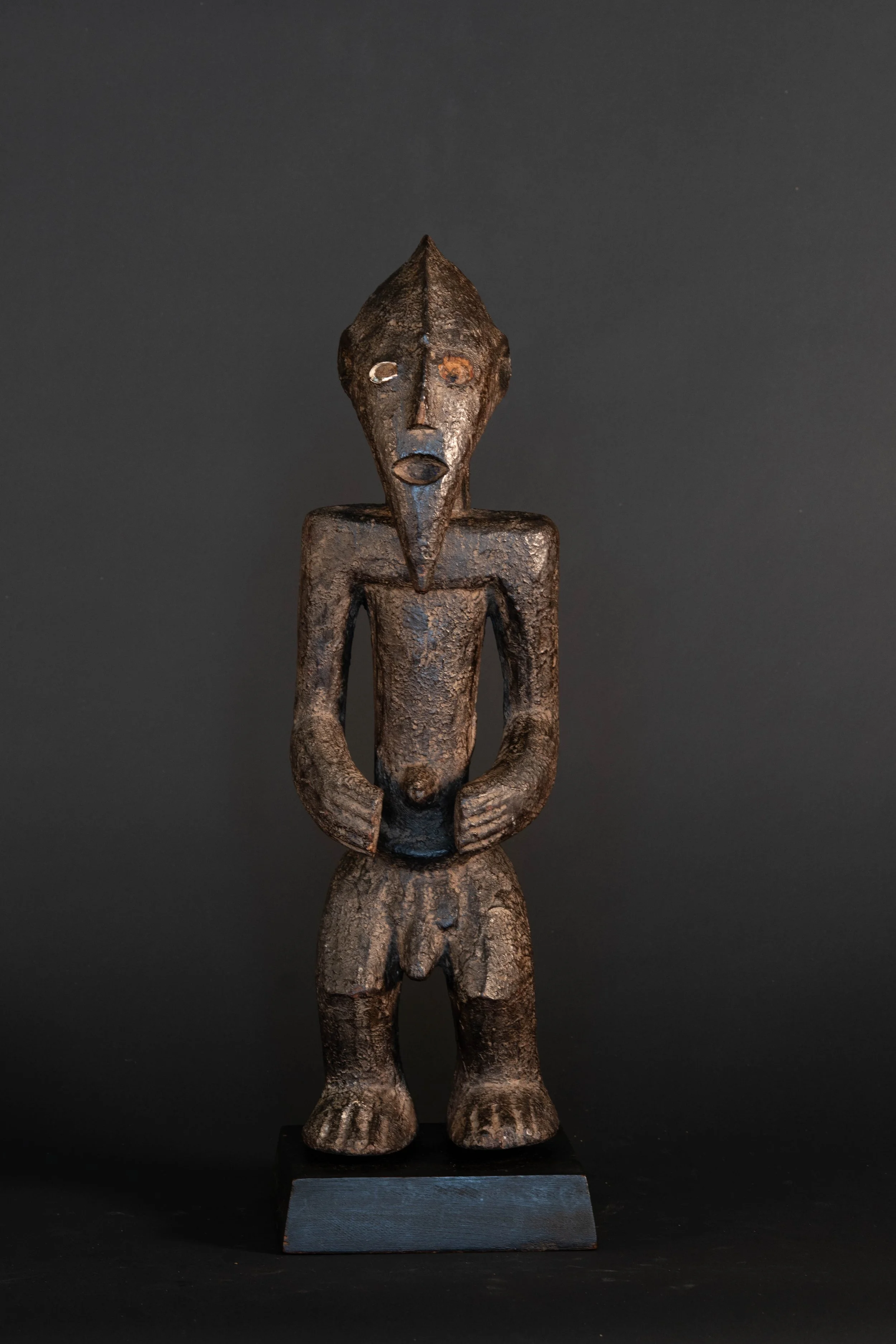 Image 1 of 6
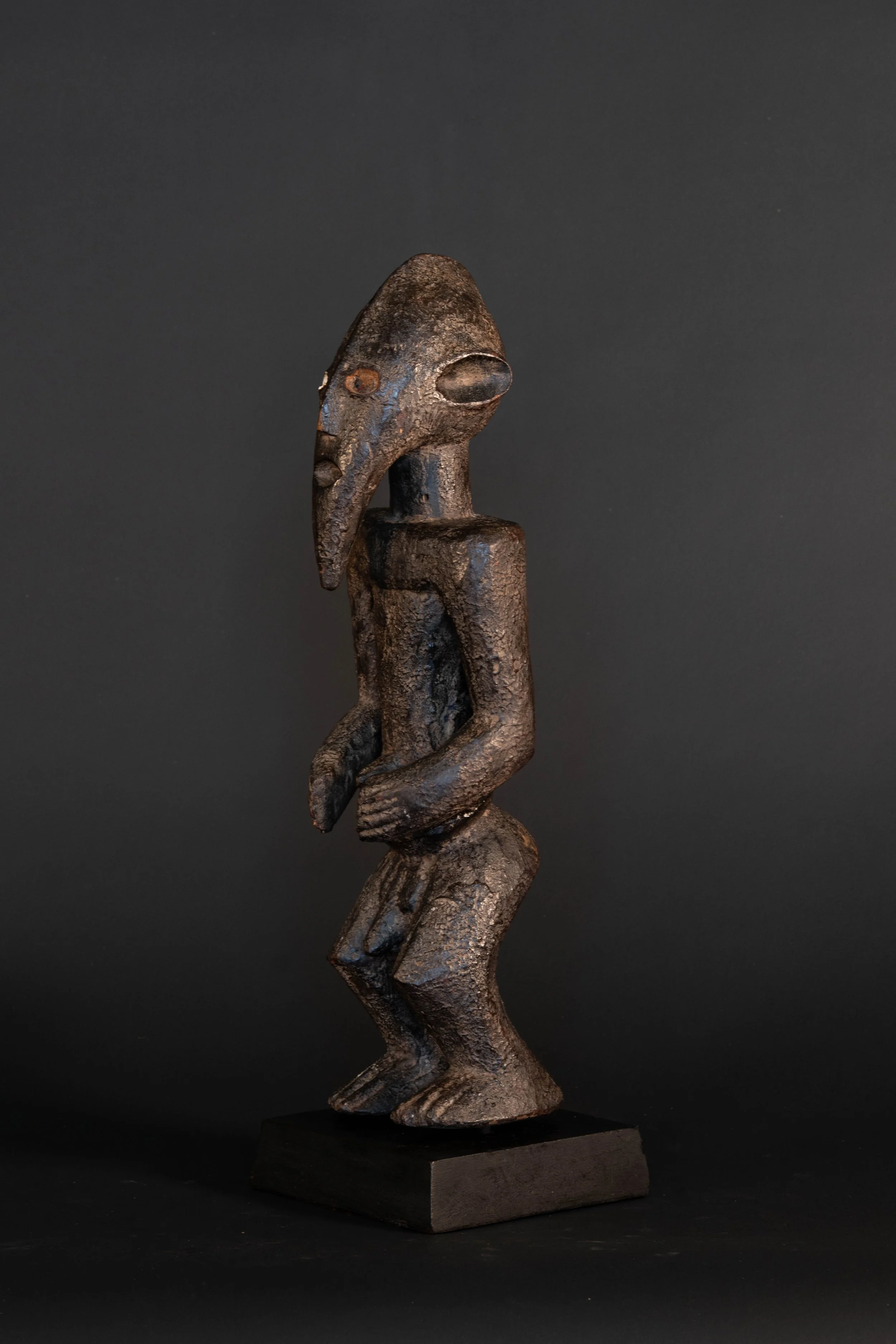 Image 2 of 6
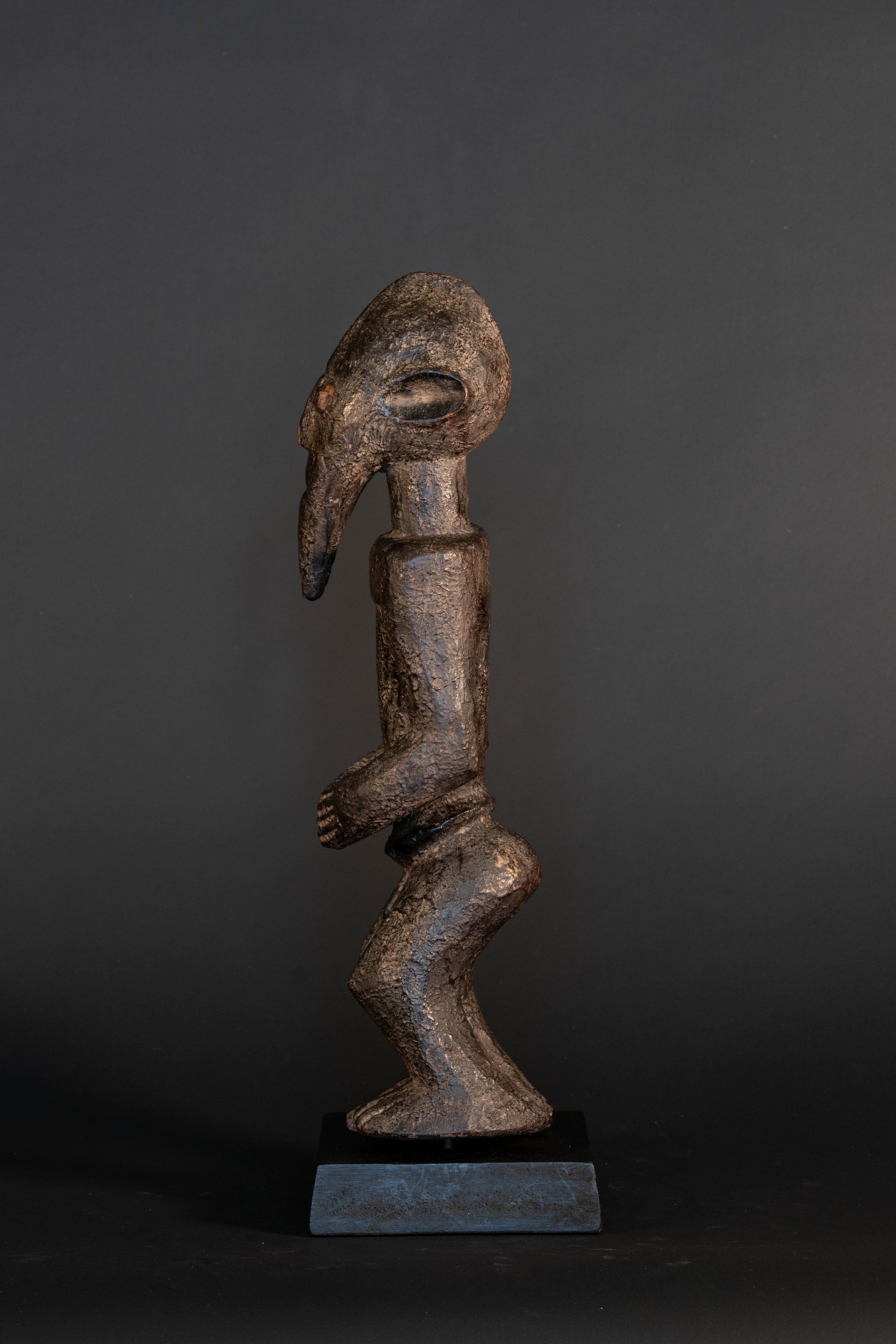 Image 3 of 6
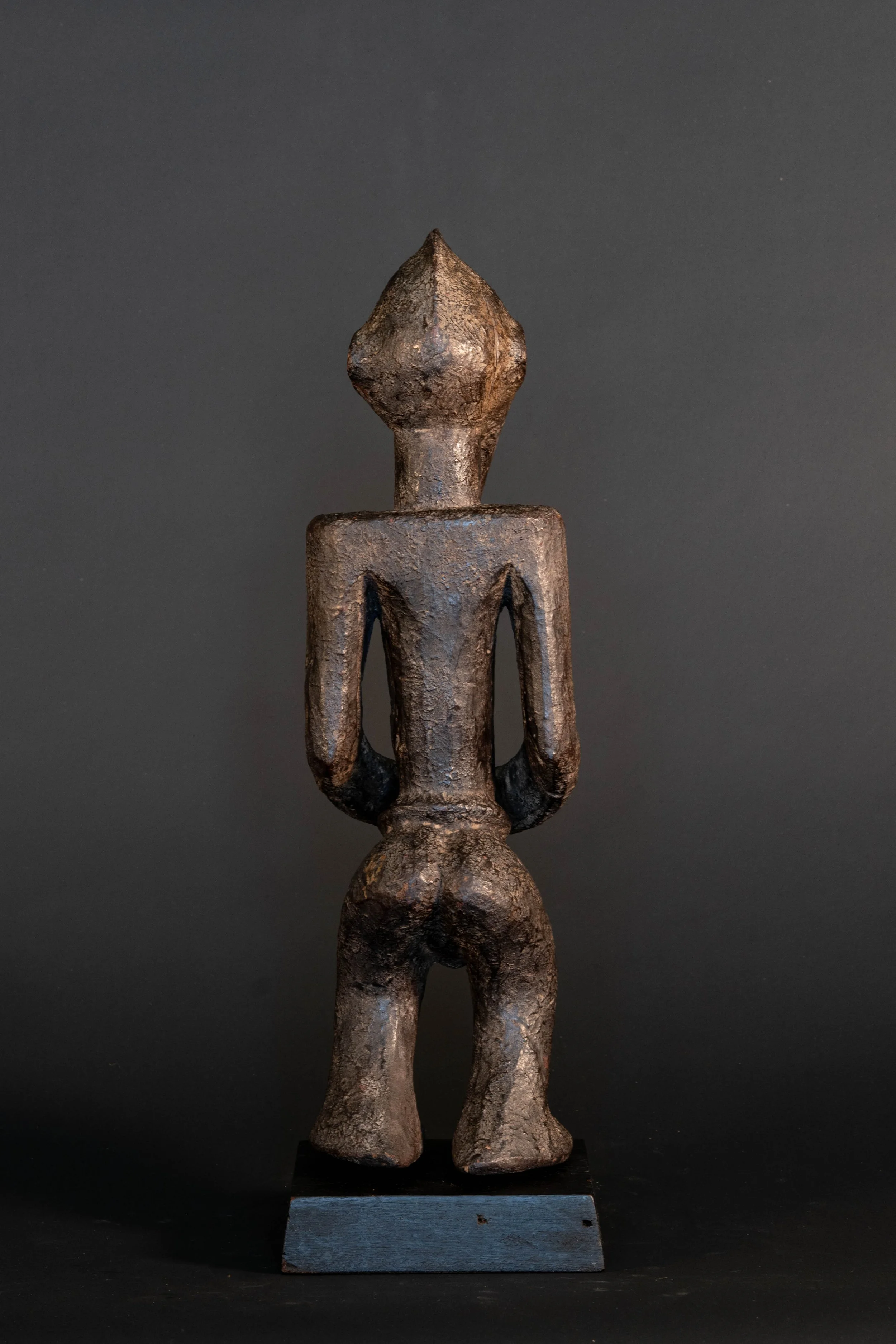 Image 4 of 6
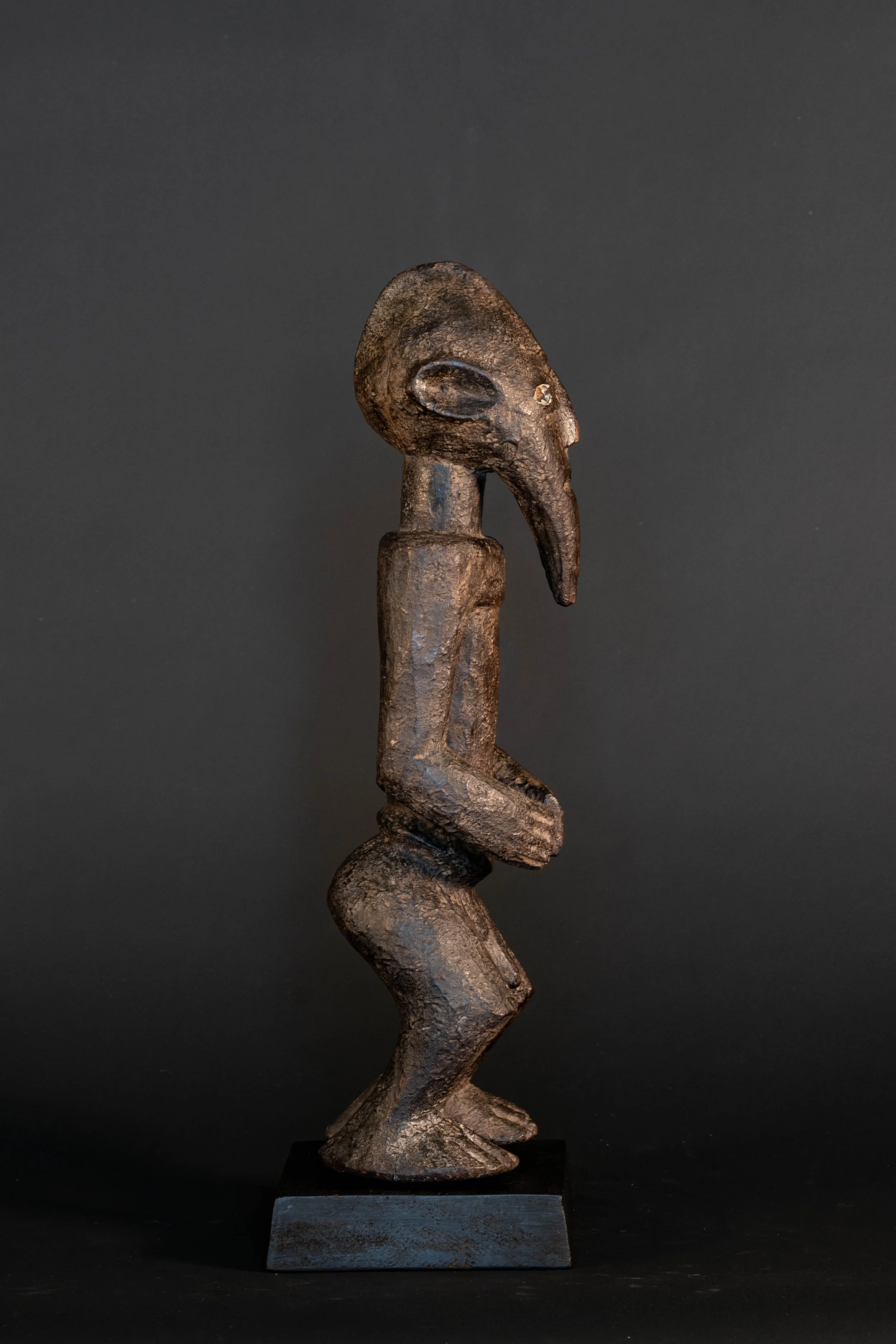 Image 5 of 6
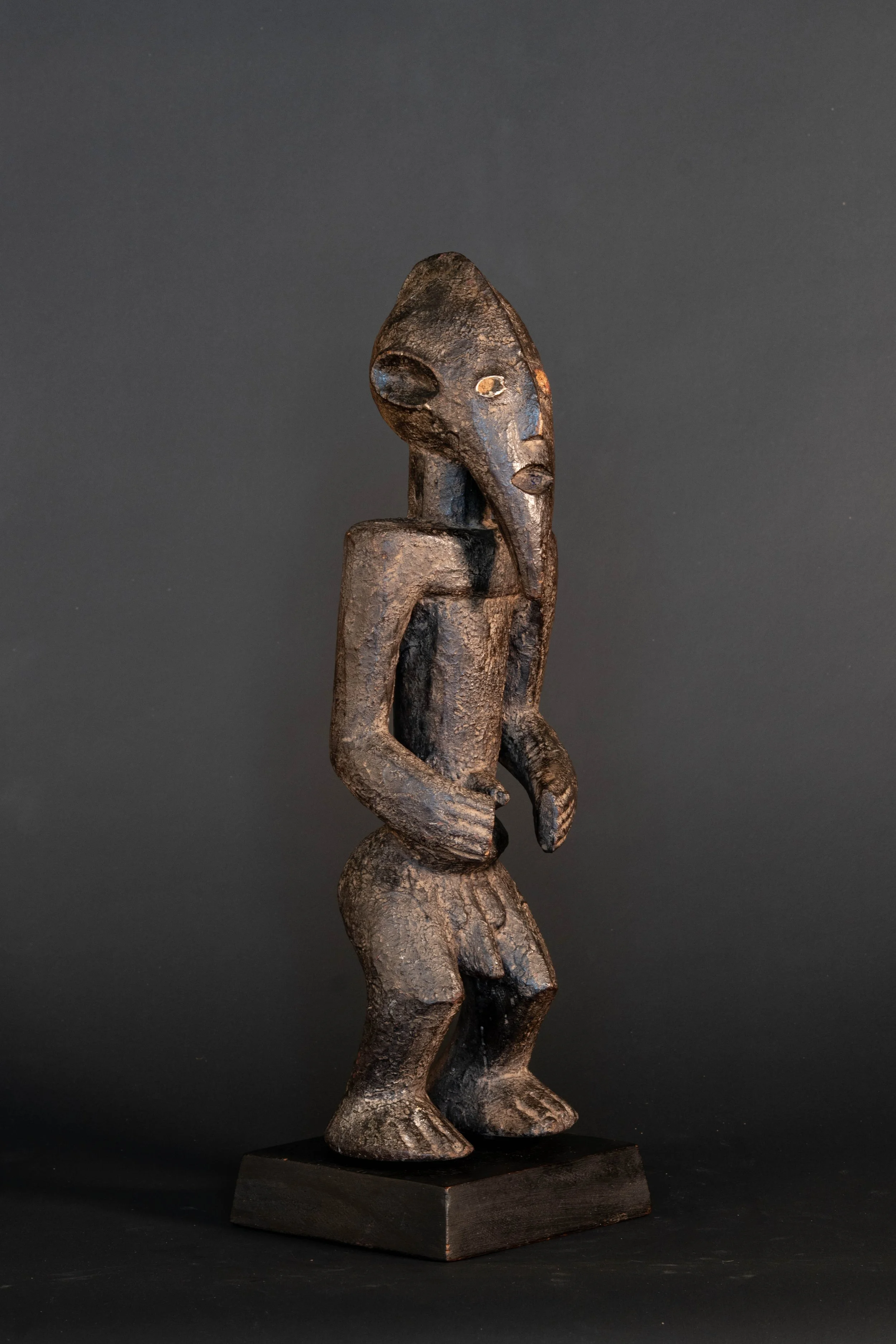 Image 6 of 6