 Image 1 of 4
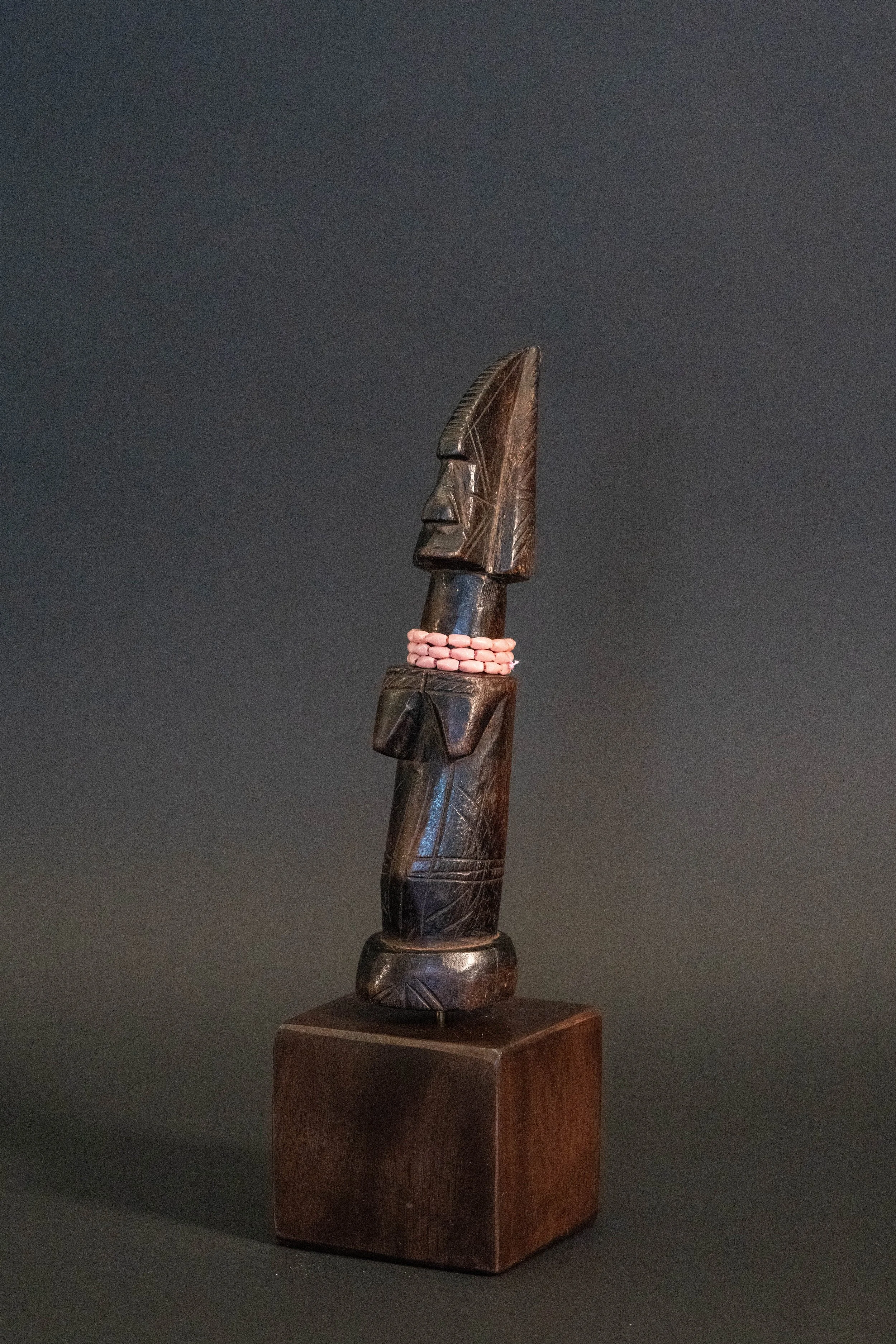 Image 2 of 4
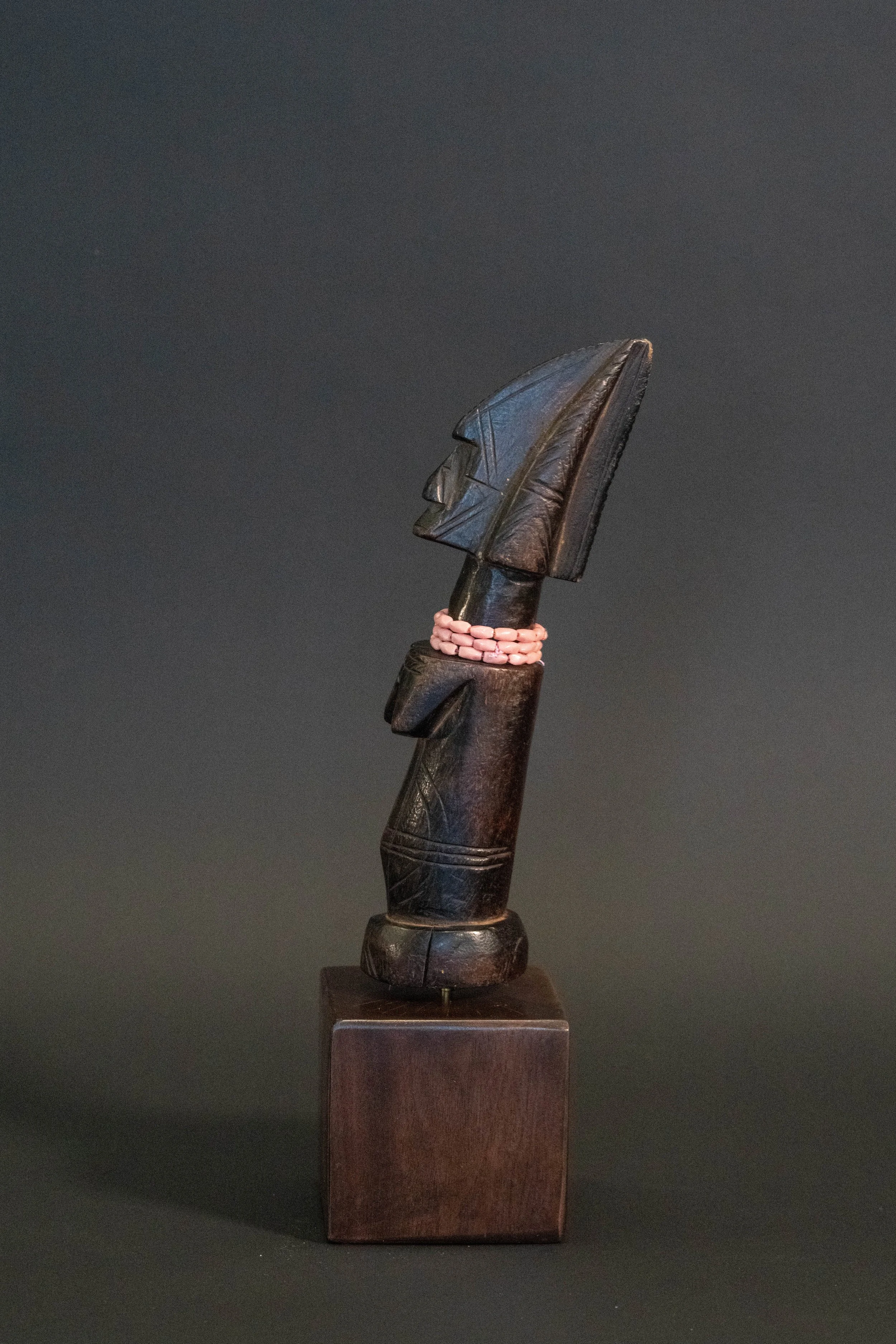 Image 3 of 4
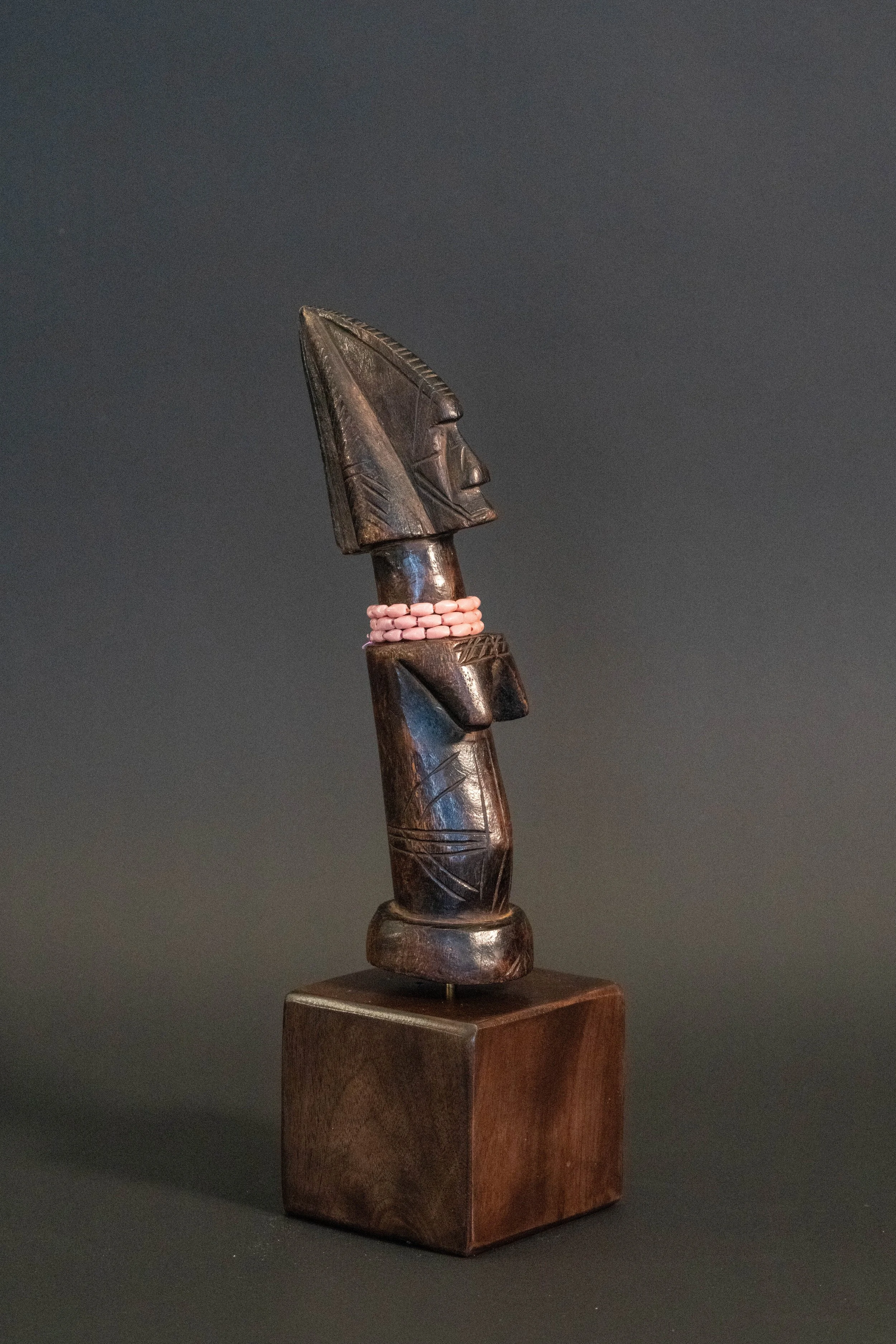 Image 4 of 4
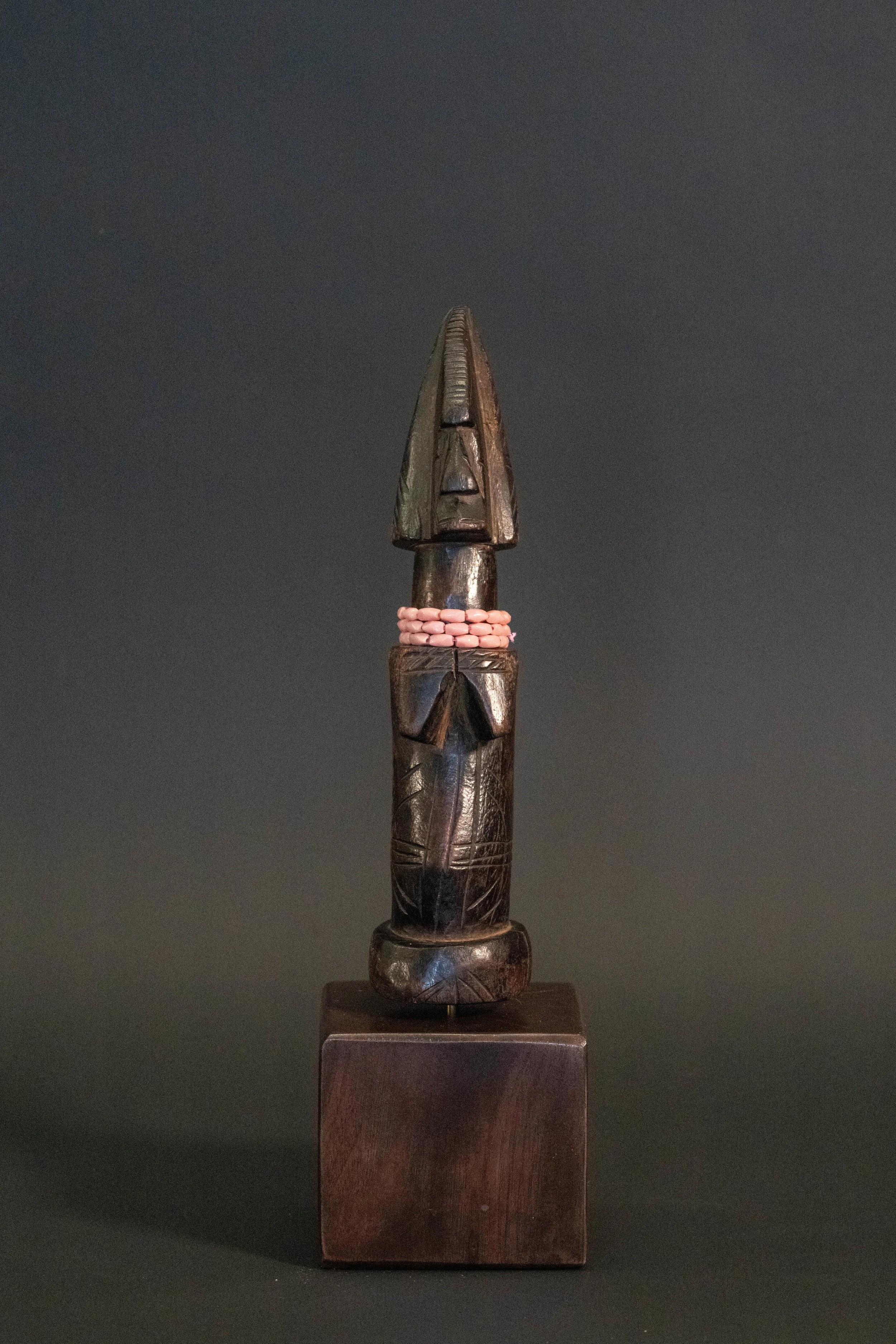
At 8.5 inches, this small figure carries the presence of something twice its size. The silhouette is pure Mossi: a slender, columnar body, a commanding wedge-shaped head, and confident, incised geometry that reads like coiffure and identity marks. It feels strikingly contemporary—until you remember that abstraction here isn't a style choice. It's a way of concentrating meaning.
Why this form matters
Biiga dolls were not made for outsiders. Carried and cared for by girls and young women, they were teaching objects and symbolic companions tied to ideals of maturity, courtship, and fertility—objects meant to shape identity, not merely to decorate.
What you're looking at
A tall, angular crested head with carved ridges and planes that catch light beautifully, especially in profile
A torso reduced to its essentials, with incised line work evoking scarification and identity patterning
Bold paired chest projections—the tradition's direct symbolic signal of femininity and fertility
A deep, dark, naturally developed patina with highlights on the raised surfaces, exactly what handling over time produces
A strand of vintage trade beads has been applied to the collar—culturally consistent with how such figures were adorned —and creates a striking visual contrast against the dark wood. Mounted on a new maple base, cleanly presented for modern display.
Condition & authenticity
Stable and well preserved, with no visible cracks, losses, or restoration. Workmanship, proportion, and patina all read as authentic and traditionally made. Surface character and evidence of handling credibly point to early–mid 20th-century production.
Why it works
Culturally, it's a purposeful object tied to womanhood, fertility, and social transition. Visually, it's a razor-clean example of African abstraction—graphic, architectural, and thoroughly resolved. It looks strong from across the room and rewards close study. And at this size, it fits anywhere: on a shelf, on a desk, or grouped with other African objects without demanding a large footprint.
For context, a closely related Mossi Biiga Doll female figure is on view in the Metropolitan Museum of Art’s online collection. https://www.metmuseum.org/art/collection/search/316648
Condition: Good. Stable; no visible restoration.
Dimensions: Overall with base 11.5 × 3.25 × 3 inches; Figure only 8.5 × 2 × 2.5 inches (H x W x D)
At 8.5 inches, this small figure carries the presence of something twice its size. The silhouette is pure Mossi: a slender, columnar body, a commanding wedge-shaped head, and confident, incised geometry that reads like coiffure and identity marks. It feels strikingly contemporary—until you remember that abstraction here isn't a style choice. It's a way of concentrating meaning.
Why this form matters
Biiga dolls were not made for outsiders. Carried and cared for by girls and young women, they were teaching objects and symbolic companions tied to ideals of maturity, courtship, and fertility—objects meant to shape identity, not merely to decorate.
What you're looking at
A tall, angular crested head with carved ridges and planes that catch light beautifully, especially in profile
A torso reduced to its essentials, with incised line work evoking scarification and identity patterning
Bold paired chest projections—the tradition's direct symbolic signal of femininity and fertility
A deep, dark, naturally developed patina with highlights on the raised surfaces, exactly what handling over time produces
A strand of vintage trade beads has been applied to the collar—culturally consistent with how such figures were adorned —and creates a striking visual contrast against the dark wood. Mounted on a new maple base, cleanly presented for modern display.
Condition & authenticity
Stable and well preserved, with no visible cracks, losses, or restoration. Workmanship, proportion, and patina all read as authentic and traditionally made. Surface character and evidence of handling credibly point to early–mid 20th-century production.
Why it works
Culturally, it's a purposeful object tied to womanhood, fertility, and social transition. Visually, it's a razor-clean example of African abstraction—graphic, architectural, and thoroughly resolved. It looks strong from across the room and rewards close study. And at this size, it fits anywhere: on a shelf, on a desk, or grouped with other African objects without demanding a large footprint.
For context, a closely related Mossi Biiga Doll female figure is on view in the Metropolitan Museum of Art’s online collection. https://www.metmuseum.org/art/collection/search/316648
Condition: Good. Stable; no visible restoration.
Dimensions: Overall with base 11.5 × 3.25 × 3 inches; Figure only 8.5 × 2 × 2.5 inches (H x W x D)