Carved hardwood core with hand-cut sheet metal cladding, iron/steel tacks, cowrie shell adornment, and old indigo textile.
Mid-20th century (c. 1930–1970) Height:10.5 in (26.7 cm) excluding stand
This compact Marka / Dafing mask has the kind of concentrated presence collectors chase: calm, controlled features; a gleaming metal “skin”; and a lived-in surface that tells you it wasn’t made to sit on a shelf. It was made to appear in performances.
At its core is a dense hardwood mask, carved by hand and then clad in thin sheet metal that was cut and fitted directly to the form. In the Marka / Dafing tradition, adding metal is not a decorative afterthought—it is a statement of power. The metal surface catches light, amplifies the face, and turns the mask into something more commanding, more protected, and more “charged” when it enters a public space.
This example is especially persuasive because the construction details match what serious buyers look for. The plating is held in place by hand-driven iron/steel fasteners that are magnetic and naturally rusted—exactly the honest oxidation you expect on an older working object. The crown element is a non-magnetic white metal, consistent with period mixed-metal construction and the practical resourcefulness of West African workshops. Inside, the story continues: the interior is deeply oxidized with clear hand-tool markings, and the rim shows heavier darkening at the contact points—wear patterns consistent with a mask that was actually handled and worn.
A strand of cowrie shells lines the crest like a protective crown, while an old indigo textile drapes the back—an evocative remnant of performance life. Indigo cloth carries deep cultural weight across West Africa; it is not just fabric, it is history—dyed, worn, repaired, and used. Here it reads as functional and authentic, not staged: frayed edges, natural drape, and the right kind of age.
Masks of this type were worn by initiated male society performers during community ceremonies, serving as a sanctioned spirit presence associated with protection, social order, and important public events. When not in use, such masks were typically kept out of sight—stored in a private interior space of a guardian’s or elder’s compound—to preserve their power.
Visually, the mask is a masterclass in restraint. Narrow slit eyes, a firm nose ridge, and a closed mouth create an expression that feels composed rather than theatrical—authority without shouting. It’s the kind of object that photographs beautifully, displays elegantly, and still feels like it has a purpose.
This is a convincing, field-made Marka / Dafing metal-clad mask with the right materials, the right wear, and the right details. For anyone new to African art, it’s an instant education in what authenticity looks like.
Condition: Overall stable and well-preserved for its type. Age-appropriate wear and oxidation across the metal surface; naturally oxidized, magnetic fasteners; non-magnetic white-metal crown element; cowrie strand and old indigo textile retained. Interior shows deep oxidation, hand-tool marks, and concentrated rim wear consistent with long use. Custom stand is included.
Dimensions: Overall with stand 15.5 × 6 × 8.5 inches; Mask only 9.5 × 6 × 4.5 inches (H x W x D)
Carved hardwood core with hand-cut sheet metal cladding, iron/steel tacks, cowrie shell adornment, and old indigo textile.
Mid-20th century (c. 1930–1970) Height:10.5 in (26.7 cm) excluding stand
This compact Marka / Dafing mask has the kind of concentrated presence collectors chase: calm, controlled features; a gleaming metal “skin”; and a lived-in surface that tells you it wasn’t made to sit on a shelf. It was made to appear in performances.
At its core is a dense hardwood mask, carved by hand and then clad in thin sheet metal that was cut and fitted directly to the form. In the Marka / Dafing tradition, adding metal is not a decorative afterthought—it is a statement of power. The metal surface catches light, amplifies the face, and turns the mask into something more commanding, more protected, and more “charged” when it enters a public space.
This example is especially persuasive because the construction details match what serious buyers look for. The plating is held in place by hand-driven iron/steel fasteners that are magnetic and naturally rusted—exactly the honest oxidation you expect on an older working object. The crown element is a non-magnetic white metal, consistent with period mixed-metal construction and the practical resourcefulness of West African workshops. Inside, the story continues: the interior is deeply oxidized with clear hand-tool markings, and the rim shows heavier darkening at the contact points—wear patterns consistent with a mask that was actually handled and worn.
A strand of cowrie shells lines the crest like a protective crown, while an old indigo textile drapes the back—an evocative remnant of performance life. Indigo cloth carries deep cultural weight across West Africa; it is not just fabric, it is history—dyed, worn, repaired, and used. Here it reads as functional and authentic, not staged: frayed edges, natural drape, and the right kind of age.
Masks of this type were worn by initiated male society performers during community ceremonies, serving as a sanctioned spirit presence associated with protection, social order, and important public events. When not in use, such masks were typically kept out of sight—stored in a private interior space of a guardian’s or elder’s compound—to preserve their power.
Visually, the mask is a masterclass in restraint. Narrow slit eyes, a firm nose ridge, and a closed mouth create an expression that feels composed rather than theatrical—authority without shouting. It’s the kind of object that photographs beautifully, displays elegantly, and still feels like it has a purpose.
This is a convincing, field-made Marka / Dafing metal-clad mask with the right materials, the right wear, and the right details. For anyone new to African art, it’s an instant education in what authenticity looks like.
Condition: Overall stable and well-preserved for its type. Age-appropriate wear and oxidation across the metal surface; naturally oxidized, magnetic fasteners; non-magnetic white-metal crown element; cowrie strand and old indigo textile retained. Interior shows deep oxidation, hand-tool marks, and concentrated rim wear consistent with long use. Custom stand is included.
Dimensions: Overall with stand 15.5 × 6 × 8.5 inches; Mask only 9.5 × 6 × 4.5 inches (H x W x D)
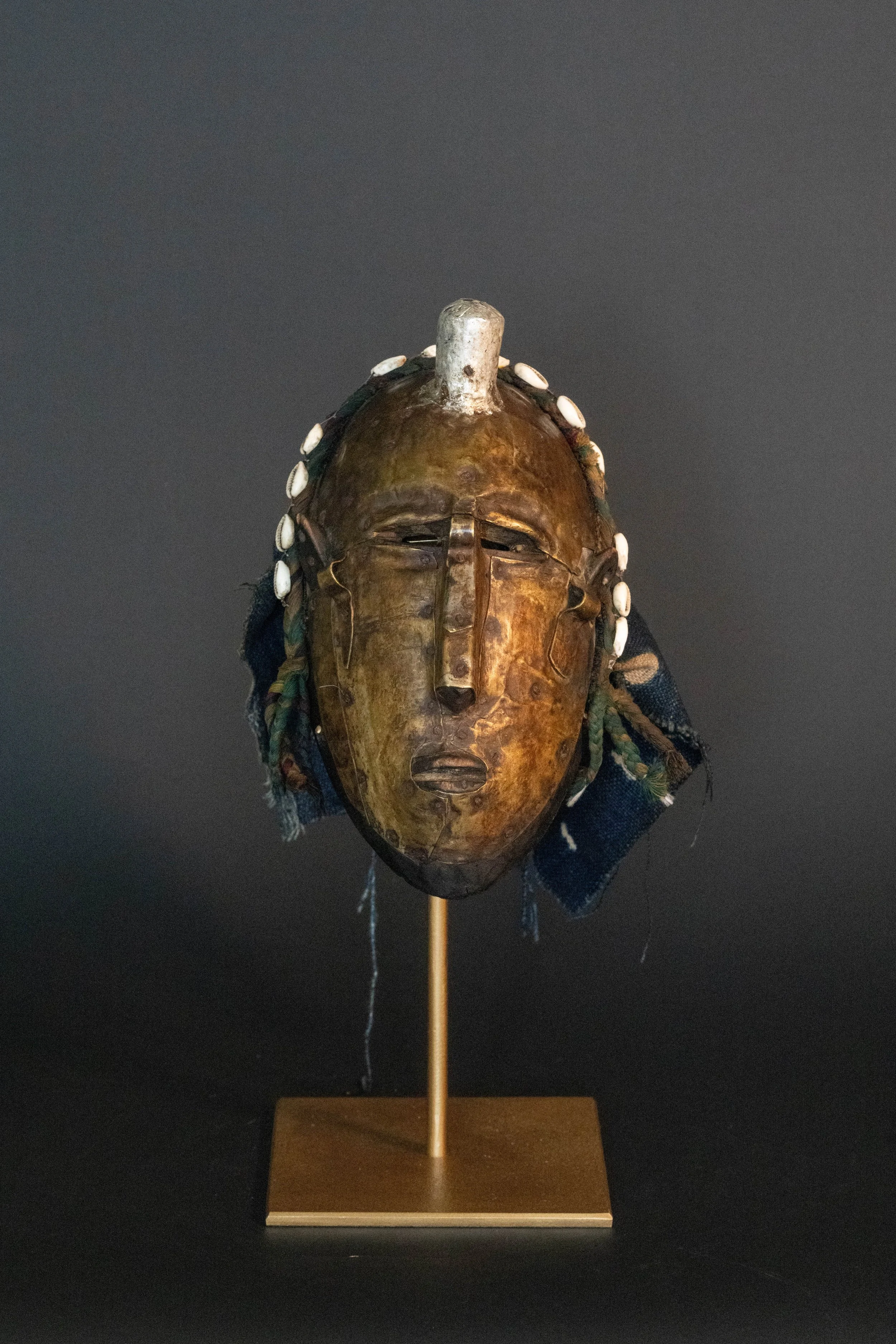 Image 1 of 6
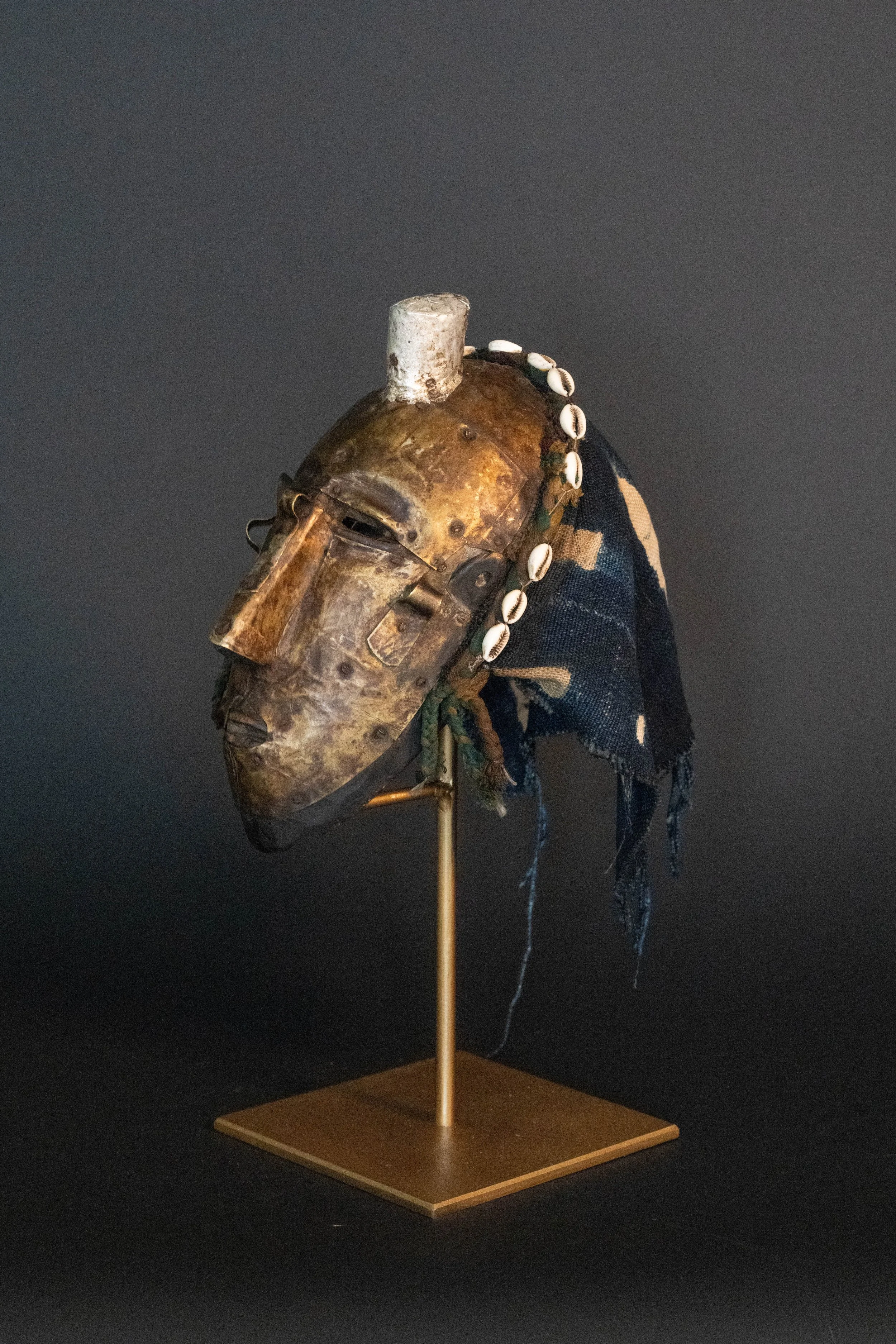 Image 2 of 6
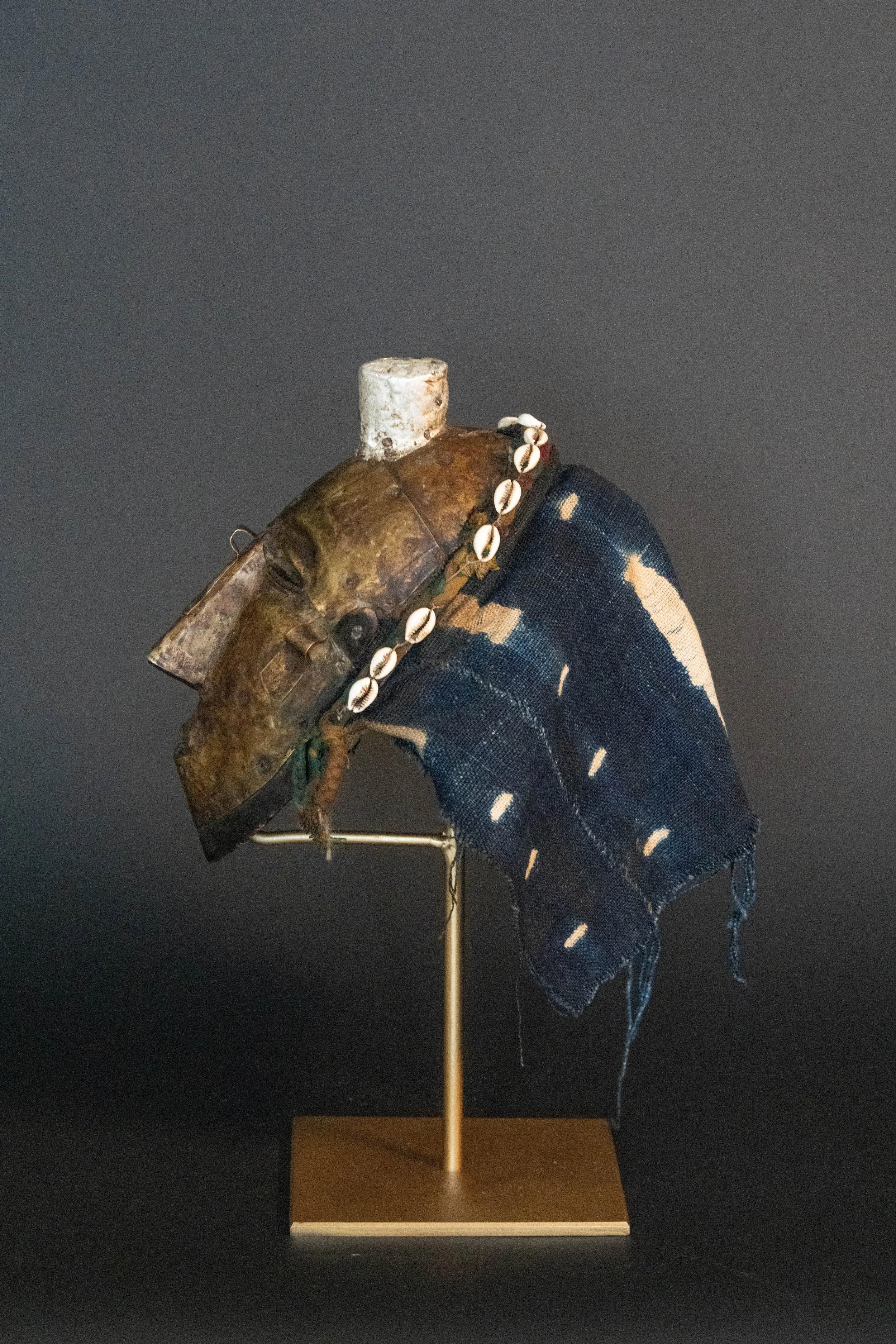 Image 3 of 6
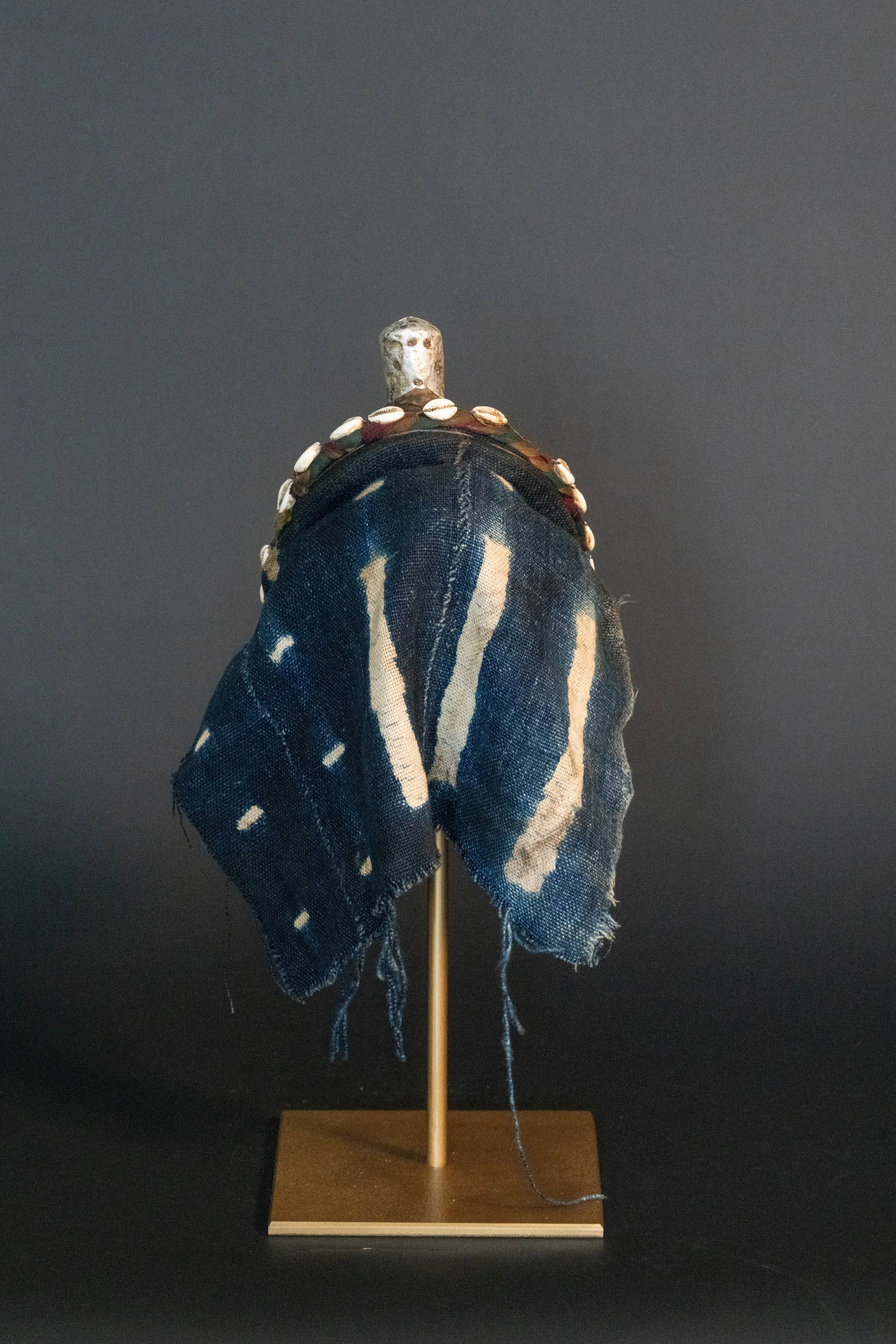 Image 4 of 6
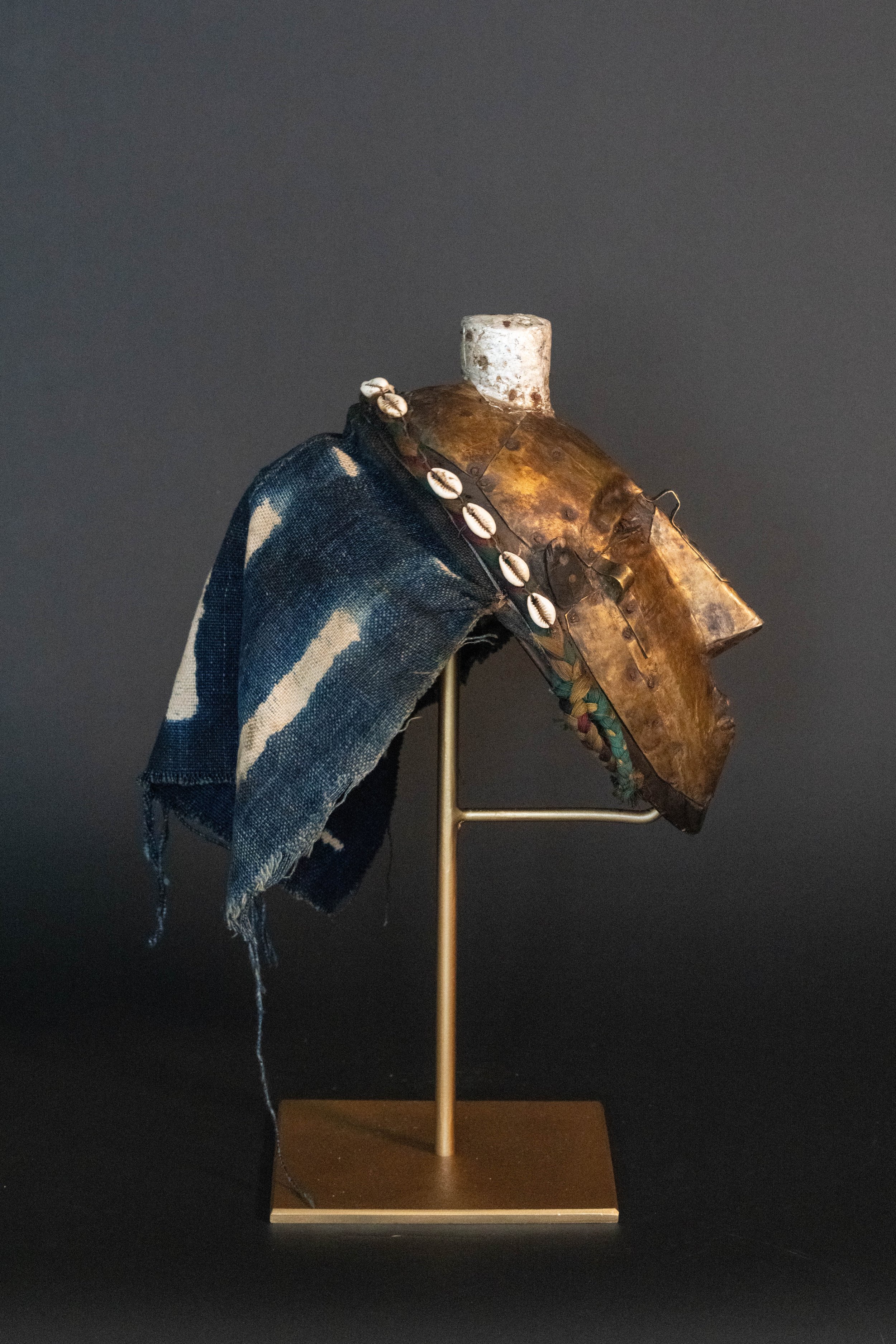 Image 5 of 6
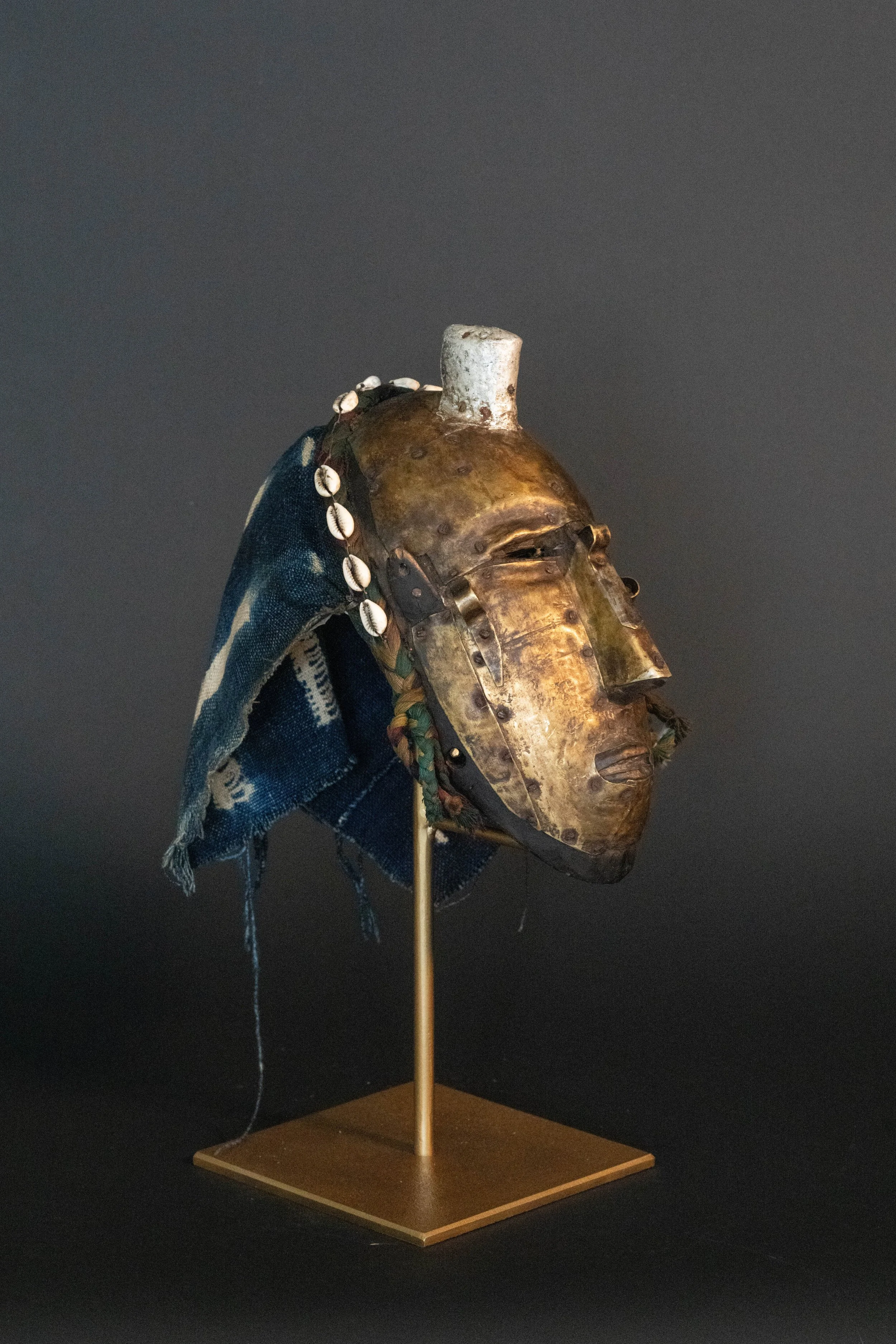 Image 6 of 6