 Image 1 of 5
 Image 2 of 5
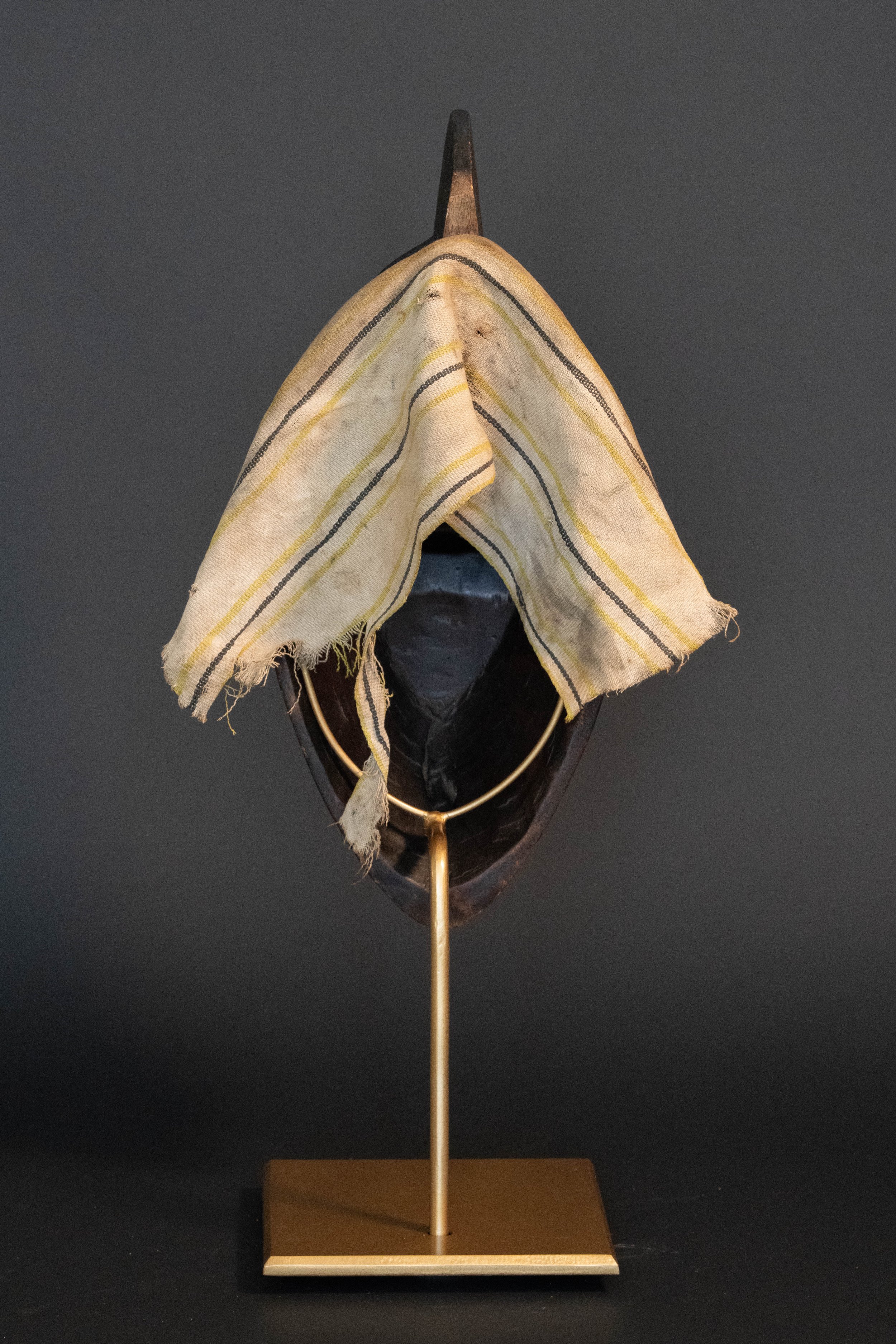 Image 3 of 5
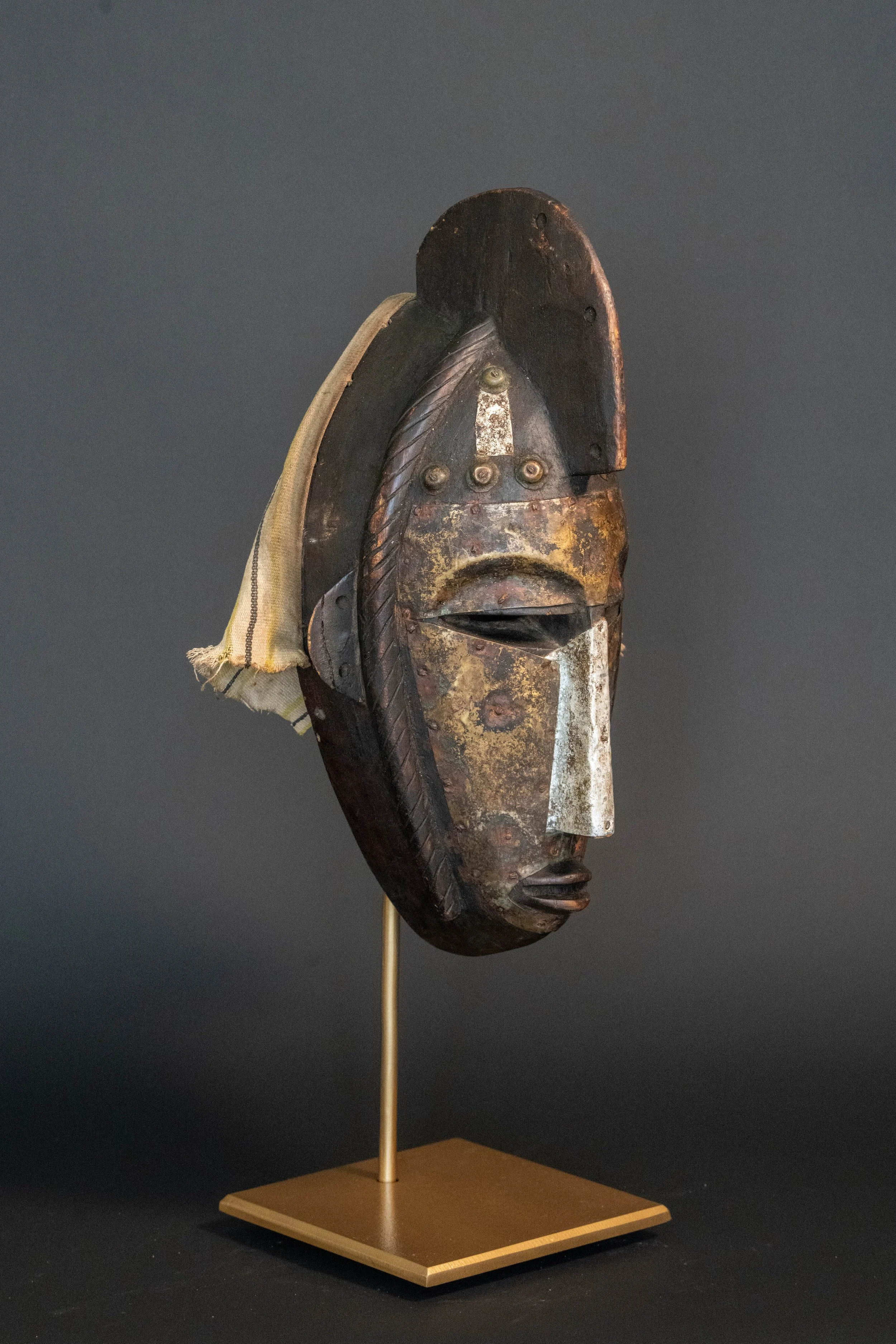 Image 4 of 5
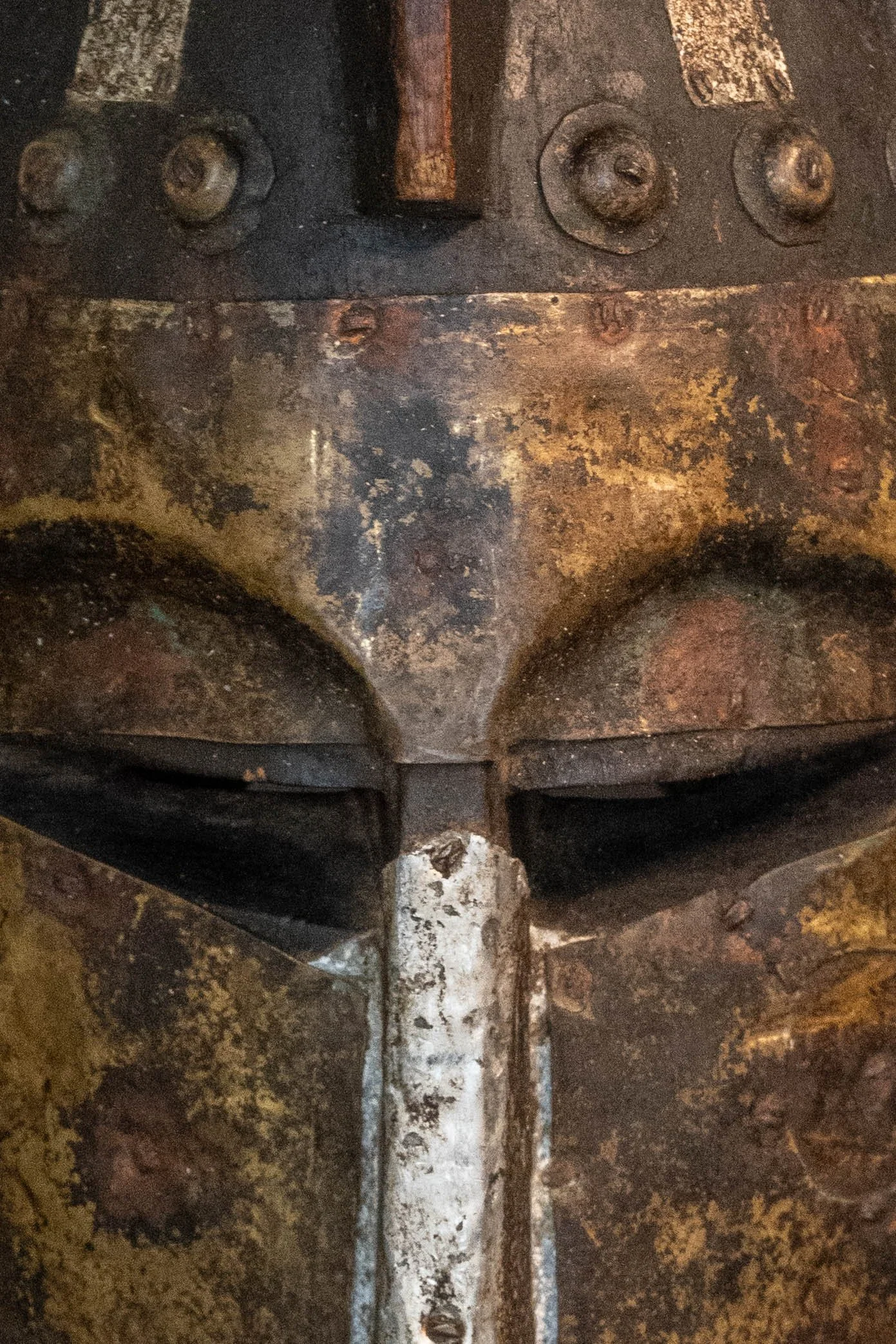 Image 5 of 5
Mid-20th century (c. 1940–1970)
Long, narrow, and commanding, this Marka/Dafing mask carries the kind of presence that reads across a crowd and holds attention in motion. It feels like ceremony the moment you see it.
In the Marka/Dafing tradition, masks like this appeared during community ceremonies as sanctioned spirit-presences—worn by initiated male society performers for protection, social order, and major public ritual. Between appearances, they were kept out of sight, wrapped in cloth, stored in a private room or loft to preserve their power.
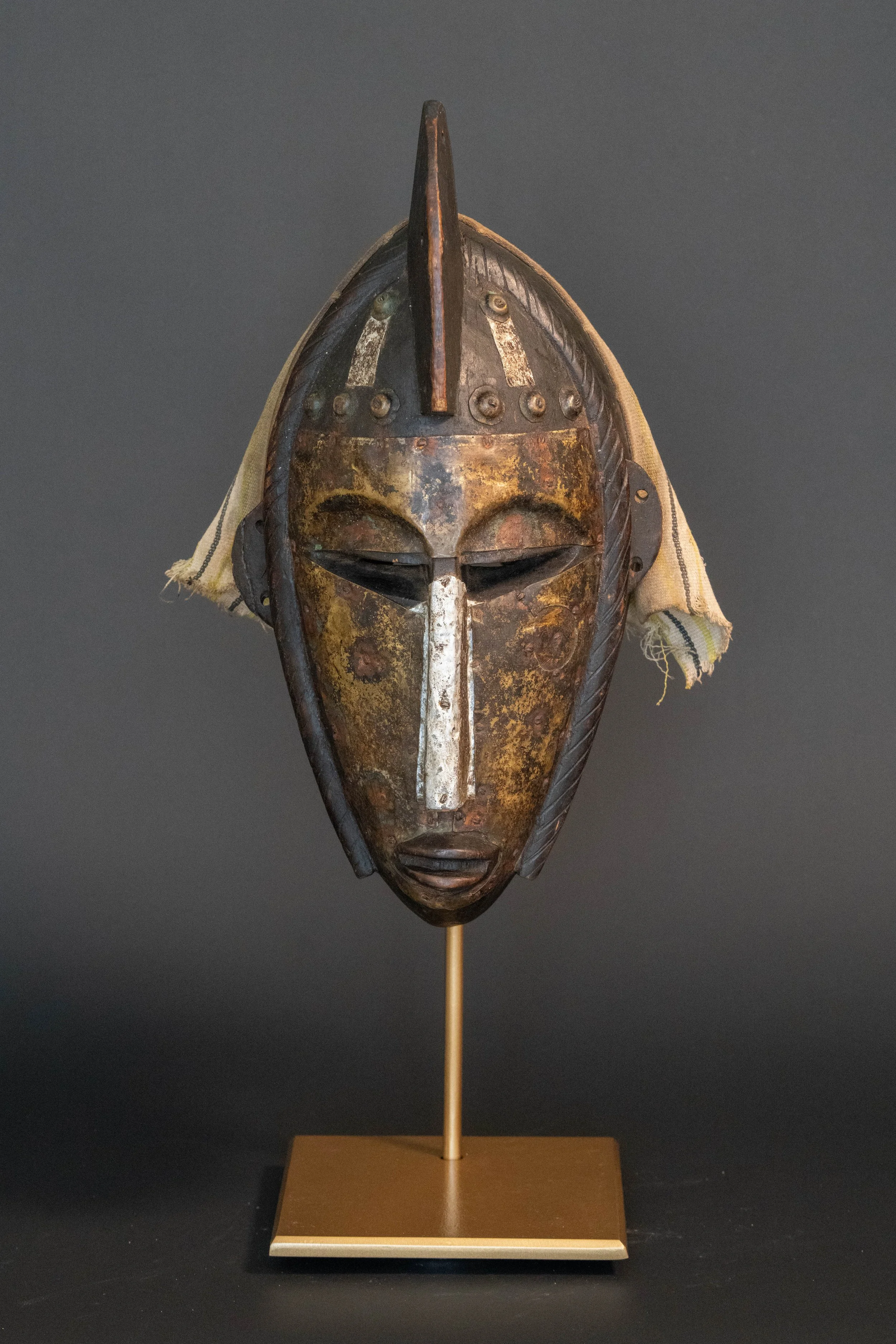
The construction tells an honest story. A dense hardwood core was carved by hand, then clad in thin sheet metal—cut, shaped, and fitted directly to the sculpture. In West African masking traditions, metal is never merely decorative. It signals protection, strength, and spiritual authority, turning the face into a kind of armor that catches light and amplifies presence. The sheet edges here are hand-cut and irregular. The cladding is secured with hand-driven iron nails—magnetic, naturally rusted—the oxidation pattern collectors want to see on a working mask. The white-metal nasal element is non-magnetic and, critically, structurally integrated beneath the cheek plating rather than added on top—the right build sequence for a mask assembled for long-term ceremonial use.
Most telling is the repair. On the left cheek, a damaged section was cut out, replaced, and secured with additional nails—an indigenous, practical fix made to keep the mask active in its community. Seasoned collectors recognize this immediately: not a flaw, but proof of a working history and an object that mattered.
Formally, the mask is superb. The elongated oval face, narrow slit eyes, and composed mouth project quiet authority rather than theatrical drama. A tall central crest rises above the brow; a carved, rope-like border frames the face, giving it a strong silhouette from every angle. The reverse retains an old woven textile element—a functional remnant from wear, another small survival that supports ceremonial intent.
This is a convincing, field-made Marka/Dafing mask—architectural in form, loaded with the material "tells" that separates genuine ceremonial objects from later decorative productions. The moment it enters a room, it communicates.
Carved hardwood core with hand-cut sheet metal cladding, iron tacks, integrated white-metal nose element, and old textile.
Date: Mid-20th century (c. 1940–1970)
Condition. Good. Overall stable and well-preserved for its type. The metal cladding shows age-appropriate oxidation and wear, with a period-repair patch on the cheek; the hardwood core retains a deep, dark patina, with clear hand-tool carving visible on the interior. Old textile remains on the reverse.
Dimensions: Overall with stand 22 × 8.5 x 8 inches, Mask only 15.5 × 8.5 × 6 inches (H x W x D)
Mid-20th century (c. 1940–1970)
Long, narrow, and commanding, this Marka/Dafing mask carries the kind of presence that reads across a crowd and holds attention in motion. It feels like ceremony the moment you see it.
In the Marka/Dafing tradition, masks like this appeared during community ceremonies as sanctioned spirit-presences—worn by initiated male society performers for protection, social order, and major public ritual. Between appearances, they were kept out of sight, wrapped in cloth, stored in a private room or loft to preserve their power.
The construction tells an honest story. A dense hardwood core was carved by hand, then clad in thin sheet metal—cut, shaped, and fitted directly to the sculpture. In West African masking traditions, metal is never merely decorative. It signals protection, strength, and spiritual authority, turning the face into a kind of armor that catches light and amplifies presence. The sheet edges here are hand-cut and irregular. The cladding is secured with hand-driven iron nails—magnetic, naturally rusted—the oxidation pattern collectors want to see on a working mask. The white-metal nasal element is non-magnetic and, critically, structurally integrated beneath the cheek plating rather than added on top—the right build sequence for a mask assembled for long-term ceremonial use.
Most telling is the repair. On the left cheek, a damaged section was cut out, replaced, and secured with additional nails—an indigenous, practical fix made to keep the mask active in its community. Seasoned collectors recognize this immediately: not a flaw, but proof of a working history and an object that mattered.
Formally, the mask is superb. The elongated oval face, narrow slit eyes, and composed mouth project quiet authority rather than theatrical drama. A tall central crest rises above the brow; a carved, rope-like border frames the face, giving it a strong silhouette from every angle. The reverse retains an old woven textile element—a functional remnant from wear, another small survival that supports ceremonial intent.
This is a convincing, field-made Marka/Dafing mask—architectural in form, loaded with the material "tells" that separates genuine ceremonial objects from later decorative productions. The moment it enters a room, it communicates.
Carved hardwood core with hand-cut sheet metal cladding, iron tacks, integrated white-metal nose element, and old textile.
Date: Mid-20th century (c. 1940–1970)
Condition. Good. Overall stable and well-preserved for its type. The metal cladding shows age-appropriate oxidation and wear, with a period-repair patch on the cheek; the hardwood core retains a deep, dark patina, with clear hand-tool carving visible on the interior. Old textile remains on the reverse.
Dimensions: Overall with stand 22 × 8.5 x 8 inches, Mask only 15.5 × 8.5 × 6 inches (H x W x D)