 Image 1 of 3
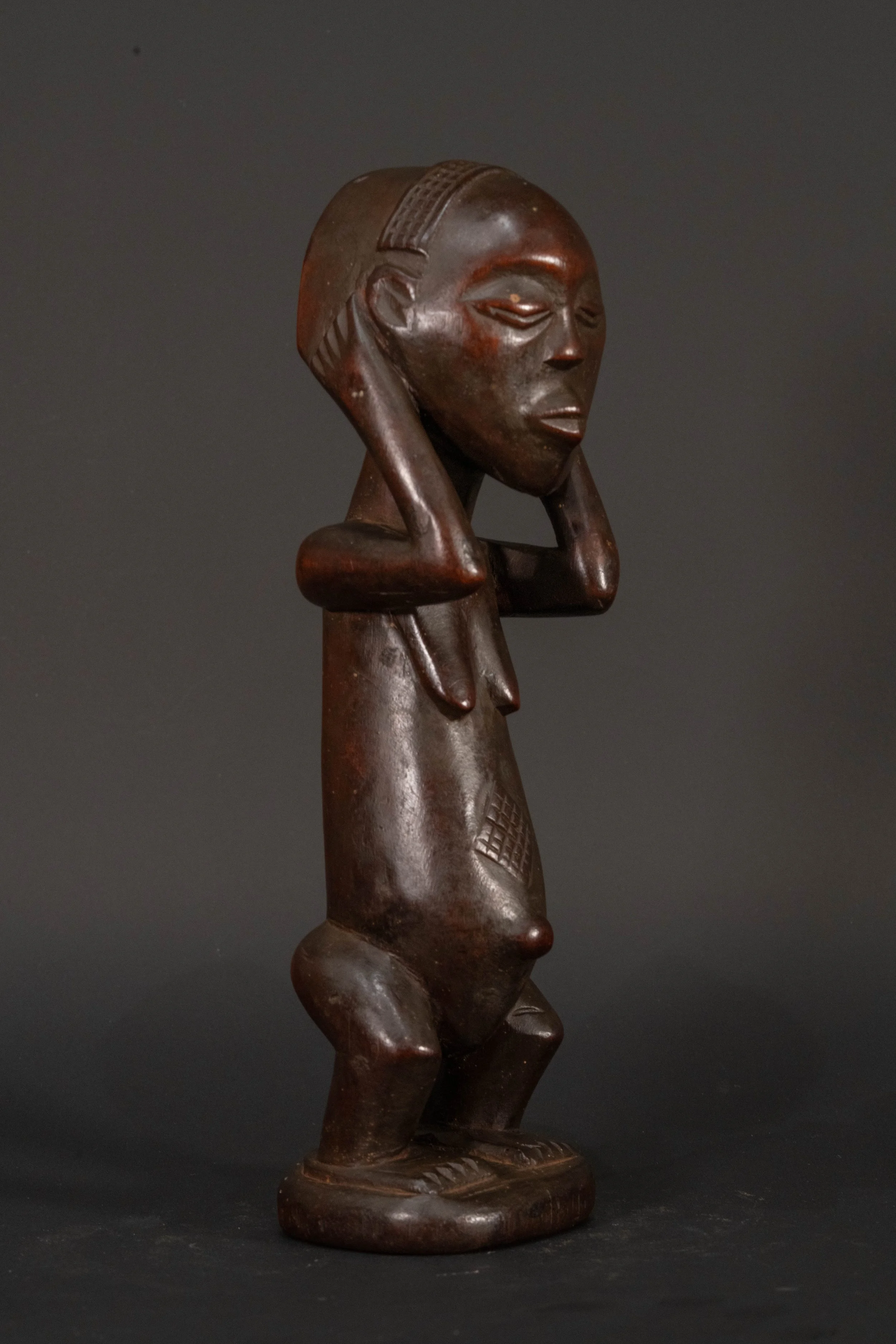 Image 2 of 3
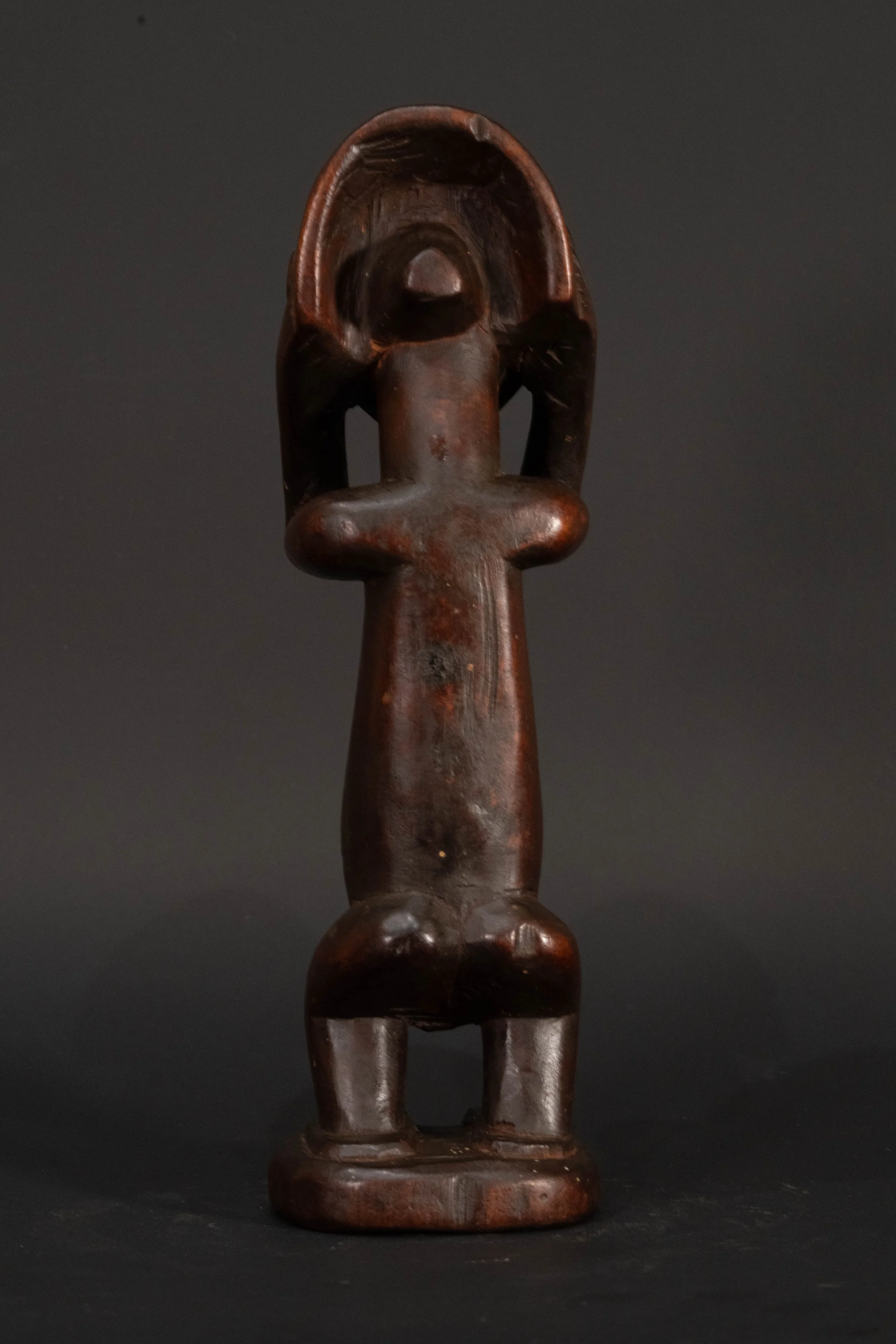 Image 3 of 3
Southeastern Congo | Mid-20th Century, circa 1940–1970
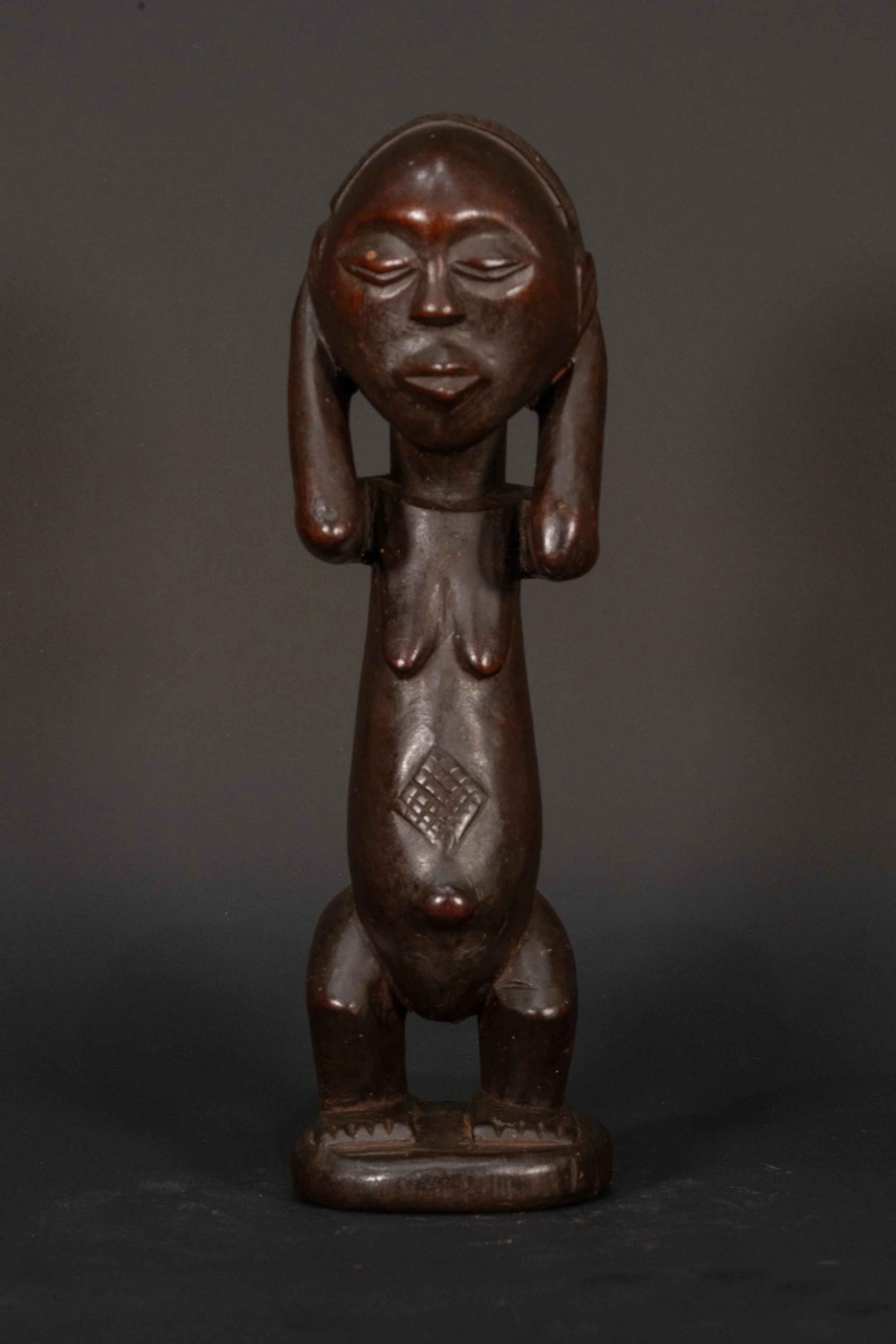
This striking Luba–Hemba female figure is a sculpted expression of memory, wisdom, and spiritual authority. The posture — hands raised to the head, elongated torso, slightly flexed knees, calm, introspective face — follows the sculptural canons of the Hemba, long grouped within the broader Luba cultural sphere in the art market.
In Luba and Hemba thought, the head is the seat of intelligence, character, and ancestral force. The gesture of both hands raised deliberately to either side of the head signals that this is no ordinary figure: she is an ancestor who remembers— a vessel of knowledge charged with safeguarding communal history and lineage. Unlike maternity figures, which turn outward in an act of nurturing, this sculpture is inward-looking and self-contained. It speaks of thought, moral authority, and controlled strength. It commands respect rather than sentiment.
The coiffure is especially refined — carefully carved and patterned along the crown, reflecting traditional hairstyles that marked status and cultural identity. Its geometric clarity frames the face and drives the eye upward toward the locus of spiritual power. The incised lozenge motif on the abdomen aligns with body scarification conventions, adding visual interest grounded in cultural meaning.
The surface tells its own story. The deep brown patina is natural and layered, with soft highlights on the brow, nose, breasts, and knees where handling occurred over time. Tool marks remain confident and legible — evidence of hand craftsmanship, not mechanical production.
This figure stands well above the decorative market. It carries the sculptural authority and surface integrity serious collectors seek in authentic Central African art — and it invites the kind of contemplation that keeps a work compelling long after it finds a new home.
Condition: Good. Minor abrasions.
Dimensions: 10 × 3 × 2.5 inches (H x W x D)
Southeastern Congo | Mid-20th Century, circa 1940–1970
This striking Luba–Hemba female figure is a sculpted expression of memory, wisdom, and spiritual authority. The posture — hands raised to the head, elongated torso, slightly flexed knees, calm, introspective face — follows the sculptural canons of the Hemba, long grouped within the broader Luba cultural sphere in the art market.
In Luba and Hemba thought, the head is the seat of intelligence, character, and ancestral force. The gesture of both hands raised deliberately to either side of the head signals that this is no ordinary figure: she is an ancestor who remembers— a vessel of knowledge charged with safeguarding communal history and lineage. Unlike maternity figures, which turn outward in an act of nurturing, this sculpture is inward-looking and self-contained. It speaks of thought, moral authority, and controlled strength. It commands respect rather than sentiment.
The coiffure is especially refined — carefully carved and patterned along the crown, reflecting traditional hairstyles that marked status and cultural identity. Its geometric clarity frames the face and drives the eye upward toward the locus of spiritual power. The incised lozenge motif on the abdomen aligns with body scarification conventions, adding visual interest grounded in cultural meaning.
The surface tells its own story. The deep brown patina is natural and layered, with soft highlights on the brow, nose, breasts, and knees where handling occurred over time. Tool marks remain confident and legible — evidence of hand craftsmanship, not mechanical production.
This figure stands well above the decorative market. It carries the sculptural authority and surface integrity serious collectors seek in authentic Central African art — and it invites the kind of contemplation that keeps a work compelling long after it finds a new home.
Condition: Good. Minor abrasions.
Dimensions: 10 × 3 × 2.5 inches (H x W x D)