Mid-20th Century | Hardwood with dark patina | 14.5 inches (figure); 16.5 inches overall with base
This Luba mother-and-child figure is one of those rare objects that commands a room and rewards close study in equal measure. Carved in dense hardwood and finished with a deep, lustrous patina that catches light beautifully across every projecting form, it has the visual weight and presence that serious collectors recognize immediately.
What makes this piece exceptional is its composition. The mother kneels with one knee to the ground, her body alive with tension and movement — her head turned sharply to the left, as if listening or watching for something beyond the viewer. On her back, the child clings close while the mother's dramatically elongated arm reaches behind her body to secure the smaller figure in place. That distortion of proportion is not a flaw. It is the carver's intelligence at work: anatomy sacrificed in favor of rhythm, design, and emotional force. The silhouette is unforgettable.
The head is equally compelling — broad, high forehead, heavy-lidded almond eyes, composed mouth, elongated neck — the hallmarks of Luba sculptural tradition, where idealized female beauty carried meaning well beyond appearance. In the Luba world, figures like this one expressed ideas of continuity, memory, and spiritual authority. They were not simply images of mothers. They were images of community, stability, and the life-giving forces that sustain both.
The child is fully integrated into the design rather than treated as a secondary detail, grasping the mother's breast and shoulder as she holds him in return. This exchange is the emotional center of the work — not sentimental, but unmistakably human. Protection, dependence, and continuity, all at once, with no wasted line.
The surface shows honest age and handling: rich patina, good depth, no distracting restoration, no interruption to the integrity of the form.
Condition: Good. Custom wood base included.
Dimensions: Overall 16.5 × 7.5 × 6 inches; Figure only 14.5 × 7 x 5.5 inches (H x W x D)
Mid-20th Century | Hardwood with dark patina | 14.5 inches (figure); 16.5 inches overall with base
This Luba mother-and-child figure is one of those rare objects that commands a room and rewards close study in equal measure. Carved in dense hardwood and finished with a deep, lustrous patina that catches light beautifully across every projecting form, it has the visual weight and presence that serious collectors recognize immediately.
What makes this piece exceptional is its composition. The mother kneels with one knee to the ground, her body alive with tension and movement — her head turned sharply to the left, as if listening or watching for something beyond the viewer. On her back, the child clings close while the mother's dramatically elongated arm reaches behind her body to secure the smaller figure in place. That distortion of proportion is not a flaw. It is the carver's intelligence at work: anatomy sacrificed in favor of rhythm, design, and emotional force. The silhouette is unforgettable.
The head is equally compelling — broad, high forehead, heavy-lidded almond eyes, composed mouth, elongated neck — the hallmarks of Luba sculptural tradition, where idealized female beauty carried meaning well beyond appearance. In the Luba world, figures like this one expressed ideas of continuity, memory, and spiritual authority. They were not simply images of mothers. They were images of community, stability, and the life-giving forces that sustain both.
The child is fully integrated into the design rather than treated as a secondary detail, grasping the mother's breast and shoulder as she holds him in return. This exchange is the emotional center of the work — not sentimental, but unmistakably human. Protection, dependence, and continuity, all at once, with no wasted line.
The surface shows honest age and handling: rich patina, good depth, no distracting restoration, no interruption to the integrity of the form.
Condition: Good. Custom wood base included.
Dimensions: Overall 16.5 × 7.5 × 6 inches; Figure only 14.5 × 7 x 5.5 inches (H x W x D)
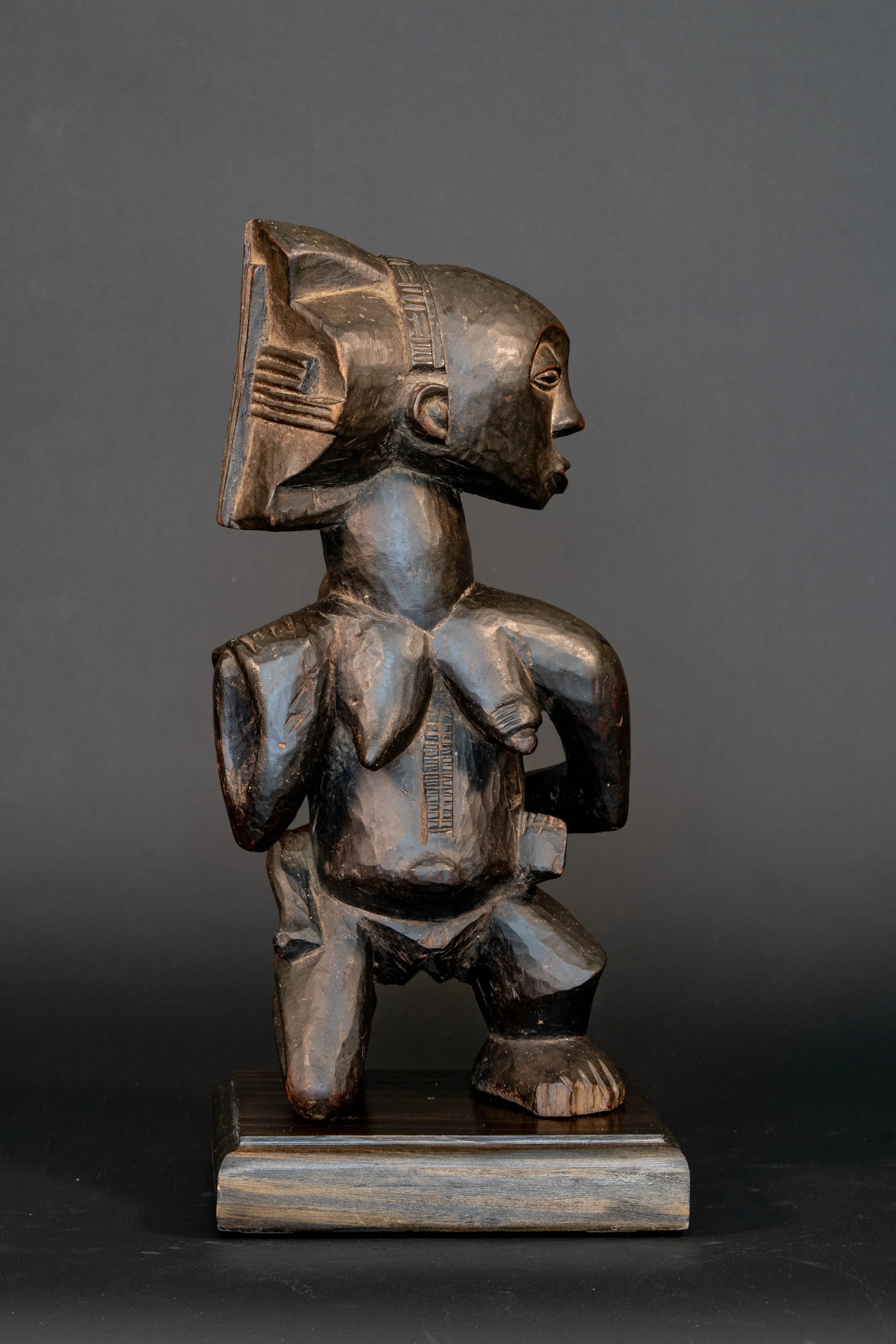 Image 1 of 6
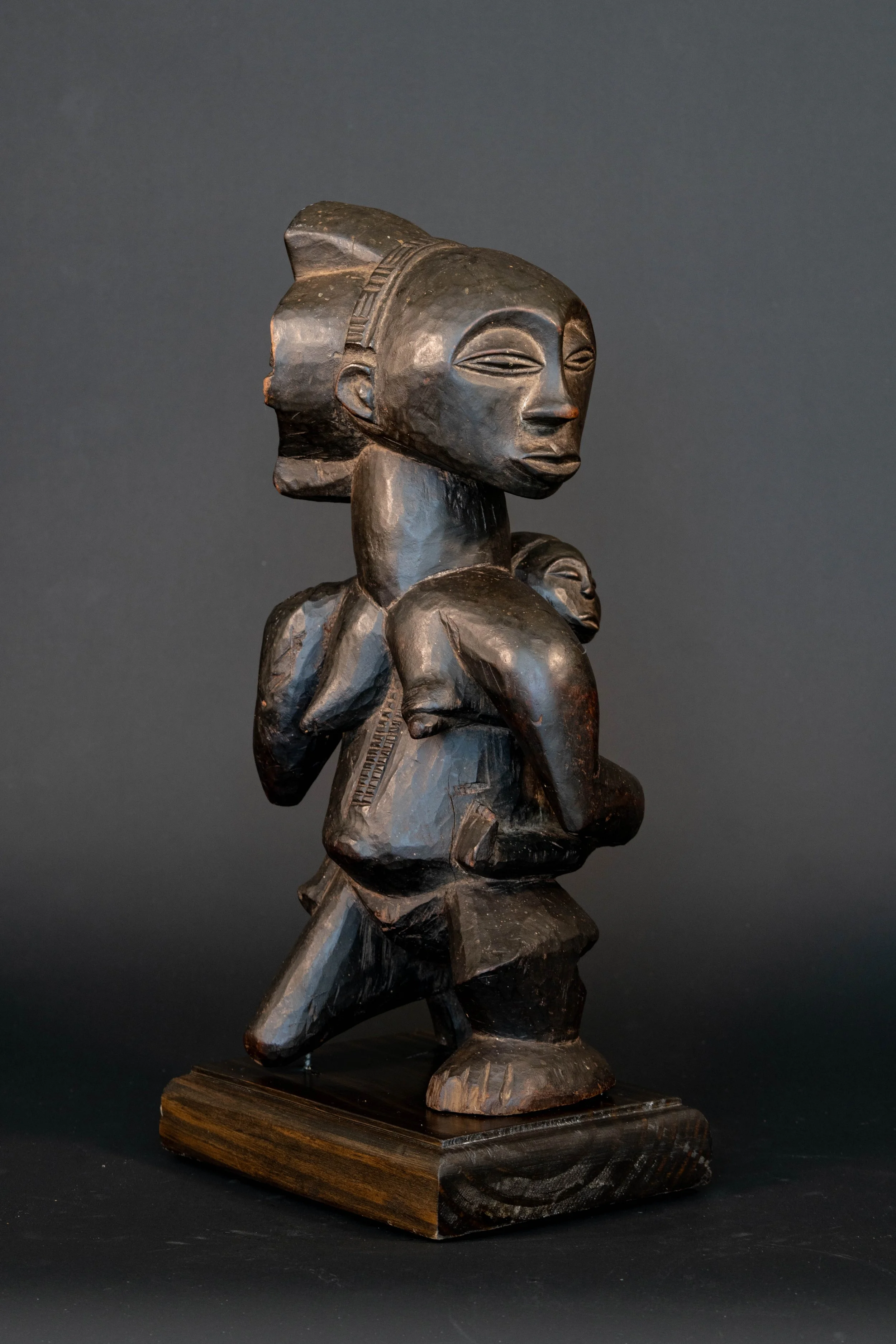 Image 2 of 6
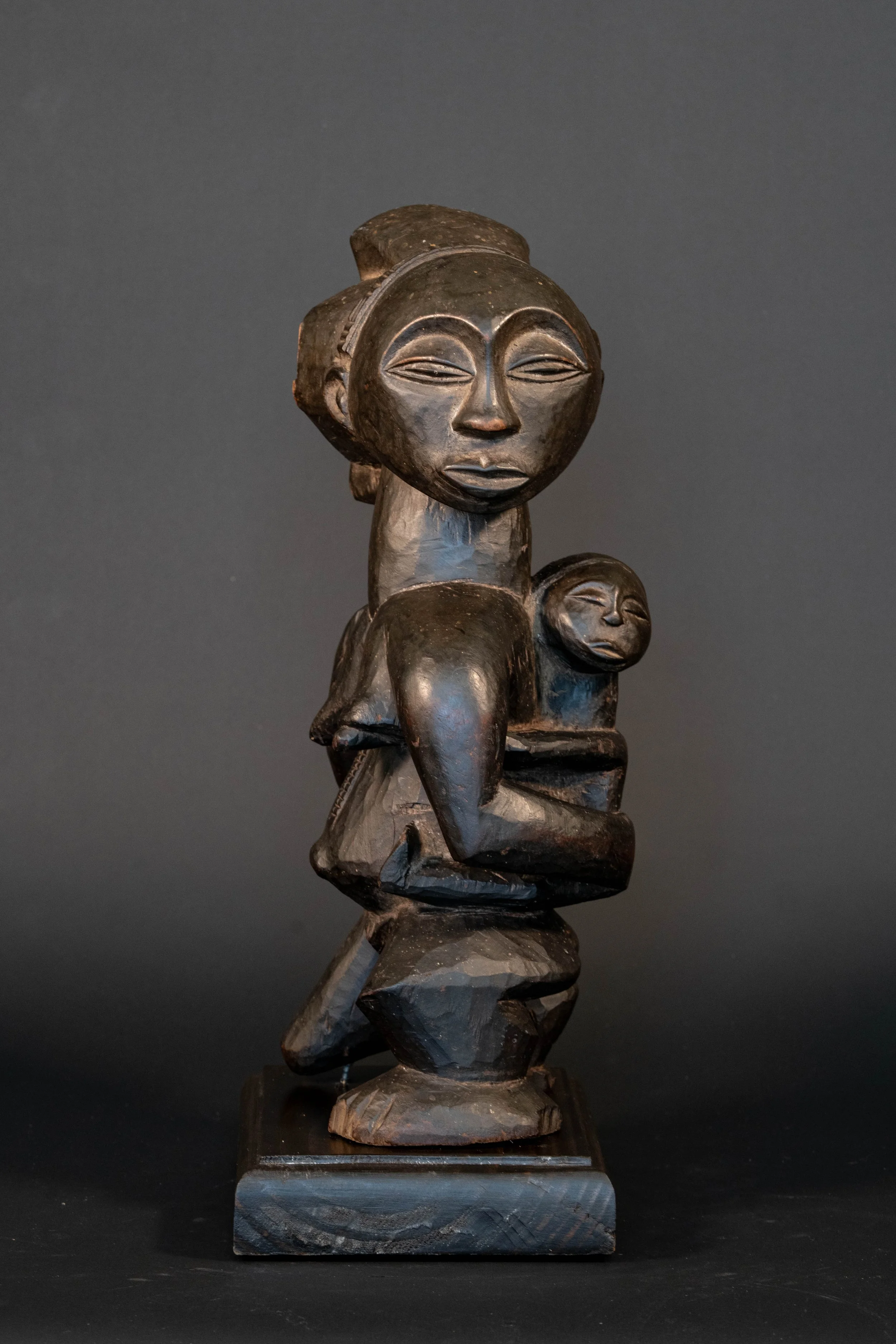 Image 3 of 6
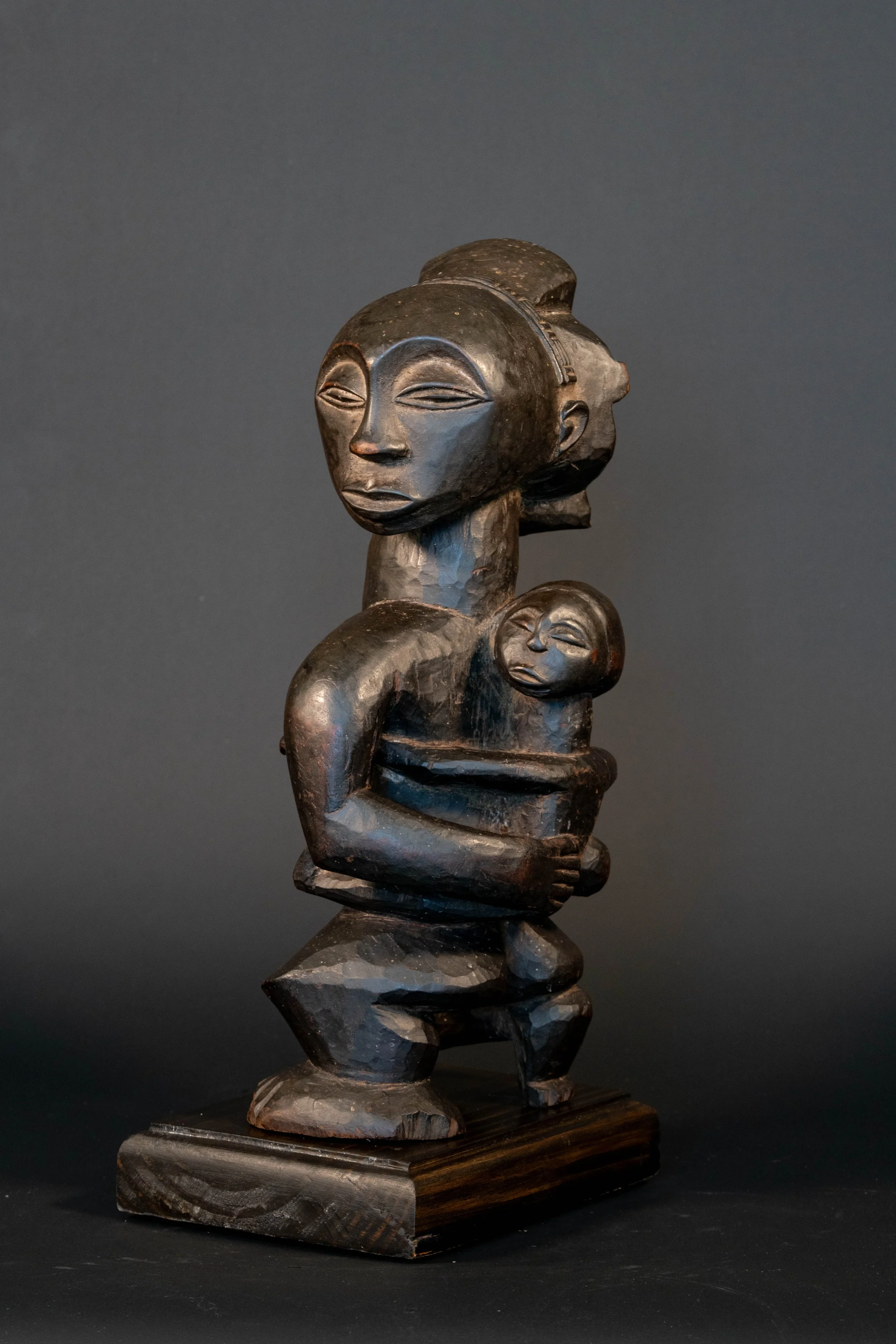 Image 4 of 6
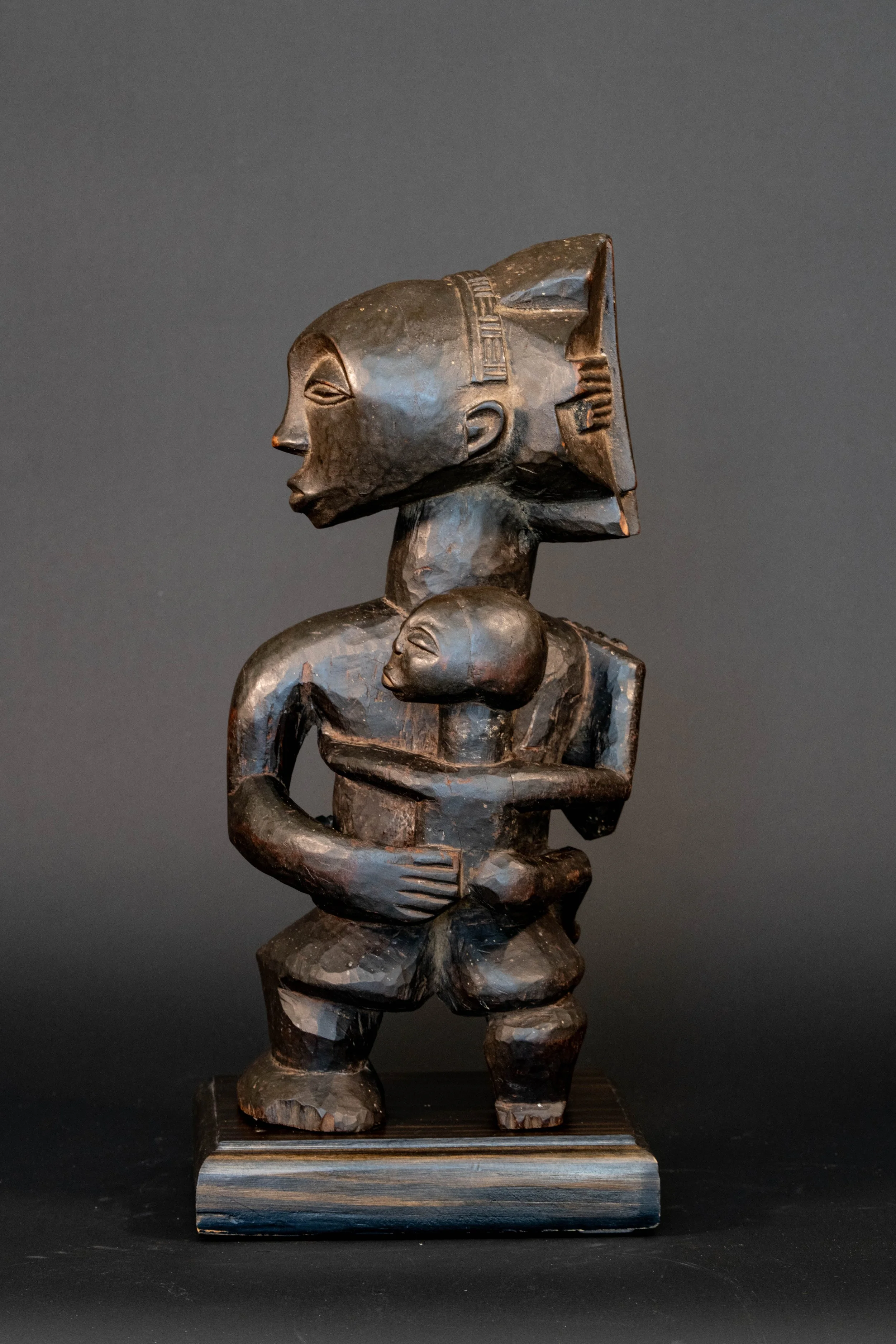 Image 5 of 6
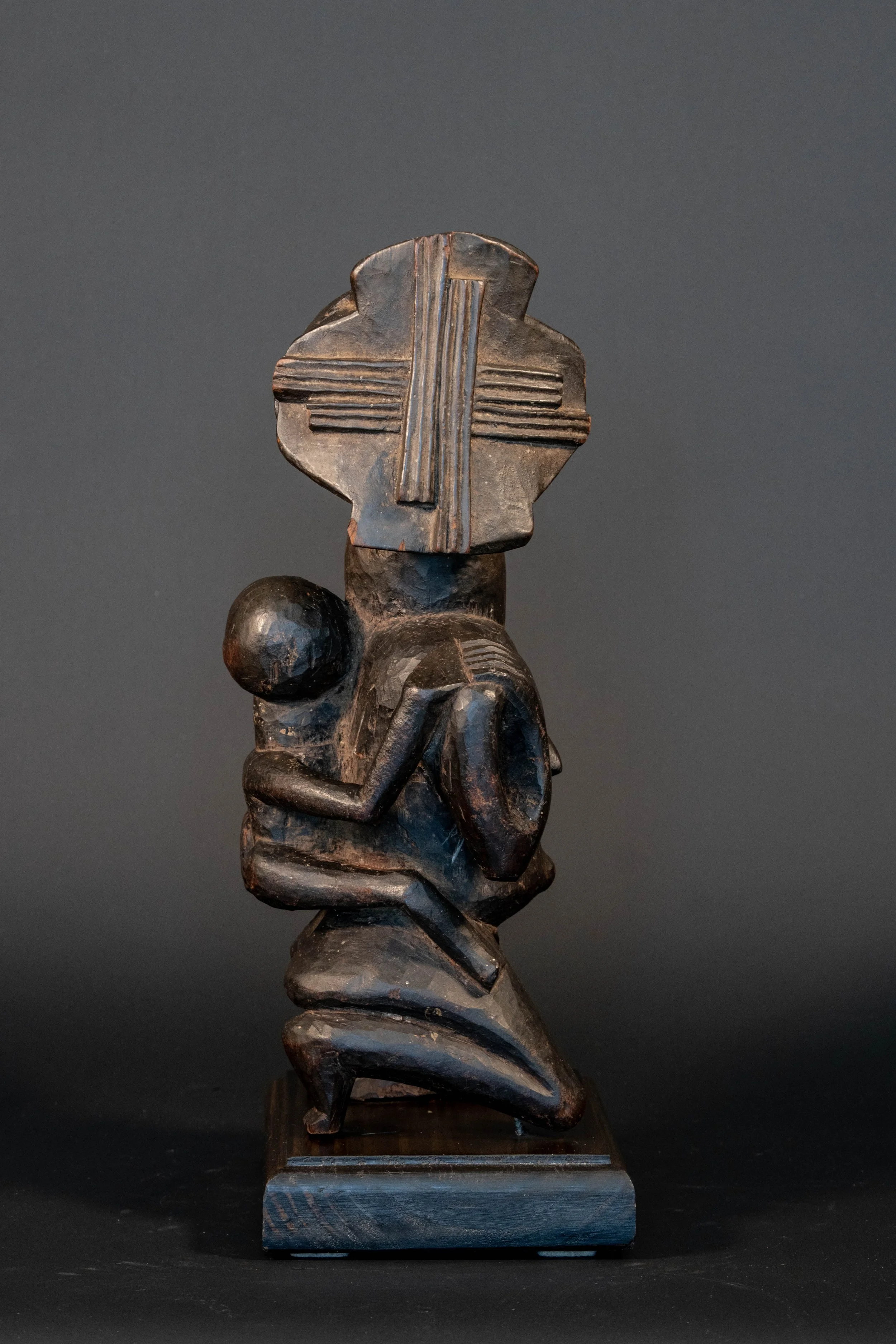 Image 6 of 6