 Image 1 of 4
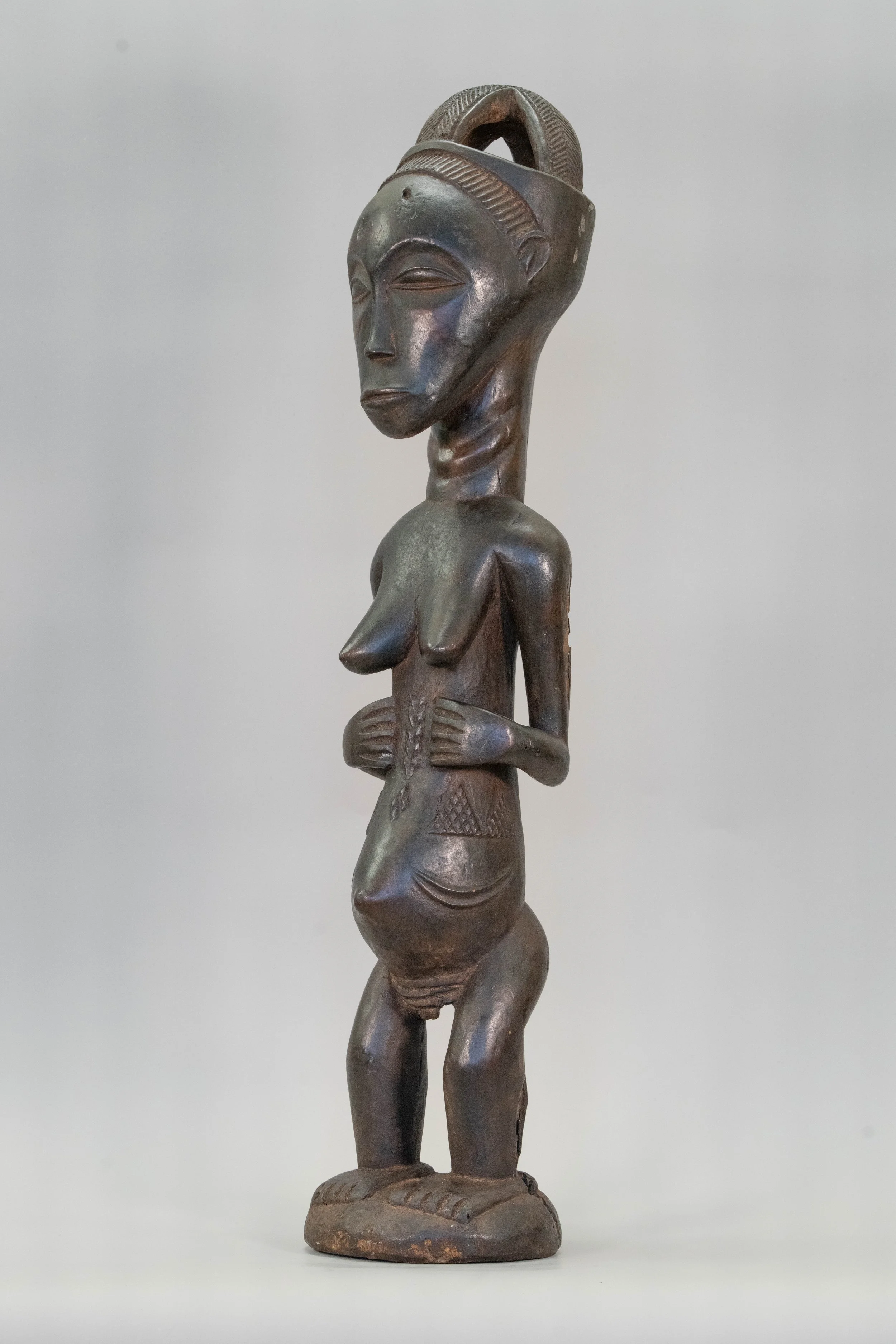 Image 2 of 4
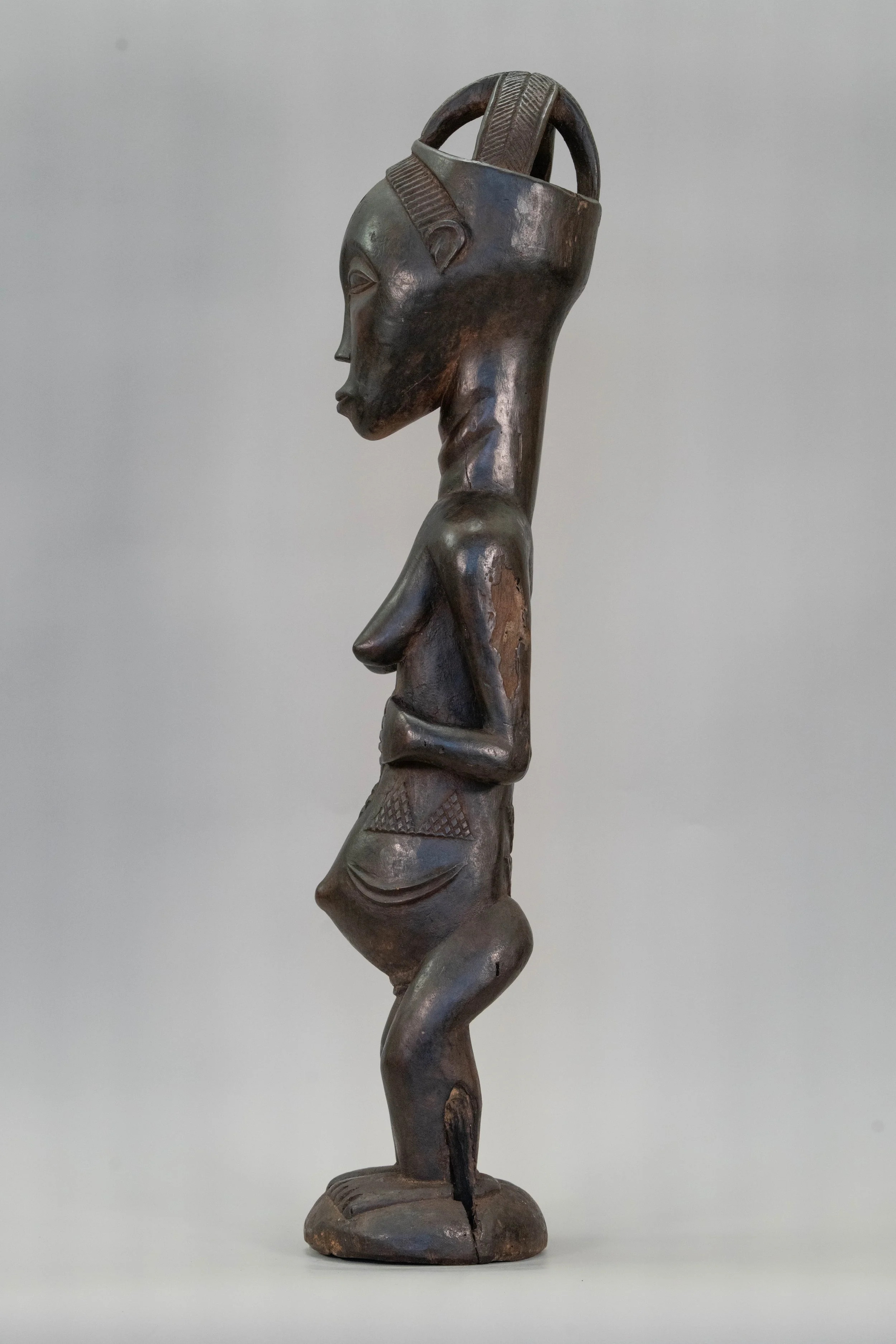 Image 3 of 4
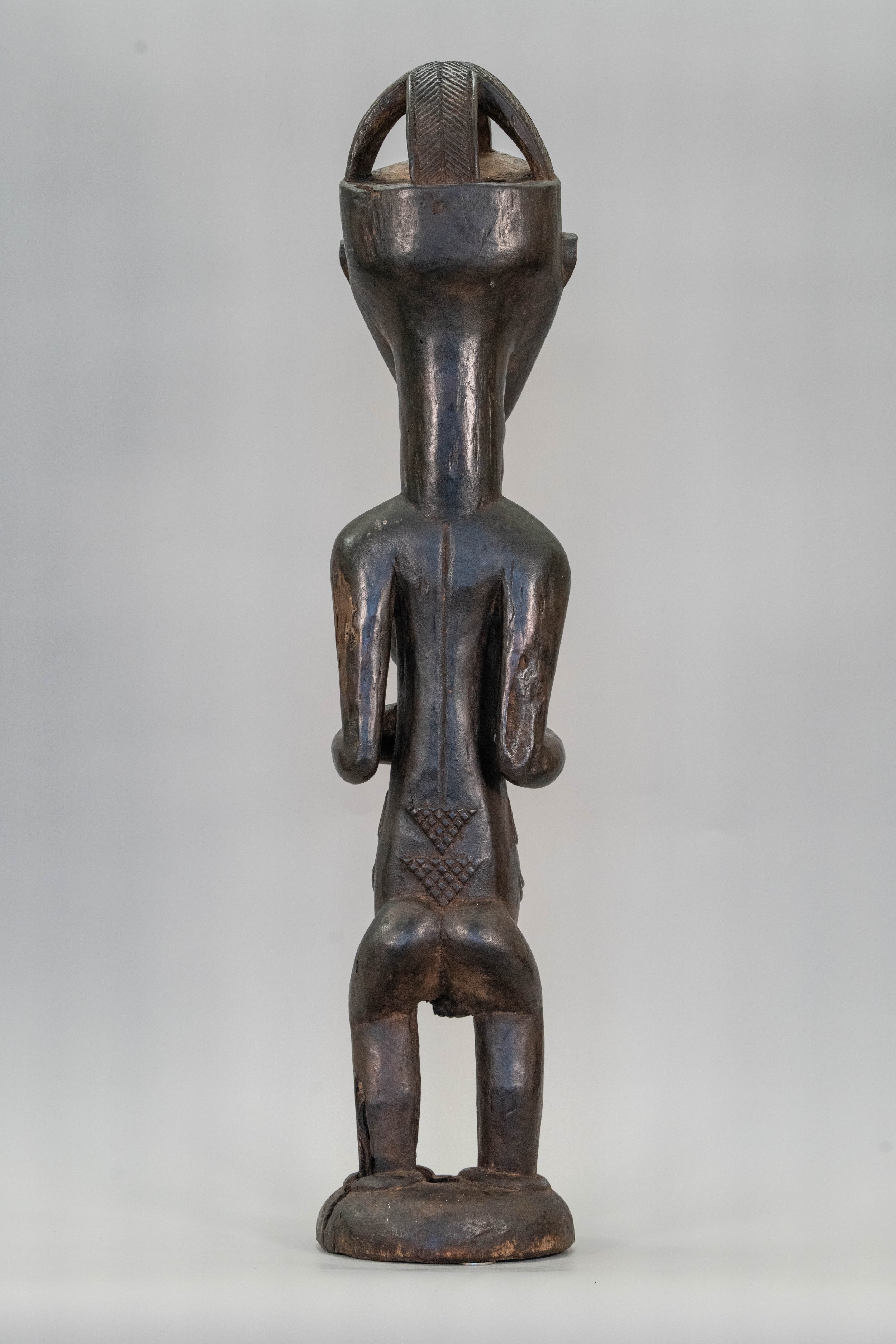 Image 4 of 4
Circa 1900–1935 / Height: 31.5 inches
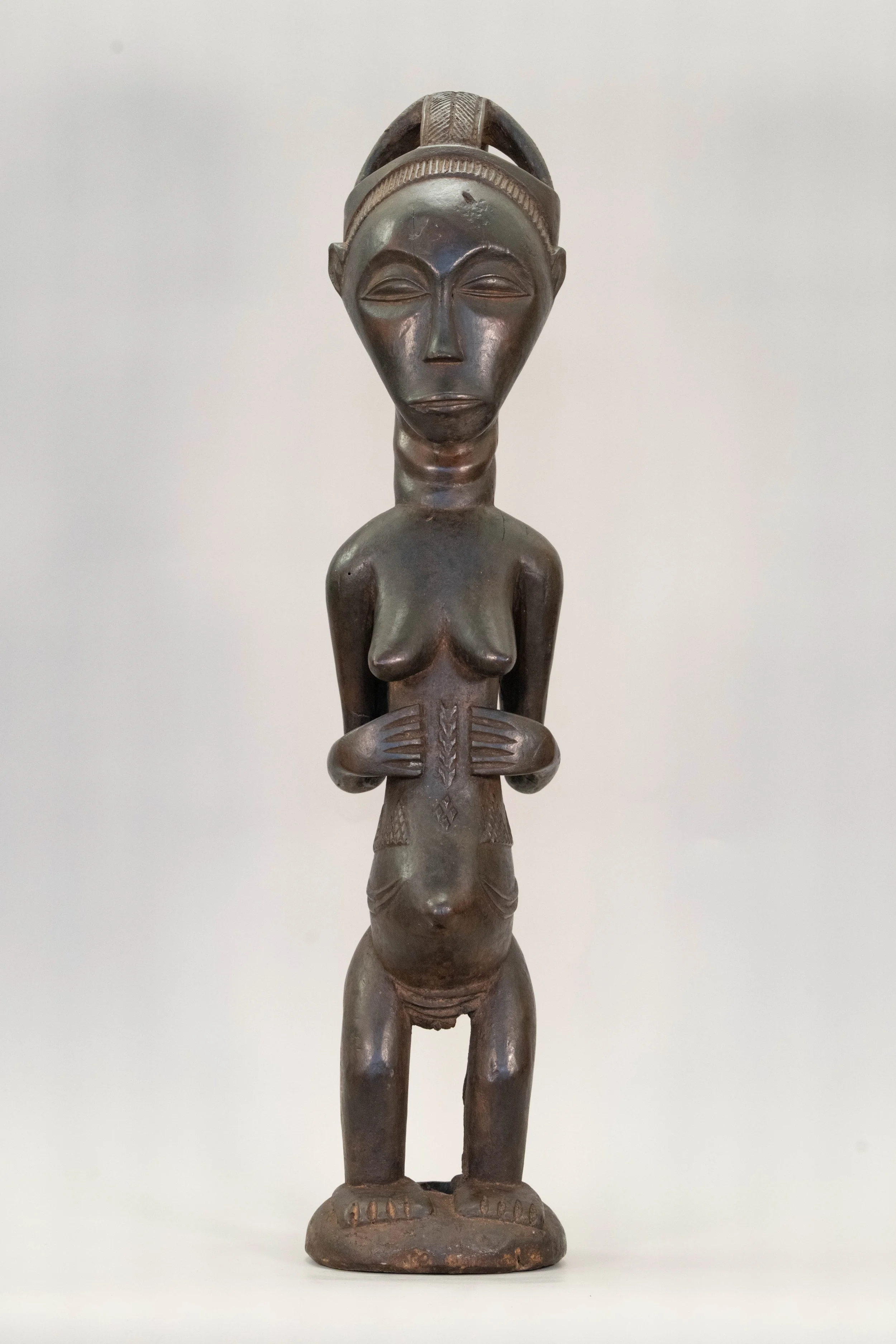
Carved in the early 20th century in what is now the Democratic Republic of the Congo, this Luba female figure is a substantial and well-preserved example of a sculptural tradition in which the female form carried deep cultural weight. At 31.5 inches tall, it is larger than many figures made for domestic use — a size that suggests original placement in a royal or chiefly compound, where such works served as spiritual anchors invoked in matters of leadership, fertility, lineage, and remembrance.
In Luba belief, the female body is closely linked to memory and continuity. The hands placed over the abdomen are a deliberate gesture — referencing not simply pregnancy but generative power and the living connection between ancestors and descendants.
The carving is accomplished and well-composed. Slightly bent knees animate the stance, giving the figure a sense of grounded readiness rather than rigid formality. Fine scarification patterns across the torso — front, sides, and back — reference cultural identity, status, and maturity; in Luba society, such markings transformed the body into a visible record of lineage and social belonging. The pronounced neck rolls are a recognized Luba aesthetic ideal, signifying health and vitality.
The head and coiffure are among the most striking elements. The crest rises in an arched form that incorporates open space within the design — a sophisticated approach that lightens the silhouette and gives the composition a sense of movement. The face is serene and inward-looking, the long neck and upright posture adding to the overall impression of composure and quiet authority.
The surface has developed an honest, naturally acquired patina, with subtle polishing on the breasts, abdomen, and thighs where handling has worn the wood over time. Old, inactive insect activity at the base and lower legs is fully stabilized — the kind of age-appropriate condition evidence that serious collectors recognize as a marker of genuine use and history, not artificial distressing.
For context, a closely related Luba female figure is on view online in the Metropolitan Museum of Art’s collection. https://www.metmuseum.org/art/collection/search/311003
Estimated date: Circa 1900–1935
Condition: Good. Age-appropriate wear; old, inactive insect activity, stabilized
Dimensions: 31.5 × 6.5 × 6.5 inches (H x W x D)
Circa 1900–1935 / Height: 31.5 inches
Carved in the early 20th century in what is now the Democratic Republic of the Congo, this Luba female figure is a substantial and well-preserved example of a sculptural tradition in which the female form carried deep cultural weight. At 31.5 inches tall, it is larger than many figures made for domestic use — a size that suggests original placement in a royal or chiefly compound, where such works served as spiritual anchors invoked in matters of leadership, fertility, lineage, and remembrance.
In Luba belief, the female body is closely linked to memory and continuity. The hands placed over the abdomen are a deliberate gesture — referencing not simply pregnancy but generative power and the living connection between ancestors and descendants.
The carving is accomplished and well-composed. Slightly bent knees animate the stance, giving the figure a sense of grounded readiness rather than rigid formality. Fine scarification patterns across the torso — front, sides, and back — reference cultural identity, status, and maturity; in Luba society, such markings transformed the body into a visible record of lineage and social belonging. The pronounced neck rolls are a recognized Luba aesthetic ideal, signifying health and vitality.
The head and coiffure are among the most striking elements. The crest rises in an arched form that incorporates open space within the design — a sophisticated approach that lightens the silhouette and gives the composition a sense of movement. The face is serene and inward-looking, the long neck and upright posture adding to the overall impression of composure and quiet authority.
The surface has developed an honest, naturally acquired patina, with subtle polishing on the breasts, abdomen, and thighs where handling has worn the wood over time. Old, inactive insect activity at the base and lower legs is fully stabilized — the kind of age-appropriate condition evidence that serious collectors recognize as a marker of genuine use and history, not artificial distressing.
For context, a closely related Luba female figure is on view online in the Metropolitan Museum of Art’s collection. https://www.metmuseum.org/art/collection/search/311003
Estimated date: Circa 1900–1935
Condition: Good. Age-appropriate wear; old, inactive insect activity, stabilized
Dimensions: 31.5 × 6.5 × 6.5 inches (H x W x D)