 Image 1 of 4
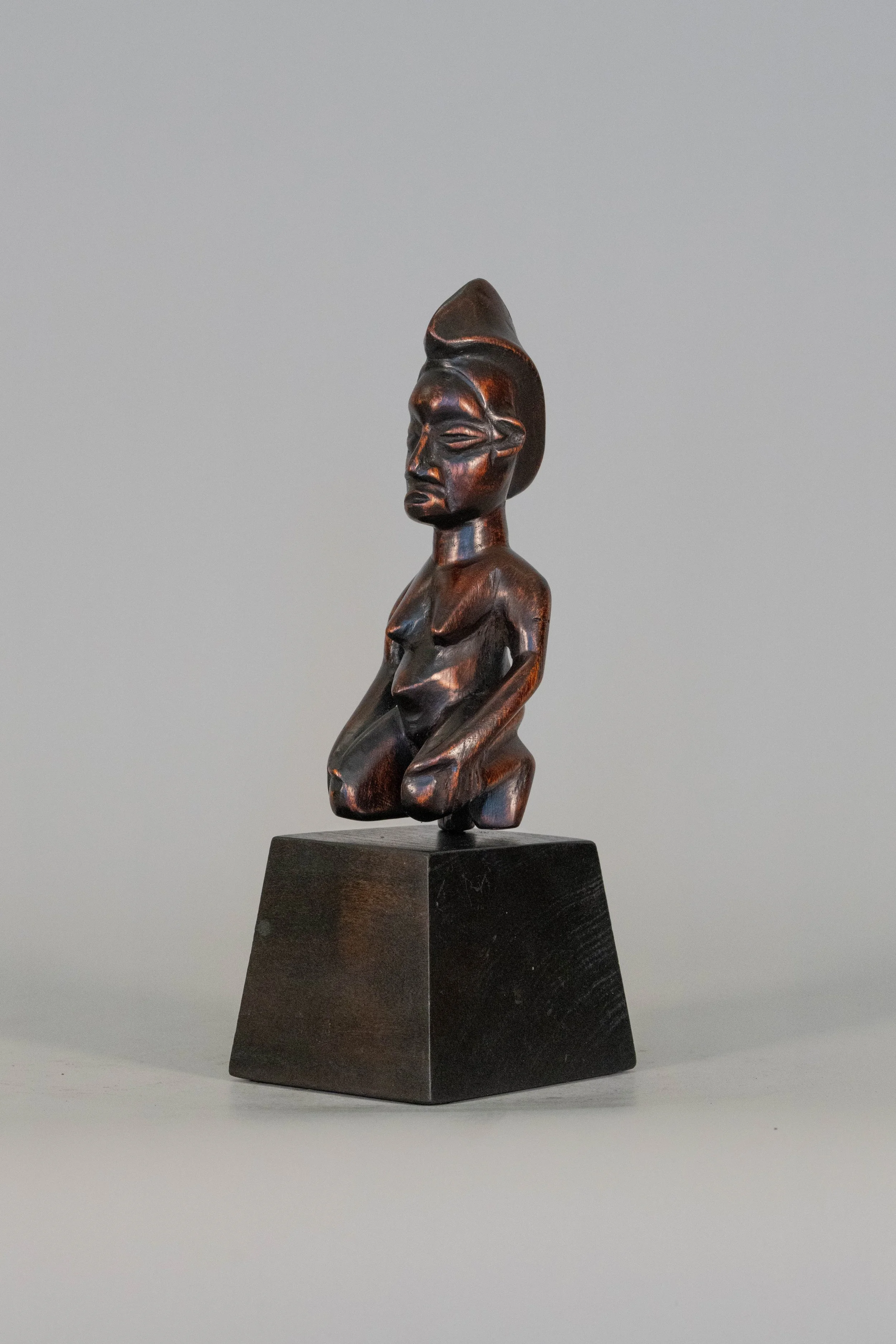 Image 2 of 4
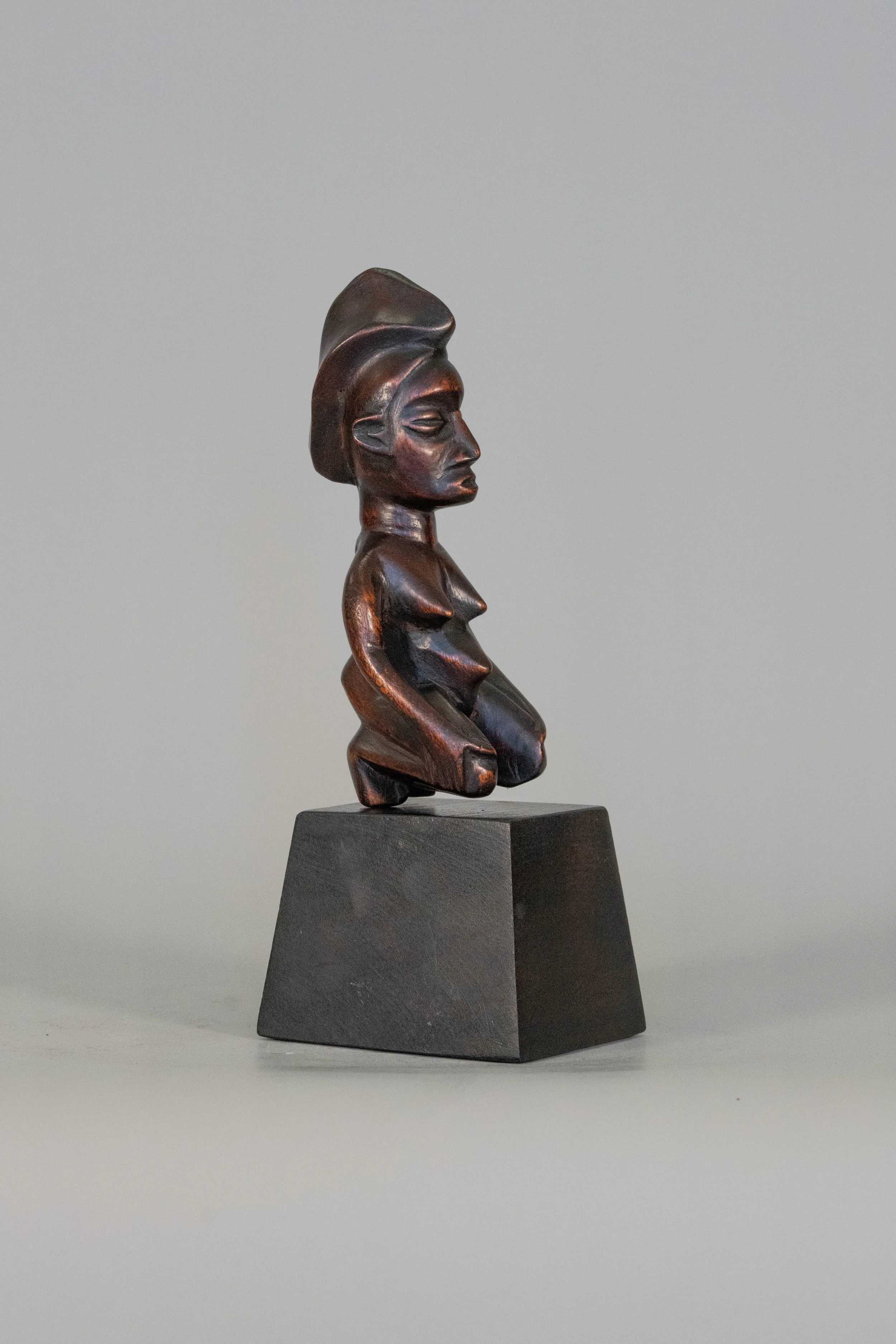 Image 3 of 4
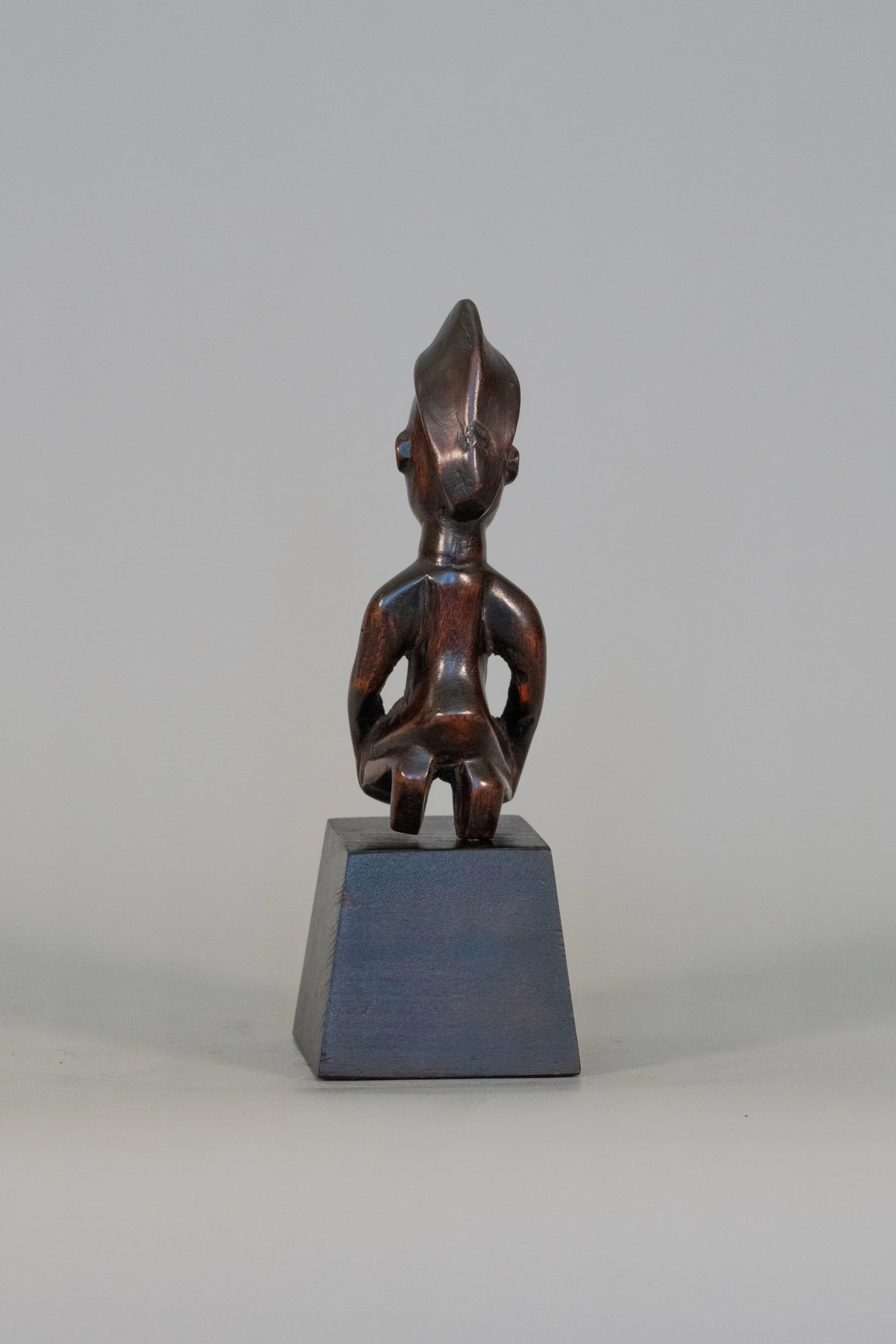 Image 4 of 4
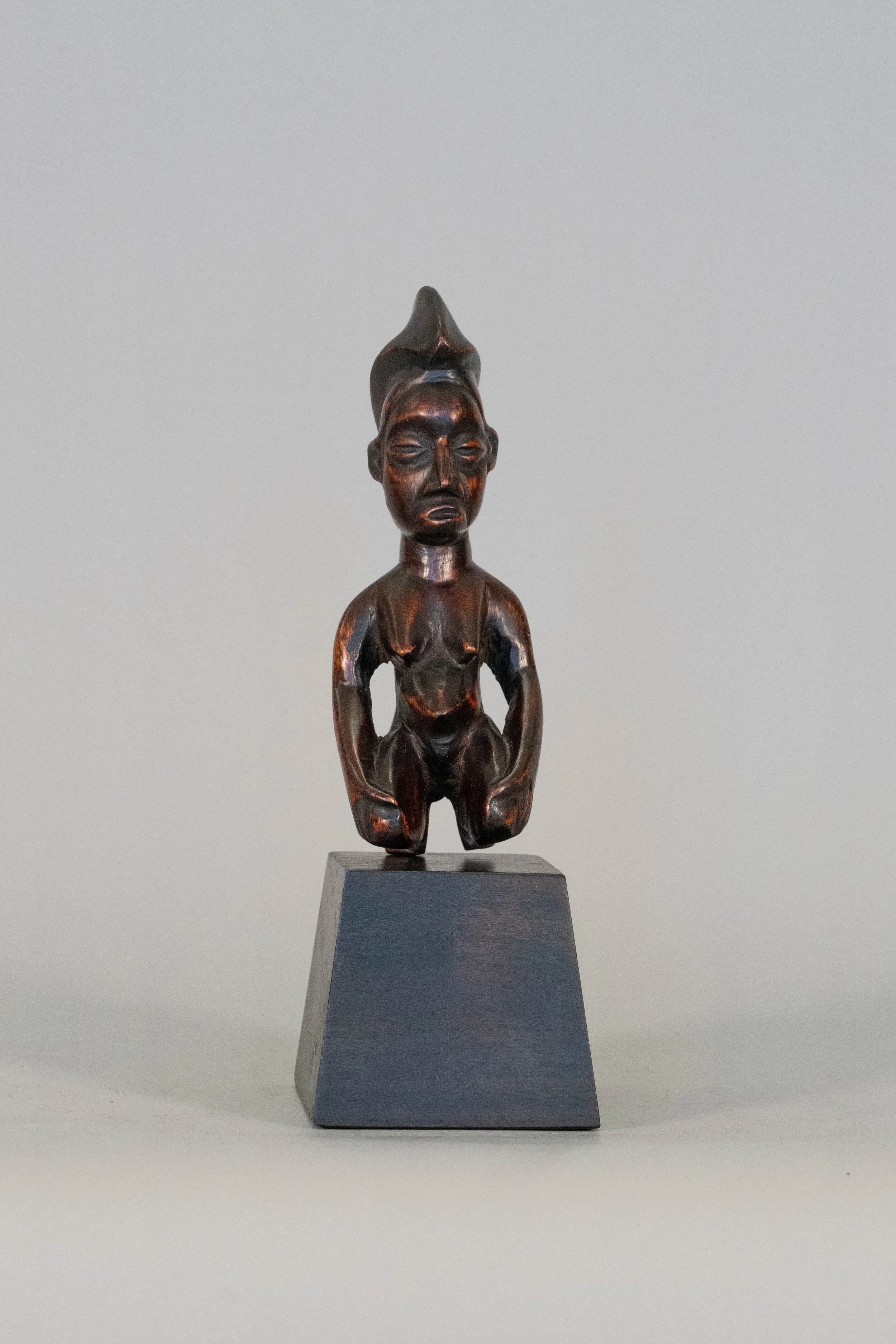
In the hands, this small Lower Congo figure from the Kongo/Bakongo peoples feels bigger than its 7 inches. Carved from dense hardwood and set in a poised kneeling stance, it carries the quiet authority of the Kongo region’s devotional sculpture—hands resting on the thighs/knees in a posture long associated with attendants, ancestors, and acts of reverence. It’s the kind of form that wasn’t meant to shout. It was meant to stay present—to witness, to support, to protect.
The face is calm and inward, the crested coiffure gives the head a crowned silhouette, and the body is modeled with confident, economical lines. It reads as an ancestor/attendant/fertility figure—a compact vessel of lineage and continuity—made to hold meaning through time. Such figures were typically kept in the home or in a family shrine space, brought out for prayer, offerings, and moments when fertility, protection, and the presence of ancestors were invoked.
The surface tells the same story. The patina is richest where life would touch it: warm, burnished highlights on exposed high points, and darker, less-polished oxidation beneath the legs and feet where light and hands seldom reach. Even better, the protected undercut between the legs is left rough with visible hand-tooling, exactly the kind of honest “hard-to-fake” detail collectors look for because it shows the carving wasn’t later prettied up or heavily refinished. Add to that no visible cracks and no evidence of repair, and you have a rare combination—age, integrity, and condition.
Presented on a high-quality custom square-peg mount, this is an ideal cabinet-scale Congo sculpture: authentic in feel, handsome from every angle, and easy to live with. Whether you’re new to African art or already deep into it, this is the kind of piece that teaches you what real patina and real carving look like—because it doesn’t rely on theatrics. It relies on truth. Custom base included.
Early–mid 20th century
Condition: Very good.
Dimensions: Overall with base 9.5 × 3.25 × 3.75 inches Figure only 7 × 2.5 × 2.5 inches (H x W x D)
In the hands, this small Lower Congo figure from the Kongo/Bakongo peoples feels bigger than its 7 inches. Carved from dense hardwood and set in a poised kneeling stance, it carries the quiet authority of the Kongo region’s devotional sculpture—hands resting on the thighs/knees in a posture long associated with attendants, ancestors, and acts of reverence. It’s the kind of form that wasn’t meant to shout. It was meant to stay present—to witness, to support, to protect.
The face is calm and inward, the crested coiffure gives the head a crowned silhouette, and the body is modeled with confident, economical lines. It reads as an ancestor/attendant/fertility figure—a compact vessel of lineage and continuity—made to hold meaning through time. Such figures were typically kept in the home or in a family shrine space, brought out for prayer, offerings, and moments when fertility, protection, and the presence of ancestors were invoked.
The surface tells the same story. The patina is richest where life would touch it: warm, burnished highlights on exposed high points, and darker, less-polished oxidation beneath the legs and feet where light and hands seldom reach. Even better, the protected undercut between the legs is left rough with visible hand-tooling, exactly the kind of honest “hard-to-fake” detail collectors look for because it shows the carving wasn’t later prettied up or heavily refinished. Add to that no visible cracks and no evidence of repair, and you have a rare combination—age, integrity, and condition.
Presented on a high-quality custom square-peg mount, this is an ideal cabinet-scale Congo sculpture: authentic in feel, handsome from every angle, and easy to live with. Whether you’re new to African art or already deep into it, this is the kind of piece that teaches you what real patina and real carving look like—because it doesn’t rely on theatrics. It relies on truth. Custom base included.
Early–mid 20th century
Condition: Very good.
Dimensions: Overall with base 9.5 × 3.25 × 3.75 inches Figure only 7 × 2.5 × 2.5 inches (H x W x D)