Lega Figure with Raised Arm (Kasungalala)
Democratic Republic of the Congo · First half to mid-20th century
This striking, minimalist figure captures what makes Lega sculpture so compelling: a whole worldview distilled into one unforgettable gesture. The single raised arm identifies the Kasungalala type, associated with a high-ranking initiate’s authority to step into a quarrel and settle it. Read that way, the gesture is a visual declaration: it makes authority visible.
The carving’s power lies in its economy and silhouette. The body is reduced to confident, architectural forms: a long vertical torso, compact flexed legs, and an emphatic waist ring that sets the figure like a signpost. The raised hand ends in incised fingers. The face is a classic Lega concave plane with coffee-bean eyes and a long, narrow nose, where the carver concentrated the character. It also shows the strongest surface nuance: subtle tonal variation, softened edges, and well-worn hand-tool marks.
Small figures like this, called iginga, belonged to senior members of Bwami, the association that governed Lega social and moral life. They served as teaching aids and moral “proofs,” brought out during initiations to illustrate proverbs, rank, and community ideals.
The surface tells its story honestly.
Wear: it is concentrated where the figure would have been held, at the rim of the face, the elbow, and the ridge down the back of the head.
Recesses: grime has settled into them, especially around the face, and traces of white kaolin remain in the mouth and eye.
UV: the figure is quiet under UV light, with no restoration observed.
Crack: a stable drying crack at the back of the head reflects natural wood movement over time.
Patina: dark and handsome, with a shine that gives it strong presence on the shelf while preserving the underlying wear collectors look for.
The red beads (older, recently applied) and the walnut base are recent additions for display. Both are easily removed if a collector prefers a purist presentation.
Why this piece works: strong modernist form, real presence, and the kind of honest surface that separates a good decorative carving from a figure with a life behind it.
Condition: Good. Structurally sound; stable crack at the back of the head; no repairs or restoration observed.
Dimensions: Overall with base 17.5 × 4 × 3.25 inches; Figure only 13.5 × 3 × 2.5 inches (H x W x D)
For reference, related Lega figures are on view online at the Metropolitan Museum of Art: https://www.metmuseum.org/art/collection/search/311090 and at the New Orleans Museum of Art: https://noma.org/collection/bwami-association-multifaced-figurine-sakimatwematwe/.
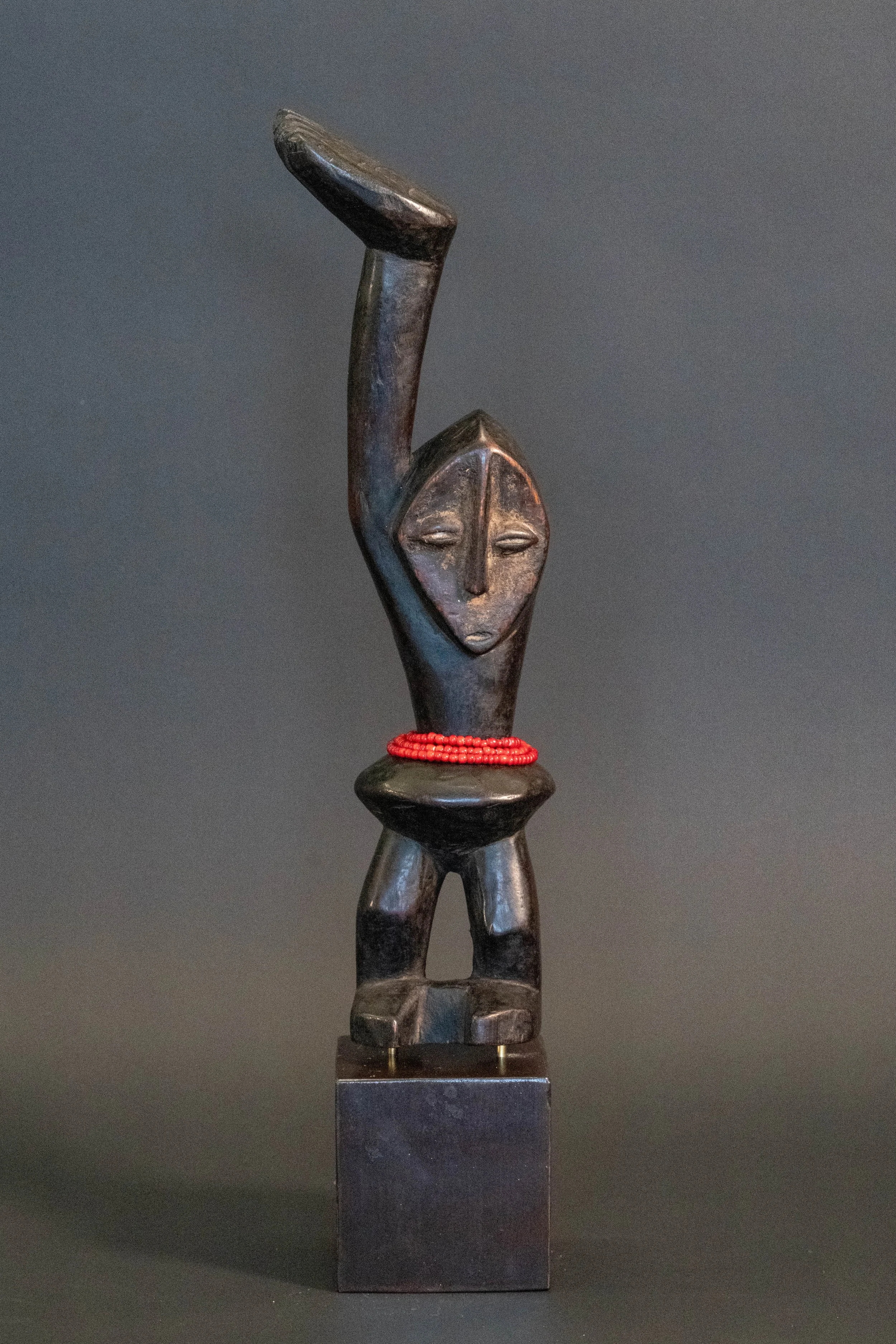 Image 1 of 6
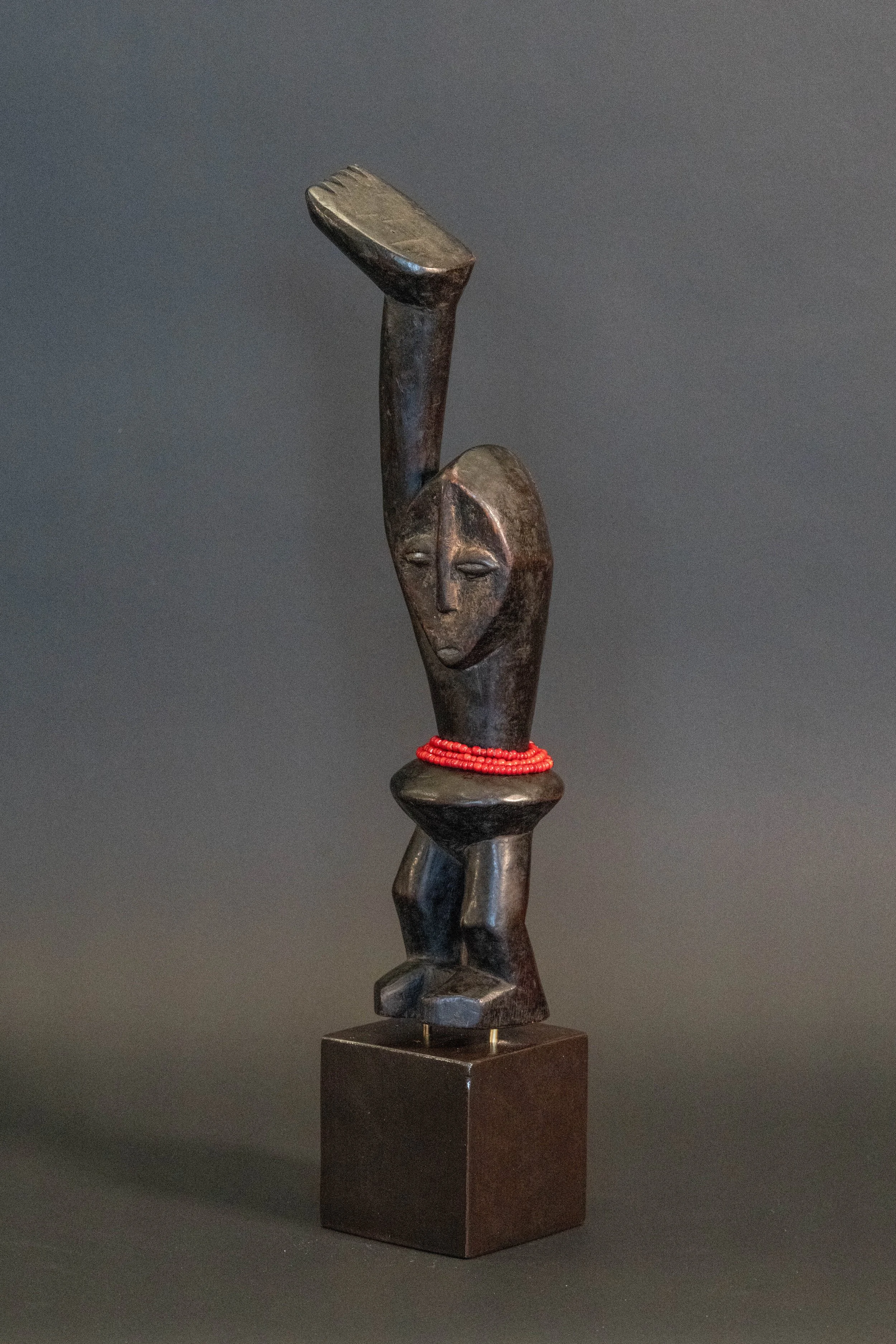 Image 2 of 6
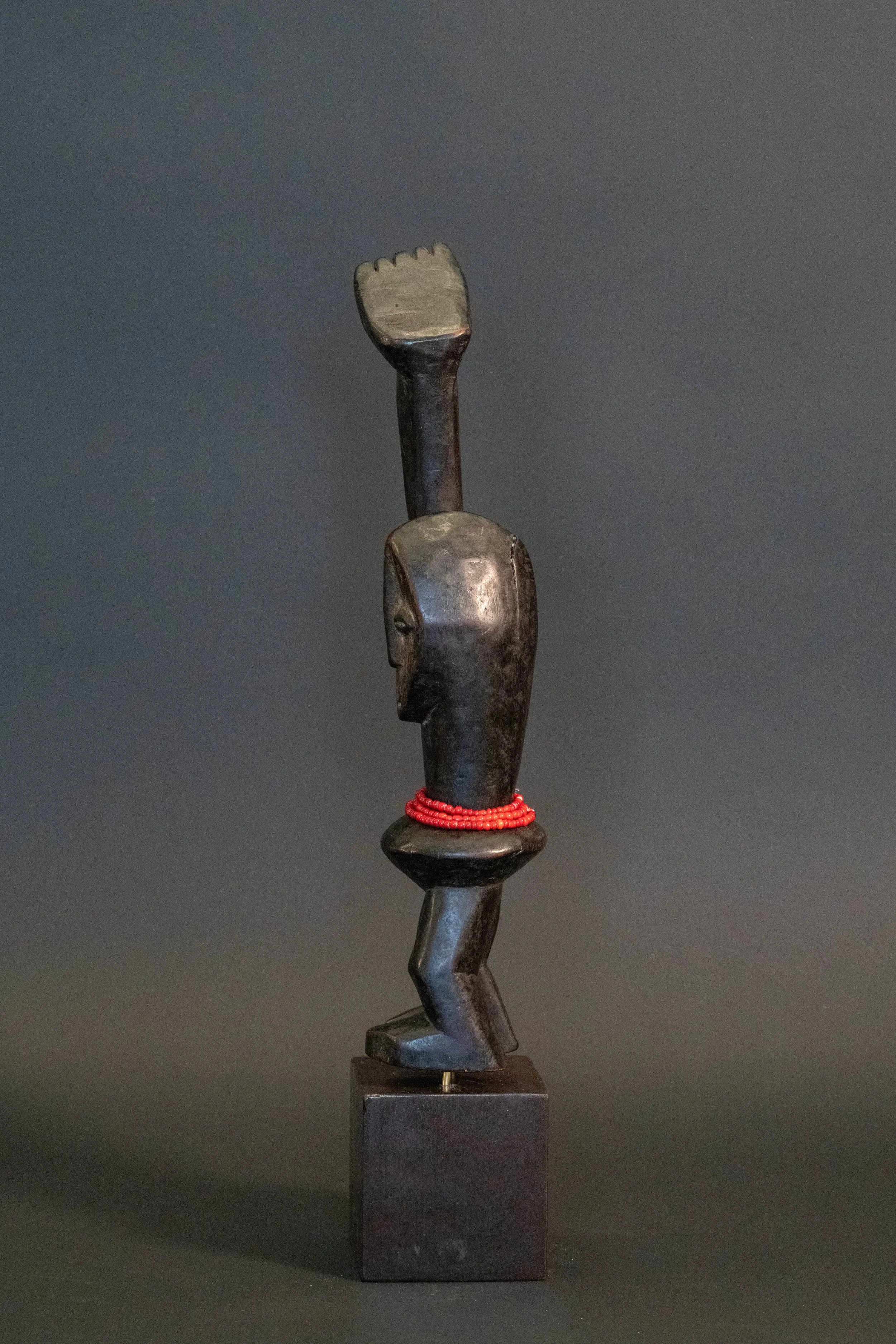 Image 3 of 6
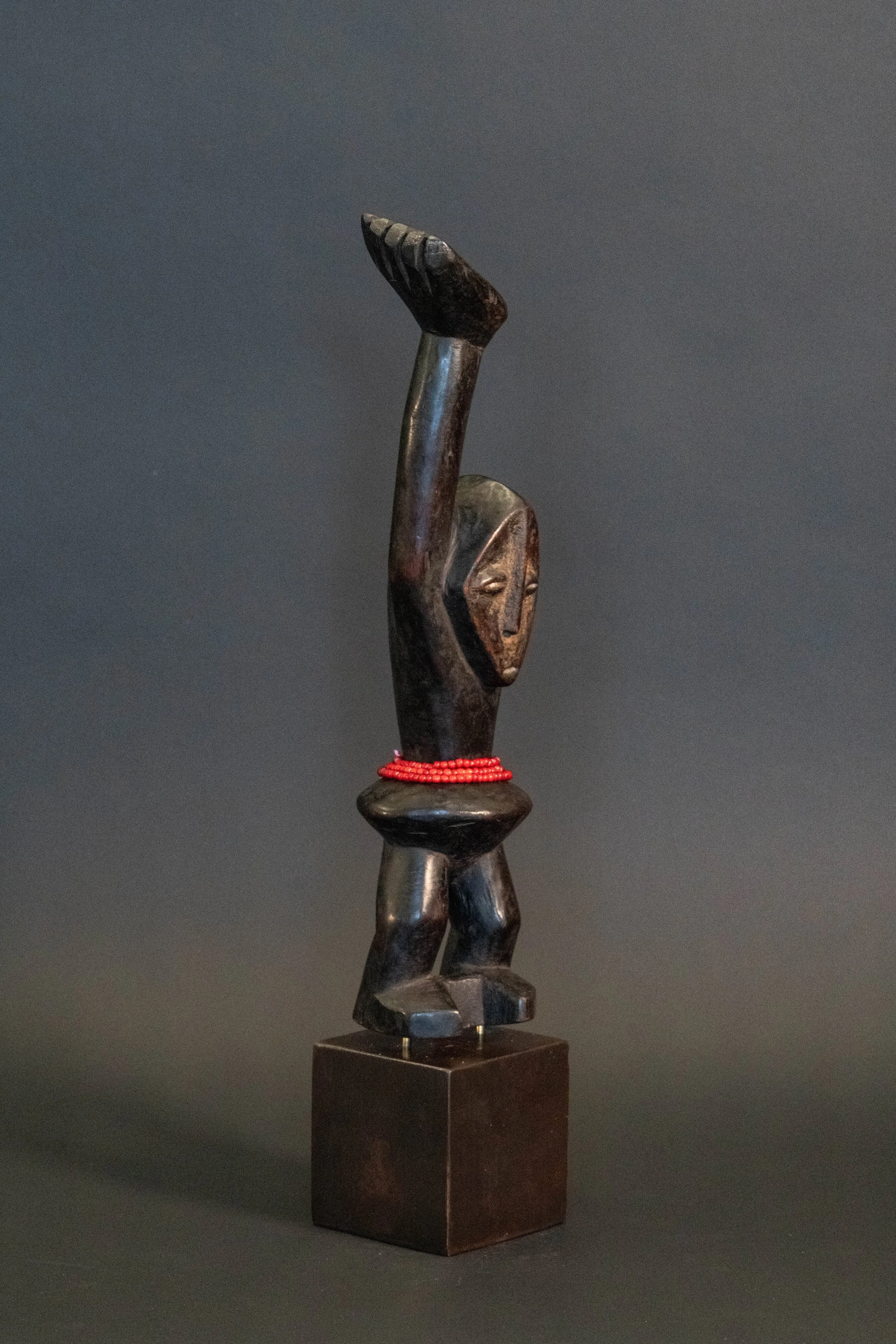 Image 4 of 6
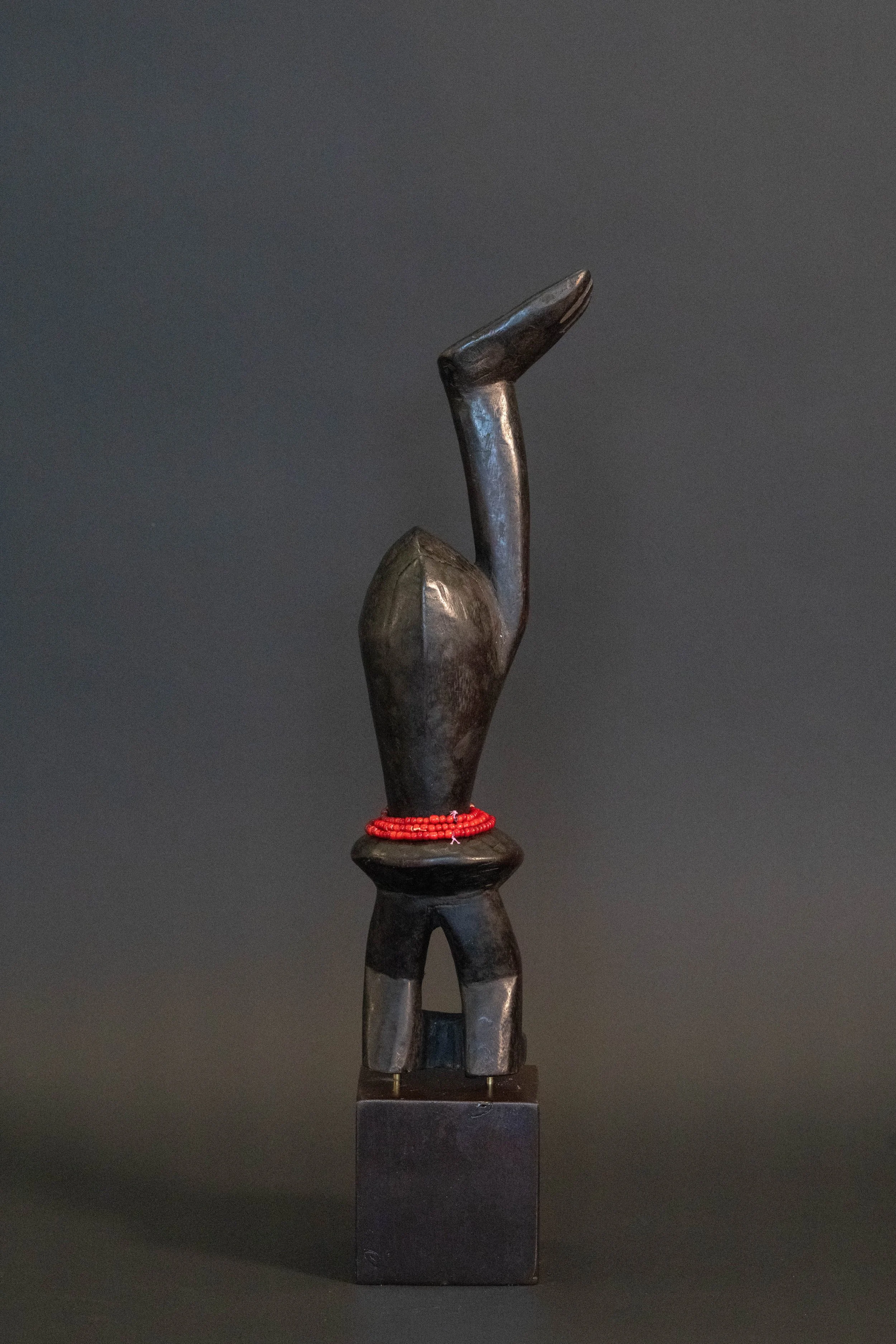 Image 5 of 6
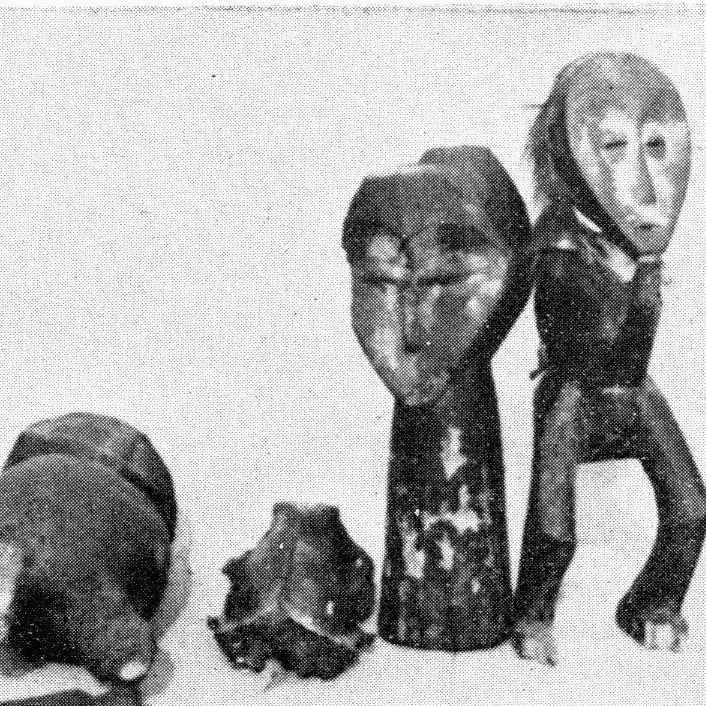 Image 6 of 6