Democratic Republic of Congo · Early to mid-20th century, c. 1920–1950 Wood, cloth, plant fiber, leather, and ritual substances (bilongo) Height: 8 inches / 20.3 cm
This compact figure carries the full apparatus of a working ritual object. Among the Kusu and their neighbors in the southeastern Congo, a piece like this is known as nkishi: a vessel of activated spiritual force, commissioned for purpose, fed for power, and consulted in moments of need. The carving is the body; the bundle bound to the head, and the dressings layered at the base are the soul.
The face is the carver's focal achievement. Heavy-lidded almond eyes gaze downward into an interior world. A cruciform scarification pattern radiates across the cheeks and beard, marking the subject as a person of standing. A stepped, ridged coiffure frames the face. In this synthesis of introspective Luba serenity and the austere geometry of Songye work, the Kusu sensibility is clear: a culture at a crossroads, drawing from major traditions on either side.
The lower body terminates not in carved legs but in a cylindrical base — a deliberate post-figure construction designed to be planted, seated, or mounted within a household shrine. The cloth-and-fiber skirt accumulated over time, layer by layer, as a ritual practitioner (nganga) added new dressings to mark each successful intervention. This construction matters: tourist and workshop figures were almost invariably carved with full legs for free-standing display. A figure built with a mounting terminus reflects the priorities of the community that used it, not the market that eventually received it.
Crowning the head, a two-tiered bundle holds the bilongo— a precise compound of sacred substances installed by the enganga at the figure's activation: earth from significant sites, plant matter, mineral pigments, and elements chosen for their resonance with the figure's intended purpose.
Authentication
Stylistic vocabulary consistent with documented Kusu production, c. 1920–1950
Deep, layered patina from authentic ritual handling; high-polish on projecting surfaces, denser residue in recesses
UV examination yields patchy green fluorescence consistent with aged organic accretions (palm oil, plant infusions)
Intact and undisturbed bilobed bundle and base dressings — increasingly rare after the 1960s, when Christianization and political upheaval led many figures to be stripped of their active components
No cracks, restoration, or modern intervention
A working-period nkishi in genuinely complete form. The Kusu — at the cultural junction between Luba and Songye traditions — produced ritual sculpture of real sophistication that remains undervalued relative to its quality, an opportunity for collectors building serious depth in Central African material.
Democratic Republic of Congo · Early to mid-20th century, c. 1920–1950 Wood, cloth, plant fiber, leather, and ritual substances (bilongo) Height: 8 inches / 20.3 cm
This compact figure carries the full apparatus of a working ritual object. Among the Kusu and their neighbors in the southeastern Congo, a piece like this is known as nkishi: a vessel of activated spiritual force, commissioned for purpose, fed for power, and consulted in moments of need. The carving is the body; the bundle bound to the head, and the dressings layered at the base are the soul.
The face is the carver's focal achievement. Heavy-lidded almond eyes gaze downward into an interior world. A cruciform scarification pattern radiates across the cheeks and beard, marking the subject as a person of standing. A stepped, ridged coiffure frames the face. In this synthesis of introspective Luba serenity and the austere geometry of Songye work, the Kusu sensibility is clear: a culture at a crossroads, drawing from major traditions on either side.
The lower body terminates not in carved legs but in a cylindrical base — a deliberate post-figure construction designed to be planted, seated, or mounted within a household shrine. The cloth-and-fiber skirt accumulated over time, layer by layer, as a ritual practitioner (nganga) added new dressings to mark each successful intervention. This construction matters: tourist and workshop figures were almost invariably carved with full legs for free-standing display. A figure built with a mounting terminus reflects the priorities of the community that used it, not the market that eventually received it.
Crowning the head, a two-tiered bundle holds the bilongo— a precise compound of sacred substances installed by the enganga at the figure's activation: earth from significant sites, plant matter, mineral pigments, and elements chosen for their resonance with the figure's intended purpose.
Authentication
Stylistic vocabulary consistent with documented Kusu production, c. 1920–1950
Deep, layered patina from authentic ritual handling; high-polish on projecting surfaces, denser residue in recesses
UV examination yields patchy green fluorescence consistent with aged organic accretions (palm oil, plant infusions)
Intact and undisturbed bilobed bundle and base dressings — increasingly rare after the 1960s, when Christianization and political upheaval led many figures to be stripped of their active components
No cracks, restoration, or modern intervention
A working-period nkishi in genuinely complete form. The Kusu — at the cultural junction between Luba and Songye traditions — produced ritual sculpture of real sophistication that remains undervalued relative to its quality, an opportunity for collectors building serious depth in Central African material.
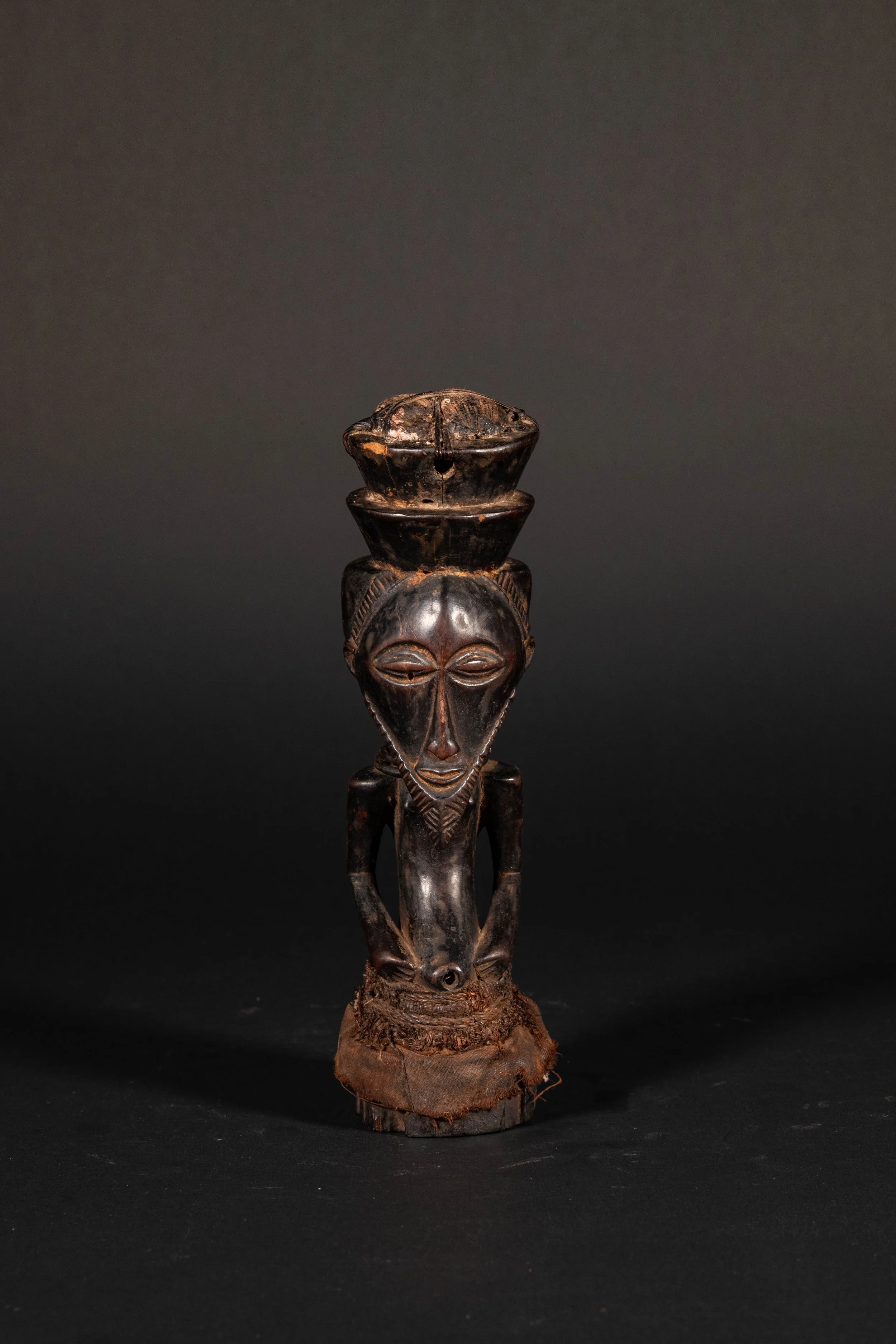 Image 1 of 6
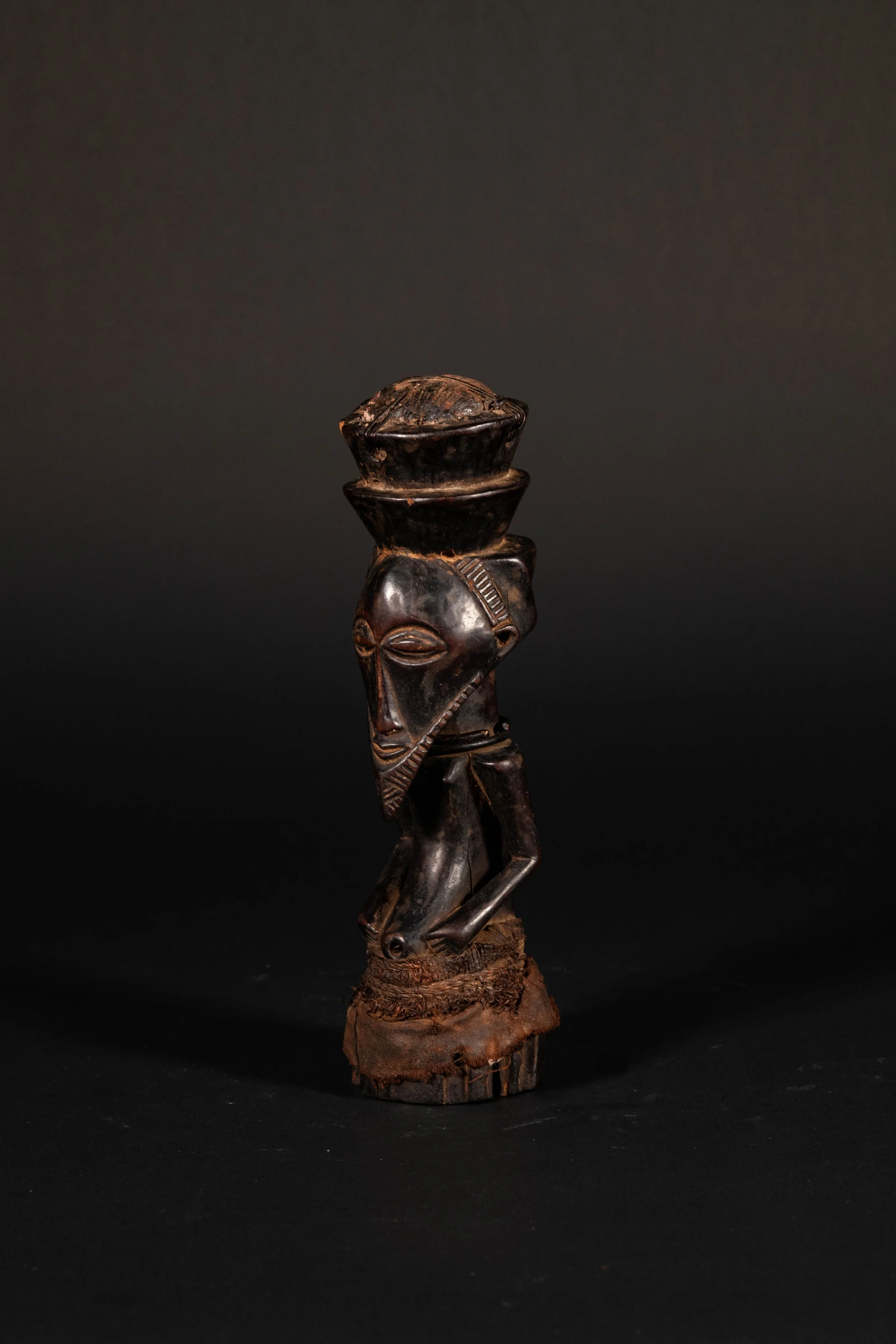 Image 2 of 6
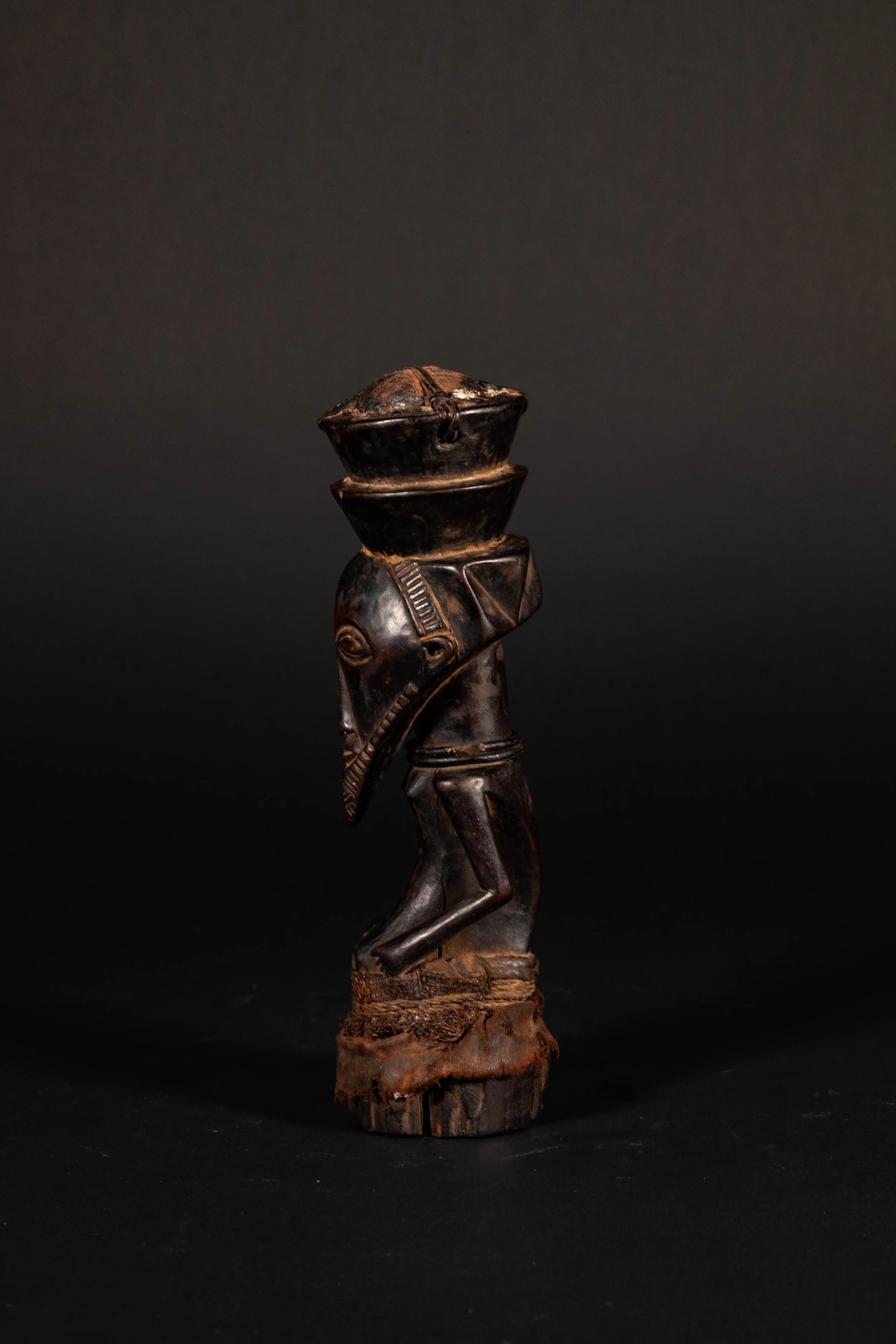 Image 3 of 6
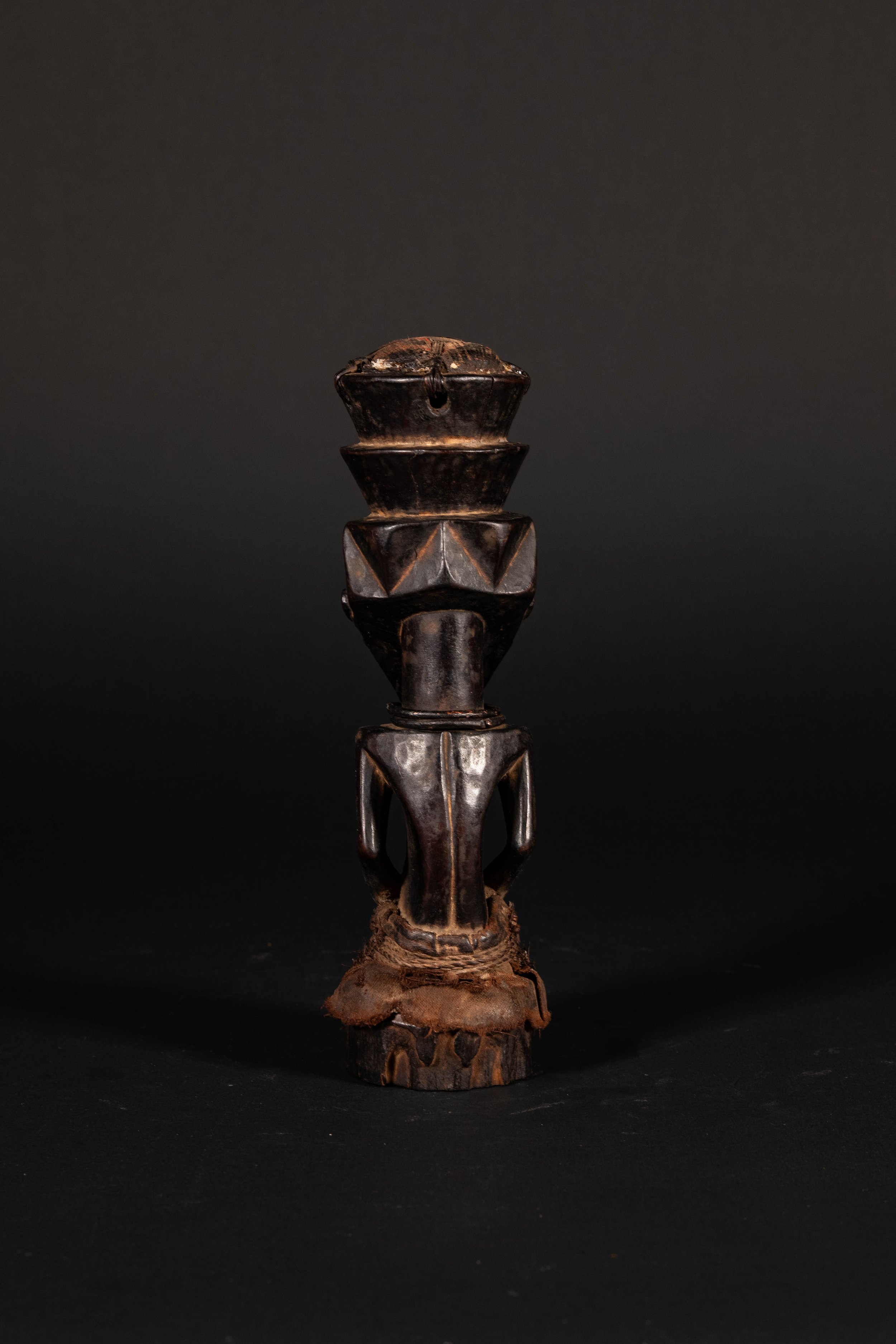 Image 4 of 6
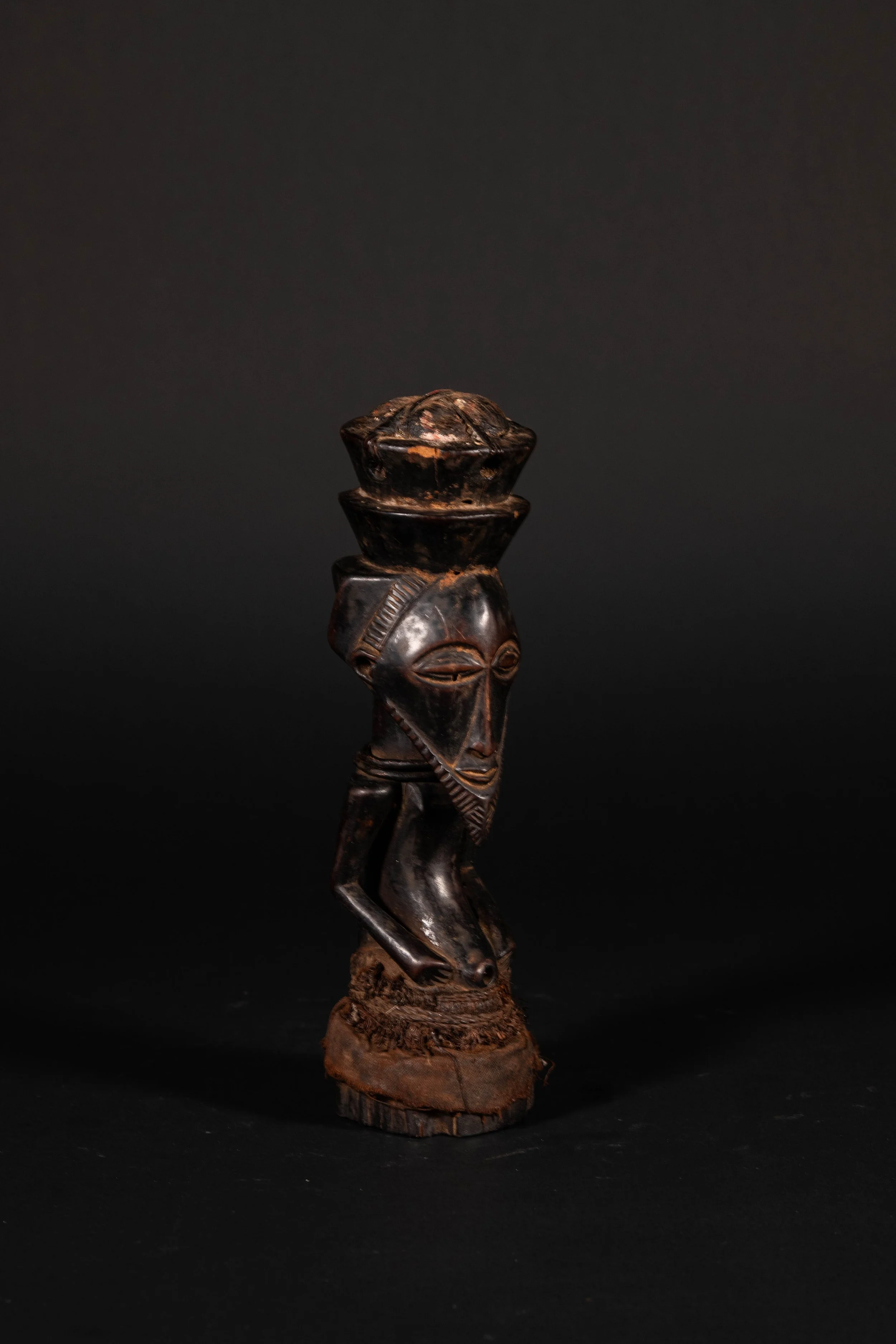 Image 5 of 6
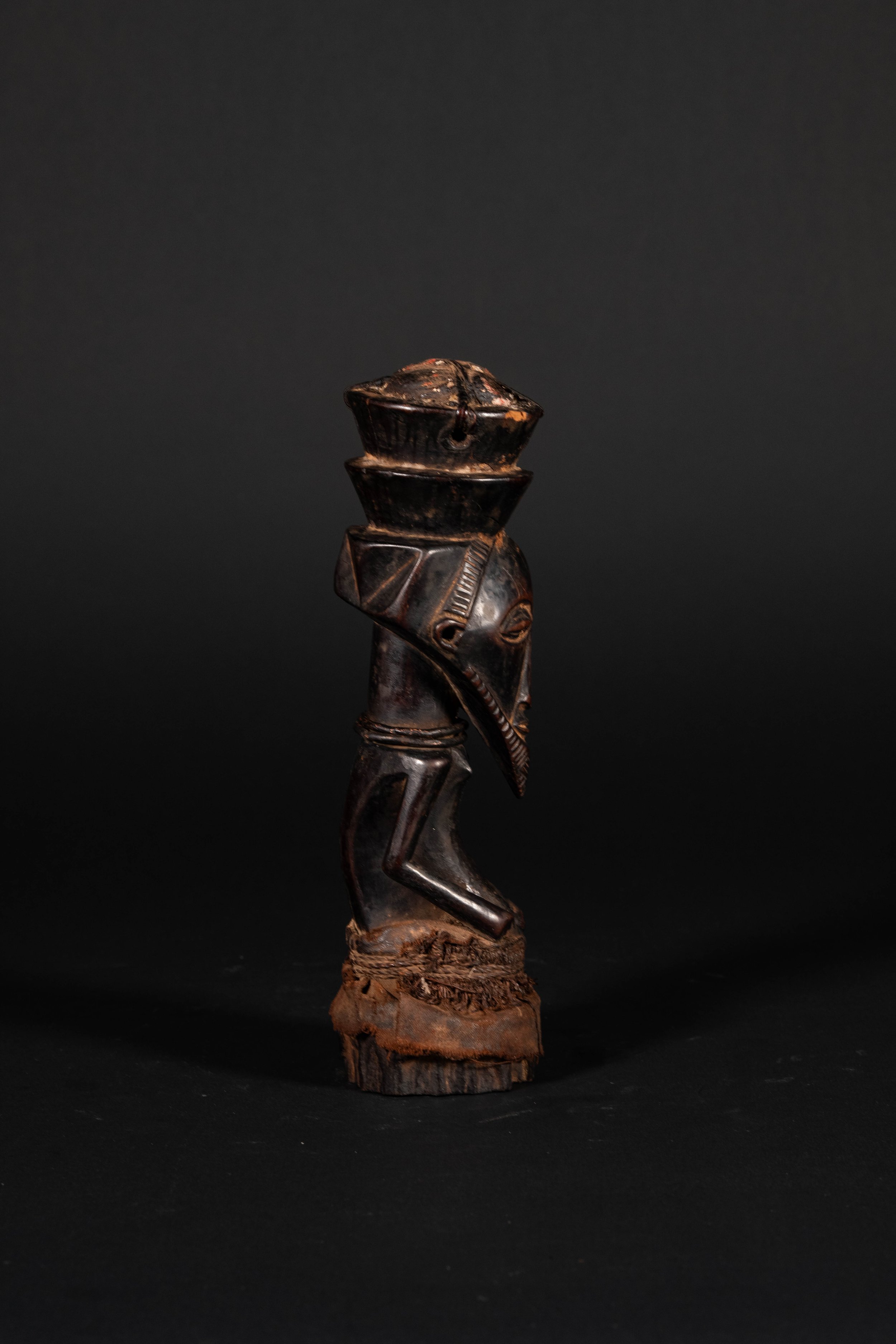 Image 6 of 6