 Image 1 of 4
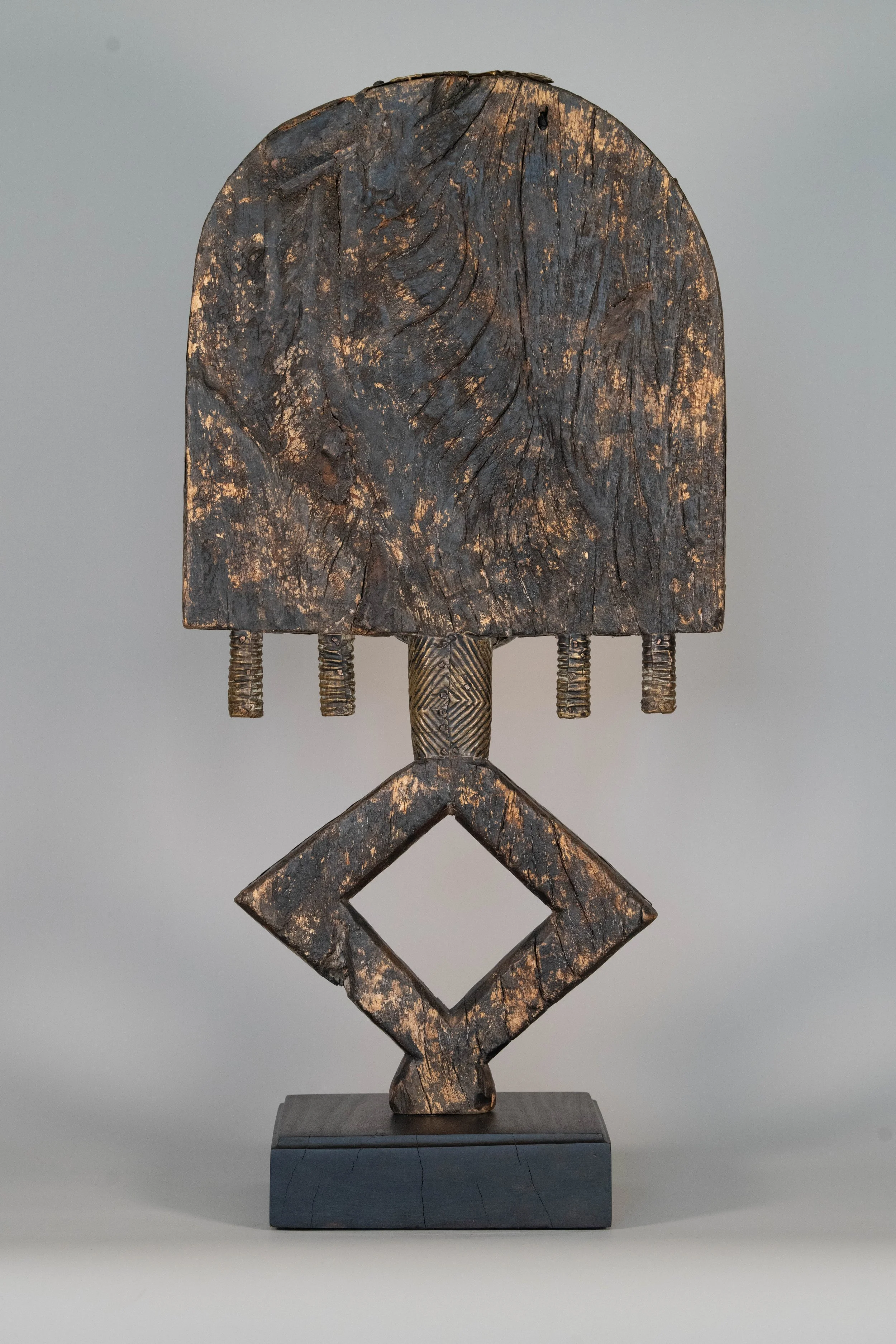 Image 2 of 4
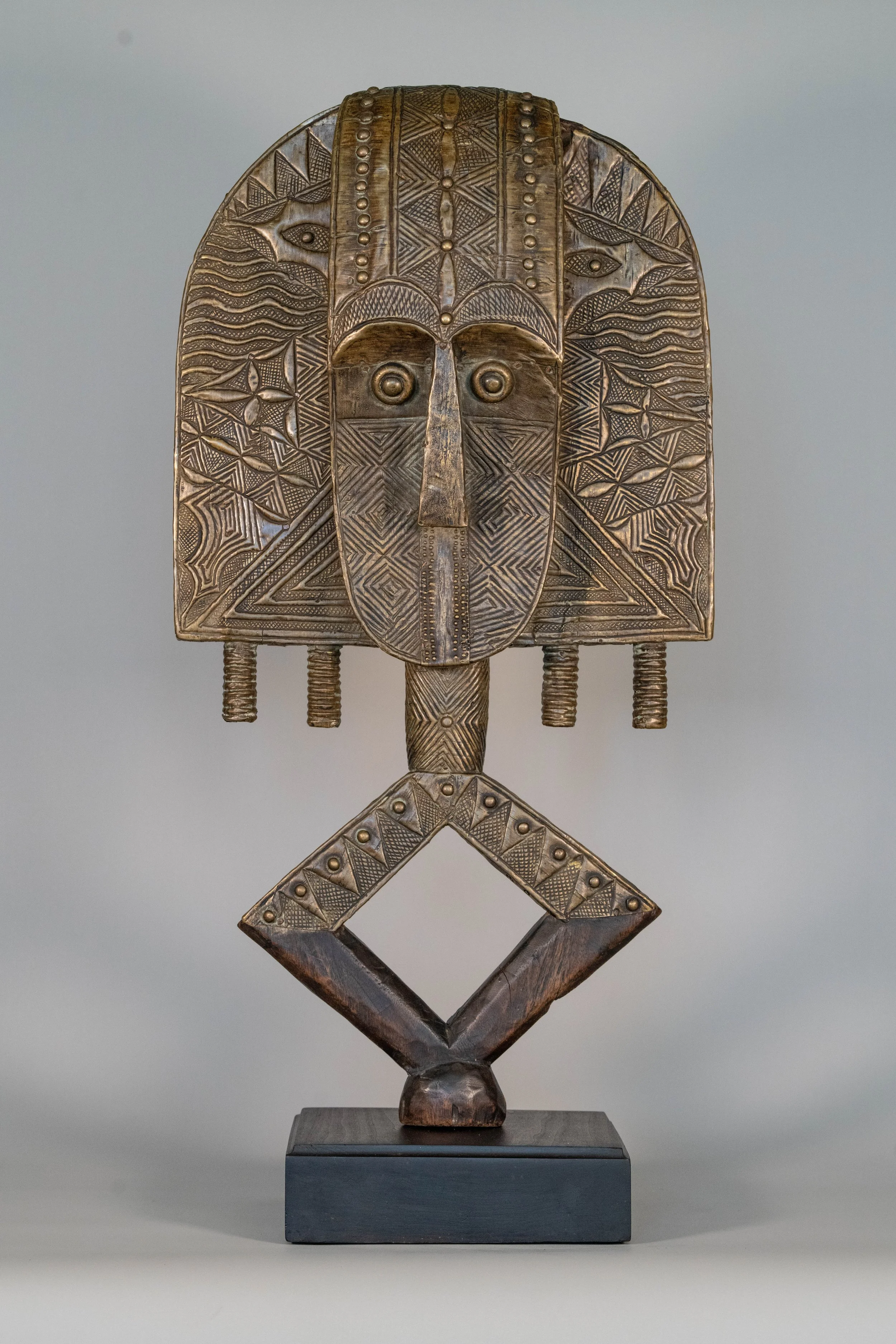 Image 3 of 4
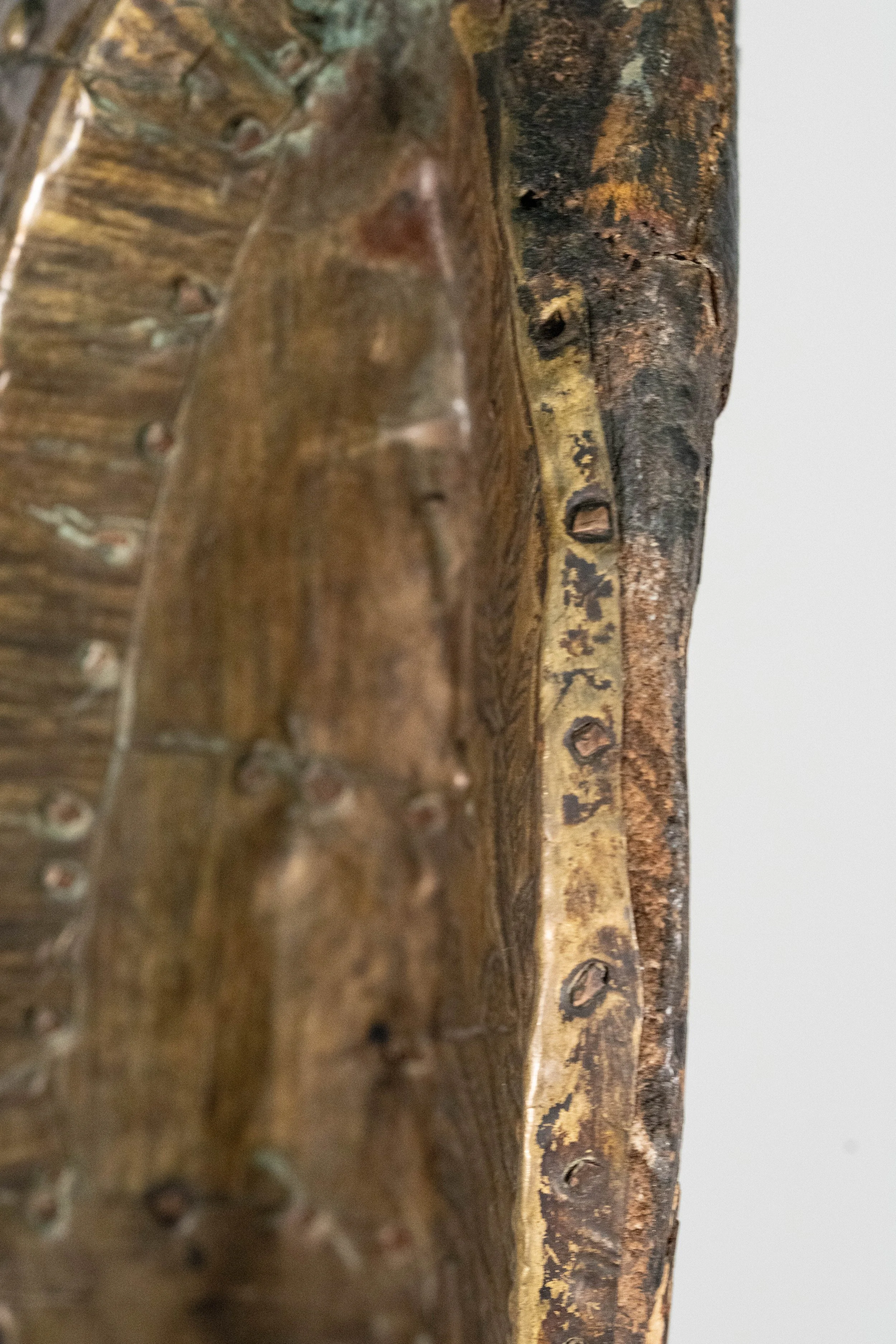 Image 4 of 4
Circa 1890–1925 · Hardwood, copper alloy · 24.5 inches (62 cm)
Before it was art, it was theology.
The Kota people of equatorial Gabon had a profound relationship with their ancestors that did not end at death. The remains of revered family members were preserved inside bark reliquary baskets, carried from village to village, and consulted before every major decision. And standing watch atop each basket was this: ambulu ngulu, a guardian figure carved from hardwood and sheathed in hammered copper alloy — an enduring symbol of the unbroken bond between the living and those who came before.
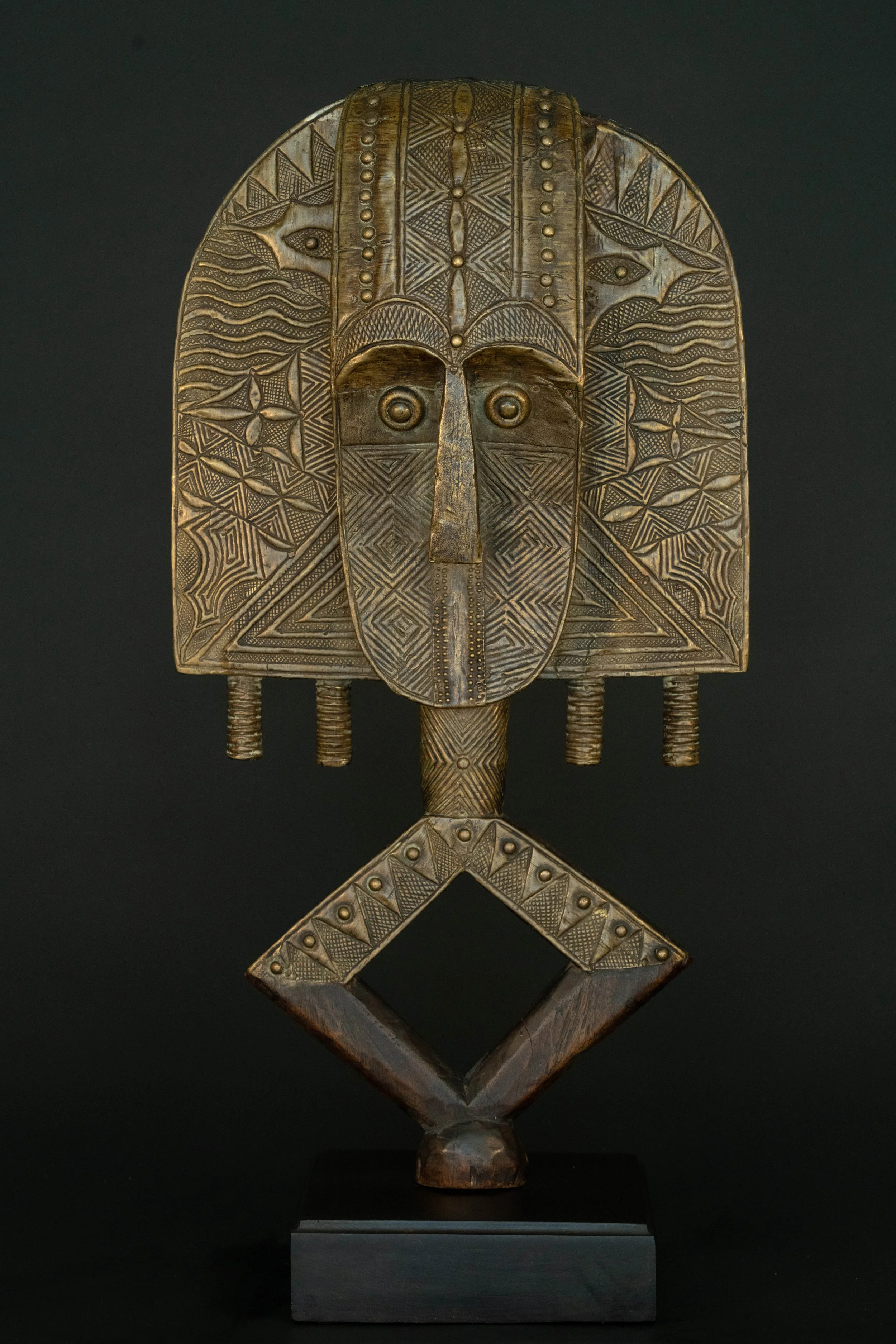
The Kota carvers worked with breathtaking economy. Reduce the human face to two concentric eyes, a ridge of nose, the dome of a brow, and what remains is pure, concentrated presence. The open diamond at the base is not an abstract design; it is the structural element that anchors this figure to the reliquary basket below, lashed in place, immovable. Form and function fused completely.
Pablo Picasso owned one. Alberto Giacometti owned one. When the Cubists encountered these figures in Paris, they recognized something startling: the Kota had already solved the very problem they were struggling with — how to represent the human form through geometry and abstraction rather than imitation. The Mbulu Ngulu didn't inspire modern art so much as prove that abstraction was never a modern idea at all.
This particular example is large at 24.5 inches — most museum pieces run 20 to 24. The front face is densely worked with geometric surface patterning, the tack heads securing the copper sheeting irregular and hand-cut, as found on all genuine pieces. The wood shows a natural, variable oxidation pattern — organic and uneven, not applied. The reverse, never meant to be seen, tells the most honest story: raw, cracked, darkened tropical hardwood that has aged for a century without intervention. No restoration. No fills. No overpainting. What survived is intact.
Production ceased around 1930 as Christianity took hold, and the ancient ancestor veneration tradition quietly came to an end. The figures passed into wider hands — first to European artists and dealers, then into the permanent collections of the world's great museums, where the finest examples remain today. Custom base included.
For context, a closely related Kota Reliquary Guardian figure is on view in the Art Institute of Chicago’s online collection. https://www.artic.edu/artworks/191213/figure-mbulu-ngulu
Condition: Good. No restoration. Unaltered surface throughout.
Dimensions: Overall with base 27.25 x 12.5 x 7.5 inches; Figure only 24.5 x 12.5 x 4 inches (H x W x D)
Circa 1890–1925 · Hardwood, copper alloy · 24.5 inches (62 cm)
Before it was art, it was theology.
The Kota people of equatorial Gabon had a profound relationship with their ancestors that did not end at death. The remains of revered family members were preserved inside bark reliquary baskets, carried from village to village, and consulted before every major decision. And standing watch atop each basket was this: ambulu ngulu, a guardian figure carved from hardwood and sheathed in hammered copper alloy — an enduring symbol of the unbroken bond between the living and those who came before.
The Kota carvers worked with breathtaking economy. Reduce the human face to two concentric eyes, a ridge of nose, the dome of a brow, and what remains is pure, concentrated presence. The open diamond at the base is not an abstract design; it is the structural element that anchors this figure to the reliquary basket below, lashed in place, immovable. Form and function fused completely.
Pablo Picasso owned one. Alberto Giacometti owned one. When the Cubists encountered these figures in Paris, they recognized something startling: the Kota had already solved the very problem they were struggling with — how to represent the human form through geometry and abstraction rather than imitation. The Mbulu Ngulu didn't inspire modern art so much as prove that abstraction was never a modern idea at all.
This particular example is large at 24.5 inches — most museum pieces run 20 to 24. The front face is densely worked with geometric surface patterning, the tack heads securing the copper sheeting irregular and hand-cut, as found on all genuine pieces. The wood shows a natural, variable oxidation pattern — organic and uneven, not applied. The reverse, never meant to be seen, tells the most honest story: raw, cracked, darkened tropical hardwood that has aged for a century without intervention. No restoration. No fills. No overpainting. What survived is intact.
Production ceased around 1930 as Christianity took hold, and the ancient ancestor veneration tradition quietly came to an end. The figures passed into wider hands — first to European artists and dealers, then into the permanent collections of the world's great museums, where the finest examples remain today. Custom base included.
For context, a closely related Kota Reliquary Guardian figure is on view in the Art Institute of Chicago’s online collection. https://www.artic.edu/artworks/191213/figure-mbulu-ngulu
Condition: Good. No restoration. Unaltered surface throughout.
Dimensions: Overall with base 27.25 x 12.5 x 7.5 inches; Figure only 24.5 x 12.5 x 4 inches (H x W x D)