Early 20th century, circa 1900–1940
This mask stops you. Its geometry is so bold and so direct that it reads almost like a modernist sculpture — and yet every form here serves a tradition far older than modernism ever was.
The face is built from pure, confident shapes: projecting tubular eyes, alert as instruments of vision; a cylindrical mouth that seems almost to speak; a long, blade-like nose that divides the composition with authority; and a dramatic disc-and-crest superstructure that gives the mask a silhouette recognizable from across a room. Nothing is decorative. Everything is intentional. This face is designed to carry force.
Masks like this one — from the Grebo and broader Kru cultural sphere of Liberia and Côte d'Ivoire — are among the boldest and most visually daring objects produced anywhere in African art. It is no accident that works of this type profoundly influenced Picasso, Léger, and the early Cubists. The visual logic is that powerful.
The surface rewards close looking. The dense hardwood has developed a rich, varied patina consistent with genuine age, handling, and long oxidation — tonal depth that no artificial finish replicates. The interior retains clear hand-tool marks and well-oxidized wear, exactly the kind of evidence serious collectors look for. Pierced attachment holes along the sides confirm the mask's life in performance, where carving, costume, movement, and community once came together.
This is a piece that bridges worlds effortlessly. Seasoned collectors will read the regional attribution, the quality of the carving, and the honest old surface. Everyone else will simply know it's exceptional to look at. It is not a timid object. It has real presence, real sculptural intelligence, and the kind of bold, unmistakable character that draws people across the room.
Condition: Good. New custom stand included.
Dimensions: Overall with stand 23.25 × 6 × 7 inches; Mask only 18 × 6 ×7 inches (H x W X D)
Early 20th century, circa 1900–1940
This mask stops you. Its geometry is so bold and so direct that it reads almost like a modernist sculpture — and yet every form here serves a tradition far older than modernism ever was.
The face is built from pure, confident shapes: projecting tubular eyes, alert as instruments of vision; a cylindrical mouth that seems almost to speak; a long, blade-like nose that divides the composition with authority; and a dramatic disc-and-crest superstructure that gives the mask a silhouette recognizable from across a room. Nothing is decorative. Everything is intentional. This face is designed to carry force.
Masks like this one — from the Grebo and broader Kru cultural sphere of Liberia and Côte d'Ivoire — are among the boldest and most visually daring objects produced anywhere in African art. It is no accident that works of this type profoundly influenced Picasso, Léger, and the early Cubists. The visual logic is that powerful.
The surface rewards close looking. The dense hardwood has developed a rich, varied patina consistent with genuine age, handling, and long oxidation — tonal depth that no artificial finish replicates. The interior retains clear hand-tool marks and well-oxidized wear, exactly the kind of evidence serious collectors look for. Pierced attachment holes along the sides confirm the mask's life in performance, where carving, costume, movement, and community once came together.
This is a piece that bridges worlds effortlessly. Seasoned collectors will read the regional attribution, the quality of the carving, and the honest old surface. Everyone else will simply know it's exceptional to look at. It is not a timid object. It has real presence, real sculptural intelligence, and the kind of bold, unmistakable character that draws people across the room.
Condition: Good. New custom stand included.
Dimensions: Overall with stand 23.25 × 6 × 7 inches; Mask only 18 × 6 ×7 inches (H x W X D)
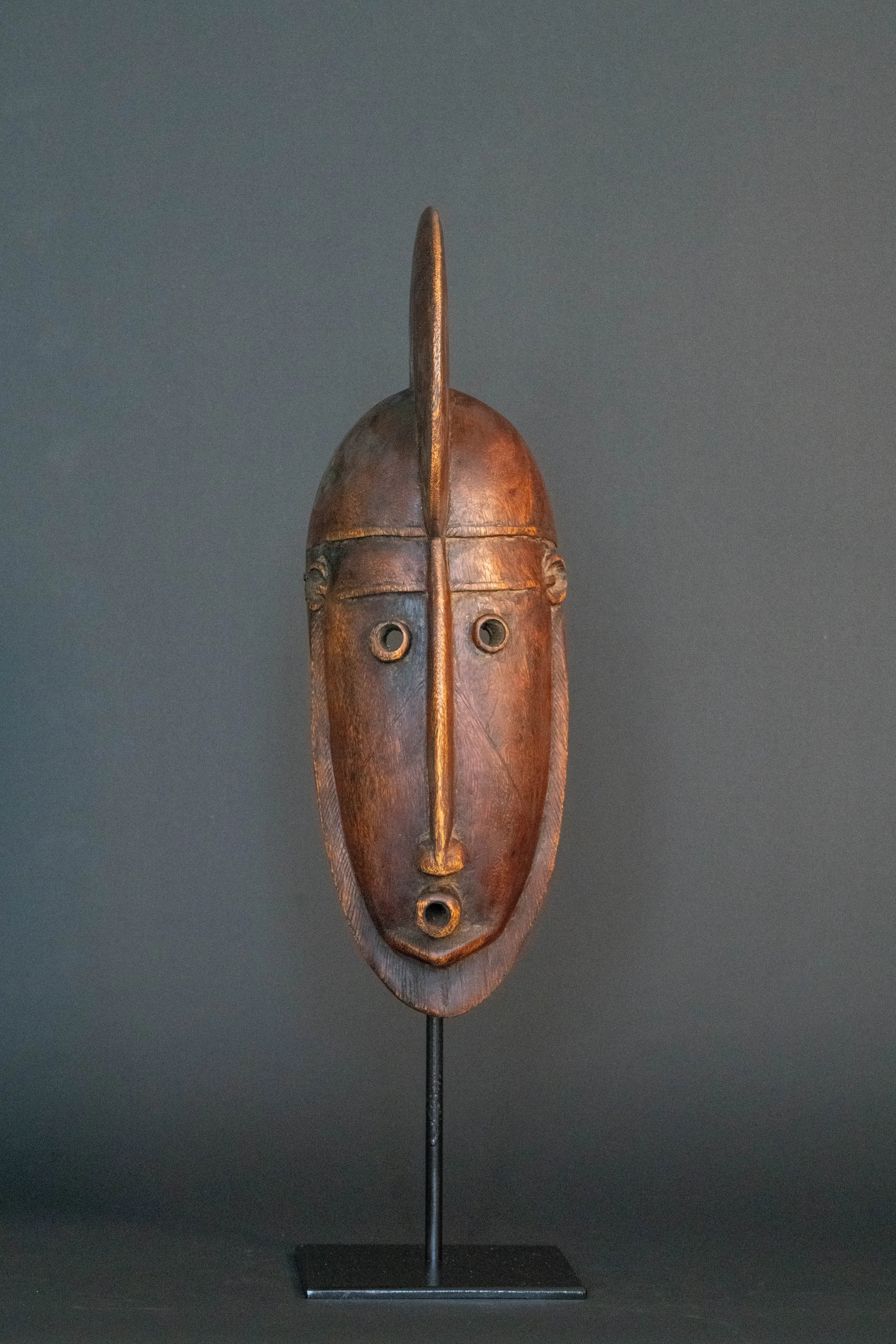 Image 1 of 6
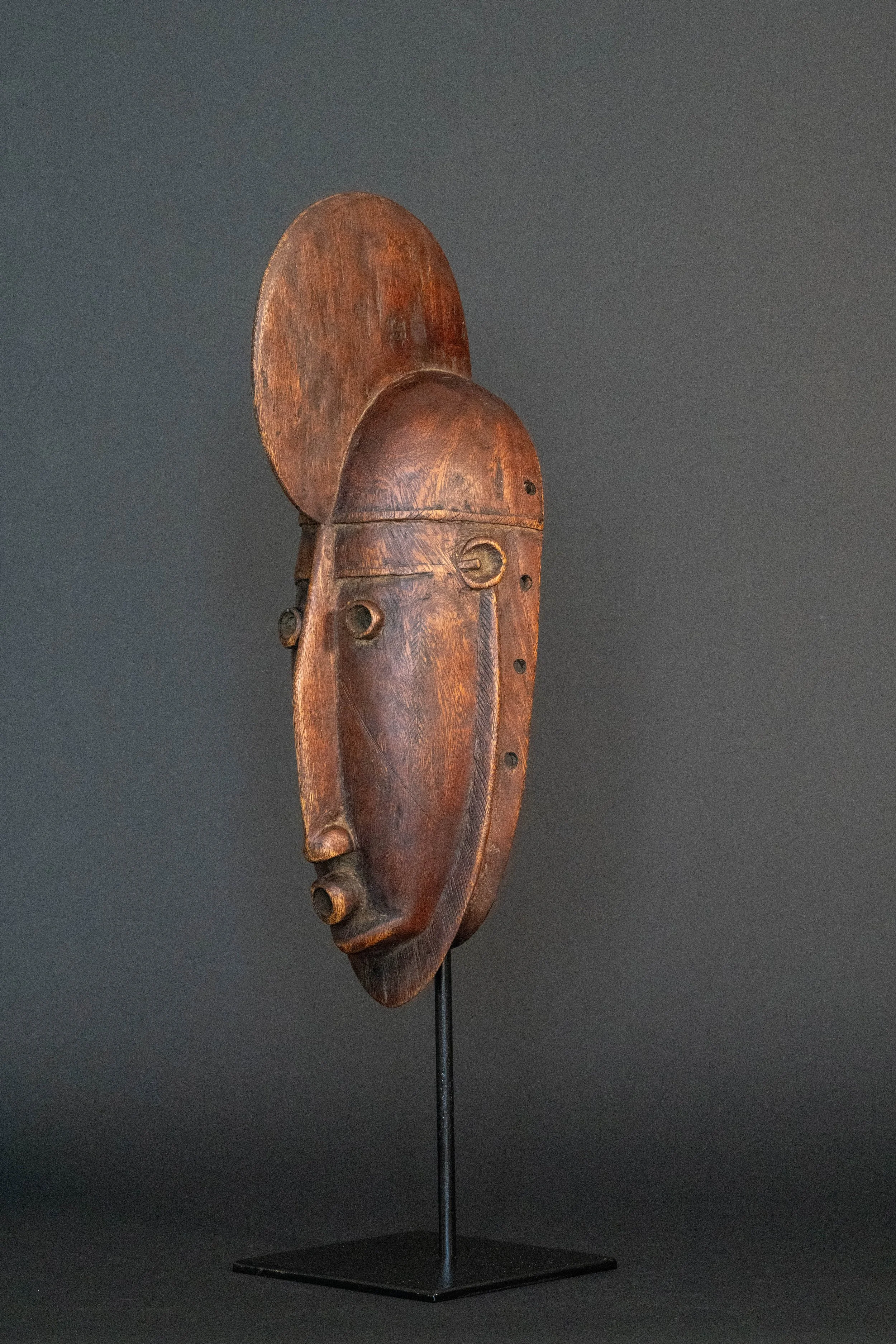 Image 2 of 6
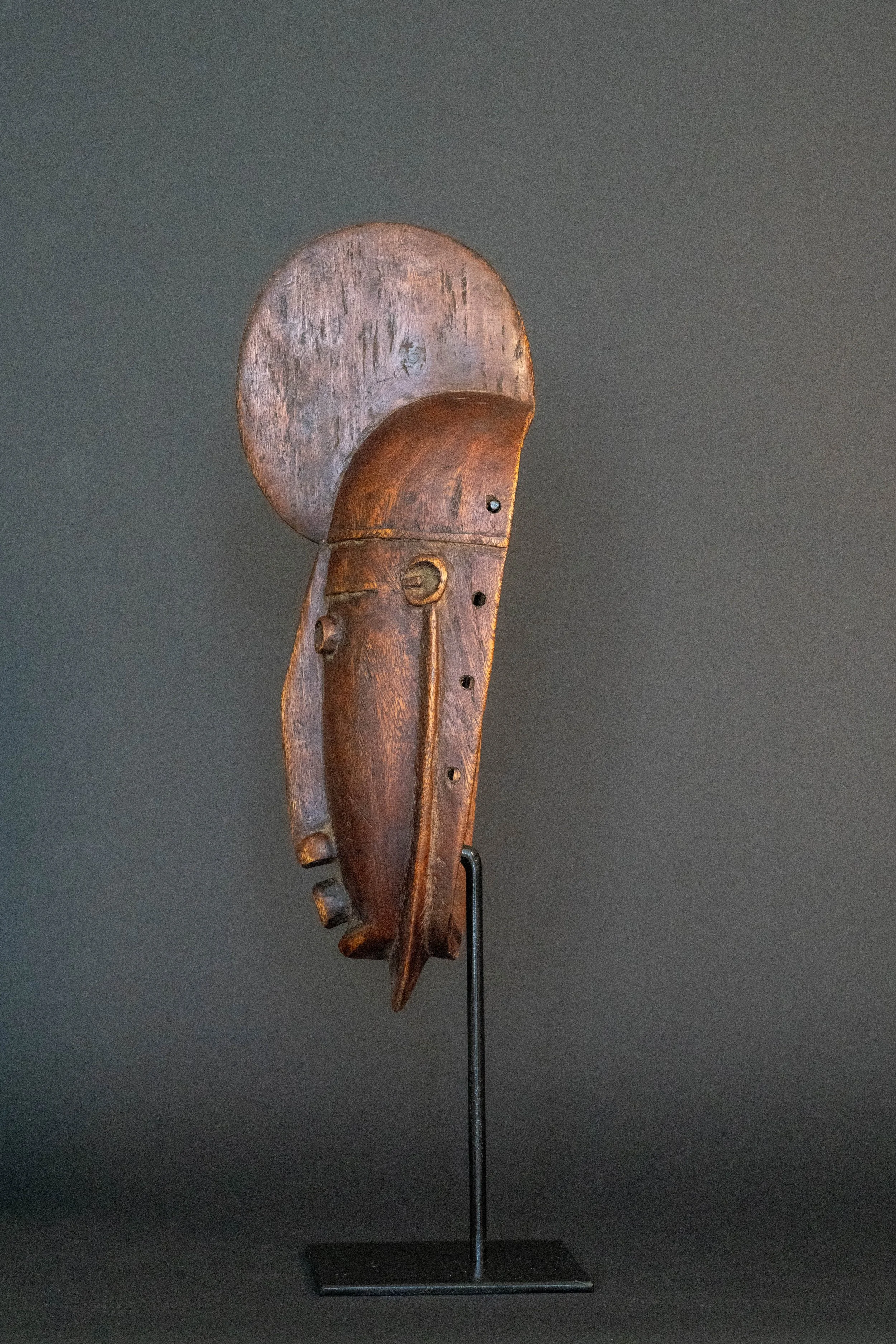 Image 3 of 6
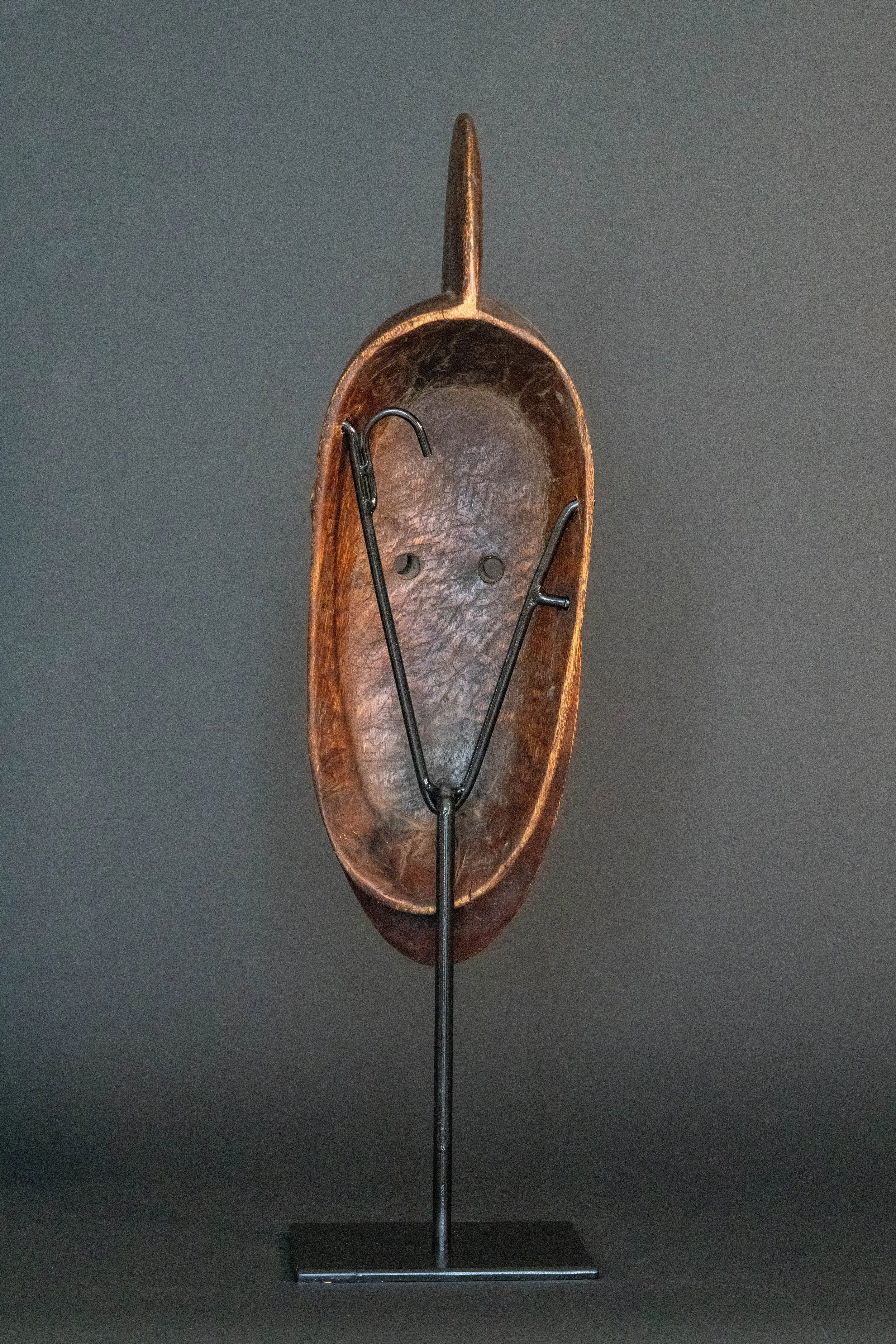 Image 4 of 6
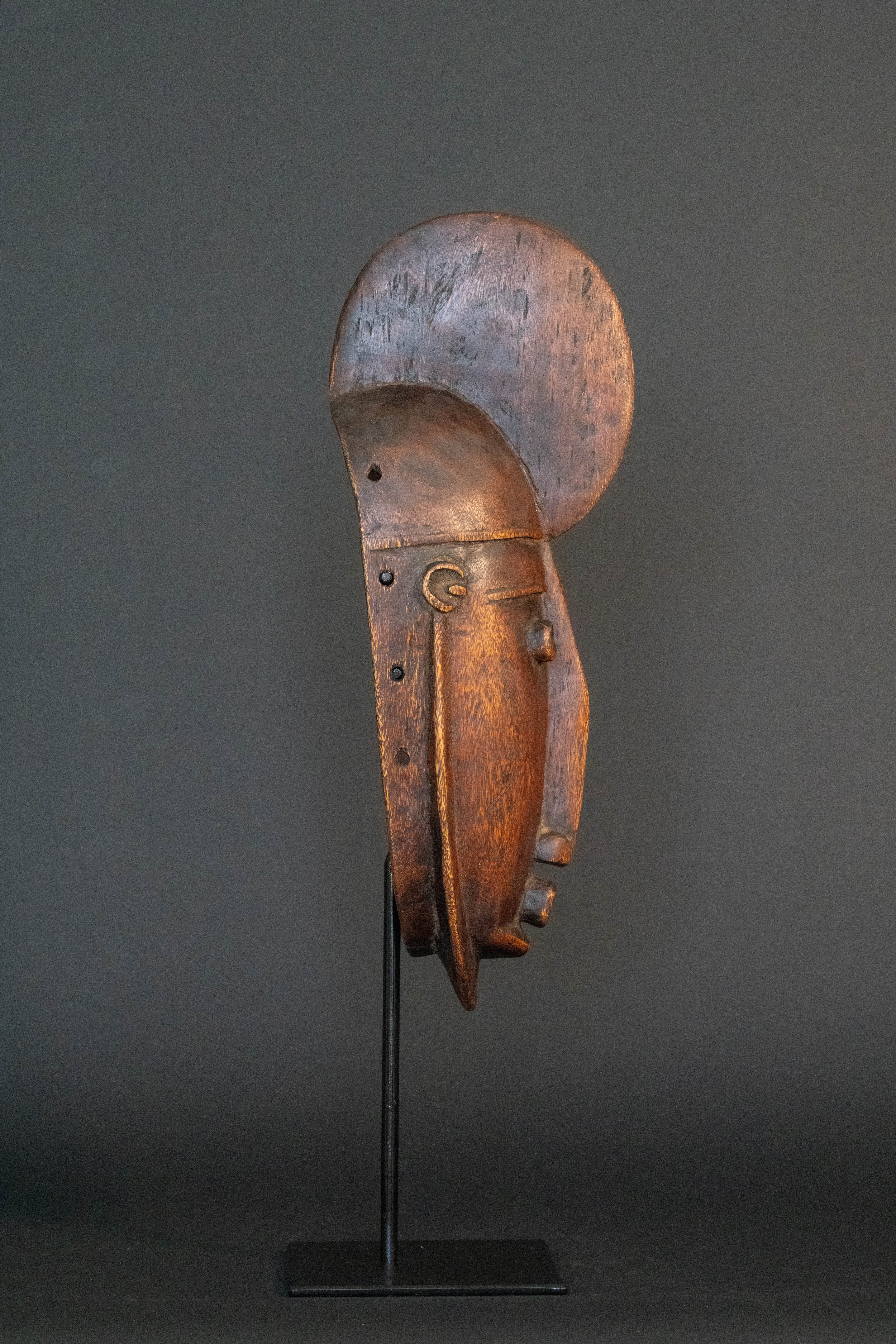 Image 5 of 6
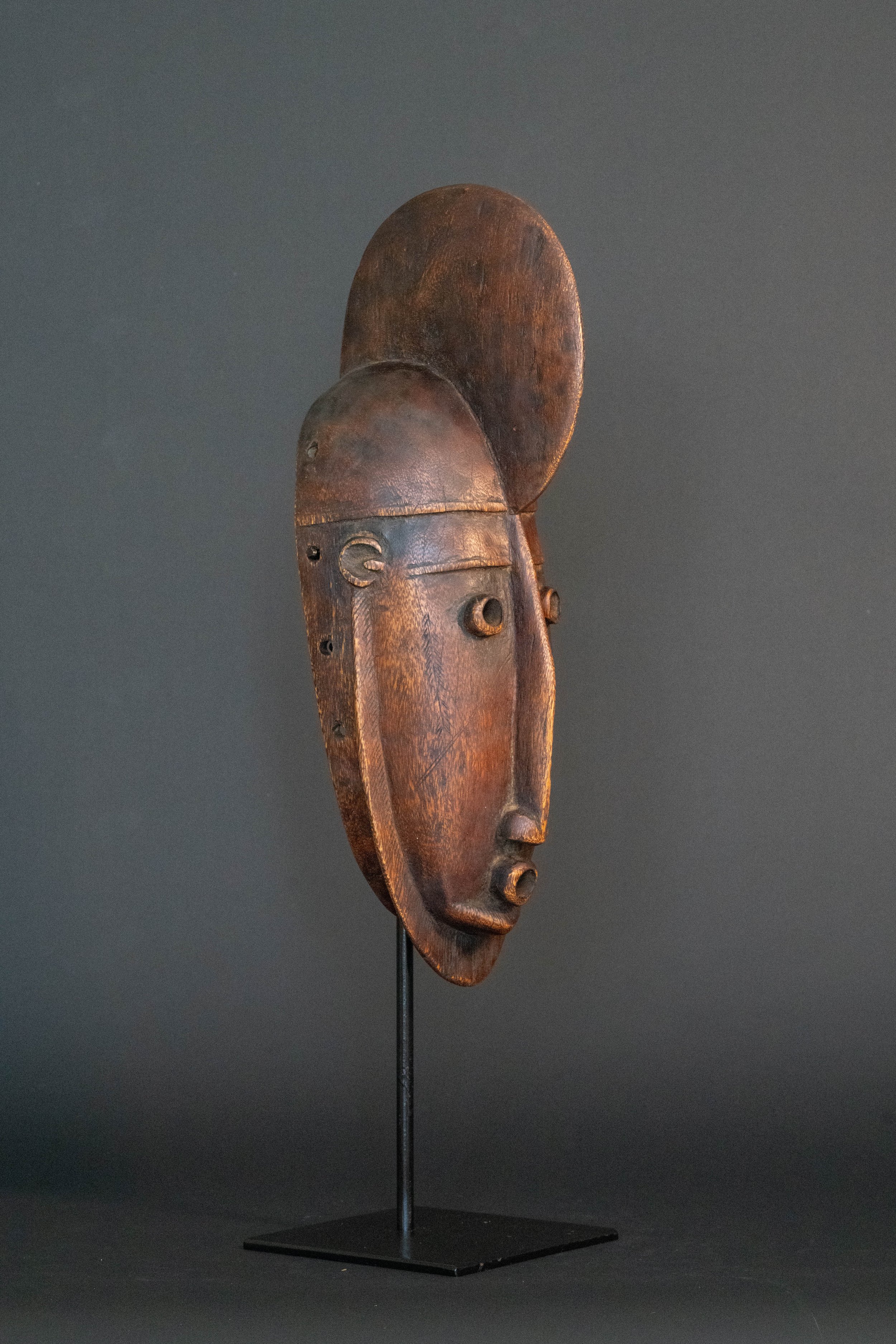 Image 6 of 6