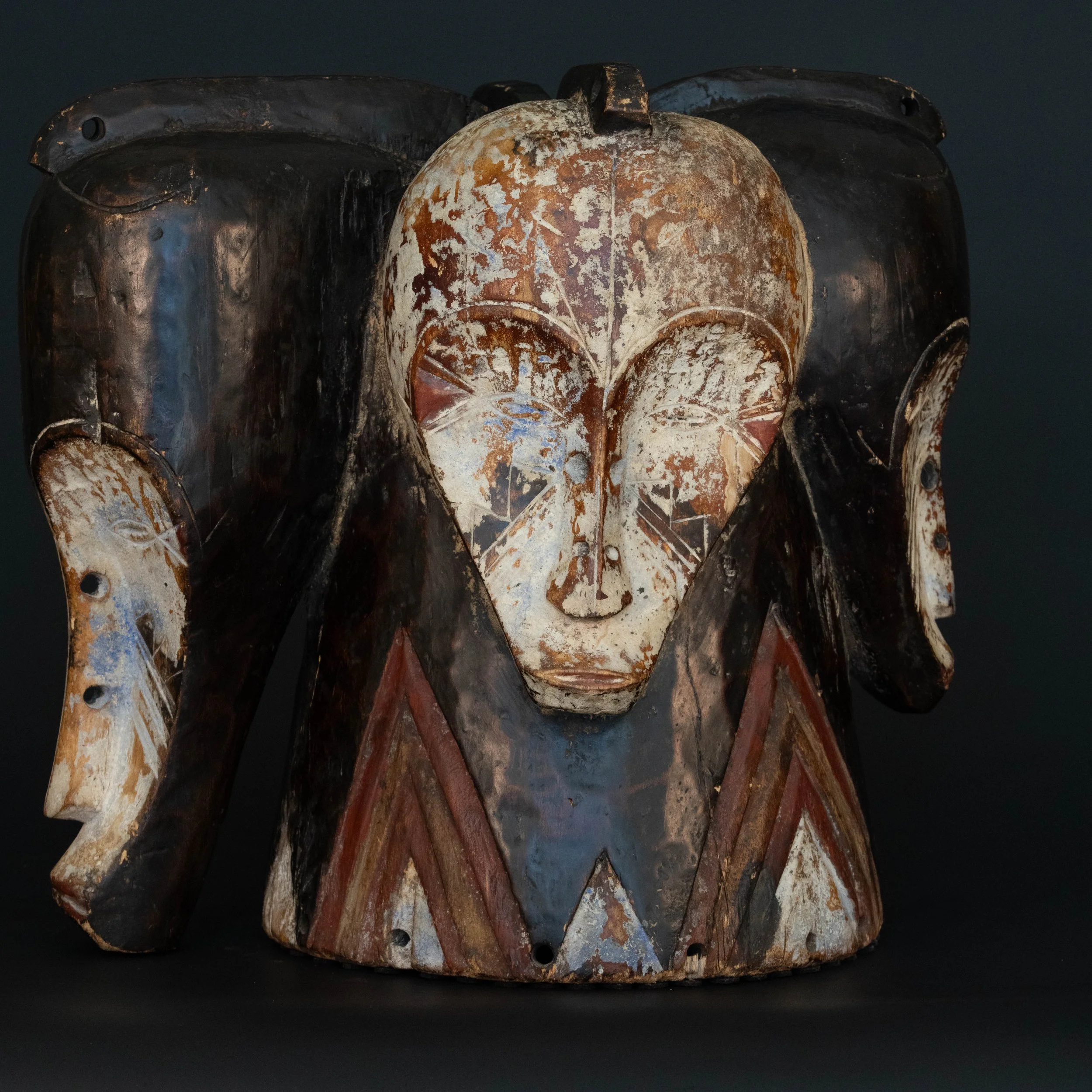
 Image 1 of 4
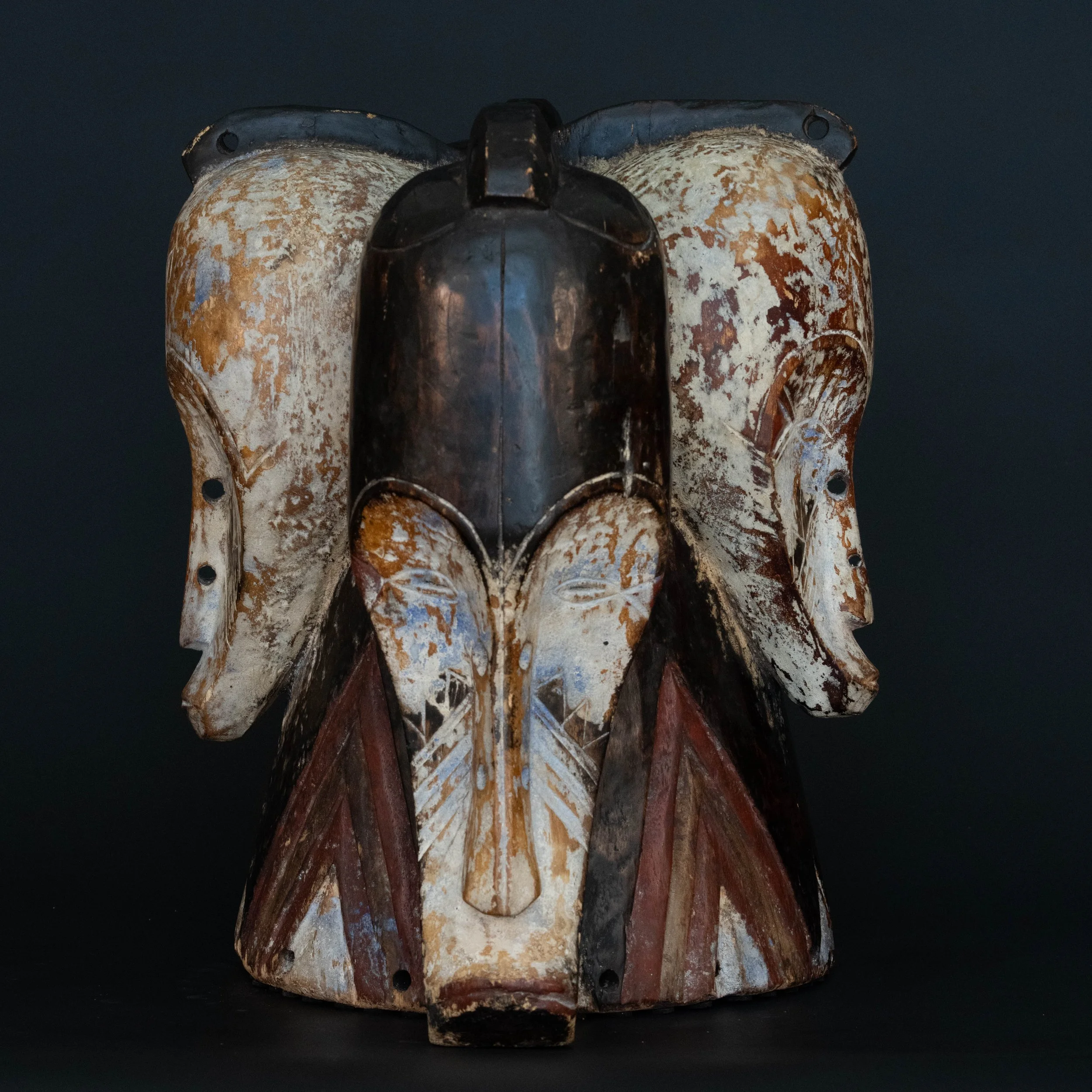
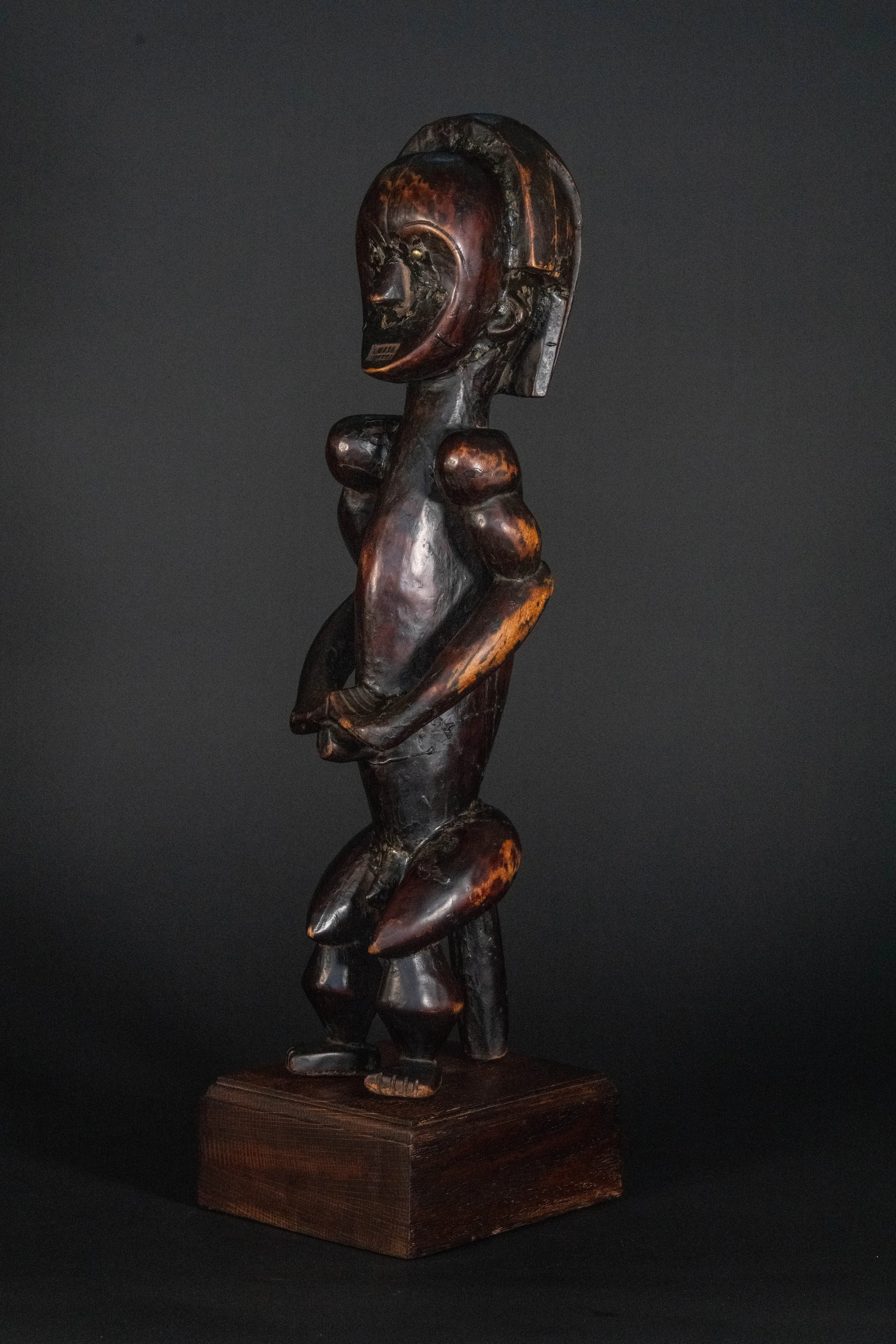 Image 2 of 4
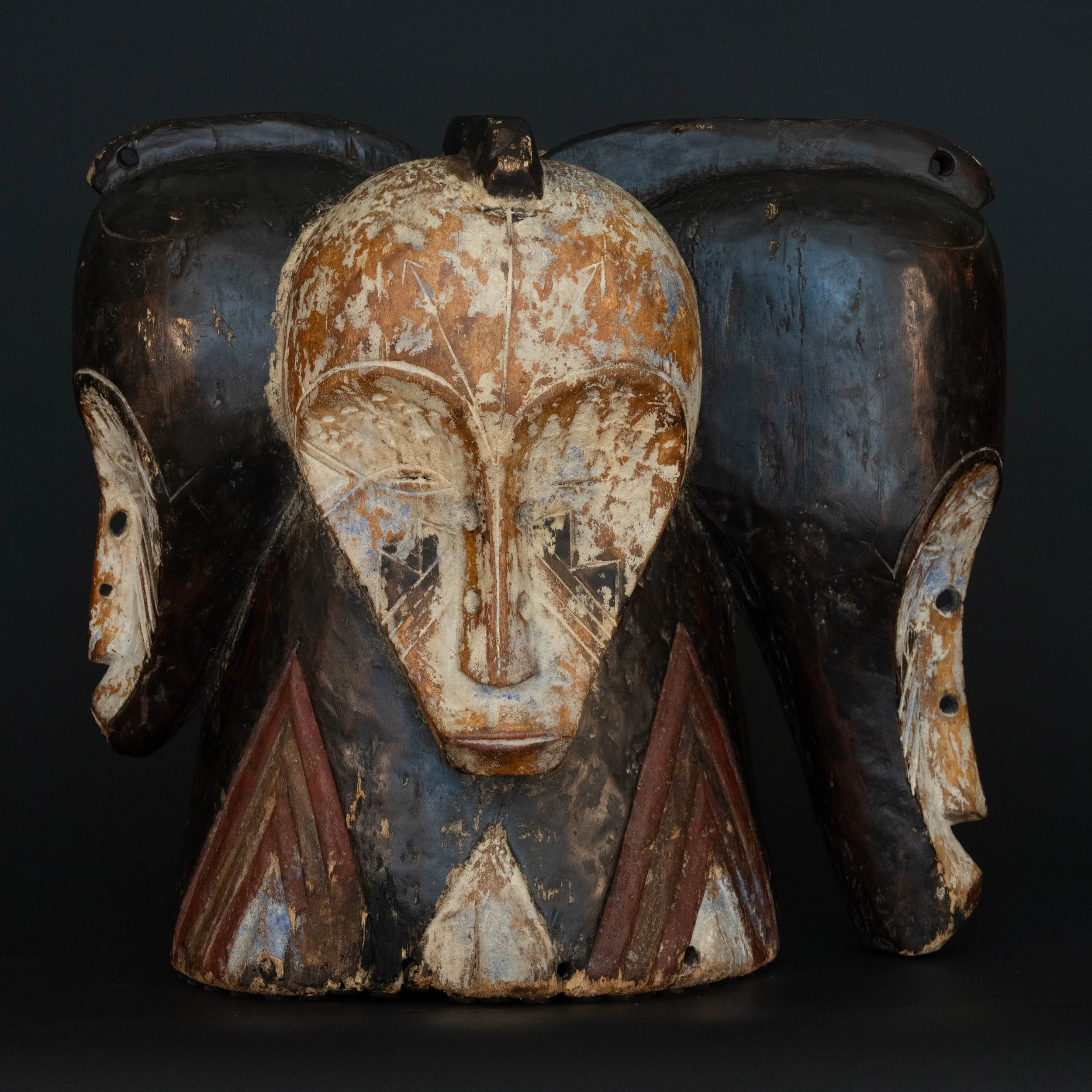
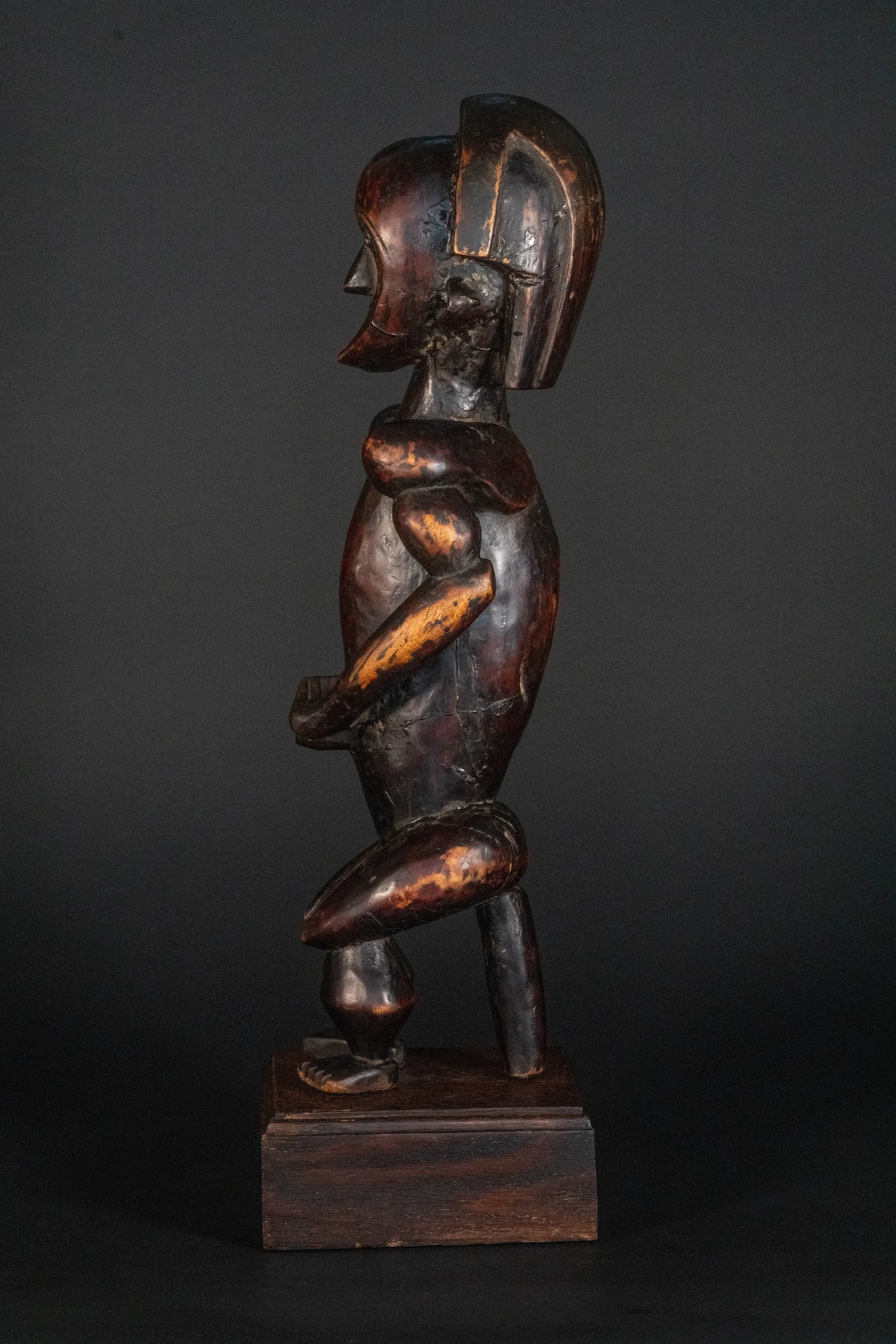 Image 3 of 4
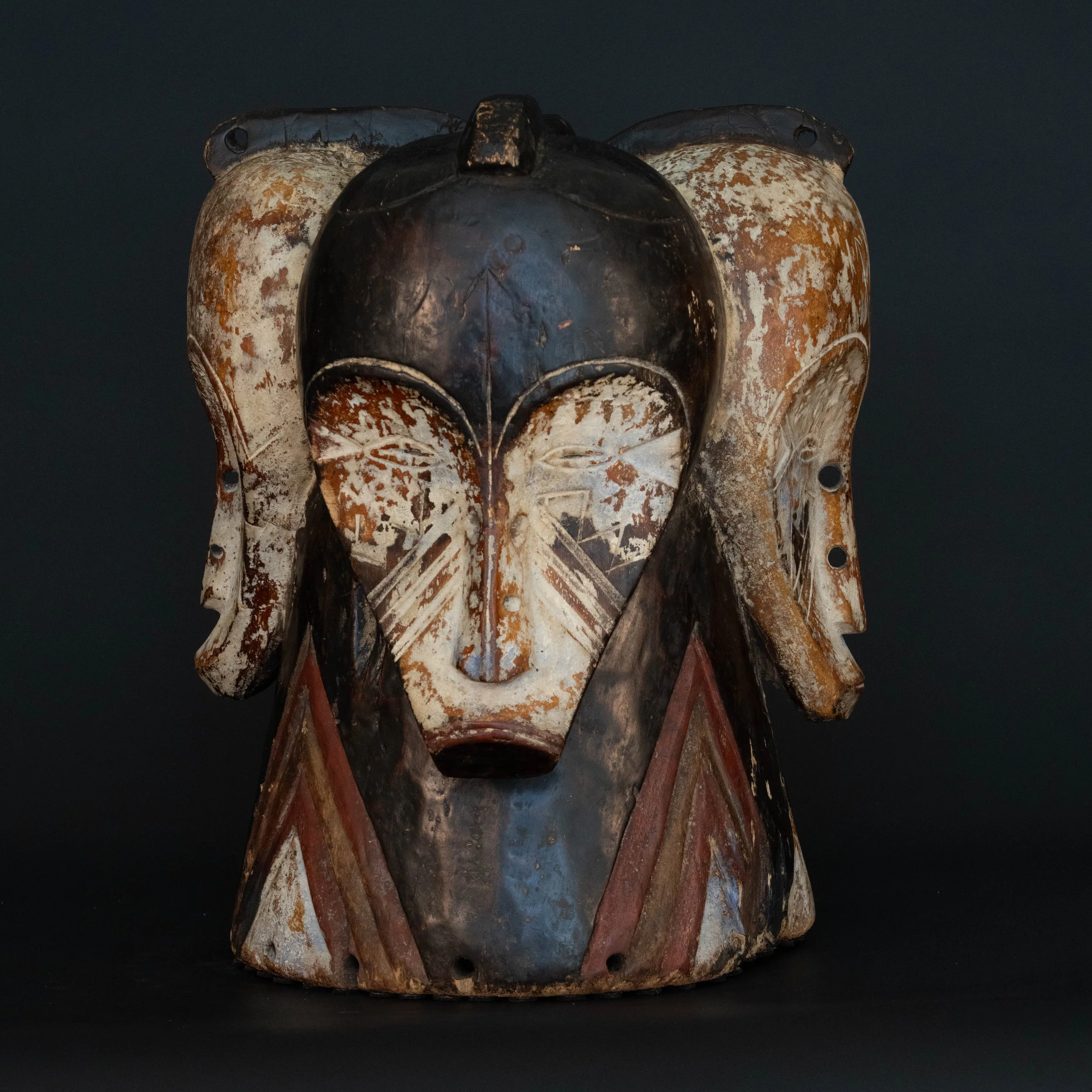
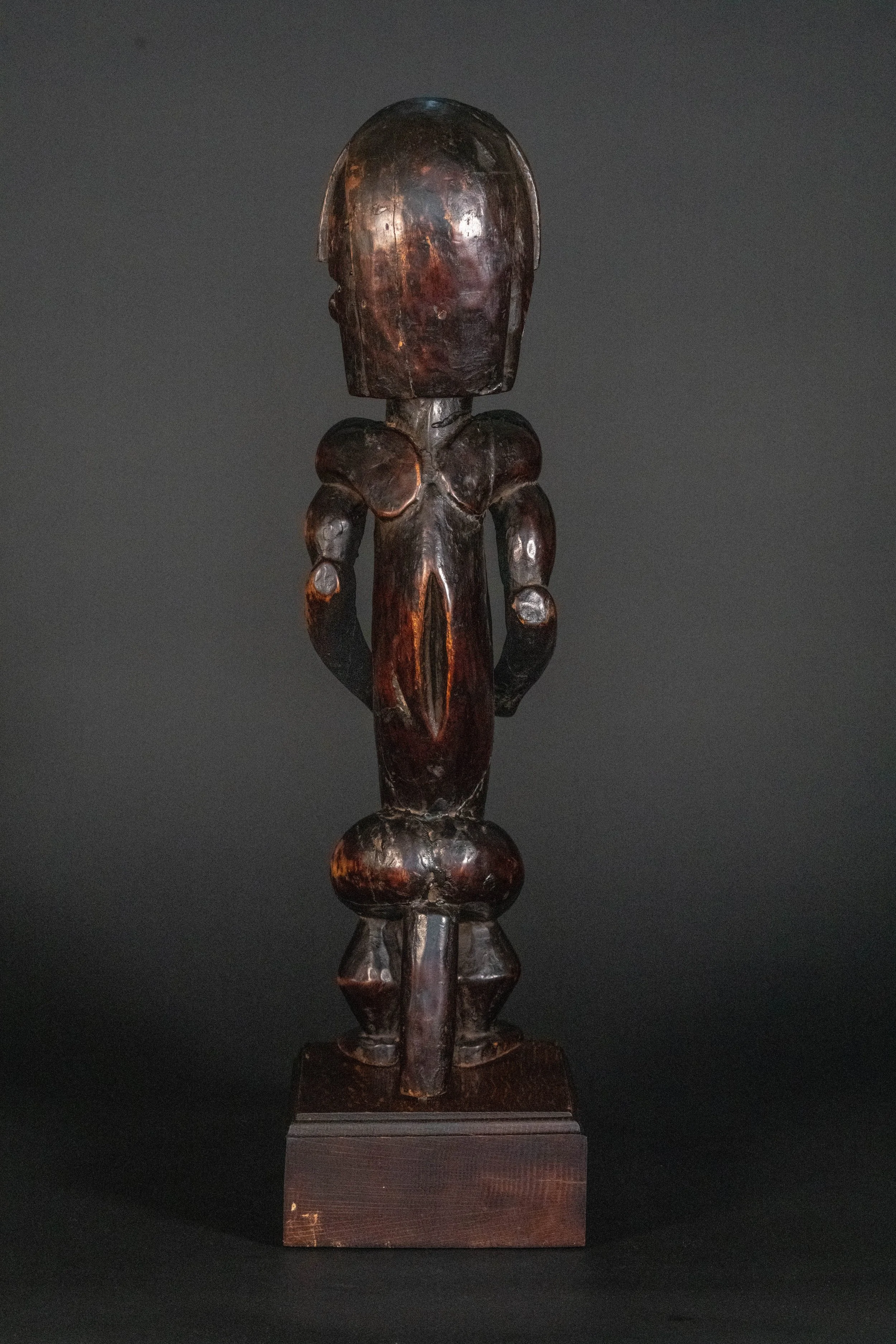 Image 4 of 4
Late 19th–Early 20th Century
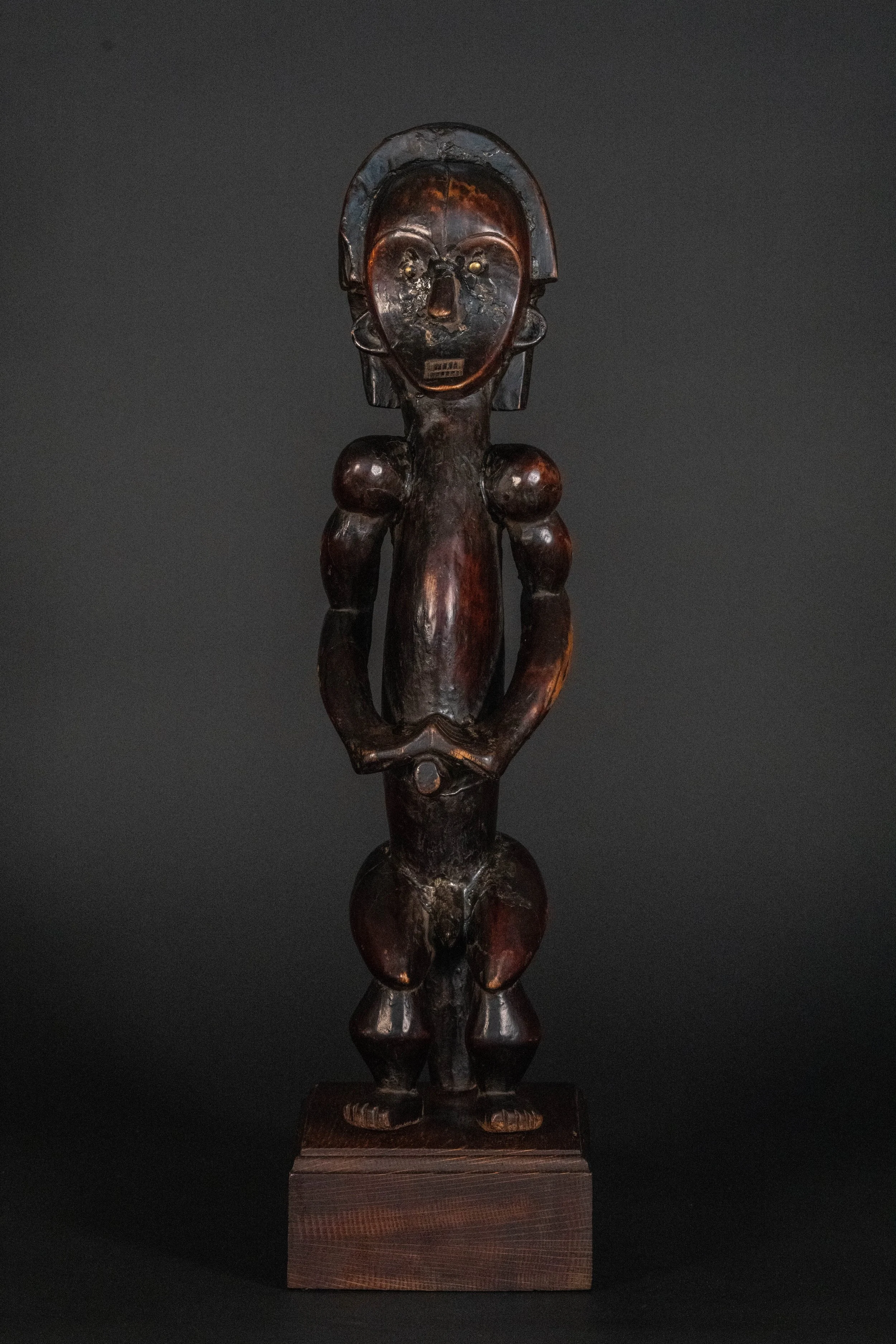
Carved in Gabon to watch over the dead, this Fang byeri guardian once sat atop a bark reliquary holding the skulls and bones of a lineage’s most important ancestors. Its task was both protective and diplomatic: to shield the sacred relics and serve as the ancestors’ intermediary, consulted before a hunt, harvest, or migration. It is a figure that embodies lineage, authority, and continuity — and, on close examination, one that shows every sign of having genuinely done that work.
The posture is powerful and contained. The hands are brought forward to frame a prominent, peg-form navel — among the Fang, the navel marks origin and the unbroken cord between generations, so the gesture reads as deliberate guardianship rather than repose. The face commands attention: a heart-shaped concave plane beneath a domed brow, a compact mouth, and inset brass eyes — non-magnetic, period-appropriate trade metal — that would once have caught the light of the shrine, lending a watchful, alert presence. A substantial helmet-form coiffure, dressed in relief ridges that run vertically at the sides and sweep down and back toward the nape, crowns the head.
Turn the figure, and the Fang emphasis on a strong central axis is clear in the channel running down the spine — earth, body, and ancestral force aligned. The carving is confident and economical, choosing presence over ornament.
Beneath the buttocks lies the detail that most rewards a collector’s eye: a functional reliquary tenon, worn smooth where it was handled and darker and rougher where it sat hidden inside the box, with an old oxidized gouge down its concealed face. This is precisely the use-wear a display piece has no reason to carry. The surface throughout is a deep, layered patina — dark with warm red undertones, lighter where hands took hold — and the recesses hold a dry, stratified accretion of aged resin and offering material built up over years of ritual use rather than applied at once.
At 21.5 inches, this is a substantial example within the byeri tradition — balanced in proportion, grounded in stance, restrained yet commanding. In a modern interior, it holds the room with quiet authority; within a focused collection of African art, it stands comfortably among more widely published examples. This is not simply a carving. It is a guardian — one that has already done its work for decades and is ready to continue that story in its next home.
Offered with candor: attribution and dating represent our considered scholarly opinion based on direct bench examination. Prior ownership is undocumented, and we state that plainly rather than imply a history the record does not support.
For reference, a related Fang Eyema byeri (reliquary guardian figure) can be seen online at the Metropolitan Museum of Art: https://www.metmuseum.org/art/collection/search/312188
Specifications
Culture / idiom: Fang peoples, Southern Fang / Ntumu idiom — Gabon
Period: Late 19th–early 20th century
Material: Medium-density hardwood, blackened and oiled; inset brass eyes; ritual accretion
Dimensions: Figure 21.5 × 5.5 × 5.5 in (54.6 × 14 × 14 cm), H × D × W; overall with mount 24 × 6.25 × 7 in
Condition: Good — stable and complete; old surface gouges consistent with age and handling; no visible repairs
Mount: Custom base included