 Image 1 of 4
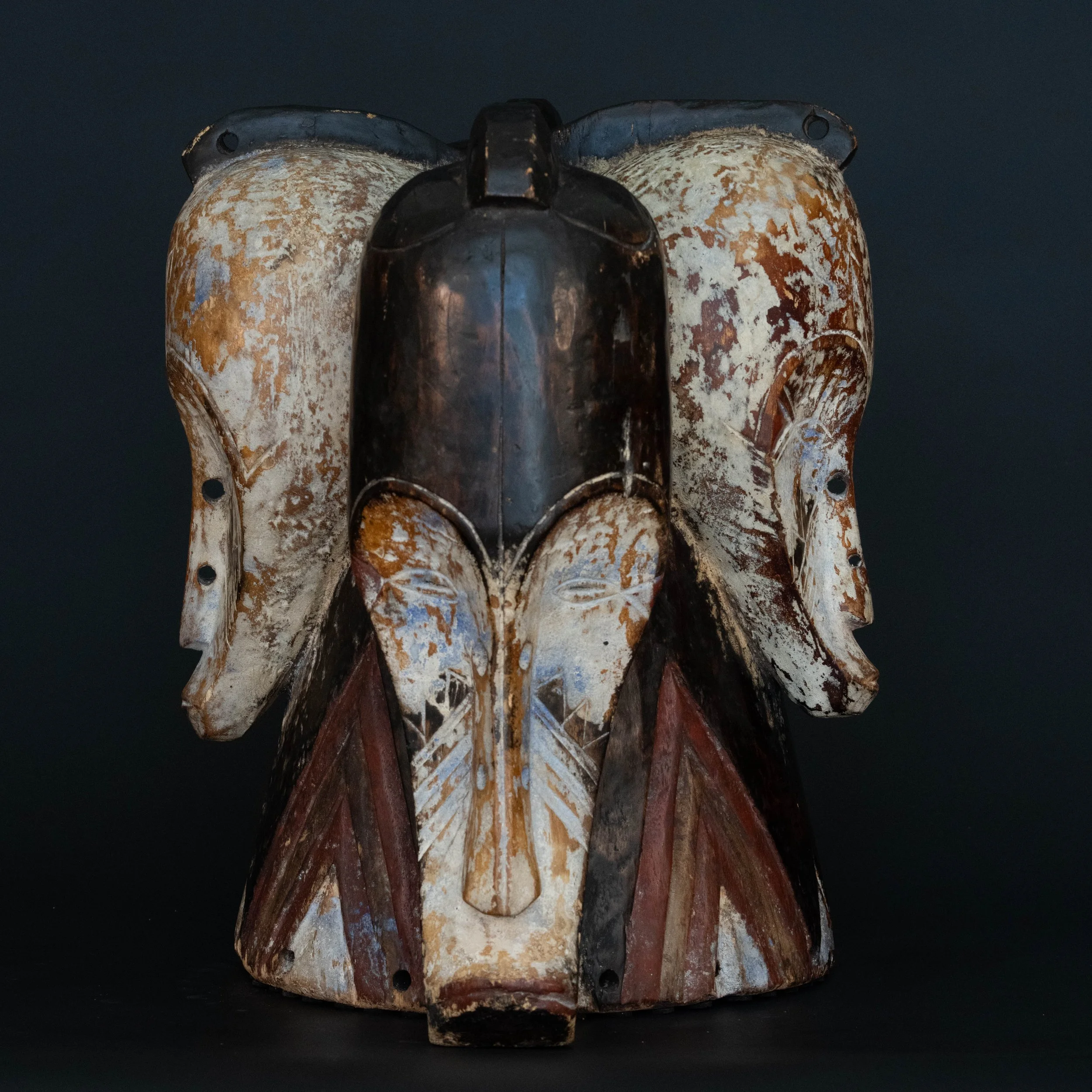 Image 2 of 4
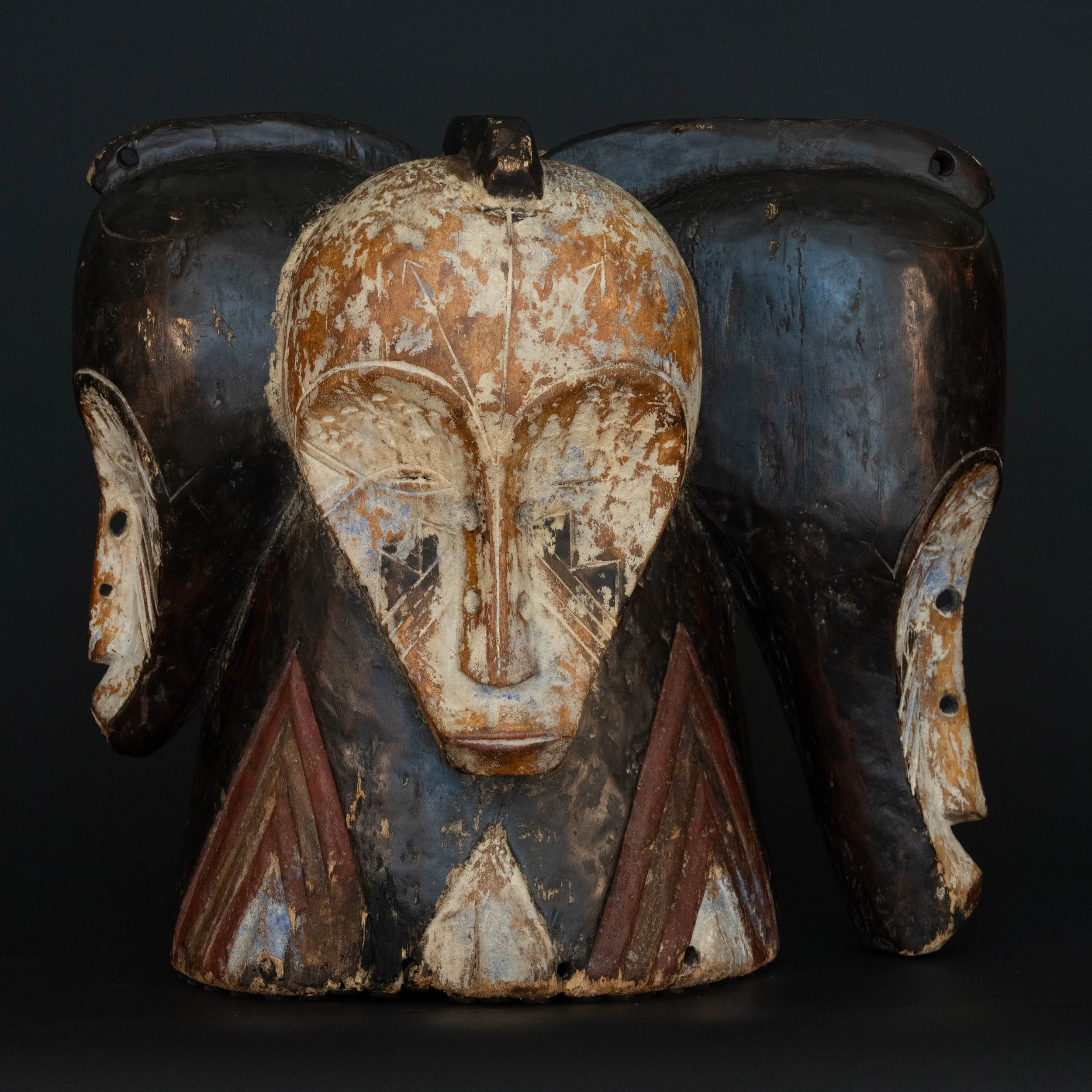 Image 3 of 4
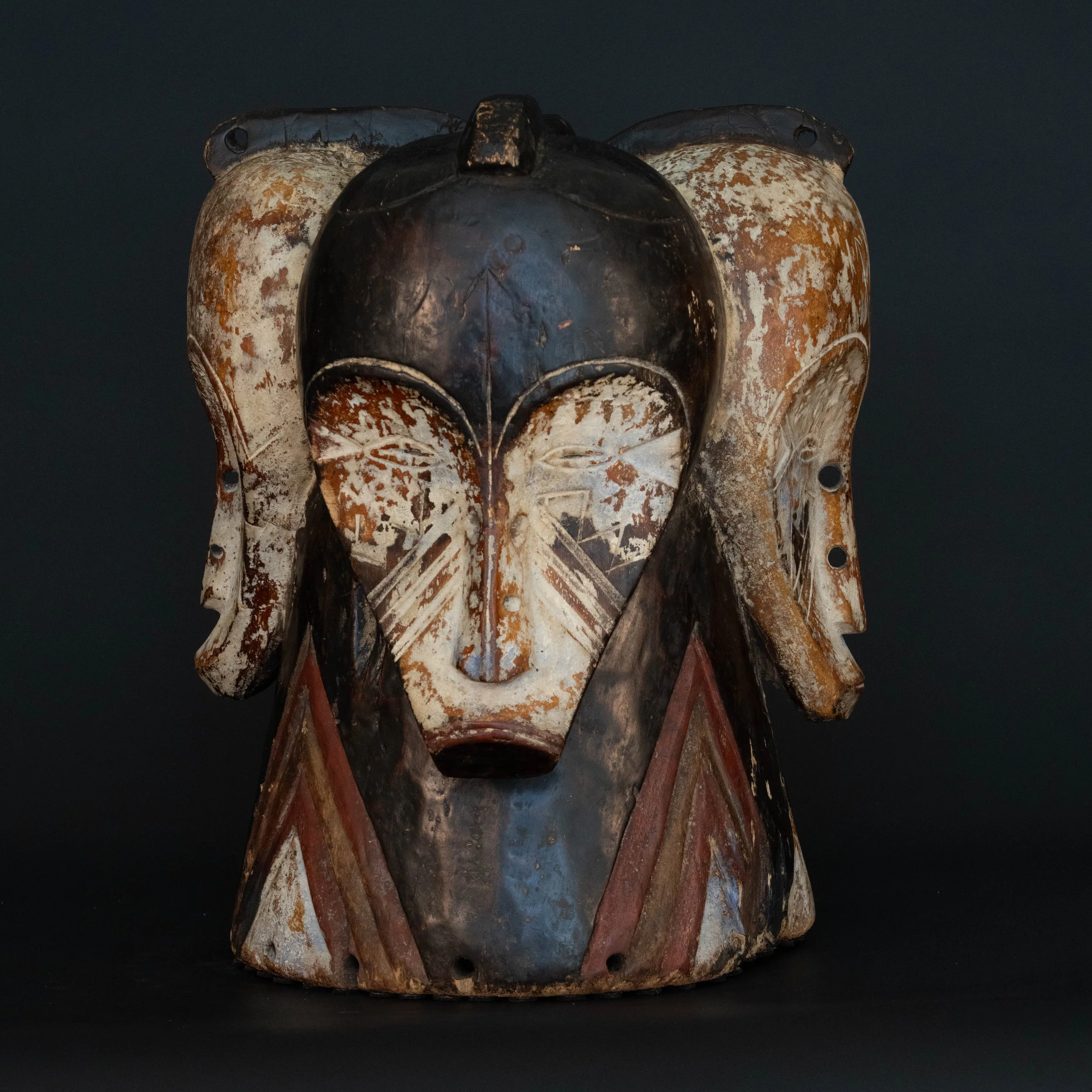 Image 4 of 4
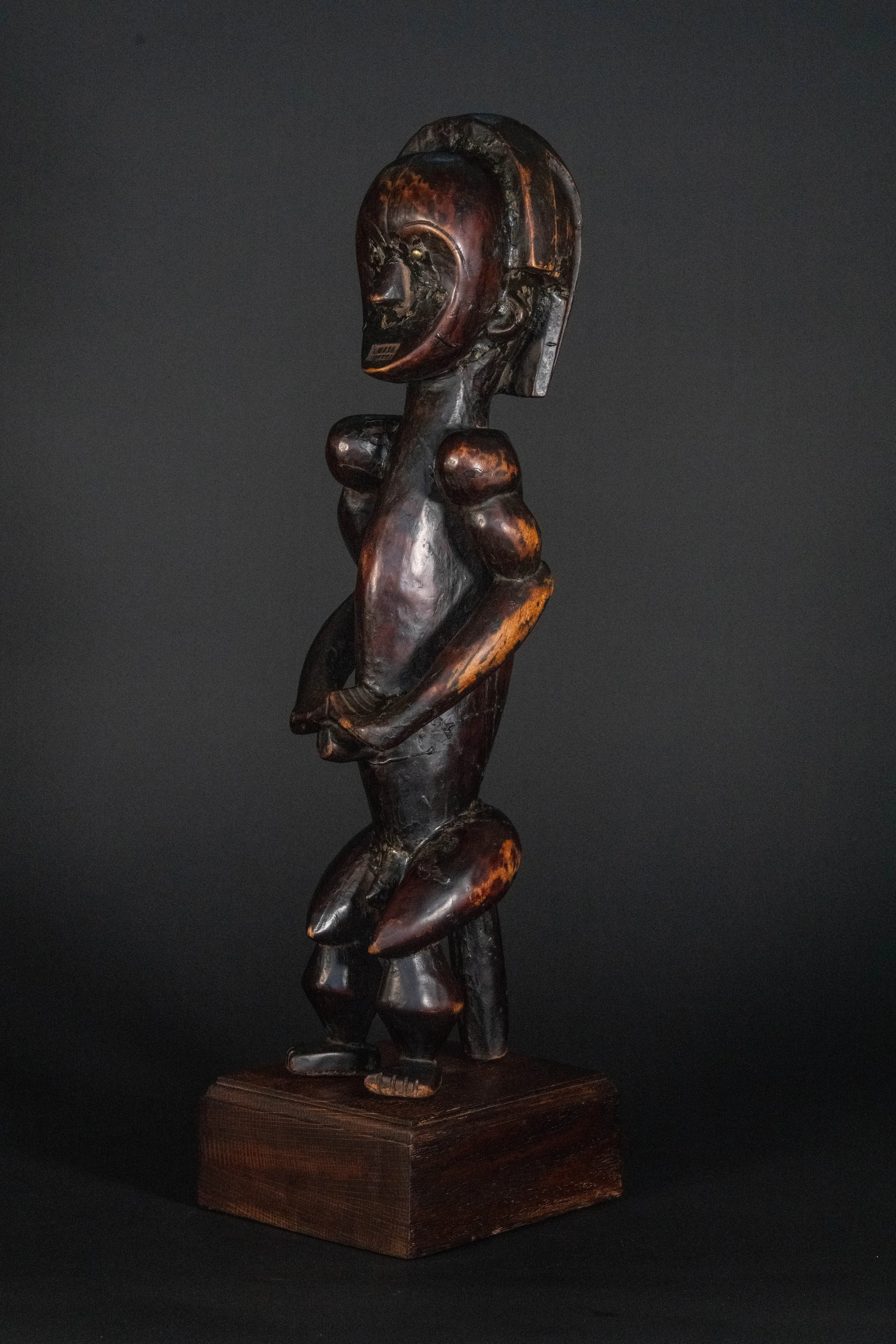
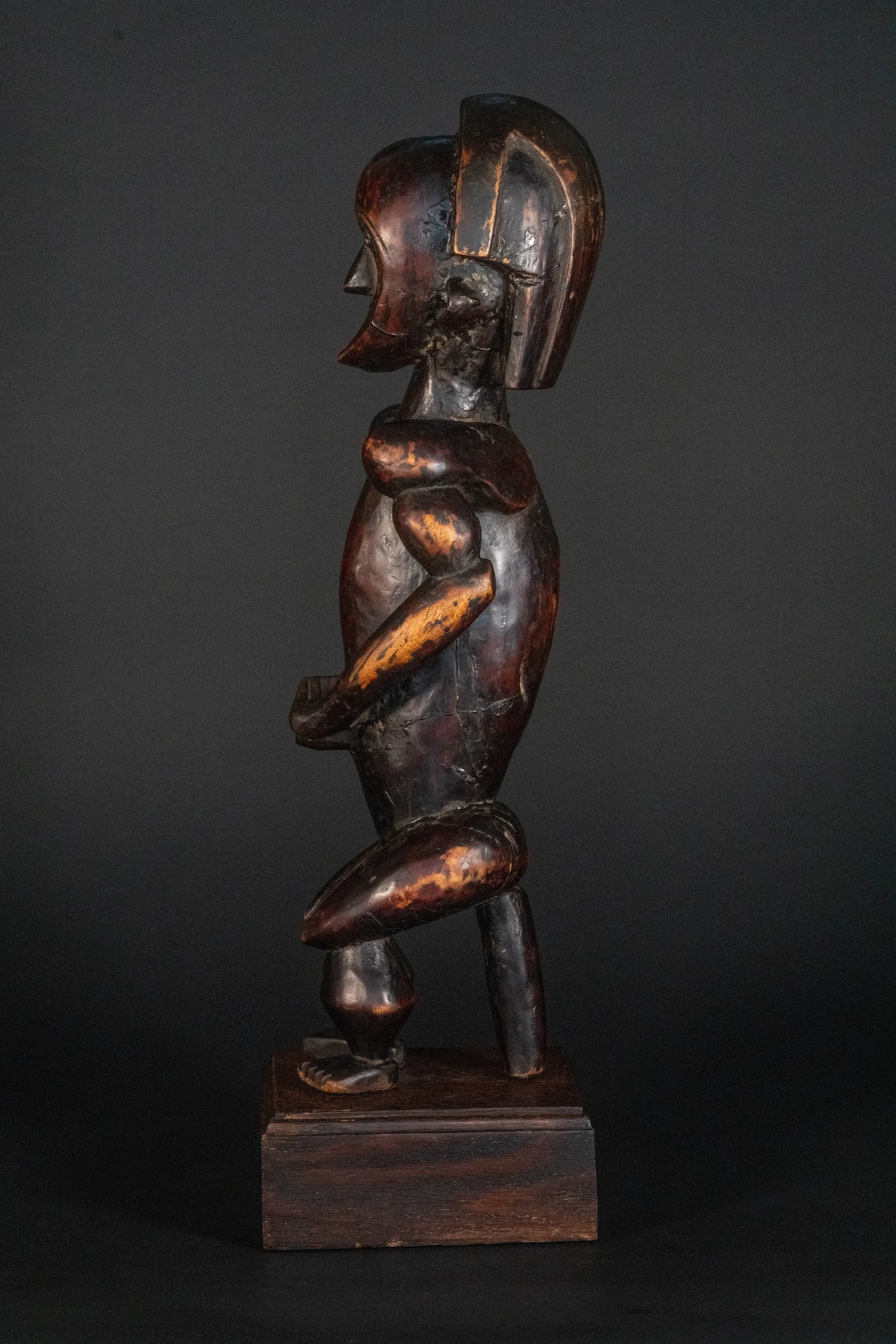
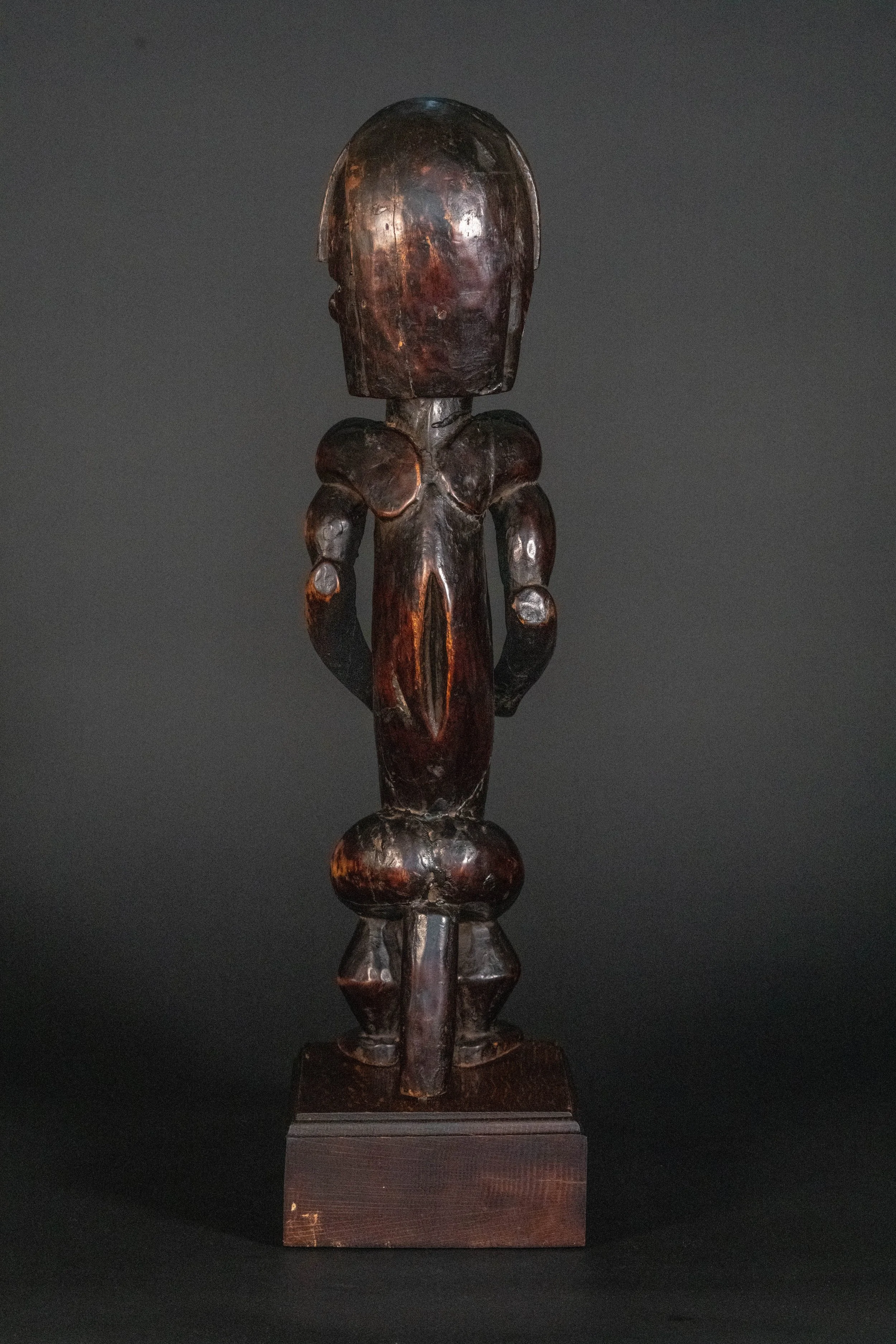
Early-to-Mid 20th Century (c. 1920–1960)
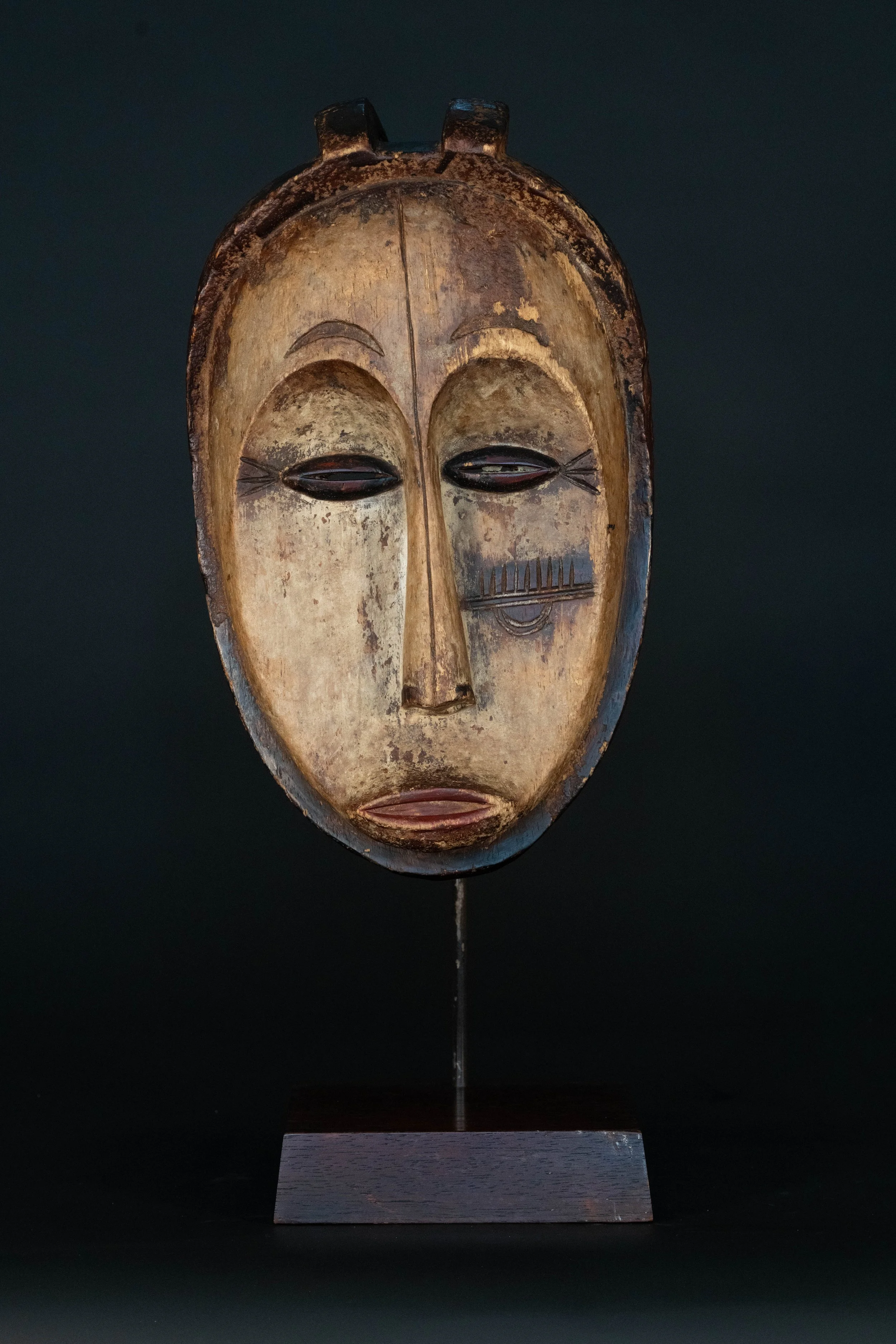
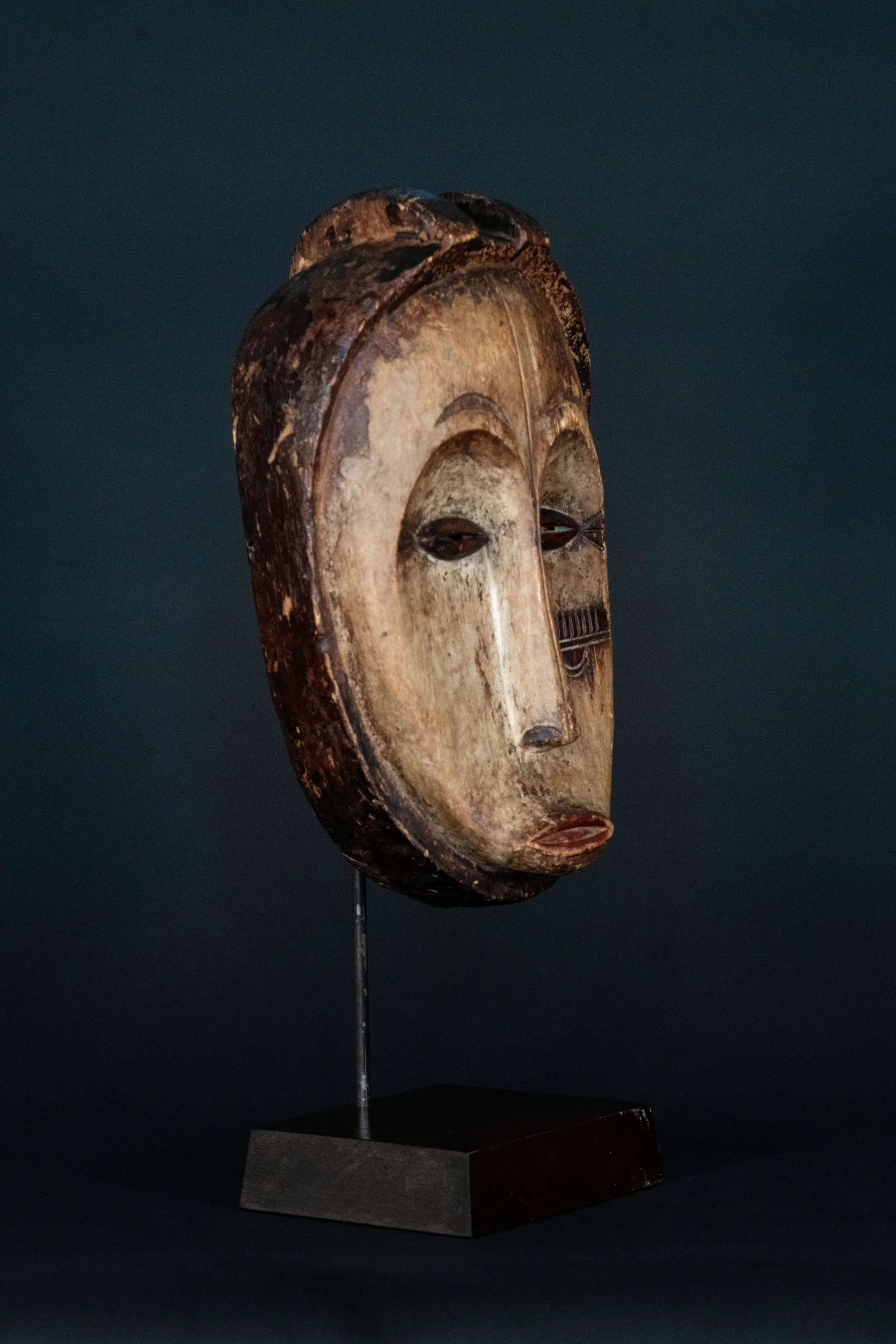
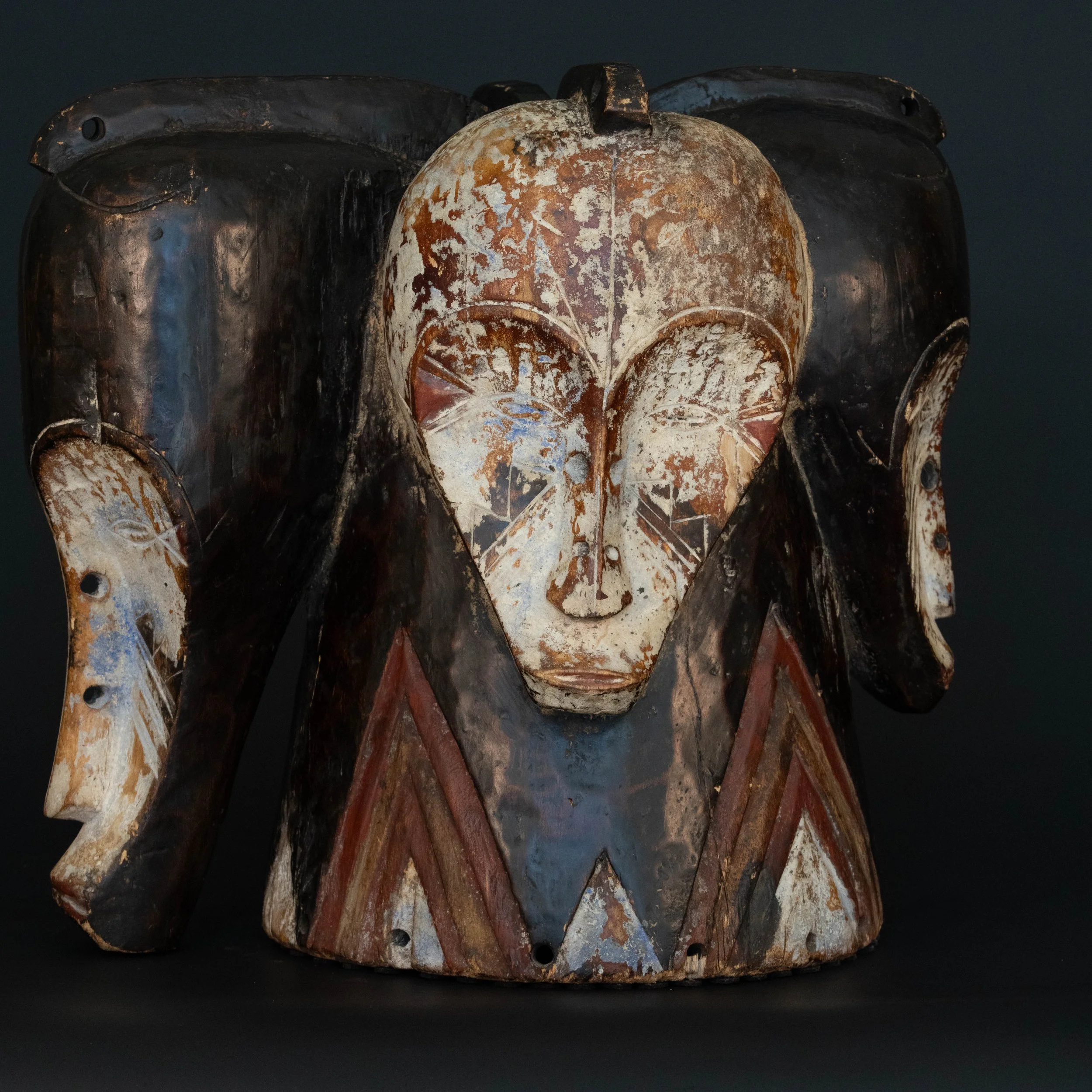
The ngontang is among the Fang’s most architecturally distinctive masquerade forms — a helmet structure bearing multiple faces rather than a single visage, each a spirit presence, collectively invoked in the communal gatherings through which the Fang addressed the well-being of the living. This example carries four faces arranged around the helmet, alternating kaolin-whitened visages with darker, patinated ones. The name itself — from ngon ntang, the young white-faced one — points to the meaning of that whiteness: it signals the ancestral spirit made visible.
Each face is finished in the idiom of fine Fang carving: a concave, heart-shaped facial plane beneath a high domed forehead, brows arching to a fine central ridge, narrow slit eyes, and a long thin nose with subtle flaring above a small mouth. A coiffure runs front to back over each crown, and scarification is incised across the cheeks and foreheads. Below, the lower register carries red geometric chevrons, with traces of blue trade pigment surviving in the recesses alongside the earth reds and worn kaolin.
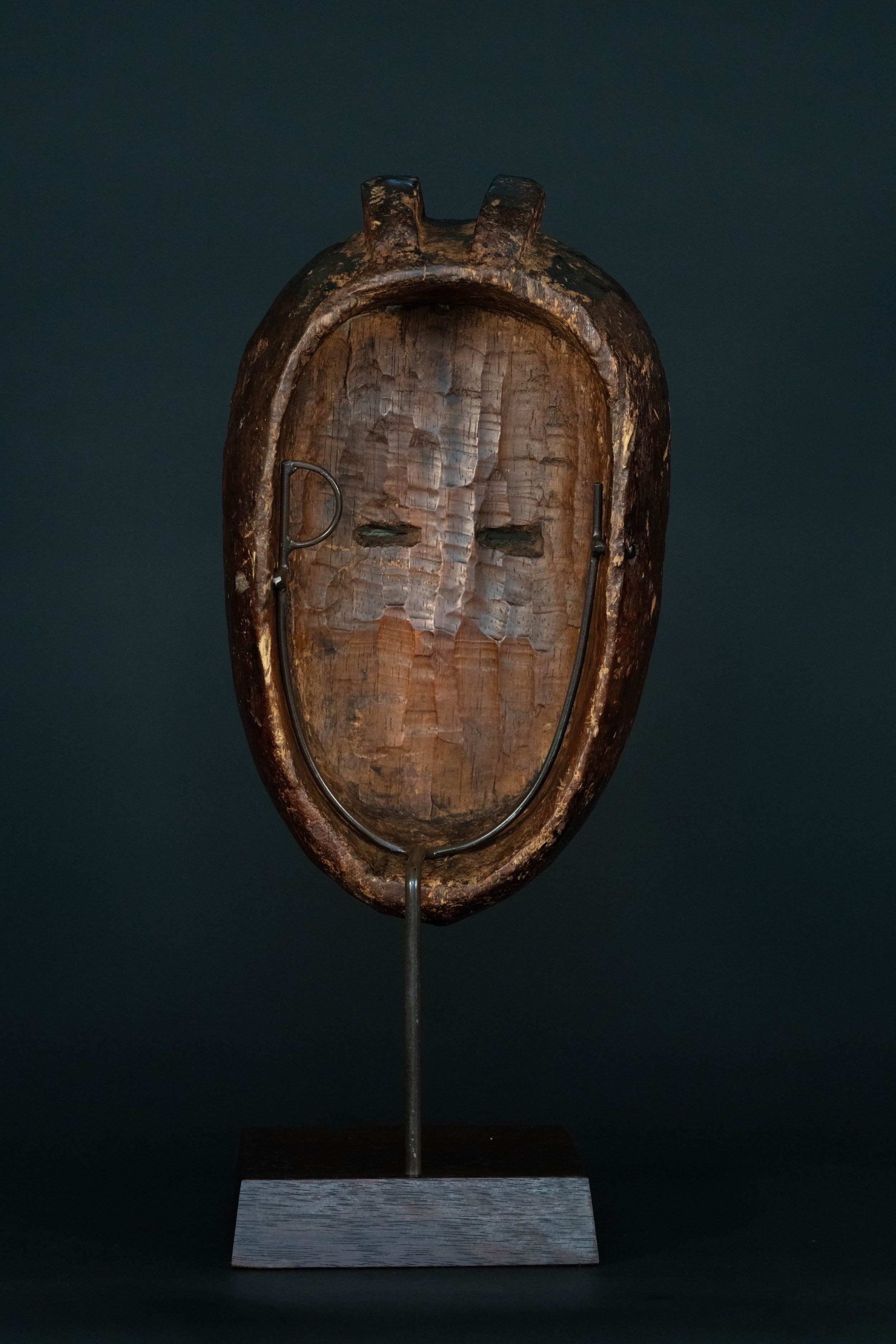
The white survives in the naturally abraded condition you would expect of a mask that was used rather than stored — thinned and finely crazed in the areas of greatest handling, legible but softened. The wood is dense and stable throughout, with a rich, good patina. There is localized softening and arrested (inactive) insect damage at the base of one quadrant, with minor wood loss that has re-darkened over time — consistent with age and long handling, not a structural concern. Attachment perforations around the rim and lower edge, along with worn piercings at each nose, confirm the mask was once fitted with a full raffia costume; in performance, it was worn on the head and animated through movement, with the four faces rotating in and out of view.
For collectors new to Fang material, ngontang is an ideal entry point: a well-documented type with a clear ritual role, strong auction records, and a visual logic that rewards close looking. For experienced buyers, the markers that matter are all present — coherent carving, an honest and legibly aged surface, worn perforations and re-patinated loss that speak to genuine use, and real sculptural presence in the round.
Condition: Good.
Dimensions: 16 × 16.5 × 12.5 inches (H × W × D)