 Image 1 of 5
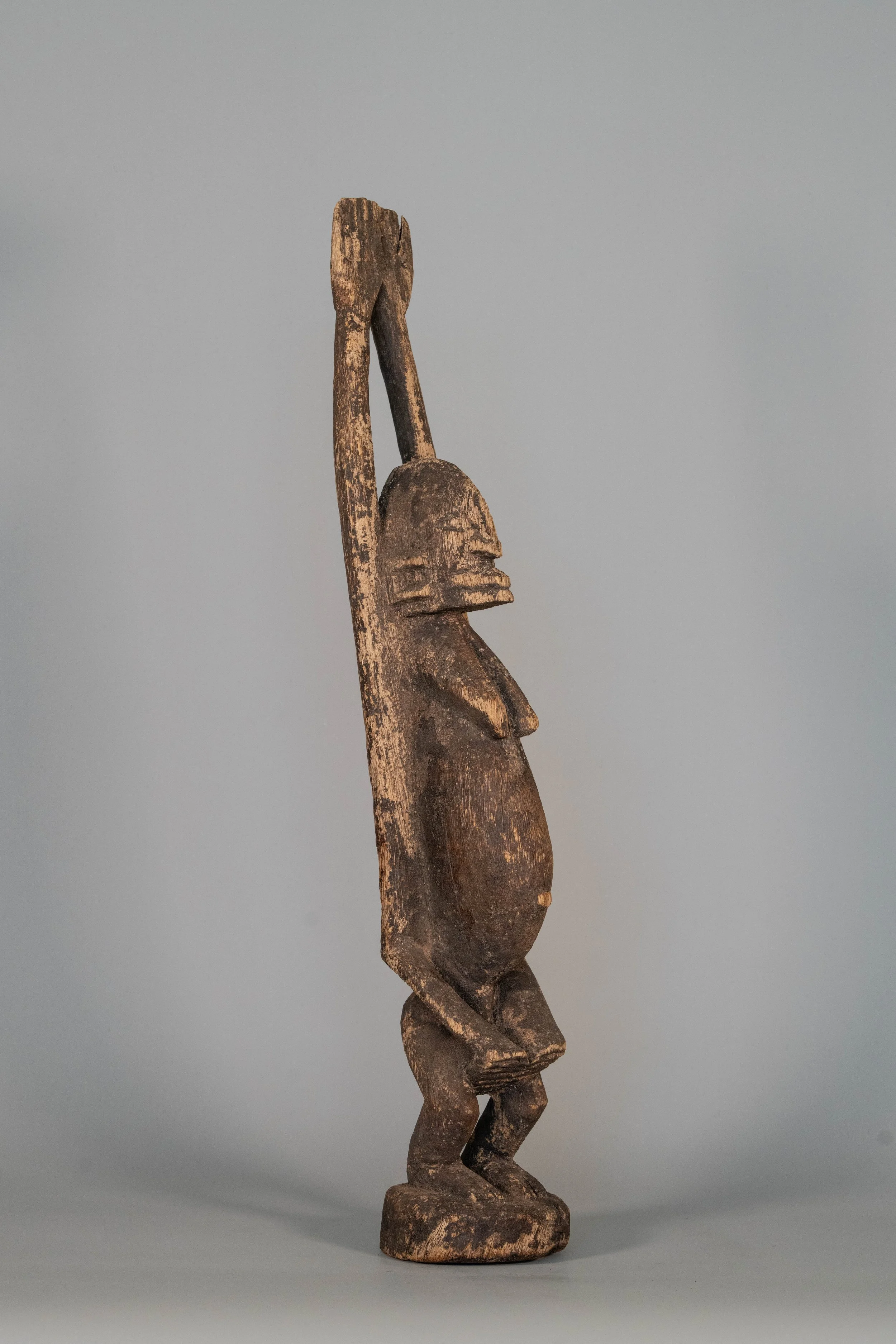 Image 2 of 5
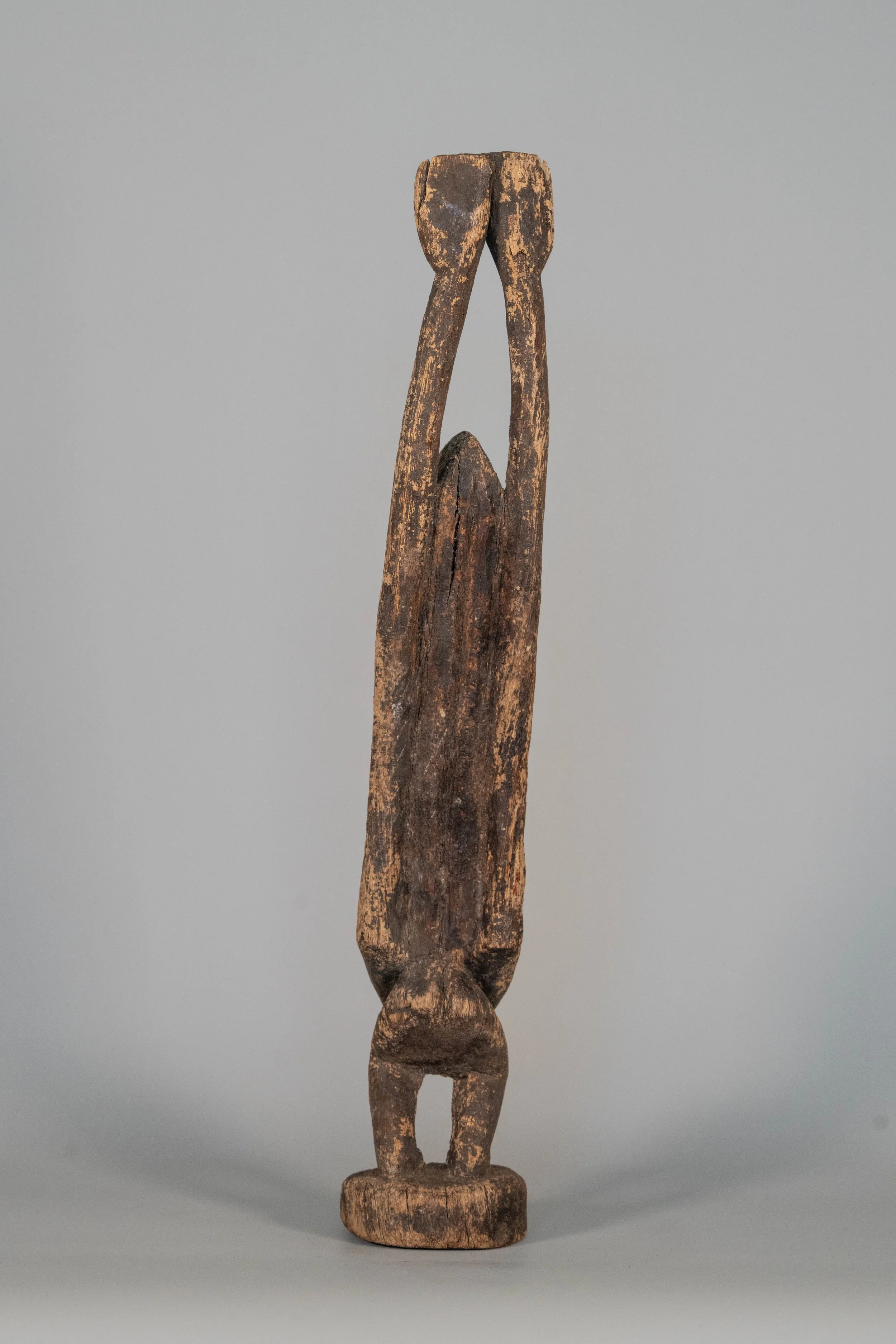 Image 3 of 5
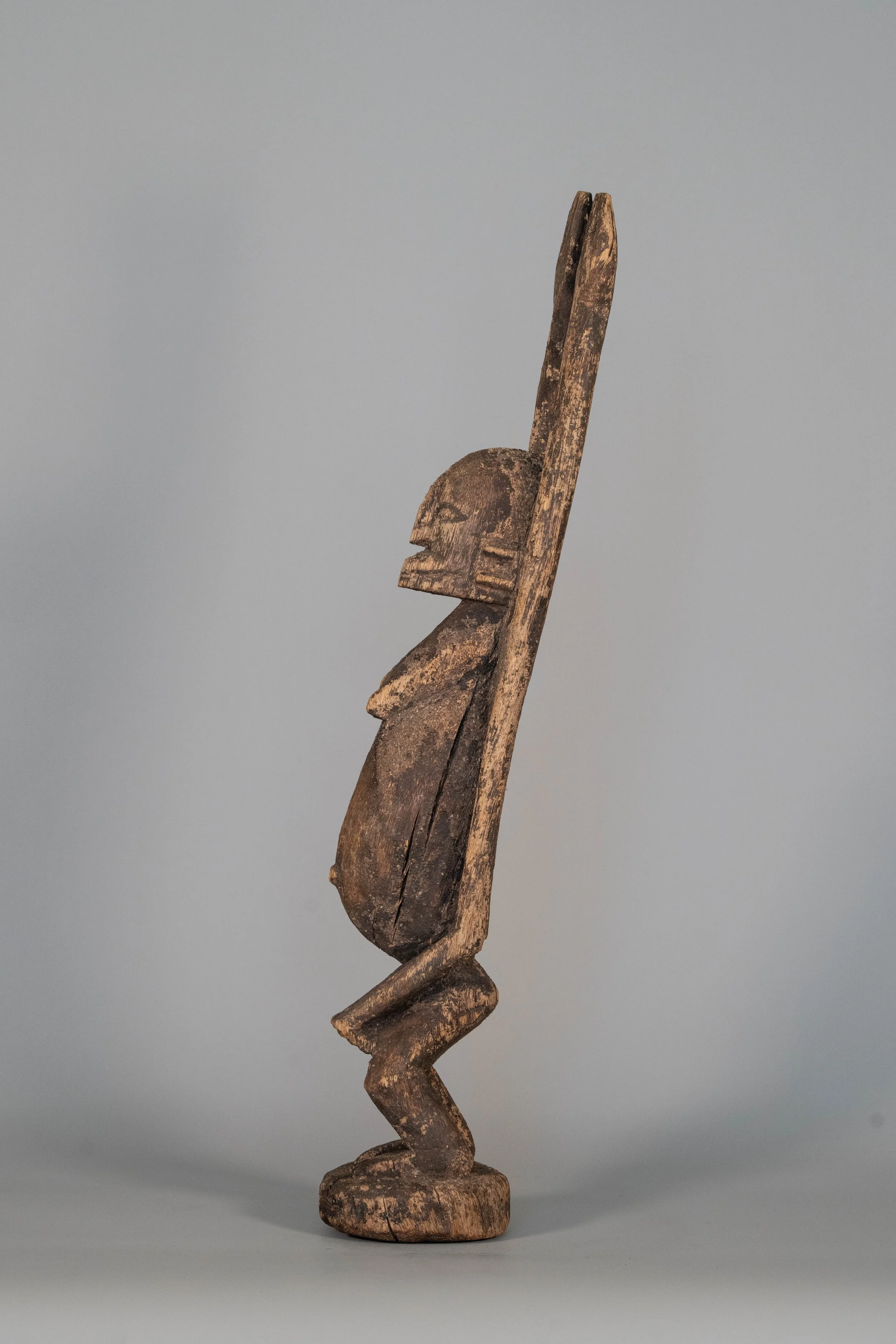 Image 4 of 5
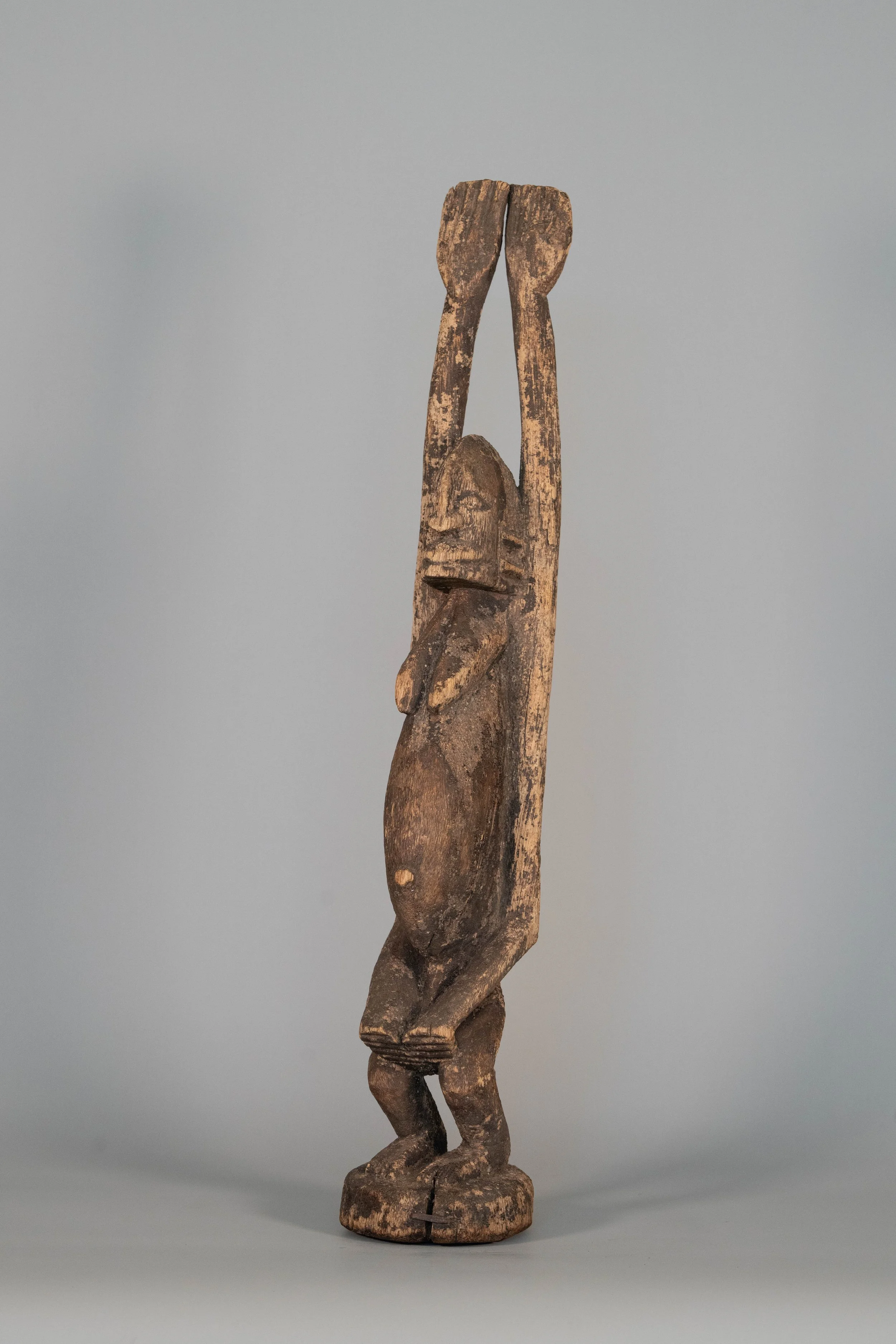 Image 5 of 5
22.5 inches · Est. 19th Century
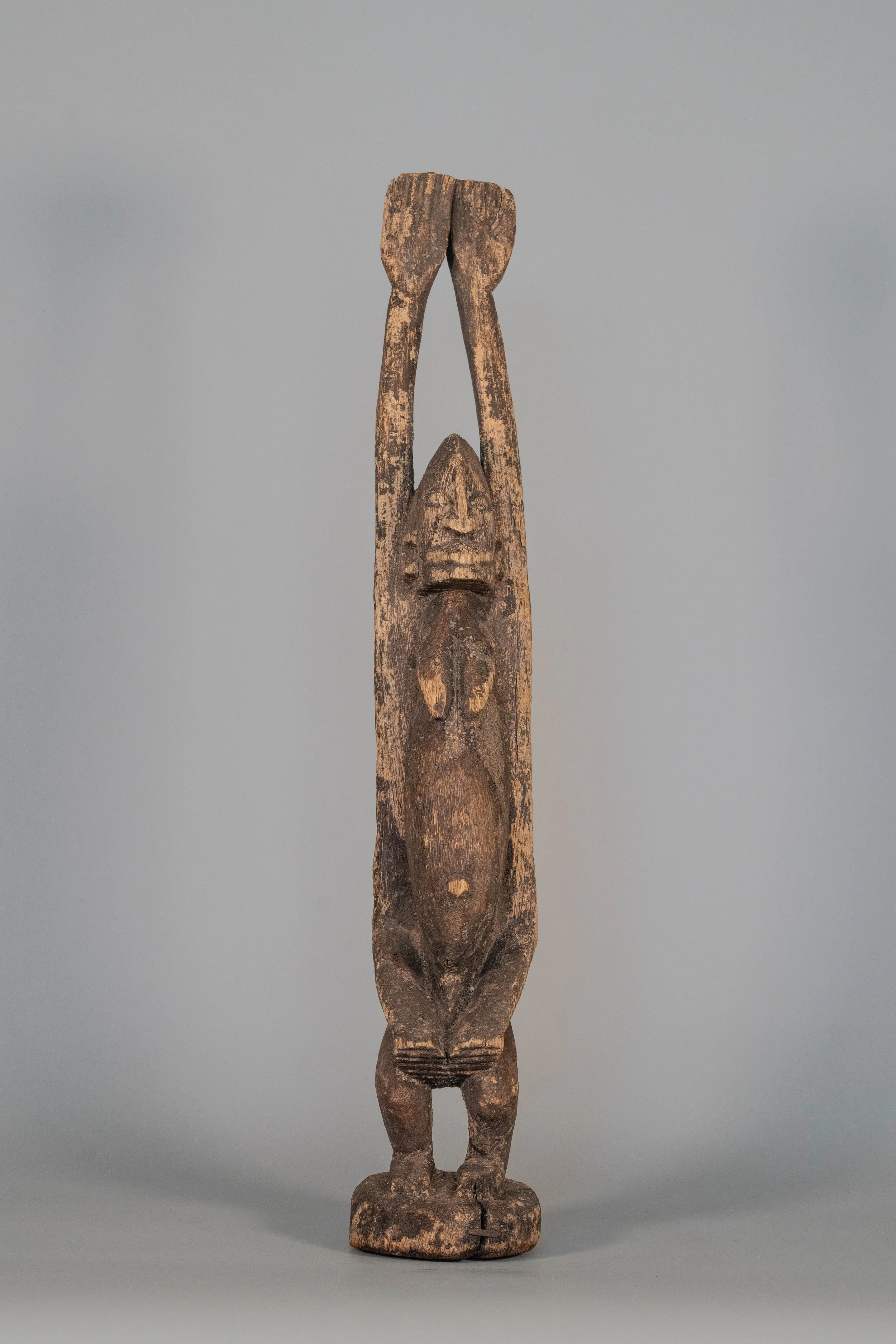
Among the most recognized sculptural traditions in African art, Dogon carving holds a permanent place in the collections of the Metropolitan Museum of Art, the Louvre, and the British Museum. This 22.5-inch figure is a rare opportunity to acquire a genuine example outside an institutional context.
The Dogon people inhabit the Bandiagara Escarpment, a dramatic 125-mile sandstone cliff face rising nearly 2,000 feet above the plains of central Mali. Their predecessors on those cliffs, the Tellem, disappeared around the 15th century, leaving behind carved wooden figures sealed in cave niches. The Dogon inherited the Tellem aesthetic wholesale — including the gesture this figure embodies: arms raised toward the sky in supplication for rain. In a semi-arid landscape where rainfall is scarce and harvests precarious, this was not a formal convention. It was a direct appeal.
Figures of this type — commonly called Nommo ancestor figures — were kept at family shrines and maintained through regular offerings of millet beer and animal sacrifice. They functioned as intermediaries between the living community and the ancestral or divine realm, consulted at planting time, during illness, and in times of drought.
At 22.5 inches, this example is notably larger than most surviving pieces — the scale of this kind typically indicates elevated ritual status. The patina is naturally variable and consistent with genuine age: darker in the recesses where organic material has accumulated over generations of use, lighter on the raised surfaces worn smooth by handling. There is no cracking, no restoration, and no evidence of modern intervention.
Close inspection reveals what appears to be a secondary pair of limbs projecting below the abdomen, with finger-like articulation distinct from the primary raised arms. The Metropolitan's collection documents comparable Dogon double figures, interpreted in relation to the Nommo's cosmological twinhood — the primordial division of a single being into a complementary pair.
Condition: Good. Custom round wood base included (not pictured).
Dimensions: Overall 24.5 × 6 × 6 inches; Figure only 22.5 × 4 × 4 inches (H x W x D)
22.5 inches · Est. 19th Century
Among the most recognized sculptural traditions in African art, Dogon carving holds a permanent place in the collections of the Metropolitan Museum of Art, the Louvre, and the British Museum. This 22.5-inch figure is a rare opportunity to acquire a genuine example outside an institutional context.
The Dogon people inhabit the Bandiagara Escarpment, a dramatic 125-mile sandstone cliff face rising nearly 2,000 feet above the plains of central Mali. Their predecessors on those cliffs, the Tellem, disappeared around the 15th century, leaving behind carved wooden figures sealed in cave niches. The Dogon inherited the Tellem aesthetic wholesale — including the gesture this figure embodies: arms raised toward the sky in supplication for rain. In a semi-arid landscape where rainfall is scarce and harvests precarious, this was not a formal convention. It was a direct appeal.
Figures of this type — commonly called Nommo ancestor figures — were kept at family shrines and maintained through regular offerings of millet beer and animal sacrifice. They functioned as intermediaries between the living community and the ancestral or divine realm, consulted at planting time, during illness, and in times of drought.
At 22.5 inches, this example is notably larger than most surviving pieces — the scale of this kind typically indicates elevated ritual status. The patina is naturally variable and consistent with genuine age: darker in the recesses where organic material has accumulated over generations of use, lighter on the raised surfaces worn smooth by handling. There is no cracking, no restoration, and no evidence of modern intervention.
Close inspection reveals what appears to be a secondary pair of limbs projecting below the abdomen, with finger-like articulation distinct from the primary raised arms. The Metropolitan's collection documents comparable Dogon double figures, interpreted in relation to the Nommo's cosmological twinhood — the primordial division of a single being into a complementary pair.
Condition: Good. Custom round wood base included (not pictured).
Dimensions: Overall 24.5 × 6 × 6 inches; Figure only 22.5 × 4 × 4 inches (H x W x D)