Circa 1880–1940 · 15 inches
High on the cliff face of the Bandiagara Escarpment in present-day Mali, the Dogon people have built one of the most philosophically rich and artistically celebrated cultures on earth. Their sculptors are recognized by the Metropolitan Museum, the Musée du quai Branly, and the British Museum as among the greatest who ever worked in wood. This figure is a product of that tradition — and she is the real thing.
She is a female ancestor figure, carved to serve as a vessel for the nommo— the divine creative spirits at the center of Dogon cosmology. She lived in a family shrine. Prayers were said near her. Offerings were made to her. She was not a decoration. She was sacred. Her head is intentionally large — for the Dogon, the head houses the spirit, and to enlarge it is to honor it. The incised zigzag patterns on her cheeks and torso are scarification marks, the permanent identity writing of her culture, recording her clan and status as faithfully as any document. The small tubular protrusion at her chin marks her as a figure of elder spiritual authority. Her arms rest close at her sides, hands at the pelvis — a posture of stillness and receptivity found throughout the Dogon ancestral canon. She is not acting. She is being.
What sets this piece apart is her patina— the accumulated evidence of genuine age that no reproduction can convincingly fake. The wood has developed the variable darkening that comes only from decades of handling, libation offerings of palm oil and millet beer, hearth smoke, and time. The warmest amber tones appear on the high points; the deepest ebony pools in the recesses of the arms and body, exactly where authentic use-wear concentrates. The stabilized cracks on the left arm and legs have darkened interiors — proof they opened long ago and have been aging quietly ever since. There is no restoration, no fills, no artificial enhancement of any kind. This surface is exactly what a century of devotional life looks like.
The piece displays the formal vocabulary of the central or southern Dogon plateau — the pronounced oval head with a median crest, the articulated scarification, the integral oval base — and is fully consistent with authenticated early-colonial or pre-colonial material in major institutional collections. It is emphatically not tourist production: the scarification is too precise, the patina too honest, the carving too considered.
Dating: circa 1880–1940, with the earlier end of that range plausible given the depth and character of the patina.
Condition: Stable throughout. Old, stabilized cracks on the left arm and legs. No restoration. No losses of significance. Surface wear is entirely consistent with age and authentic use. Presented on a later fitted display base.
Picasso collected African sculpture seriously and said it changed everything he thought he knew about art. He was looking at pieces like this one. If you have never owned a work from this tradition, you are missing one of the great chapters of human creative achievement. This figure is an ideal place to begin — or to deepen — that conversation.
Dimensions: Overall with base 18 x 5 x 5 inches; Figure only 15 x 4 x 4.5 inches (H x W x D)
Circa 1880–1940 · 15 inches
High on the cliff face of the Bandiagara Escarpment in present-day Mali, the Dogon people have built one of the most philosophically rich and artistically celebrated cultures on earth. Their sculptors are recognized by the Metropolitan Museum, the Musée du quai Branly, and the British Museum as among the greatest who ever worked in wood. This figure is a product of that tradition — and she is the real thing.
She is a female ancestor figure, carved to serve as a vessel for the nommo— the divine creative spirits at the center of Dogon cosmology. She lived in a family shrine. Prayers were said near her. Offerings were made to her. She was not a decoration. She was sacred. Her head is intentionally large — for the Dogon, the head houses the spirit, and to enlarge it is to honor it. The incised zigzag patterns on her cheeks and torso are scarification marks, the permanent identity writing of her culture, recording her clan and status as faithfully as any document. The small tubular protrusion at her chin marks her as a figure of elder spiritual authority. Her arms rest close at her sides, hands at the pelvis — a posture of stillness and receptivity found throughout the Dogon ancestral canon. She is not acting. She is being.
What sets this piece apart is her patina— the accumulated evidence of genuine age that no reproduction can convincingly fake. The wood has developed the variable darkening that comes only from decades of handling, libation offerings of palm oil and millet beer, hearth smoke, and time. The warmest amber tones appear on the high points; the deepest ebony pools in the recesses of the arms and body, exactly where authentic use-wear concentrates. The stabilized cracks on the left arm and legs have darkened interiors — proof they opened long ago and have been aging quietly ever since. There is no restoration, no fills, no artificial enhancement of any kind. This surface is exactly what a century of devotional life looks like.
The piece displays the formal vocabulary of the central or southern Dogon plateau — the pronounced oval head with a median crest, the articulated scarification, the integral oval base — and is fully consistent with authenticated early-colonial or pre-colonial material in major institutional collections. It is emphatically not tourist production: the scarification is too precise, the patina too honest, the carving too considered.
Dating: circa 1880–1940, with the earlier end of that range plausible given the depth and character of the patina.
Condition: Stable throughout. Old, stabilized cracks on the left arm and legs. No restoration. No losses of significance. Surface wear is entirely consistent with age and authentic use. Presented on a later fitted display base.
Picasso collected African sculpture seriously and said it changed everything he thought he knew about art. He was looking at pieces like this one. If you have never owned a work from this tradition, you are missing one of the great chapters of human creative achievement. This figure is an ideal place to begin — or to deepen — that conversation.
Dimensions: Overall with base 18 x 5 x 5 inches; Figure only 15 x 4 x 4.5 inches (H x W x D)
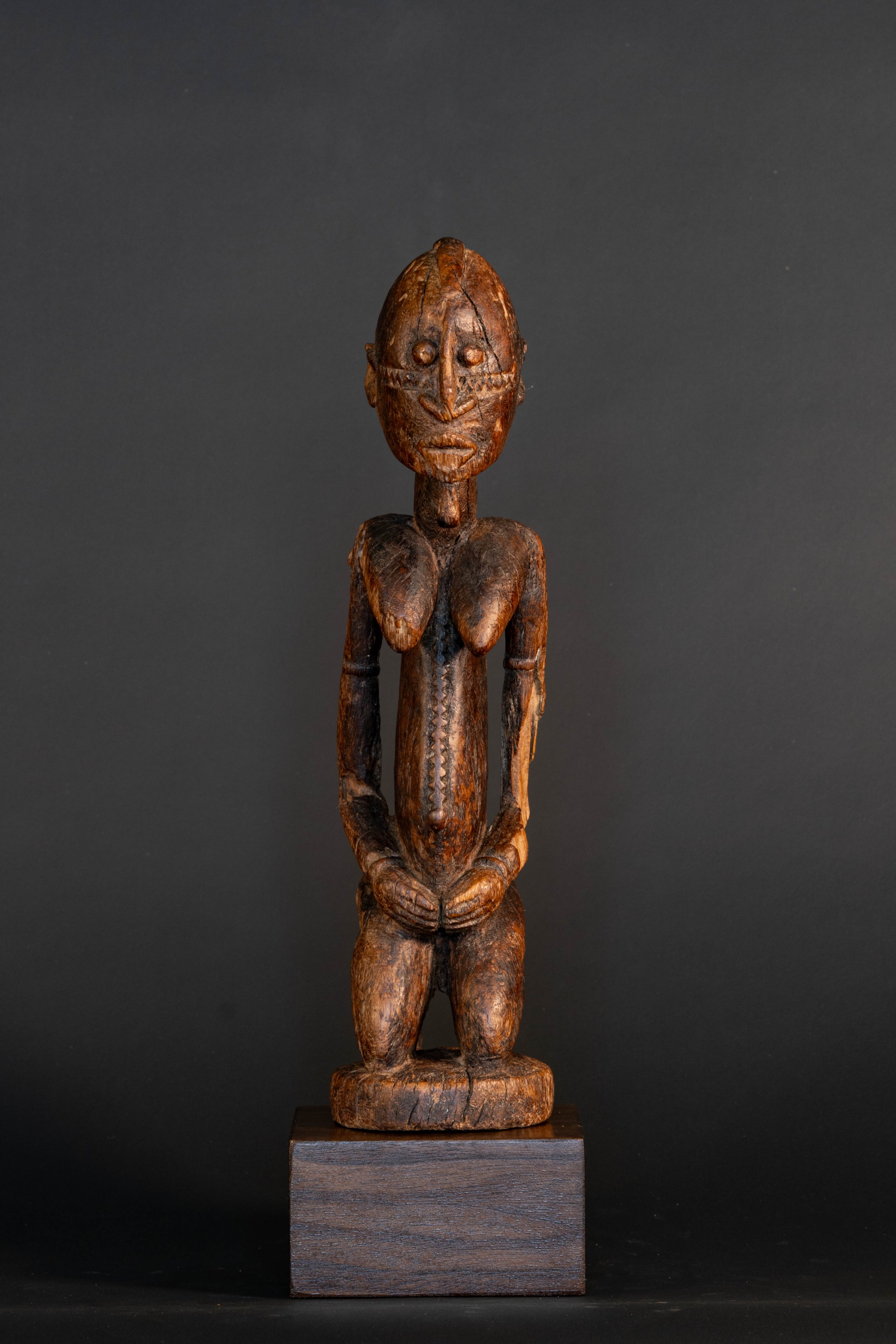 Image 1 of 6
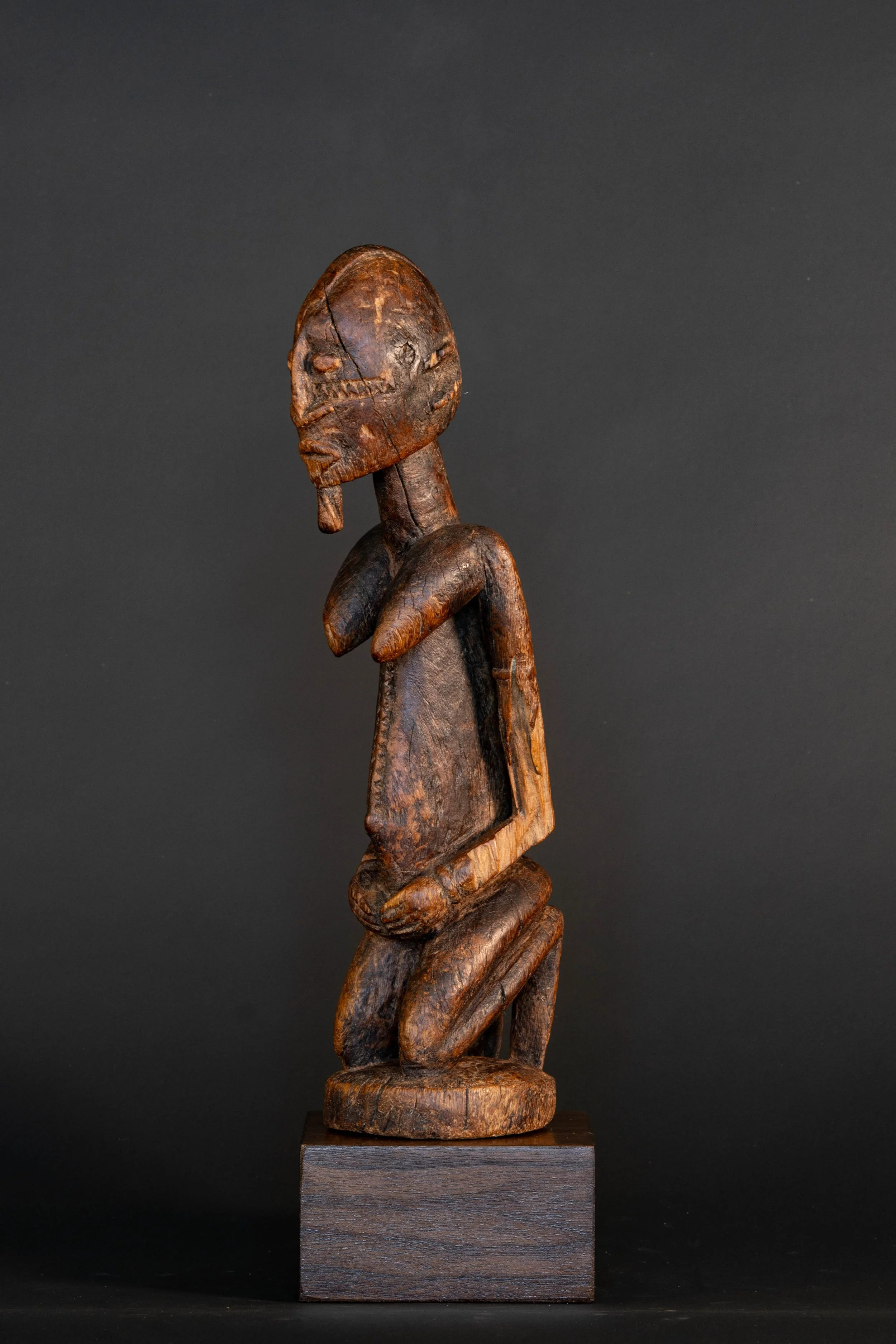 Image 2 of 6
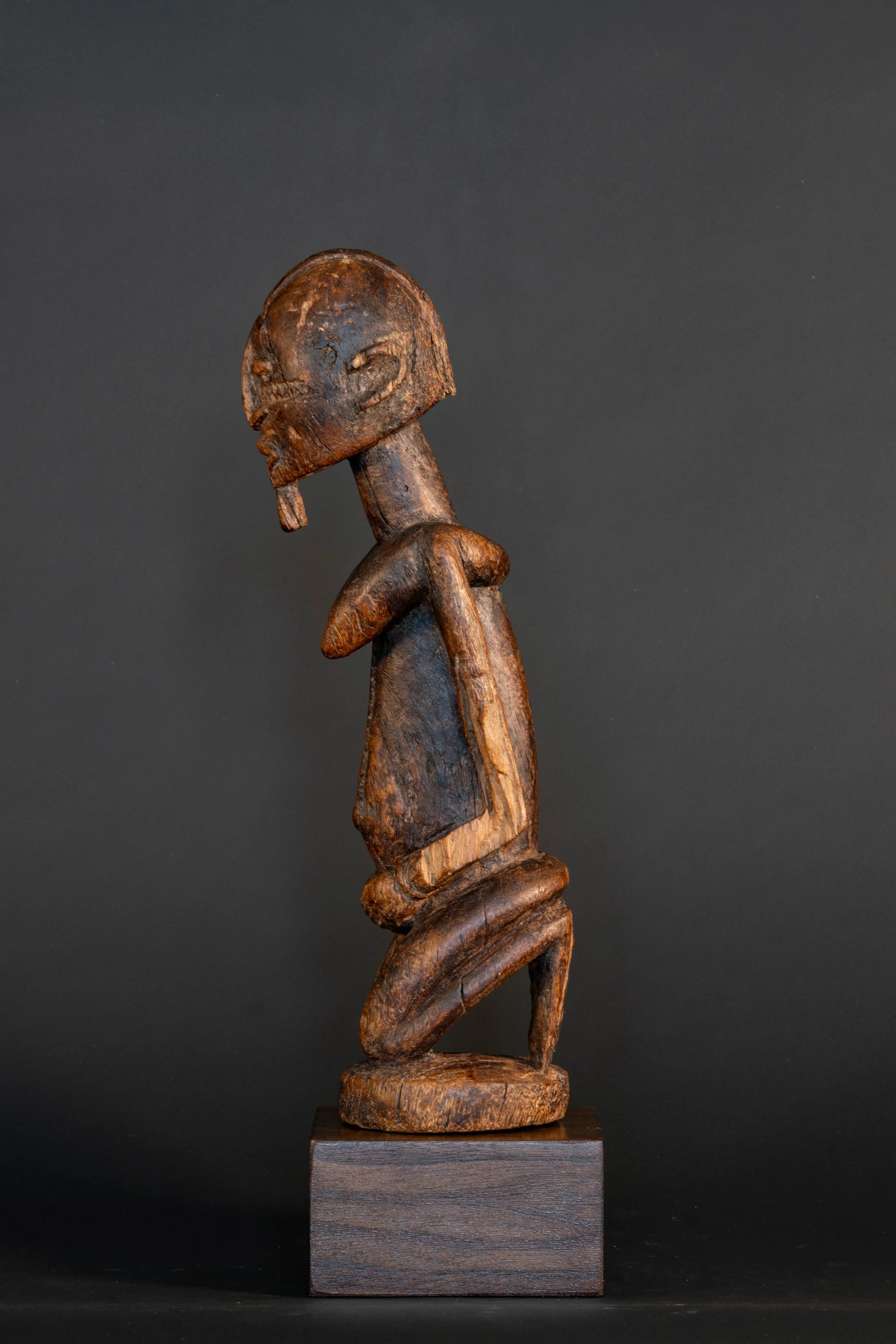 Image 3 of 6
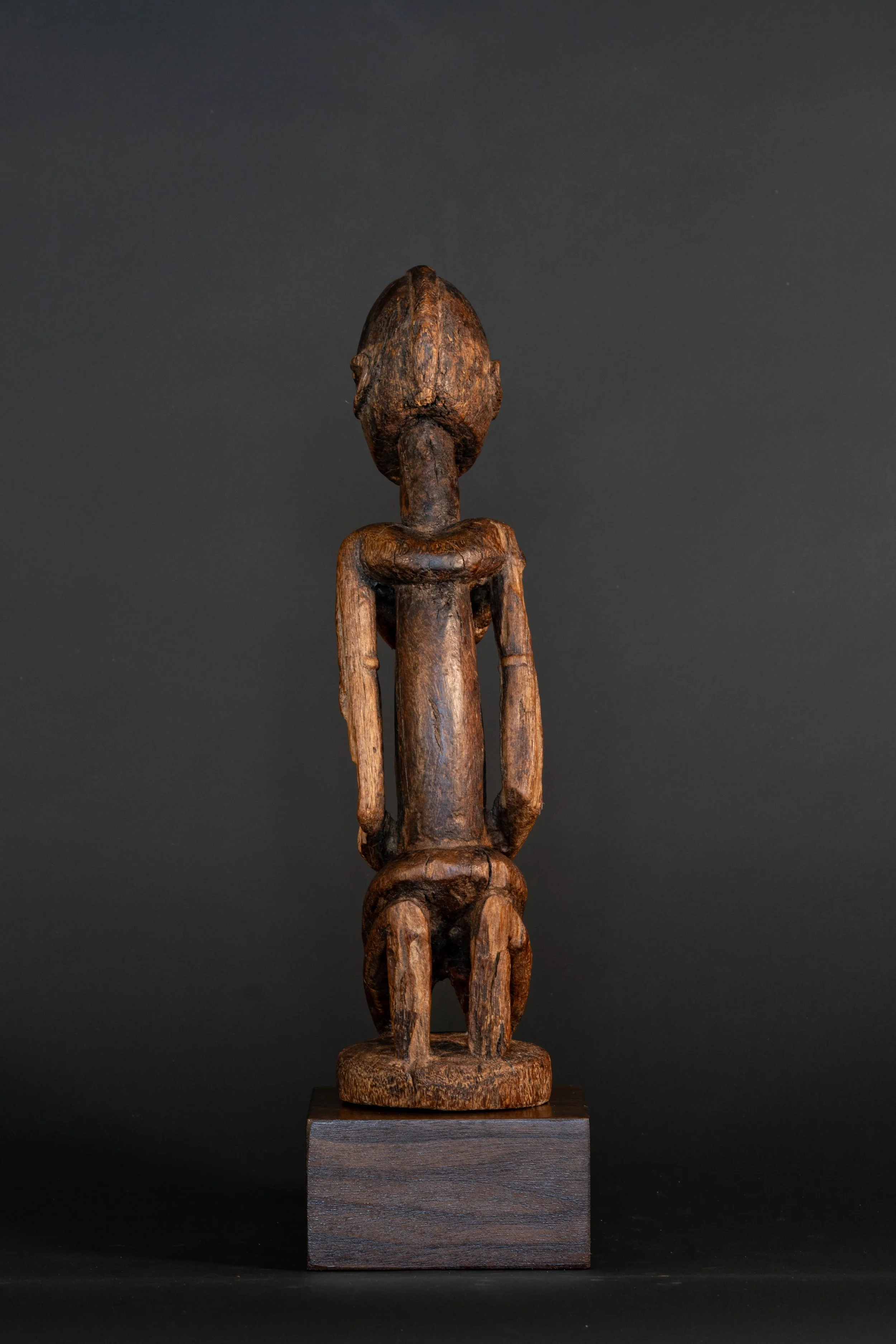 Image 4 of 6
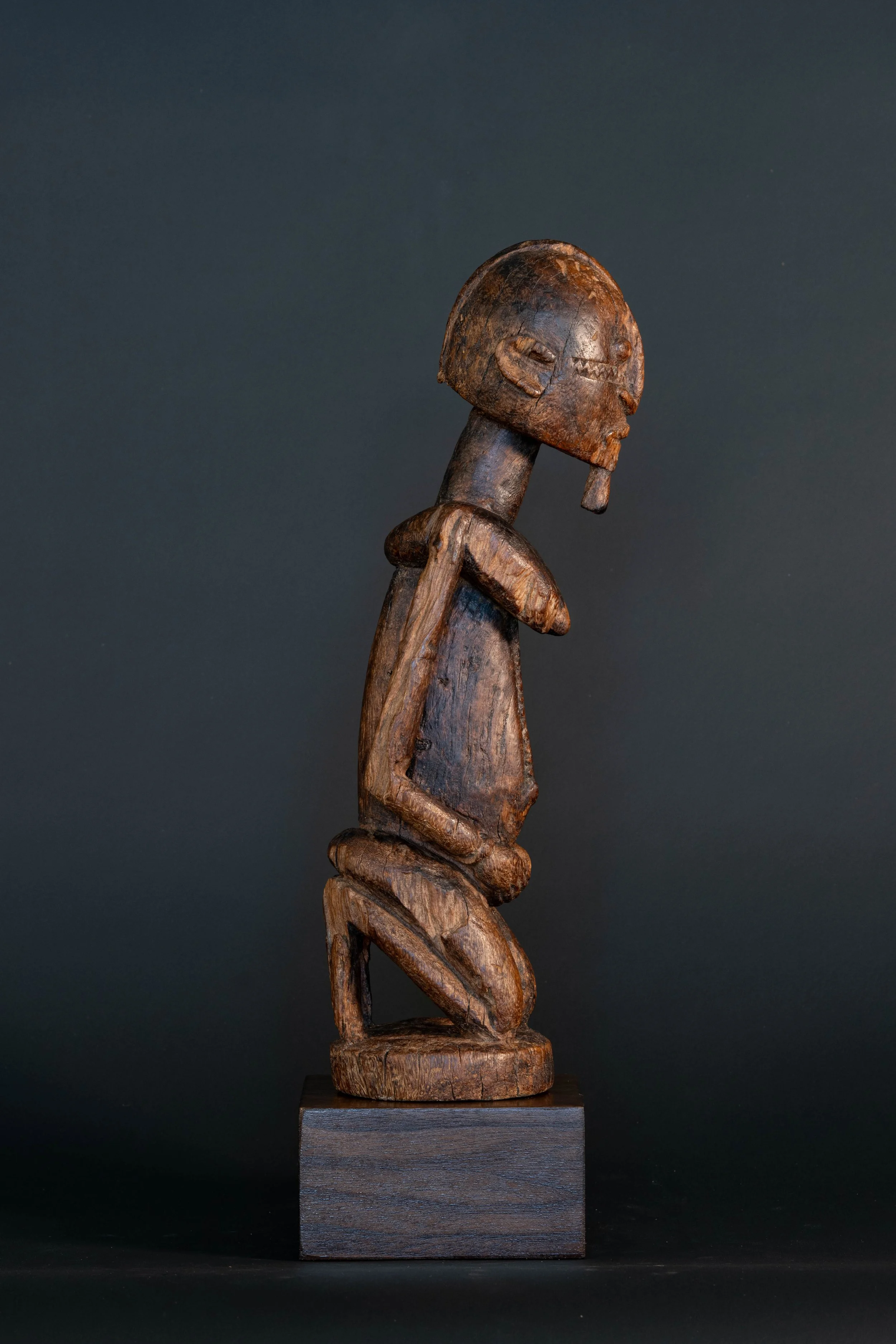 Image 5 of 6
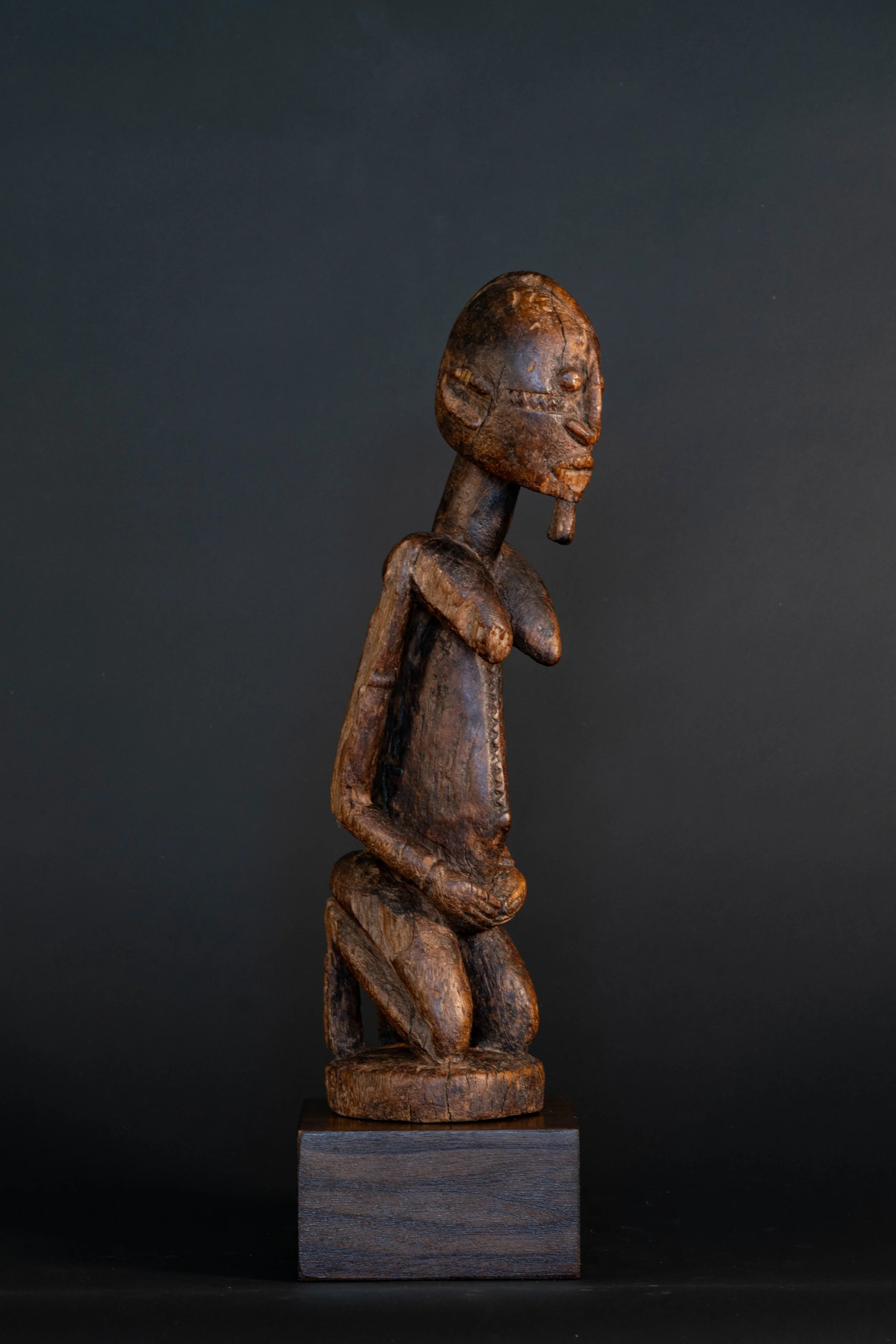 Image 6 of 6