 Image 1 of 4
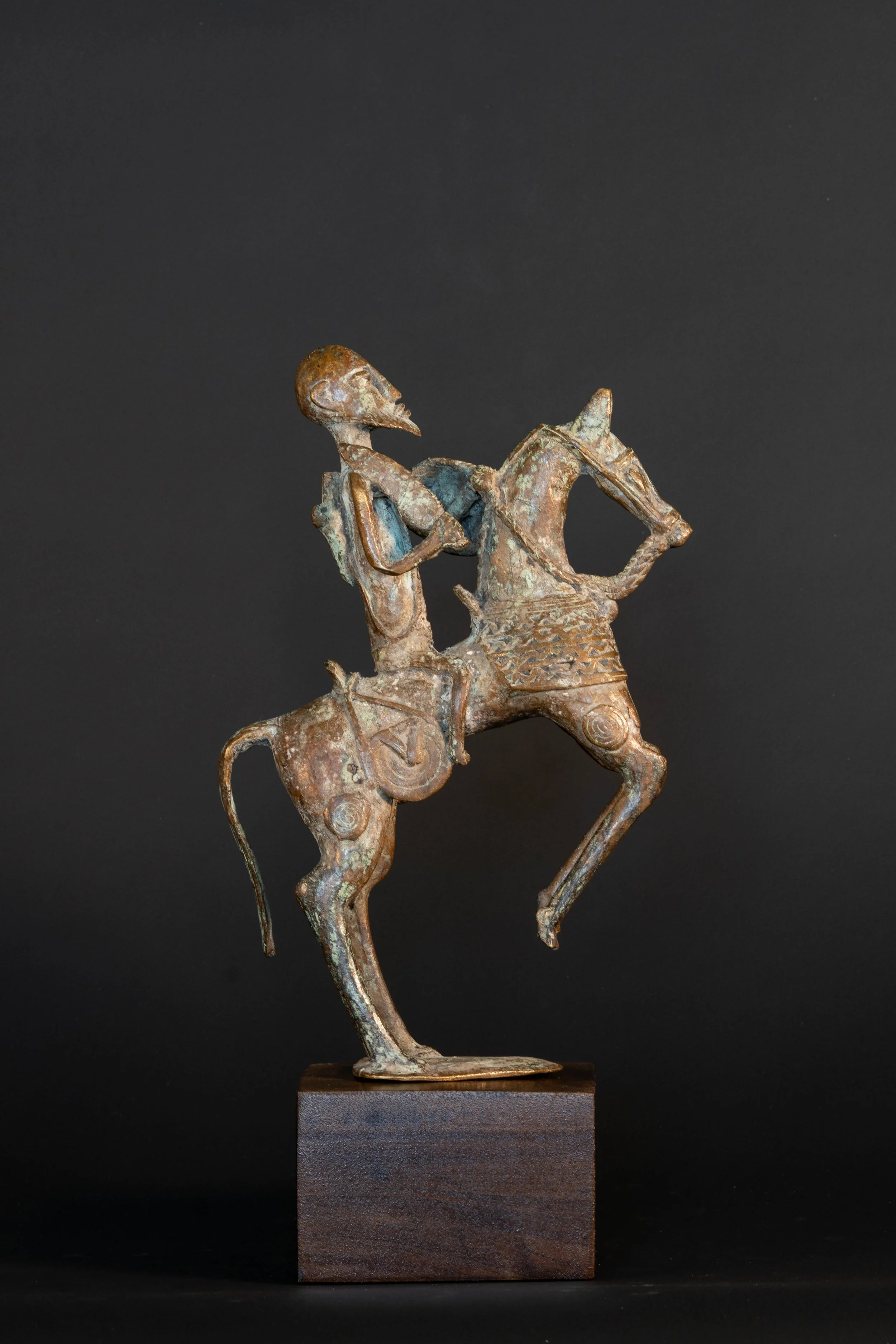 Image 2 of 4
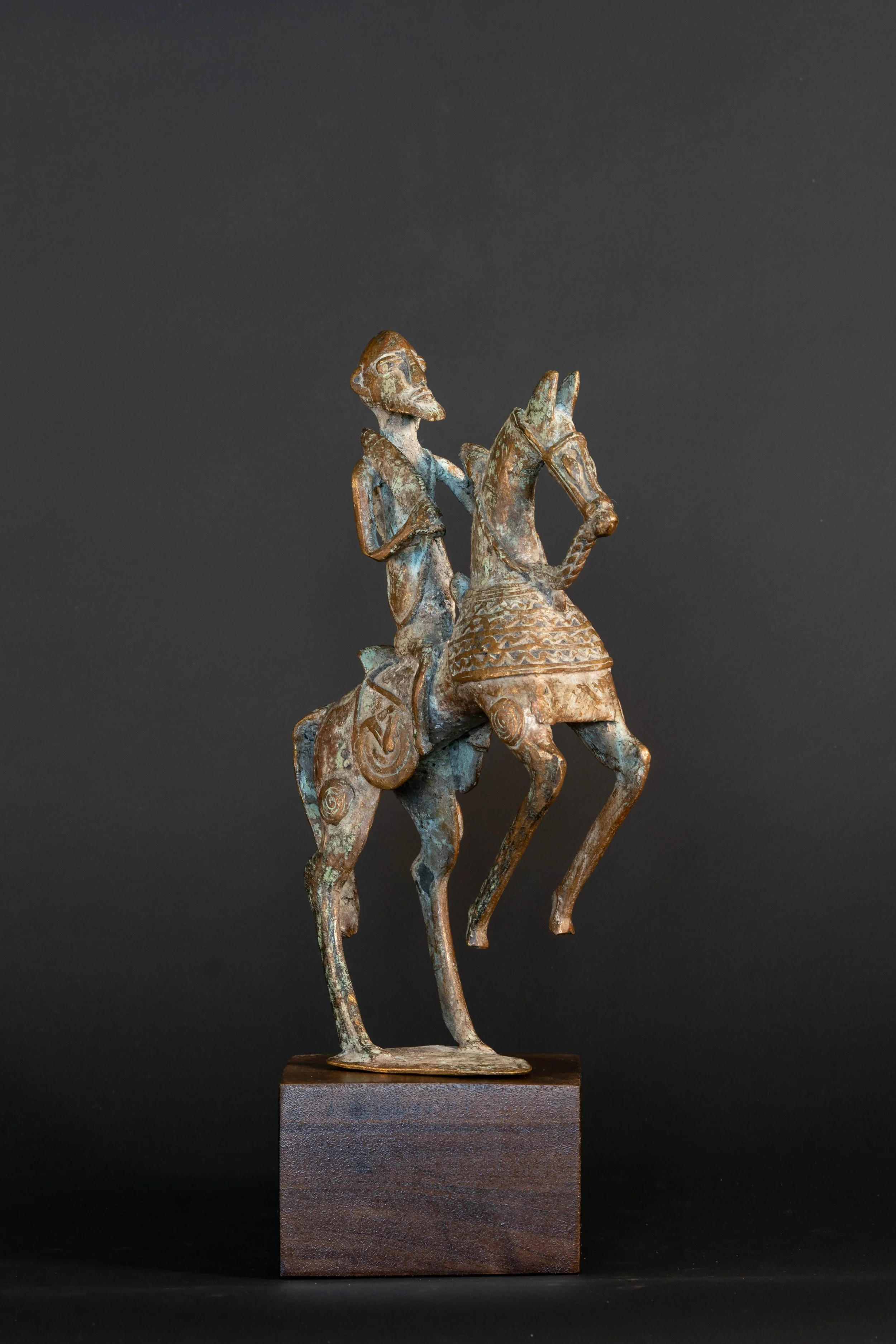 Image 3 of 4
 Image 4 of 4
Copper alloy / bronze, lost-wax cast
Mid-20th century, circa 1940–1970
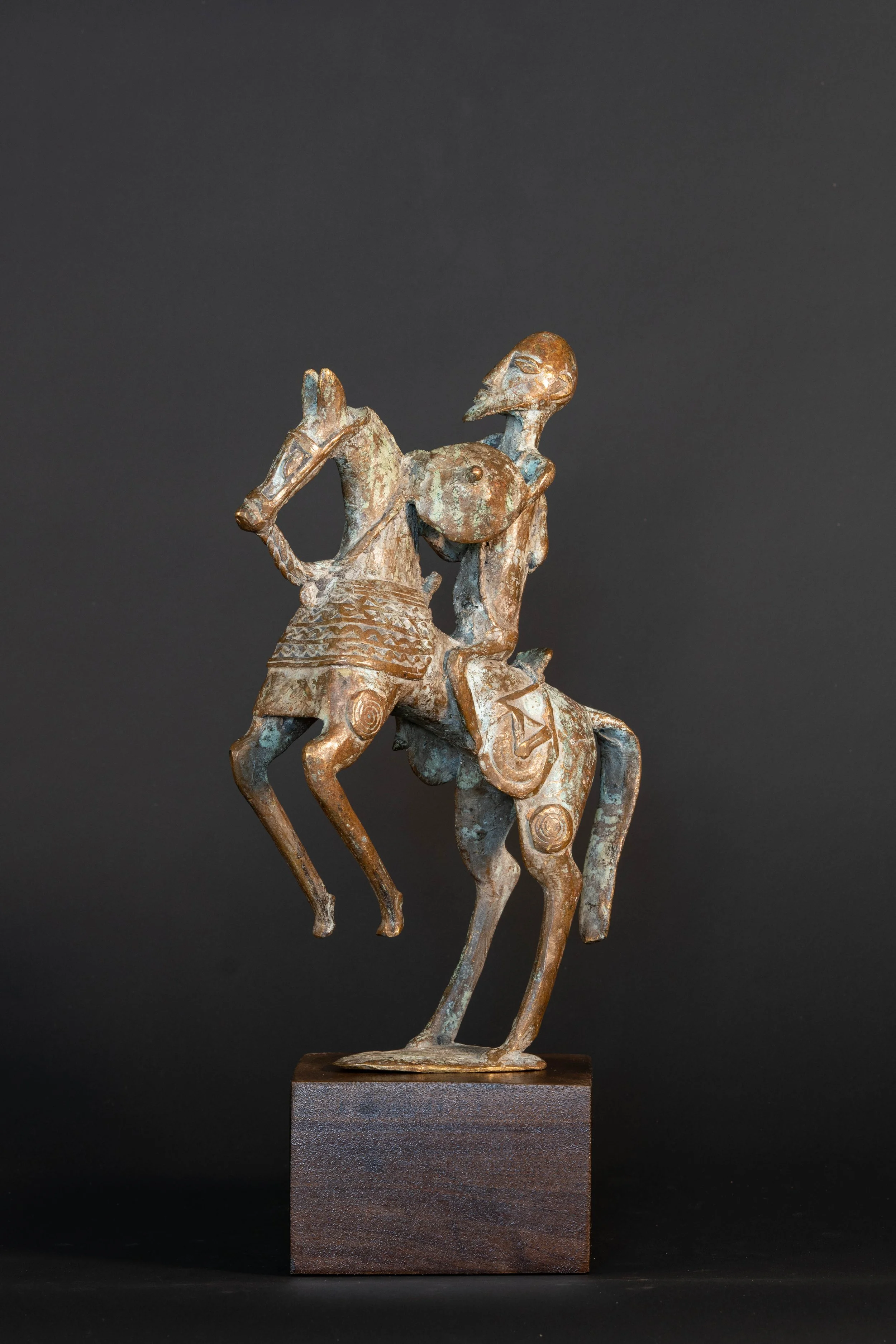
This equestrian bronze from Mali has what draws collectors to African sculpture: movement, authority, age, and unmistakable presence. A mounted warrior sits upright on a rearing horse, a round shield across his chest and a weapon raised. The whole composition is reduced to elegant, expressive forms. Elongated limbs, an openwork bridle, incised horse trappings, and a sharply profiled, bearded head give the piece a dramatic silhouette recognizable from across a room.
The figure belongs to the Dogon artistic tradition, or the wider Dogon style, which is one of West Africa’s most celebrated sculptural languages. In the Sahel the horse was a costly, prestigious animal, and in Dogon art the mounted figure signals rank, wealth, and power. People often read such riders as ancestors, leaders, or heroes. This is not merely a rider on horseback. It is a declaration of status cast in metal.
Made by hand, one at a time. Each lost-wax bronze begins as a wax model shaped by hand, then encased in clay. The wax is melted out and molten metal is poured into the void it leaves. The mold is broken to free the casting, so no two pieces are ever identical. The casting here remains lively and hand-worked rather than stiff. It is rich in surface detail, including wavy banded trappings on the horse, spiral roundels at the joints, and a chevron-incised saddle bag.
A surface collectors look for. The patina is rich and varied. Warm, polished bronze shows on the high points, including the rider’s head and the horse’s ornament, and blue-green verdigris collects in the recesses. That handling wear and natural oxidation give the sculpture depth, character, and the lived-in surface experienced collectors want to see.
An ideal scale. At 12 inches high without the base, the figure is substantial enough to command attention and versatile enough for a shelf, pedestal, or tabletop. It suits a serious collection equally well as a singular statement piece in a refined interior.
A memorable, sculptural, and highly decorative example of West African lost-wax casting.
Condition: Good. Natural, unrestored patina; all figural elements intact.
Dimensions: Figure only, 12 × 3 × 7.5 in. (H × W × D). Overall on wood base, 15.25 × 4.75 × 7.5 in.
Provenance: Private collection. Documentation predating 1970 is not available.