Early to mid-20th Century
This Dogon mask is a strong example of the bold, architectural carving that makes the arts of Mali so admired by collectors worldwide. Tall, dramatic, and unmistakably sculptural, it combines a deeply recessed rectangular face with sharply cut triangular eyes, blade-like side projections, and a commanding pair of upward-rising antelope horns — a form that feels at once ancient, elemental, and surprisingly modern.
The face is especially compelling. Rather than naturalistic modeling, the carver chose a more abstract and forceful solution: deep vertical channels and triangular eye openings animate the surface through light and shadow, while the side projections widen the silhouette and reinforce ceremonial authority. Nothing feels unnecessary. That economy of form is one of the great strengths of Dogon carving.
The horns provide the visual climax. Their ribbed carving and surviving traces of pigment bring rhythm and life to the upper register. In Dogon art, antelope imagery connects human life to the vitality of the bush — masks like this were meant to be seen in motion, danced in communal ritual with full-fiber costumes. Even on a stand, this example retains that sense of energy.
The interior shows clear hand-carving. The surface carries an honest oxidized patina with surviving pigment and wear consistent with age and use; side perforations likely once secured costume attachments. What makes this piece especially desirable is the way it succeeds both as an ethnographic object and as pure sculpture — the cut planes, negative space, and horned crown give it an almost modernist authority and real wall presence.
Condition: Good. Custom stand included.
Dimensions: Overall with stand 24 × 6.5 × 10 inches, Mask only 19.5 × 6.5 × 8 inches (H x W x D)
Early to mid-20th Century
This Dogon mask is a strong example of the bold, architectural carving that makes the arts of Mali so admired by collectors worldwide. Tall, dramatic, and unmistakably sculptural, it combines a deeply recessed rectangular face with sharply cut triangular eyes, blade-like side projections, and a commanding pair of upward-rising antelope horns — a form that feels at once ancient, elemental, and surprisingly modern.
The face is especially compelling. Rather than naturalistic modeling, the carver chose a more abstract and forceful solution: deep vertical channels and triangular eye openings animate the surface through light and shadow, while the side projections widen the silhouette and reinforce ceremonial authority. Nothing feels unnecessary. That economy of form is one of the great strengths of Dogon carving.
The horns provide the visual climax. Their ribbed carving and surviving traces of pigment bring rhythm and life to the upper register. In Dogon art, antelope imagery connects human life to the vitality of the bush — masks like this were meant to be seen in motion, danced in communal ritual with full-fiber costumes. Even on a stand, this example retains that sense of energy.
The interior shows clear hand-carving. The surface carries an honest oxidized patina with surviving pigment and wear consistent with age and use; side perforations likely once secured costume attachments. What makes this piece especially desirable is the way it succeeds both as an ethnographic object and as pure sculpture — the cut planes, negative space, and horned crown give it an almost modernist authority and real wall presence.
Condition: Good. Custom stand included.
Dimensions: Overall with stand 24 × 6.5 × 10 inches, Mask only 19.5 × 6.5 × 8 inches (H x W x D)
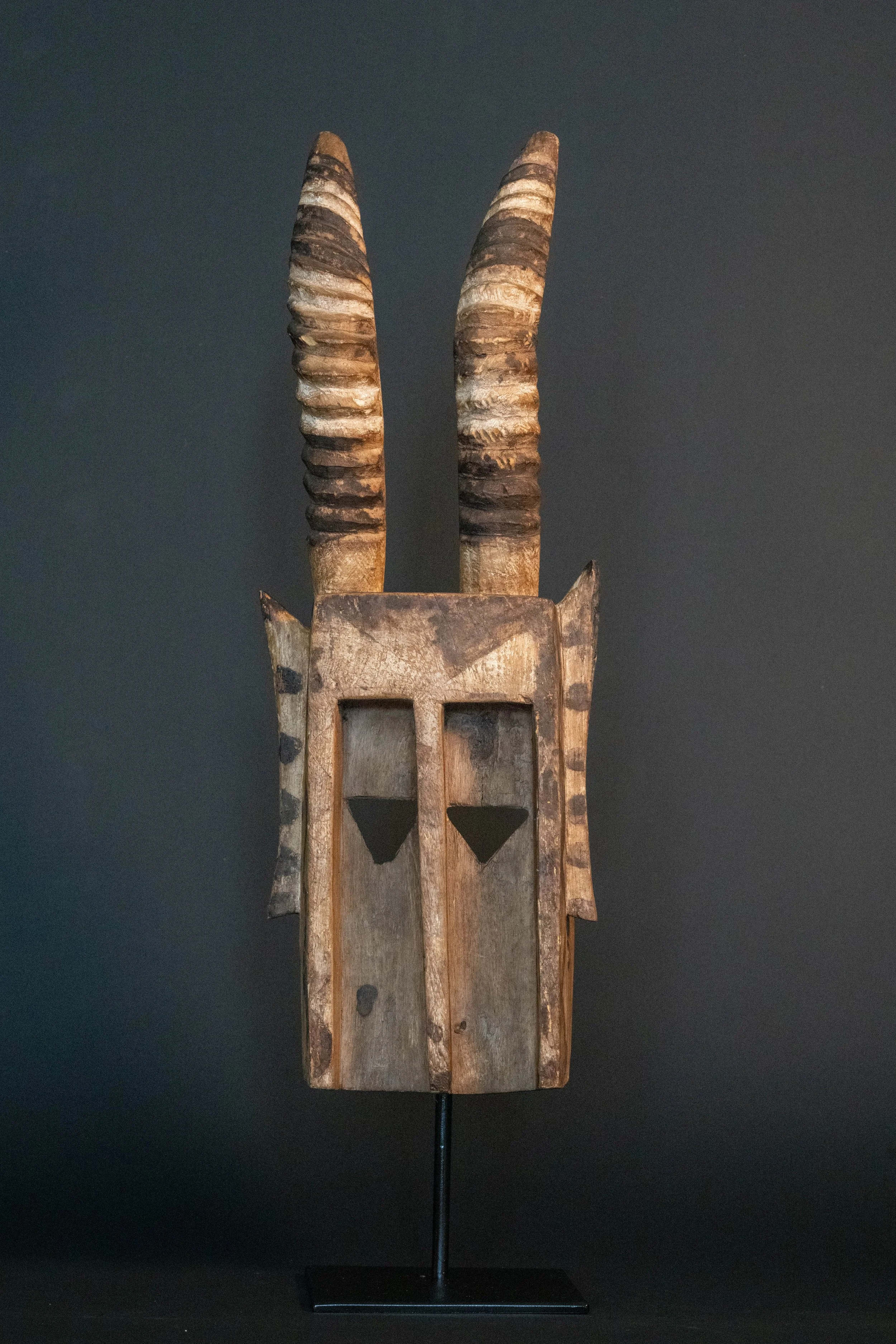 Image 1 of 7
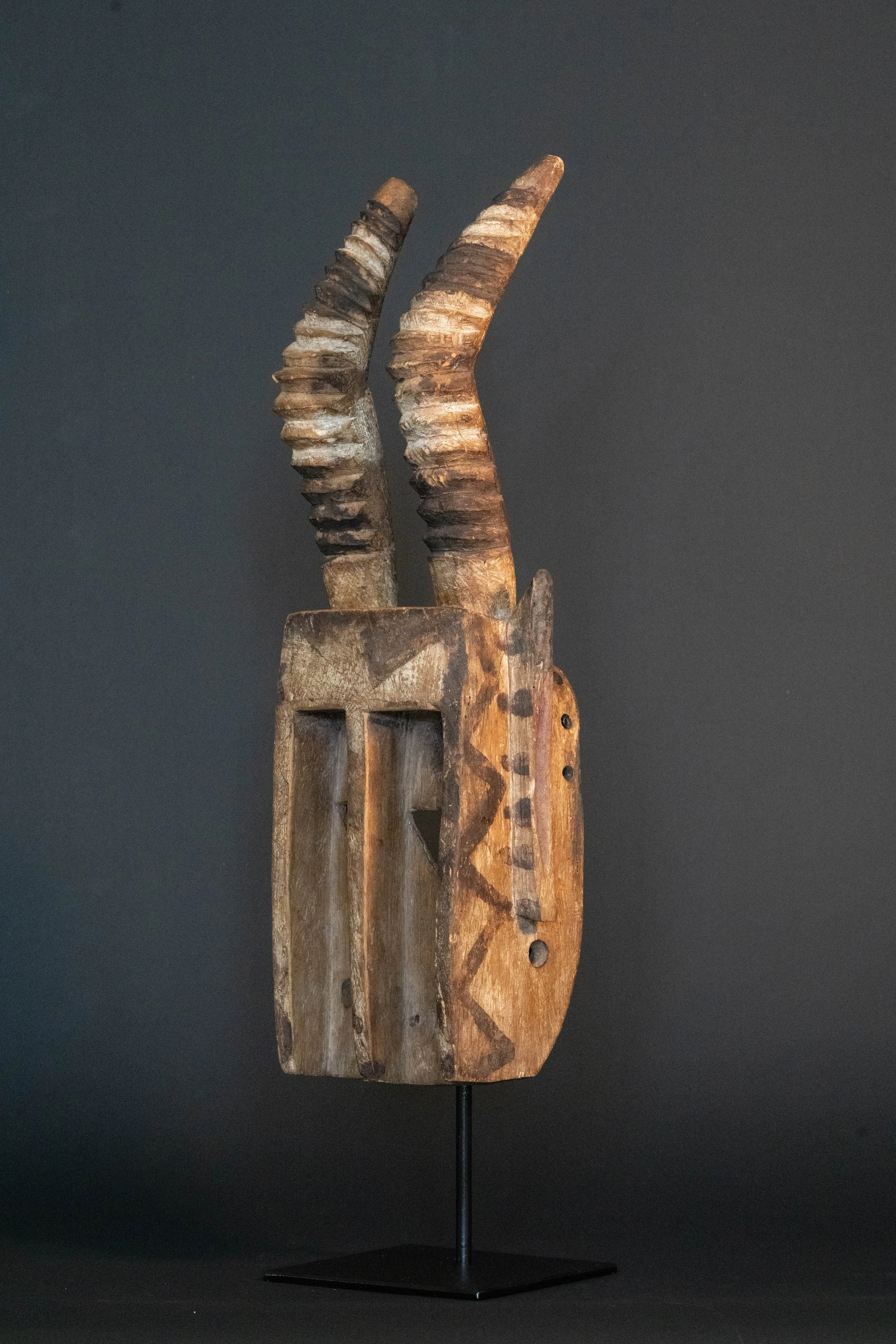 Image 2 of 7
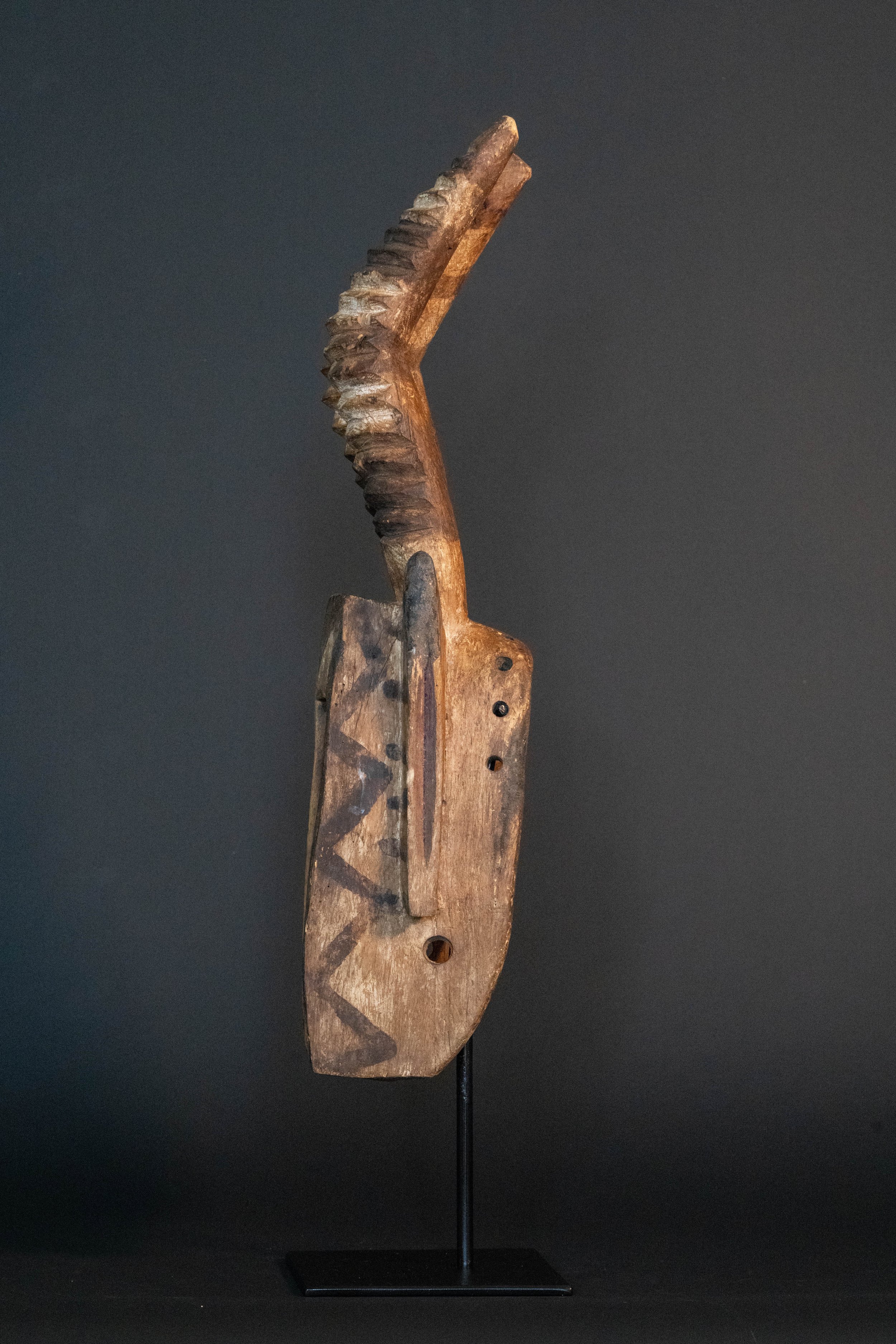 Image 3 of 7
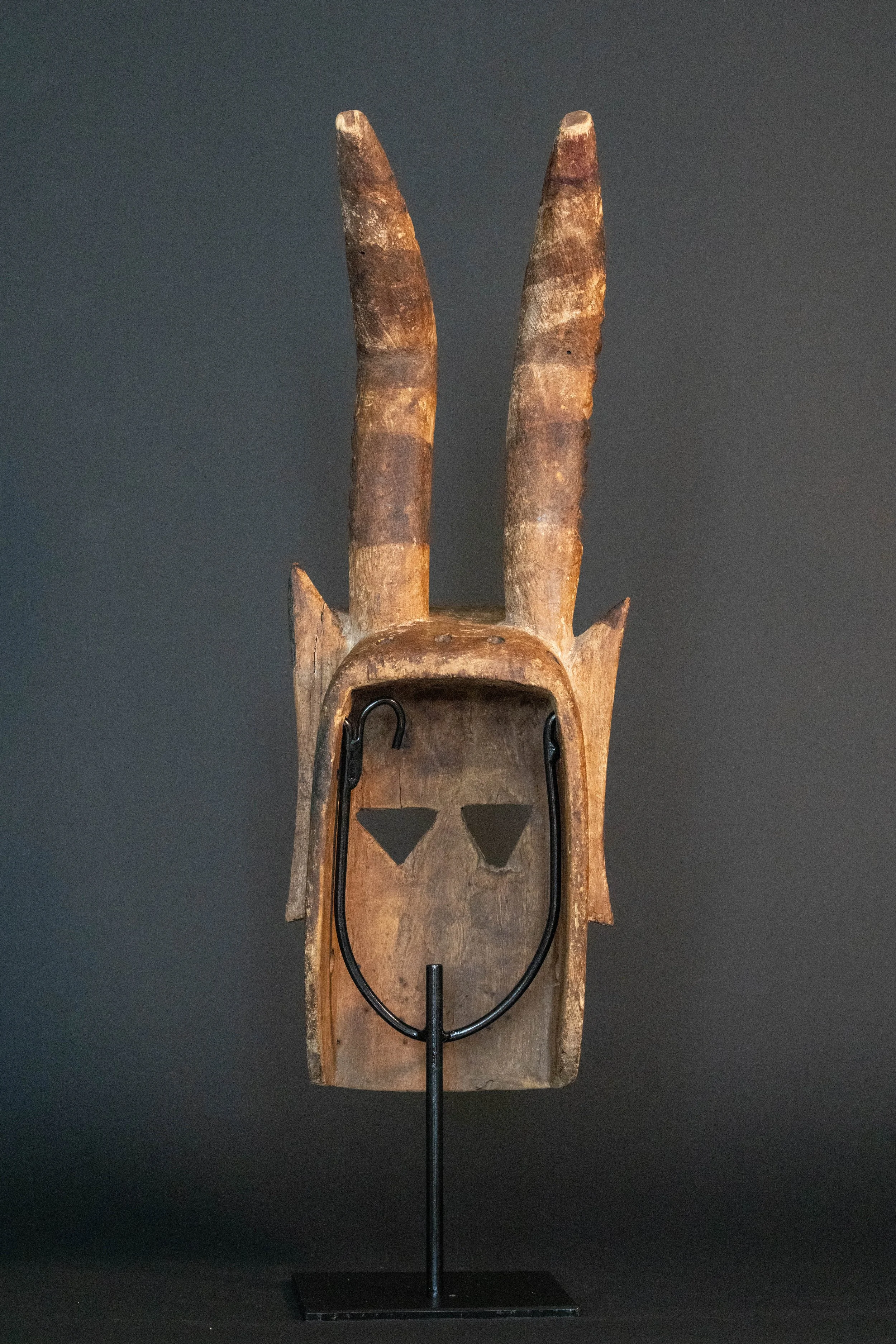 Image 4 of 7
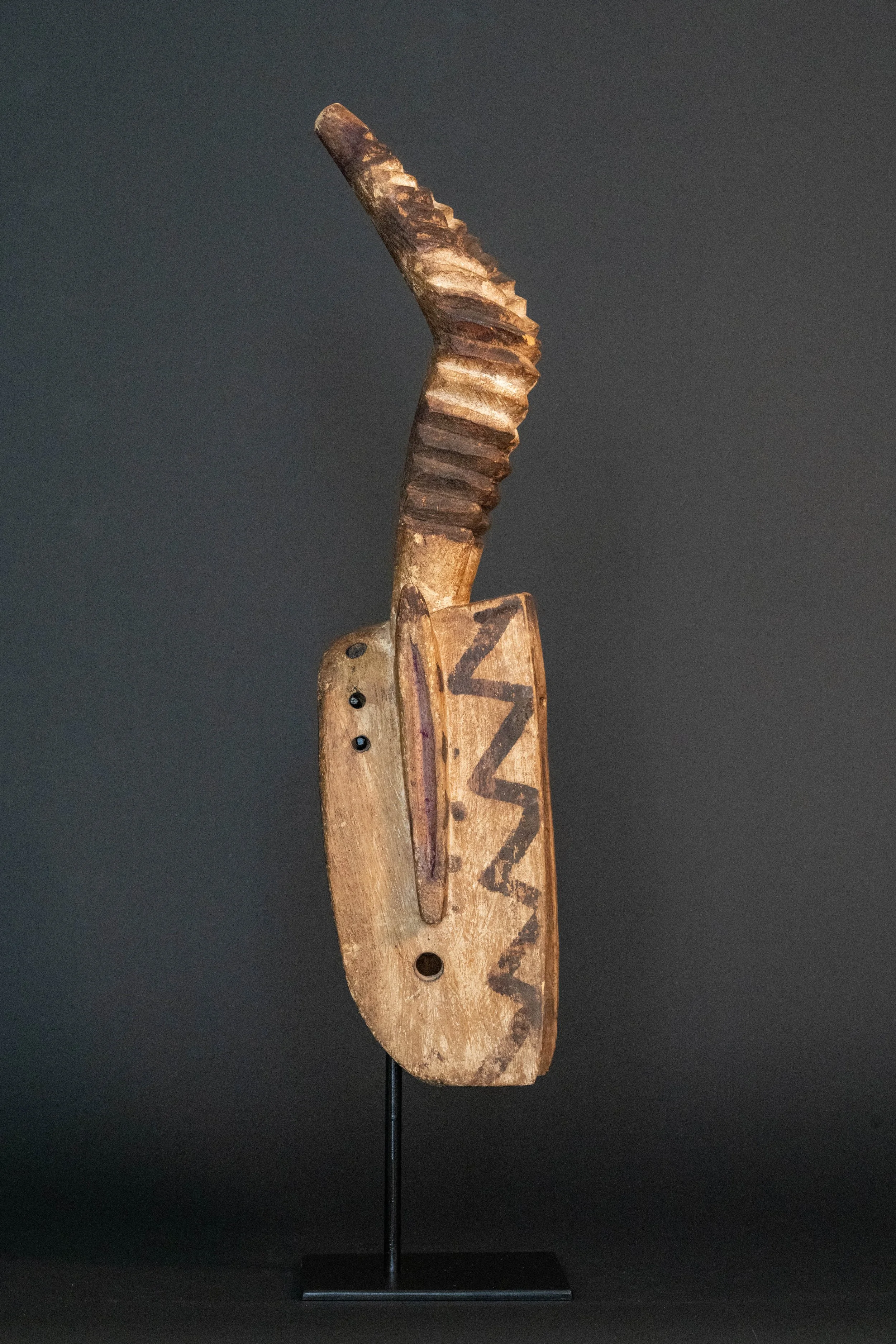 Image 5 of 7
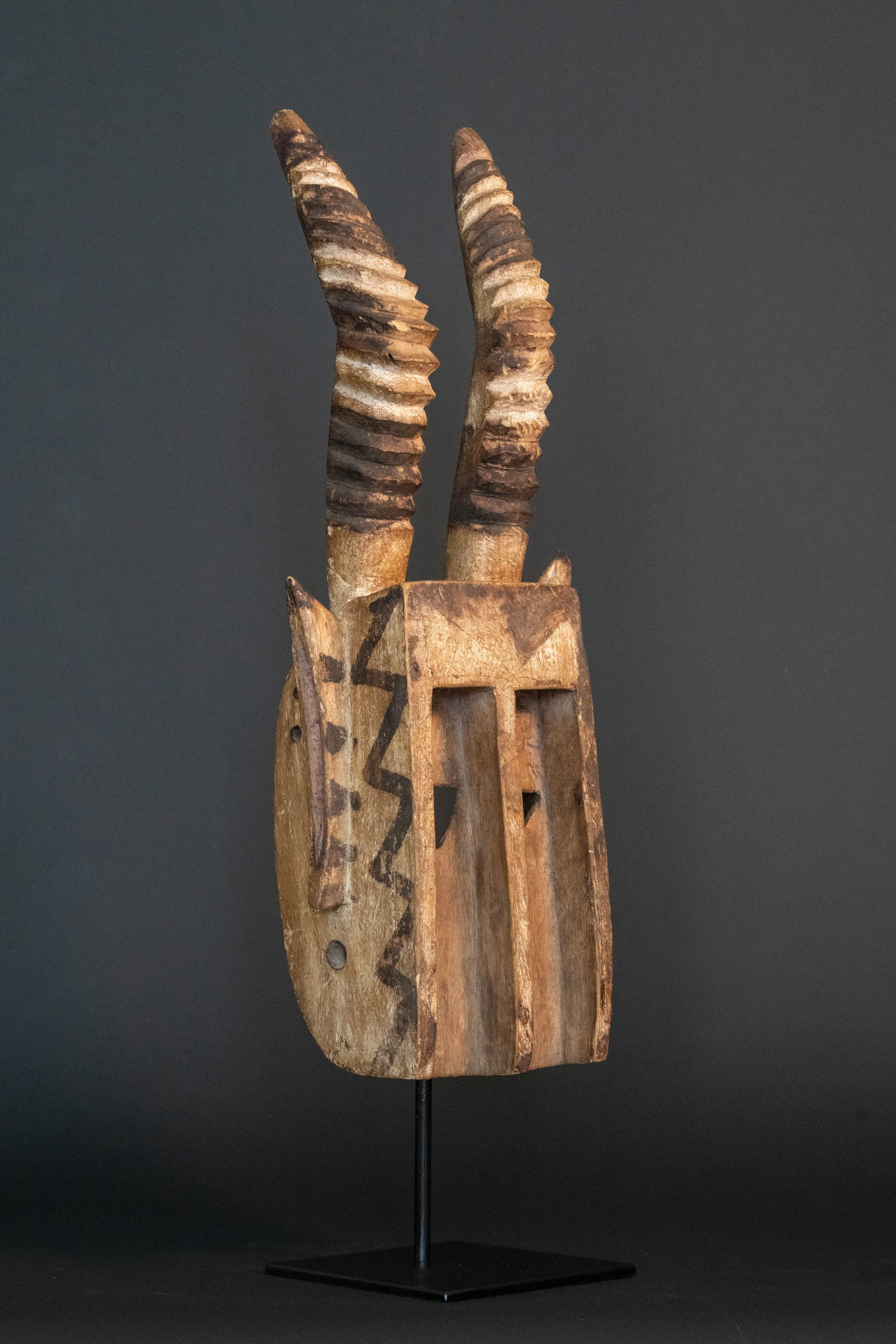 Image 6 of 7
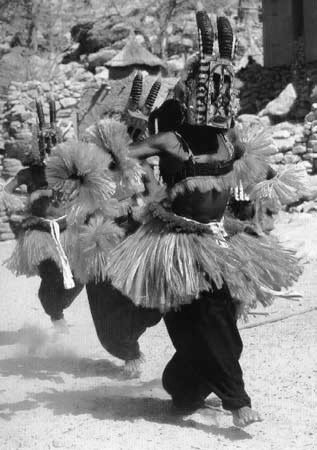 Image 7 of 7