 Image 1 of 3
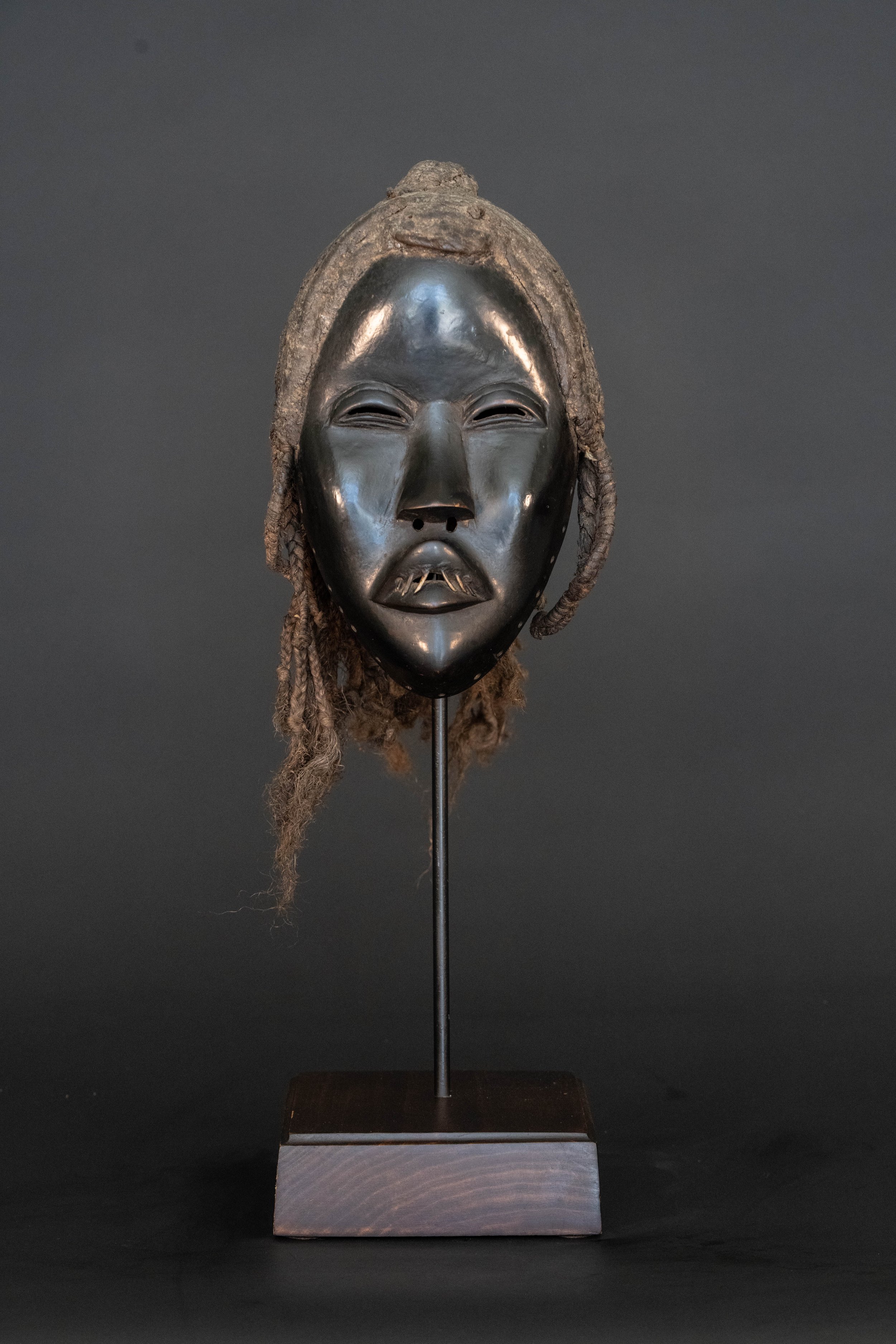 Image 2 of 3
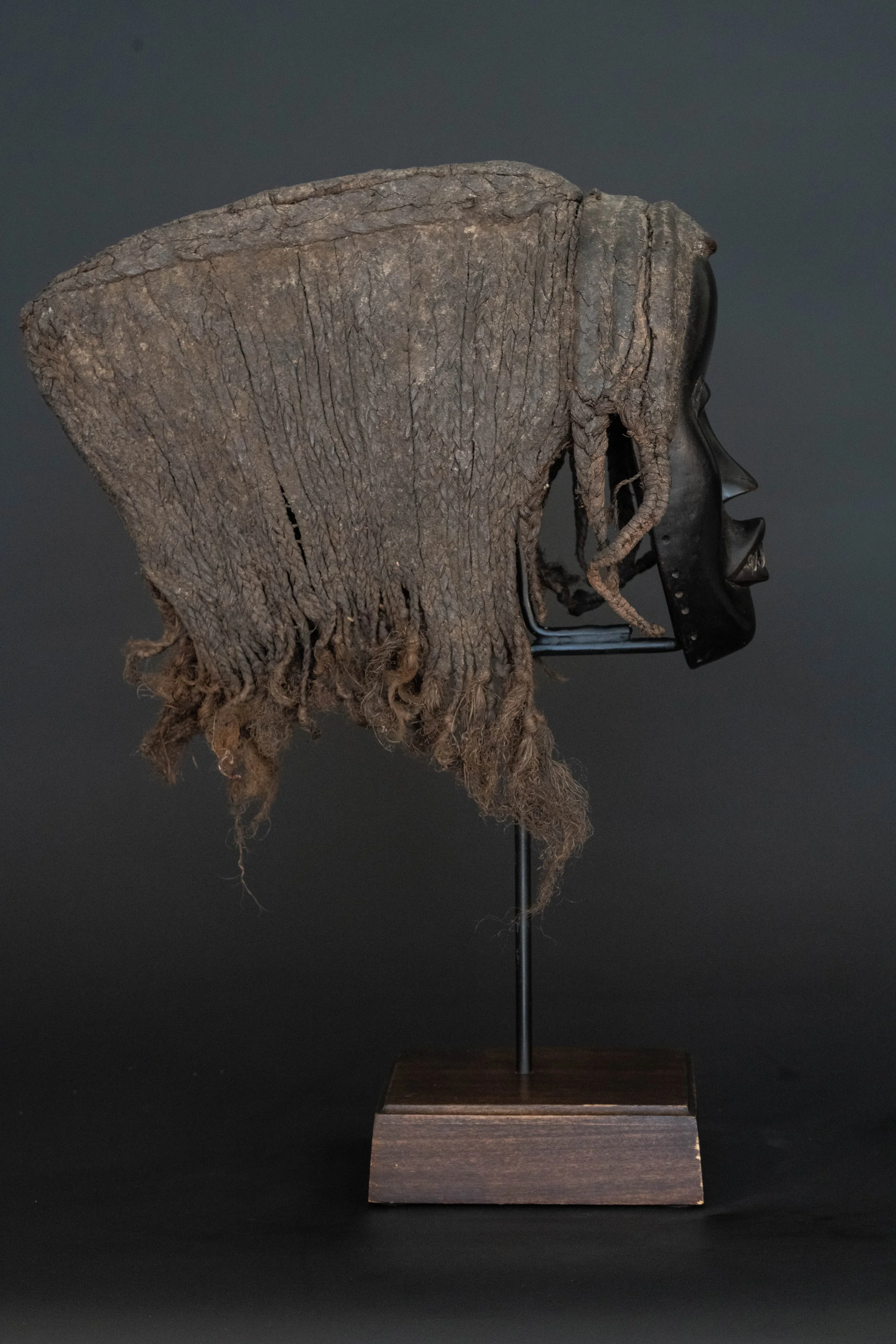 Image 3 of 3
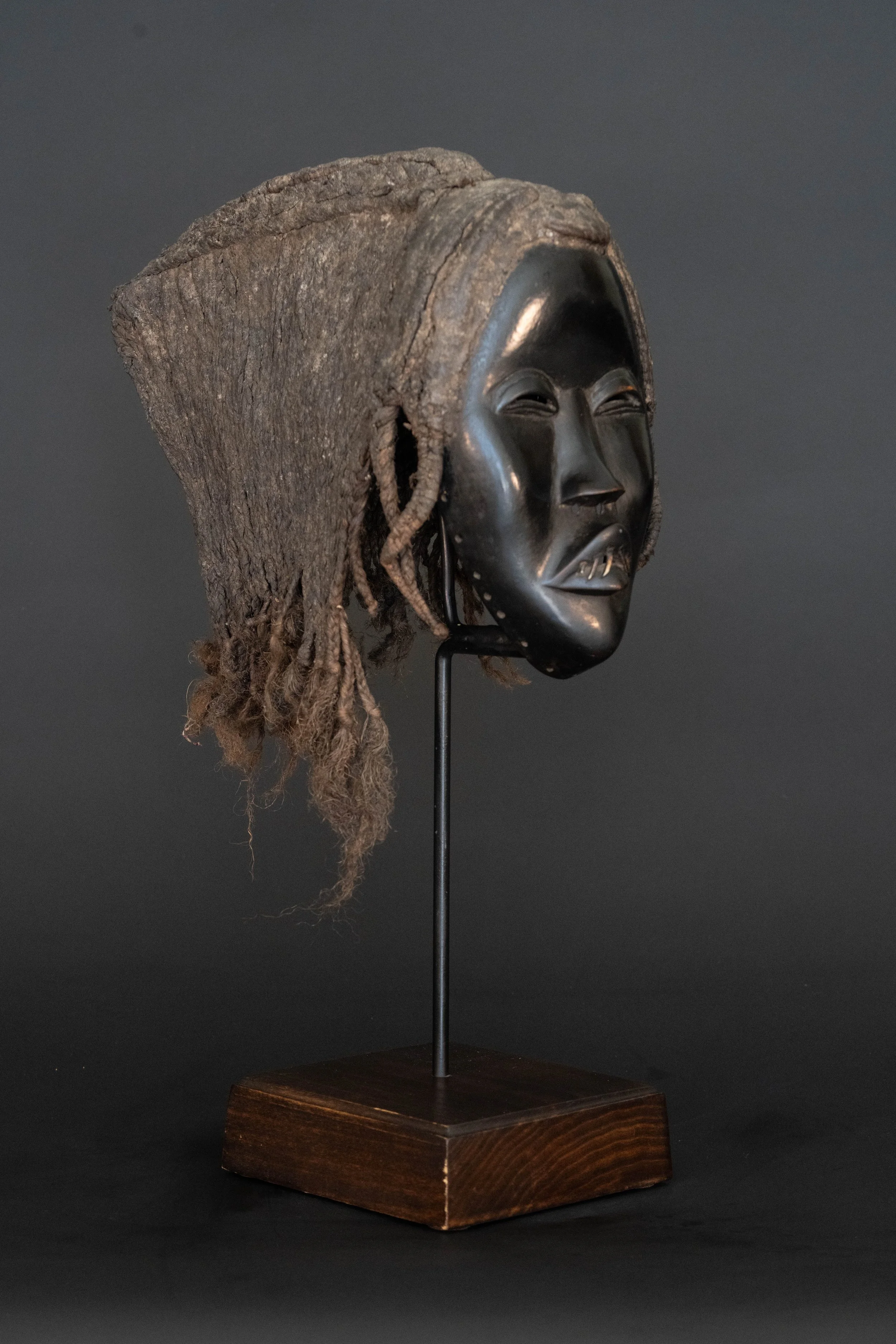
This is not simply a mask—it is the preserved face of a living performance tradition from the Dan people of Liberia and Côte d’Ivoire. When worn in ceremony, masks like this did not represent decoration; they became mysterious forest spirits. The dancer disappeared. The community saw the presence of something moral, watchful, and powerful. This particular mask represents a gentle spirit (Deangle; also called Gle) representing an idealized feminine moral character.
The face is the first sign that this is an authentic, early example. The features are refined and disciplined: narrow, meditative eyes; a long, elegant nose; a small, tightly formed mouth with delicately placed teeth (bone). Nothing is exaggerated. Nothing is careless. The sculptor understood restraint—an essential Dan aesthetic principle tied to dignity, control, and inner strength. The smooth, lustrous black surface is not paint; it is a deep patina built over time through handling, oiling, and ritual use. The glow you see is earned.
But what truly sets this mask apart—and what makes it increasingly rare on today’s market—is the survival of its original headdress. The thick, sculptural mass of aged fiber cascading from the crown is not decorative trimming added later for effect. It is the costume element that transformed this carved face into a full spiritual presence. The fibers show compacted wear, oxidation, and natural aging that only time produces. Most masks have lost these elements. Here, the ensemble remains dramatically intact.
In performance, this would have moved as a single entity: the calm face floating forward while the fiber headdress swayed and expanded the spirit’s silhouette. The small perforations around the edge confirm it was securely tied into a complete masquerade costume. This was not made for a wall—it was made for ceremonies.
Based on carving quality, patina development, and the condition of the fiber, this example likely dates from the late 19th to early 20th century (circa 1890–1930), before large-scale tourist production altered many traditional forms. It carries the quiet authority of something created for use, not for sale.
For collectors new to African art, this is the kind of object that explains why these works captivate museums and serious collectors worldwide. It is visually striking, yes—but it also holds history, belief, and movement within its form. For seasoned collectors, the intact headdress alone makes this an uncommon opportunity.
Most Dan masks survive as faces. This one survives as a presence. Custom stand included.
For context, a closely related Dan Deangle (Gle) Mask is on view online and in person in the Metropolitan Museum of Art’s collection in Gallery 341. https://www.metmuseum.org/art/collection/search/844652
Condition: Good.
Dimensions: Overall with stand 20 × 6 × 15 inches; Mask only 12 x 6 × 15 inches (H x W x D)
Detailed Authentication Report available.
This is not simply a mask—it is the preserved face of a living performance tradition from the Dan people of Liberia and Côte d’Ivoire. When worn in ceremony, masks like this did not represent decoration; they became mysterious forest spirits. The dancer disappeared. The community saw the presence of something moral, watchful, and powerful. This particular mask represents a gentle spirit (Deangle; also called Gle) representing an idealized feminine moral character.
The face is the first sign that this is an authentic, early example. The features are refined and disciplined: narrow, meditative eyes; a long, elegant nose; a small, tightly formed mouth with delicately placed teeth (bone). Nothing is exaggerated. Nothing is careless. The sculptor understood restraint—an essential Dan aesthetic principle tied to dignity, control, and inner strength. The smooth, lustrous black surface is not paint; it is a deep patina built over time through handling, oiling, and ritual use. The glow you see is earned.
But what truly sets this mask apart—and what makes it increasingly rare on today’s market—is the survival of its original headdress. The thick, sculptural mass of aged fiber cascading from the crown is not decorative trimming added later for effect. It is the costume element that transformed this carved face into a full spiritual presence. The fibers show compacted wear, oxidation, and natural aging that only time produces. Most masks have lost these elements. Here, the ensemble remains dramatically intact.
In performance, this would have moved as a single entity: the calm face floating forward while the fiber headdress swayed and expanded the spirit’s silhouette. The small perforations around the edge confirm it was securely tied into a complete masquerade costume. This was not made for a wall—it was made for ceremonies.
Based on carving quality, patina development, and the condition of the fiber, this example likely dates from the late 19th to early 20th century (circa 1890–1930), before large-scale tourist production altered many traditional forms. It carries the quiet authority of something created for use, not for sale.
For collectors new to African art, this is the kind of object that explains why these works captivate museums and serious collectors worldwide. It is visually striking, yes—but it also holds history, belief, and movement within its form. For seasoned collectors, the intact headdress alone makes this an uncommon opportunity.
Most Dan masks survive as faces. This one survives as a presence. Custom stand included.
For context, a closely related Dan Deangle (Gle) Mask is on view online and in person in the Metropolitan Museum of Art’s collection in Gallery 341. https://www.metmuseum.org/art/collection/search/844652
Condition: Good.
Dimensions: Overall with stand 20 × 6 × 15 inches; Mask only 12 x 6 × 15 inches (H x W x D)
Detailed Authentication Report available.