 Image 1 of 4
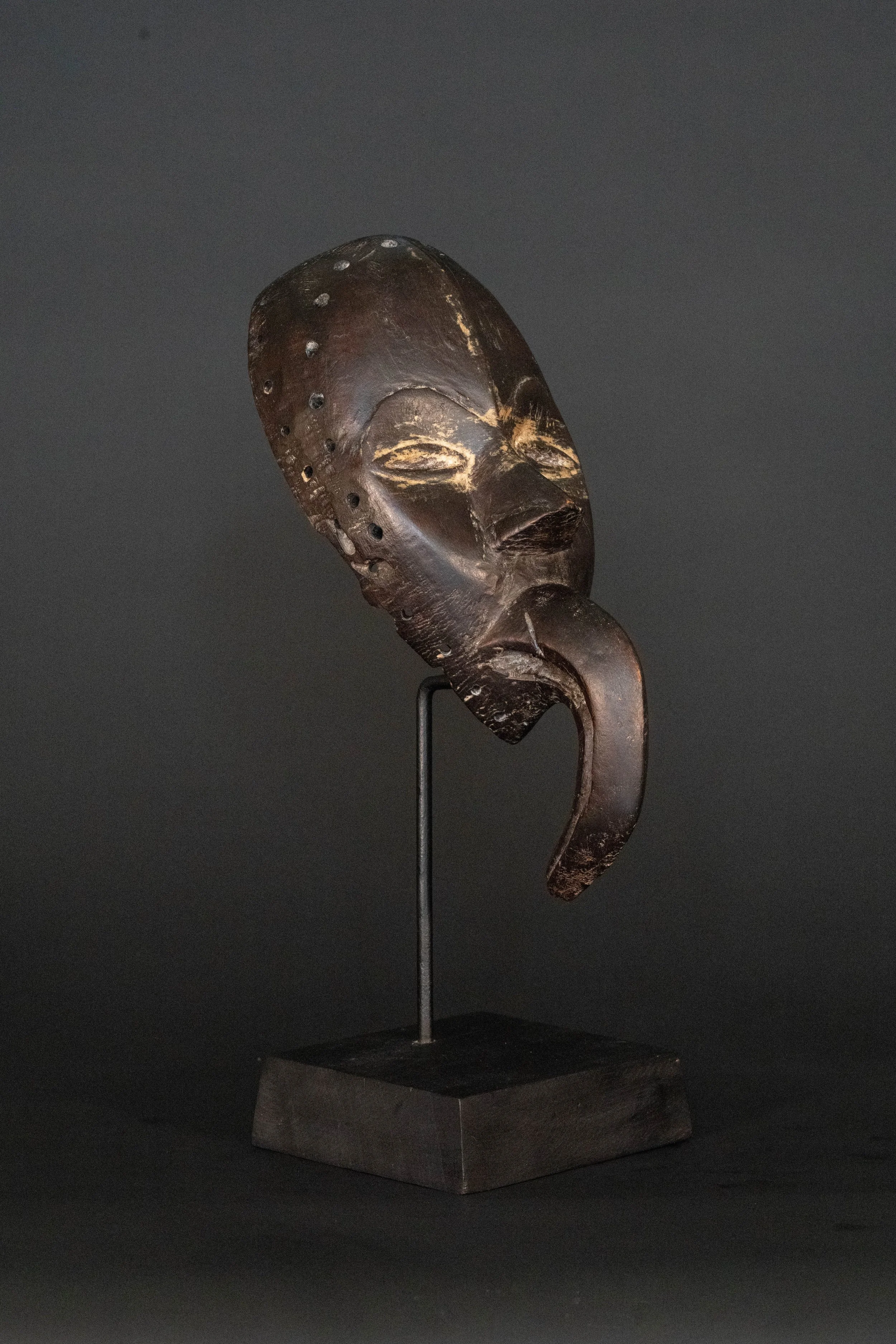 Image 2 of 4
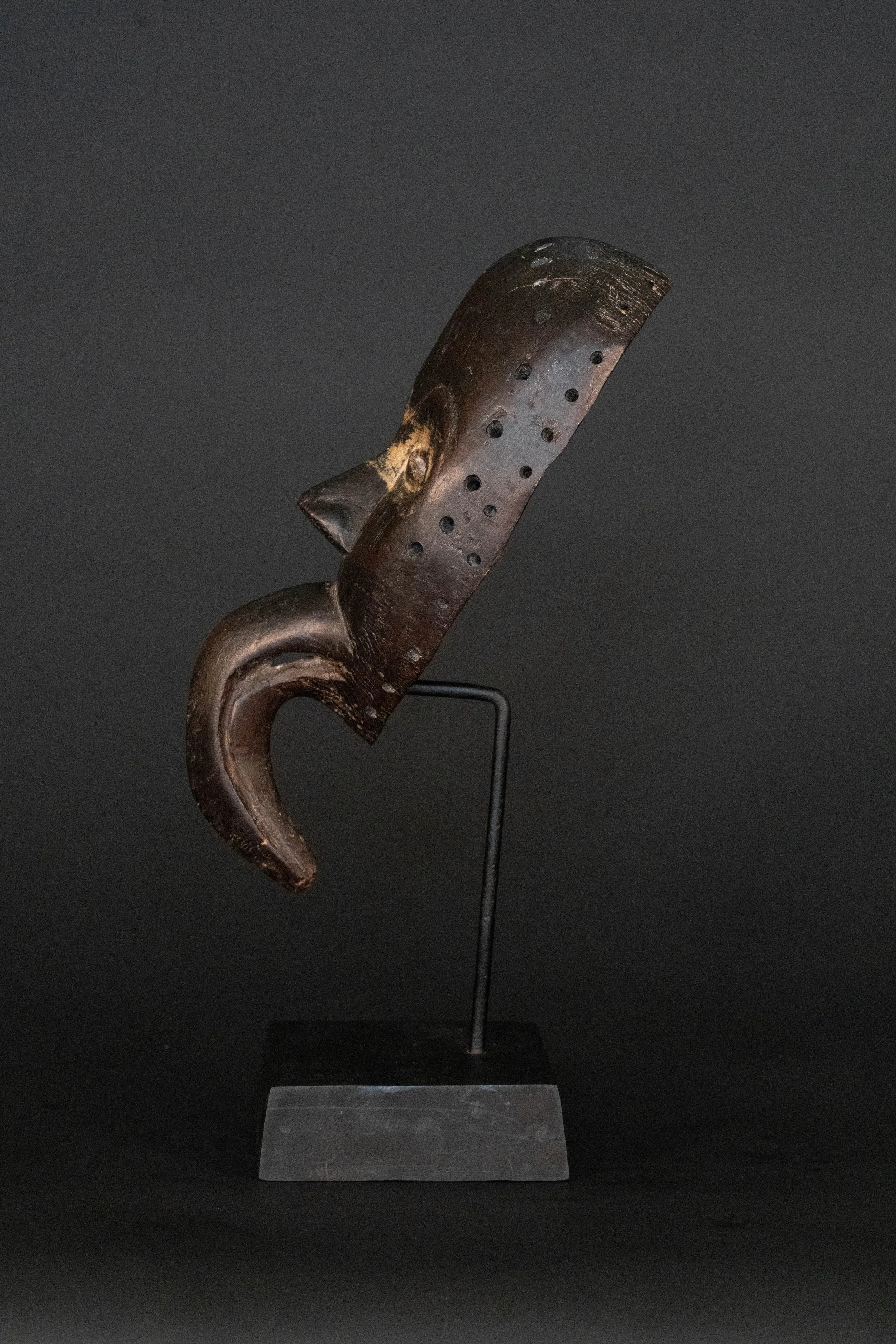 Image 3 of 4
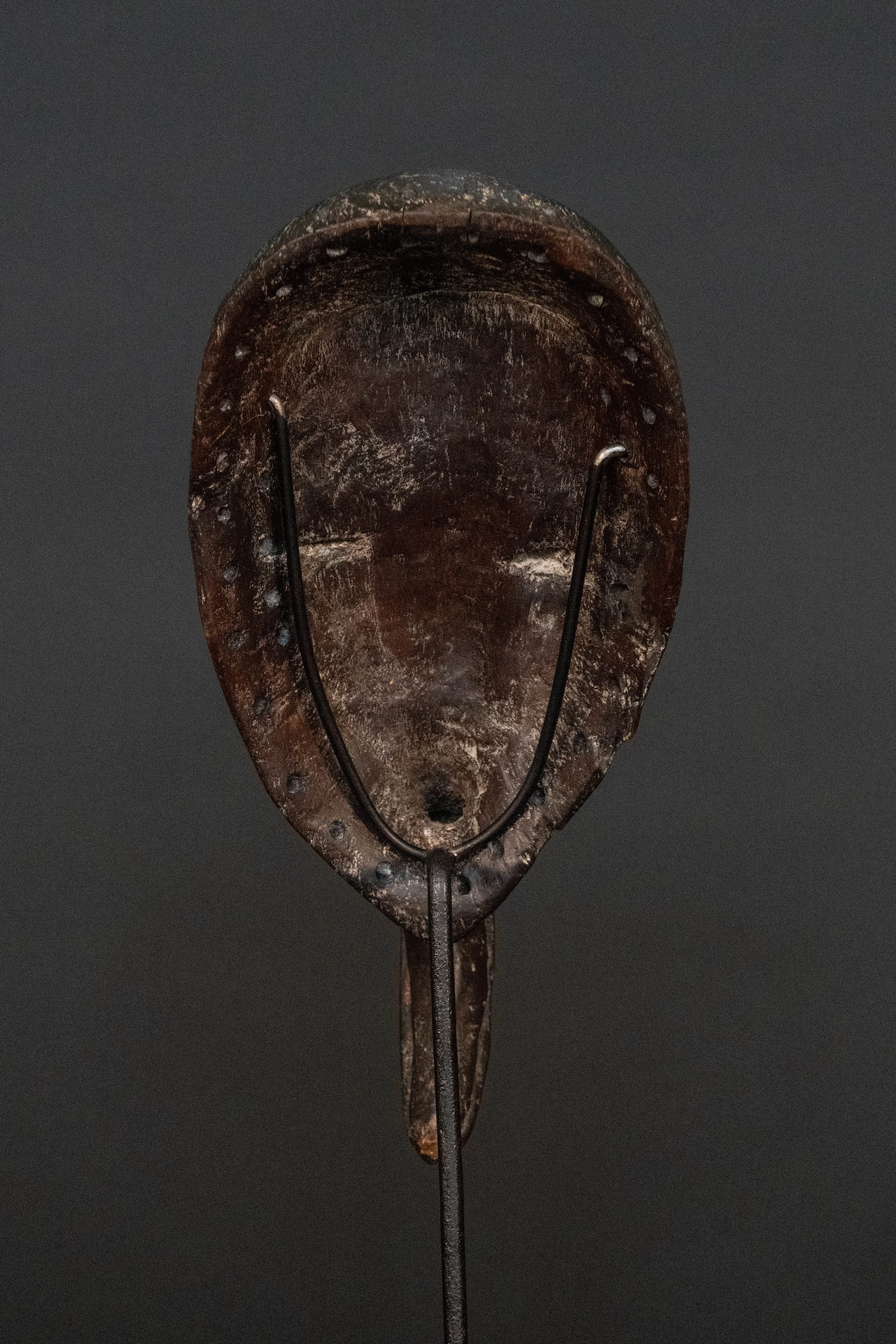 Image 4 of 4
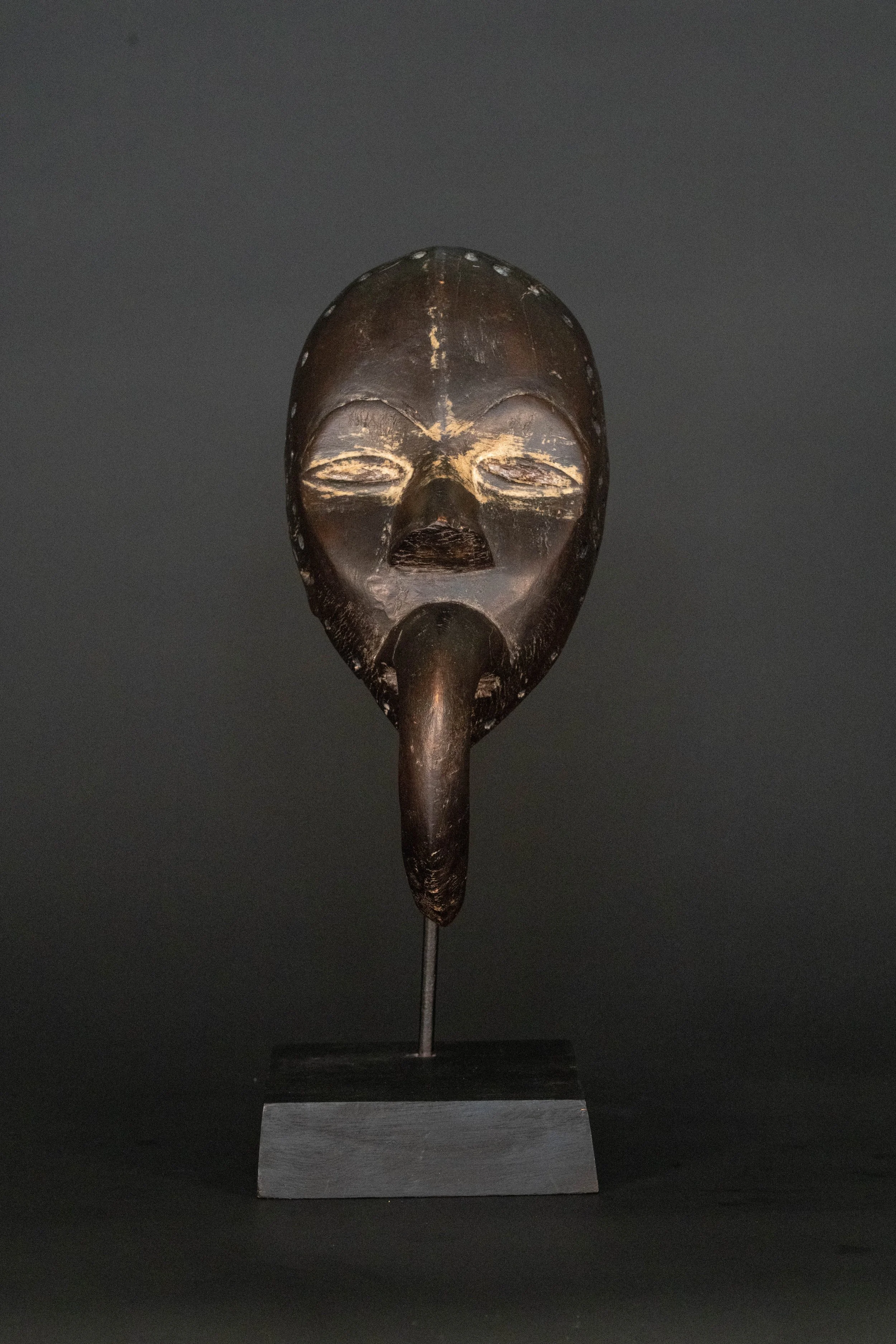
At first glance, this mask feels almost otherworldly. The long, downward-curving beak, the narrow watchful eyes, and the smooth, darkened surface give it a presence that is both elegant and commanding. This is not simply a carved face—it is the embodiment of a spirit.
Among the Dan people of Liberia and Côte d’Ivoire, masks are not decorative objects. They are living forces, worn by initiated performers who become the spirit itself during ceremonies. This particular type—often called Ge Gon, or “bird spirit”—combines human and animal features to express power, authority, and moral strength. The beak is not meant to depict a bird literally. It symbolizes sharp perception, control, and the ability to “speak” with spiritual authority.
What makes this example especially compelling is its restraint. The eyes are narrow and inward-looking, once highlighted with white kaolin pigment to heighten their intensity. The face is compact and beautifully balanced. The beak curves downward in a single confident sweep, carved from the same block of wood—an indication of thoughtful, skilled workmanship rather than later decorative production.
The surface has developed a deep, rich patina from years of handling. Around the rim are small perforations where raffia or cloth once attached, allowing the spirit to fully conceal the wearer. The interior shows hand-adzed tool marks and honest wear—details that support age and ritual use. Nothing about this mask feels manufactured for tourists; it carries the quiet authority of an object that once mattered deeply within its community.
Museums such as The Metropolitan Museum of Art and the Brooklyn Museum hold comparable Dan bird-beak masks, and this example stands comfortably within that tradition. Its severity and sculptural simplicity suggest an early date, likely around 1890–1930, before mid-20th-century variations became more theatrical or embellished.
The condition is very strong for its age. The beak—often the first part to break on masks of this type—remains intact. The surface wear is consistent and natural. The mask retains its dignity and structural integrity.
For those new to African art, it is worth understanding that works like this influenced some of the most important modern artists of the 20th century. The bold abstraction, the reduction of features, the emotional force—these qualities inspired European modernism. Yet long before museums displayed them, these masks carried social and spiritual meaning within their own cultures.
This mask offers both worlds: a striking sculptural form that holds its own in any interior, and a genuine cultural object with history, presence, and soul. It is a piece that commands attention quietly—an object that rewards close looking and continues to reveal itself over time. Custom stand included.
Condition: Good.
Dimensions: Overall with stand 21 × 7 × 5 inches; Mask only 14 × 7 × 3.5 inches (H x W x D)
At first glance, this mask feels almost otherworldly. The long, downward-curving beak, the narrow watchful eyes, and the smooth, darkened surface give it a presence that is both elegant and commanding. This is not simply a carved face—it is the embodiment of a spirit.
Among the Dan people of Liberia and Côte d’Ivoire, masks are not decorative objects. They are living forces, worn by initiated performers who become the spirit itself during ceremonies. This particular type—often called Ge Gon, or “bird spirit”—combines human and animal features to express power, authority, and moral strength. The beak is not meant to depict a bird literally. It symbolizes sharp perception, control, and the ability to “speak” with spiritual authority.
What makes this example especially compelling is its restraint. The eyes are narrow and inward-looking, once highlighted with white kaolin pigment to heighten their intensity. The face is compact and beautifully balanced. The beak curves downward in a single confident sweep, carved from the same block of wood—an indication of thoughtful, skilled workmanship rather than later decorative production.
The surface has developed a deep, rich patina from years of handling. Around the rim are small perforations where raffia or cloth once attached, allowing the spirit to fully conceal the wearer. The interior shows hand-adzed tool marks and honest wear—details that support age and ritual use. Nothing about this mask feels manufactured for tourists; it carries the quiet authority of an object that once mattered deeply within its community.
Museums such as The Metropolitan Museum of Art and the Brooklyn Museum hold comparable Dan bird-beak masks, and this example stands comfortably within that tradition. Its severity and sculptural simplicity suggest an early date, likely around 1890–1930, before mid-20th-century variations became more theatrical or embellished.
The condition is very strong for its age. The beak—often the first part to break on masks of this type—remains intact. The surface wear is consistent and natural. The mask retains its dignity and structural integrity.
For those new to African art, it is worth understanding that works like this influenced some of the most important modern artists of the 20th century. The bold abstraction, the reduction of features, the emotional force—these qualities inspired European modernism. Yet long before museums displayed them, these masks carried social and spiritual meaning within their own cultures.
This mask offers both worlds: a striking sculptural form that holds its own in any interior, and a genuine cultural object with history, presence, and soul. It is a piece that commands attention quietly—an object that rewards close looking and continues to reveal itself over time. Custom stand included.
Condition: Good.
Dimensions: Overall with stand 21 × 7 × 5 inches; Mask only 14 × 7 × 3.5 inches (H x W x D)