 Image 1 of 4
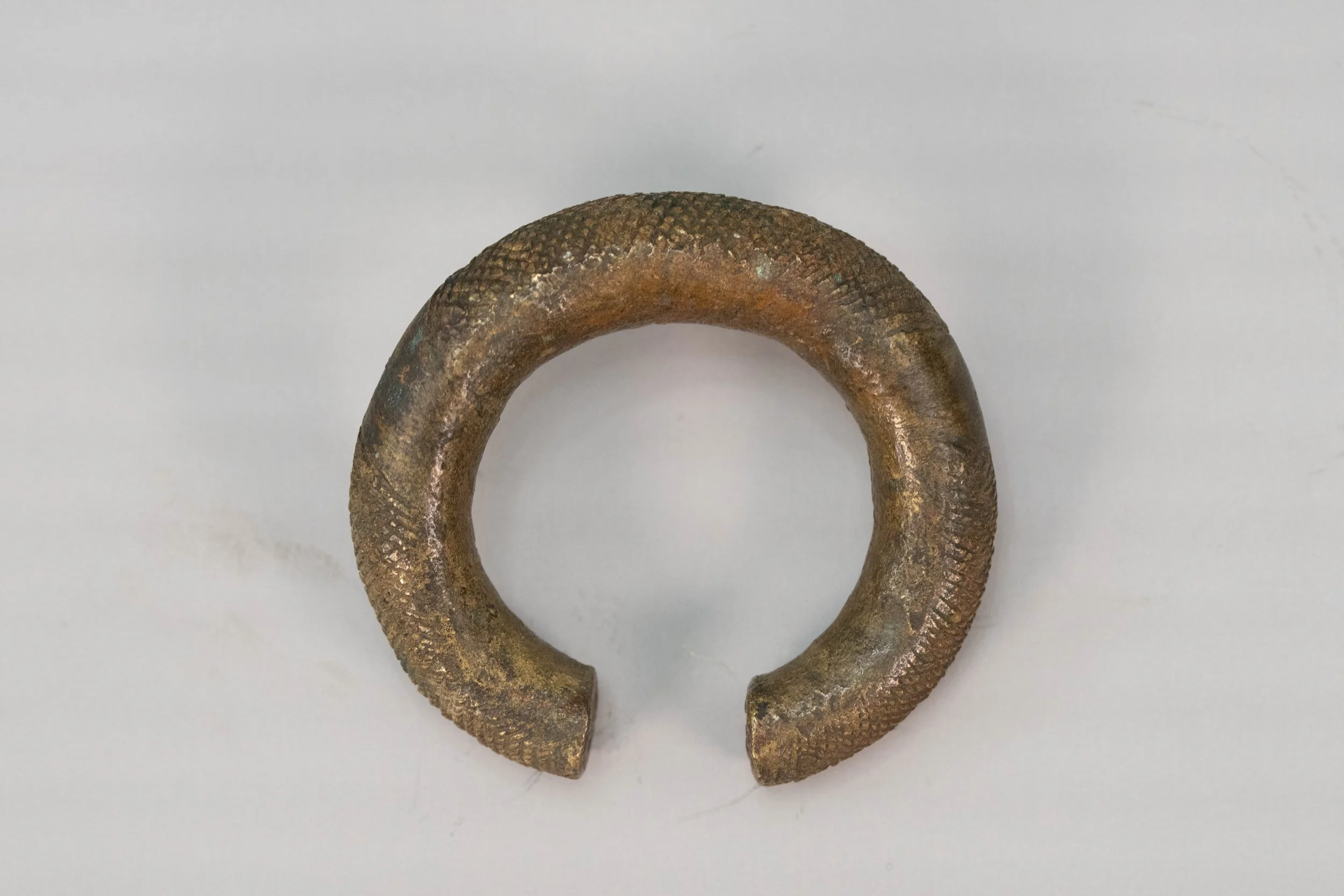 Image 2 of 4
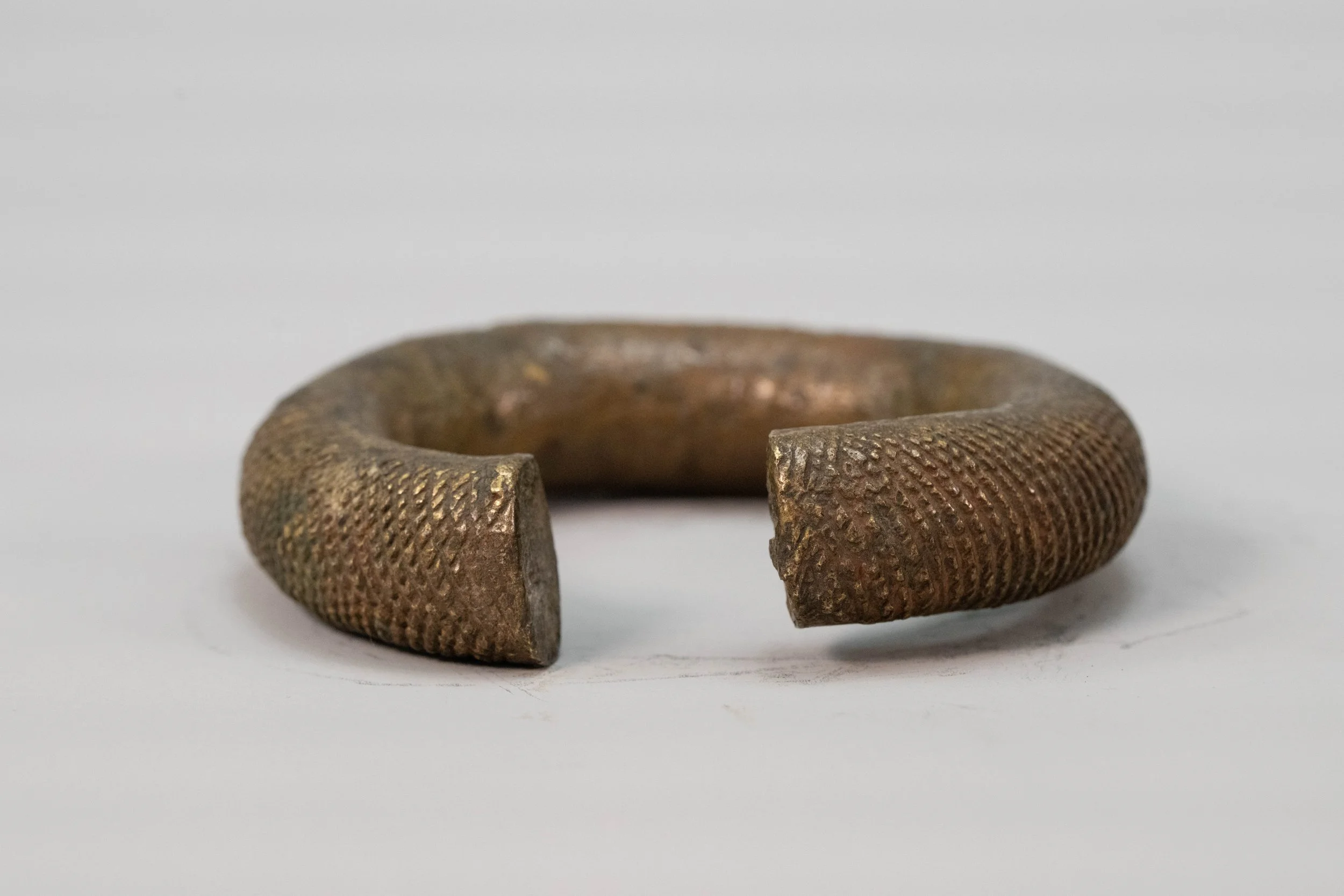 Image 3 of 4
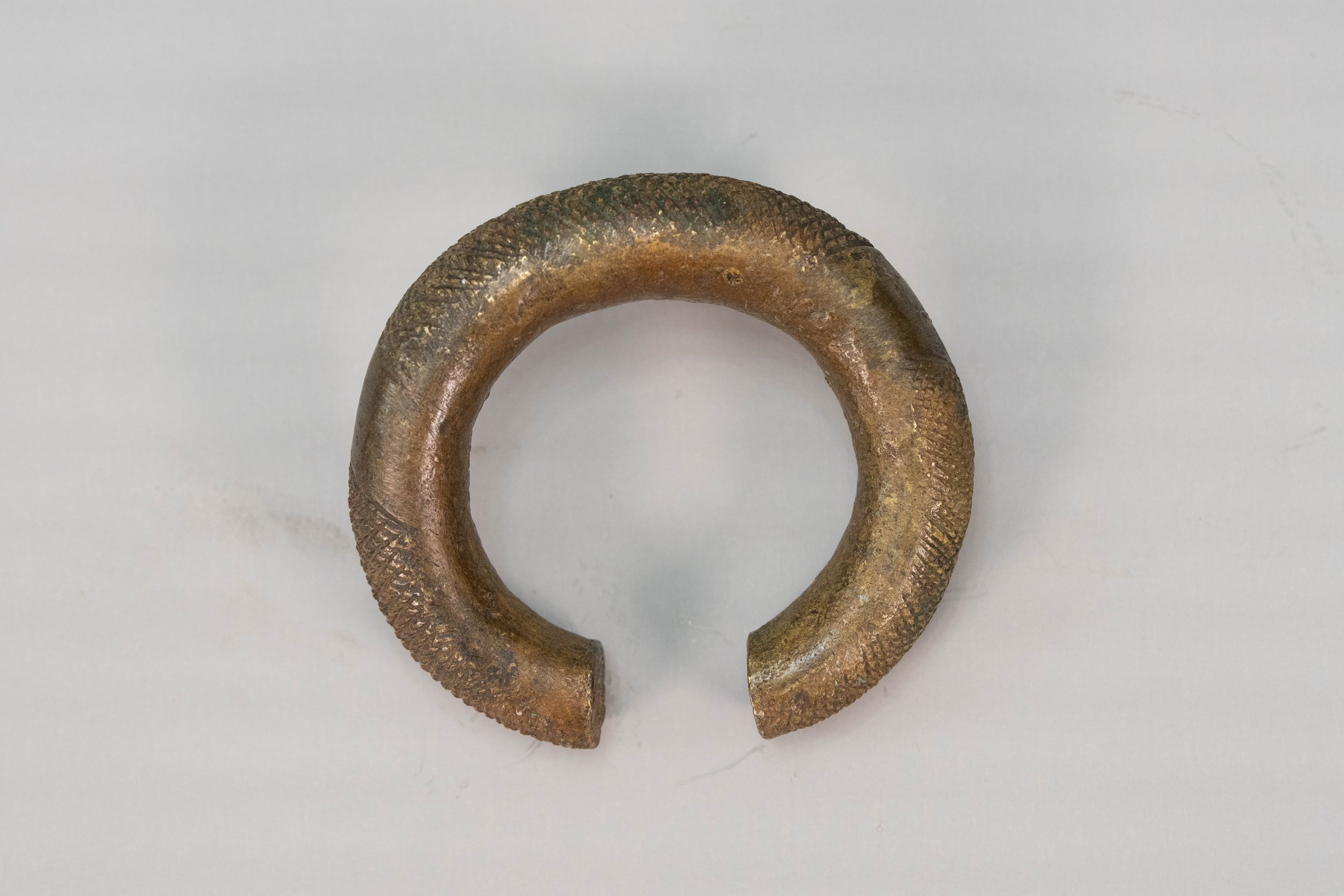 Image 4 of 4
Lower Niger / Niger Delta trade sphere (present-day southern Nigeria and coastal West Africa), Pre-20th century
Provenance: Ex-private collection of Al & Kay Bierling
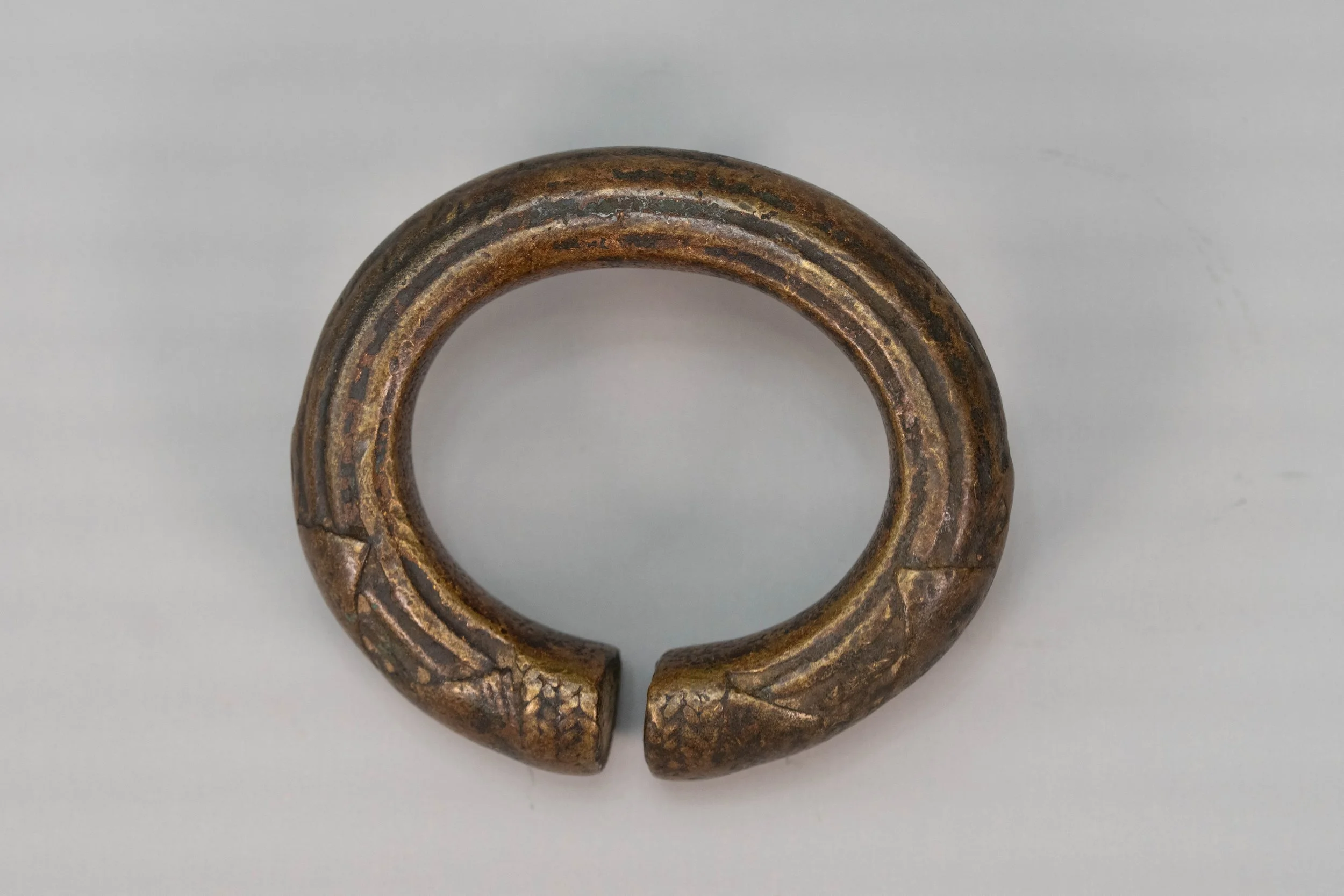
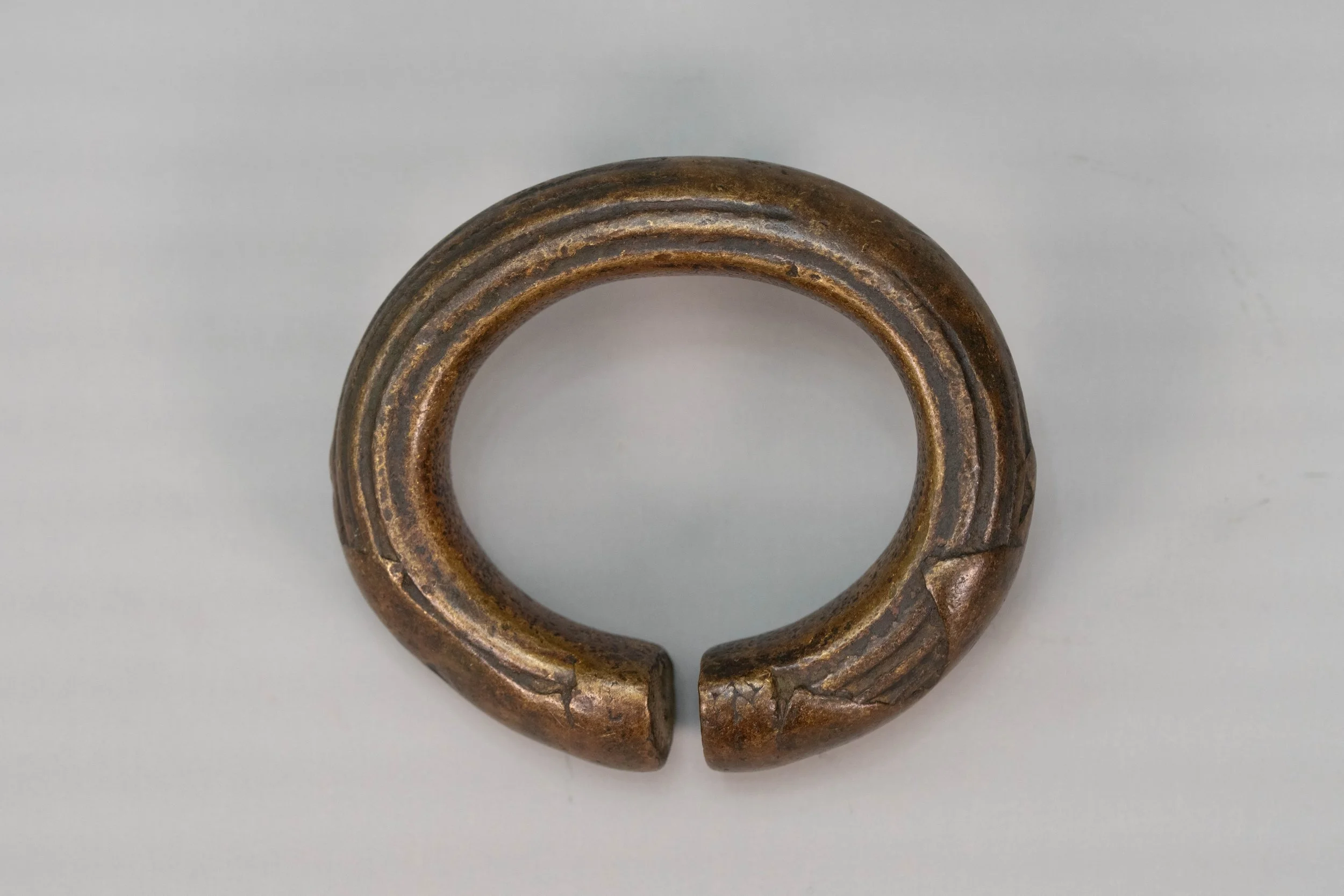
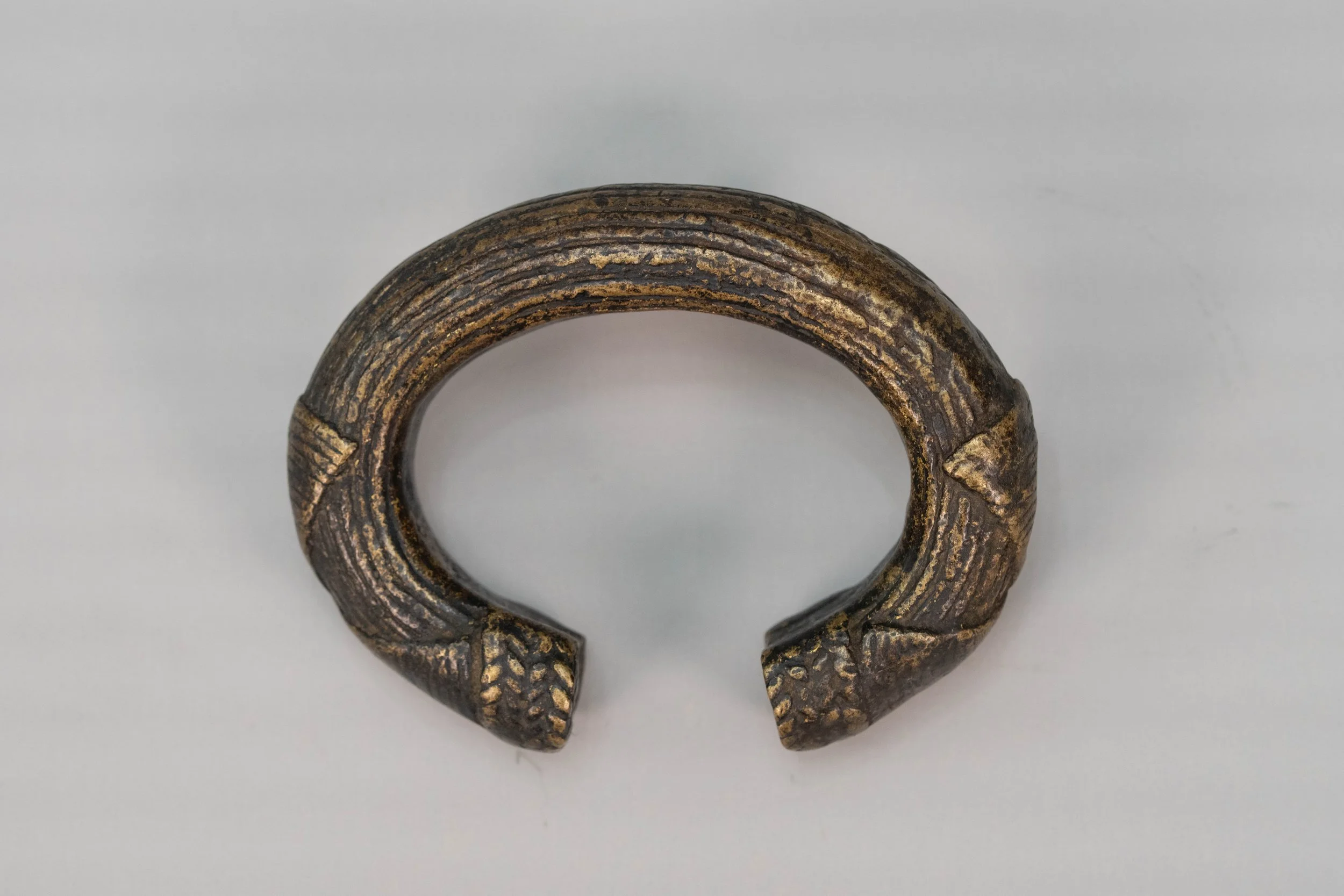
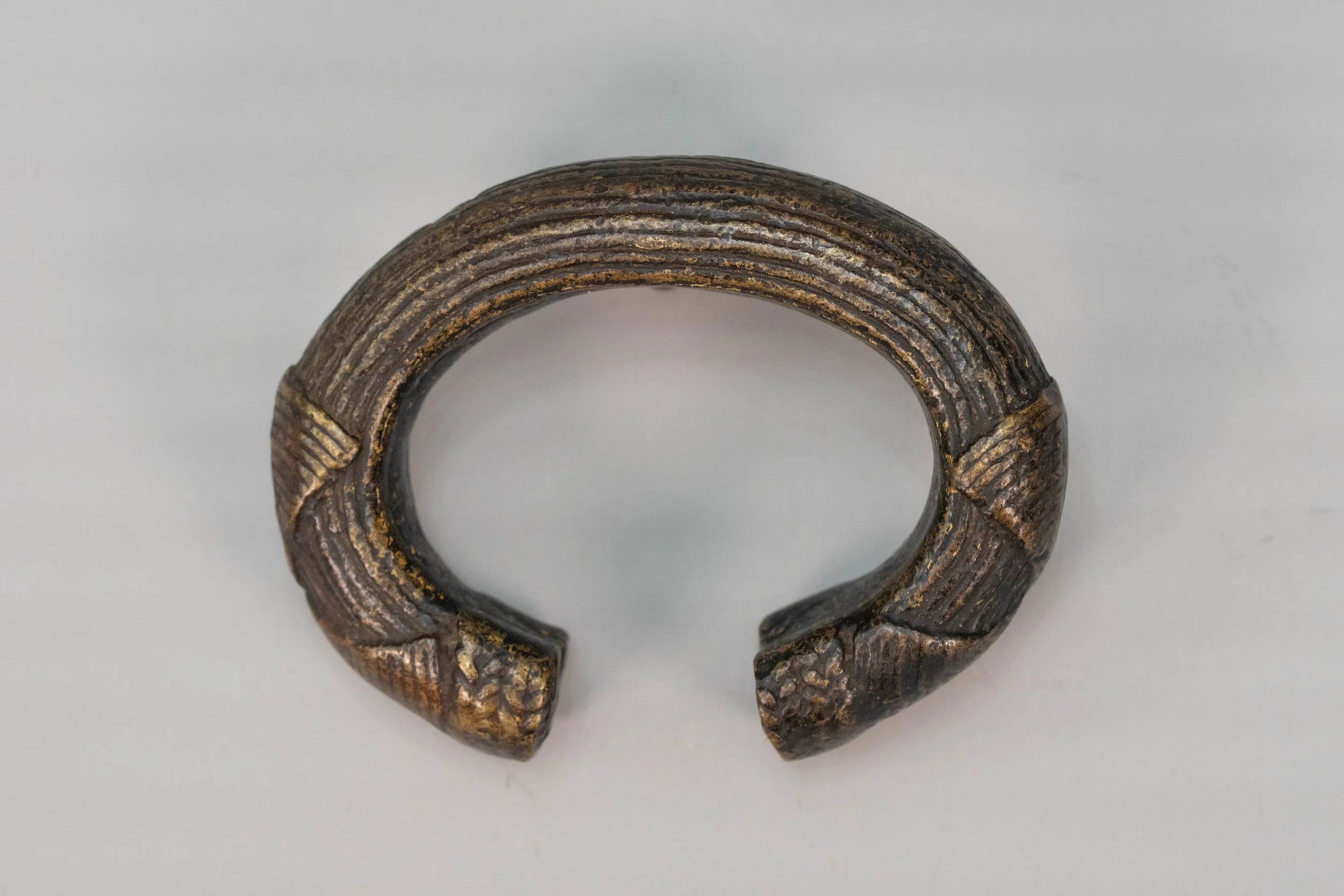
Weighing a commanding 329 grams, this antique manilla is a classic example of West African bracelet currency. Hand-cast in copper alloy, it served as a store of value that could be worn, stacked, traded, and passed down. For more than four centuries, manillas served as the principal metal money of the Bights of Benin and Biafra, used for trade goods, fines and fees, and, historically, in the Atlantic slave trade. Within communities, they also carried social power. They formed part of bride wealth and marriage negotiations, sealed alliances as gifts, served as public displays of a household’s standing, and were presented at funerals and title ceremonies where wealth was meant to be seen and witnessed.
Southern Nigeria produced heavy, individually cast bracelets of this kind, very probably from recycled European trade metal. Their weight and hand-finished surfaces set them apart from the light, uniform manillas mass-produced in Birmingham. Manilla weights fell steadily over the centuries, so substantial pieces like this one point to the trade’s earlier period, and some examples may date to the 18th century.
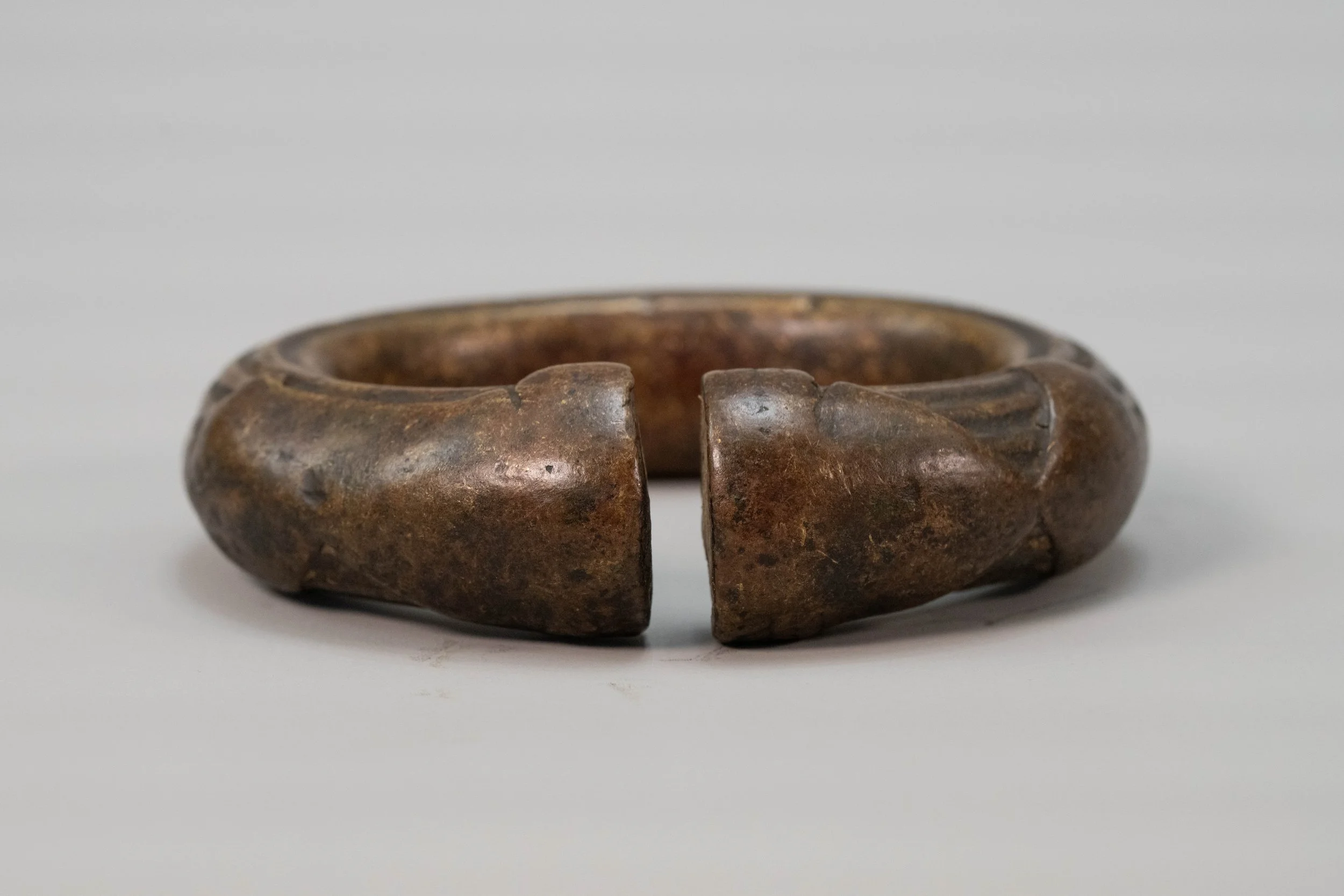
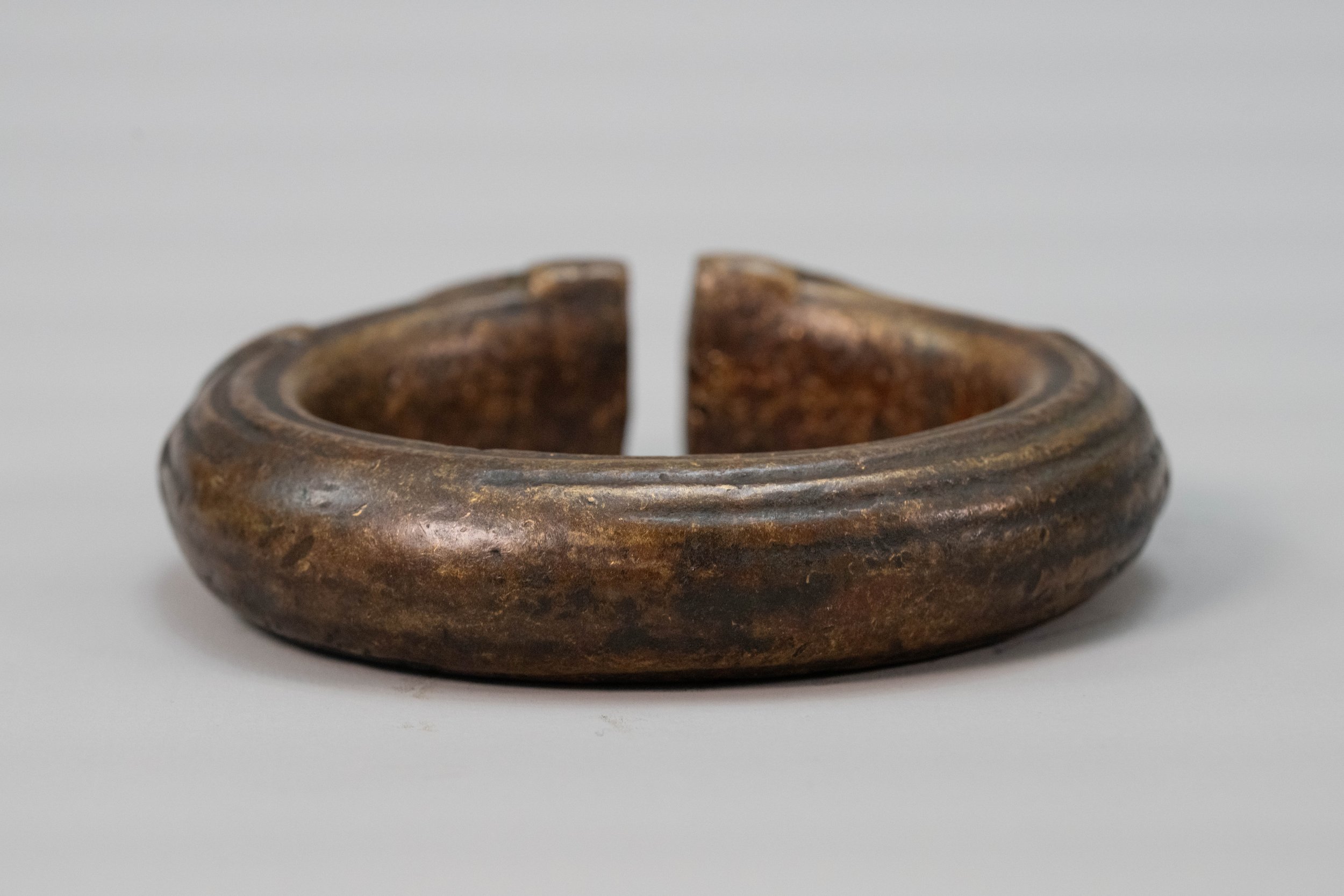
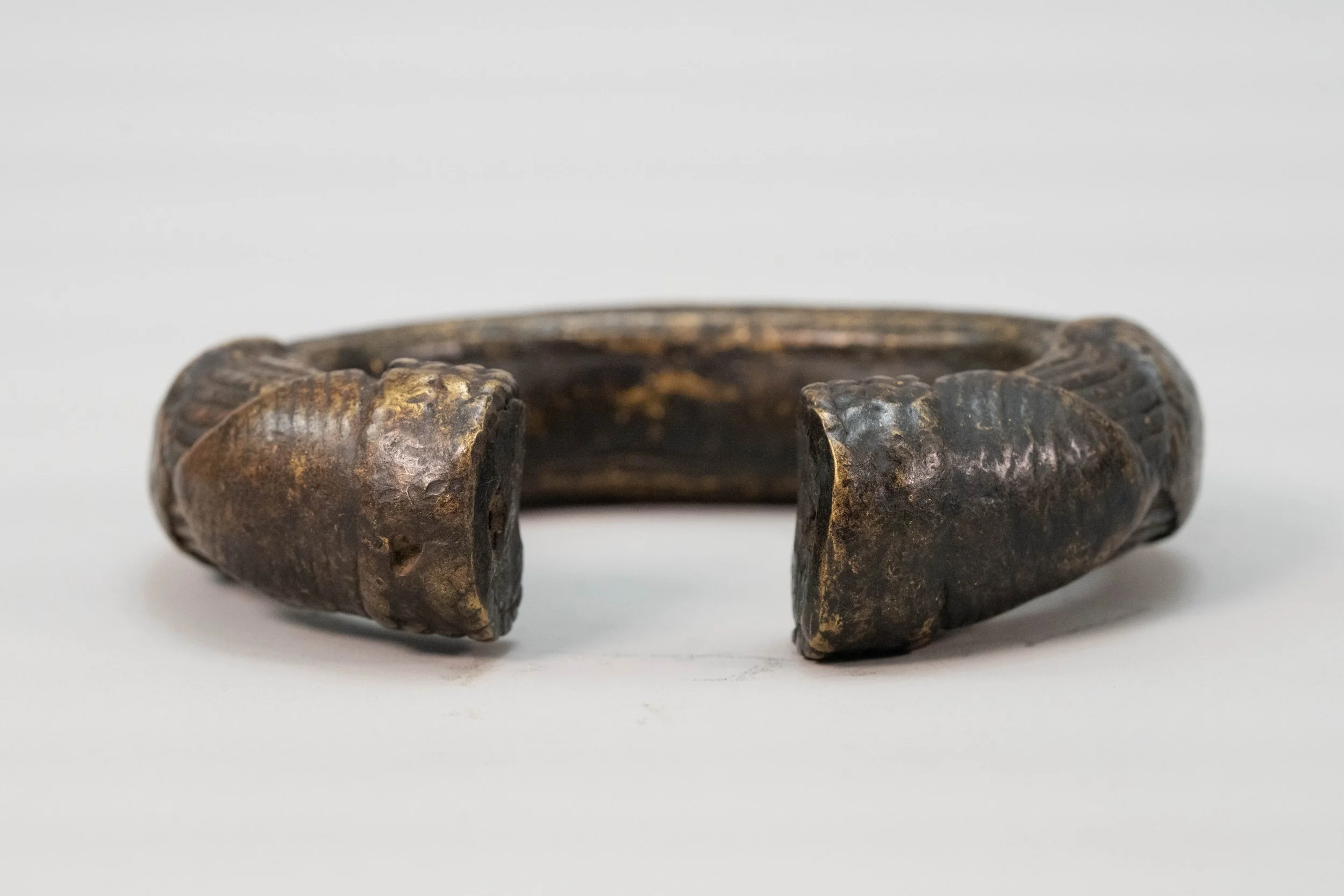
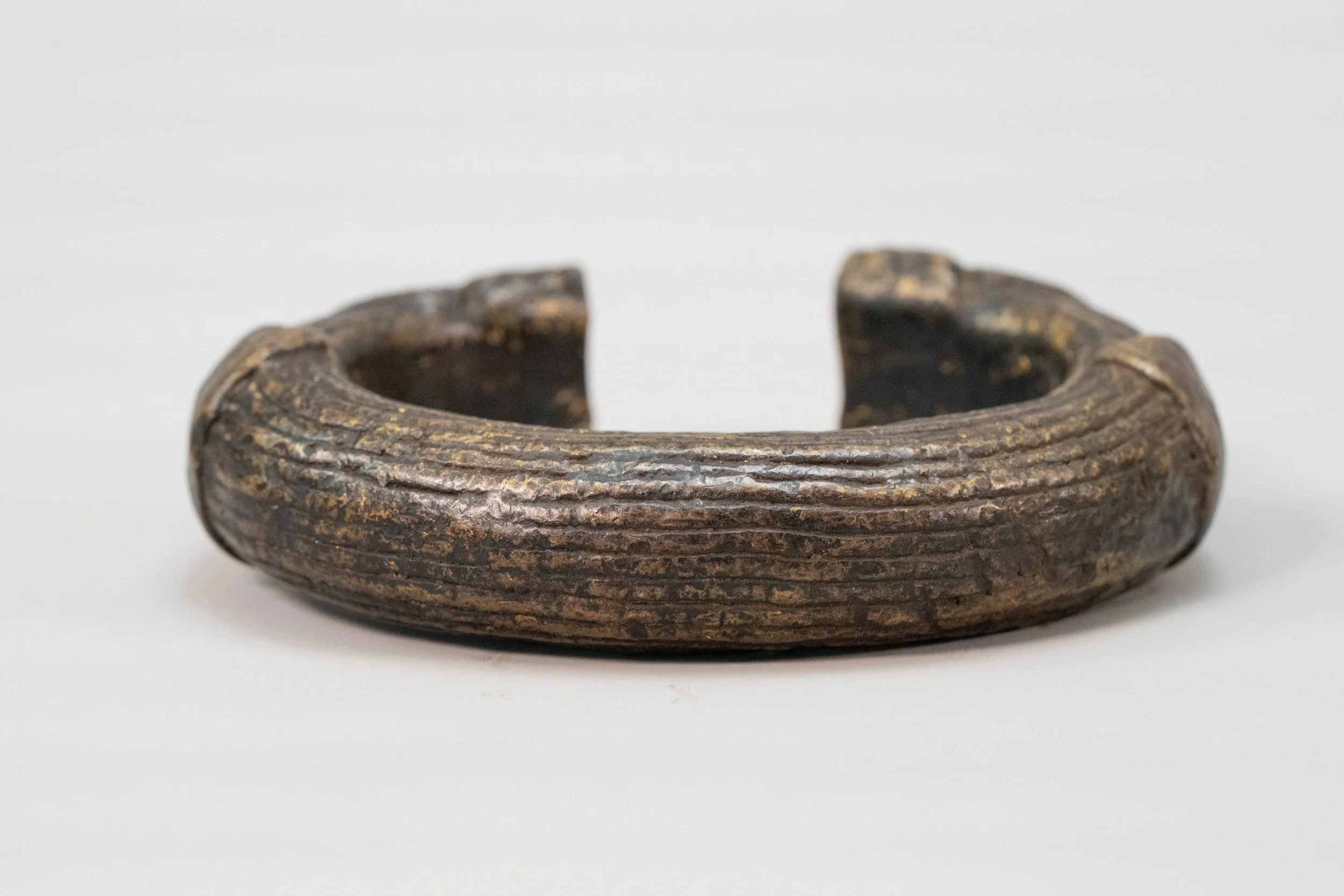
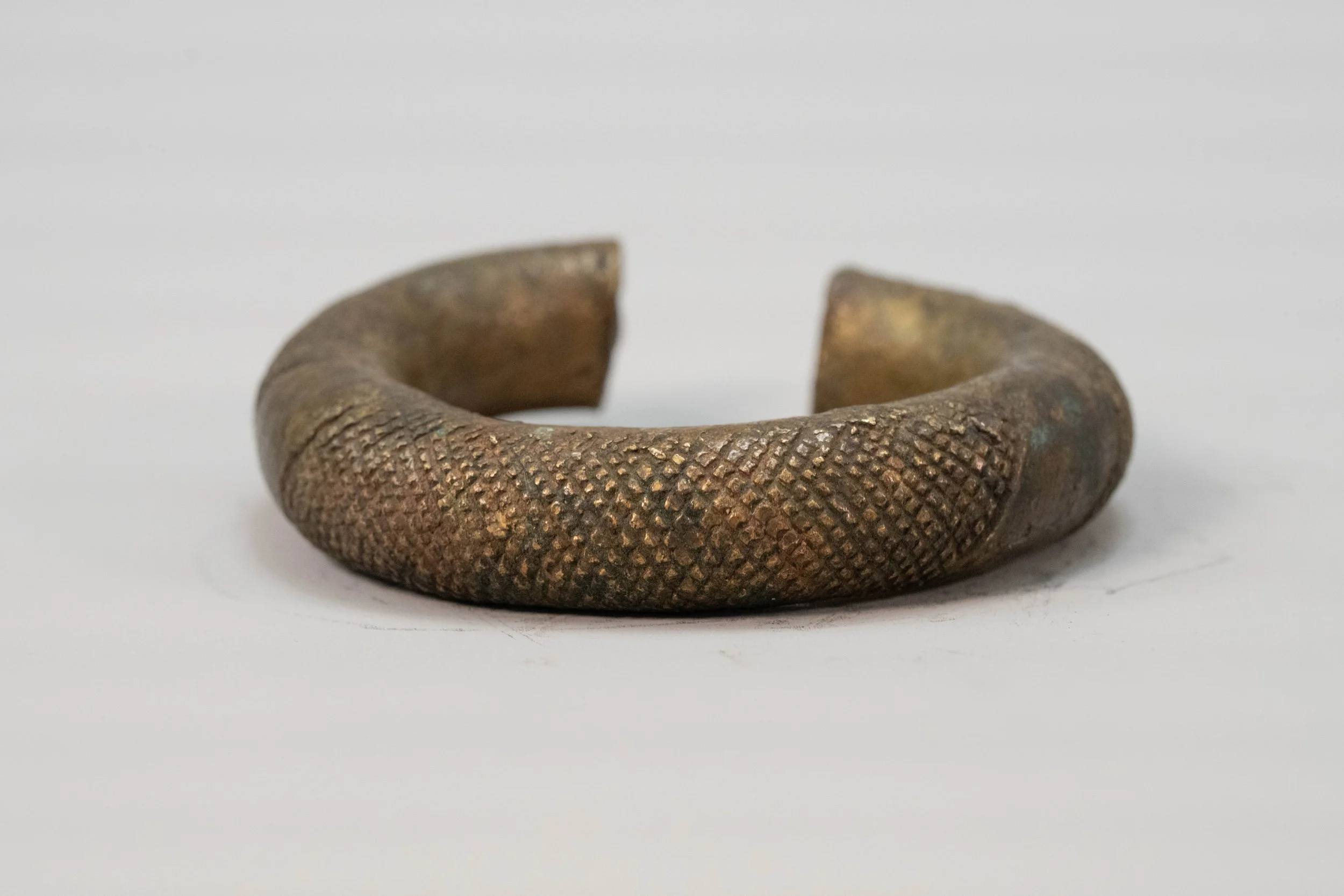
Cast in a hard, non-magnetic copper alloy (brass/bronze), the bracelet has the iconic open horseshoe profile of bracelet money, with a thick, rounded body that reads as dense and intentionally weighty. The surface is worked with closely pecked, stippled texturing, a granular hand-finished skin. The terminals are blunt and squared off, their faces and adjacent areas further roughened by deliberate tooling, reinforcing the impression of purpose-built trade metal meant to be handled, stacked, and counted as wealth.
The surface carries a convincing age signature: a warm, layered patina with subtle tonal shifts and small touches of green oxidation, consistent with long-term copper-alloy aging. In hand, it has the density and presence collectors prize; on display, it reads like modernist sculpture, minimal, powerful, and historically loaded.
Dimensions: 0.5 × 3.5 × 3 inches (H x W x D)