 Image 1 of 5
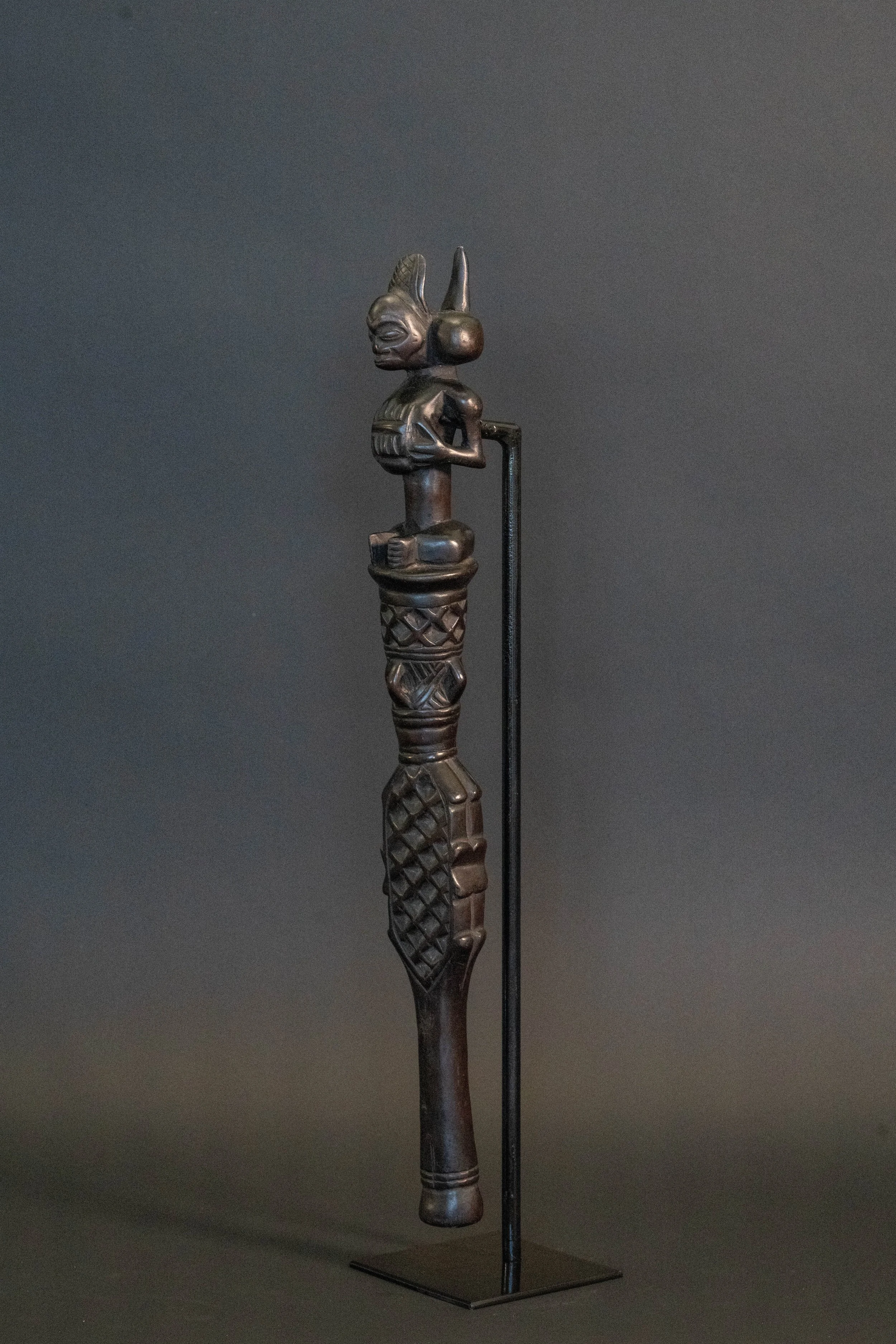 Image 2 of 5
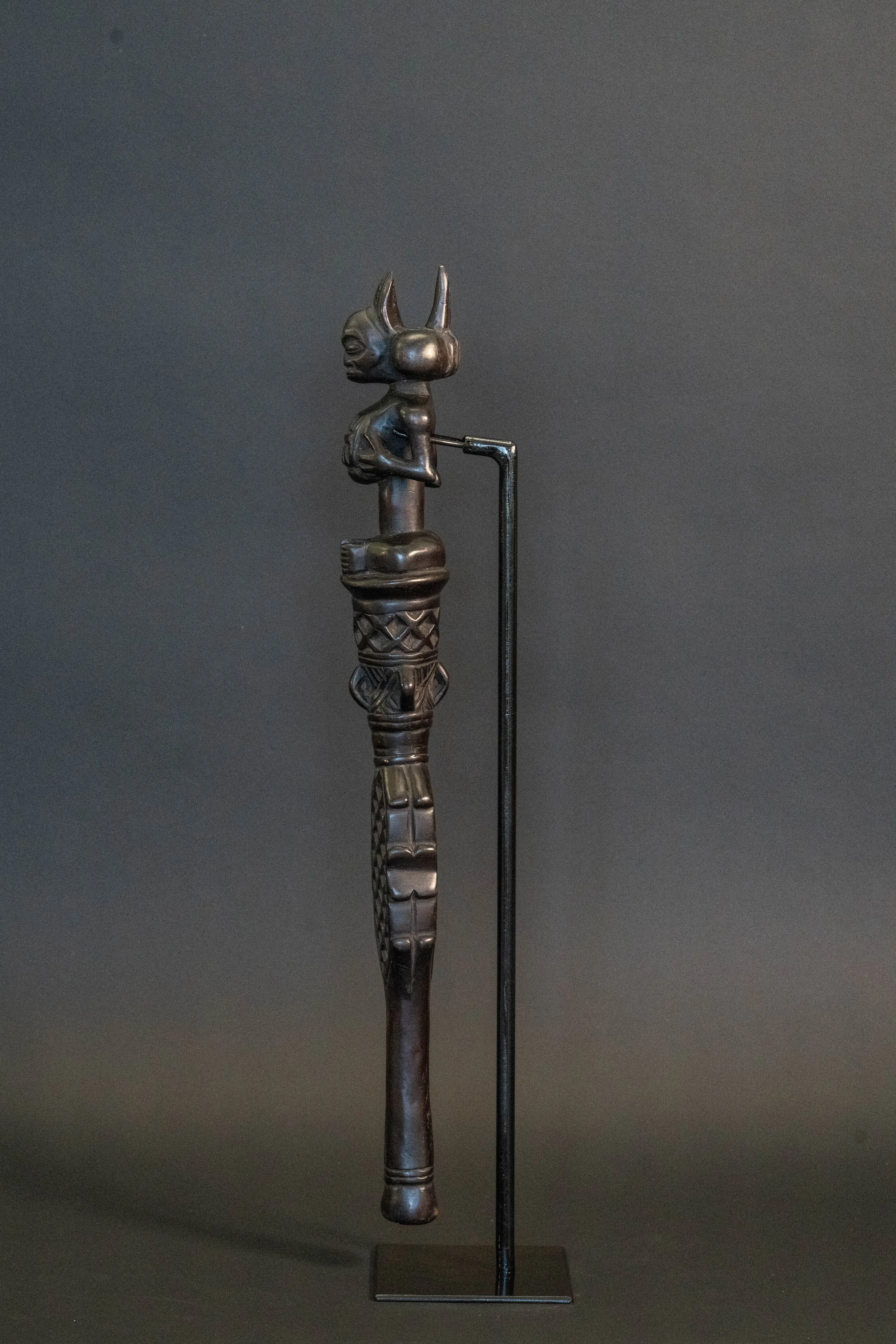 Image 3 of 5
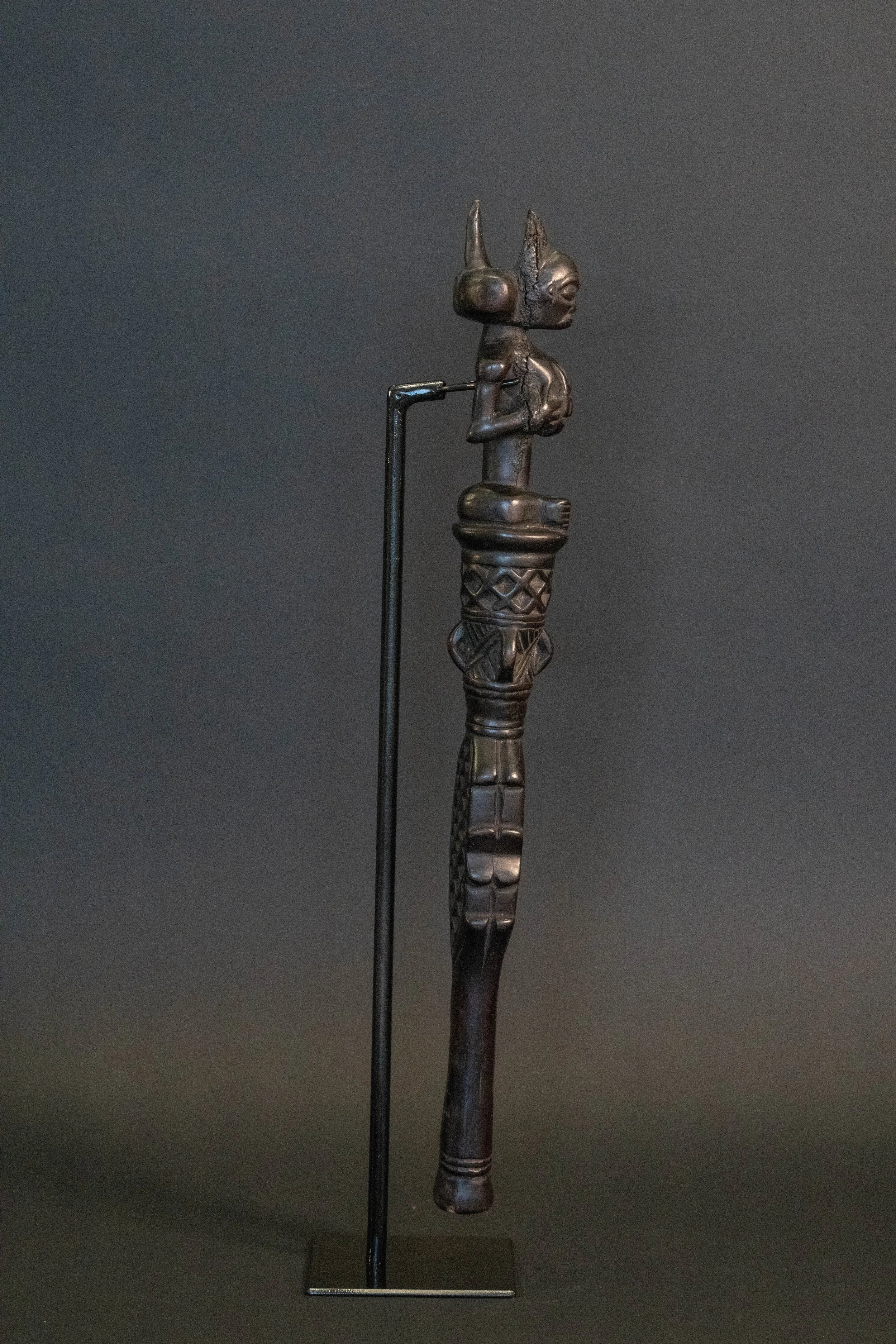 Image 4 of 5
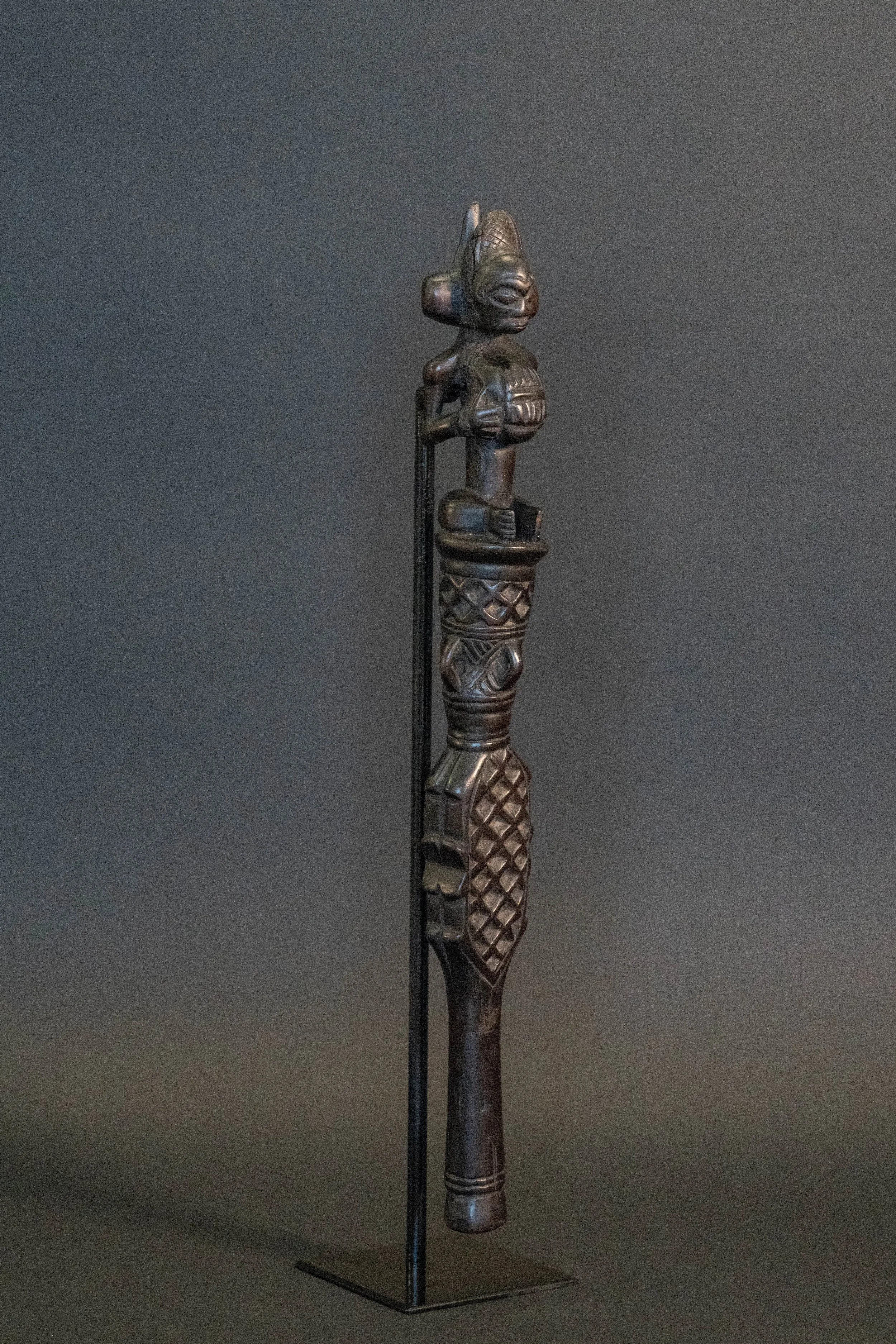 Image 5 of 5
Early–mid 20th century
Carved wood; H. 20.5 in. (52 cm) including custom base
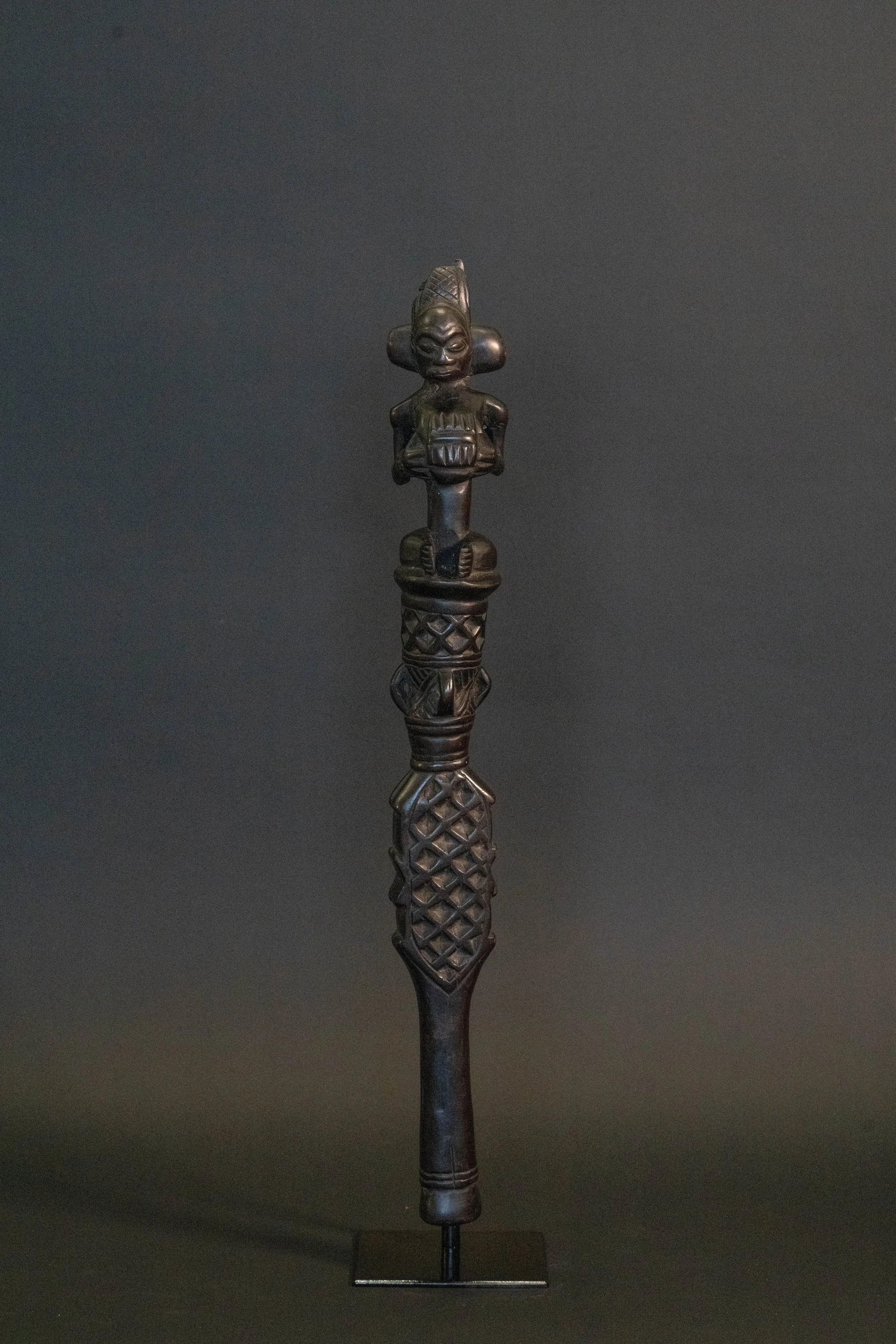
A powerful and beautifully preserved Chokwe prestige scepter—the kind of object that was made to move in public as a sign of authority. Topped with a finely carved figure, this scepter combines courtly presence with a rare, storytelling detail: the figure holds what appears to be a sanza (lamellophone/thumb piano)—a symbol of music, memory, and the spoken history that leaders and elders are expected to carry and protect.
The figure’s distinctive coiffure and bold head form read as high-status regalia, while the scepter's rhythmic, geometric relief patterns translate textile and basketry designs into wood—an unmistakable hallmark of skilled Central African sculpture. In profile, the finial features an additional blade-like emblem at the head, reinforcing the scepter’s role in making rank, power, and identity visible.
Condition is a major strength. The surface shows clear handling wear and varied oxidation—exactly what collectors want to see on a true prestige object: softened high points, darker protected areas, and a dense, mature patina that comes from decades of touch and use rather than modern staining. Importantly, there also appears to be an old indigenous repair running along the figure’s right side from the head down toward the chest—the kind of period stabilization that reads as authentic life history rather than later restoration, and a reminder that this was an object valued enough to remain in service.
A prestige scepter like this functioned as portable authority —carried in formal settings, processions, and public appearances to signal who held status and responsibility. Here, the addition of the sanza turns the message into something richer: leadership not just as force, but as culture—music, wisdom, and tradition—held in the hands.
Mounted on a custom base for display.
Condition: Good. Old indigenous repair on the figure’s upper right side.
Dimensions: Overall with stand 20.5 × 4 × 4 inches; Figure only 19 × 2.5 × 2.5 inches (H x W x D)
Early–mid 20th century
Carved wood; H. 20.5 in. (52 cm) including custom base
A powerful and beautifully preserved Chokwe prestige scepter—the kind of object that was made to move in public as a sign of authority. Topped with a finely carved figure, this scepter combines courtly presence with a rare, storytelling detail: the figure holds what appears to be a sanza (lamellophone/thumb piano)—a symbol of music, memory, and the spoken history that leaders and elders are expected to carry and protect.
The figure’s distinctive coiffure and bold head form read as high-status regalia, while the scepter's rhythmic, geometric relief patterns translate textile and basketry designs into wood—an unmistakable hallmark of skilled Central African sculpture. In profile, the finial features an additional blade-like emblem at the head, reinforcing the scepter’s role in making rank, power, and identity visible.
Condition is a major strength. The surface shows clear handling wear and varied oxidation—exactly what collectors want to see on a true prestige object: softened high points, darker protected areas, and a dense, mature patina that comes from decades of touch and use rather than modern staining. Importantly, there also appears to be an old indigenous repair running along the figure’s right side from the head down toward the chest—the kind of period stabilization that reads as authentic life history rather than later restoration, and a reminder that this was an object valued enough to remain in service.
A prestige scepter like this functioned as portable authority —carried in formal settings, processions, and public appearances to signal who held status and responsibility. Here, the addition of the sanza turns the message into something richer: leadership not just as force, but as culture—music, wisdom, and tradition—held in the hands.
Mounted on a custom base for display.
Condition: Good. Old indigenous repair on the figure’s upper right side.
Dimensions: Overall with stand 20.5 × 4 × 4 inches; Figure only 19 × 2.5 × 2.5 inches (H x W x D)