 Image 1 of 4
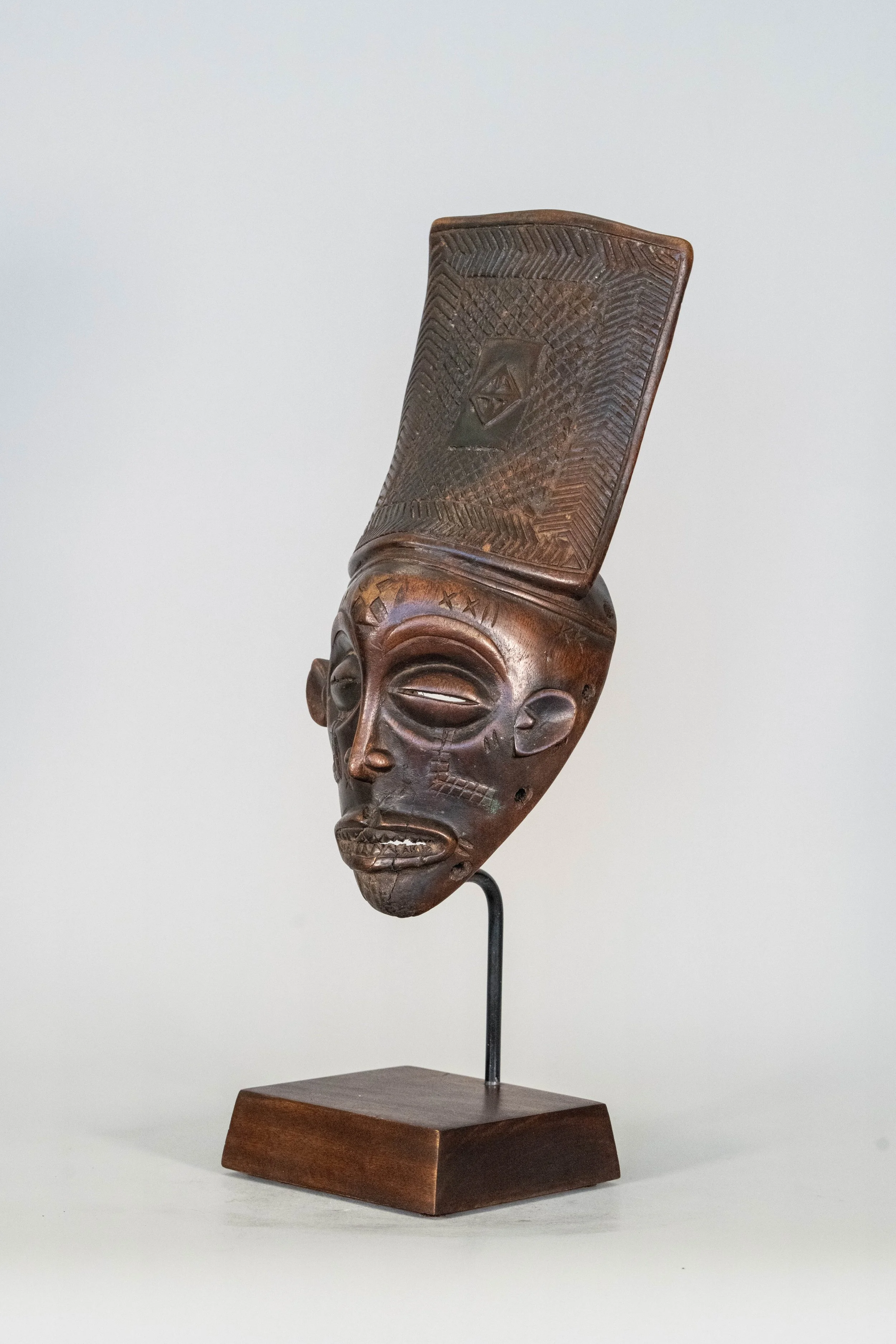 Image 2 of 4
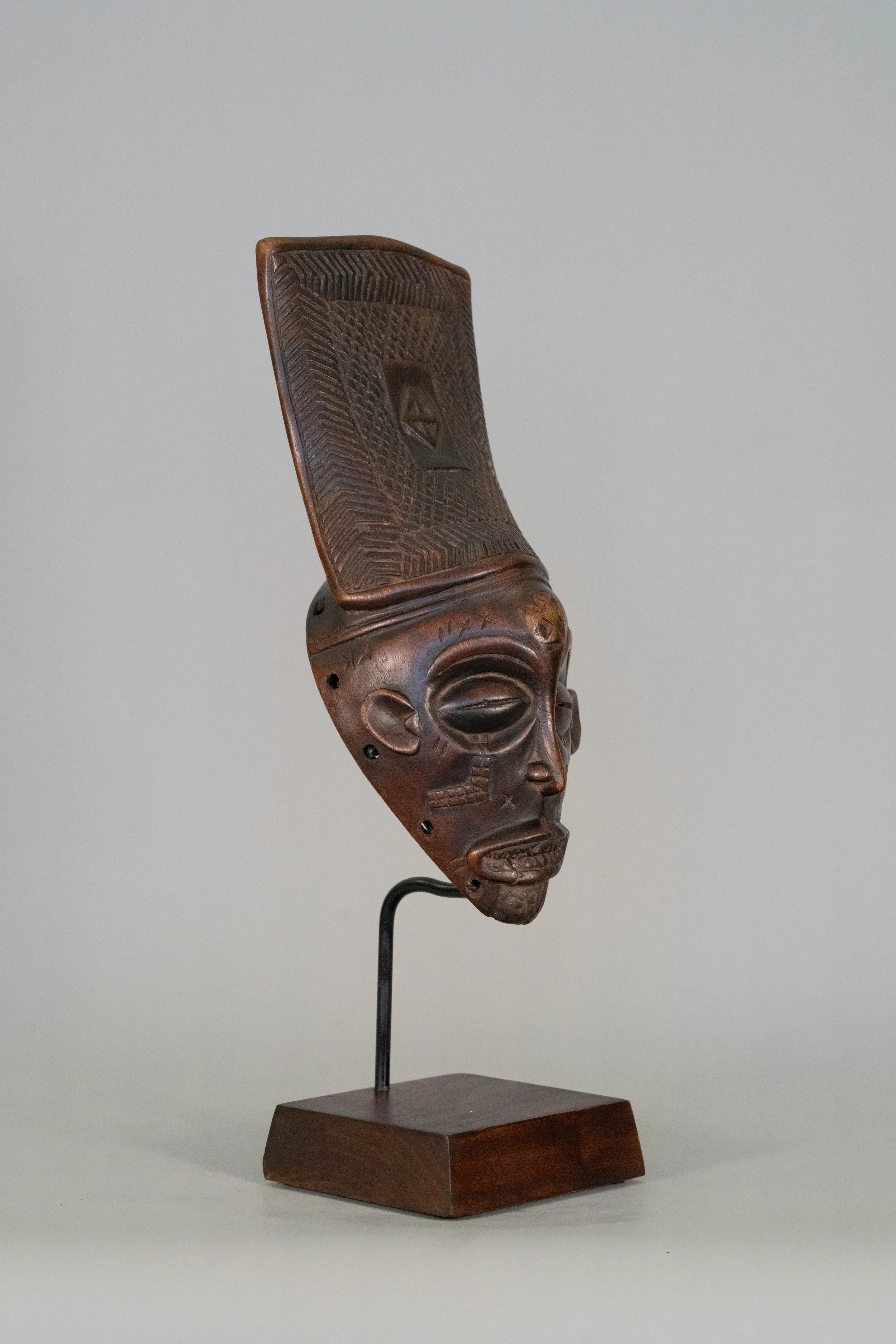 Image 3 of 4
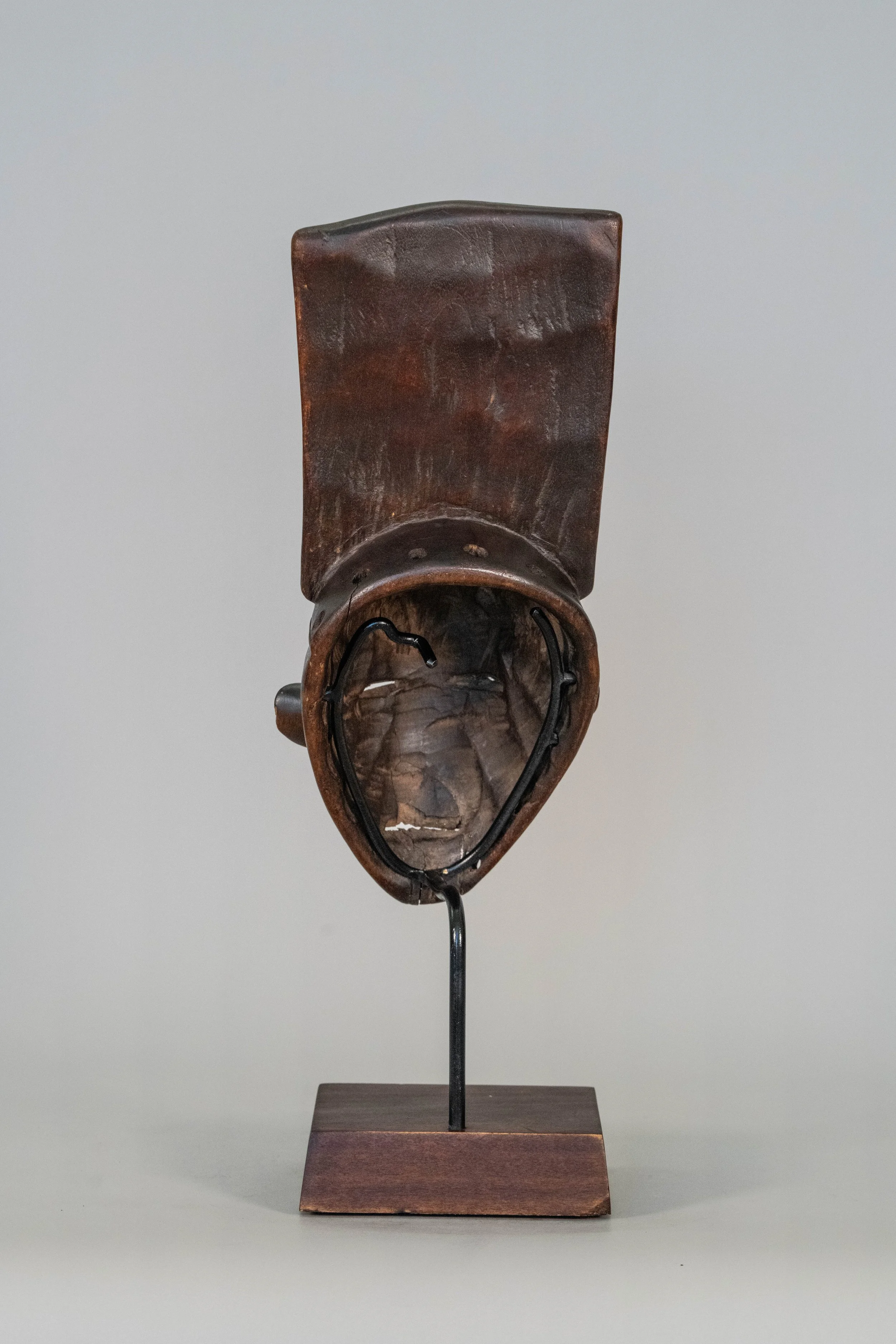 Image 4 of 4
Angola / Democratic Republic of the Congo · Second Quarter to Mid-20th Century
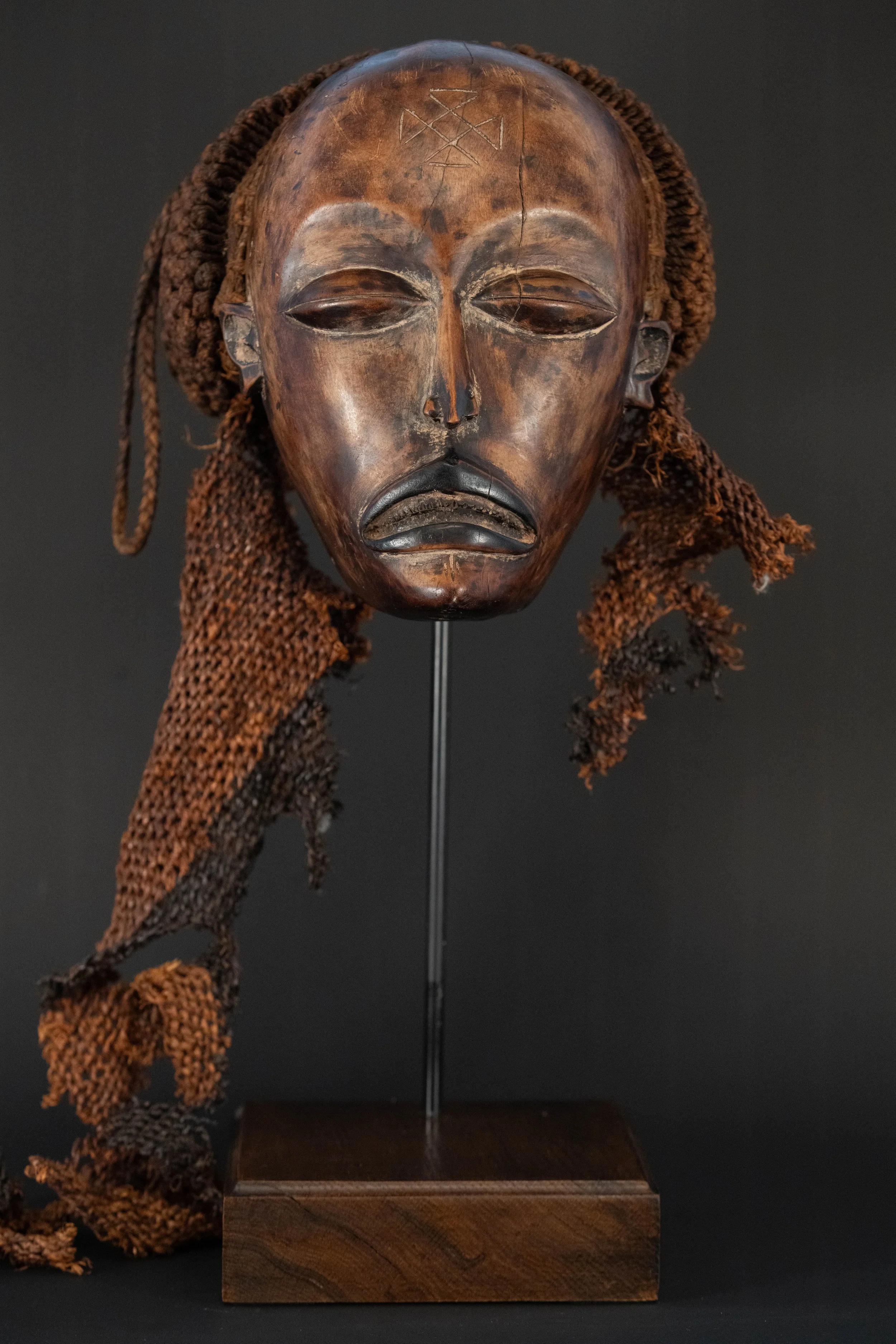
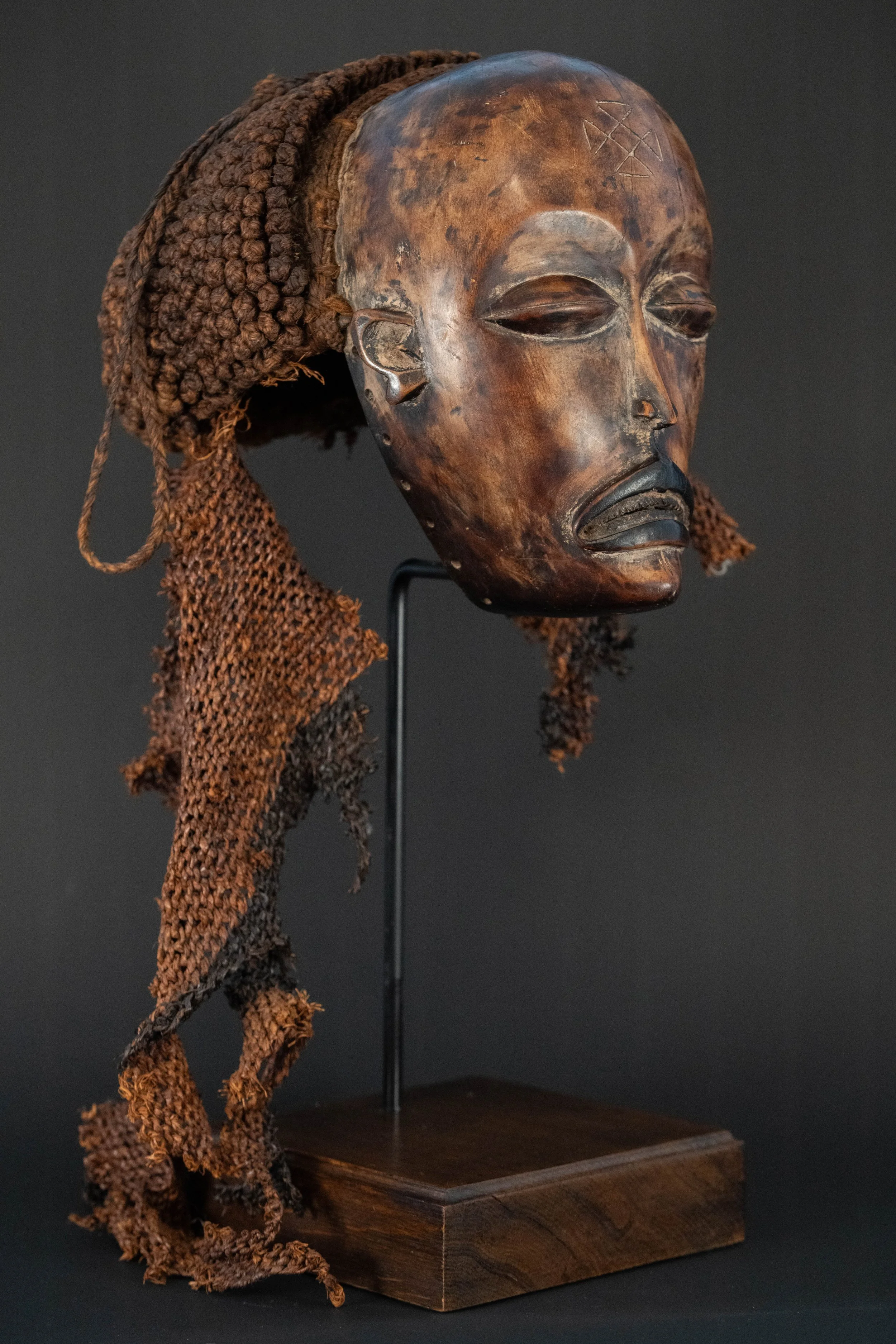
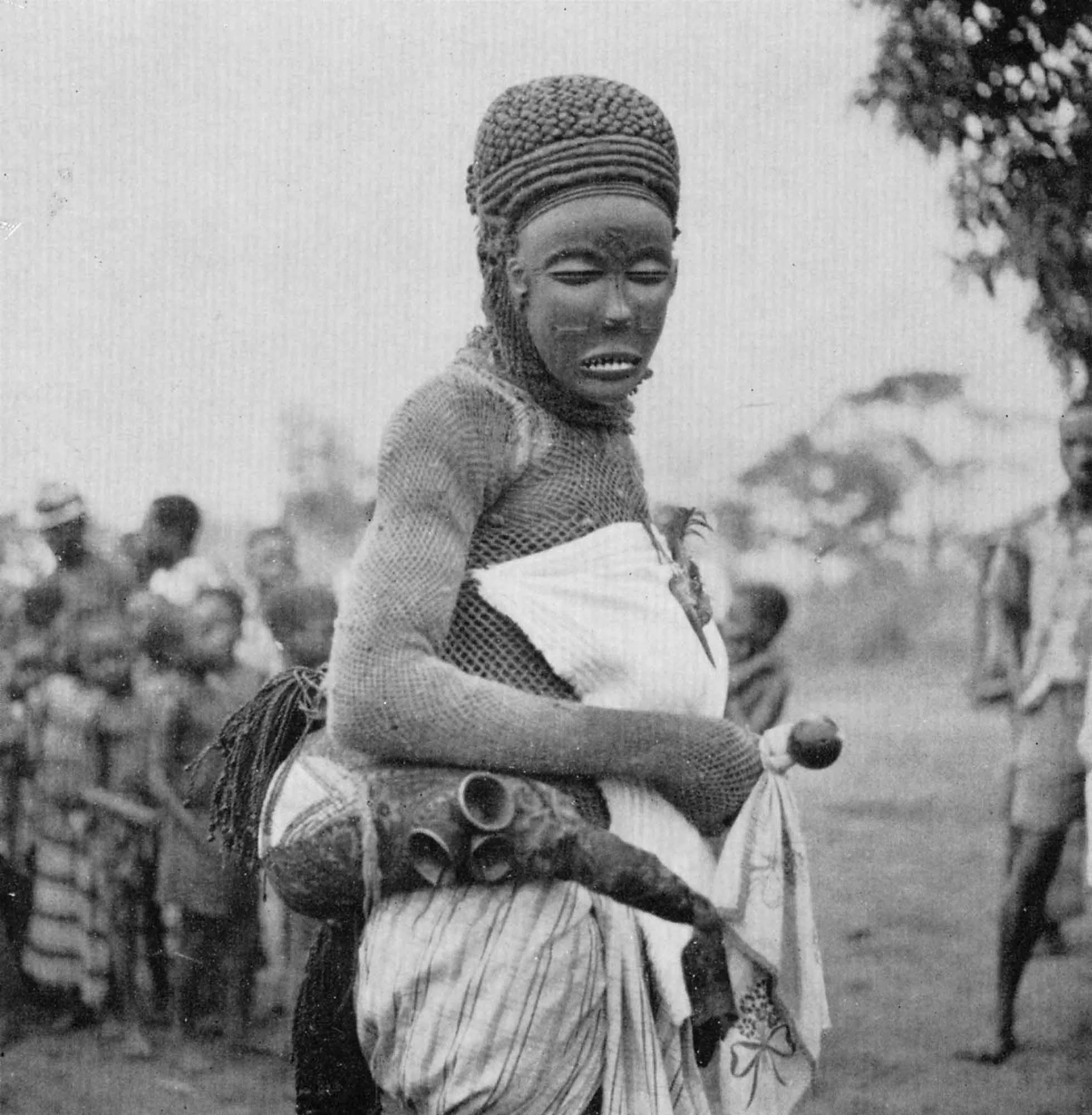
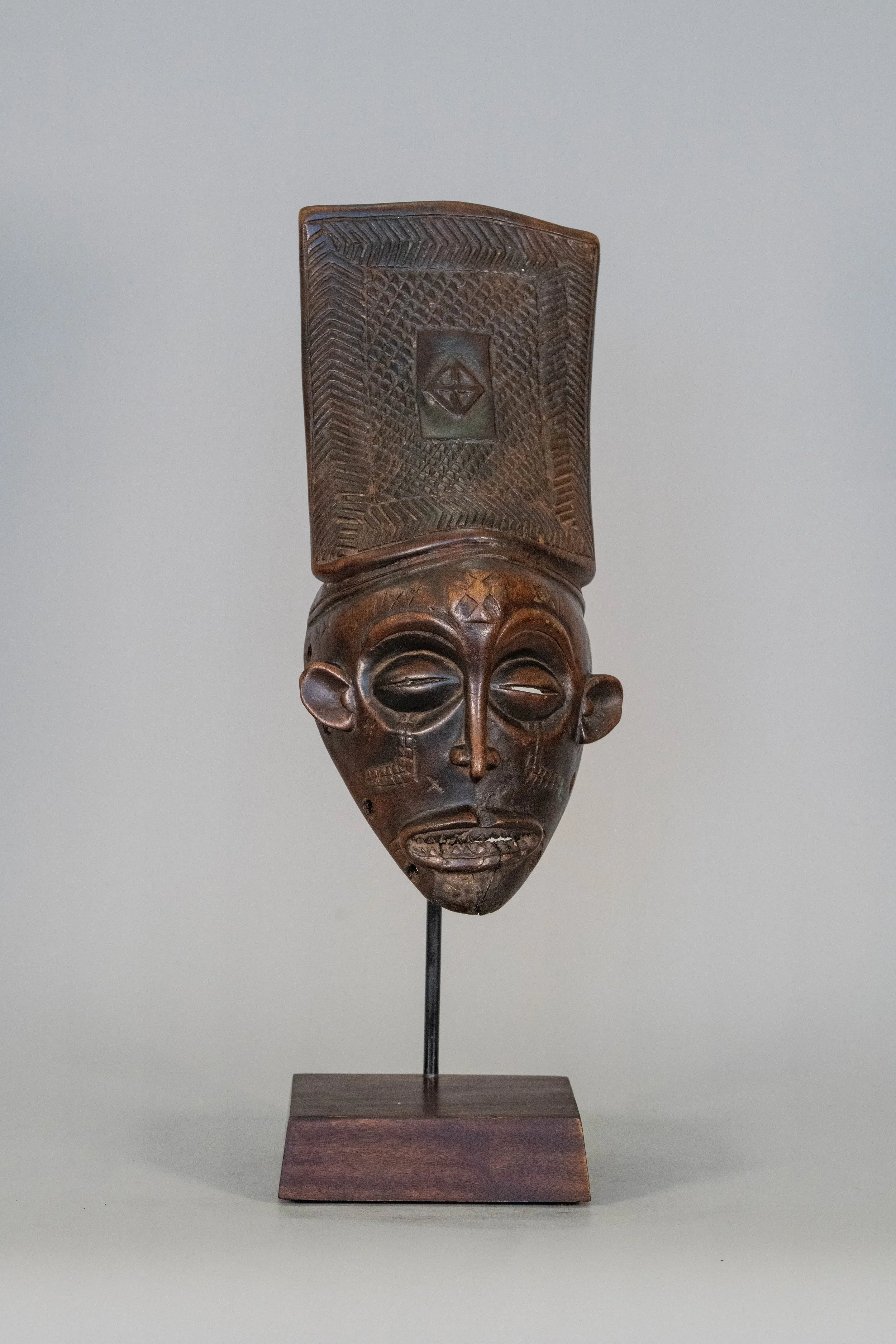
This Chokwe pwo mask is a fragment of performance and living history from Central Africa. Pwo — “woman” — honors the female ancestor. Carved by hand and danced by men at initiation celebrations and village festivities, it was made to be worn: to move and speak through the body of the dancer, presenting an ideal of feminine beauty, grace, and dignity to the community.
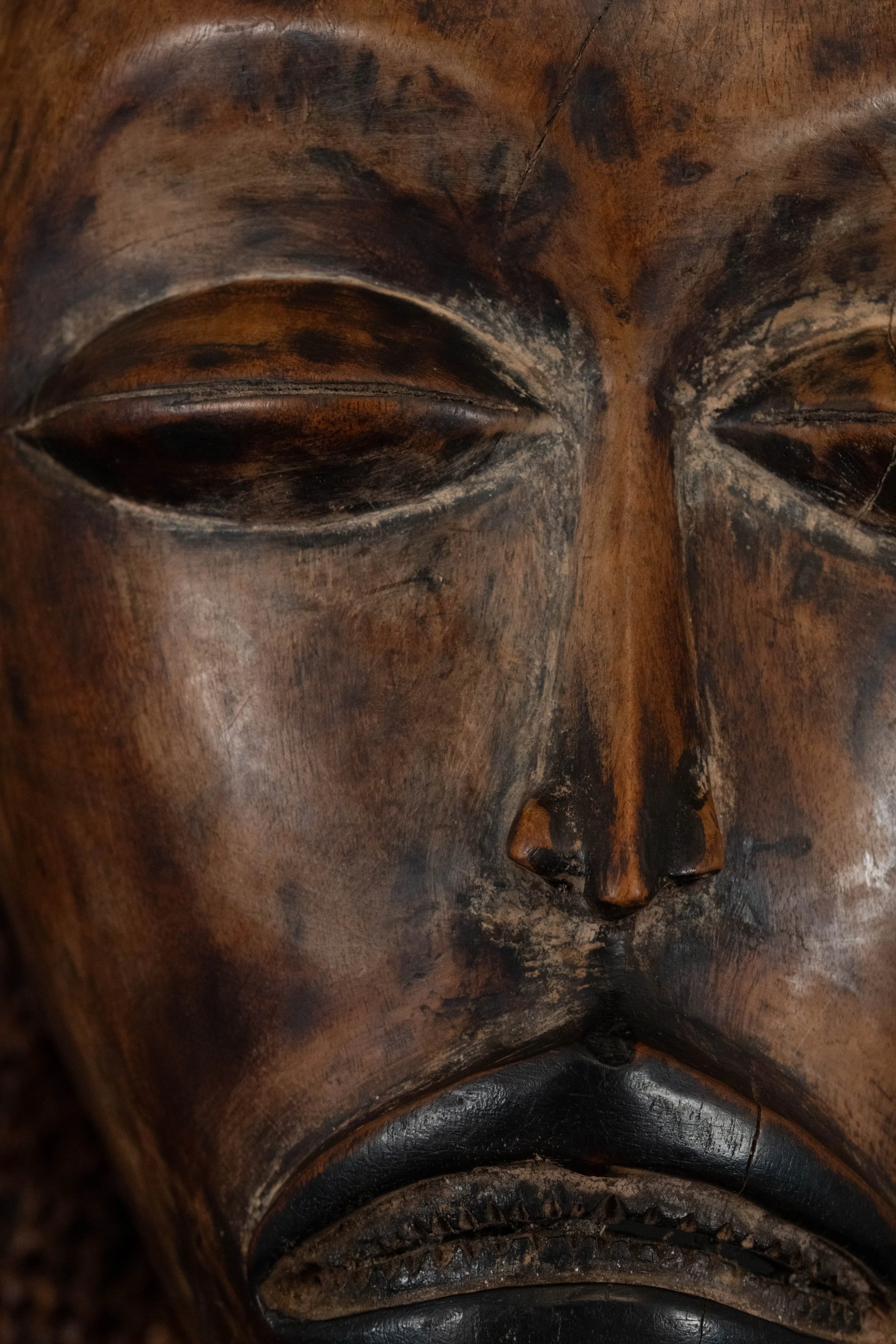
The face is refined and composed. Lowered, slit eyes beneath a continuous brow and a calm, inward expression convey dignity and control. The mouth is slightly open, revealing teeth filed to points, a mark of adult beauty among the Chokwe. The scarification is unusually rich: cross-form marks on the forehead, gridded cartouches beneath each eye in the motif known as masoji, “tears,” and finely incised linear and cruciform marks on the temples and cheeks, each reflecting cultural ideals of beauty and identity.
Above the face rises a tall, backswept crest representing the elaborate coiffure of a woman of standing. It is richly textured with hand-cut herringbone and crosshatched patterns imitating plaited fiber and anchored at center by a raised emblem. This dramatic vertical form would have made the mask immediately recognizable in performance, particularly when paired with the fiber costume that completed the figure.
The surface tells its own story. A deep brown patina has developed over decades, darker in the recesses and showing gentle wear on the crest, its most exposed element. Turn the mask over and the evidence of use continues: hand-tooled interior surfaces, a rim darkened and smoothed by handling, and perforations stretched by the cords that once secured the costume. An old, stable repair at the mouth and chin is honest evidence of the mask’s working life. Apart from this repair, ultraviolet examination shows an untouched surface.
For collectors new to African art, this is an accessible yet serious example with the qualities that matter: strong carving, authentic age, and a surface that reflects real history. For experienced collectors, it offers classic Chokwe aesthetics in a refined, well-balanced form.
Condition: Very Good. Old, stable repair at the mouth and chin; wear consistent with age and use.
Dimensions: Overall with stand 15.5 × 5.5 × 5 inches; mask only 11.5 × 5.5 × 5 inches (H × W × D
For reference, a relating Chokwe mask is on view online at The British Museum: https://www.britishmuseum.org/collection/object/E_Af1958-02-1.