 Image 1 of 4
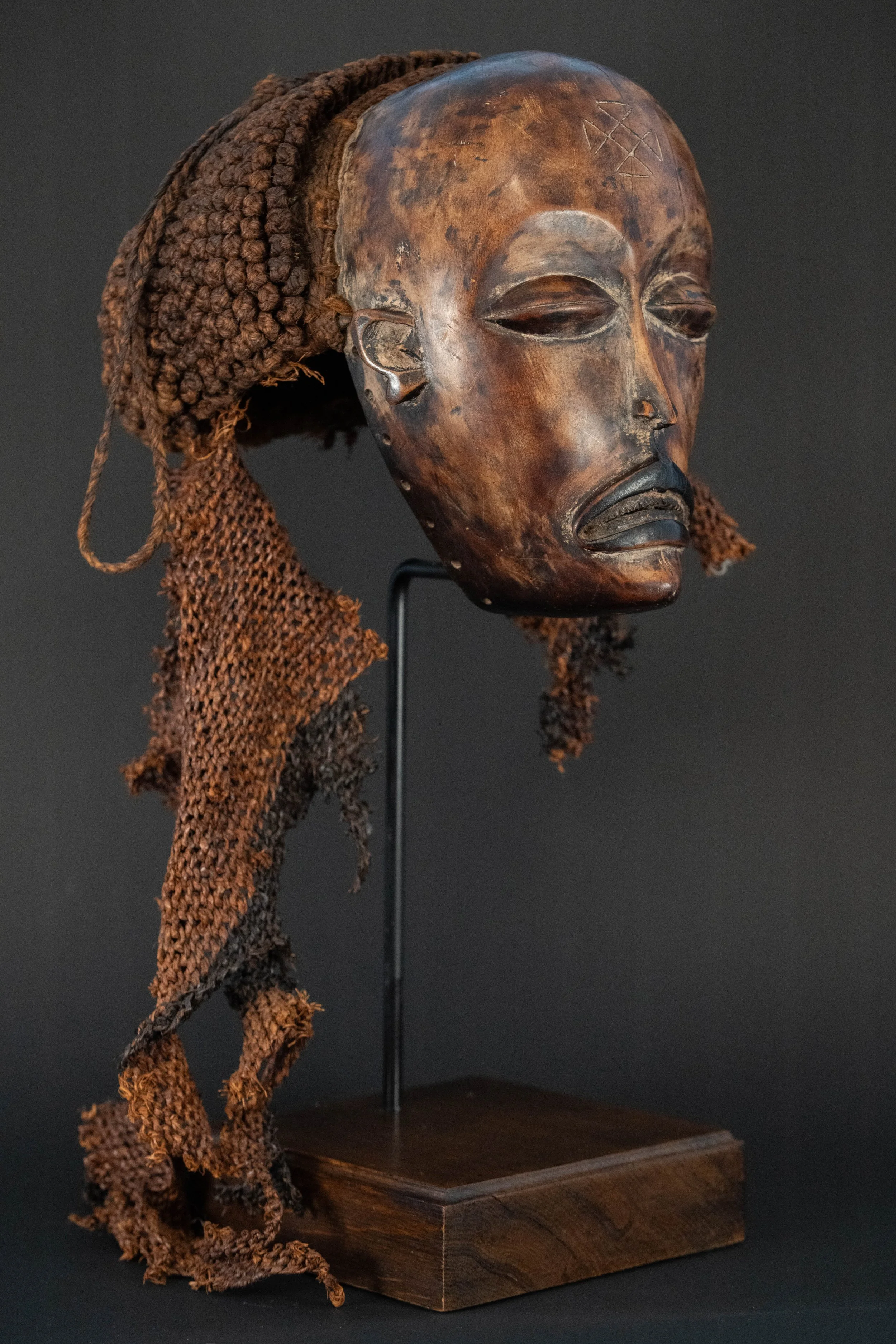 Image 2 of 4
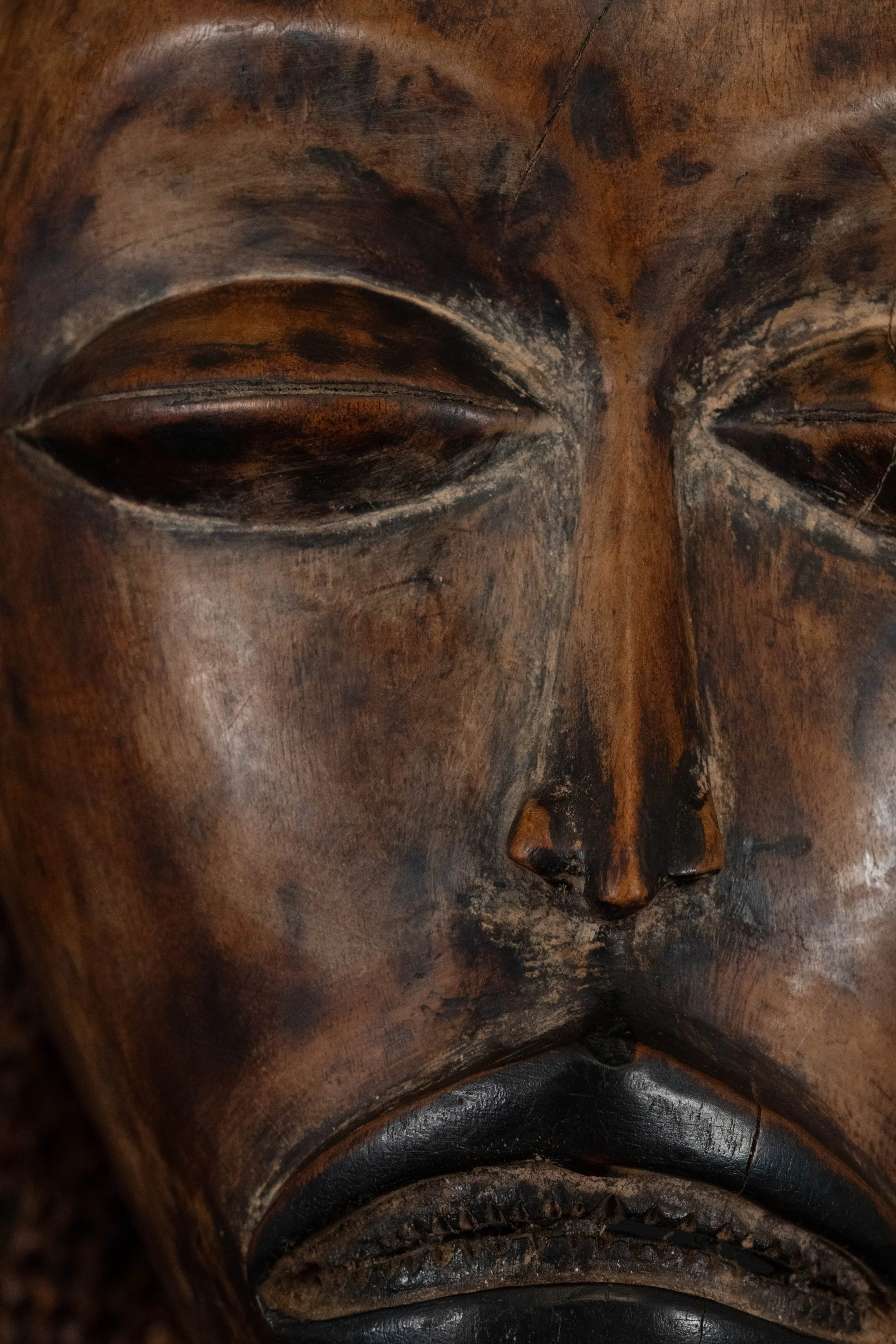 Image 3 of 4
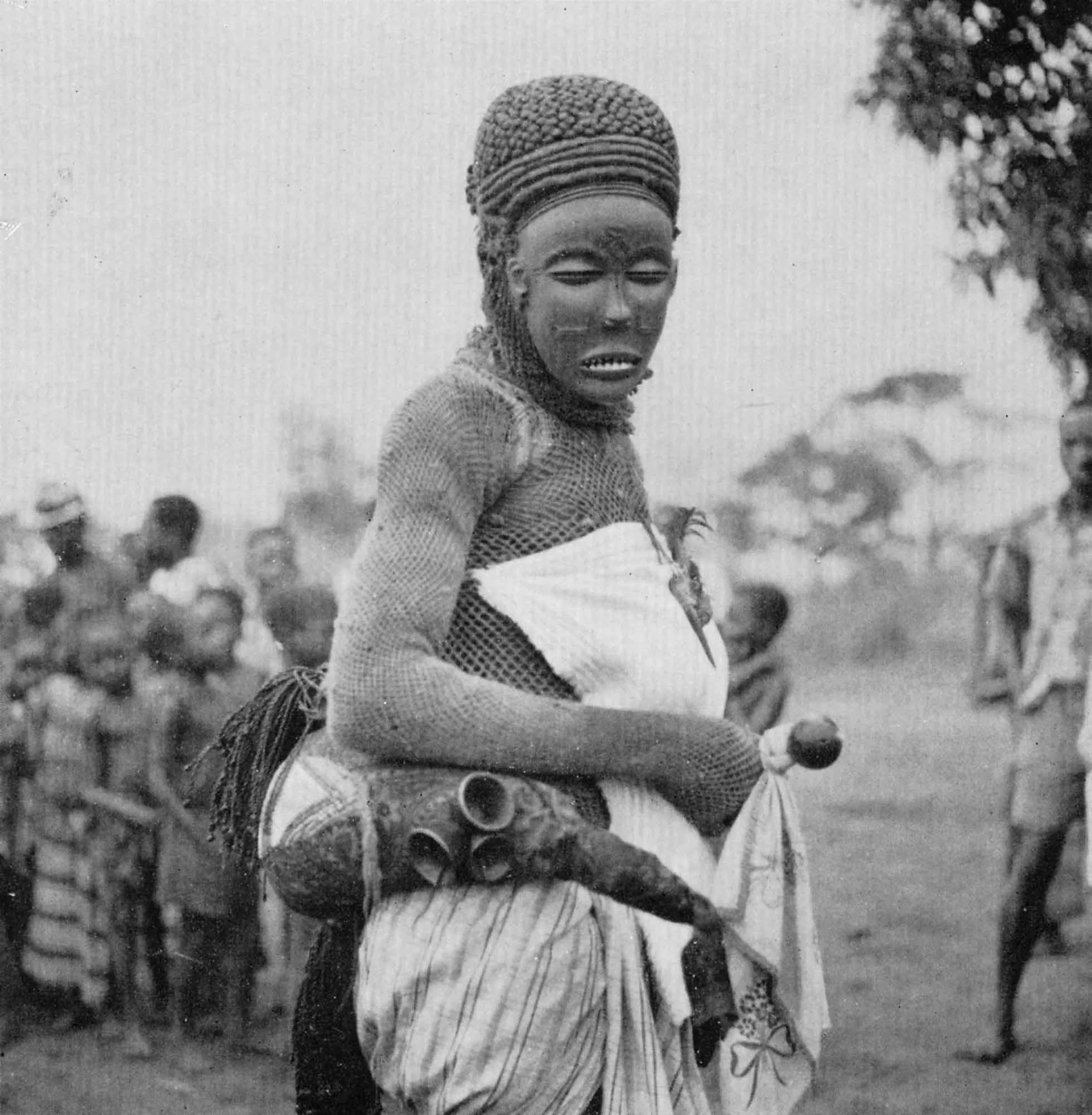 Image 4 of 4
Northeastern Angola or adjacent Congo region / Late 19th – Early 20th Century
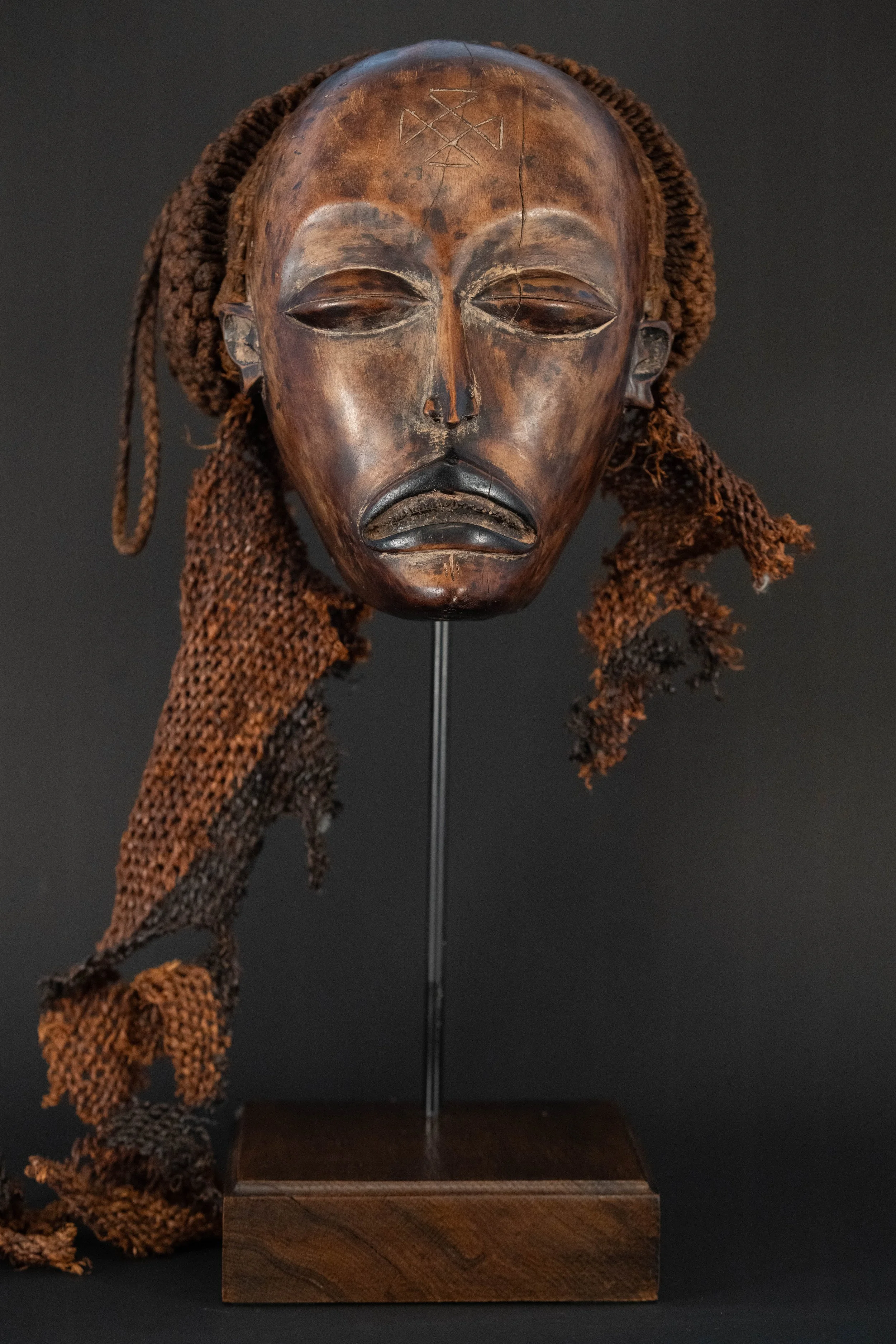
Created by a Chokwe artist working in the late 19th to early 20th century, this mask embodies the feminine ideal at the heart of Chokwe ceremonial life — the mwana pwo, or "young woman," whose qualities of beauty, composure, and moral character were made visible through dance and ritual performance. Masks like this did not merely represent. They transformed the wearer into a living ancestral presence.
The face rewards close attention. Narrow, half-closed eyes suggest introspection rather than display. The long straight nose and gently modeled cheeks speak to a sculptor working with confidence and restraint — the softly compressed lips expressive without exaggeration. A single incised geometric mark on the forehead anchors the mask in the realities of initiation and social identity.
The surface is the mask's most compelling testimony. A deep, uneven patina — built across years of handling and ceremonial use — has settled into the wood unevenly, as authentic age always does: a subtle sheen across the brow and nose, softened edges, fine cracks following the grain. These are not manufactured effects. They are the slow signature of time. Equally significant is the surviving fiber coiffure — oxidized and fragile now, but intact. Such organic elements rarely endure. Their survival here places this mask in a higher tier of authenticity and collectibility.
This is not a decorative copy. The carving has presence and intentionality; the aging is coherent throughout. It presents as a genuine example dating to approximately 1880–1930, and it holds its ground in any serious collection.
For context, a closely related Chokwe Pwo Female Mask is on view online and in person in the Metropolitan Museum of Art’s collection in Gallery 344. https://www.metmuseum.org/art/collection/search/319264
Condition: Good. Thin vertical crack on the mask face. Headdress fiber torn/distressed.
Dimensions: Overall with stand 18.5 inches; Figure only 8.5 × 7 .5 × 12.5 inches (H x W x D)
Northeastern Angola or adjacent Congo region / Late 19th – Early 20th Century
Created by a Chokwe artist working in the late 19th to early 20th century, this mask embodies the feminine ideal at the heart of Chokwe ceremonial life — the mwana pwo, or "young woman," whose qualities of beauty, composure, and moral character were made visible through dance and ritual performance. Masks like this did not merely represent. They transformed the wearer into a living ancestral presence.
The face rewards close attention. Narrow, half-closed eyes suggest introspection rather than display. The long straight nose and gently modeled cheeks speak to a sculptor working with confidence and restraint — the softly compressed lips expressive without exaggeration. A single incised geometric mark on the forehead anchors the mask in the realities of initiation and social identity.
The surface is the mask's most compelling testimony. A deep, uneven patina — built across years of handling and ceremonial use — has settled into the wood unevenly, as authentic age always does: a subtle sheen across the brow and nose, softened edges, fine cracks following the grain. These are not manufactured effects. They are the slow signature of time. Equally significant is the surviving fiber coiffure — oxidized and fragile now, but intact. Such organic elements rarely endure. Their survival here places this mask in a higher tier of authenticity and collectibility.
This is not a decorative copy. The carving has presence and intentionality; the aging is coherent throughout. It presents as a genuine example dating to approximately 1880–1930, and it holds its ground in any serious collection.
For context, a closely related Chokwe Pwo Female Mask is on view online and in person in the Metropolitan Museum of Art’s collection in Gallery 344. https://www.metmuseum.org/art/collection/search/319264
Condition: Good. Thin vertical crack on the mask face. Headdress fiber torn/distressed.
Dimensions: Overall with stand 18.5 inches; Figure only 8.5 × 7 .5 × 12.5 inches (H x W x D)