 Image 1 of 3
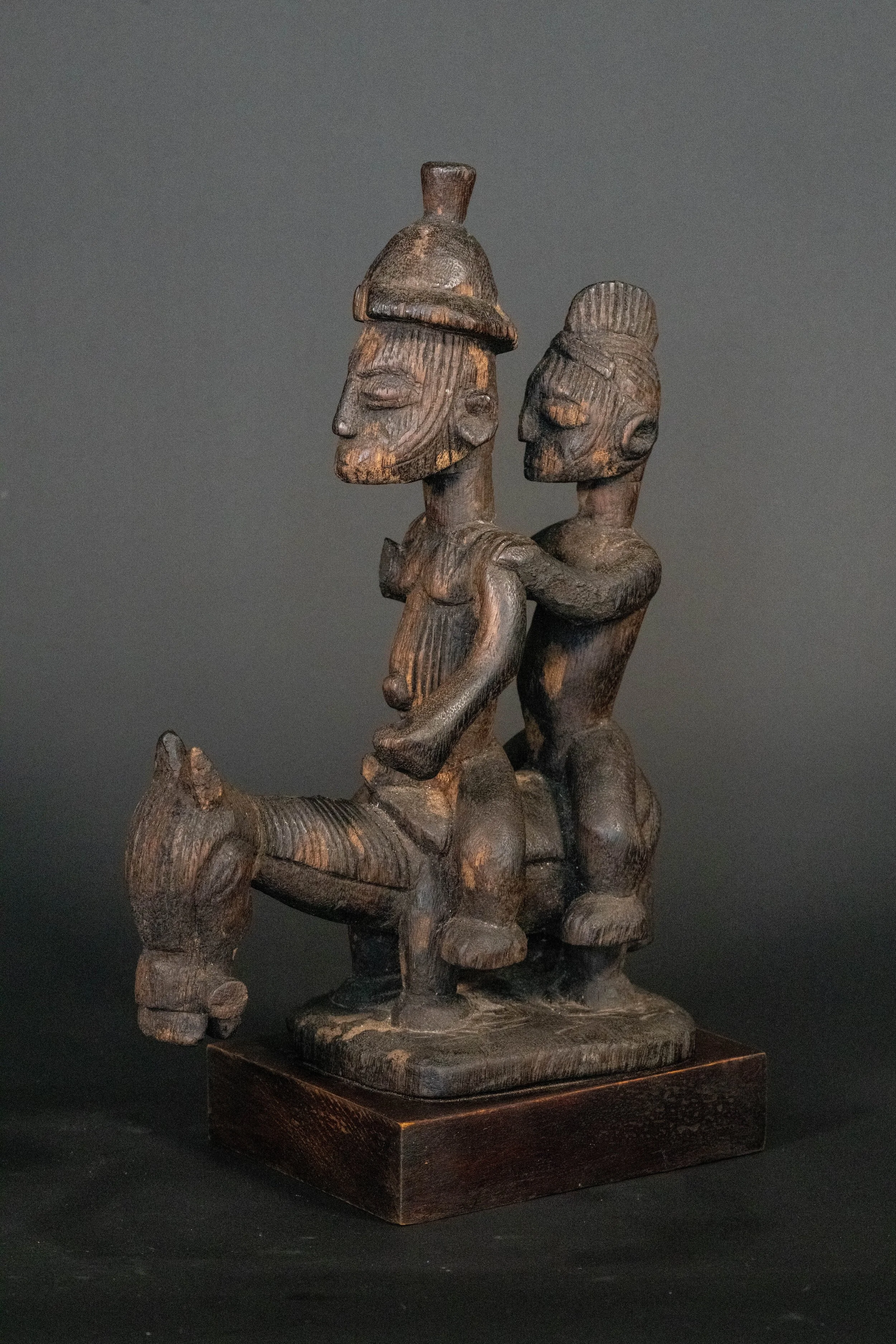 Image 2 of 3
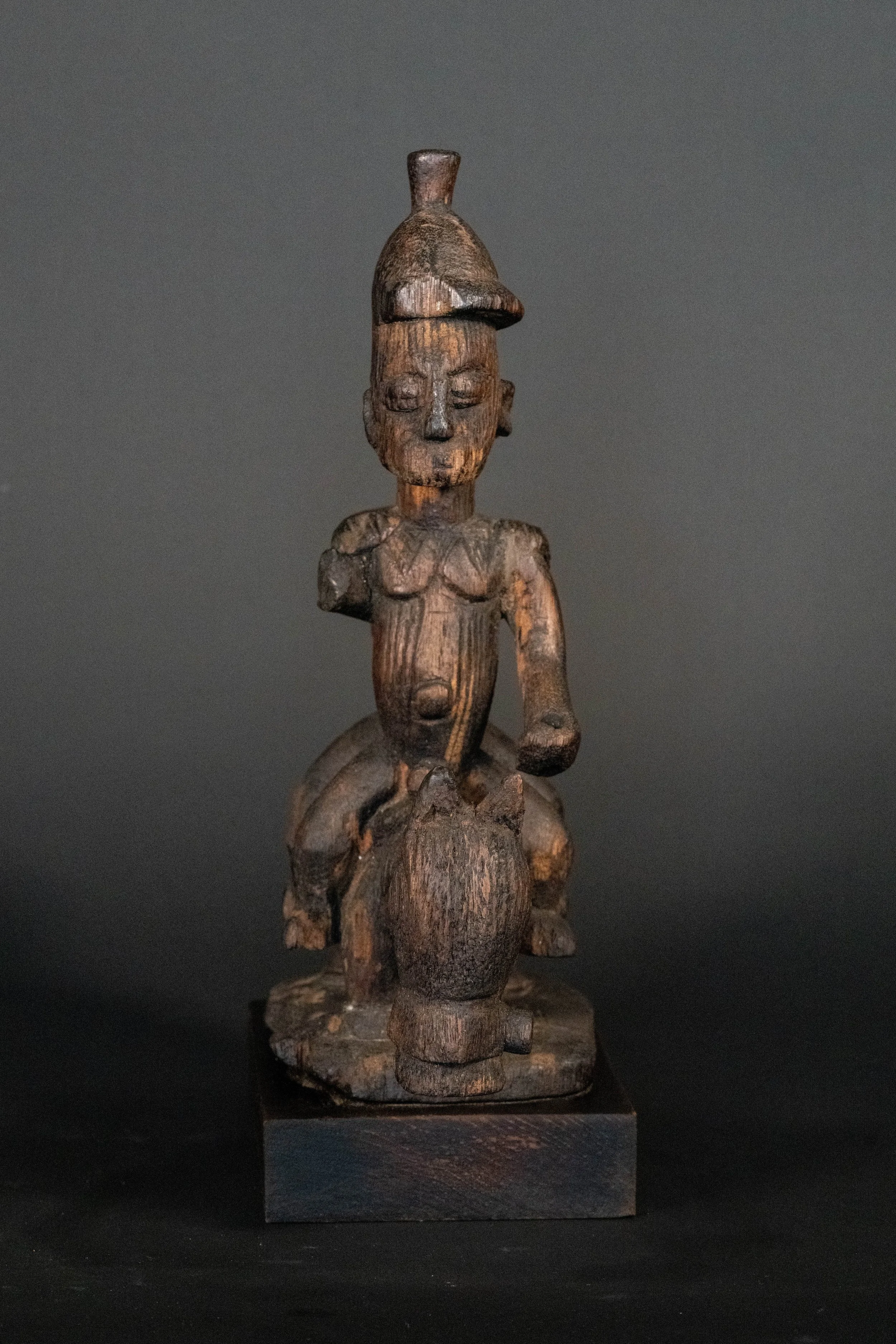 Image 3 of 3
Benue Valley, Central Nigeria / Early to mid-20th century, circa 1920–1955
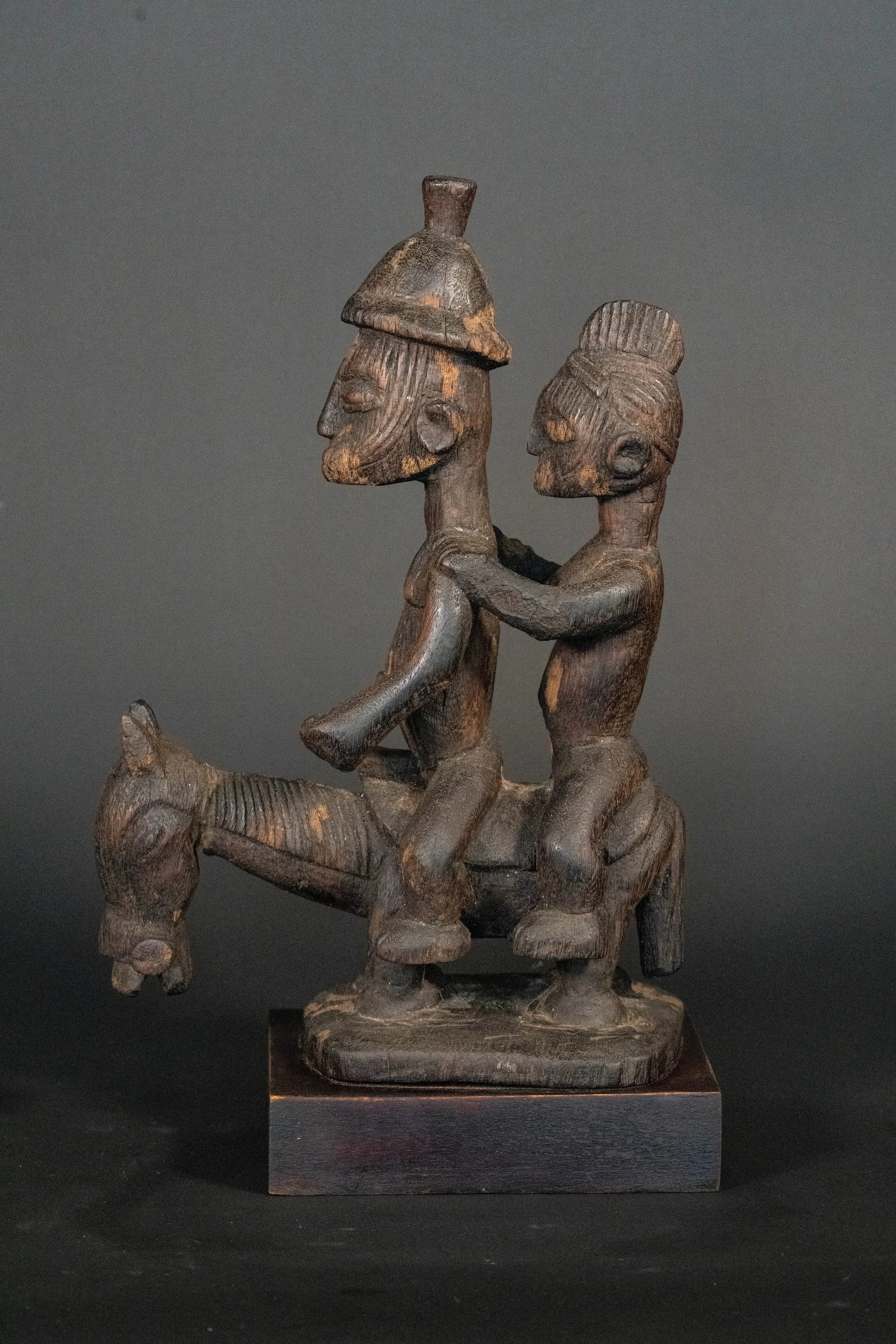
This compact Nigerian equestrian group commands attention precisely because it tells a story. Two figures ride a single horse — the rear rider resting both hands on the shoulders of the one in front — a gesture that reads immediately as ceremony, closeness, and shared authority. That single detail lifts this well above the standard single-rider carving and gives the piece a narrative energy that holds the eye.
The composition is beautifully resolved. The horse is pared to its essentials while the human figures dominate: elongated necks, poised postures, angular faces with quiet half-closed eyes, and incised facial scarification that roots the work firmly in its regional tradition. The carver simplified without sacrificing dignity. The result feels both traditionally grounded and unexpectedly contemporary.
The wood carries a rich dark patina with lighter worn passages from handling and use — the kind of surface variation that speaks to age and a life outside the studio. There is old, inactive insect wear consistent with an authentic Benue Valley carving.
One arm of the front figure is missing, a common loss in carvings with projecting elements. The main composition — horse, both riders, the distinctive double-figure arrangement — remains fully intact and reads with complete visual authority.
A highly displayable piece, compact in scale and rich in sculptural character, equally at home with the seasoned collector or the discerning newcomer drawn to bold, purposeful form.
Condition: Good. One arm missing (old loss); minor inactive insect wear.
Dimensions: Overall 13 × 8.5 × 4.5 inches; Figure only 11.75 × 9.25 × 4.75 inches (H x W x D)
Benue Valley, Central Nigeria / Early to mid-20th century, circa 1920–1955
This compact Nigerian equestrian group commands attention precisely because it tells a story. Two figures ride a single horse — the rear rider resting both hands on the shoulders of the one in front — a gesture that reads immediately as ceremony, closeness, and shared authority. That single detail lifts this well above the standard single-rider carving and gives the piece a narrative energy that holds the eye.
The composition is beautifully resolved. The horse is pared to its essentials while the human figures dominate: elongated necks, poised postures, angular faces with quiet half-closed eyes, and incised facial scarification that roots the work firmly in its regional tradition. The carver simplified without sacrificing dignity. The result feels both traditionally grounded and unexpectedly contemporary.
The wood carries a rich dark patina with lighter worn passages from handling and use — the kind of surface variation that speaks to age and a life outside the studio. There is old, inactive insect wear consistent with an authentic Benue Valley carving.
One arm of the front figure is missing, a common loss in carvings with projecting elements. The main composition — horse, both riders, the distinctive double-figure arrangement — remains fully intact and reads with complete visual authority.
A highly displayable piece, compact in scale and rich in sculptural character, equally at home with the seasoned collector or the discerning newcomer drawn to bold, purposeful form.
Condition: Good. One arm missing (old loss); minor inactive insect wear.
Dimensions: Overall 13 × 8.5 × 4.5 inches; Figure only 11.75 × 9.25 × 4.75 inches (H x W x D)