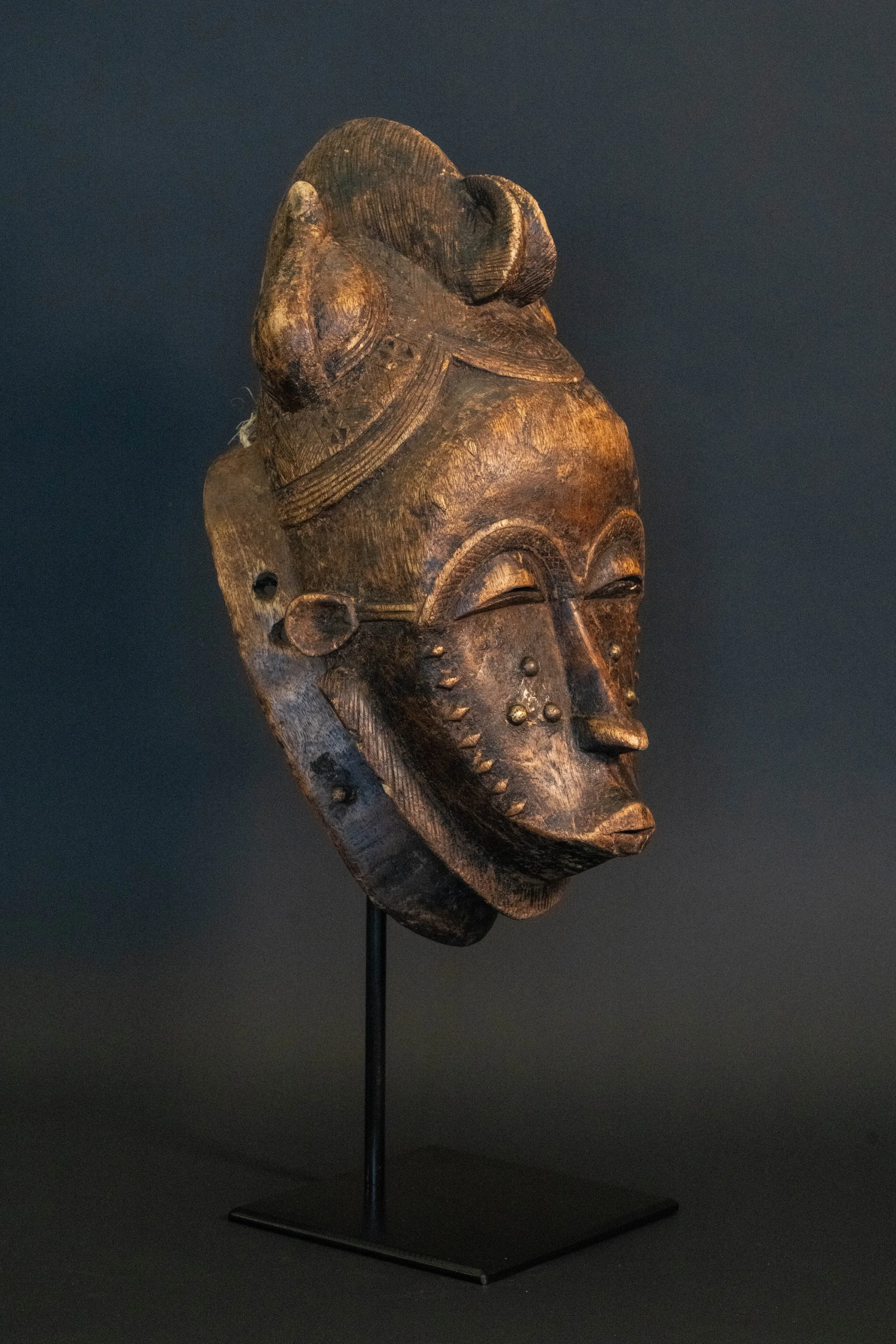
Baule (Baoulé) peoples, Côte d’Ivoire · 19th – early 20th century (c. 1880–1930)
Wood with ritual accretion, kaolin, and aged cloth · 22.5 × 6.5 × 8 in. (H × W × D)
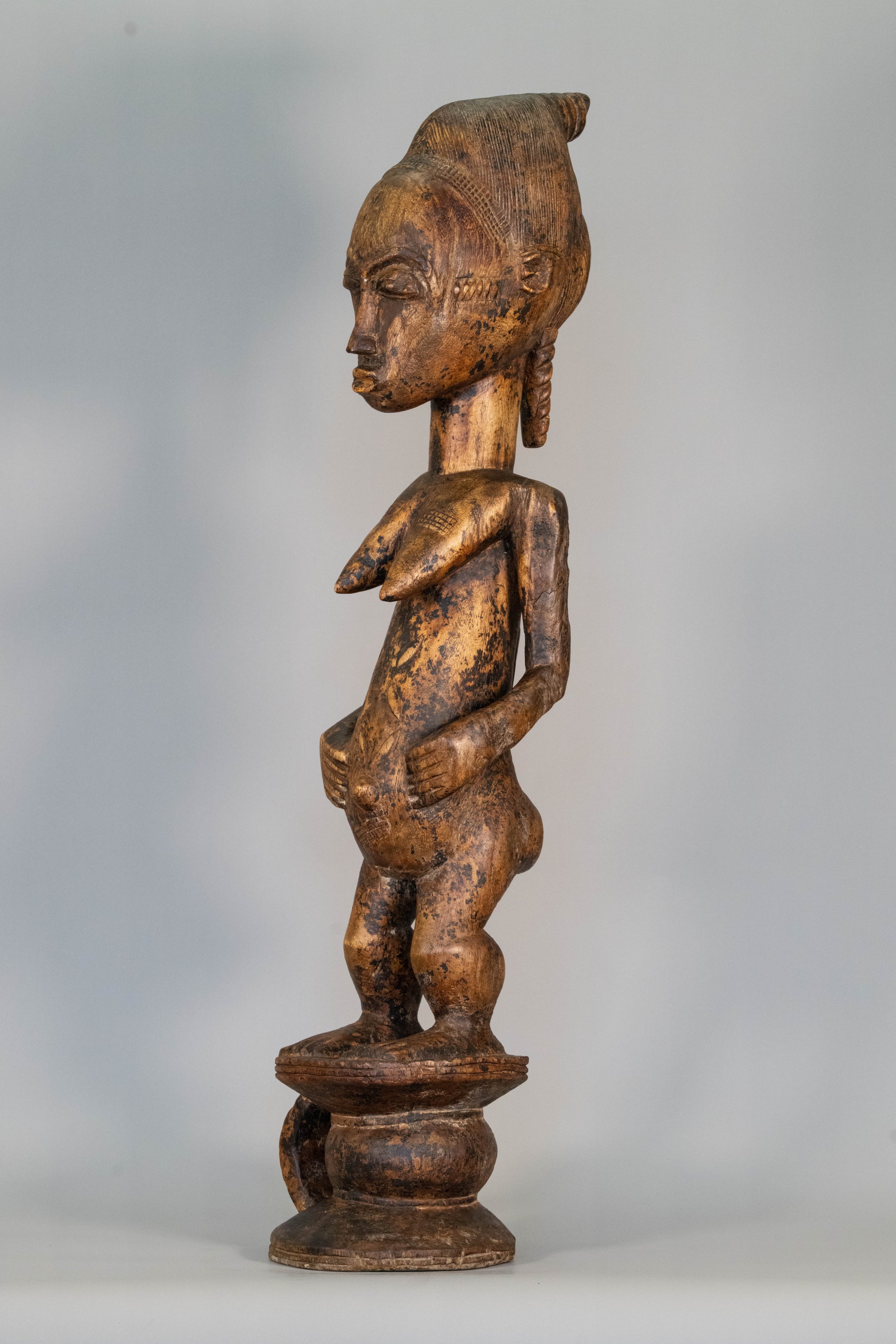
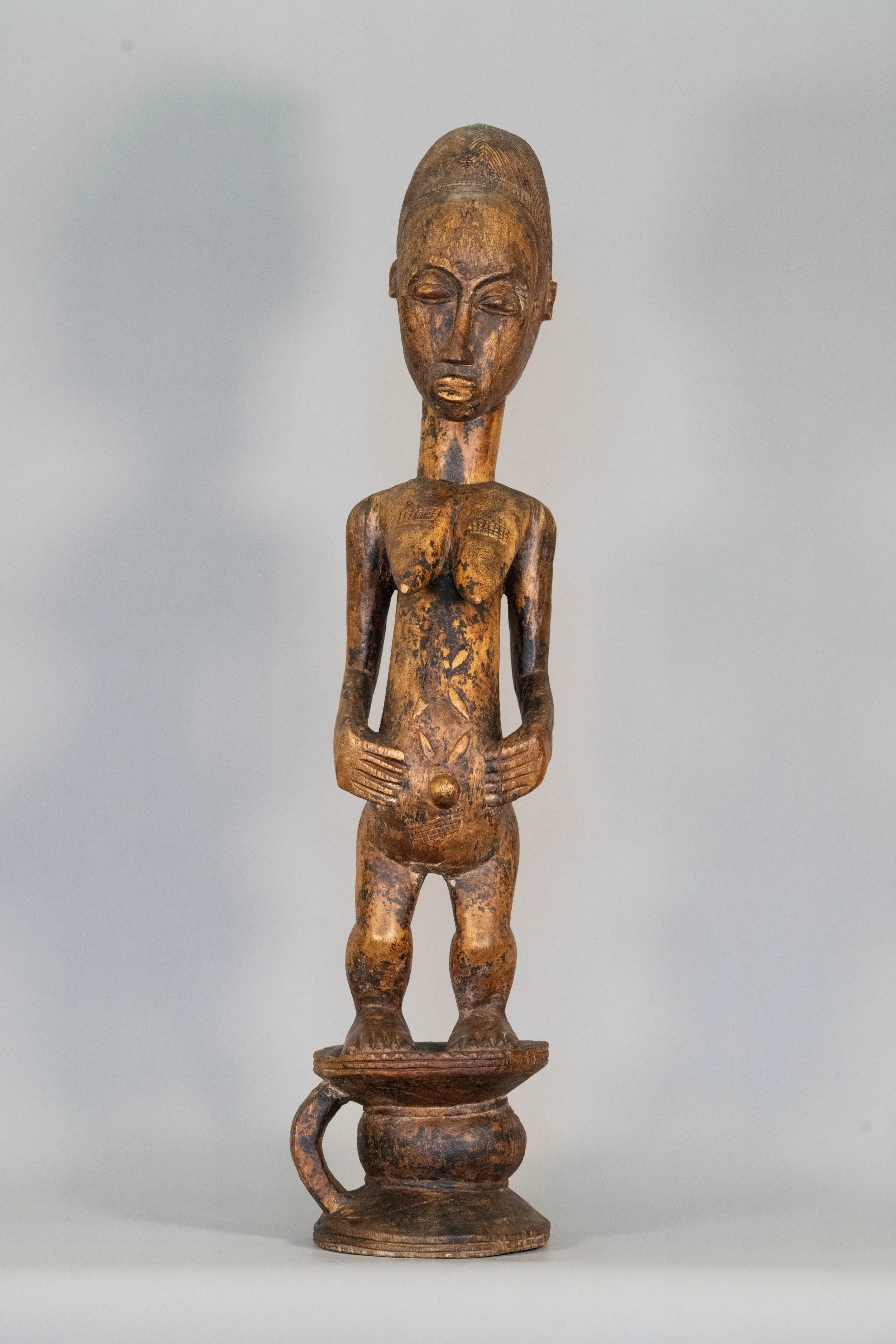
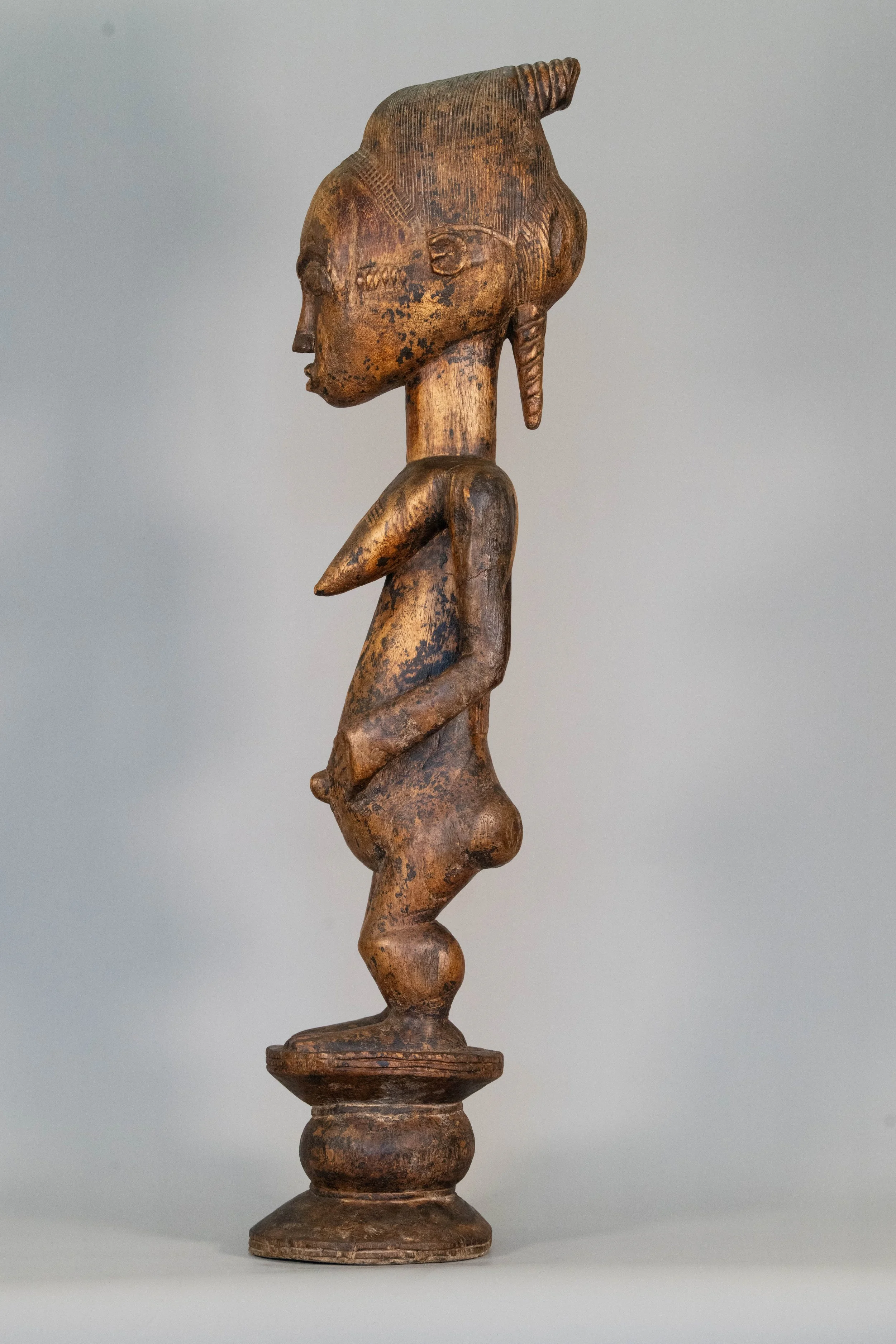
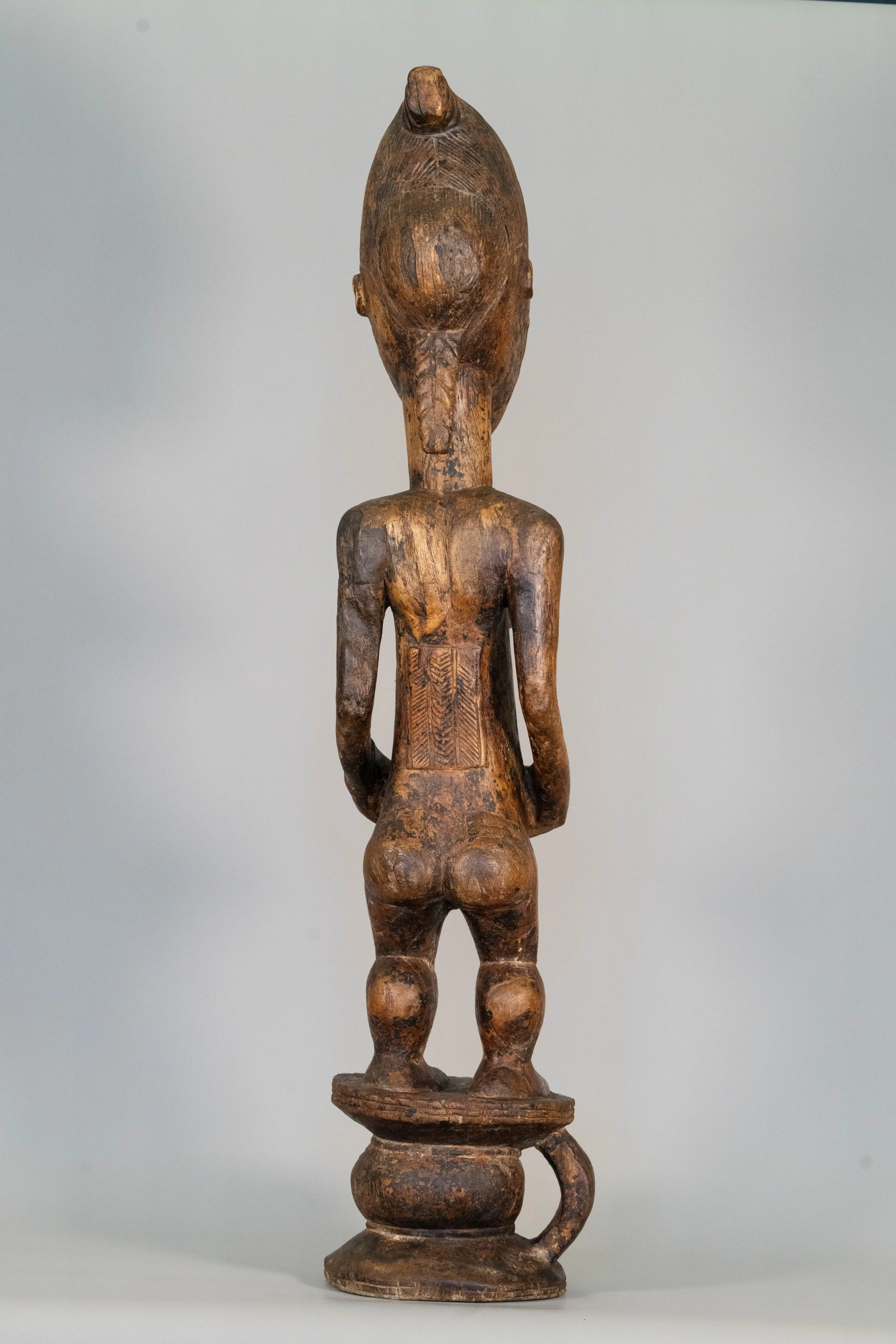
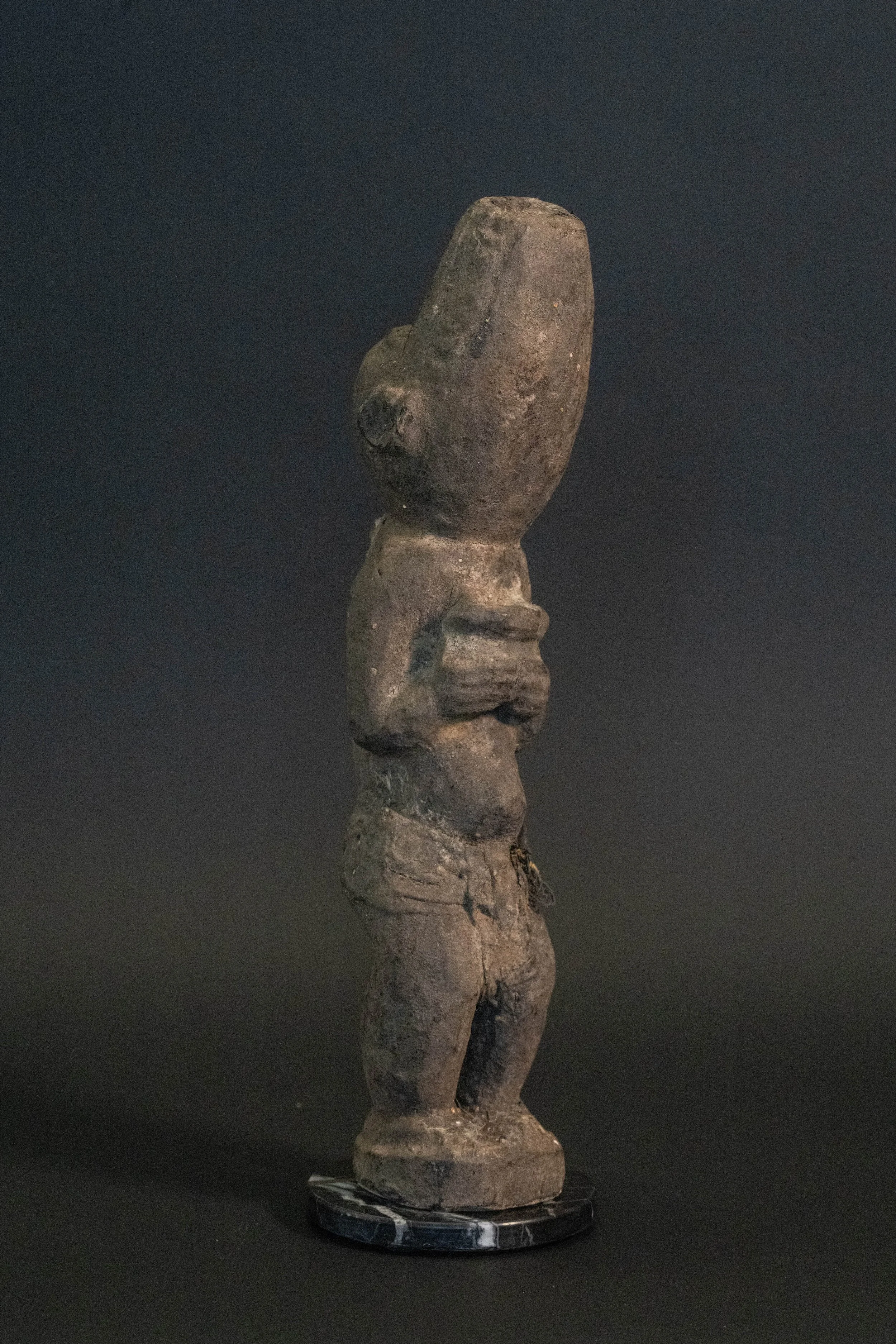
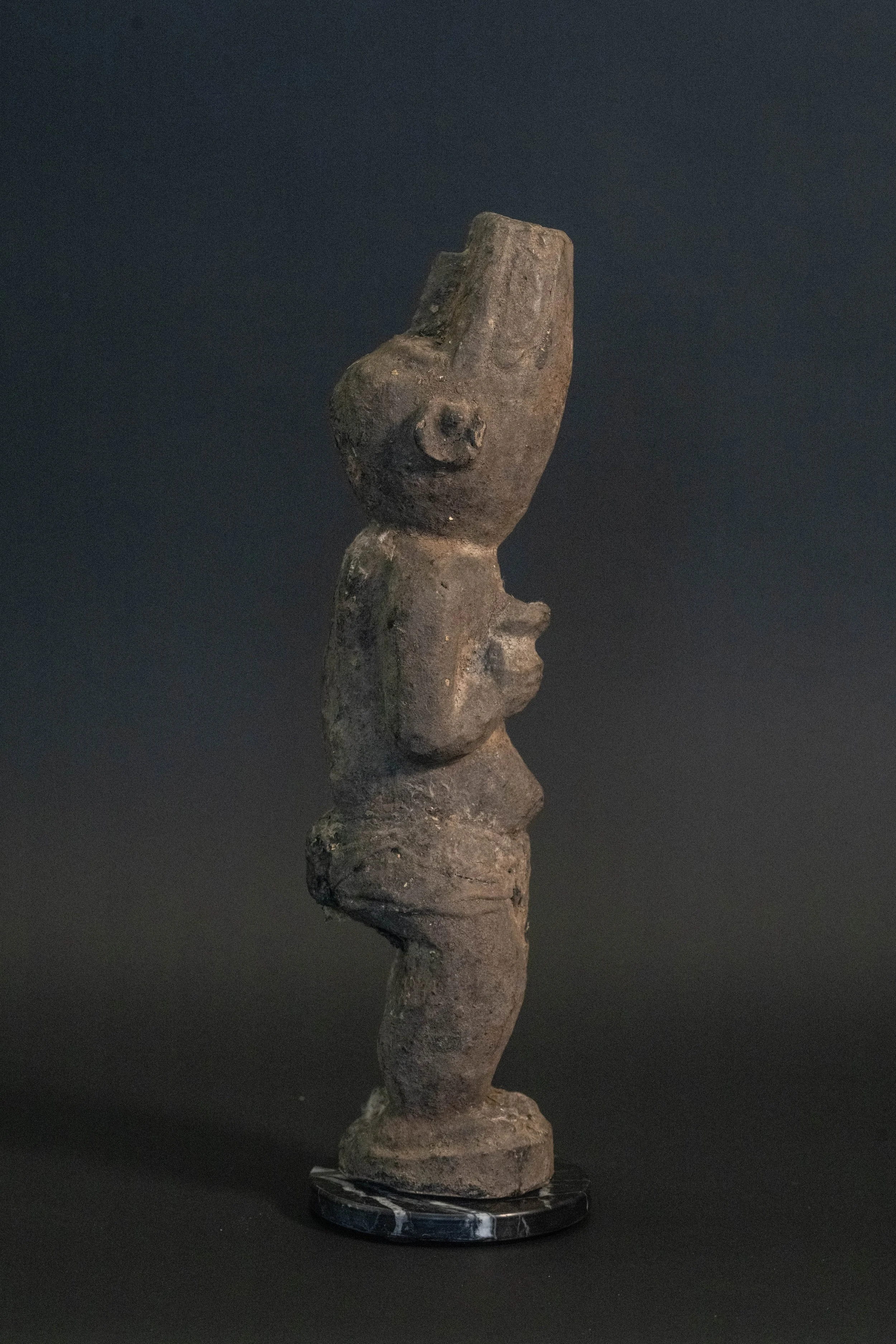
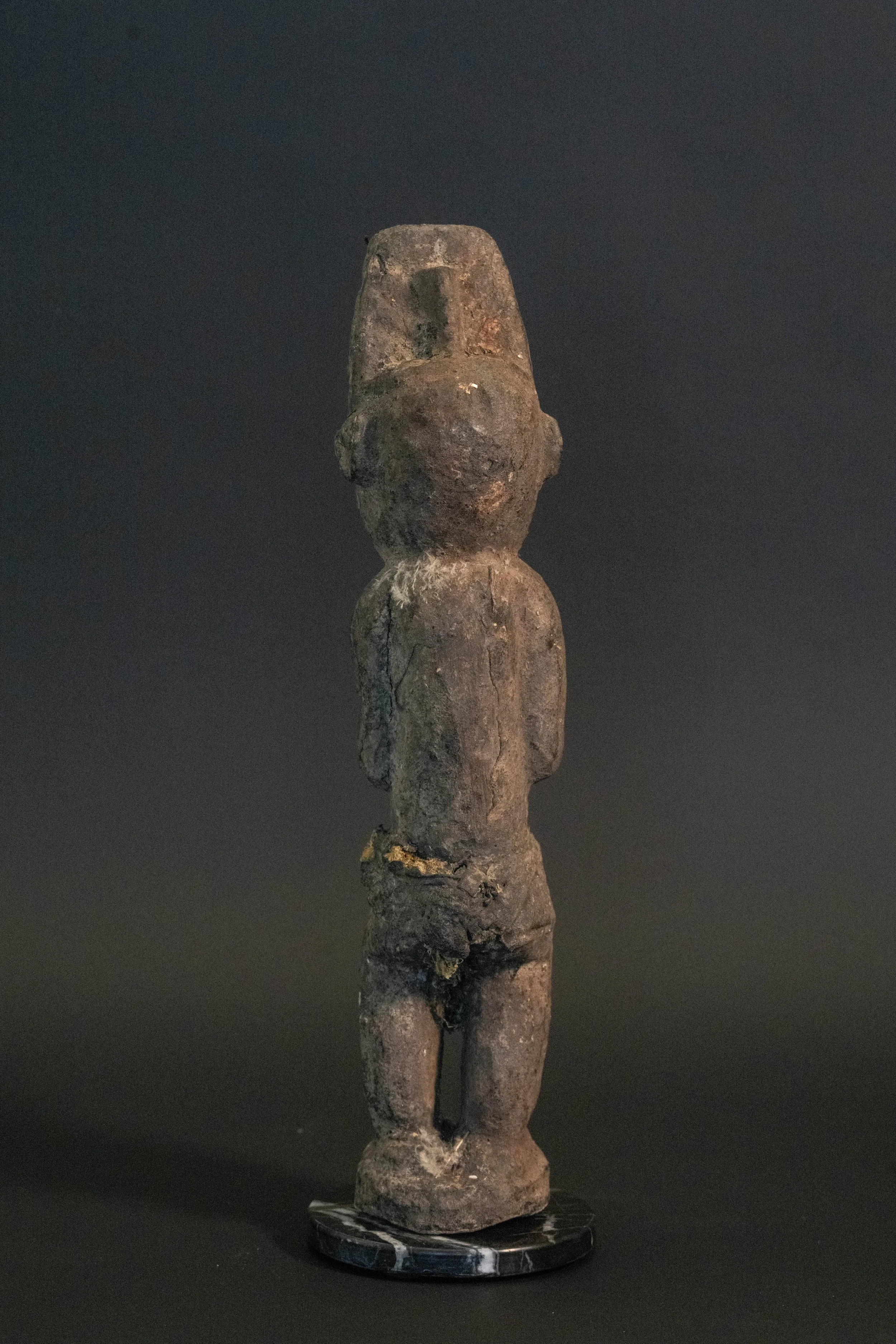
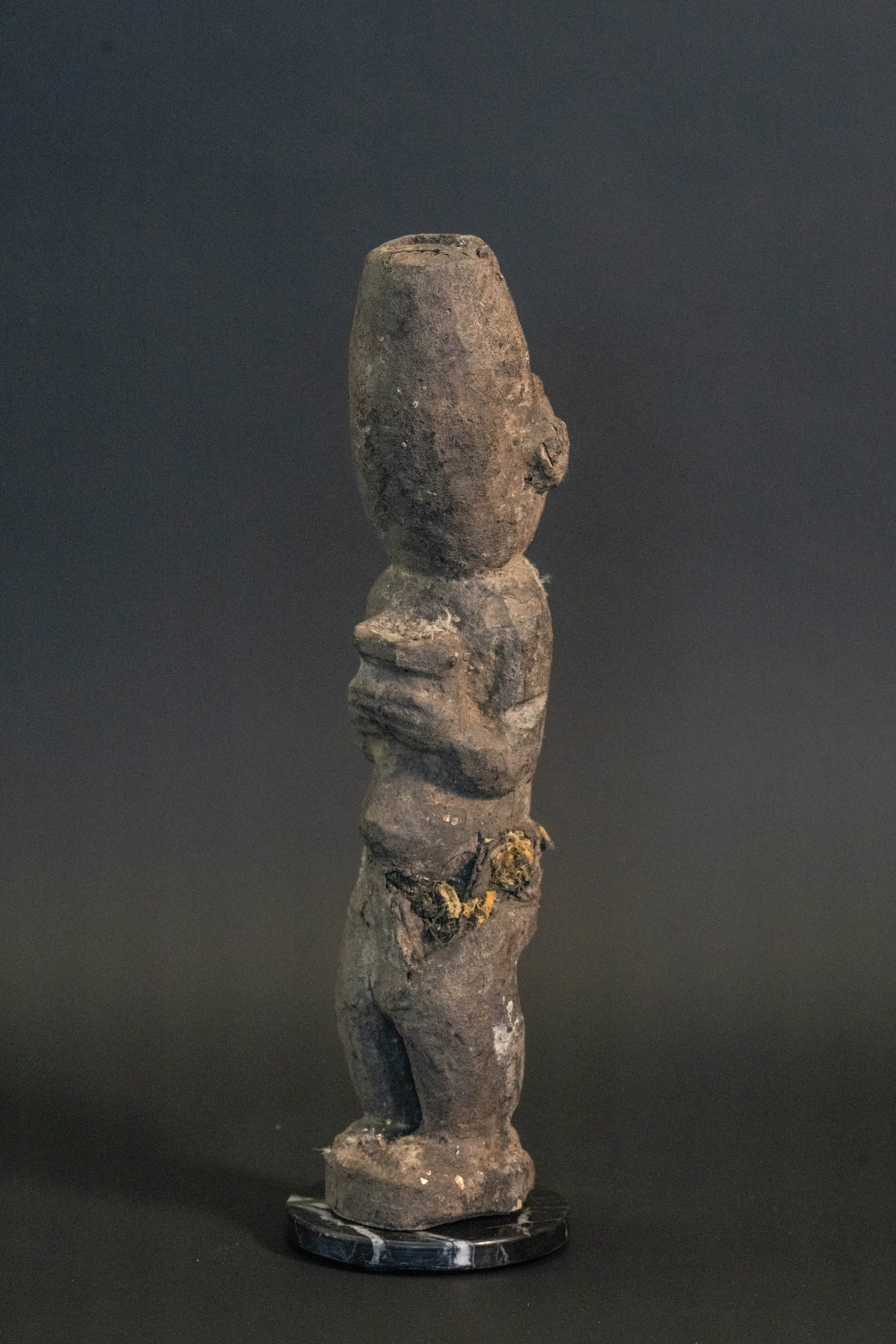
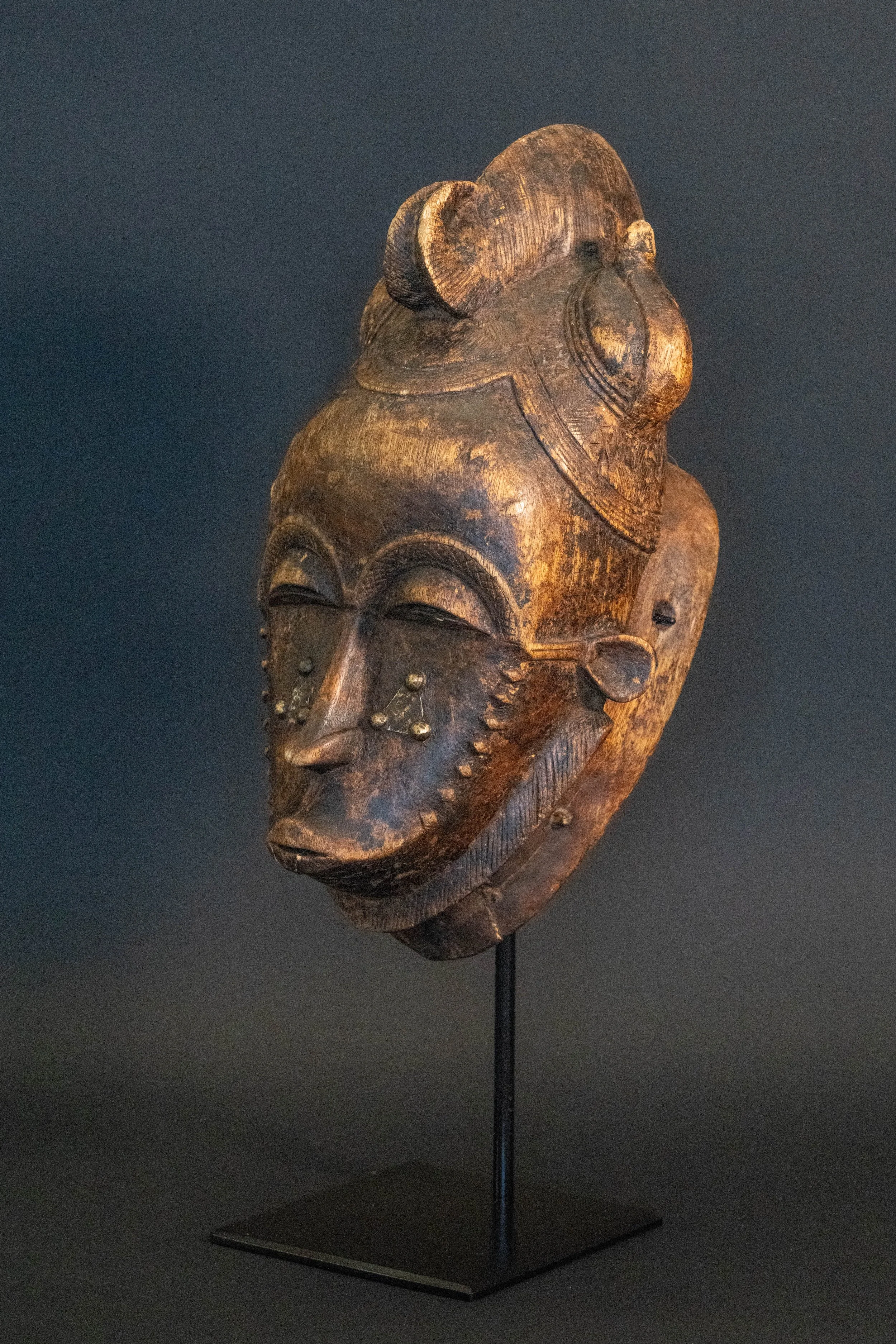
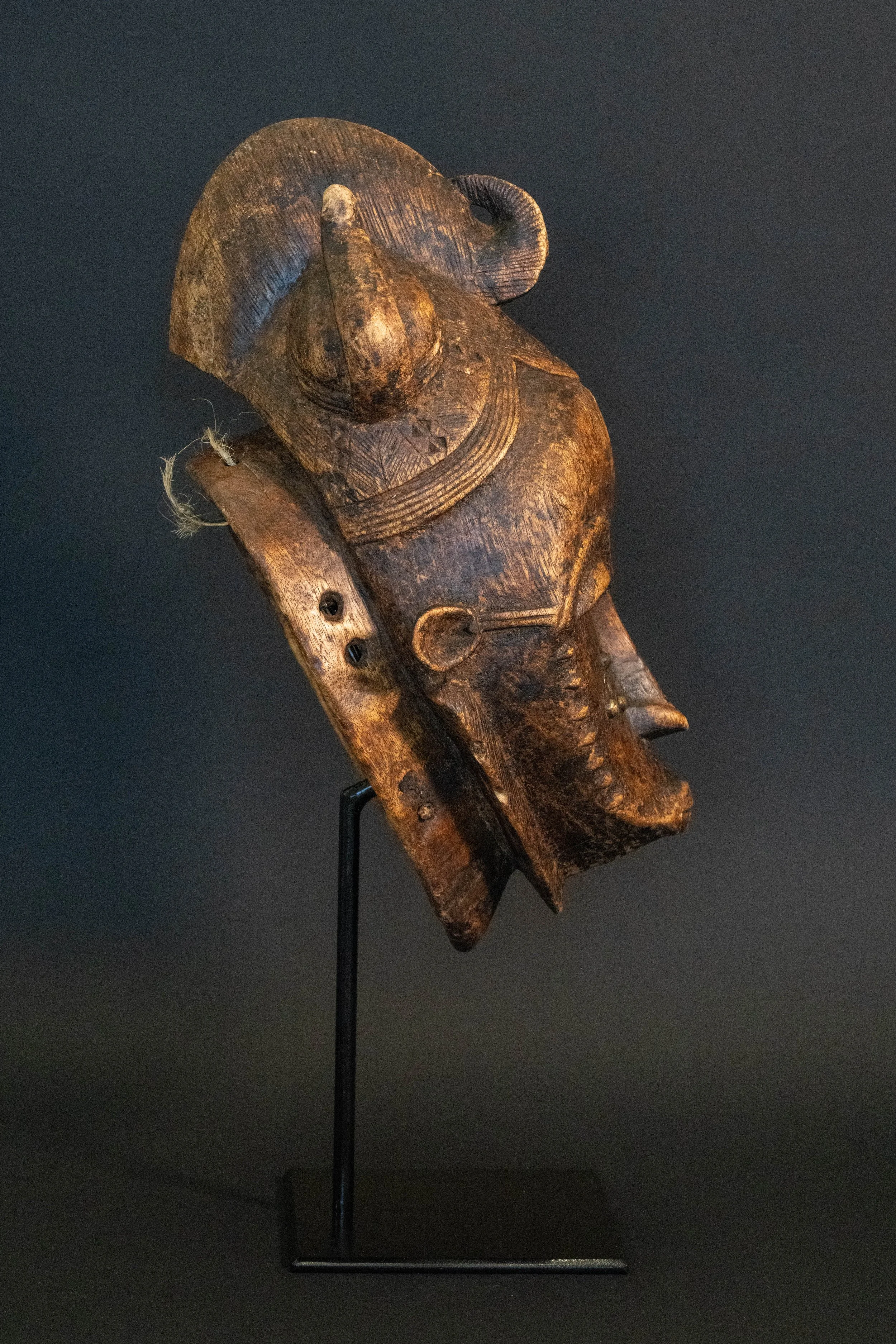
A substantial example of Baule ritual sculpture, carved from a single block of dense hardwood. The figure stands in a deep crouch, knees bent, presenting a bowl at the chest with both hands — the posture that defines this class of object. The long columnar trunk, horizontally projecting muzzle with bared teeth, upturned eyes, and disc ears mark it unmistakably as simian rather than human.
For most of the twentieth century, bowl-bearing monkeys like this circulated under the name gbekre. The label was a trade convention that hardened into fact, and it was mistaken — gbekre in Baule practice belongs to the mouse oracle. Susan Vogel corrected the record in Baule: African Art, Western Eyes (1997), placing these figures among the amuin: powerful, dangerous objects kept by men, concealed from women and the uninitiated, and sustained through repeated ceremonial feeding. The bowl is not an attribute but the working heart of the piece — a receptacle for blood, kola, palm wine, and other offerings poured in and over the head across a long ritual life.
The surface is the most compelling feature. A thick, layered accretion covers the head, torso, and loincloth in the pattern left by sustained handling and feeding — dense at the points of contact, varied across the body, and turning chalk-white at the mouth, teeth, and bowl, where kaolin was concentrated to mark the spiritually charged zones. The contrast between dark oxidized wood and pale pigment gives the figure considerable presence. An aged indigo-and-green strip-cloth loincloth survives partially beneath the crust — a detail worth noting, as textile elements on figures of this type are difficult to fake convincingly, and its integration into the ritual surface indicates it was present throughout the object’s ceremonial life.
Dating rests on carving style, construction, and surface character, with the layered accretion and the way it has flowed into and aged within the body’s cracks both pointing to a long working life. Condition shows honest age wear: stable cracking, surface losses consistent with use, an aperture through the base fitted with a bound fiber charge, and no evidence of modern restoration. Form, patina, pigment, and ritual buildup are all intact.
For context, the Metropolitan Museum of Art holds a closely related example, cataloged as Monkey Figure for Mbra, Baule artist, central Côte d’Ivoire, 19th–mid-20th century (Michael C. Rockefeller Memorial Collection, object number 1978.412.325). https://www.metmuseum.org/art/collection/search/310767
Dimensions: 22.5 × 6.5 × 8 inches (H × W × D)
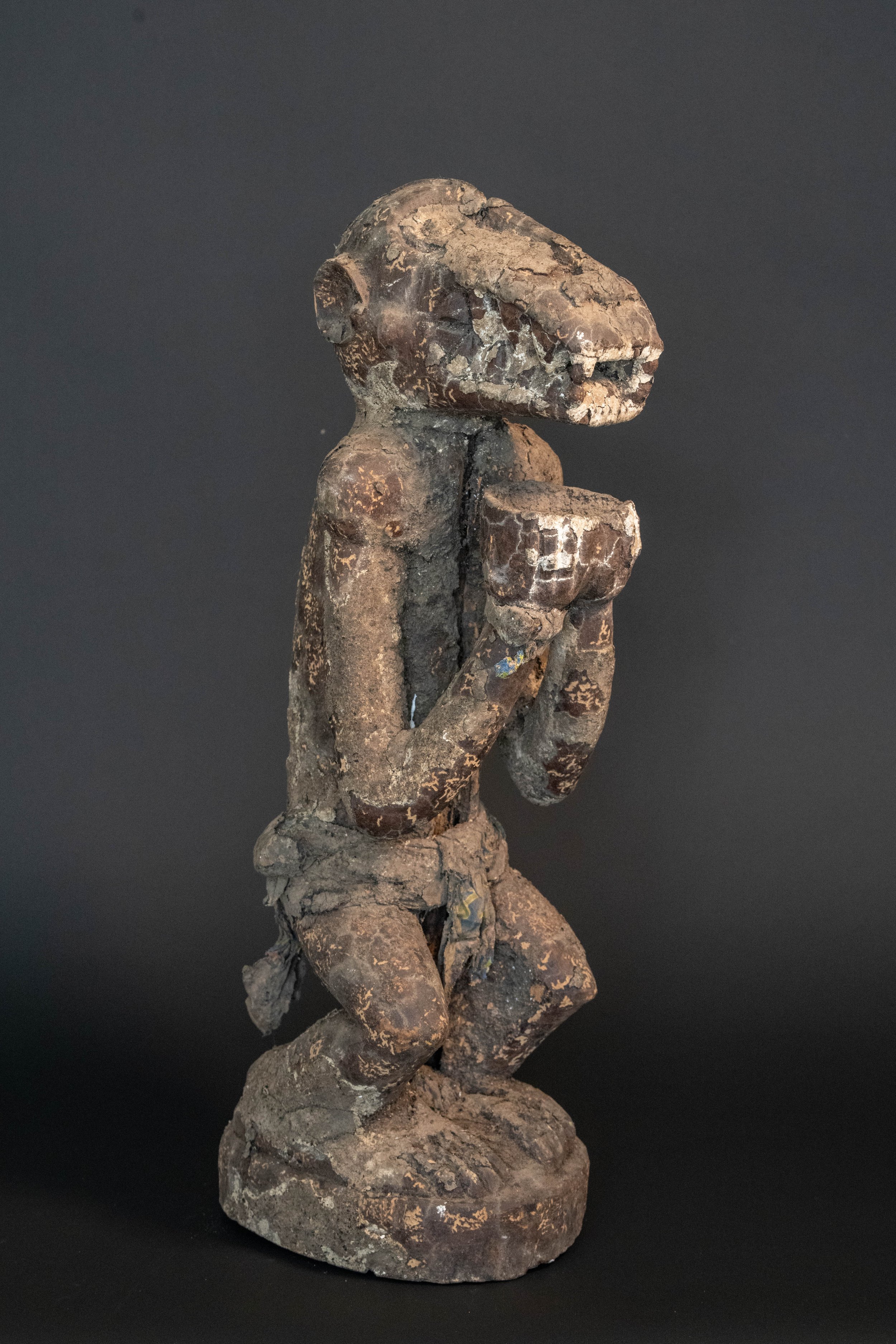 Image 1 of 7
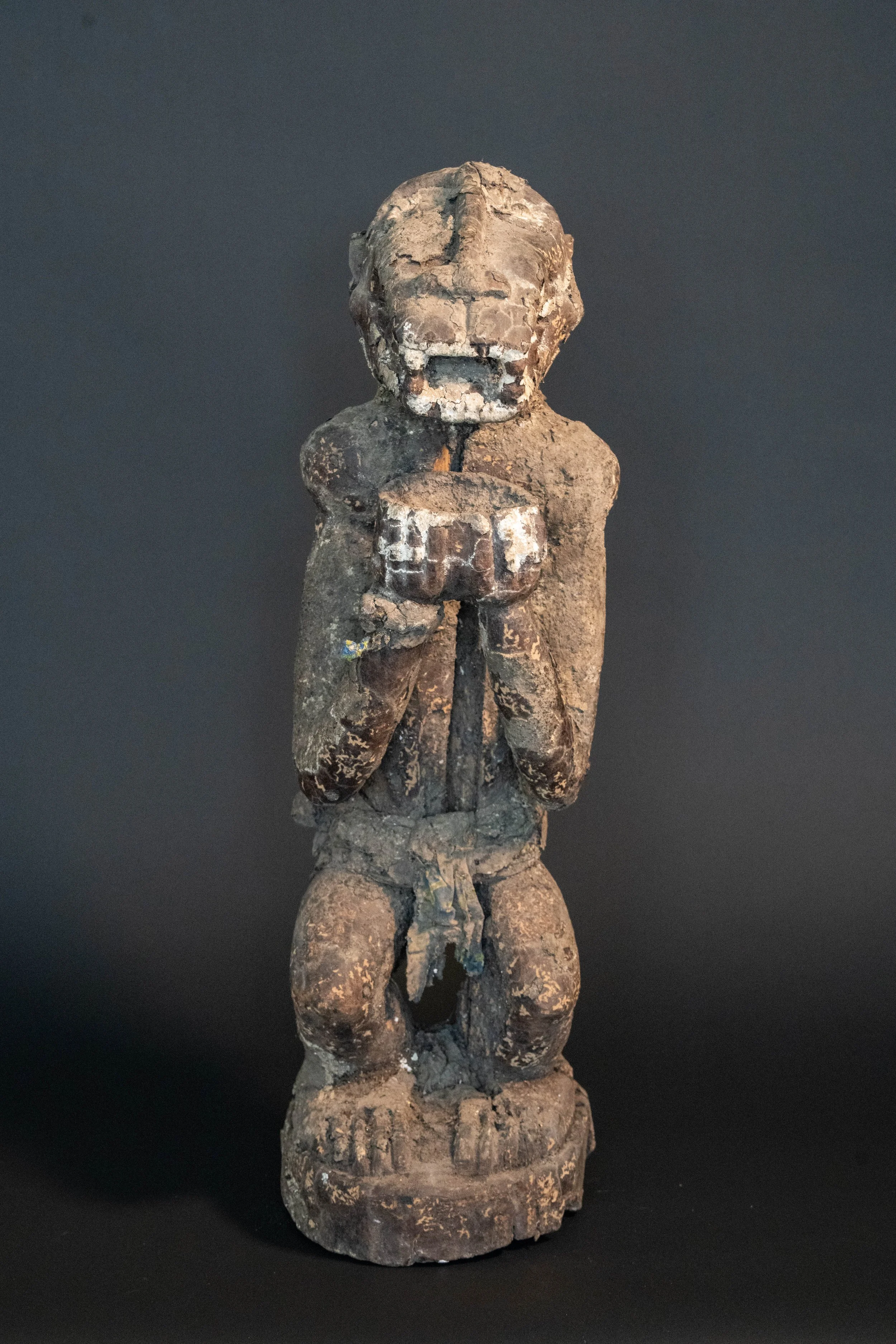 Image 2 of 7
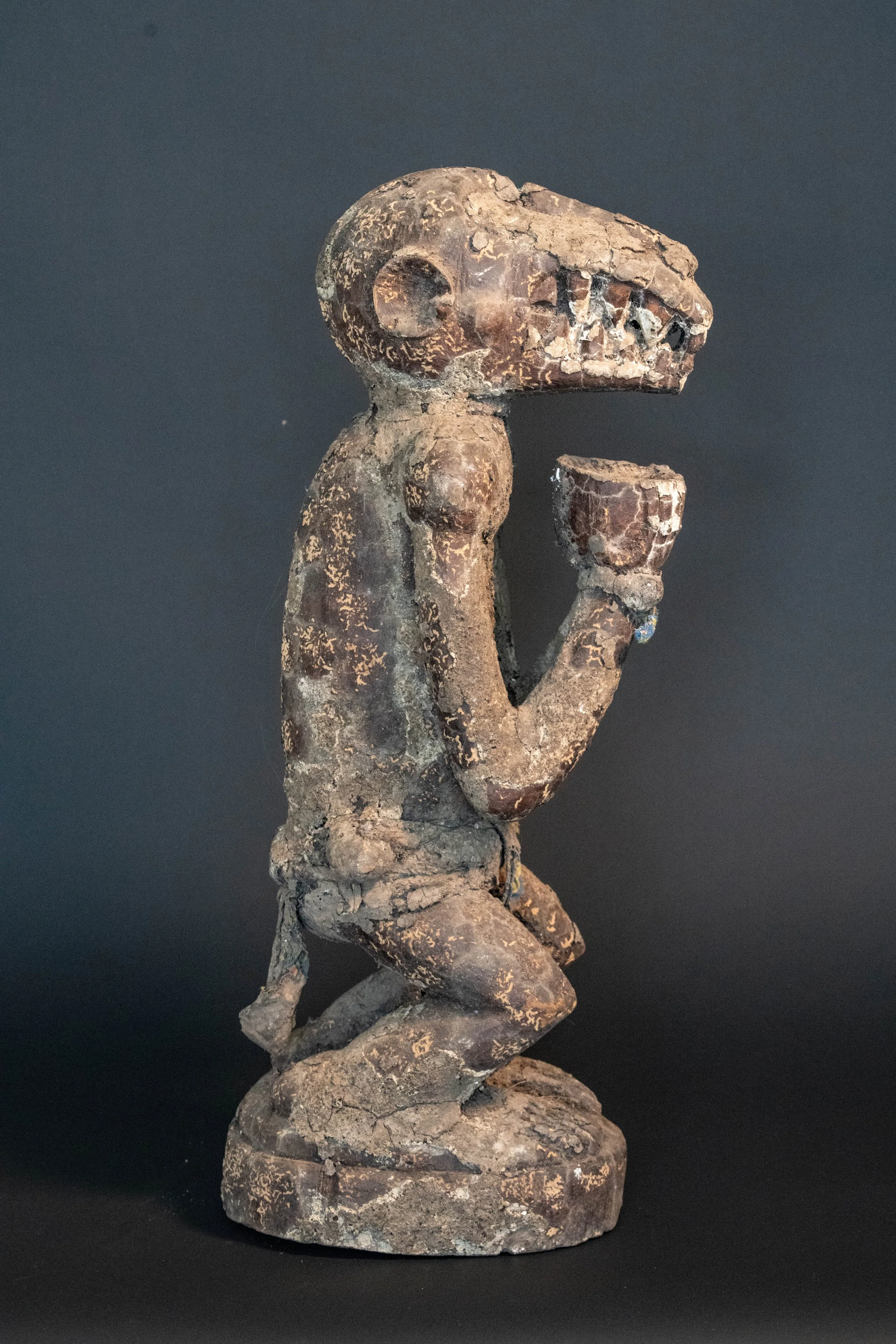 Image 3 of 7
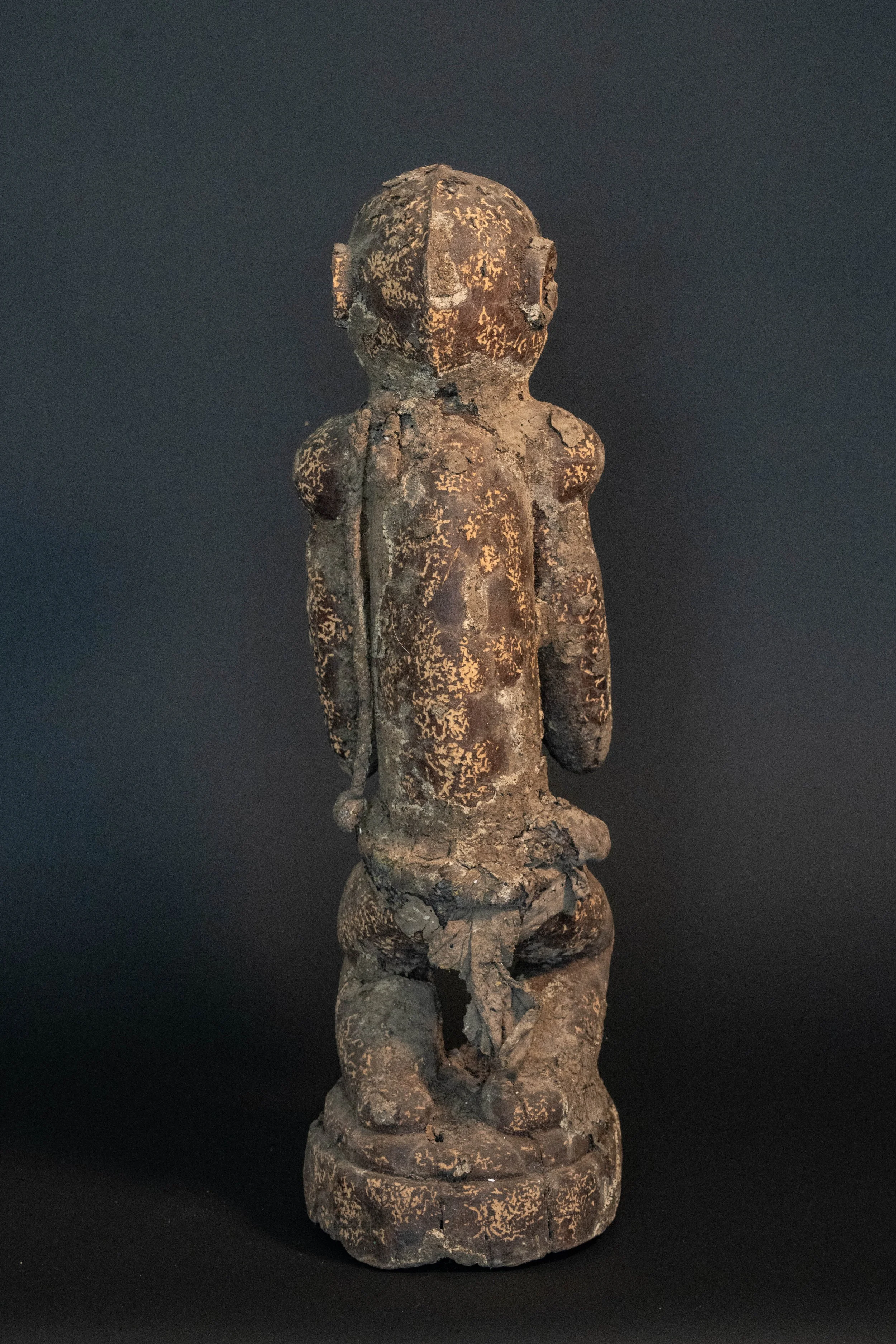 Image 4 of 7
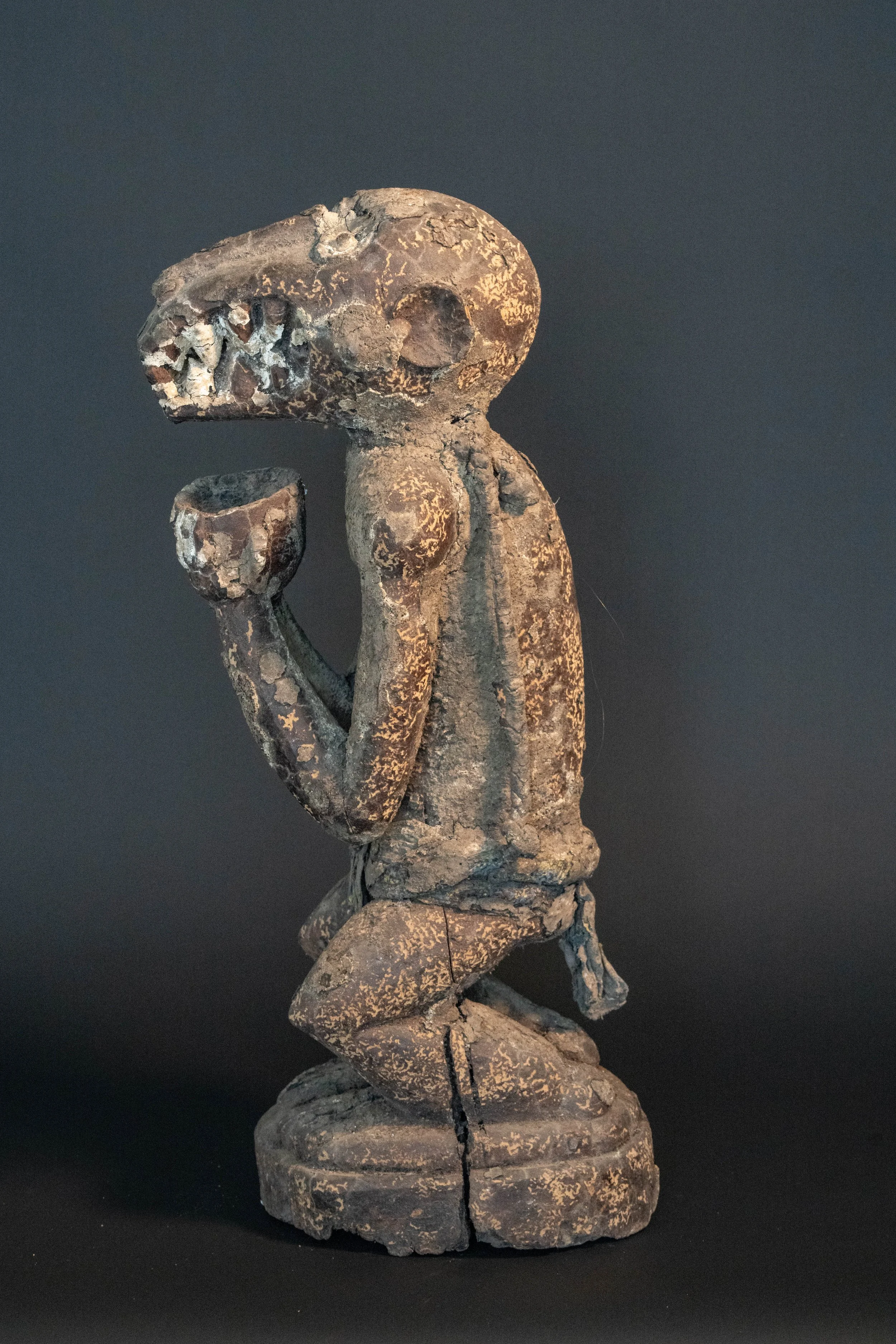 Image 5 of 7
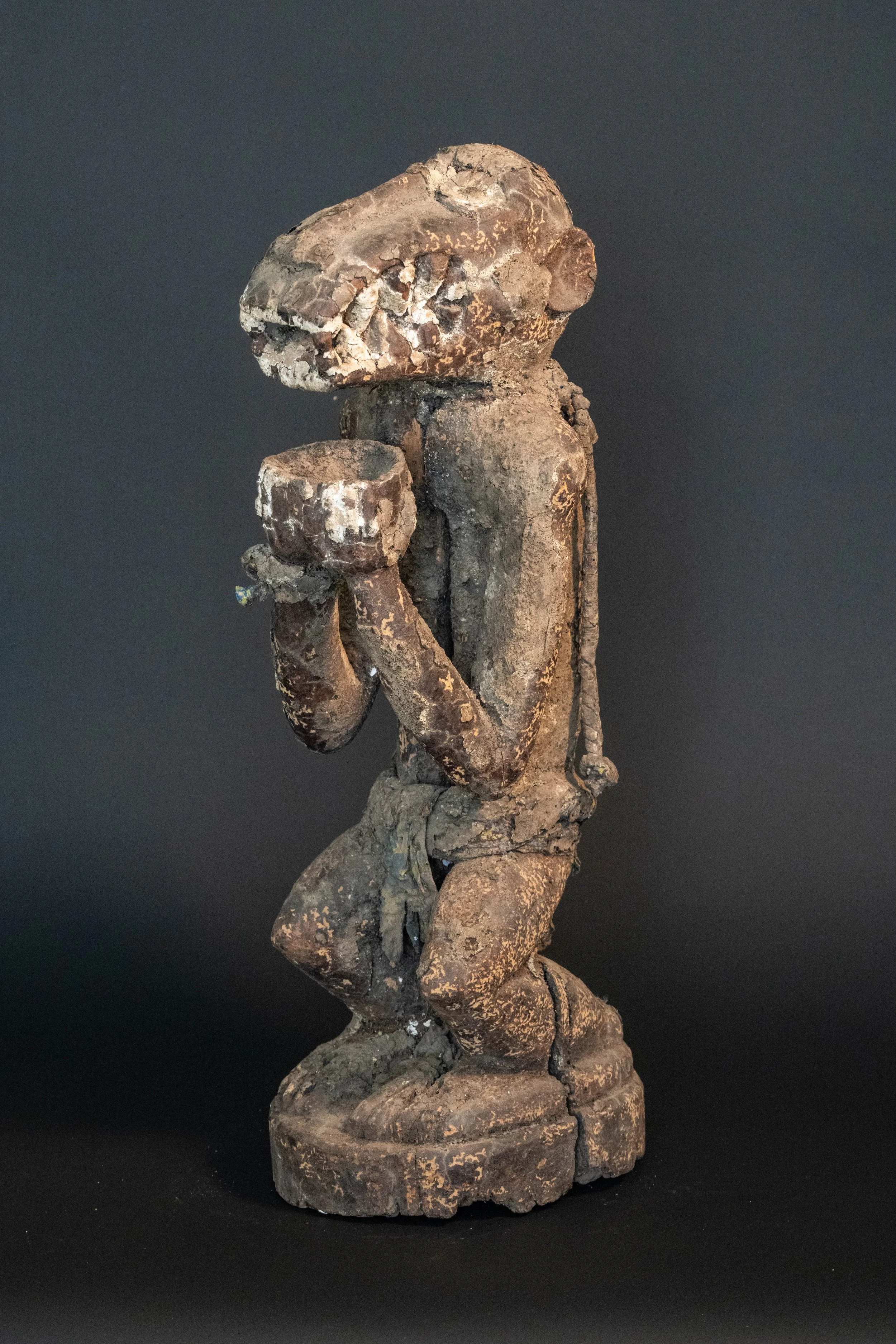 Image 6 of 7
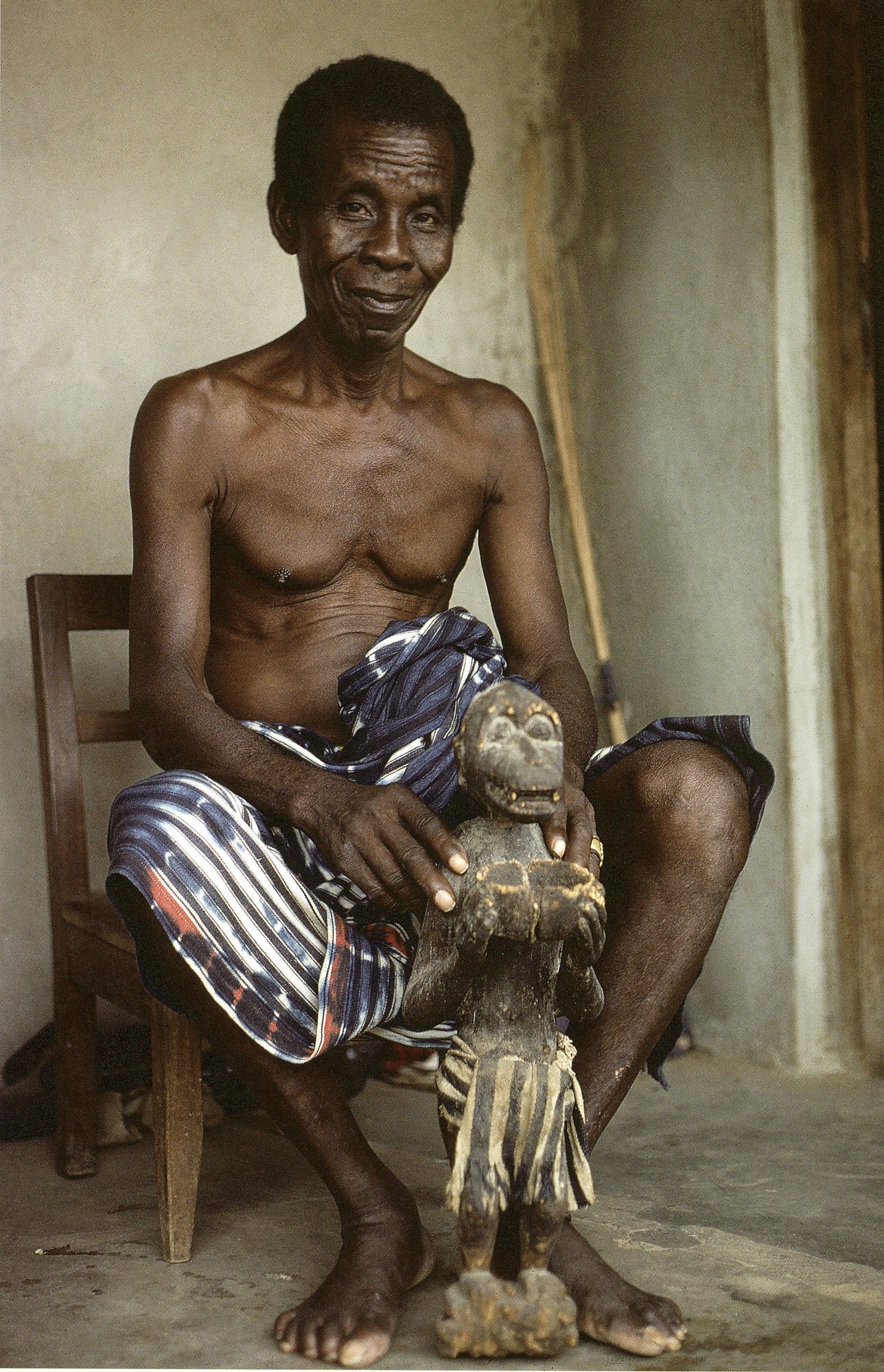 Image 7 of 7