 Image 1 of 4
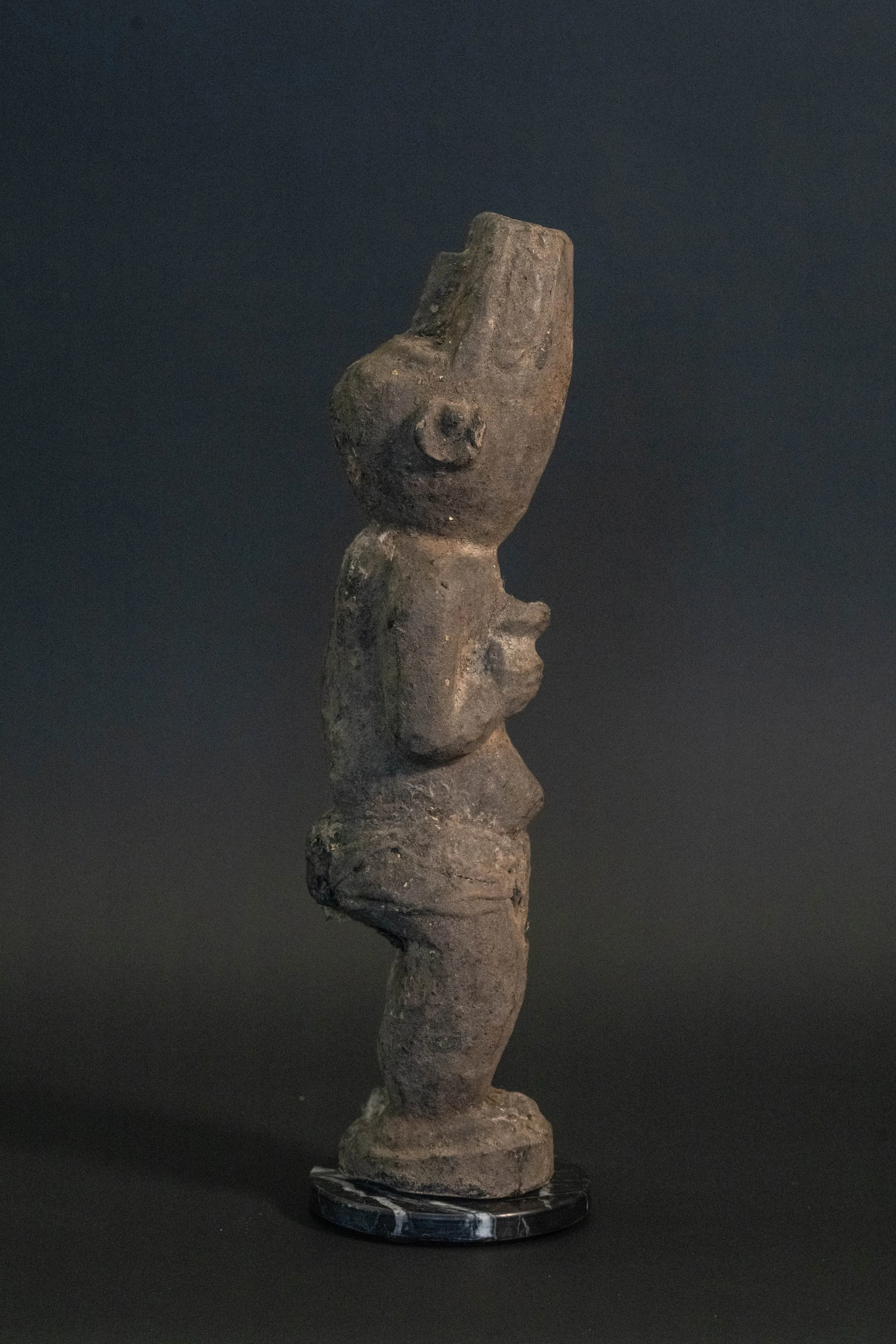 Image 2 of 4
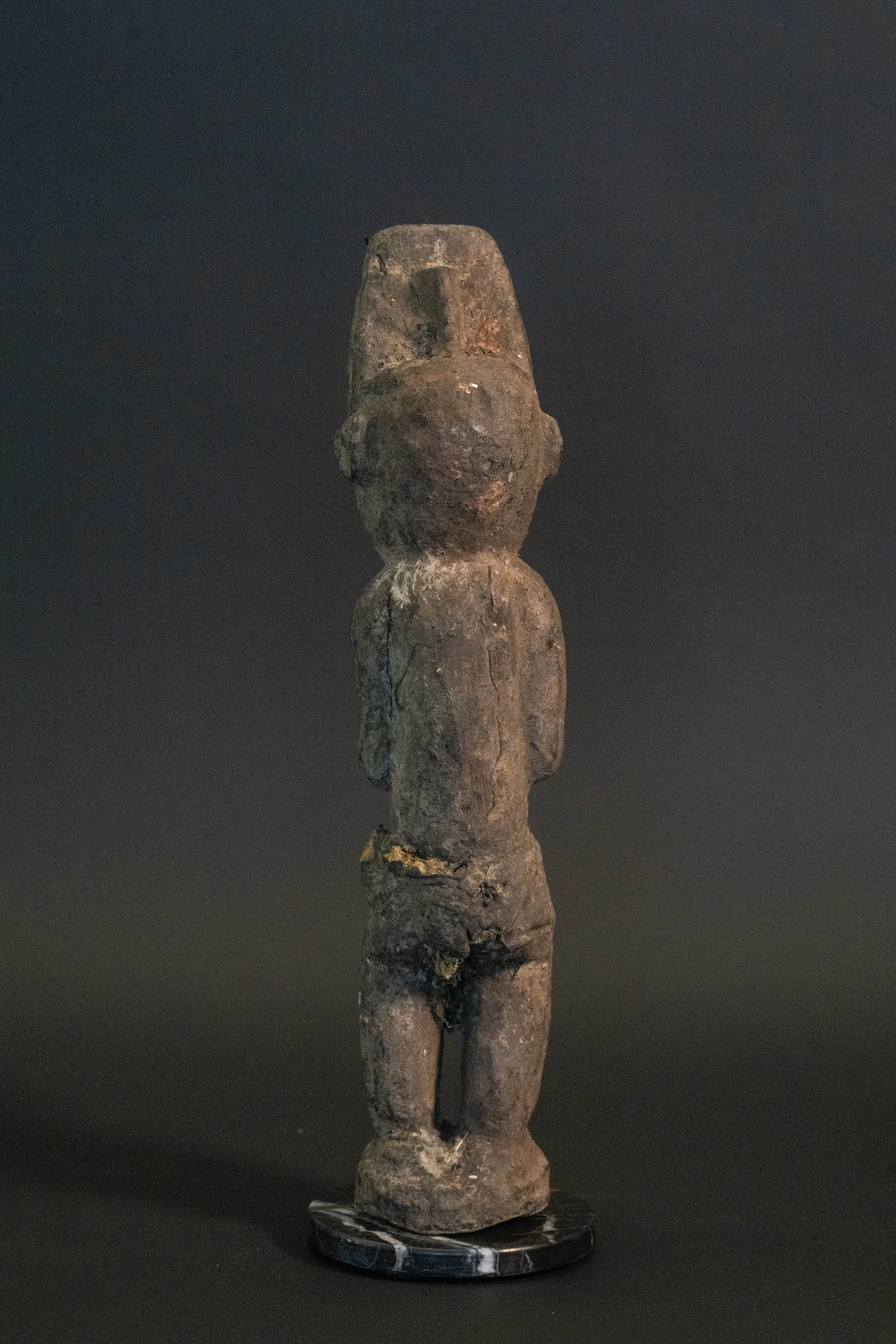 Image 3 of 4
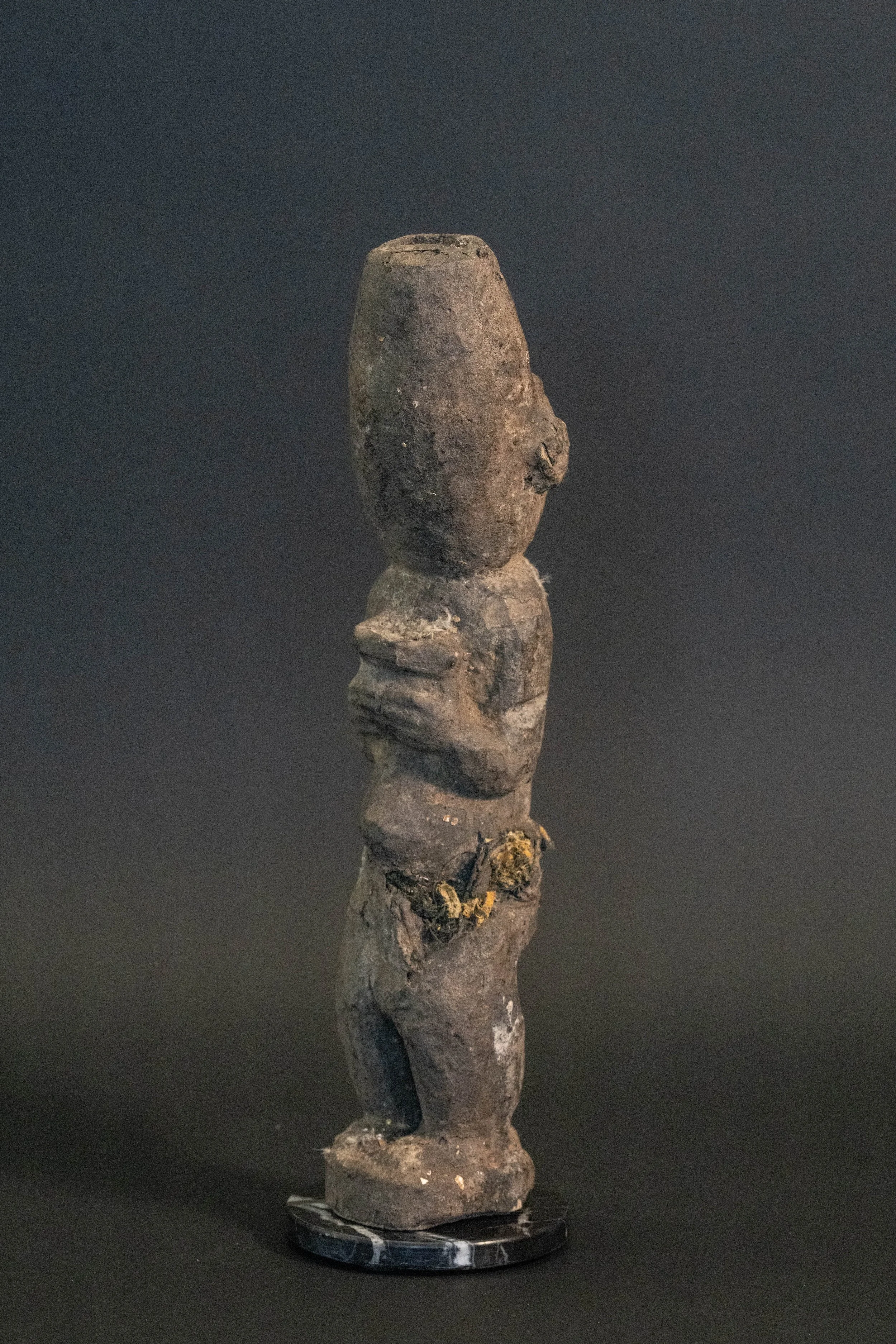 Image 4 of 4
Baule Zoomorphic Shrine Figure (Spirit Monkey) Côte d'Ivoire | Wood with ritual accretions, aged cloth fiber Height: 13.5 in (34 cm) | Estimated: early–mid 20th century, possibly late 19th
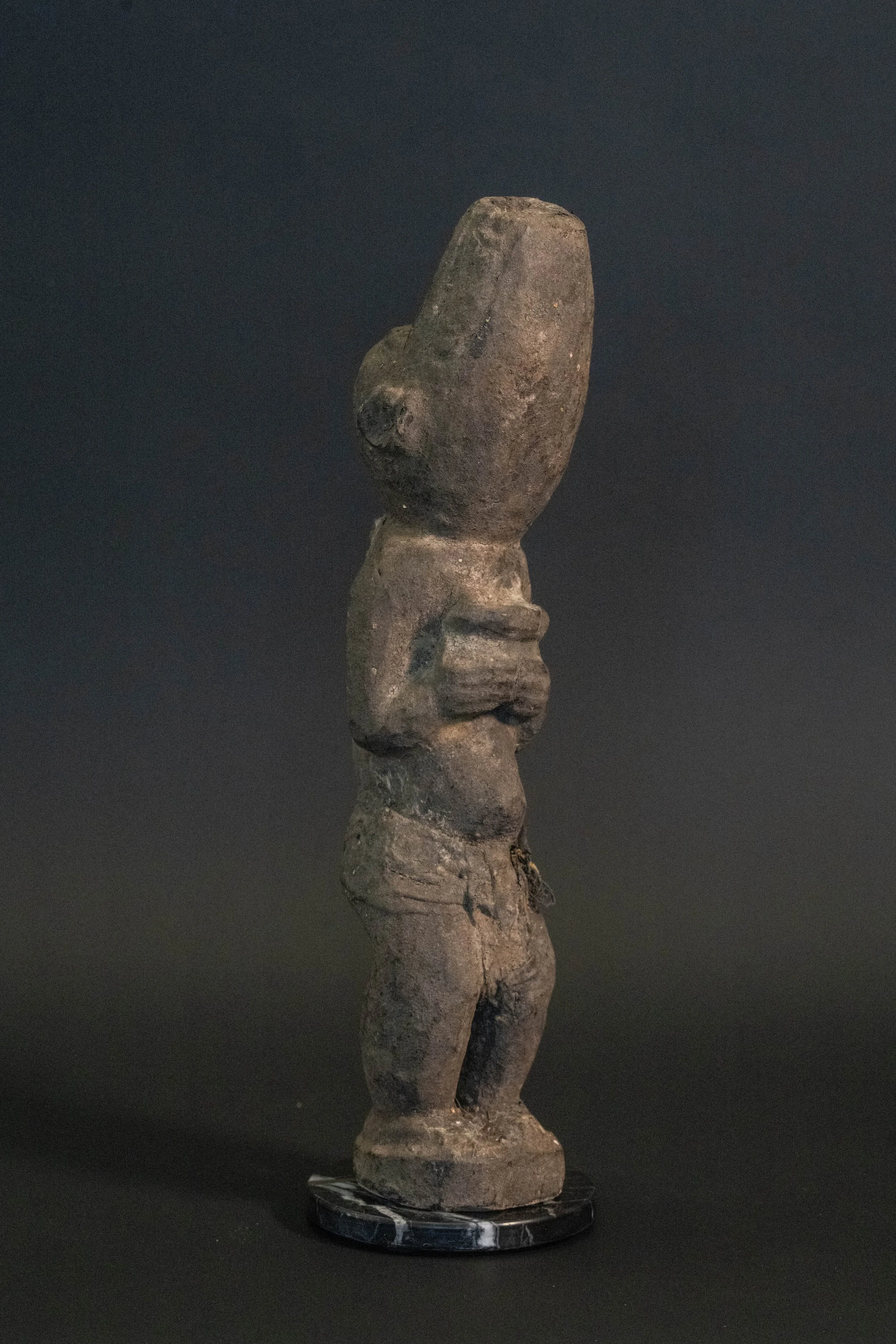
Compact and unmistakably made for indigenous use, this Baule-area zoomorphic shrine figure presents an animal spirit — monkey-like in its upturned snout, legible ears, and lateral display of teeth — head lifted skyward, hands offering a small cup. That cup is not a decorative detail. It tells you exactly what this figure was made to do.
In Central Côte d'Ivoire traditions, figures like this lived at the center of daily devotional life — kept on household or healer's shrines and activated through repeated offerings: libations of water, palm wine, oil, and medicinal washes, poured while prayers were spoken for protection, health, and spiritual balance. Over time, those actions leave the best evidence a collector can ask for. Not fresh "antiquing" — but decades of handling, smoke, and shrine life.
The surface here is exceptional. Thick ritual accretion sits in protected recesses; high points are softened where hands and cloth worked the figure again and again. Around the waist, an aged cloth and fiber loincloth is partly buried beneath old buildup — exactly what you see when an object has been wrapped, re-wrapped, and re-fed over long use. No visible restoration. Just an honest, earned patina.
The tooth-baring mouth is worth noting. In African visual language, exposed teeth signal warning, power, and protection — the spirit's ability to repel harm. Paired with the offering cup, the iconographic message is clear: this figure receives devotion, and it enforces boundaries.
This is a working object—a small, powerful survivor of lived ceremony. Put it under good light, and it does what the best African sculpture does: it stops being “an artifact” and becomes a presence.
For context, a closely related Baule Monkey figure is on view online in the Metropolitan Museum of Art’s collection. https://www.metmuseum.org/art/collection/search/310774
Condition: Good. Structurally sound with no visible repairs. Ritual accretions, aged cloth fiber.
Dimensions: 13.5 × 2.5 × 3 inches (H x W x D)
Baule Zoomorphic Shrine Figure (Spirit Monkey) Côte d'Ivoire | Wood with ritual accretions, aged cloth fiber Height: 13.5 in (34 cm) | Estimated: early–mid 20th century, possibly late 19th
Compact and unmistakably made for indigenous use, this Baule-area zoomorphic shrine figure presents an animal spirit — monkey-like in its upturned snout, legible ears, and lateral display of teeth — head lifted skyward, hands offering a small cup. That cup is not a decorative detail. It tells you exactly what this figure was made to do.
In Central Côte d'Ivoire traditions, figures like this lived at the center of daily devotional life — kept on household or healer's shrines and activated through repeated offerings: libations of water, palm wine, oil, and medicinal washes, poured while prayers were spoken for protection, health, and spiritual balance. Over time, those actions leave the best evidence a collector can ask for. Not fresh "antiquing" — but decades of handling, smoke, and shrine life.
The surface here is exceptional. Thick ritual accretion sits in protected recesses; high points are softened where hands and cloth worked the figure again and again. Around the waist, an aged cloth and fiber loincloth is partly buried beneath old buildup — exactly what you see when an object has been wrapped, re-wrapped, and re-fed over long use. No visible restoration. Just an honest, earned patina.
The tooth-baring mouth is worth noting. In African visual language, exposed teeth signal warning, power, and protection — the spirit's ability to repel harm. Paired with the offering cup, the iconographic message is clear: this figure receives devotion, and it enforces boundaries.
This is a working object—a small, powerful survivor of lived ceremony. Put it under good light, and it does what the best African sculpture does: it stops being “an artifact” and becomes a presence.
For context, a closely related Baule Monkey figure is on view online in the Metropolitan Museum of Art’s collection. https://www.metmuseum.org/art/collection/search/310774
Condition: Good. Structurally sound with no visible repairs. Ritual accretions, aged cloth fiber.
Dimensions: 13.5 × 2.5 × 3 inches (H x W x D)