Liberia, Early to Mid-20th Century Wood, kaolin. Height: 14 inches
Among the peoples of central Liberia's forested interior, the Bassa carved masks that distilled an entire philosophy of feminine beauty into wood. This example belongs to the tradition of Chu-Den-Zo — the "beautiful face" masks danced within the No society and related contexts where the ideal of refined womanhood was made visible, embodied, and honored through performance.
The sculptural intelligence of Bassa carving reveals itself in the organization of volumes. The face reads as a sequence of stacked spherical zones: a bulging forehead vault, a quieter mid-face plane carrying the small triangular nose and narrow slit eyes, and the projecting lower face with its softly modeled mouth. Horizontal grooves articulate the transitions, lending the composition a quiet architectural rhythm rarely matched in neighboring traditions.
Above the brow, an elaborate conical coiffure rises to a knobbed crest — a sculptural rendering of the gathered topknot worn by Bassa women on important occasions, ornamented in life with cowries and carved hairpins. Incised herringbone banding articulates the hairline, and a band of kaolin runs along the forehead, traces of the ritual preparation that activated the mask for performance.
The surface carries the history of its use. A variegated dark patina, deepest across the raised forehead and cheek crowns where palm oil and handling concentrated, gives way to lighter, weathered tones along the rim. Inside the cavity, the wood darkens further into the patchy, slightly greasy concretion that develops only through prolonged contact with a dancer's skin across many seasons. The perforated border, smoothed at the inner edges from decades of cord friction, attests to the attachment of the raffia headdress and costume that completed the masquerade.
Bassa masks of this character entered the same European dealer networks that, in the opening decades of the twentieth century, brought West African sculpture into the Paris ateliers where Modernism was being invented. The segmented planes and reductive geometry that animated Picasso, Derain, and Matisse find their source in carvings precisely of this kind — works in which the human face is reconstructed as a composition of pure volumes, governed by a logic older than European art had remembered.
A confidently sculpted, fully realized example with uncompromised surface and clear evidence of ceremonial life.
Liberia, Early to Mid-20th Century Wood, kaolin. Height: 14 inches
Among the peoples of central Liberia's forested interior, the Bassa carved masks that distilled an entire philosophy of feminine beauty into wood. This example belongs to the tradition of Chu-Den-Zo — the "beautiful face" masks danced within the No society and related contexts where the ideal of refined womanhood was made visible, embodied, and honored through performance.
The sculptural intelligence of Bassa carving reveals itself in the organization of volumes. The face reads as a sequence of stacked spherical zones: a bulging forehead vault, a quieter mid-face plane carrying the small triangular nose and narrow slit eyes, and the projecting lower face with its softly modeled mouth. Horizontal grooves articulate the transitions, lending the composition a quiet architectural rhythm rarely matched in neighboring traditions.
Above the brow, an elaborate conical coiffure rises to a knobbed crest — a sculptural rendering of the gathered topknot worn by Bassa women on important occasions, ornamented in life with cowries and carved hairpins. Incised herringbone banding articulates the hairline, and a band of kaolin runs along the forehead, traces of the ritual preparation that activated the mask for performance.
The surface carries the history of its use. A variegated dark patina, deepest across the raised forehead and cheek crowns where palm oil and handling concentrated, gives way to lighter, weathered tones along the rim. Inside the cavity, the wood darkens further into the patchy, slightly greasy concretion that develops only through prolonged contact with a dancer's skin across many seasons. The perforated border, smoothed at the inner edges from decades of cord friction, attests to the attachment of the raffia headdress and costume that completed the masquerade.
Bassa masks of this character entered the same European dealer networks that, in the opening decades of the twentieth century, brought West African sculpture into the Paris ateliers where Modernism was being invented. The segmented planes and reductive geometry that animated Picasso, Derain, and Matisse find their source in carvings precisely of this kind — works in which the human face is reconstructed as a composition of pure volumes, governed by a logic older than European art had remembered.
A confidently sculpted, fully realized example with uncompromised surface and clear evidence of ceremonial life.
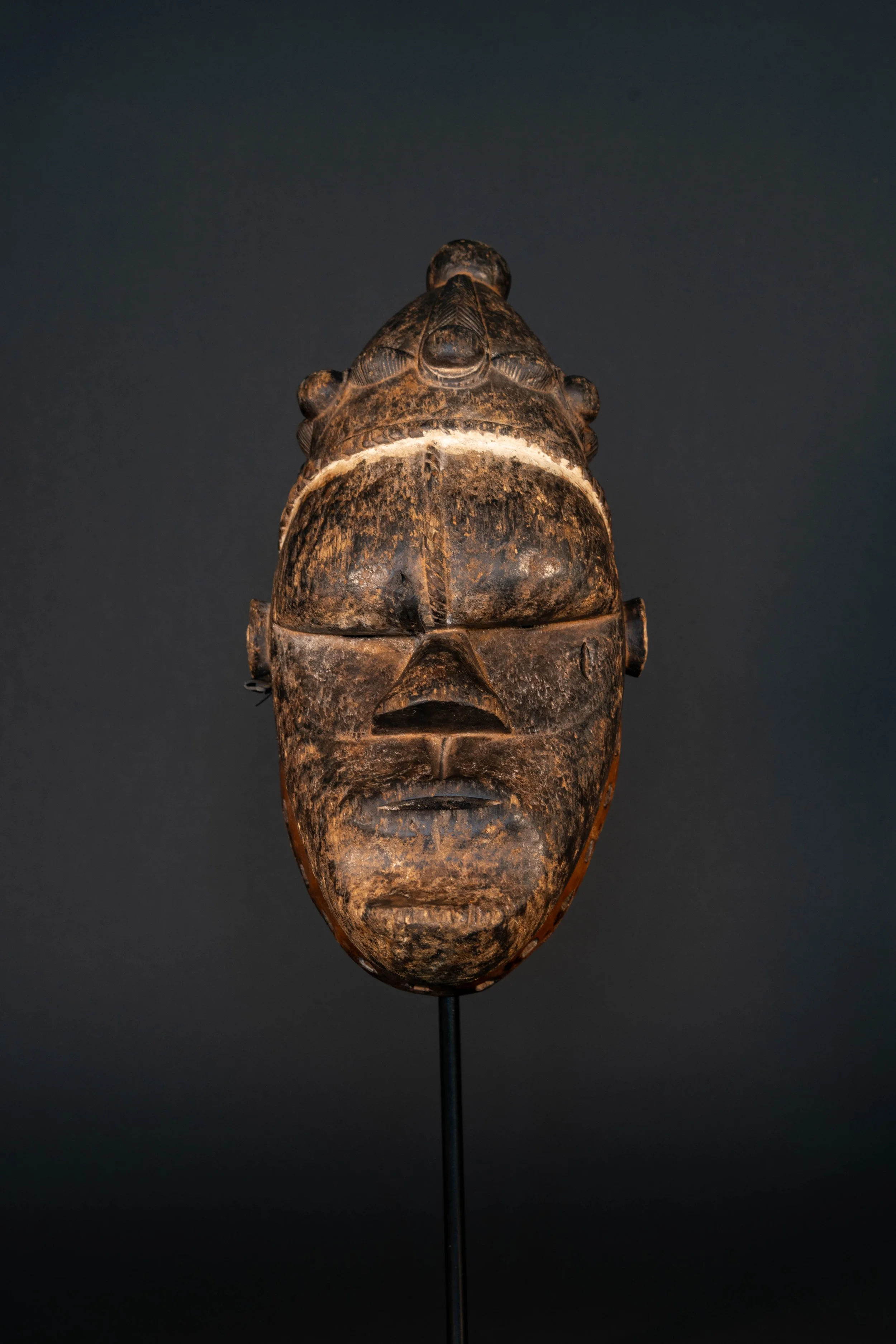 Image 1 of 6
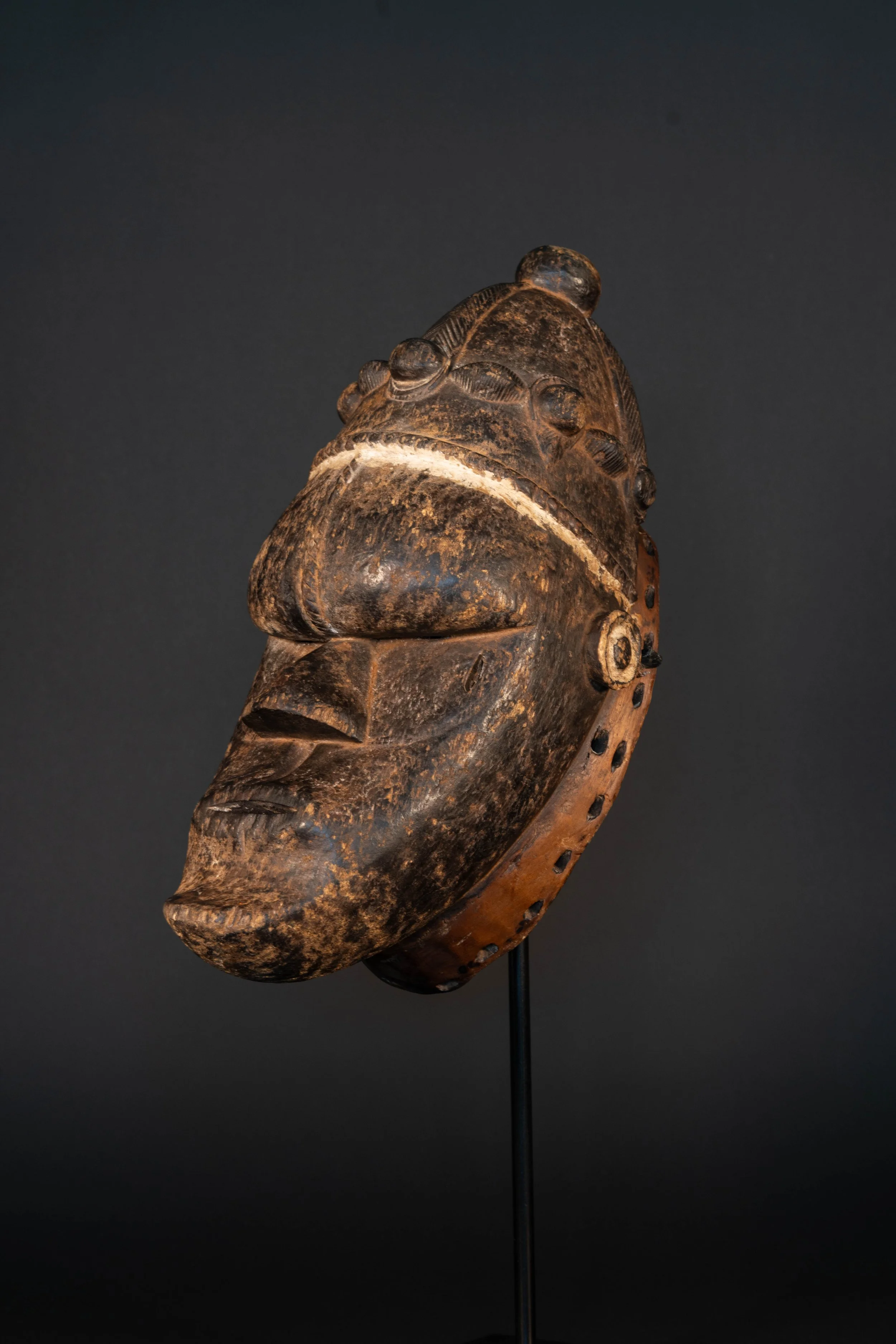 Image 2 of 6
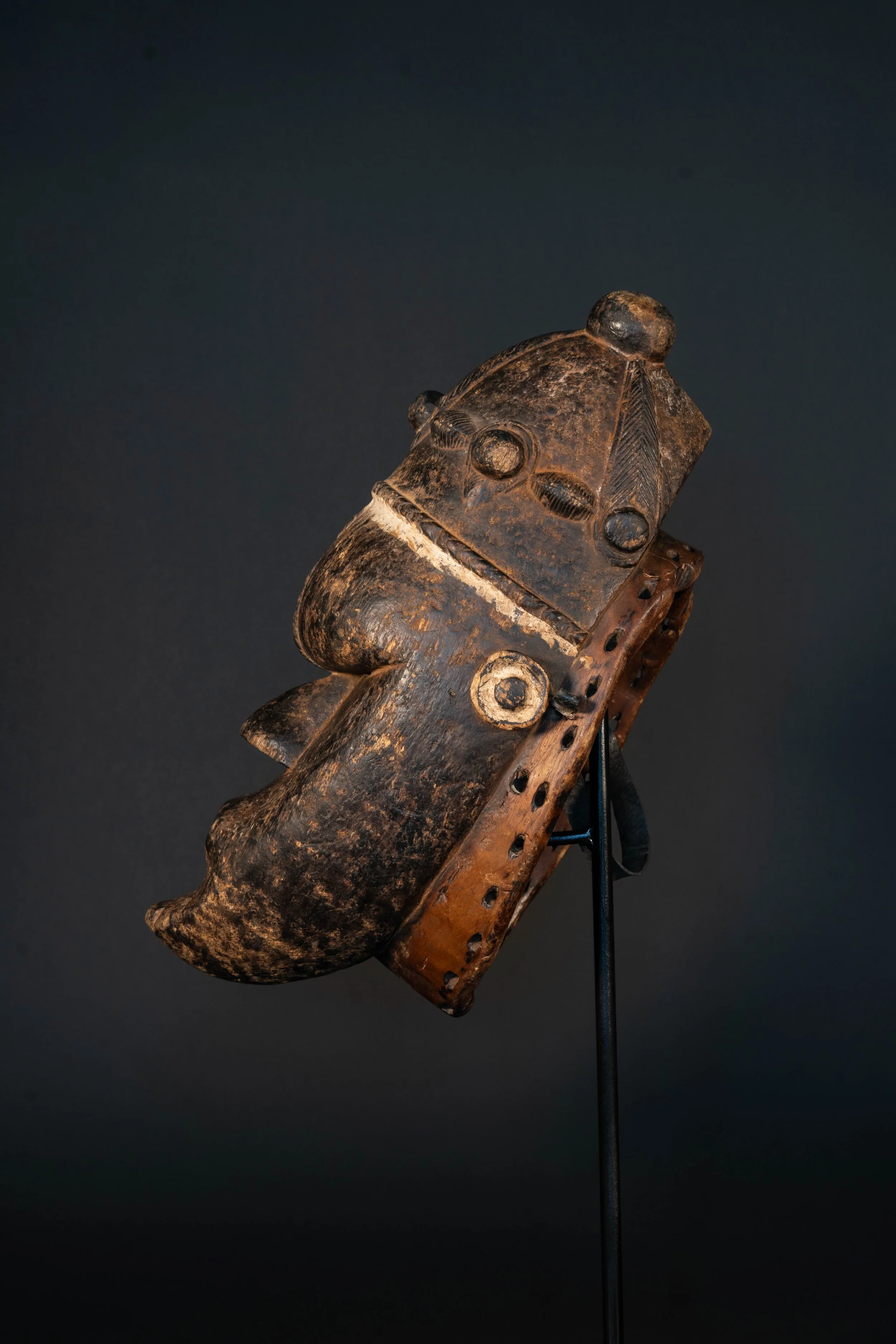 Image 3 of 6
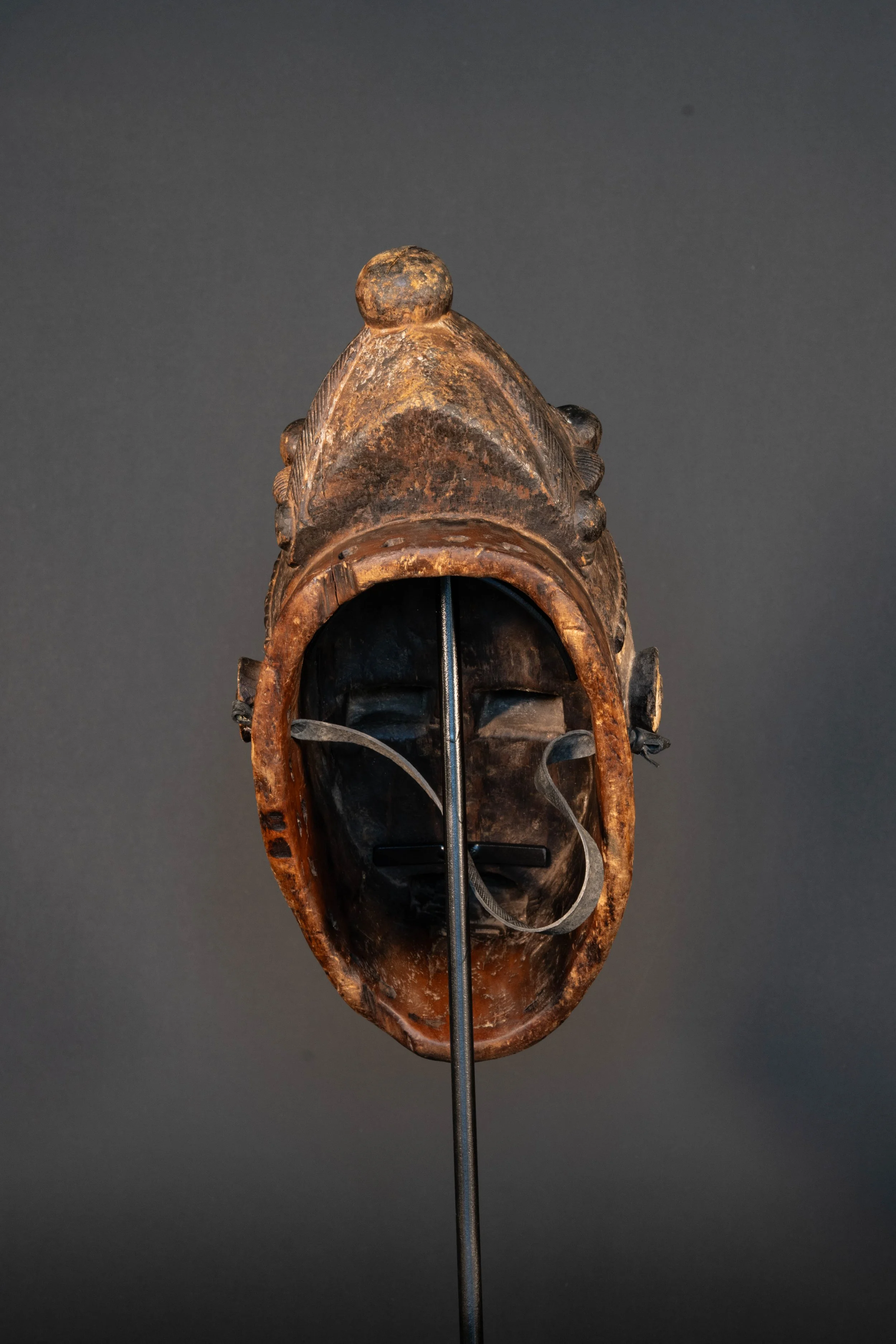 Image 4 of 6
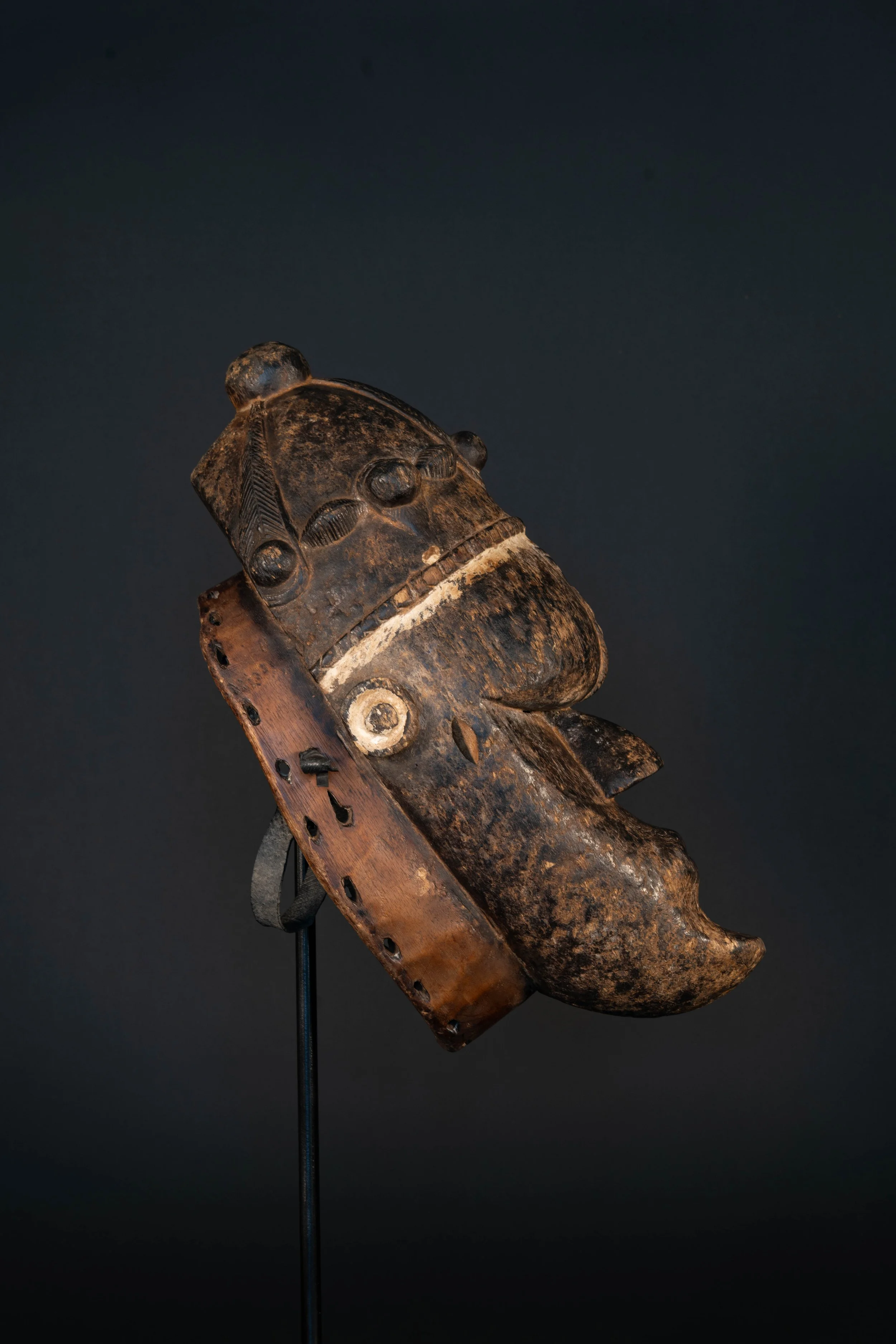 Image 5 of 6
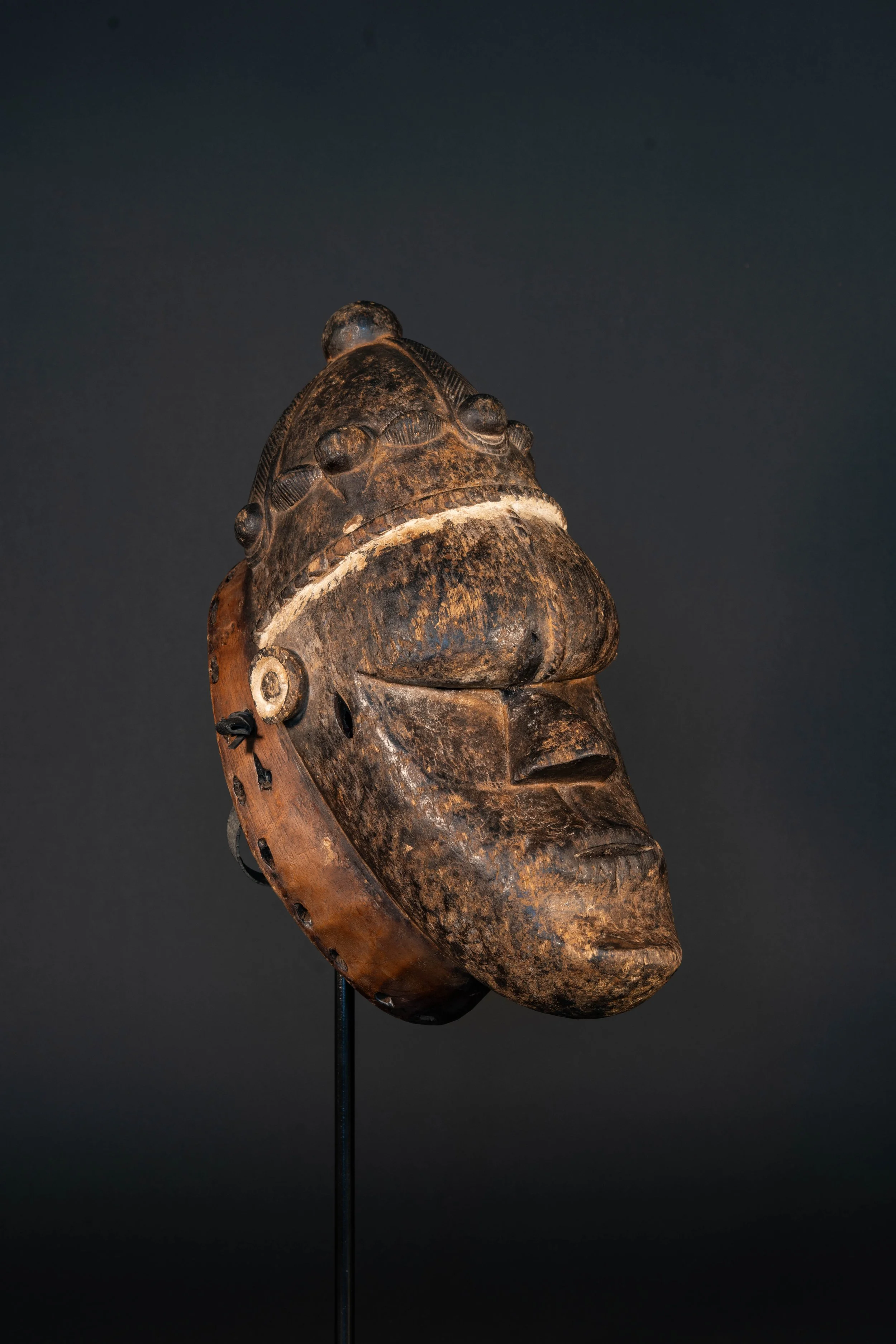 Image 6 of 6