 Image 1 of 4
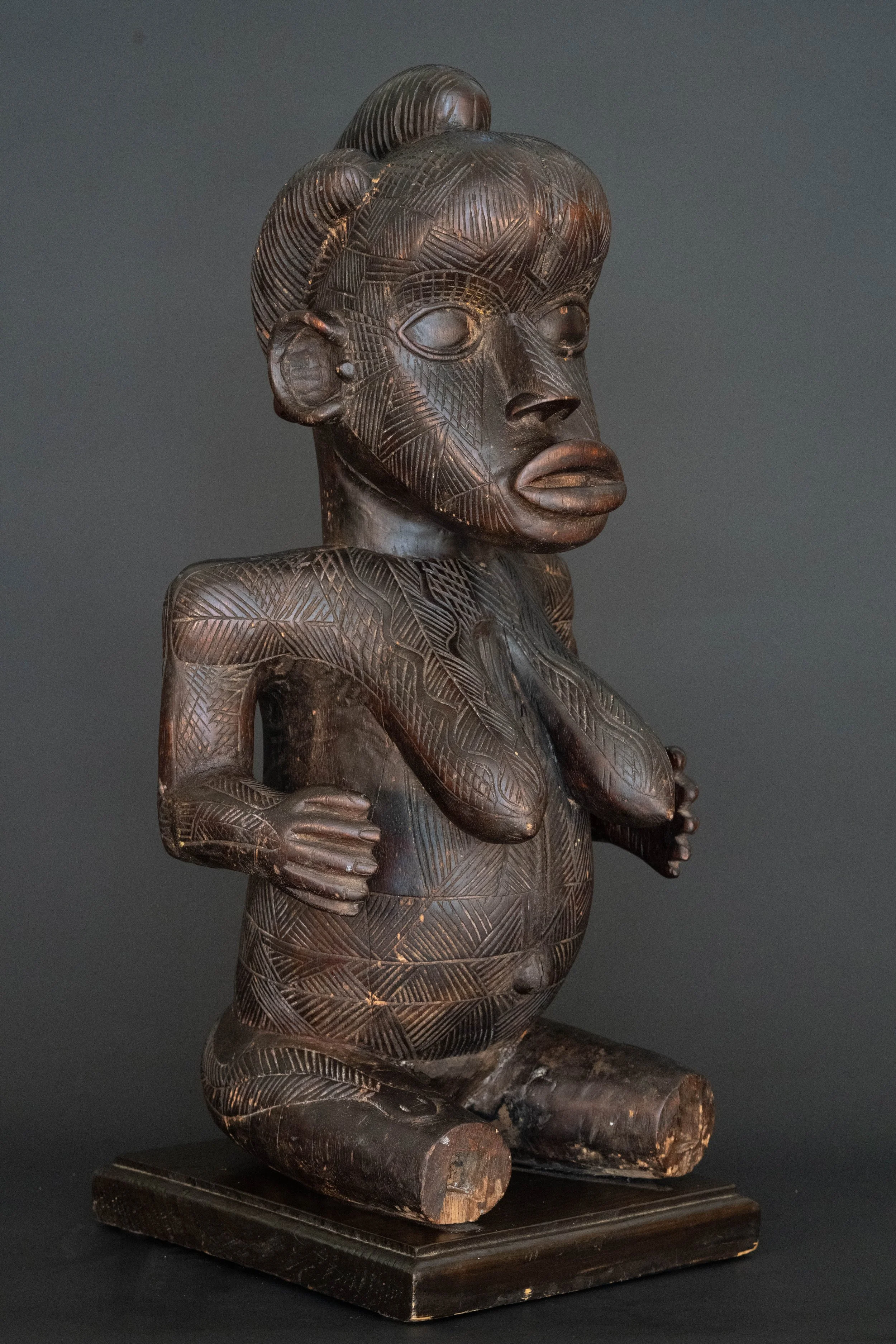 Image 2 of 4
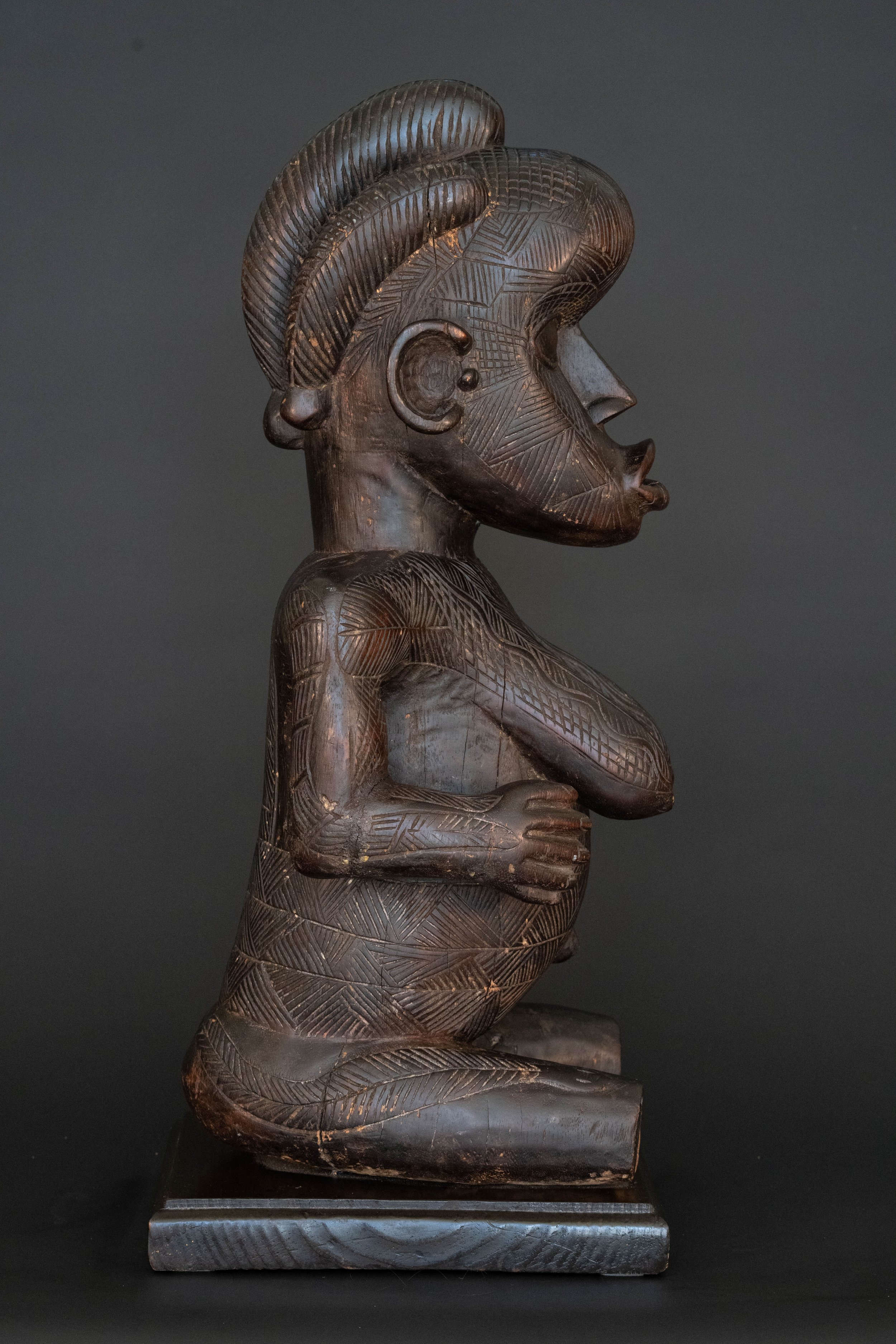 Image 3 of 4
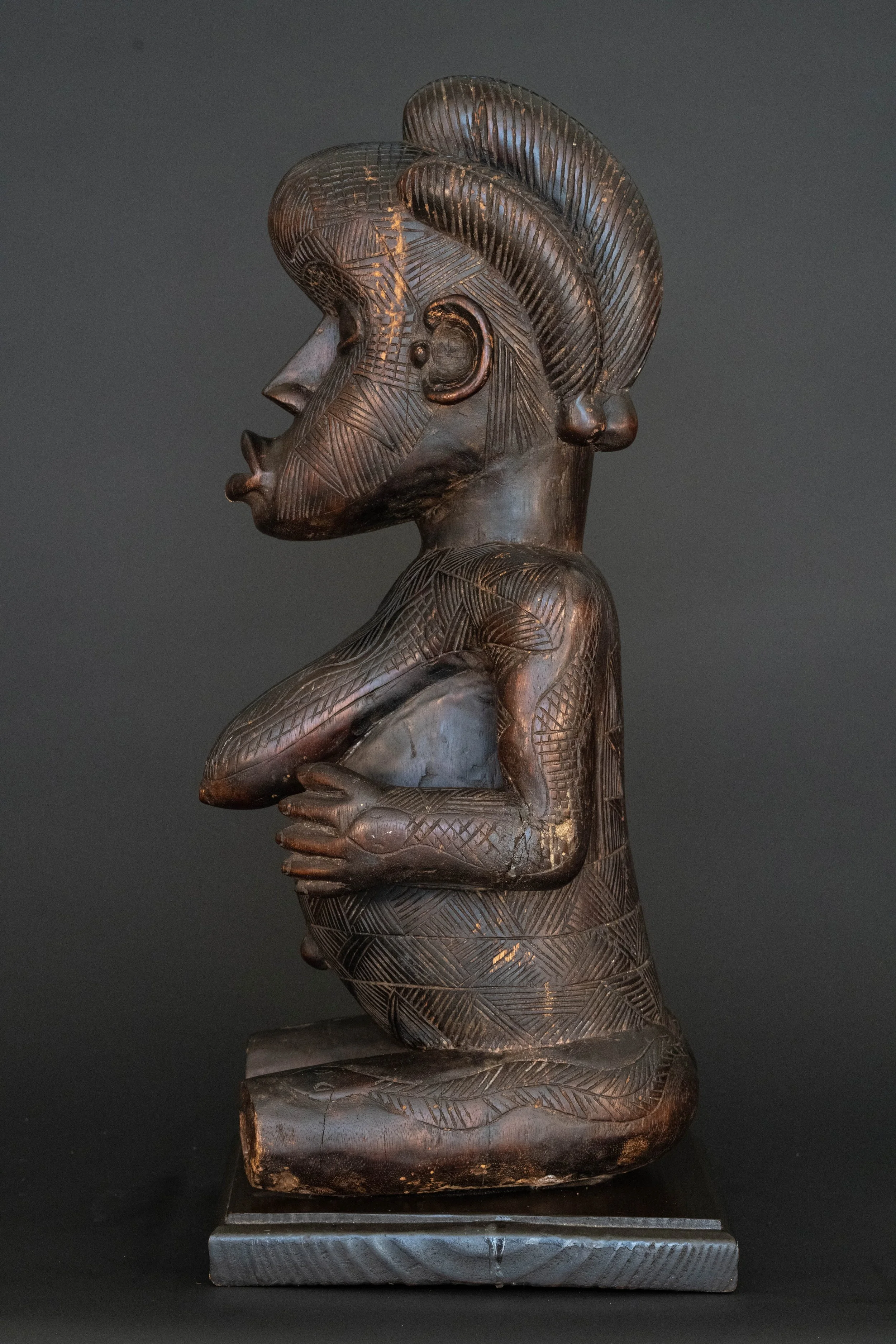 Image 4 of 4
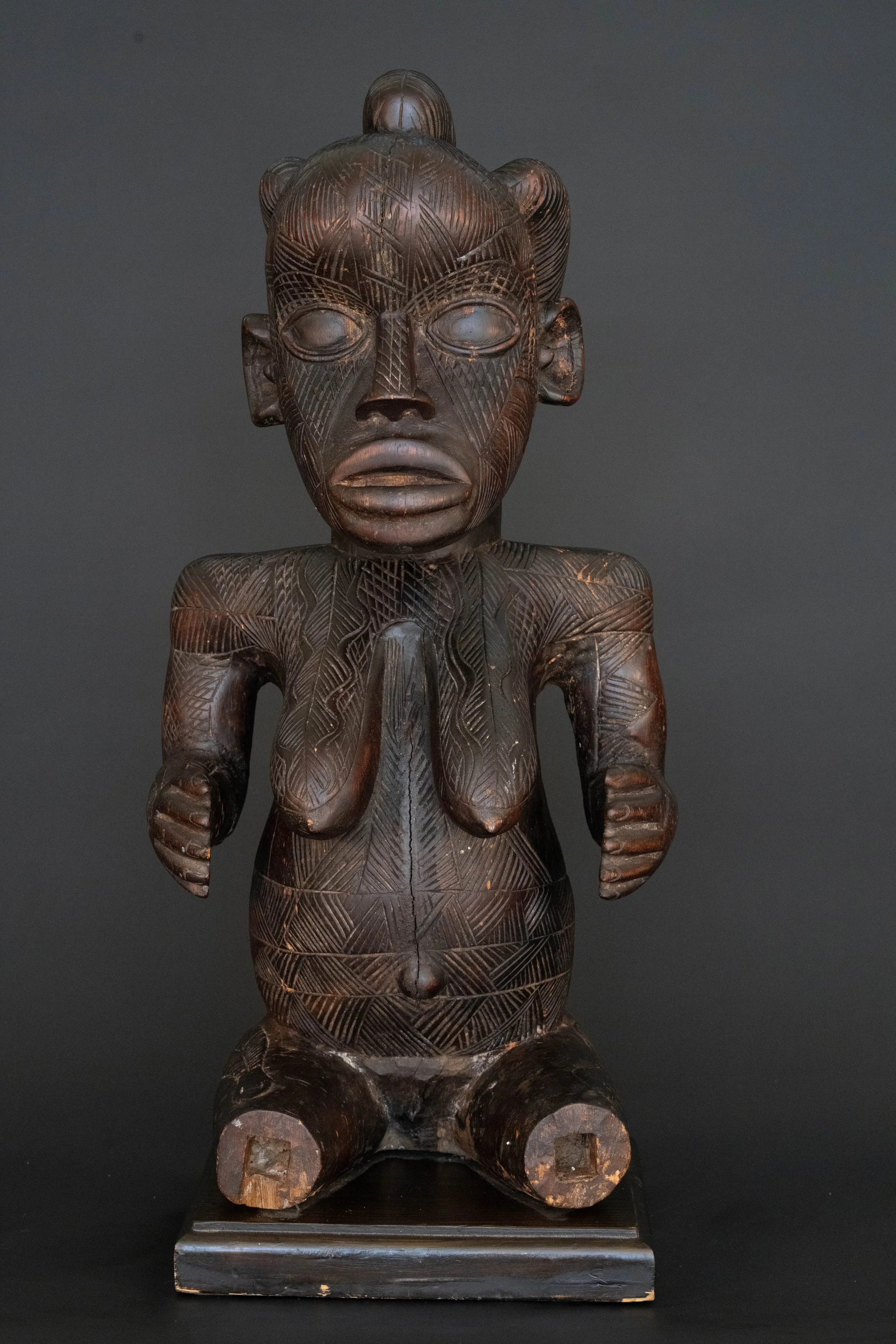
Carved by the Bassa people of the Kru language group, from the Rivercress and Grand Bassa regions of Liberia, this seated female figure belongs to a tradition of domestic and lineage sculpture that has received relatively little scholarly attention despite its formal sophistication.
The figure sits with legs folded beneath her, hands resting across the abdomen — a posture consistently associated in Bassa culture with fertility, protection, and continuity of the family line. These were not public ritual objects. They were kept within the household or compound, used for divination and protection, and closely associated with the family's well-being: safe childbirth, health, and the maintenance of lineage. Only families of means commissioned work at this level of refinement.
The surface is covered in finely incised geometric patterning from the neck down — a direct translation of scarification practice into carved wood. The markings signal beauty, maturity, and social standing; they are identity, rendered permanent in the material. The face, with its heavy-lidded eyes and full, projecting lips, connects this figure to the broader mask traditions of the region. The carving throughout is disciplined and assured.
The patina is deep, dark, and well-settled into the incised lines, preserving the crispness of the geometric work. This is a piece made for use, not export, and its surface reflects that history.
Truly convincing Bassa figural sculpture — particularly seated female forms with intact compositional integrity and surface quality at this level — appears infrequently on the market. Custom base included.
Condition: Good. Minimal erosion. Indigenous repair on arms. Thin vertical crack down the chest and right thigh.
Dimensions: Overall with base 25.5 × 11.5 × 11 inches; Figure only 24 × 11.5 × 10.5 inches (H x D x W)
Carved by the Bassa people of the Kru language group, from the Rivercress and Grand Bassa regions of Liberia, this seated female figure belongs to a tradition of domestic and lineage sculpture that has received relatively little scholarly attention despite its formal sophistication.
The figure sits with legs folded beneath her, hands resting across the abdomen — a posture consistently associated in Bassa culture with fertility, protection, and continuity of the family line. These were not public ritual objects. They were kept within the household or compound, used for divination and protection, and closely associated with the family's well-being: safe childbirth, health, and the maintenance of lineage. Only families of means commissioned work at this level of refinement.
The surface is covered in finely incised geometric patterning from the neck down — a direct translation of scarification practice into carved wood. The markings signal beauty, maturity, and social standing; they are identity, rendered permanent in the material. The face, with its heavy-lidded eyes and full, projecting lips, connects this figure to the broader mask traditions of the region. The carving throughout is disciplined and assured.
The patina is deep, dark, and well-settled into the incised lines, preserving the crispness of the geometric work. This is a piece made for use, not export, and its surface reflects that history.
Truly convincing Bassa figural sculpture — particularly seated female forms with intact compositional integrity and surface quality at this level — appears infrequently on the market. Custom base included.
Condition: Good. Minimal erosion. Indigenous repair on arms. Thin vertical crack down the chest and right thigh.
Dimensions: Overall with base 25.5 × 11.5 × 11 inches; Figure only 24 × 11.5 × 10.5 inches (H x D x W)