 Image 1 of 5
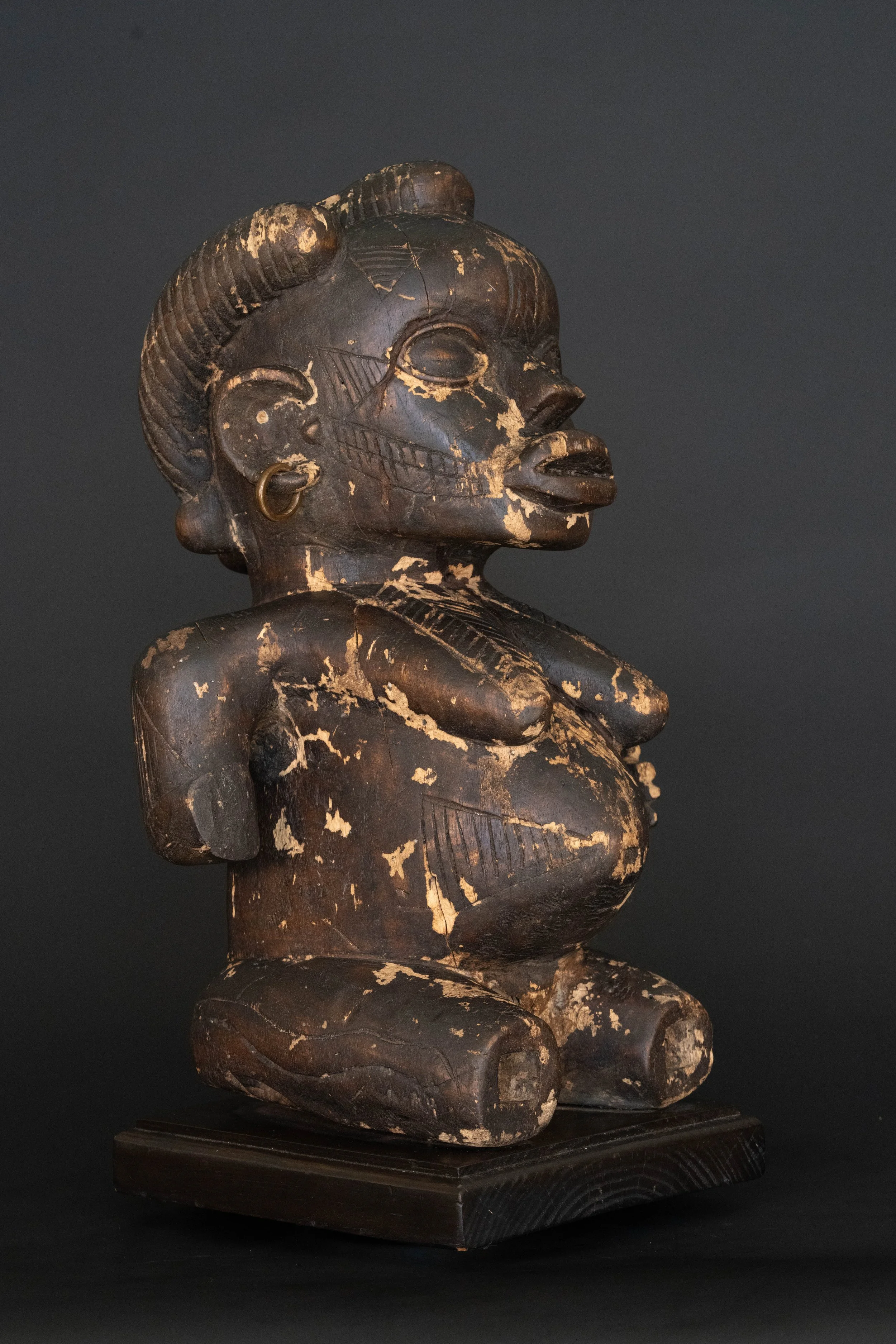 Image 2 of 5
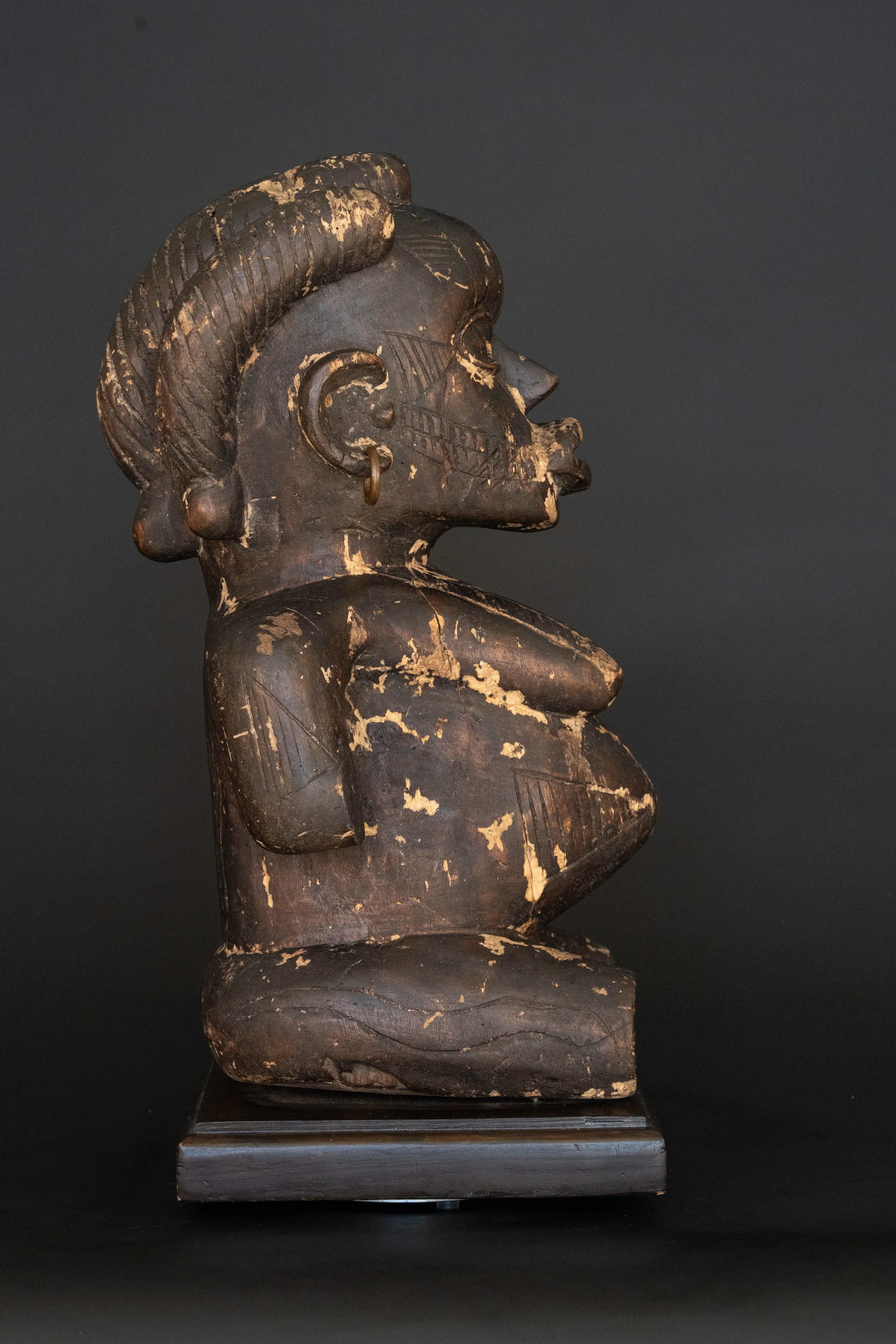 Image 3 of 5
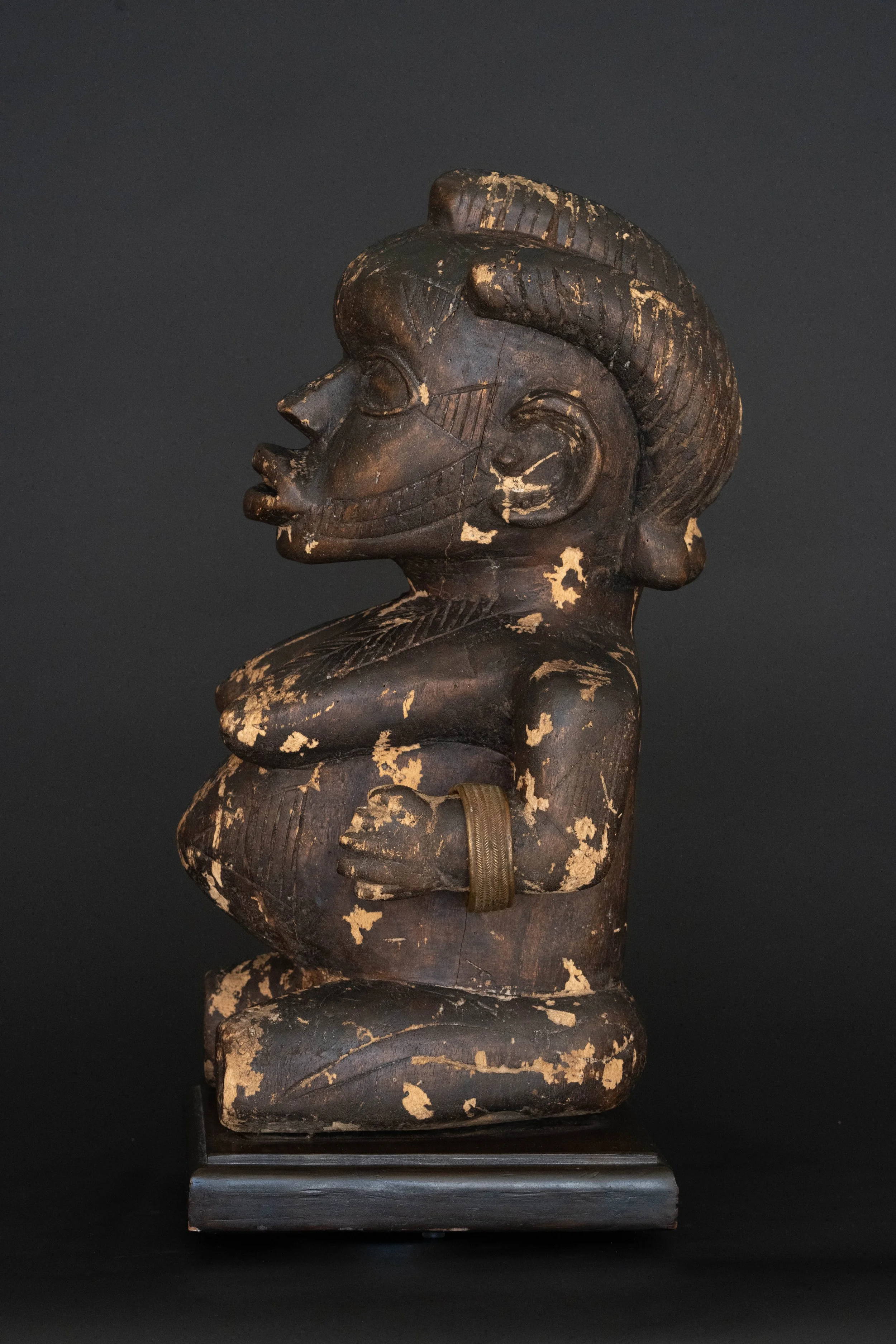 Image 4 of 5
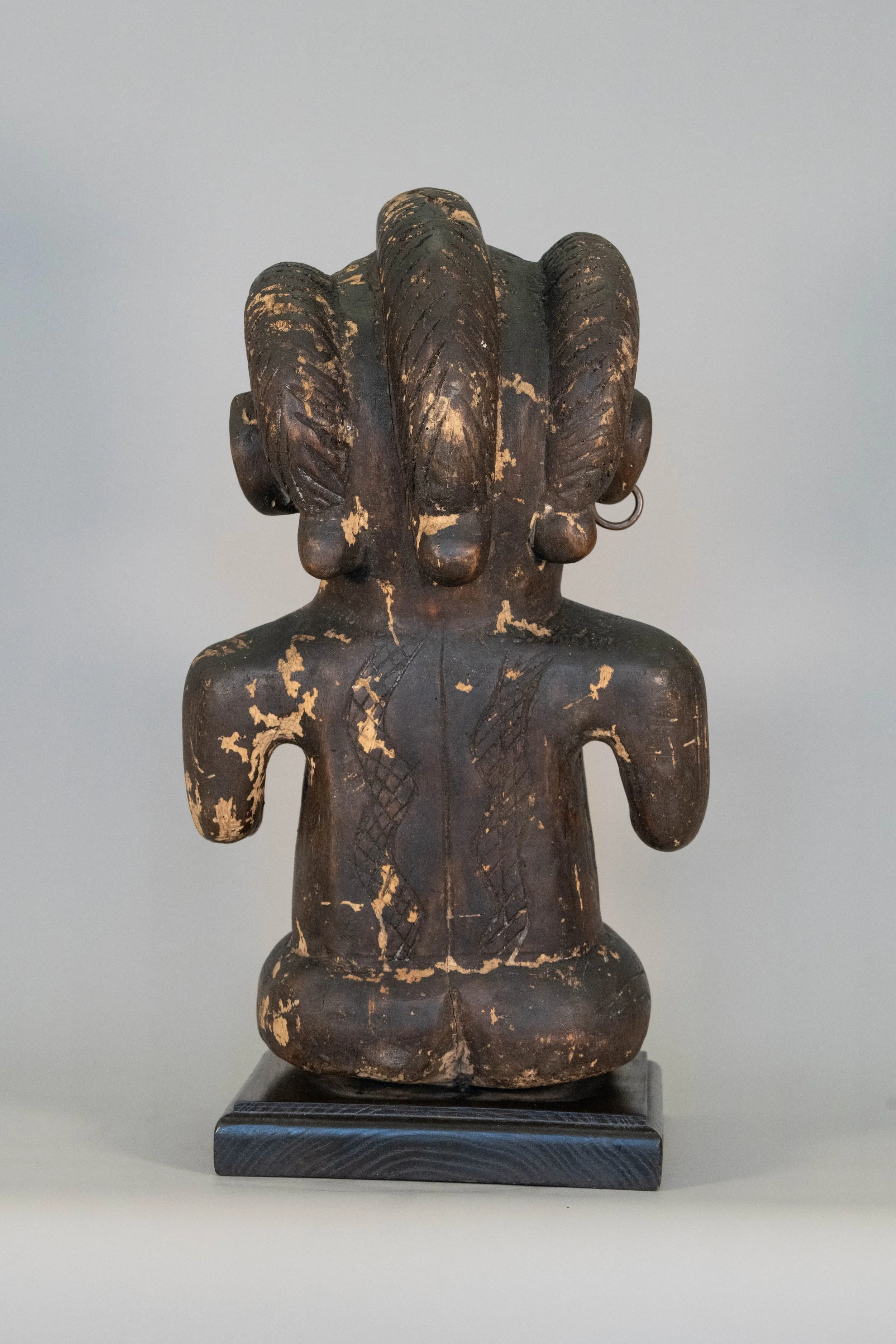 Image 5 of 5
Mid-20th Century
Before it ever entered a collection, this seated female figure most likely occupied a domestic space in coastal Liberia — a quiet, grounded presence within a Bassa household rather than an object made for public ritual or display.
The Bassa people, part of the Kru language group concentrated in the Rivercess and Grand Bassa regions, produced figures like this as household objects of real significance: commissioned by families of standing to honor a person of exceptional character, or to secure fertility, safe childbirth, and family well-being. They functioned as a bridge between the domestic and the spiritual — private anchors in daily life.
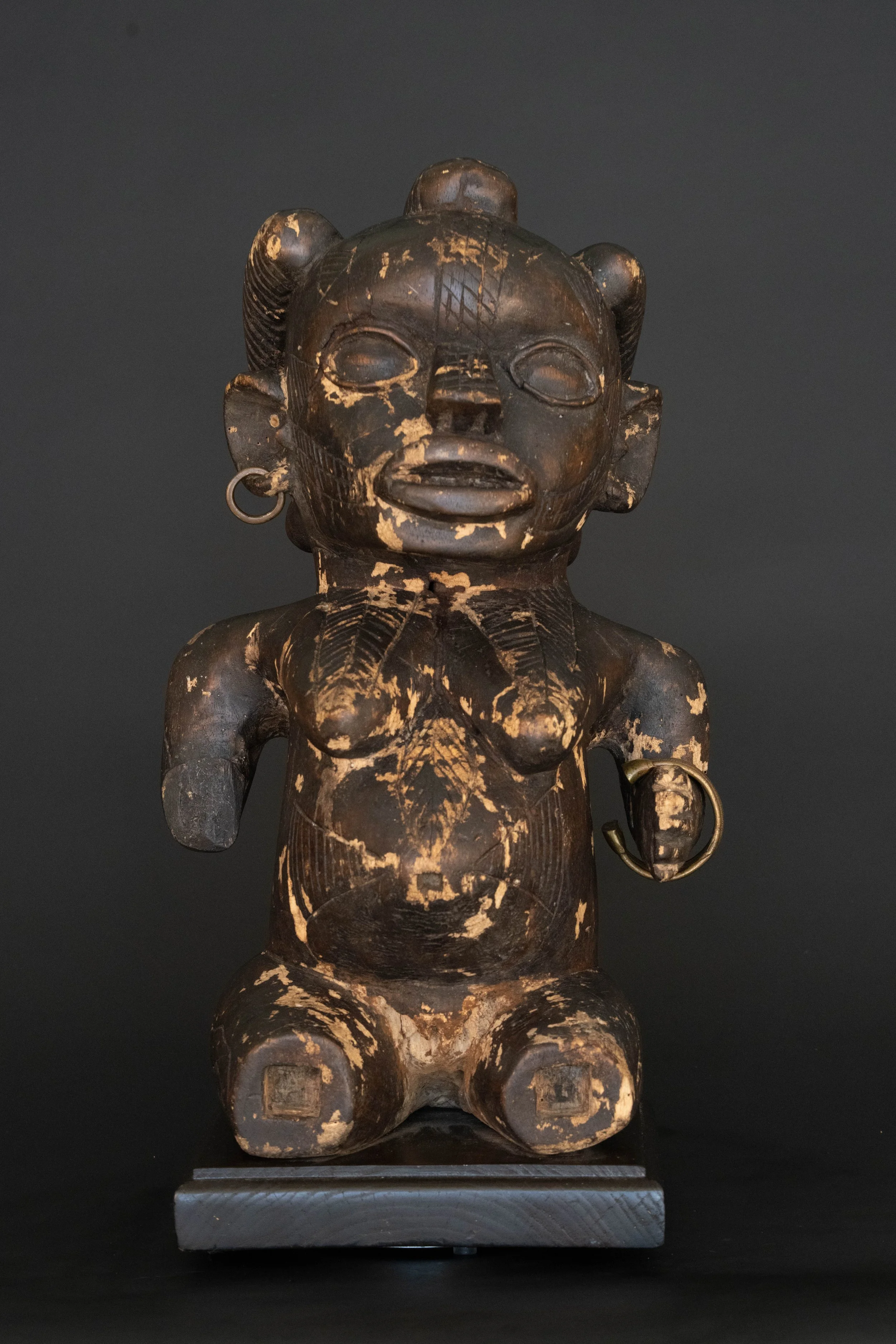
The figure's form is compact and deliberate. The rounded abdomen, full breasts, and calm forward gaze communicate womanhood as the Bassa understood it — not sentimentalized, but grounded in ideas of continuity and strength. Her seated posture is stable and low, with her arms bent close to her body. Scarification marks across the face and torso echo traditional cultural body markings that indicate identity, maturity, and belonging. A serpent-like carved form wraps around her body — a motif found across many African traditions, associated with renewal and cyclical regeneration. The swept-back coiffure signals adulthood and status. The metal earrings and bracelet, now darkened with age, reinforce her dignity.
The surface deserves attention. The deep, even patina and scattered areas of exposed wood are not condition issues — they are the natural result of handling, movement, and possibly anointing with oil or palm butter over many years. The lighter areas settle within carved lines and tool marks rather than across them, which is consistent with genuine age rather than artificial treatment. This sculpture has clearly been used and lived with.
Truly convincing Bassa seated female figures — with this level of patina, compositional integrity, and symbolic carving — appear infrequently on the market. For collectors drawn to African figurative work, this piece offers quiet authority: its strength comes from mass, serenity, and accumulated surface rather than dramatic expression.
Custom base included.
Condition: Good. Pigment loss and desiccation, vertical torso crack.
Dimensions: Overall with base 21 × 9 × 9.5 inches, Figure without base 19 × 8 × 8.5 inches (H x D x W)
Mid-20th Century
Before it ever entered a collection, this seated female figure most likely occupied a domestic space in coastal Liberia — a quiet, grounded presence within a Bassa household rather than an object made for public ritual or display.
The Bassa people, part of the Kru language group concentrated in the Rivercess and Grand Bassa regions, produced figures like this as household objects of real significance: commissioned by families of standing to honor a person of exceptional character, or to secure fertility, safe childbirth, and family well-being. They functioned as a bridge between the domestic and the spiritual — private anchors in daily life.
The figure's form is compact and deliberate. The rounded abdomen, full breasts, and calm forward gaze communicate womanhood as the Bassa understood it — not sentimentalized, but grounded in ideas of continuity and strength. Her seated posture is stable and low, with her arms bent close to her body. Scarification marks across the face and torso echo traditional cultural body markings that indicate identity, maturity, and belonging. A serpent-like carved form wraps around her body — a motif found across many African traditions, associated with renewal and cyclical regeneration. The swept-back coiffure signals adulthood and status. The metal earrings and bracelet, now darkened with age, reinforce her dignity.
The surface deserves attention. The deep, even patina and scattered areas of exposed wood are not condition issues — they are the natural result of handling, movement, and possibly anointing with oil or palm butter over many years. The lighter areas settle within carved lines and tool marks rather than across them, which is consistent with genuine age rather than artificial treatment. This sculpture has clearly been used and lived with.
Truly convincing Bassa seated female figures — with this level of patina, compositional integrity, and symbolic carving — appear infrequently on the market. For collectors drawn to African figurative work, this piece offers quiet authority: its strength comes from mass, serenity, and accumulated surface rather than dramatic expression.
Custom base included.
Condition: Good. Pigment loss and desiccation, vertical torso crack.
Dimensions: Overall with base 21 × 9 × 9.5 inches, Figure without base 19 × 8 × 8.5 inches (H x D x W)