Early to Mid-20th Century
Carved from a single block of dense hardwood by the Bamana people of Mali, this figure belongs to a tradition of sculptural thinking that helped reshape the modern understanding of form. Bold and economical, it communicates through amplified proportion rather than surface detail: a serene, downcast face beneath a worked coiffure; a long neck; strong volumes at the chest, hips, and thighs. The distortions are deliberate—fertility, maturity, and social wholeness made legible at a glance.
The incised bands at the waist and hips carry meaning beyond ornament. They reference traditional body adornment—scarification, girdles, and waist ornaments—as markers of adult identity and belonging in Bamana social life. Figures like this circulated within domestic and ritual contexts, kept close as tangible expressions of hopes for fertility, safe childbirth, and family well-being.
The surface is the piece's most compelling physical argument for age and use: deep brown tones, gentle smoothing on the high points, and darker oxidation in the recesses, all built up naturally over decades of handling. There is no evidence of restoration. Stable age cracks run through the head and torso—consistent with the material and the century—and the figure remains structurally sound and visually strong.
A confident, self-contained object with genuine presence, equally at home in a collection of African art, early modernist work, or simply on its own.
Condition: Very good. Stable age cracks; no repairs observed; surface wear consistent with age and use.
Dimensions: 23 × 6 × 5.5 inches (H x D x W)
Early to Mid-20th Century
Carved from a single block of dense hardwood by the Bamana people of Mali, this figure belongs to a tradition of sculptural thinking that helped reshape the modern understanding of form. Bold and economical, it communicates through amplified proportion rather than surface detail: a serene, downcast face beneath a worked coiffure; a long neck; strong volumes at the chest, hips, and thighs. The distortions are deliberate—fertility, maturity, and social wholeness made legible at a glance.
The incised bands at the waist and hips carry meaning beyond ornament. They reference traditional body adornment—scarification, girdles, and waist ornaments—as markers of adult identity and belonging in Bamana social life. Figures like this circulated within domestic and ritual contexts, kept close as tangible expressions of hopes for fertility, safe childbirth, and family well-being.
The surface is the piece's most compelling physical argument for age and use: deep brown tones, gentle smoothing on the high points, and darker oxidation in the recesses, all built up naturally over decades of handling. There is no evidence of restoration. Stable age cracks run through the head and torso—consistent with the material and the century—and the figure remains structurally sound and visually strong.
A confident, self-contained object with genuine presence, equally at home in a collection of African art, early modernist work, or simply on its own.
Condition: Very good. Stable age cracks; no repairs observed; surface wear consistent with age and use.
Dimensions: 23 × 6 × 5.5 inches (H x D x W)
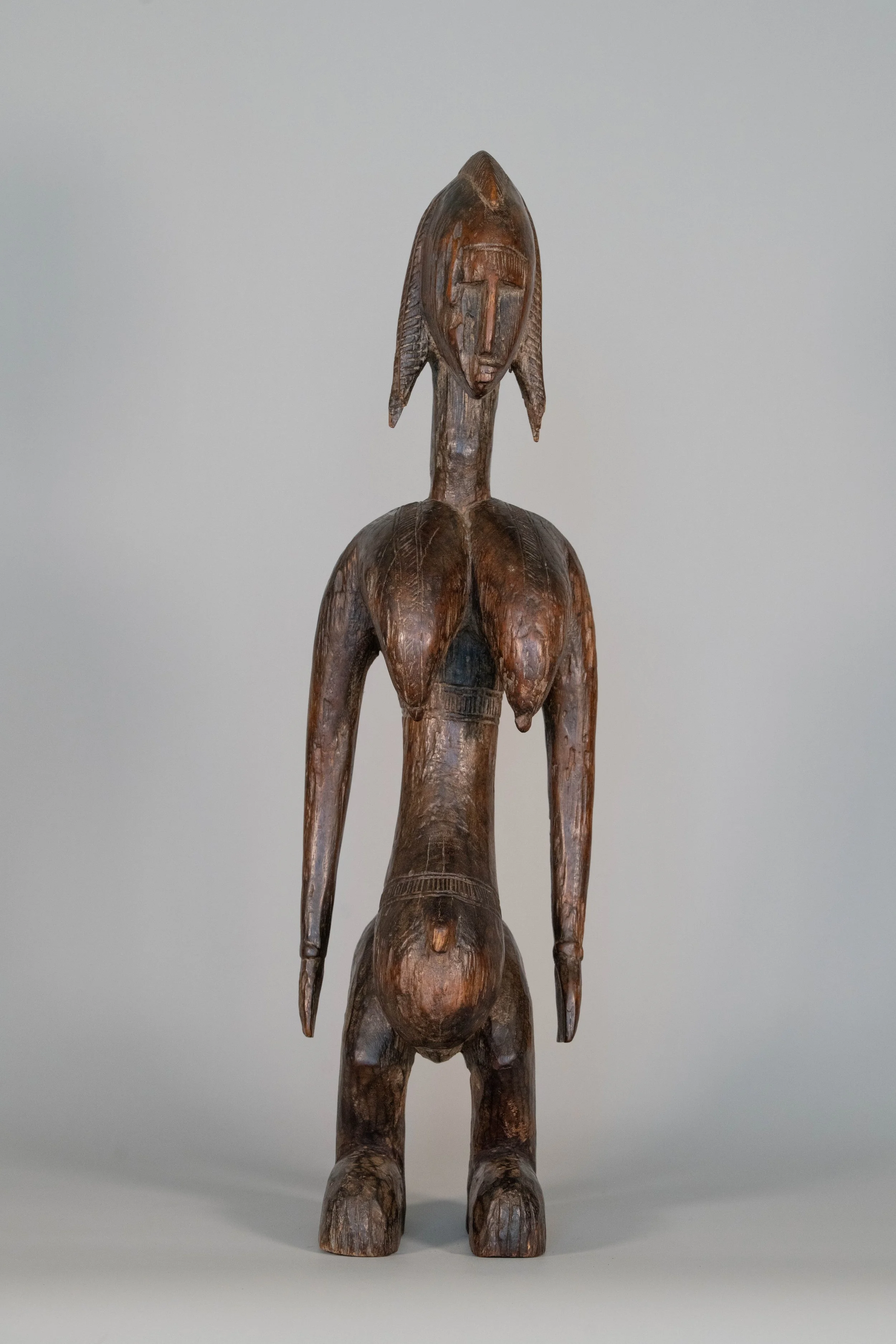 Image 1 of 6
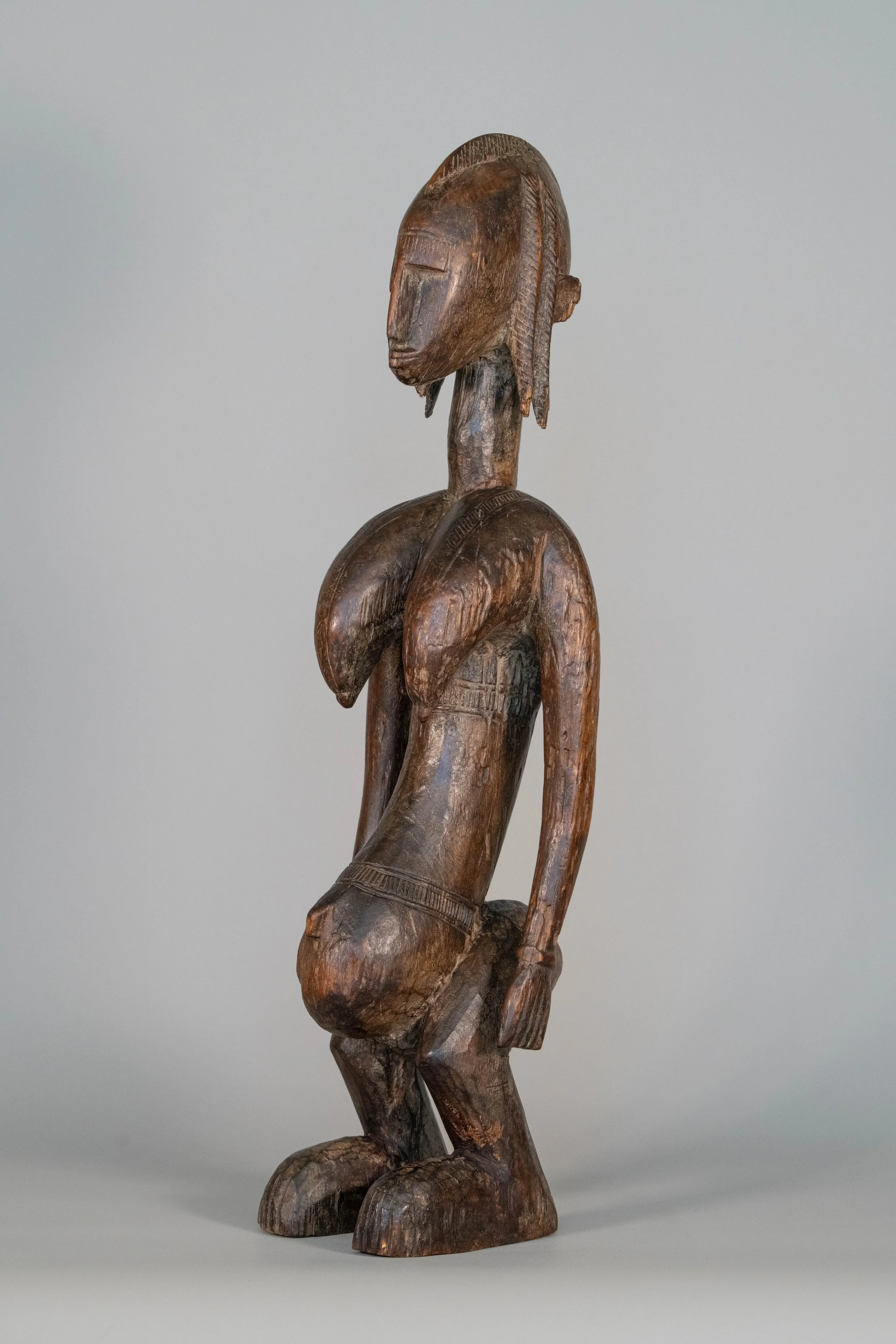 Image 2 of 6
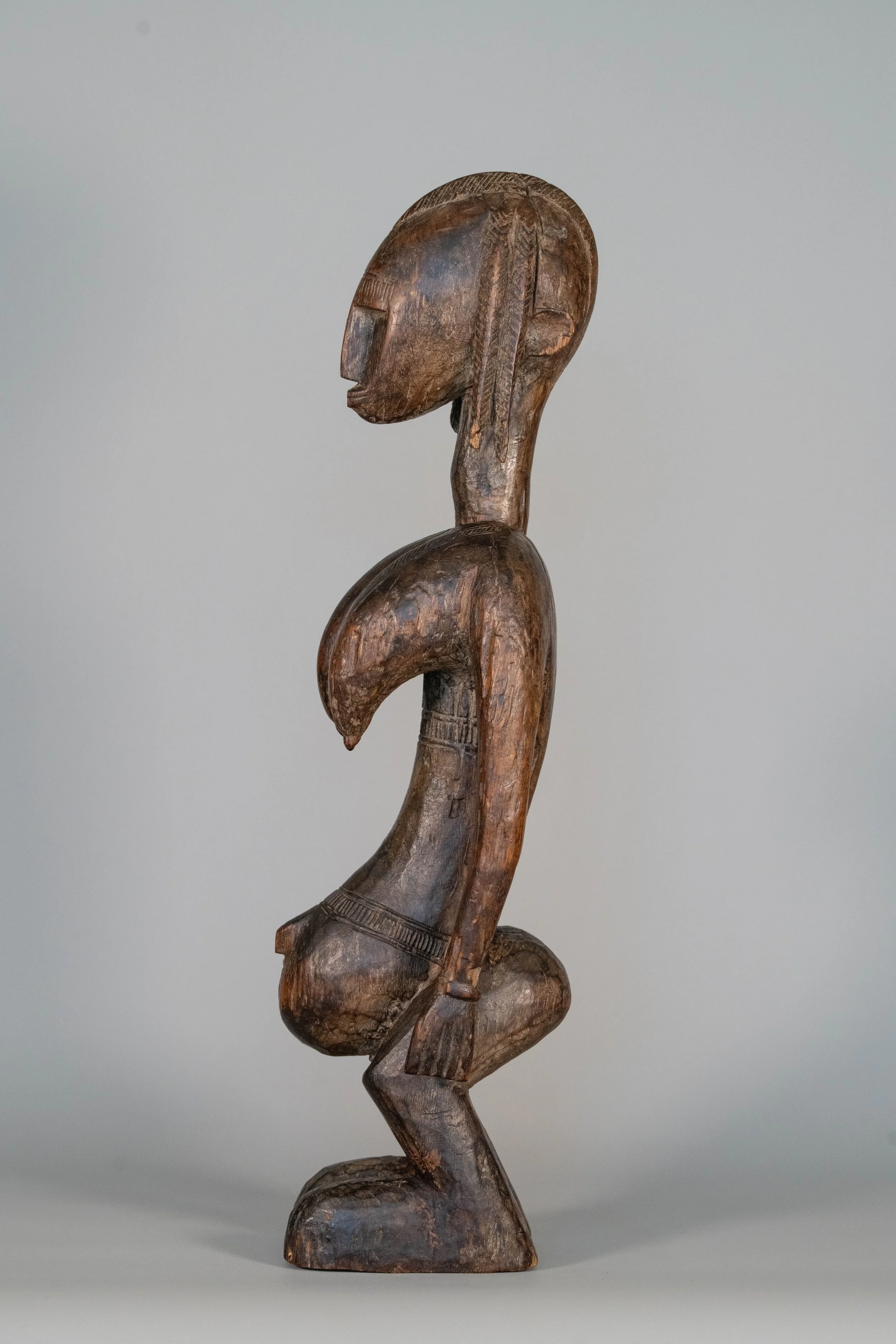 Image 3 of 6
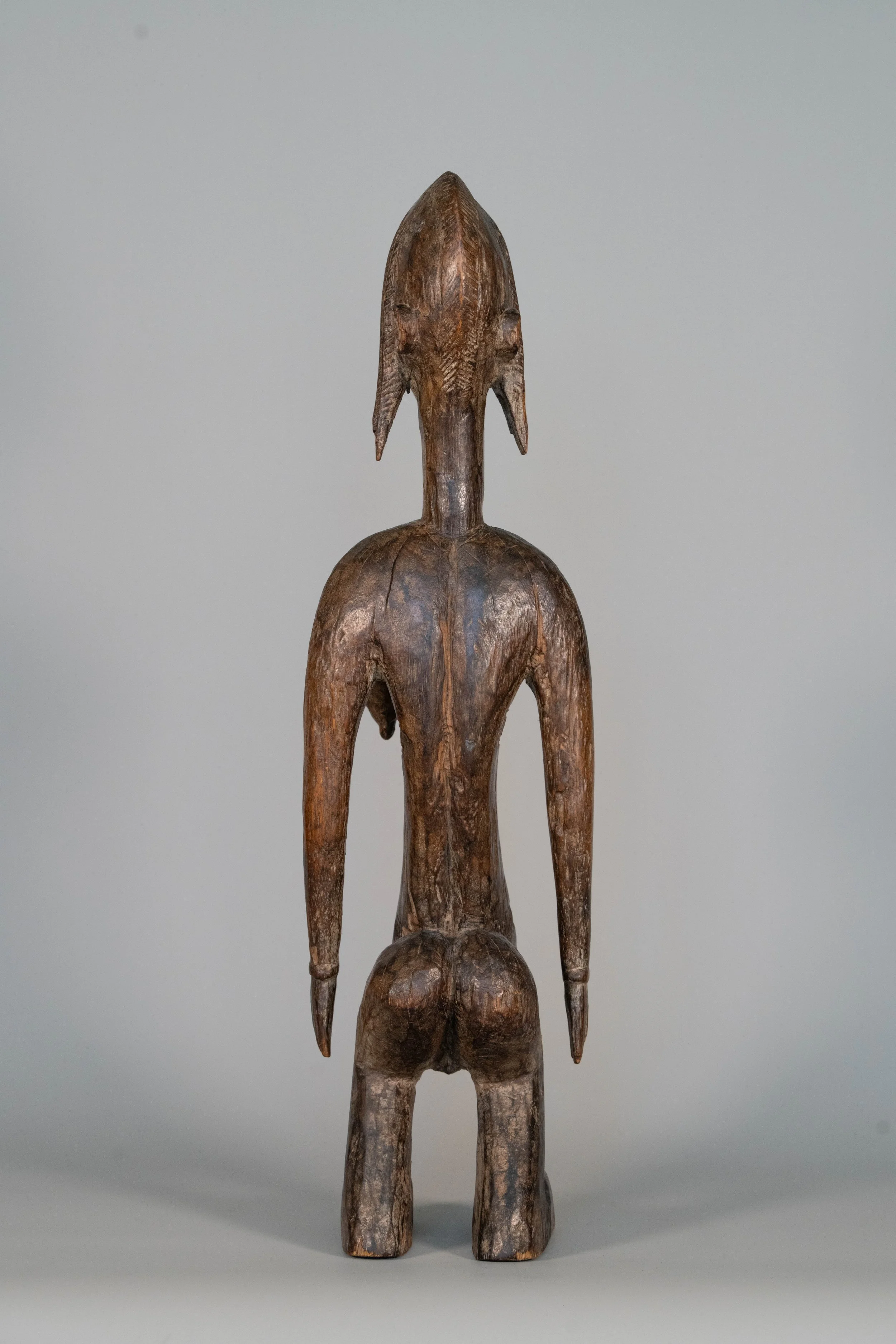 Image 4 of 6
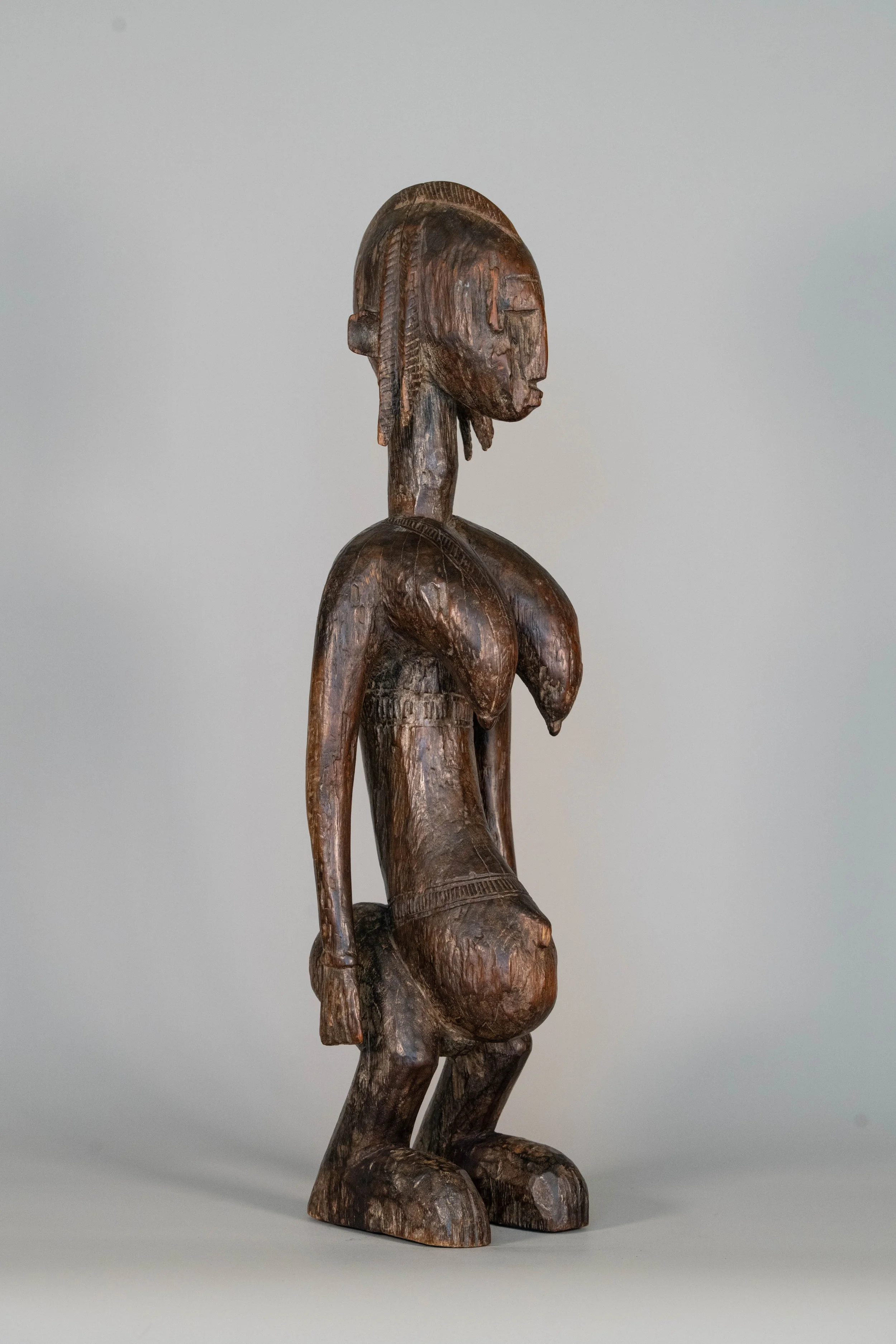 Image 5 of 6
 Image 6 of 6