Probably Ségou region, Mali
Early to Mid-20th Century
A powerful and unusually sculptural West African mask, most likely Bamana and probably from the Ségou region of Mali, with stylistic overlap that may also invite comparison to neighboring Marka-related traditions. Carved from dense hardwood with a deep, varied oxidized patina, the piece has exactly what serious collectors look for: strong form, believable age, real handling wear, and a design that rewards study from every angle.
The face is calm, elongated, and highly controlled — heavy-lidded eyes, a long, triangular nose, a small, compressed mouth — projecting authority rather than aggression. The carver achieved impact through proportion, balance, and shadow rather than exaggerated drama. Careful structuring of the forehead and coiffure, combined with confident use of negative space, gives the mask a refined, architectural quality.
The real distinction is the superstructure. Seated above the face is a commanding male figure wearing a helmet-like crested coiffure and holding what appears to be a knife and a companion prestige implement. The figure is fully integrated into the composition, transforming the object from a face mask into a complex ceremonial image that projects social authority and spiritual force in performance.
Around the rim are numerous old perforations — a significant detail. Used to attach fiber, cloth, or raffia costume elements, they confirm that this carving once served as the wooden core of a full masquerade ensemble. Together with the well-oxidized interior, clear hand-tool marks, and wear at contact points, these holes anchor the piece in genuine ceremonial use. It has the look of a mask that once moved.
For the collector, this example offers strong scale, an arresting silhouette, a well-aged surface, and an unusually compelling superstructure figure — the kind of object that commands a room immediately and grows more rewarding the longer it is studied.
Condition: Good overall. Expected surface wear, oxidation, and handling marks consistent with age and use. Interior shows old hand-tooling and deep patina. Rim perforations intact. Mounted on a new custom stand.
Dimensions: Overall with stand 24 × 6.5 × 10 inches, Mask only 19.5 × 6.5 × 8 inches (H x W x D)
Probably Ségou region, Mali
Early to Mid-20th Century
A powerful and unusually sculptural West African mask, most likely Bamana and probably from the Ségou region of Mali, with stylistic overlap that may also invite comparison to neighboring Marka-related traditions. Carved from dense hardwood with a deep, varied oxidized patina, the piece has exactly what serious collectors look for: strong form, believable age, real handling wear, and a design that rewards study from every angle.
The face is calm, elongated, and highly controlled — heavy-lidded eyes, a long, triangular nose, a small, compressed mouth — projecting authority rather than aggression. The carver achieved impact through proportion, balance, and shadow rather than exaggerated drama. Careful structuring of the forehead and coiffure, combined with confident use of negative space, gives the mask a refined, architectural quality.
The real distinction is the superstructure. Seated above the face is a commanding male figure wearing a helmet-like crested coiffure and holding what appears to be a knife and a companion prestige implement. The figure is fully integrated into the composition, transforming the object from a face mask into a complex ceremonial image that projects social authority and spiritual force in performance.
Around the rim are numerous old perforations — a significant detail. Used to attach fiber, cloth, or raffia costume elements, they confirm that this carving once served as the wooden core of a full masquerade ensemble. Together with the well-oxidized interior, clear hand-tool marks, and wear at contact points, these holes anchor the piece in genuine ceremonial use. It has the look of a mask that once moved.
For the collector, this example offers strong scale, an arresting silhouette, a well-aged surface, and an unusually compelling superstructure figure — the kind of object that commands a room immediately and grows more rewarding the longer it is studied.
Condition: Good overall. Expected surface wear, oxidation, and handling marks consistent with age and use. Interior shows old hand-tooling and deep patina. Rim perforations intact. Mounted on a new custom stand.
Dimensions: Overall with stand 24 × 6.5 × 10 inches, Mask only 19.5 × 6.5 × 8 inches (H x W x D)
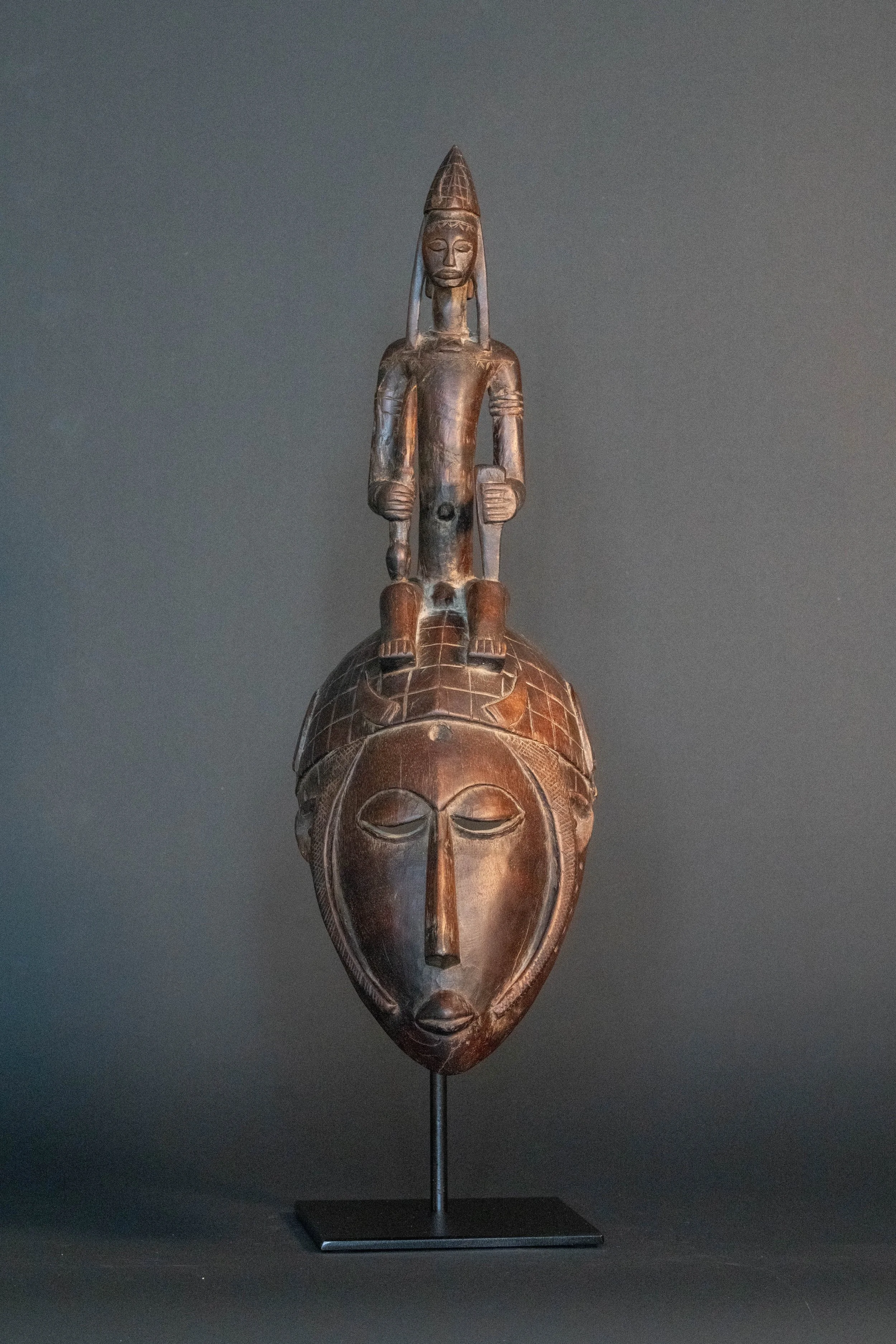 Image 1 of 6
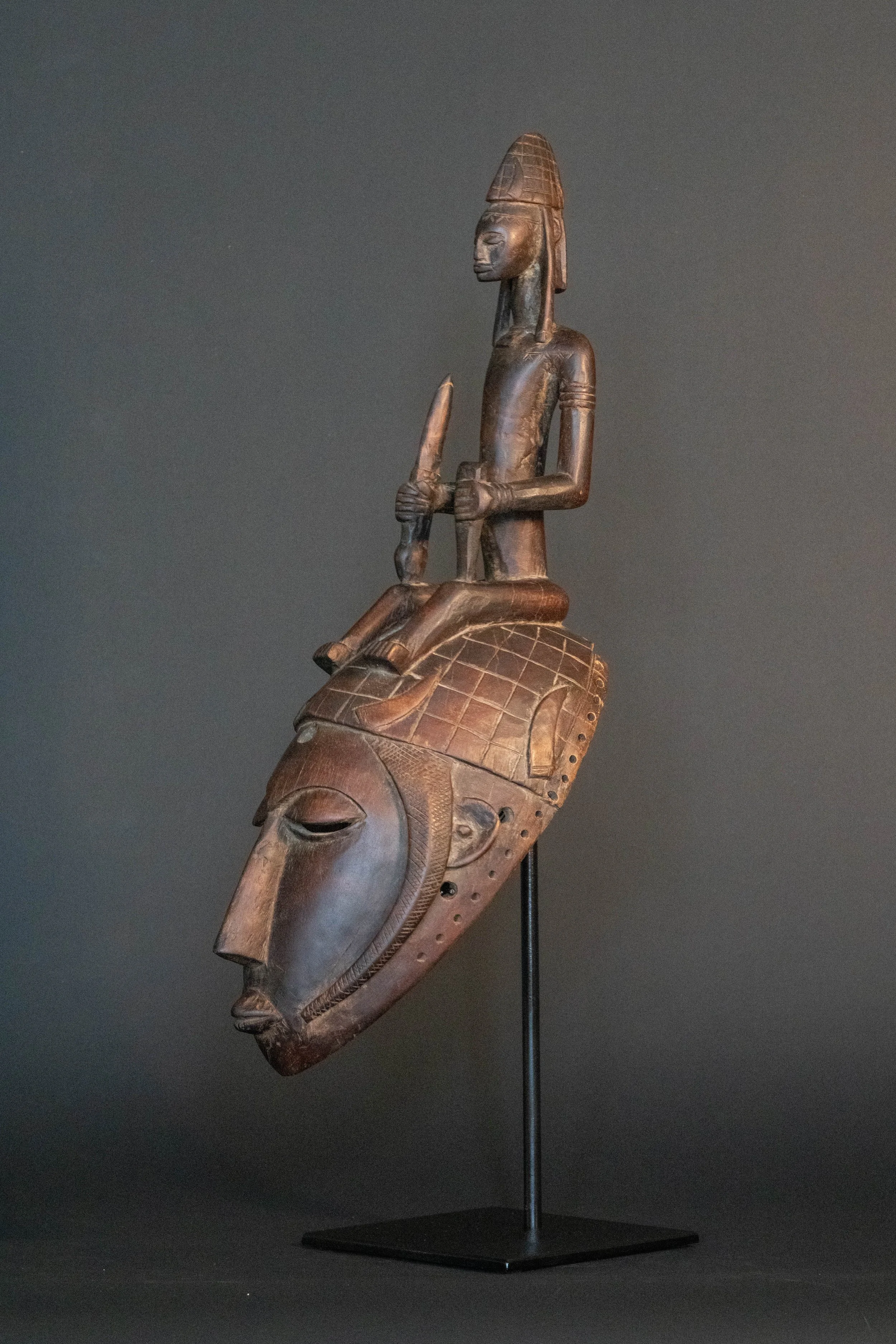 Image 2 of 6
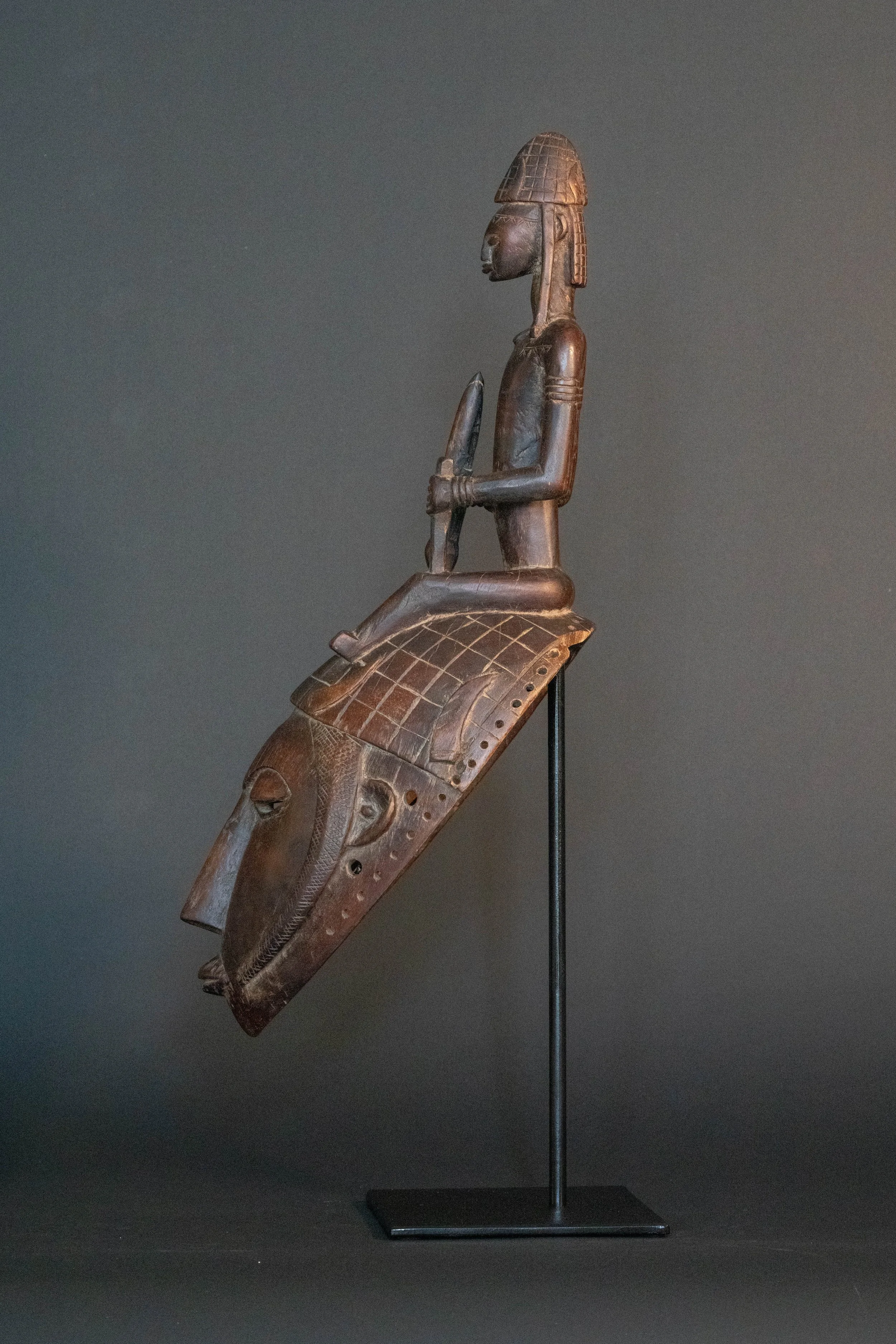 Image 3 of 6
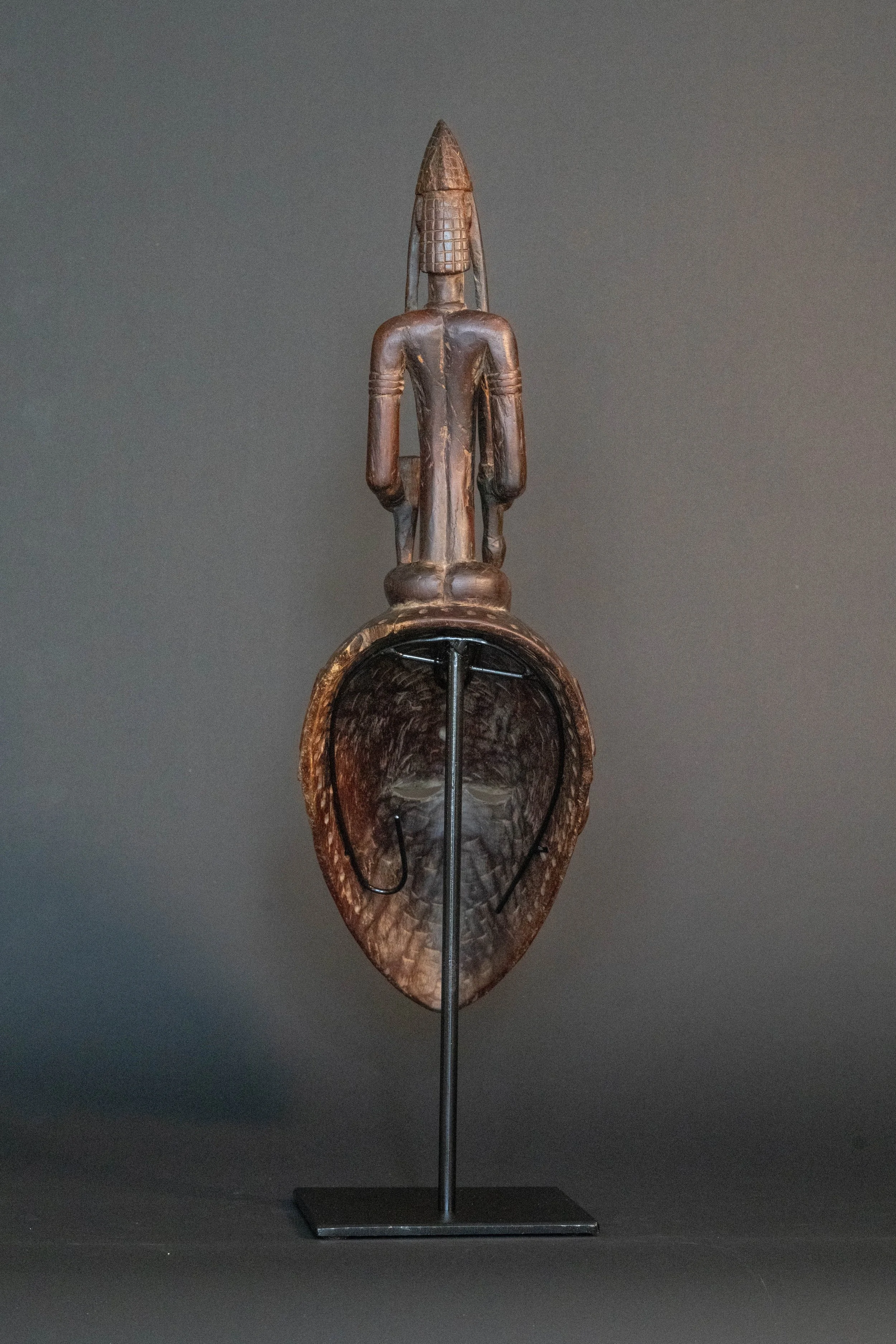 Image 4 of 6
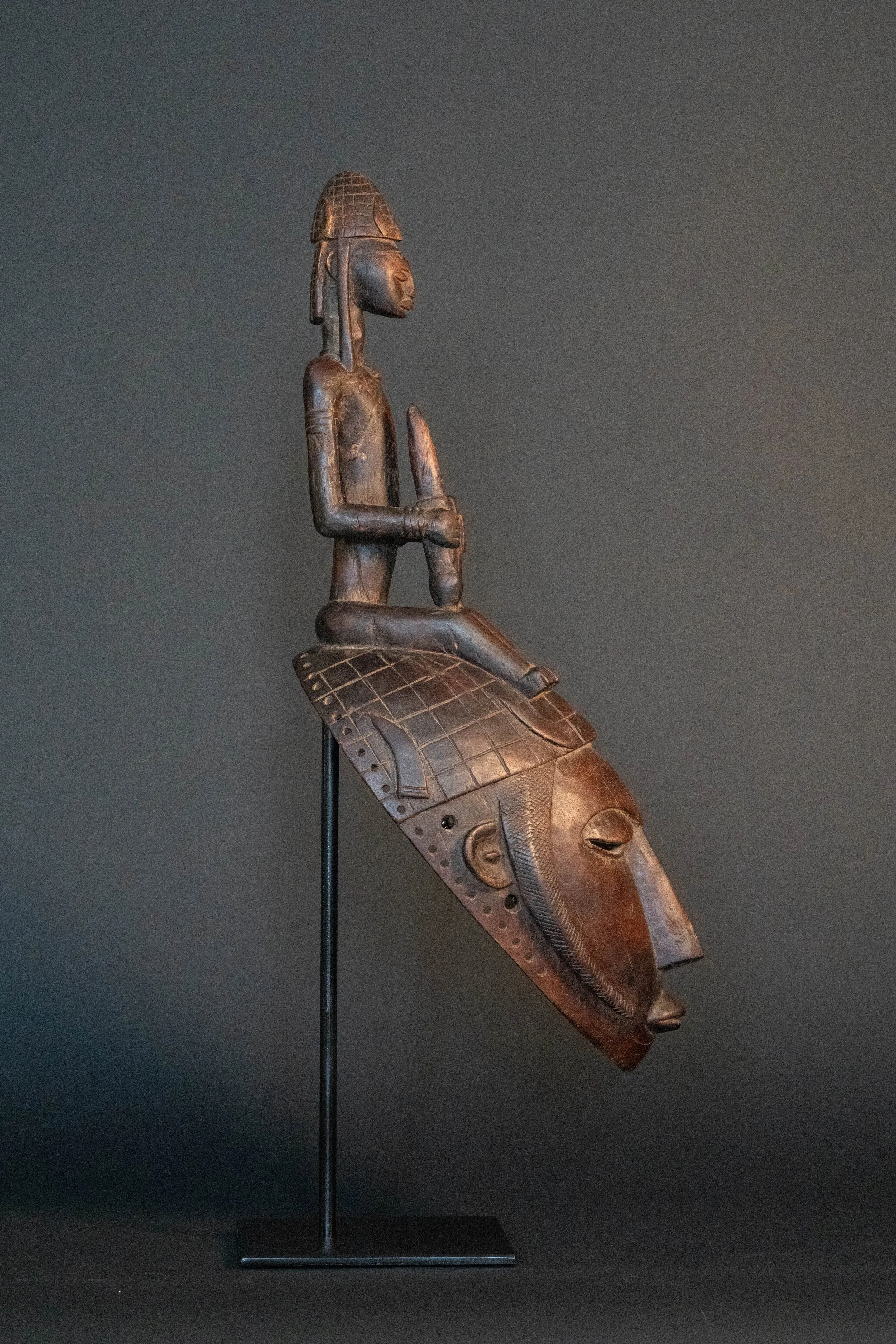 Image 5 of 6
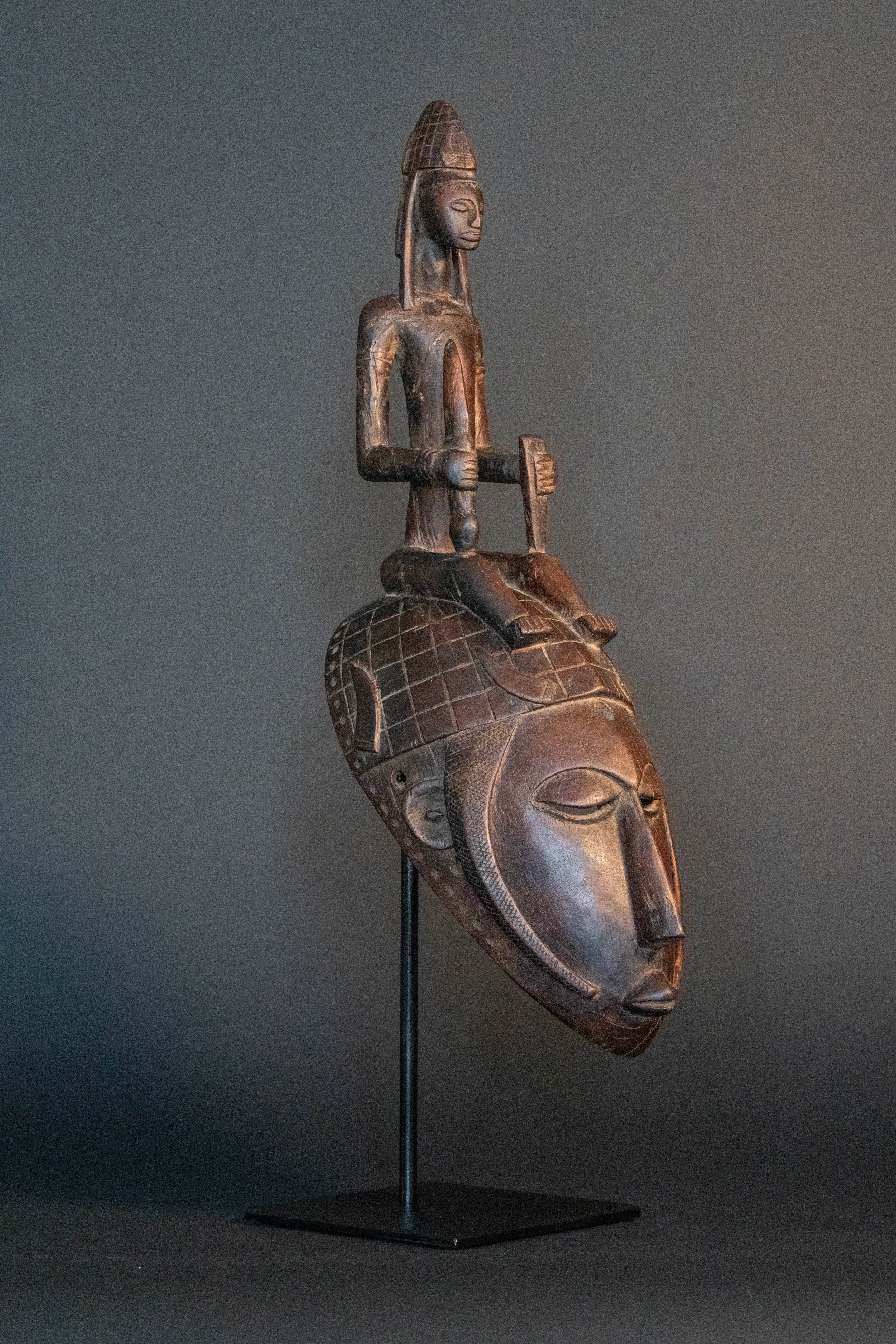 Image 6 of 6