Mali - Early 20th century
Wood with embedded seed pods and animal hair, on a new custom stand
Height: 29.5 inches (without stand)
This exceptional N'tomo mask represents one of West Africa's most powerful sculptural traditions. Carved from dense hardwood and crowned with a dramatic array of upright crest elements, the mask was created for use within the N'tomo initiation society — the institution responsible for guiding young Bamana boys through their first stages of education, moral formation, and spiritual development.
The mask's defining vertical structure is both visually arresting and symbolically loaded. The multiple slender crests rising from the domed forehead represent the stages of knowledge and the connection between the human world and the spiritual realm. In Bamana thought, learning is transformation, and these upward-reaching forms give that idea physical expression. Embedded throughout the crests are small red seed pods — many still intact — which carried associations of vitality and generative force. The remaining tufts of animal hair at the crest tips would have animated the mask in performance, where it appeared above a full fiber costume, the wearer invisible, the mask itself becoming a living presence.
The face is a masterwork of Bamana geometric abstraction: a long tapering plane punctuated by triangular eyes, flanking ear elements, a projecting nose ridge, and finely incised surface patterns drawn from textile and architectural traditions. These are not decorative flourishes — they encode ideals of order, balance, and disciplined thought, the very qualities the N'tomo society was designed to instill.
The surface carries exactly what one hopes to find in an authentic early example: a naturally oxidized patina with lighter wear on exposed planes and deeper darkening in protected recesses. The interior retains clear adze marks from the original carver's hand, along with deeper oxidation around the chin consistent with age and repeated handling — evidence of an object that lived its intended life before entering the collection.
Structurally sound and visually compelling, this mask has the tall architectural presence that defines the finest Bamana work: a dramatic silhouette from any angle, with crests that seem to reach toward something beyond the frame. It is a piece that rewards close looking and commands a room.
Condition:Good. Some seed pods lost to age, as expected. Custom stand included.
Dimensions: Overall 35 × 8 × 7.5 inches ; Mask only 29.5 × 8 × 6.5 inches (H x W x D)
Mali - Early 20th century
Wood with embedded seed pods and animal hair, on a new custom stand
Height: 29.5 inches (without stand)
This exceptional N'tomo mask represents one of West Africa's most powerful sculptural traditions. Carved from dense hardwood and crowned with a dramatic array of upright crest elements, the mask was created for use within the N'tomo initiation society — the institution responsible for guiding young Bamana boys through their first stages of education, moral formation, and spiritual development.
The mask's defining vertical structure is both visually arresting and symbolically loaded. The multiple slender crests rising from the domed forehead represent the stages of knowledge and the connection between the human world and the spiritual realm. In Bamana thought, learning is transformation, and these upward-reaching forms give that idea physical expression. Embedded throughout the crests are small red seed pods — many still intact — which carried associations of vitality and generative force. The remaining tufts of animal hair at the crest tips would have animated the mask in performance, where it appeared above a full fiber costume, the wearer invisible, the mask itself becoming a living presence.
The face is a masterwork of Bamana geometric abstraction: a long tapering plane punctuated by triangular eyes, flanking ear elements, a projecting nose ridge, and finely incised surface patterns drawn from textile and architectural traditions. These are not decorative flourishes — they encode ideals of order, balance, and disciplined thought, the very qualities the N'tomo society was designed to instill.
The surface carries exactly what one hopes to find in an authentic early example: a naturally oxidized patina with lighter wear on exposed planes and deeper darkening in protected recesses. The interior retains clear adze marks from the original carver's hand, along with deeper oxidation around the chin consistent with age and repeated handling — evidence of an object that lived its intended life before entering the collection.
Structurally sound and visually compelling, this mask has the tall architectural presence that defines the finest Bamana work: a dramatic silhouette from any angle, with crests that seem to reach toward something beyond the frame. It is a piece that rewards close looking and commands a room.
Condition:Good. Some seed pods lost to age, as expected. Custom stand included.
Dimensions: Overall 35 × 8 × 7.5 inches ; Mask only 29.5 × 8 × 6.5 inches (H x W x D)
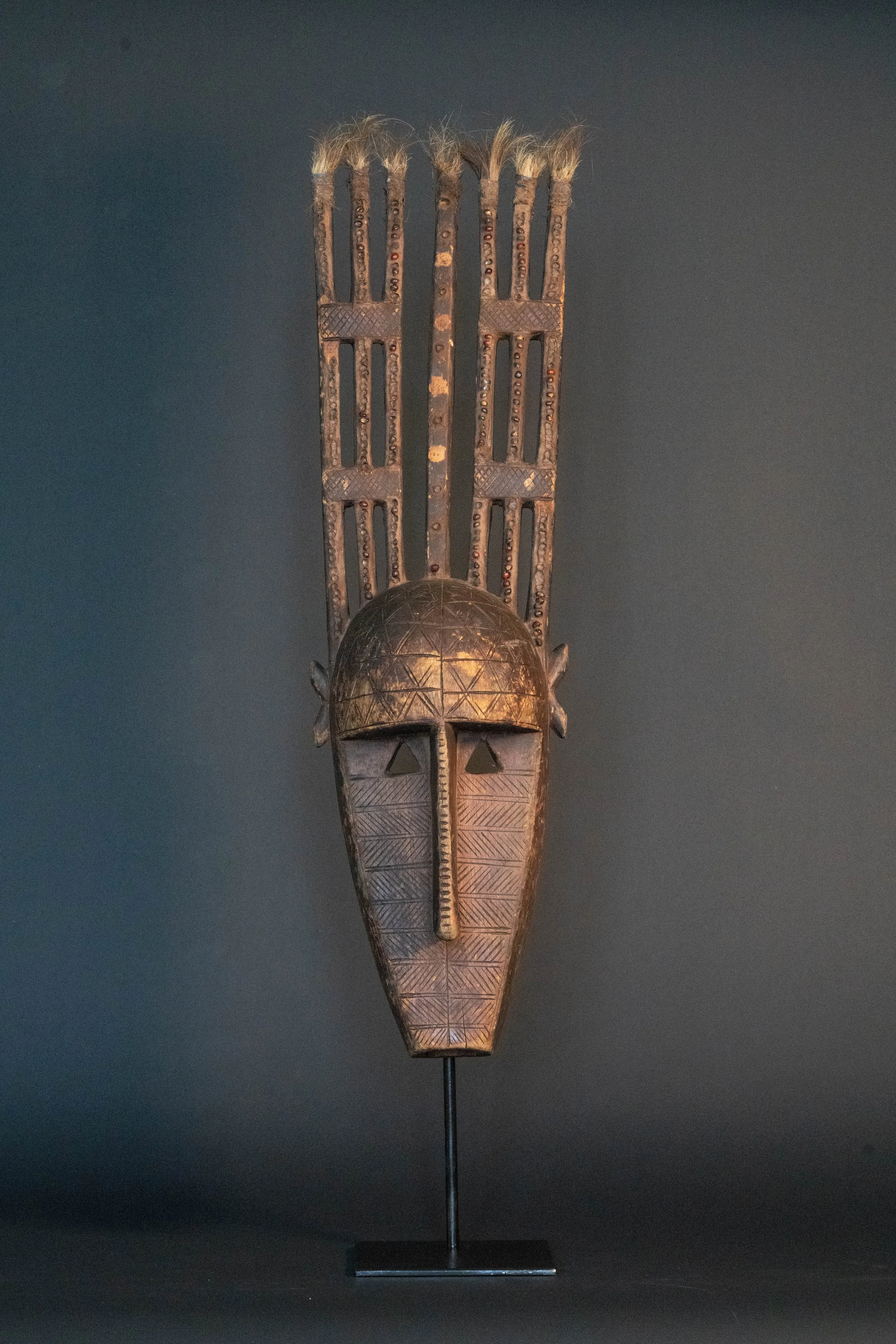 Image 1 of 7
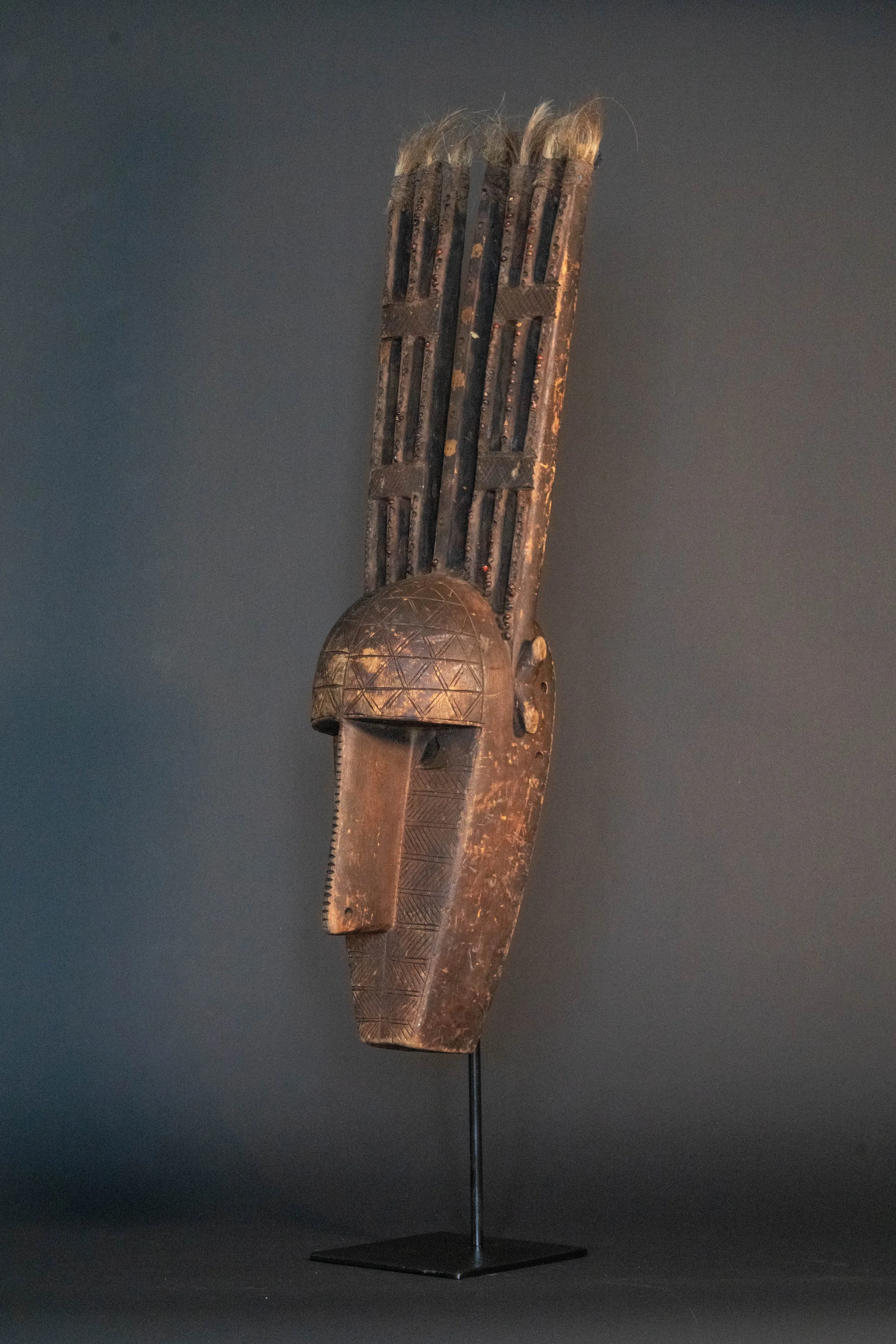 Image 2 of 7
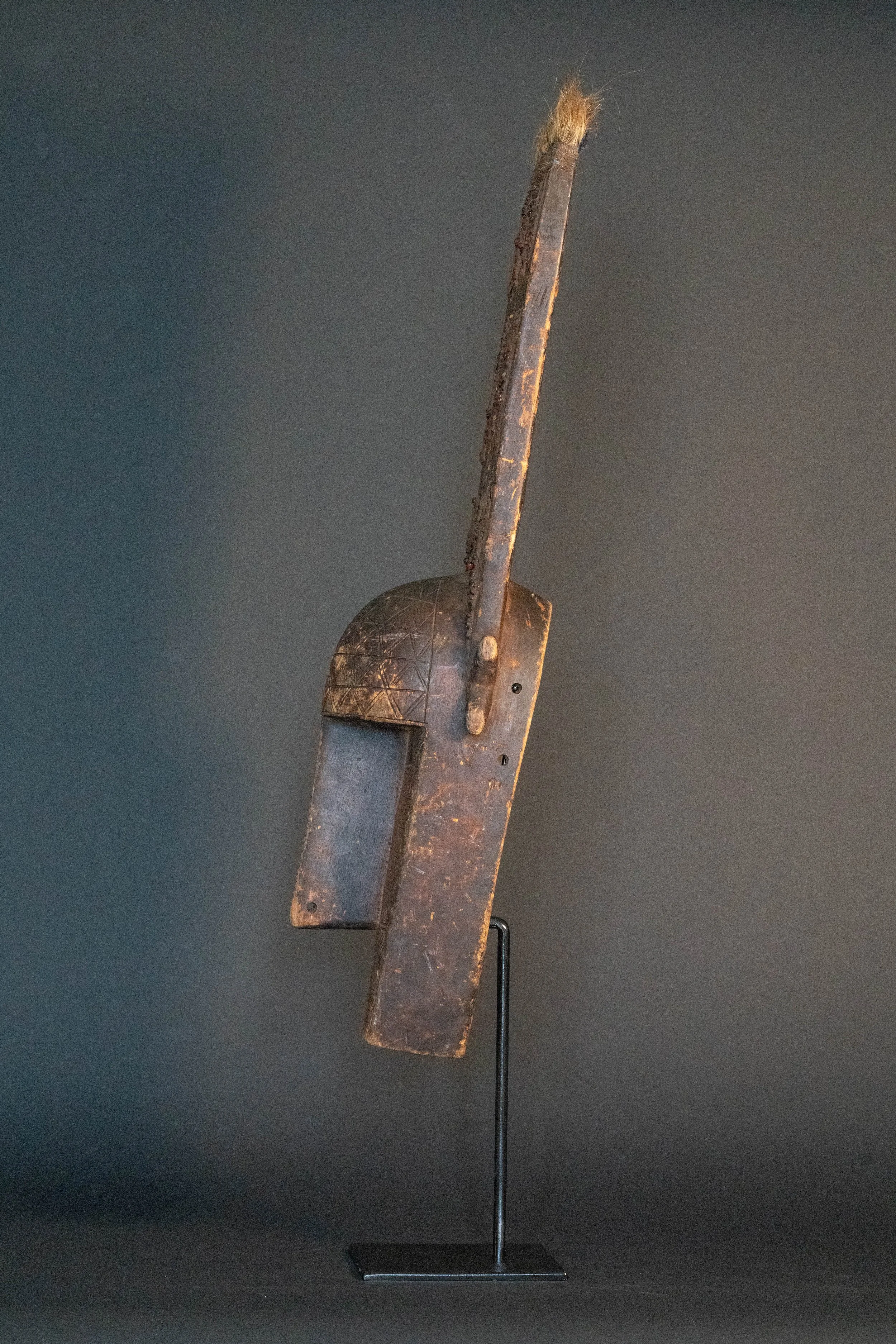 Image 3 of 7
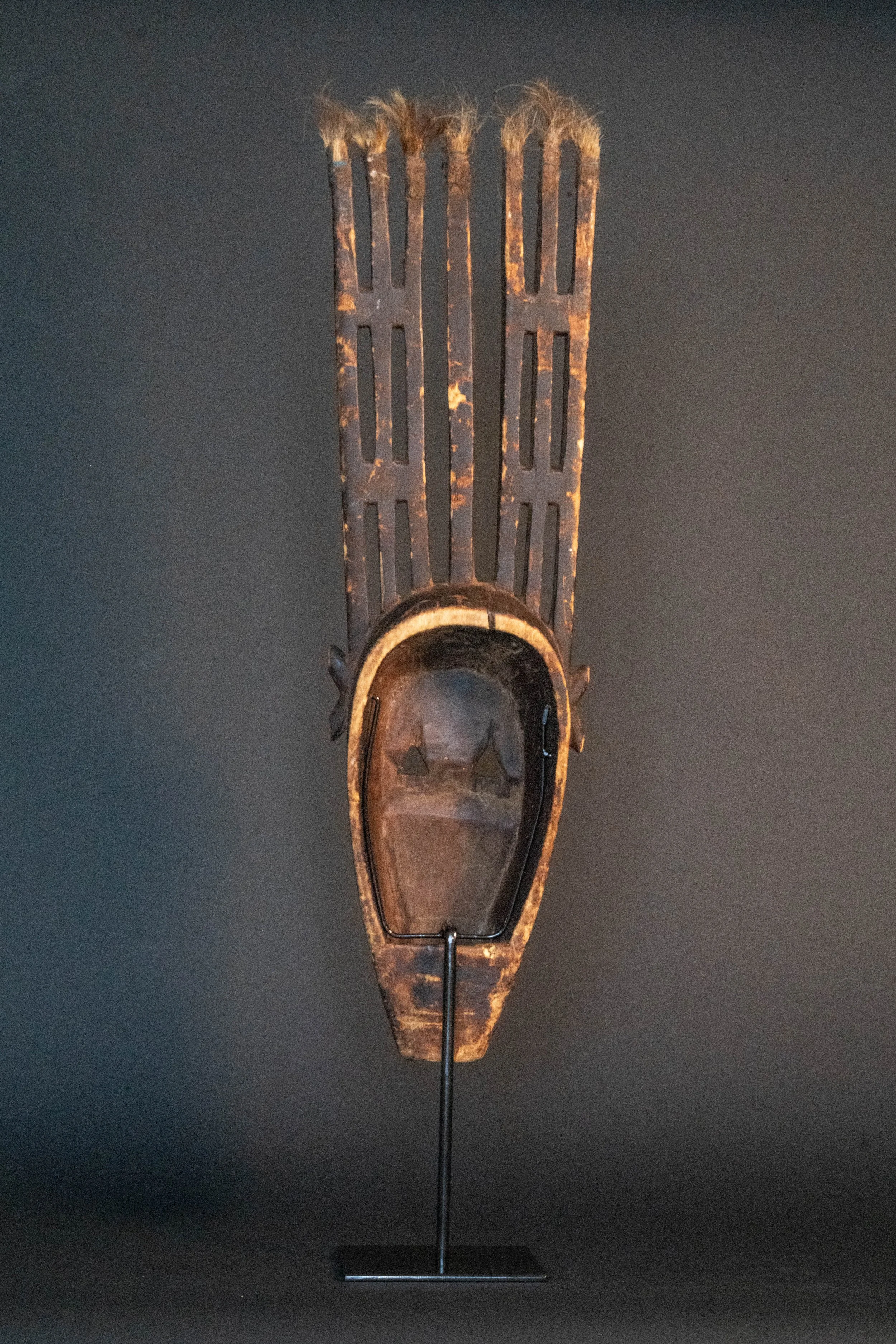 Image 4 of 7
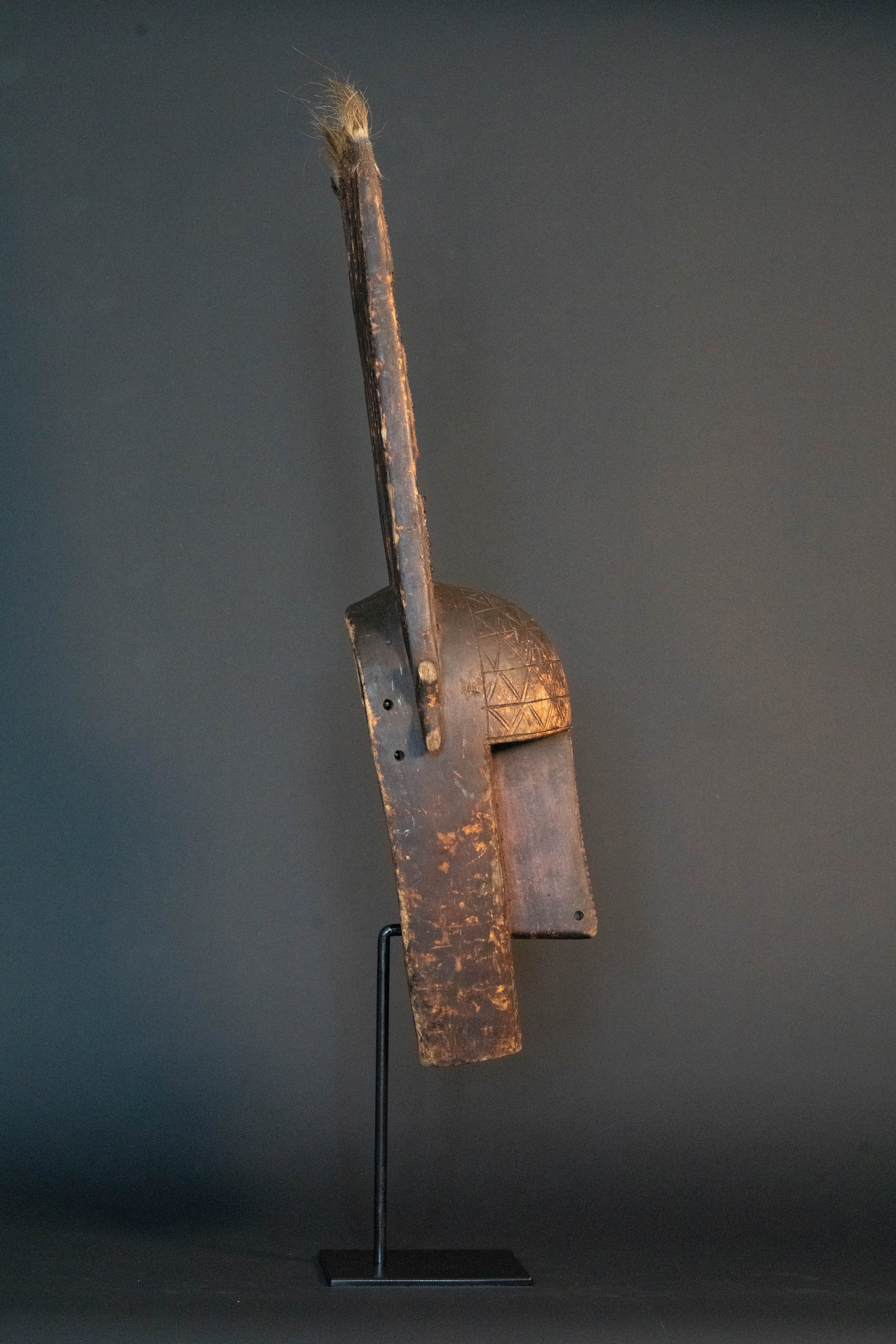 Image 5 of 7
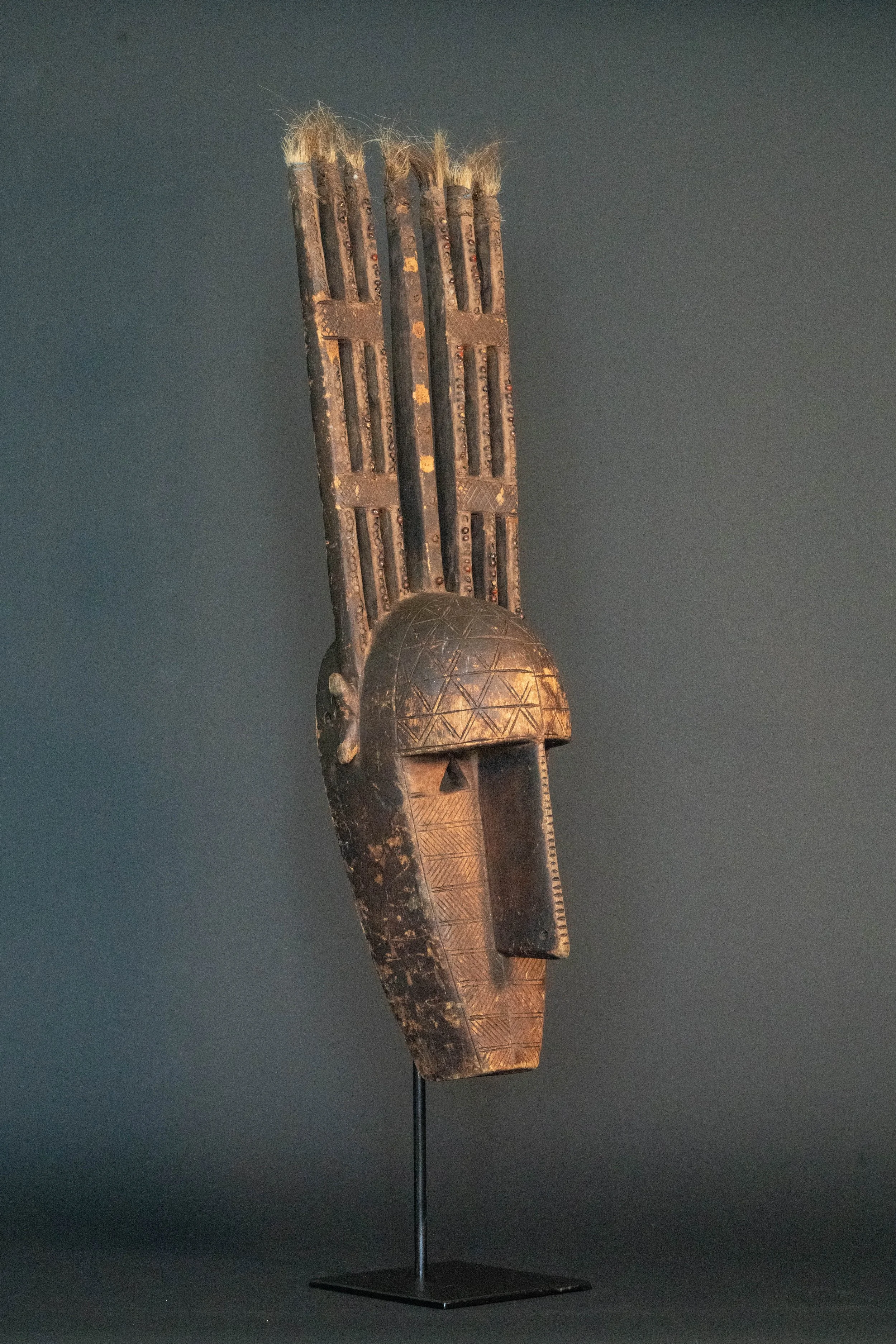 Image 6 of 7
 Image 7 of 7