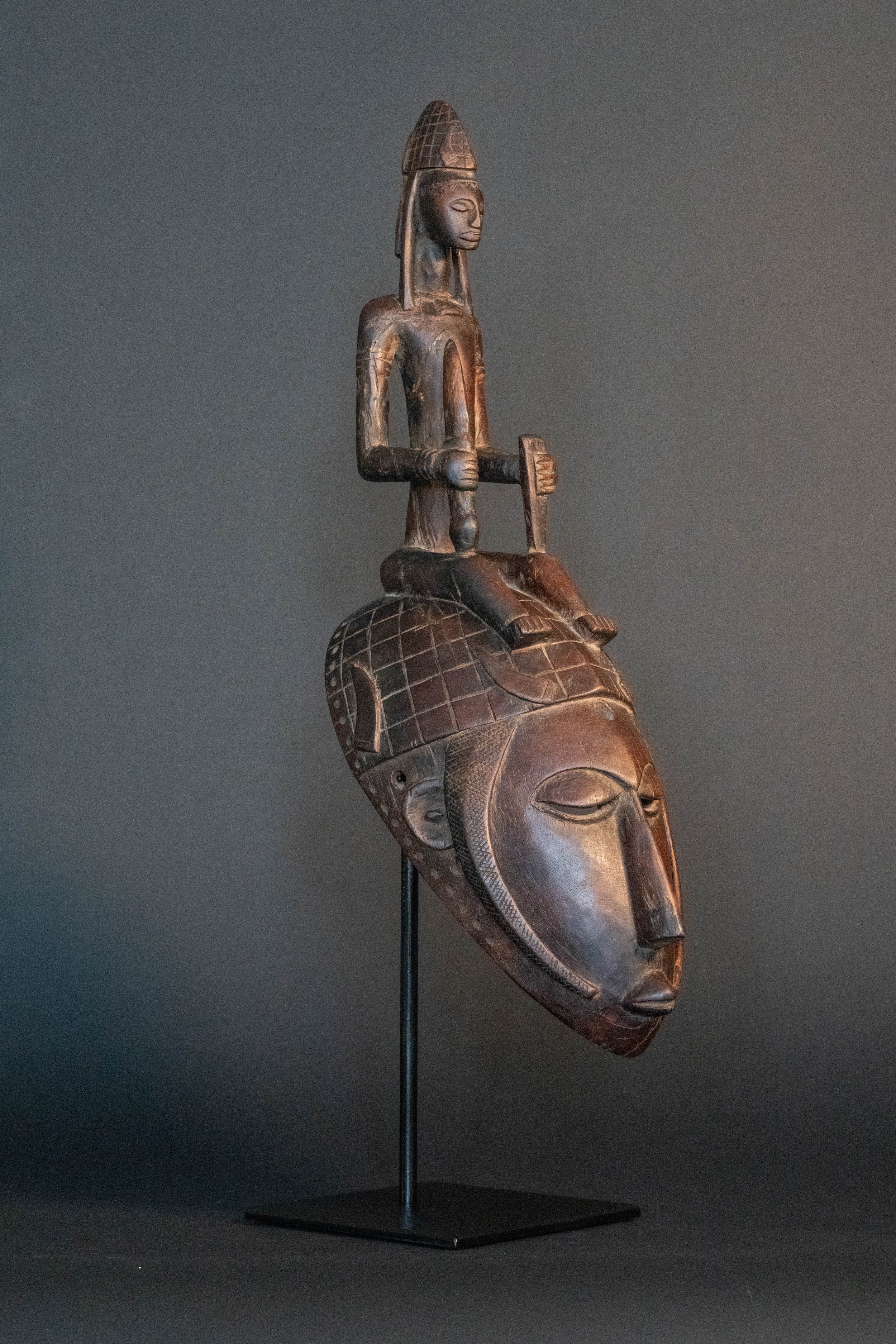
Image 1 of 4
 Image 2 of 4
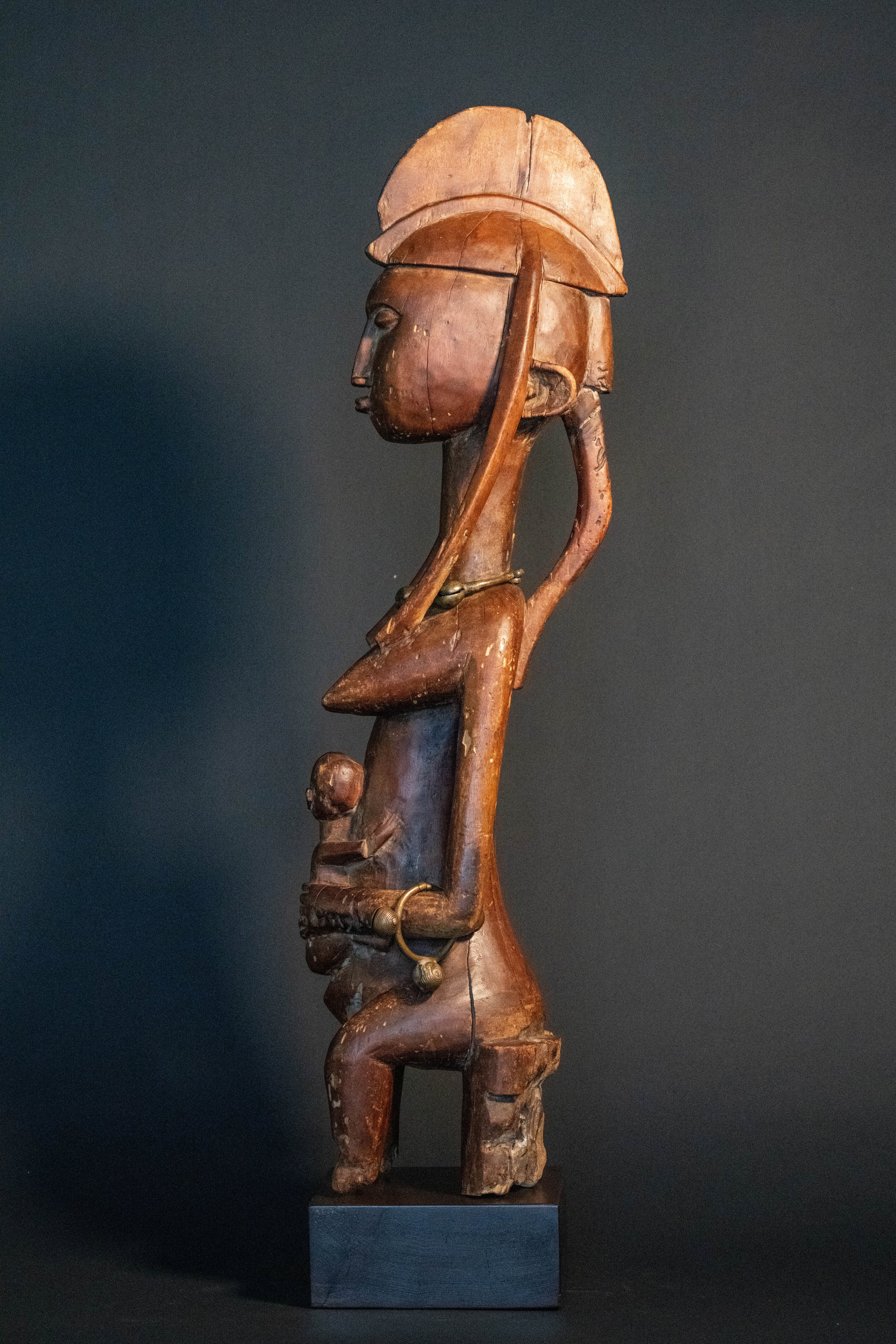 Image 3 of 4
 Image 4 of 4
First Half 20th Century (circa 1925–1950)
Materials: Carved wood; worn copper-alloy neck and wrist adornments with cast bells containing ferrous rattle-balls
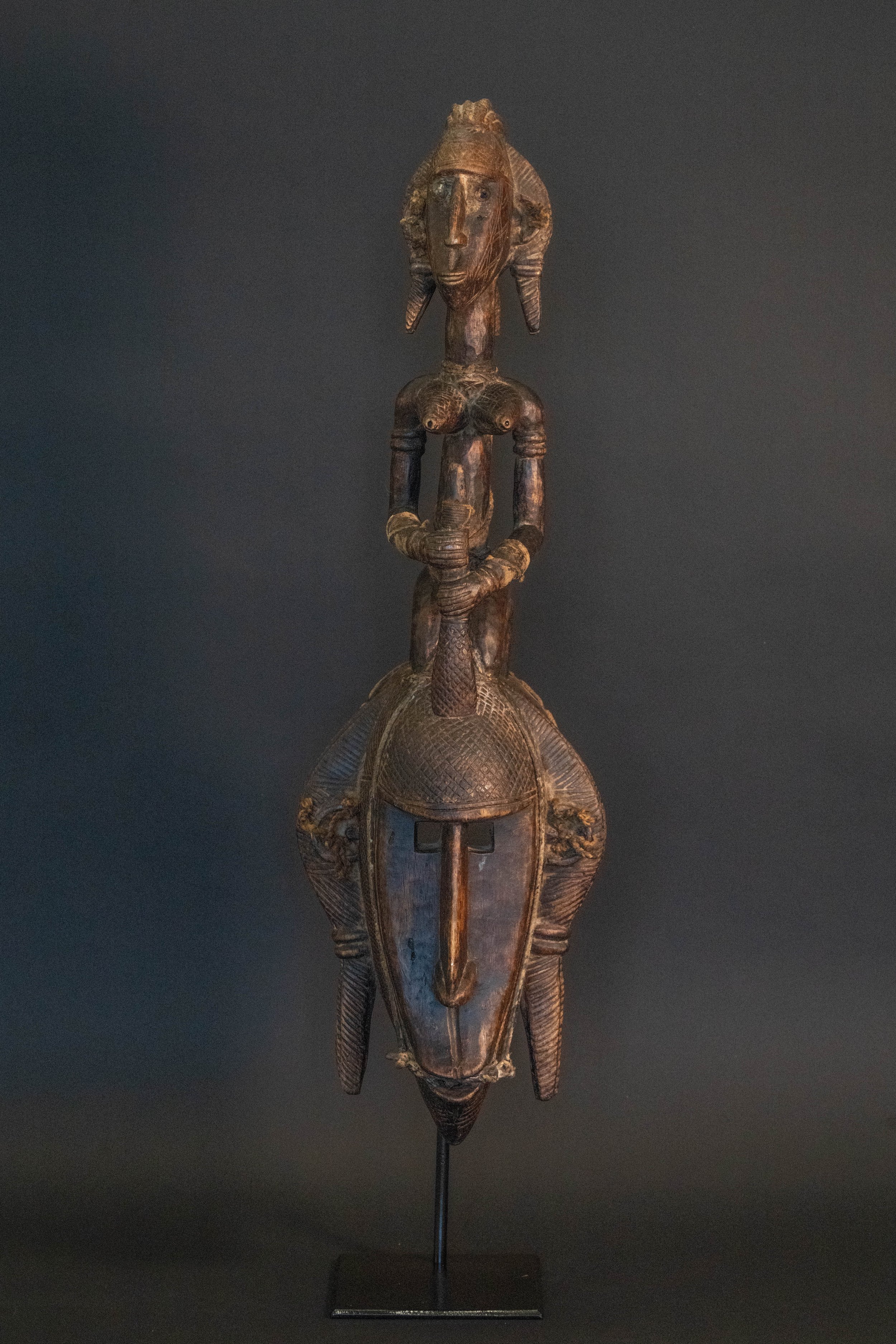
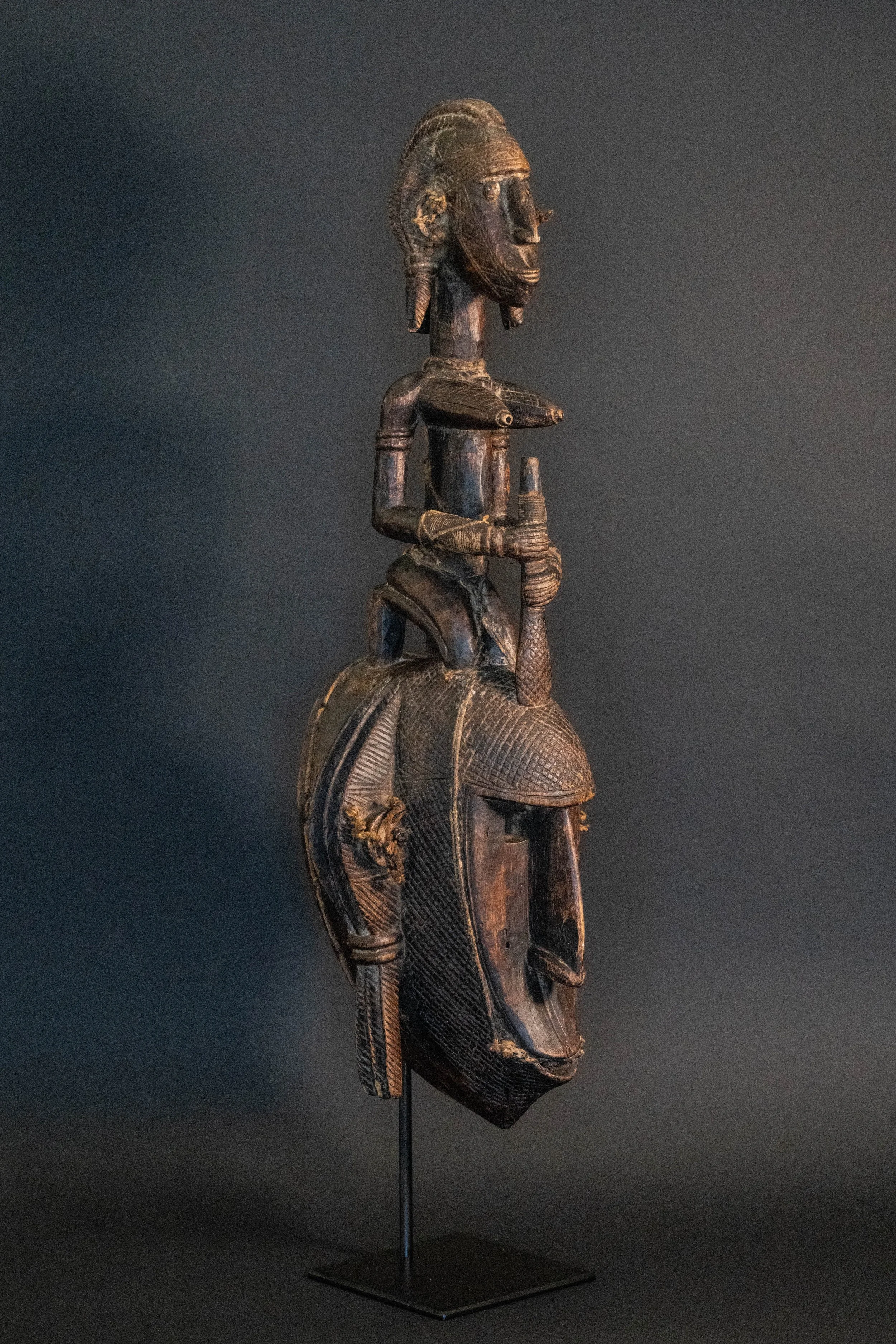
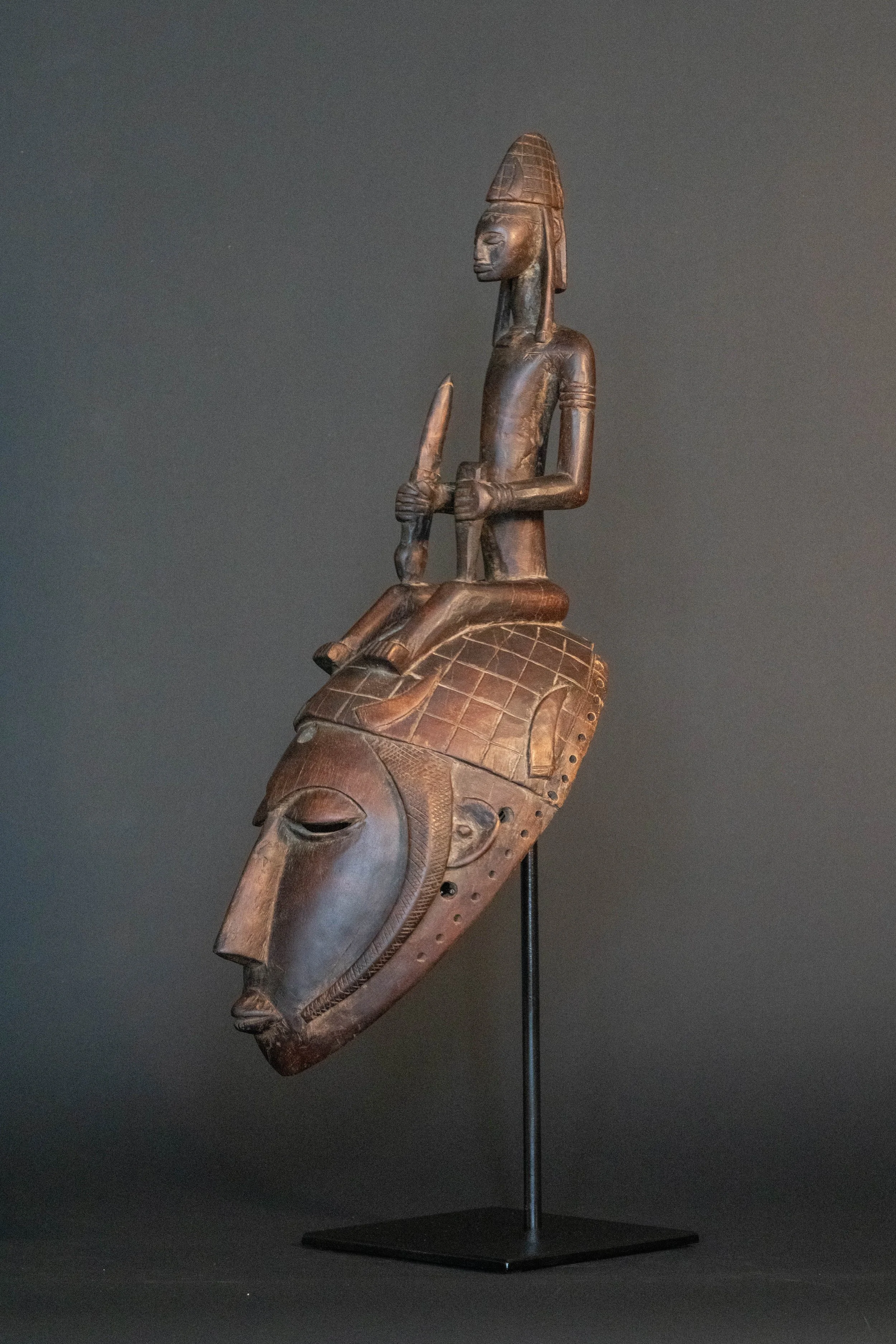
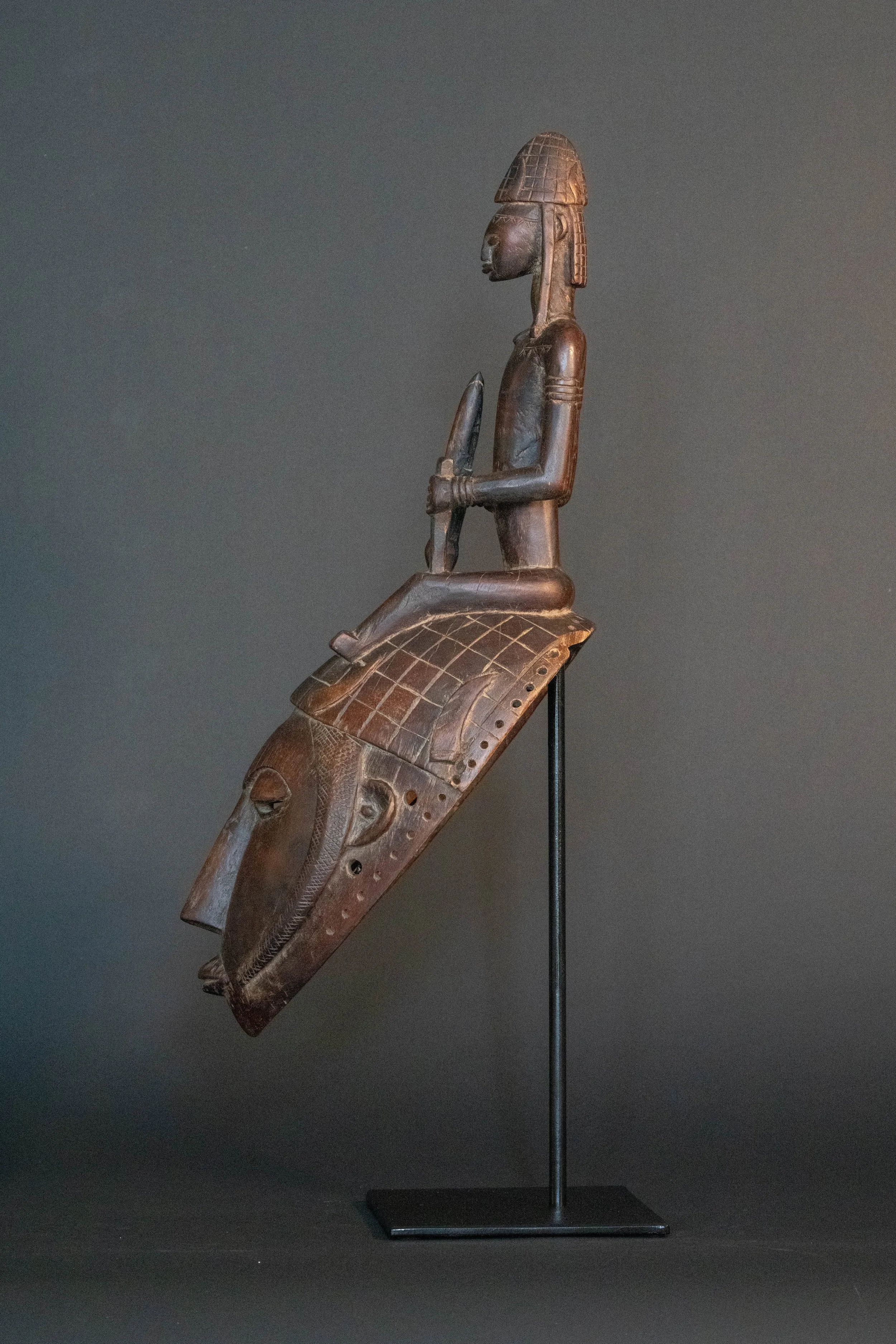
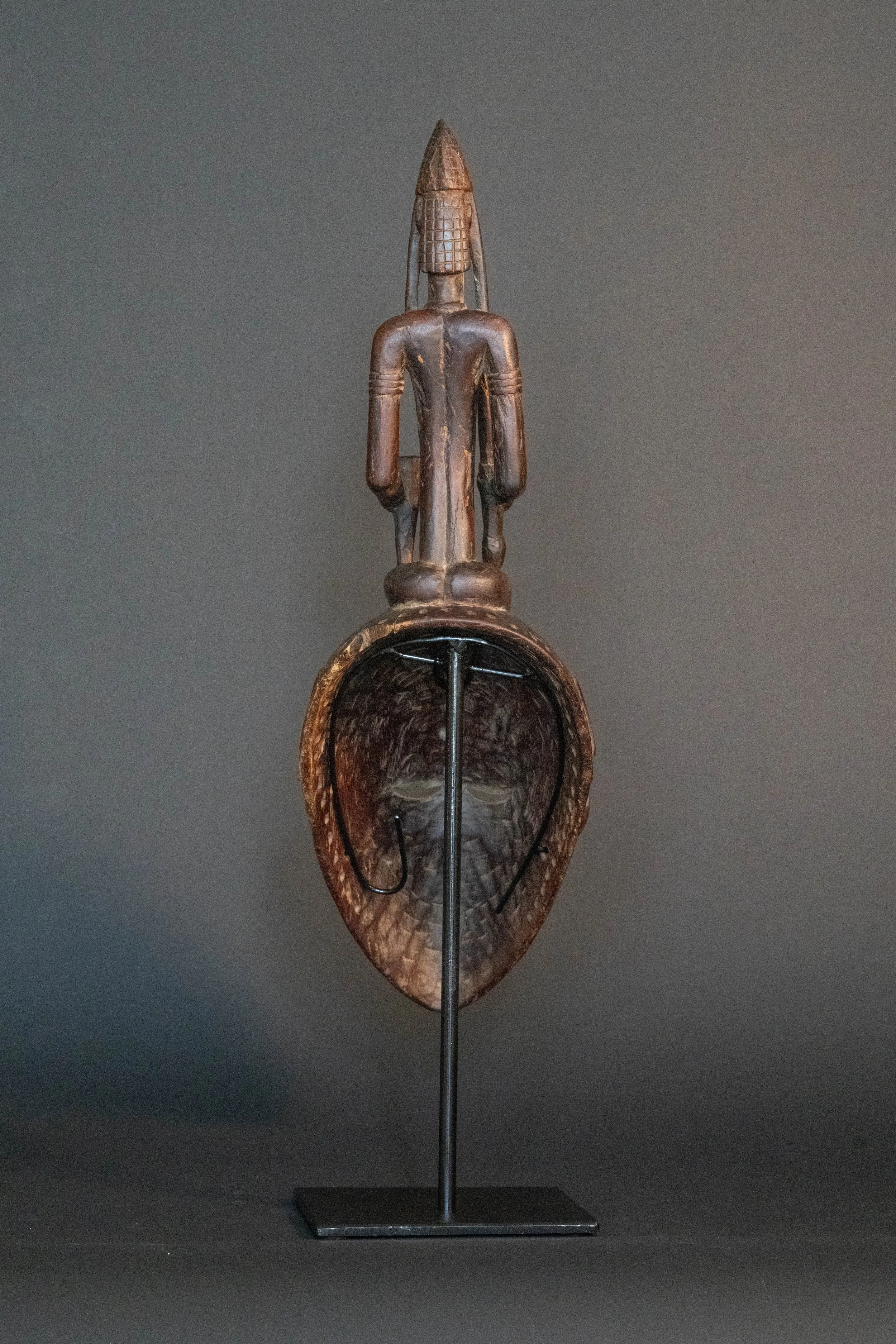
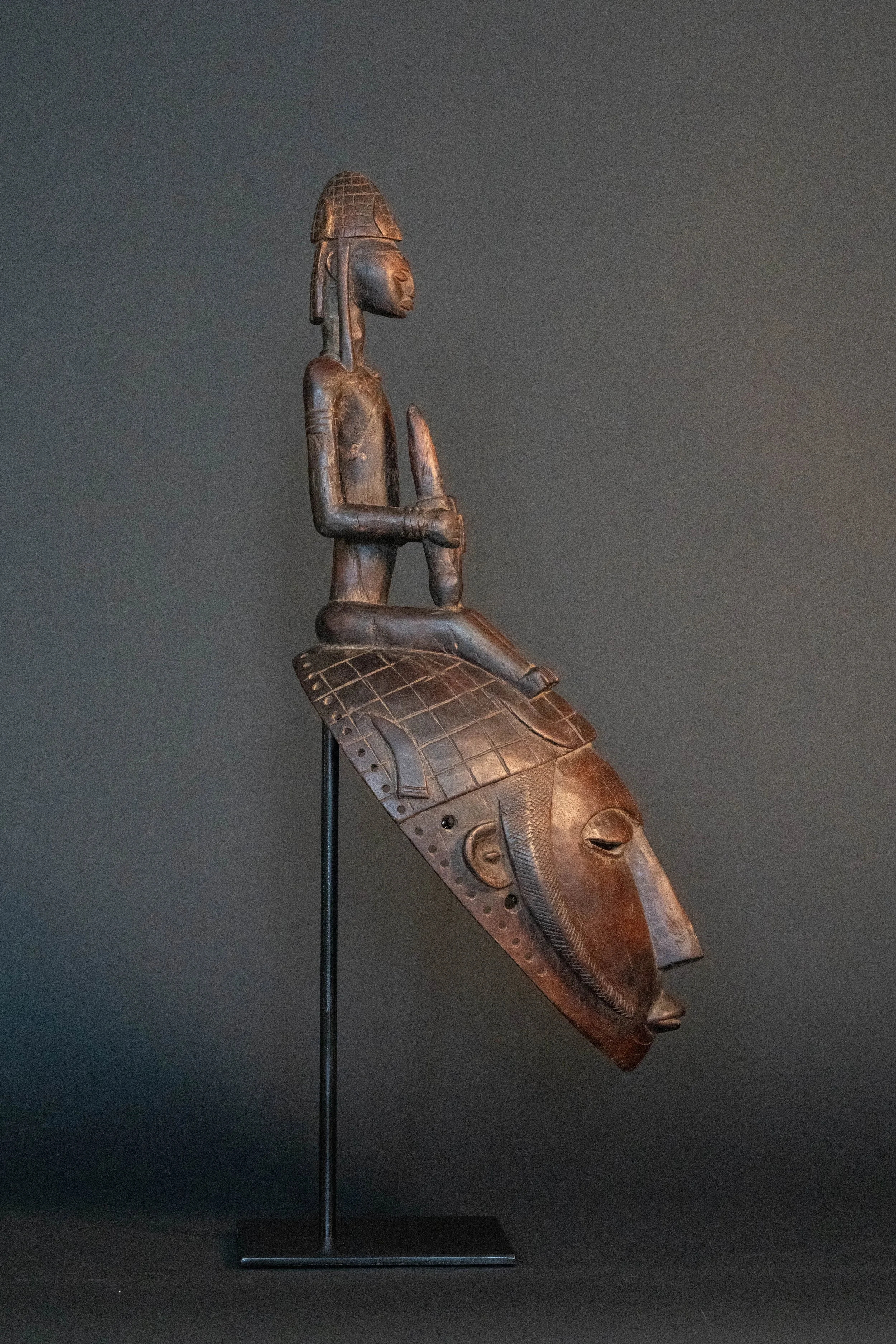
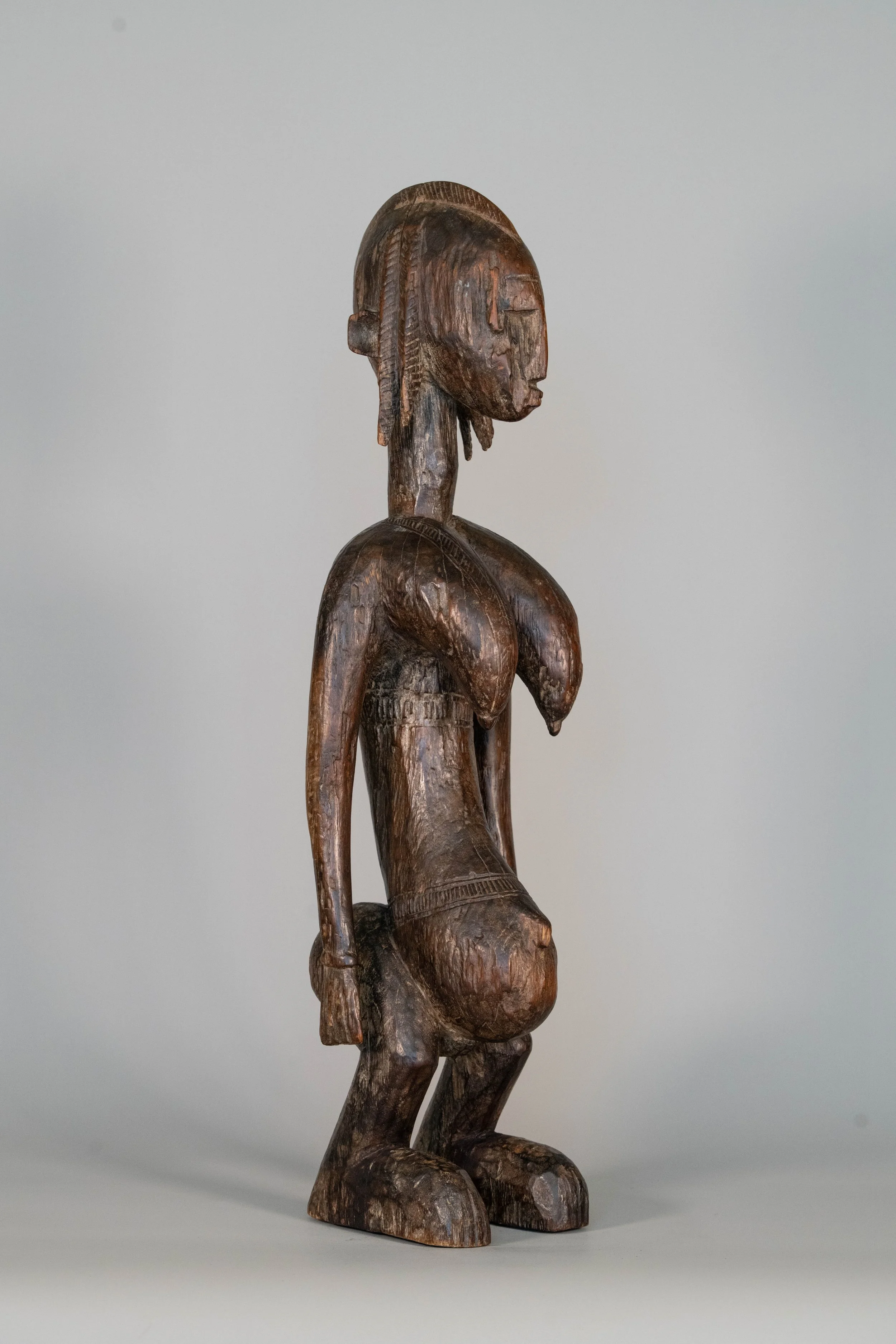
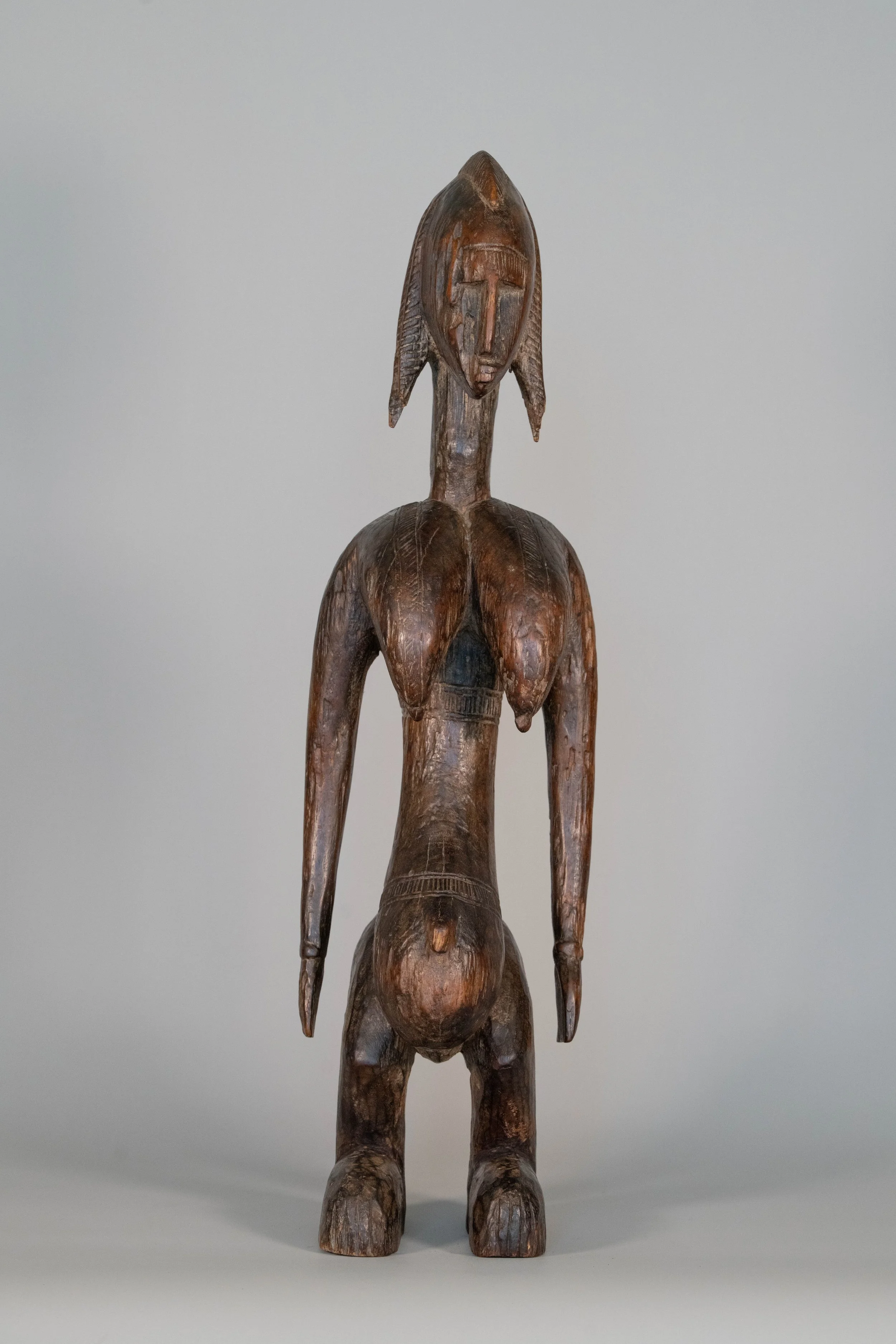
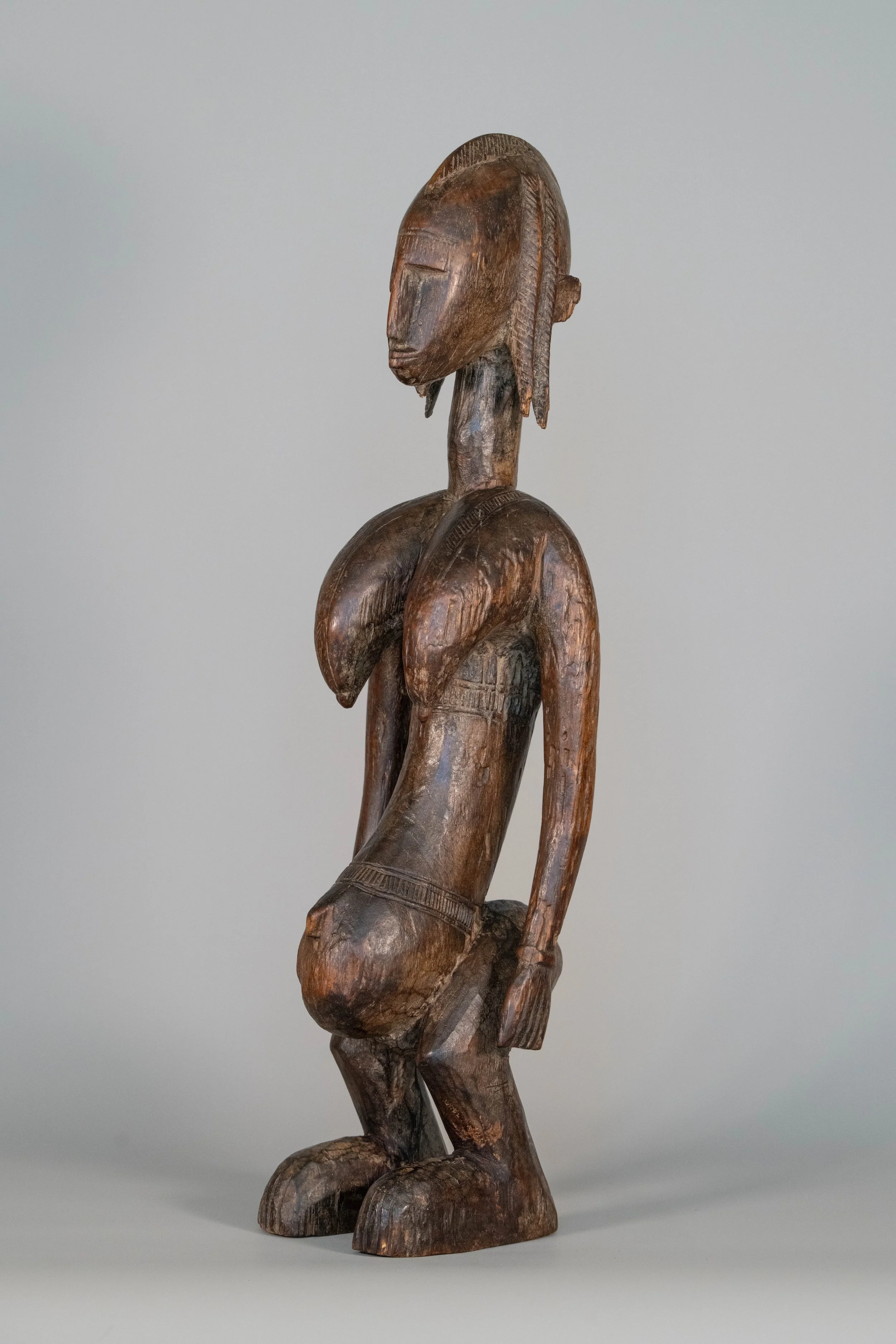
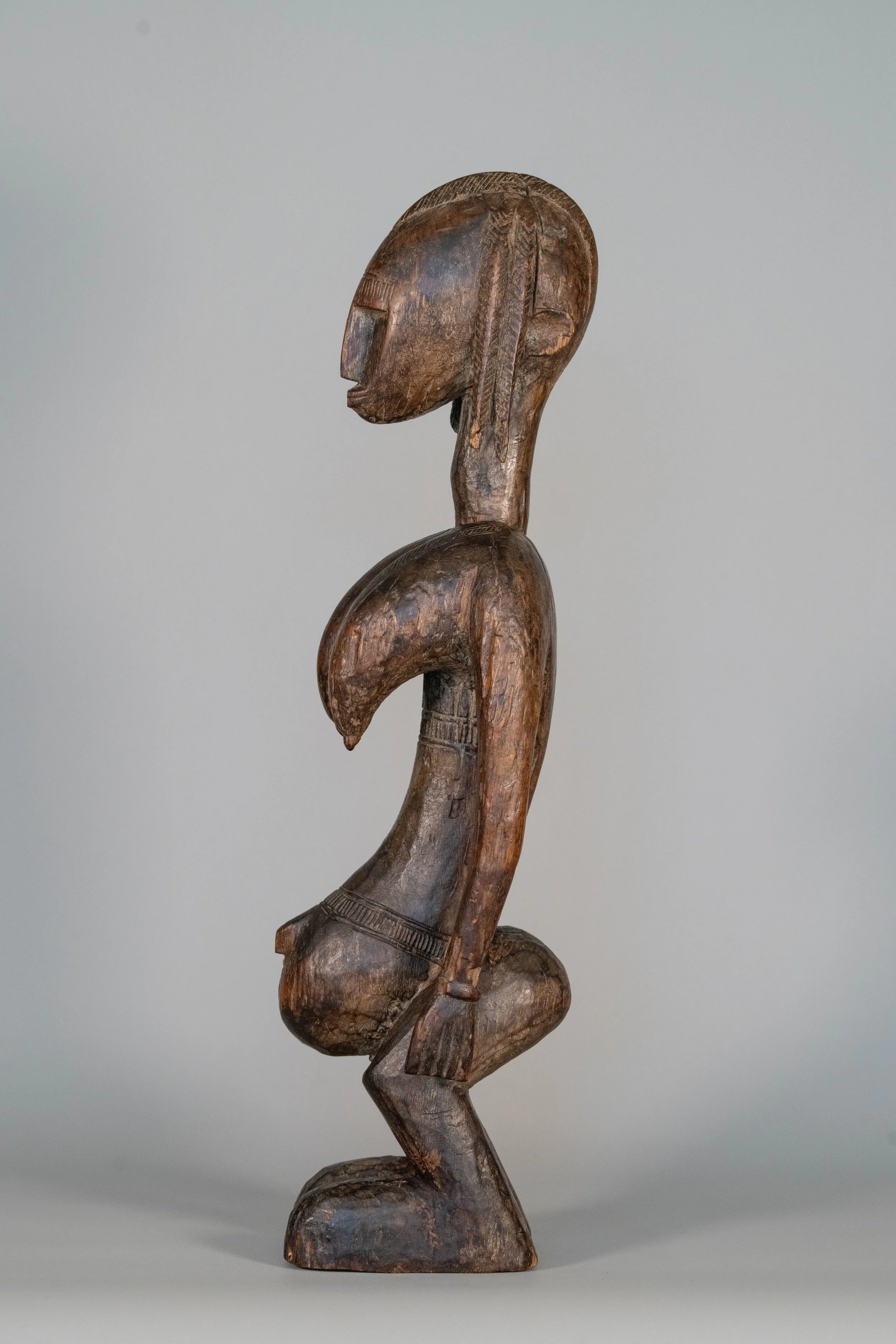
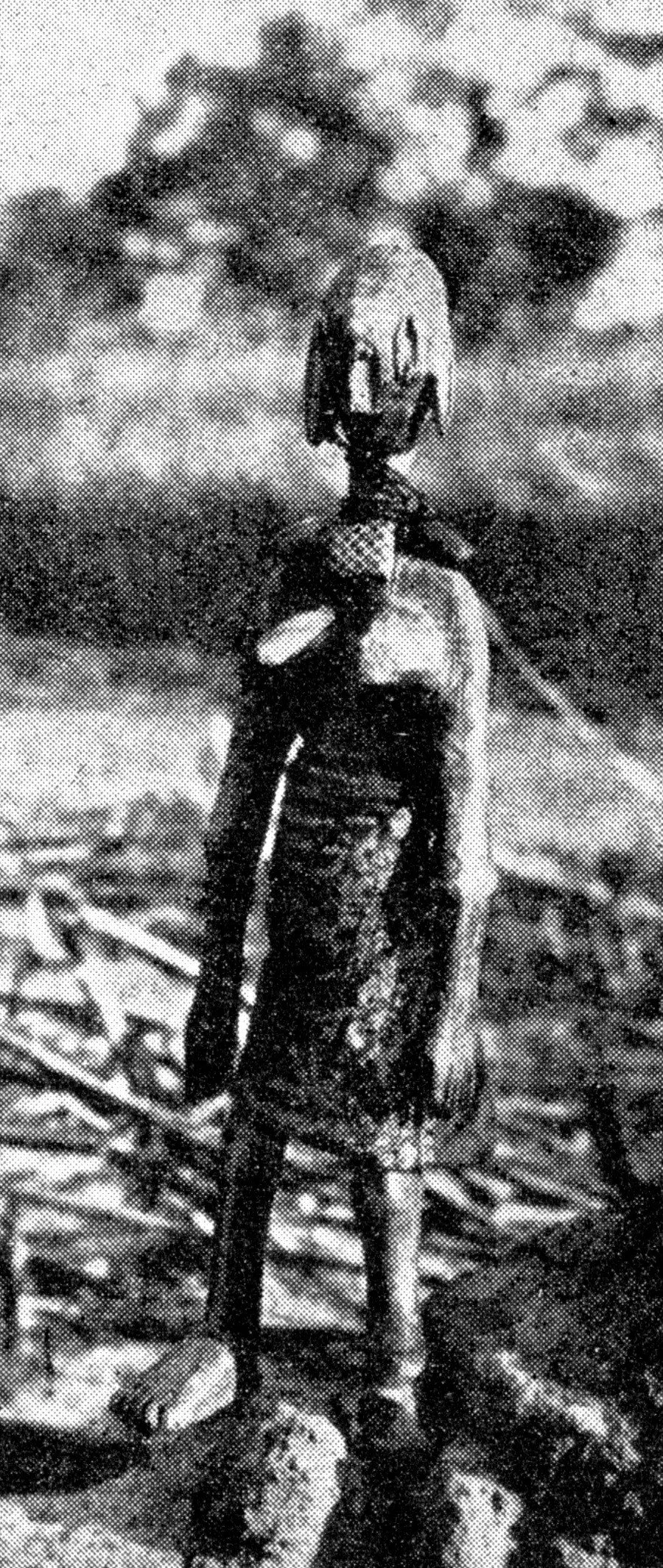
This is the kind of West African sculpture collectors chase: tall, poised, and quietly powerful, with an unforgettable silhouette. Carved by the Bamana people of southern Mali, it presents a seated mother holding her child, an image that carries far more weight than Western notions of “motherhood.” Figures of this type, called gwandusu, belong to the Gwan association, which worked alongside the Jo society to help women conceive and bear children. They were not made for decoration. They were washed, dressed, and displayed at annual ceremonies honoring fertility, protection, and continuity. The name describes a woman of extraordinary spirit and strength of character.
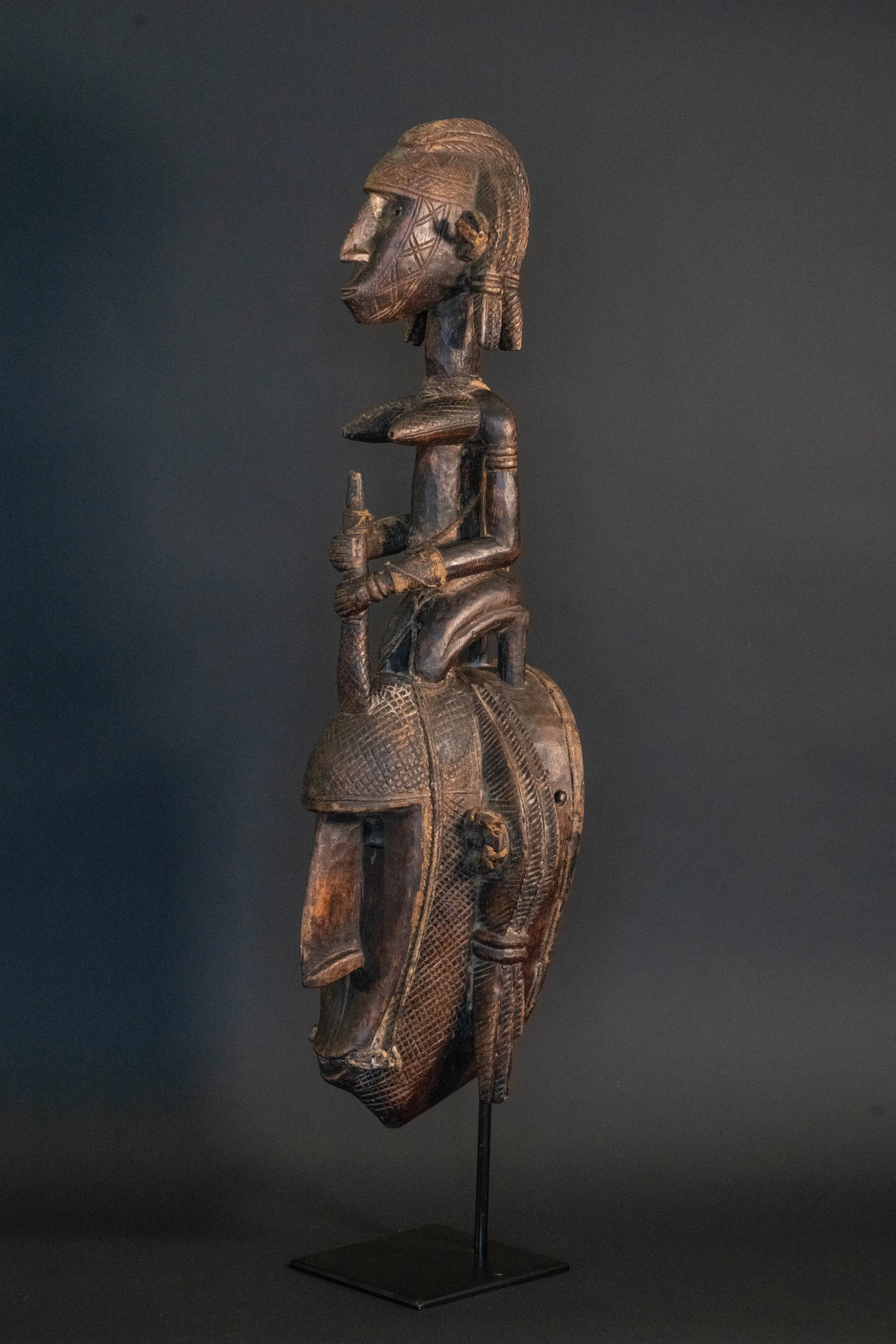
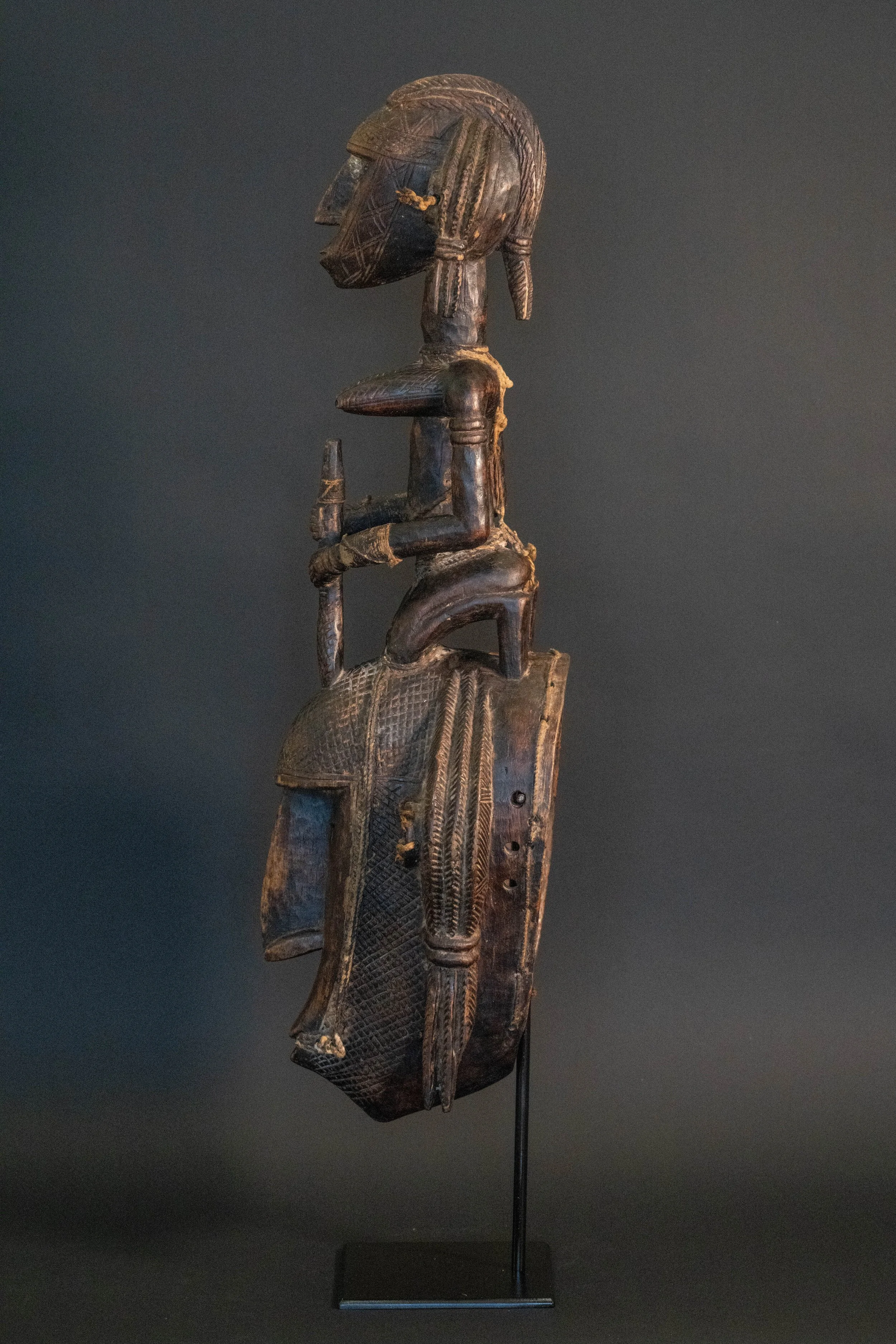
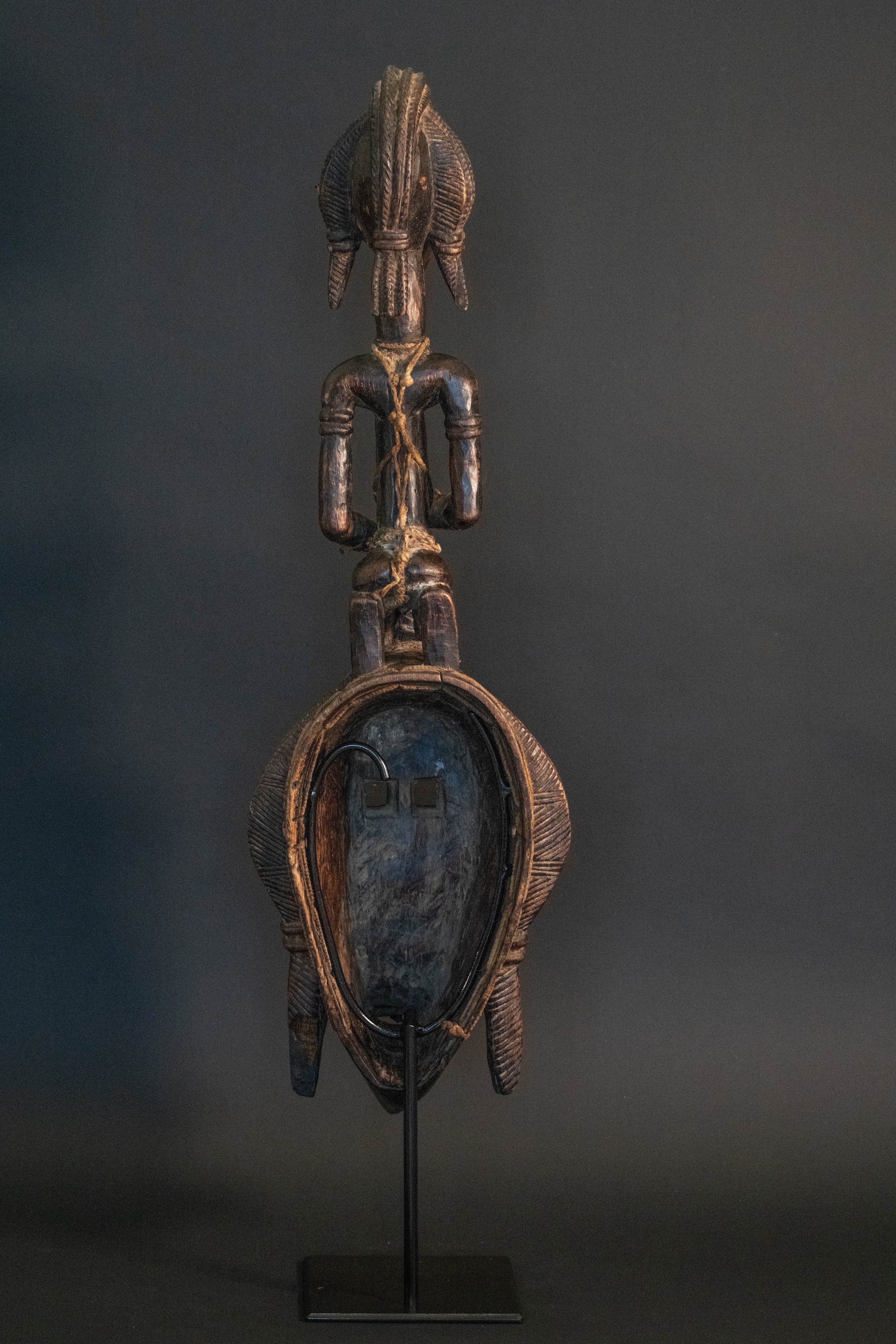
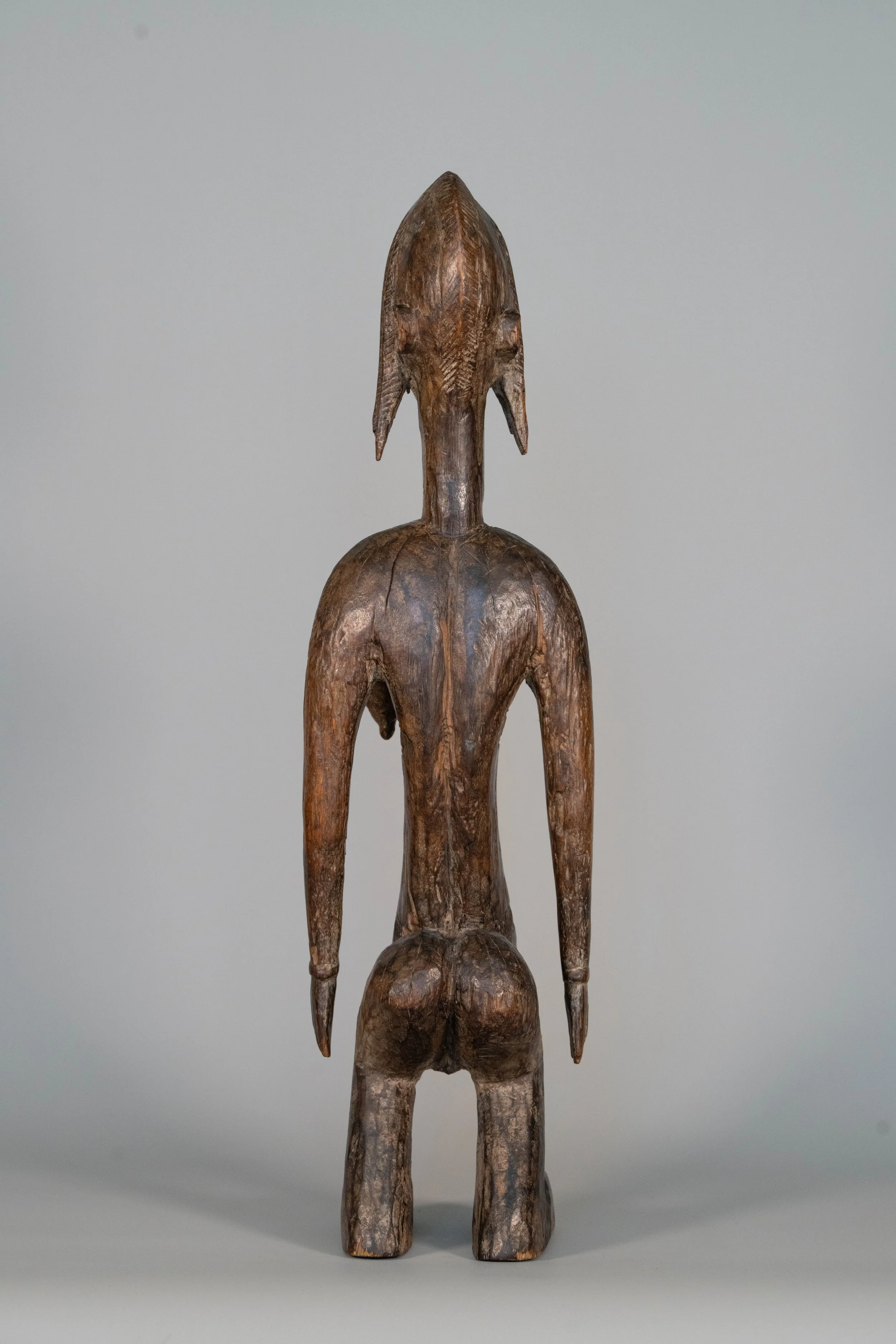
The carving commands a room: an elongated neck and torso, calm, heavy-lidded eyes, a long, thin nose, and a small, pursed mouth. Her crested coiffure, an attribute traditionally associated with hunters and people of power, marks her as a woman whose abilities exceed the ordinary. Three long plaits fall free of the neck, two framing the face and one running down the back. These are among the most fragile elements of the type and remain intact here. The child is held firmly at the abdomen, a steadying, protective gesture that reads instantly from across a room. The surface shows exactly the honest age collectors want: softened high points, deeper tone in protected areas, and natural variation across the patina. It shows minimal fluorescence under UV light, with no modern varnish or wax.
A standout feature is the neck and wrist adornment: non-magnetic metal rings fitted with cast bells whose ferrous internal balls still sound. In-hand wear is strong and convincing. Decorative lines are partially smoothed from use; the metal sits married to the figure (not removable without deforming it), and contact areas show long-term interaction consistent with ceremonial handling.
Condition is well-aged and stable, with no visible repairs. Checks and cracks follow the wood's natural drying and show darkened, oxidized edges, not recent. Old wear and loss at the feet and the rear of the integrated stool are expected in a figure of this size and age, as is the arrested insect activity in the same areas. The piece includes an unattached wood display base.
For context, the type is represented at the highest level by the Metropolitan Museum of Art’s celebrated Gwandusu (15th–17th century, Bougouni region), on view in Gallery 341 and online: https://www.metmuseum.org/art/collection/search/312336. Our figure is a later work of the same living tradition. It is smaller in scale, with a handled surface rather than the crusted ceremonial patina of the earliest examples, and it is presented as such.
Condition: Well-aged and stable overall. Old wear and losses at the lower extremities and stool.
Dimensions: Overall with base 30 × 6.25 × 6.25 in.; figure only 27.5 × 6 × 8 in. (H × W × D)
Provenance: Private American Collection